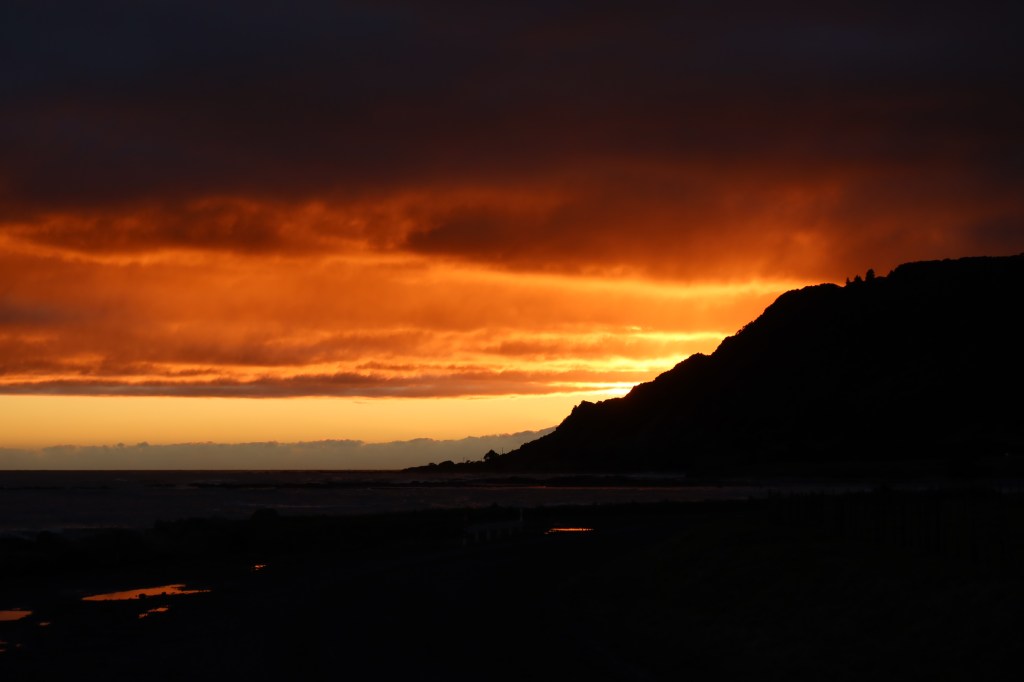
All posts by tmrowe70

A mum and a writer with a passion for archaeology and history.

An Adventure to the East Cape

One of the great traditions in New Zealand is the ‘roadie’ – the road trip. As a country whose nearest neighbours are a minimum of a three-hour flight away it has always been considered a must do to explore our own backyard. Something we as a family have endeavored to do, even more so now we have ‘Miffo’ the motorhome. Recently we decided to take a week to explore the beautiful East Cape, an area we had yet to visit.
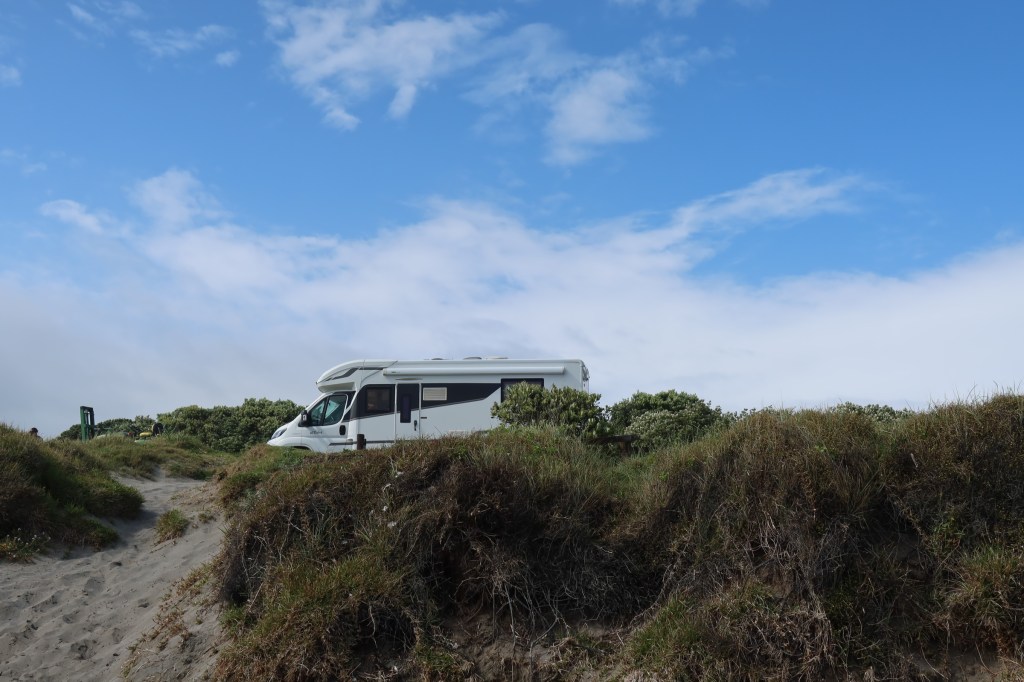
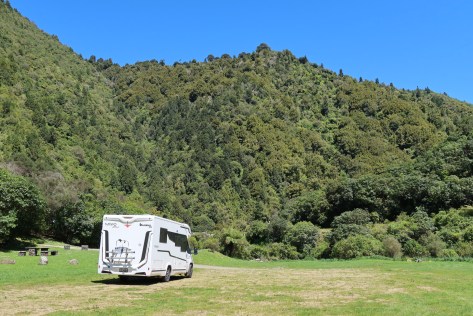
Miffo the Motorhome at one of the many roadside stops on our journey.

Our journey began as it always does with the husband being impatient and wanting to leave at the crack of dawn…the dog and I objected and we compromised – we left a short while after the crack of dawn. The drive from Auckland to Ohope Beach, our starting point, was predictable, much of the road was one we had travelled before. There was a brief stop in Katikati for a visit to the farmers market where we bought honey and we got slightly turned around when himself decided he did not want to pay the toll on the Tauranga East road. It was not a huge sum but sometimes it is very hard to get a Cornishman to part with his money. Apparently, it was the ‘principle’…eventually after a bit of swearing we found the free route.

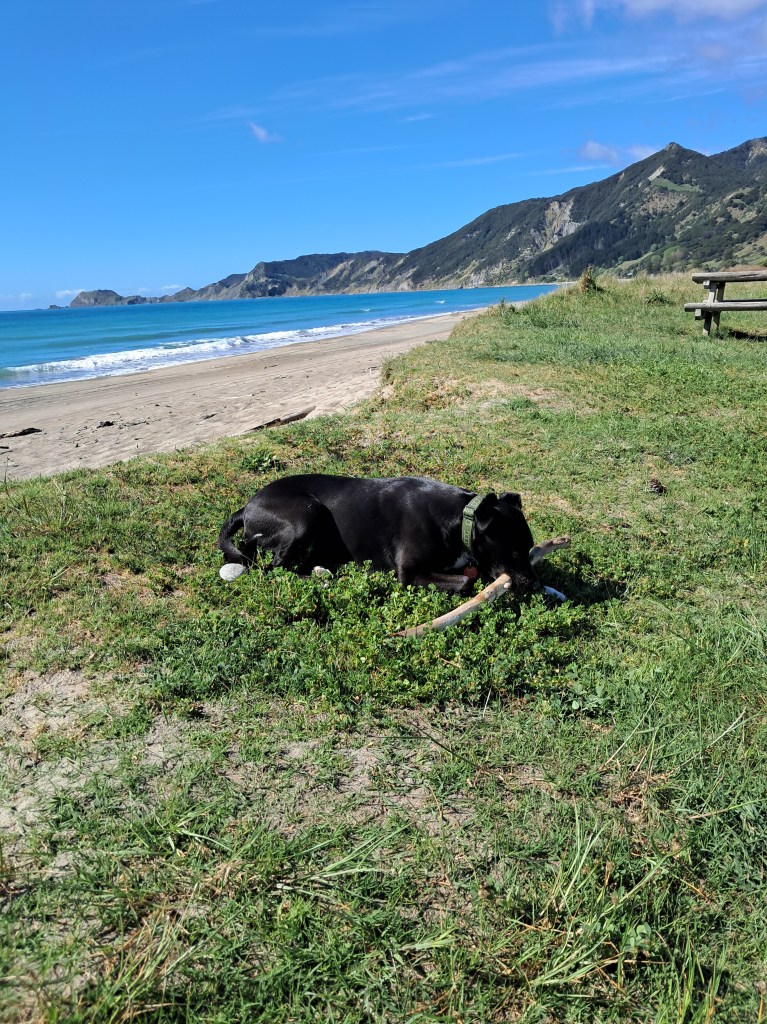
Our first night as mentioned was at Ohope Beach at the freedom camp at the far end of the harbour. Unsurprisingly, it was a popular spot being on the water and quiet. There was a typical husband moment where he lost his phone down one of the side panels in the sleeping area, it was eventually retrieved amidst much swearing and after borrowing a screwdriver (note to self – bring toolbox next time) from a neighbour so I could surgically retrieve said phone. After all that excitement we took a pre-dinner stroll across the dunes to the surf beach and for an Aucklander it was fabulous to have a beach as beautiful as this one to ourselves. The dog found what was to be the first of many sticks…
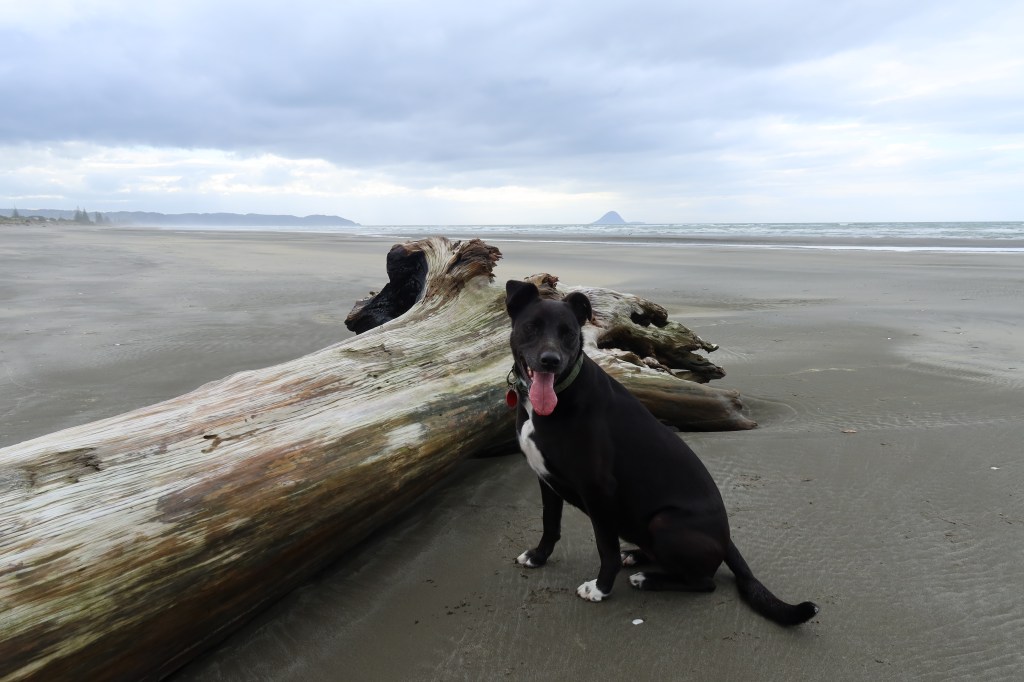
I think this ‘stick’ was just a tad too big to throw – Ohope Beach surf side.
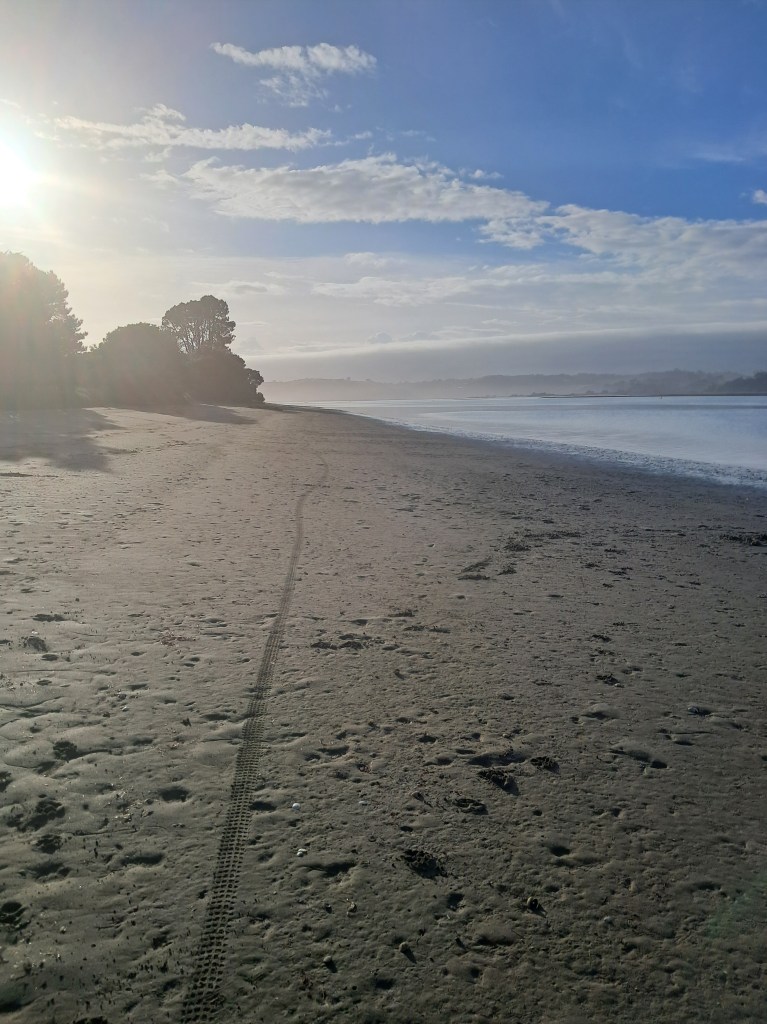
Early morning walk over the fence from our campsite – Ohope Harbour.

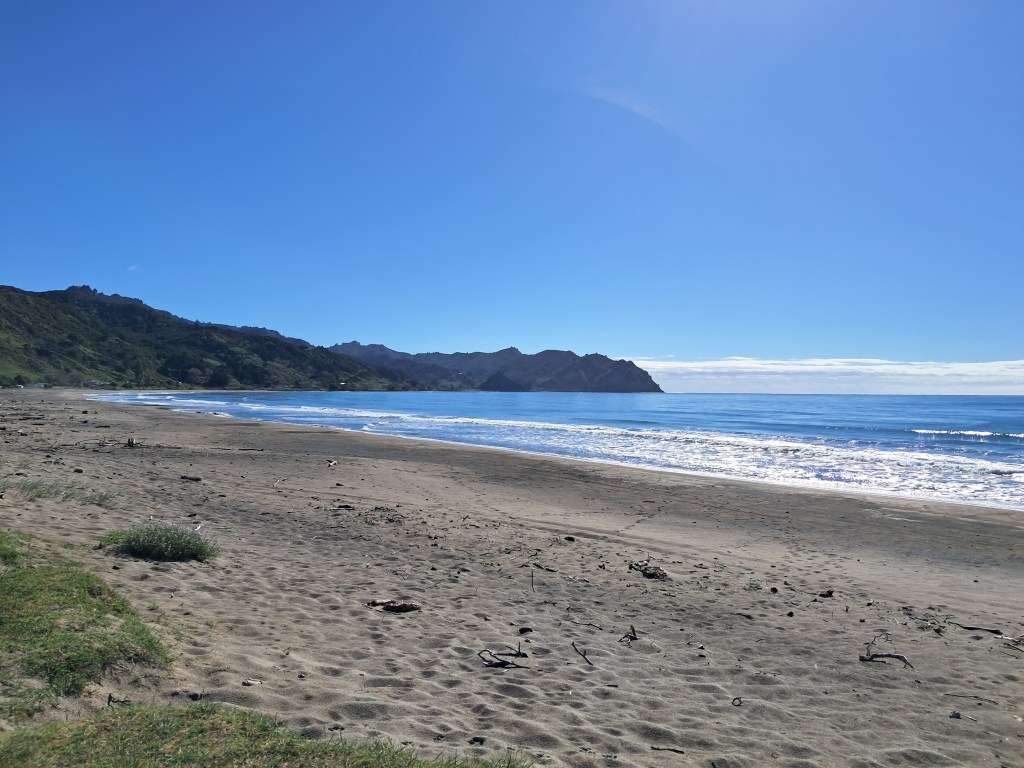
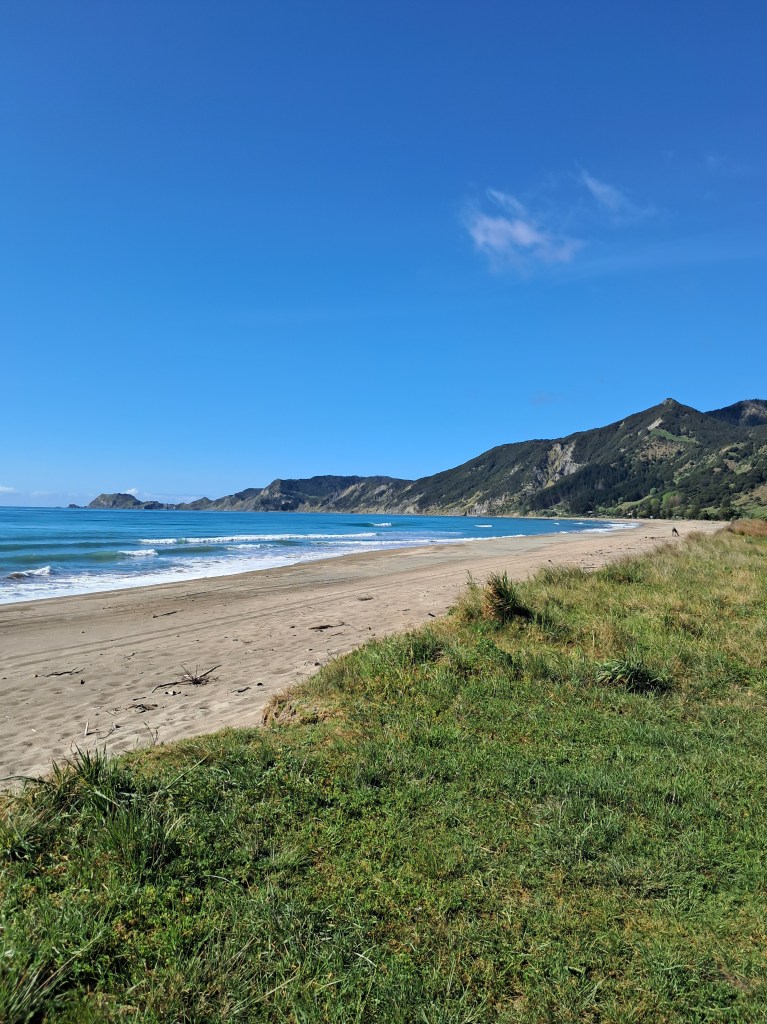
Day two started with the necessary walk and stick throwing for the dog, followed by a mercy mission into Whakatane. The husband had a footwear malfunction and required a new pair – hello Whakatane Warehouse! But it did enable me to purchase the necessary fridge magnets for our collection. After this short side quest we were on our way properly, our target for tonight’s camp was Te Kaha. Along the way, we had a few stops at some lovely beaches (the dog was happy, more sticks!). We arrived at Te Kaha at around lunch time and after some food and a cup of coffee and wee womble on the beach we decided to motor on to Waihau Bay. One of the joys of having a motorhome is the flexibility it offers, sometimes plans change and with our home on wheels we can go with the flow.
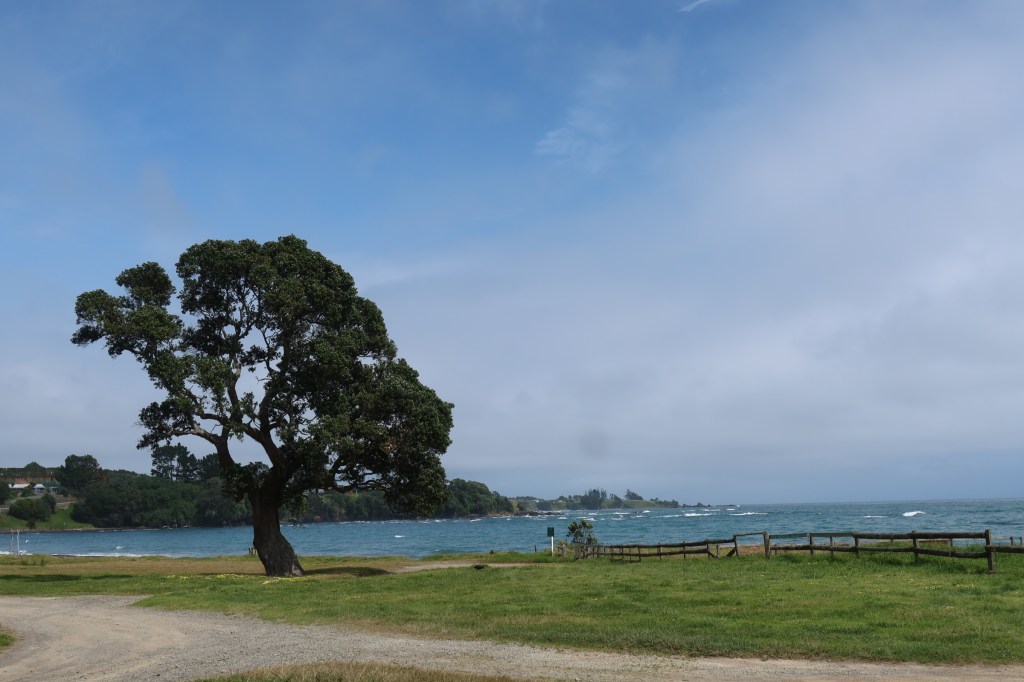
The rest stop at Te Kaha.

Before we reached Waihau Bay we stopped to admire the Kokorore Church. Perhaps one of the prettiest churches I have seen in New Zealand, perched on a small peninsula with its tall wooden spire, it is certainly eye catching. Visiting the small urupa (cemetary) at the rear of the church, it was clear that this was a family church with several names dominating the headstones. I was particularly touched to see the names of three young lads who I presumed to be brothers, who died in an accident in the late 80s. Such young lives to be cut so short, who might they have become, what might they have achieved. With a son the same age I could only imagine their family’s heartache.
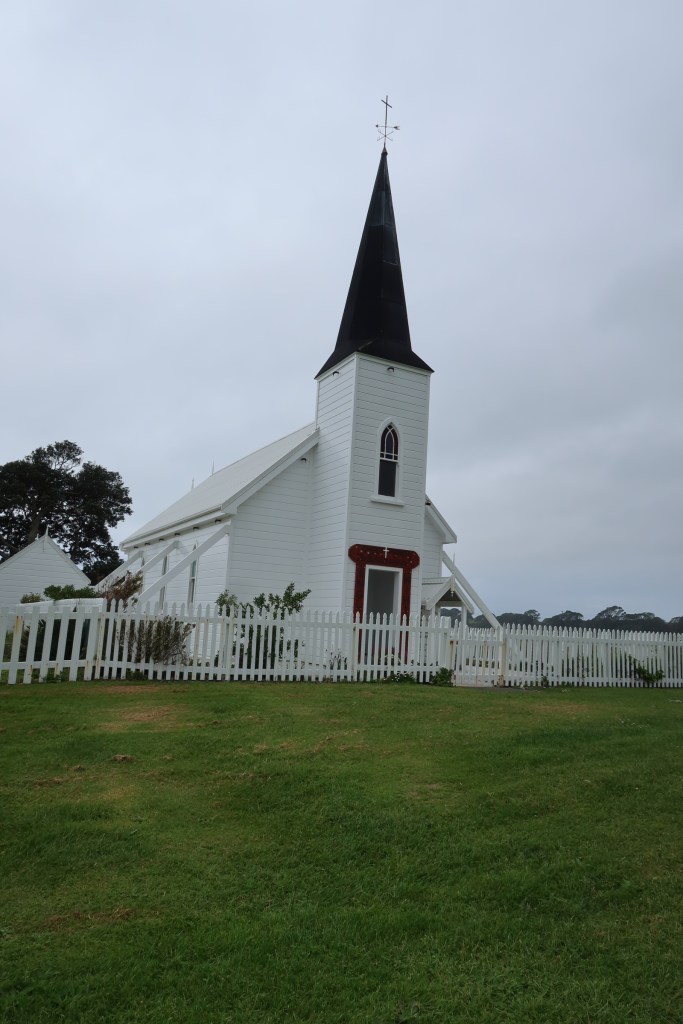
Kokorore Church.

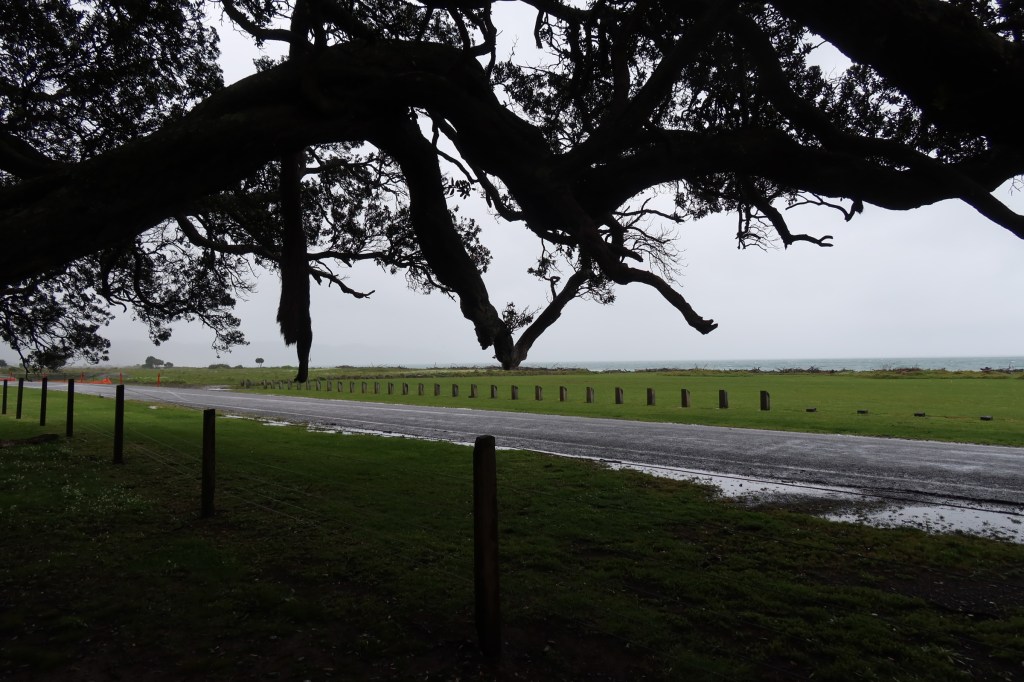
Arriving at the campsite in Waihau Bay we were greeted by the friendly hosts and showed to spot under an old puriri tree. The campsite itself was perhaps a little dated but for the money was perfectly acceptable. It was situated on the main road but to be honest that was not a problem, I think we had a ‘rush hour’ the next morning around 8am where about half a dozen cars and two school buses went past. On the other side of the road was the beach and yes you guessed it more sticks for the dog!
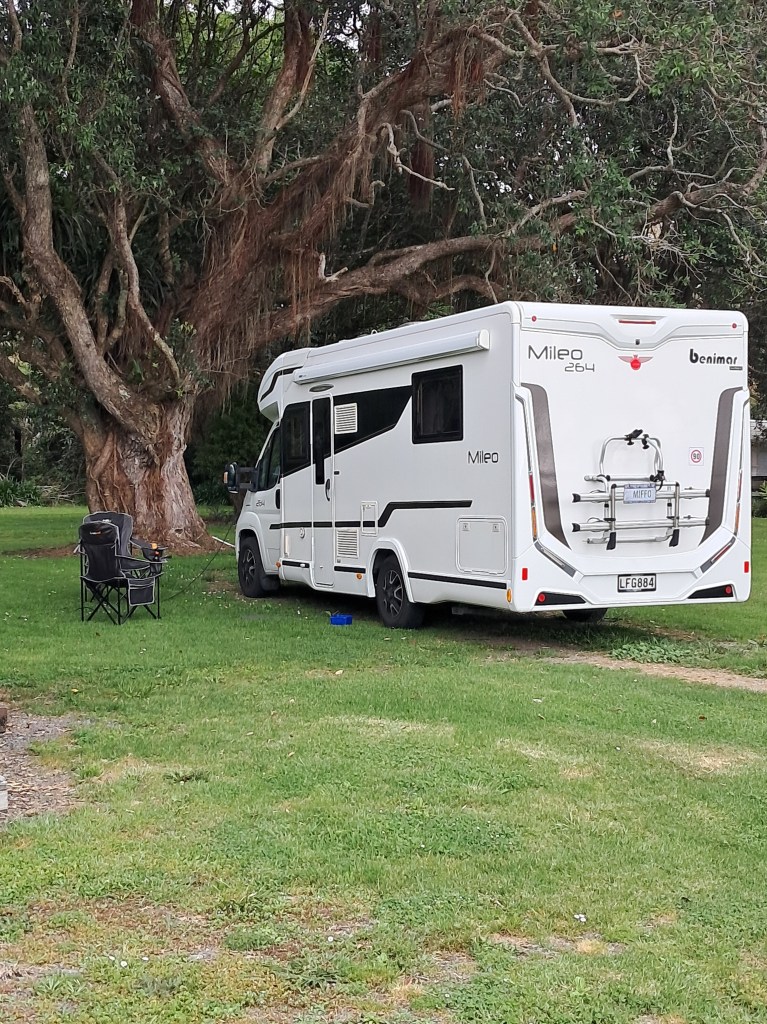
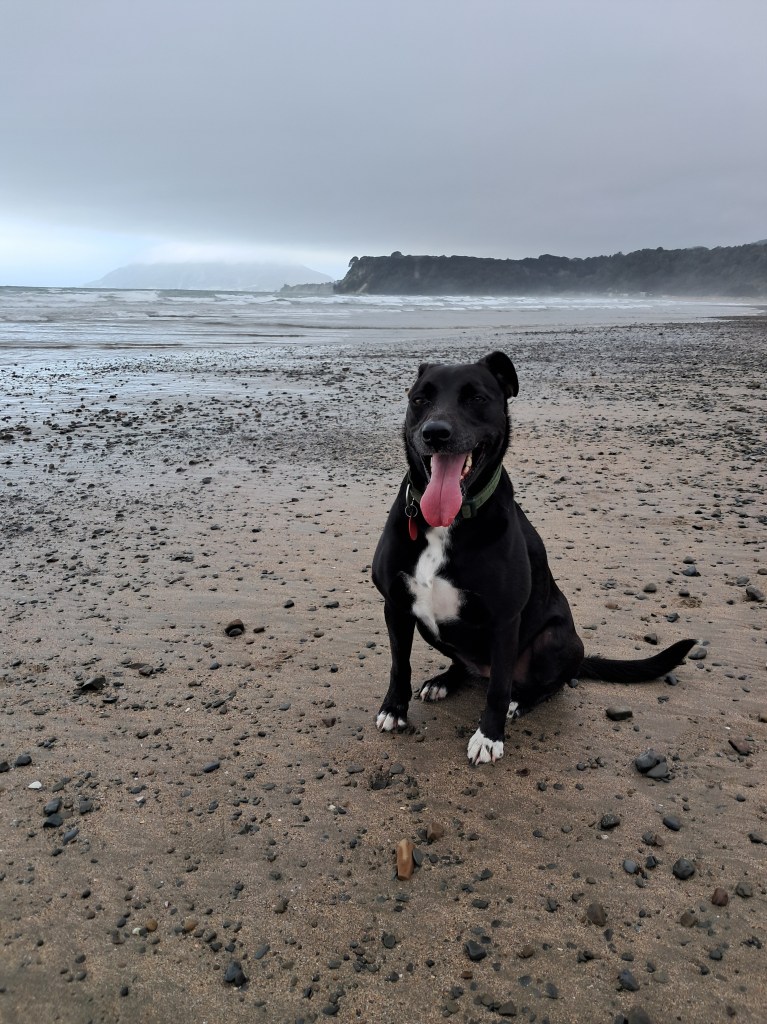
Under the puriri tree.

Day three – we woke up to rain and when I attempted to take the dog for a walk on the beach promptly discovered how well the dunes protected the campsite – it was far windier and rainier than anticipated and was a walk cut short – even the dog was happy to leave the beach. An hour up the road and we stopped at the general store in Hicks Bay, a coffee for myself and what was to be the first of many pies for the Cornishman. The pie is worth a mention here, as it was a Ruatoria pie (Ruatoria is an East Cape town and thus this was a locally produced pie). The husband is always on the lookout for locally produced foodstuffs. His verdict on the pie (steak and cheese) was excellent, apparently, they had used proper cheese (not the fake stuff many pie producers use). I am an awful kiwi, not being a fan of ‘the pie’, so it is good that the husband makes up for my shortcomings.

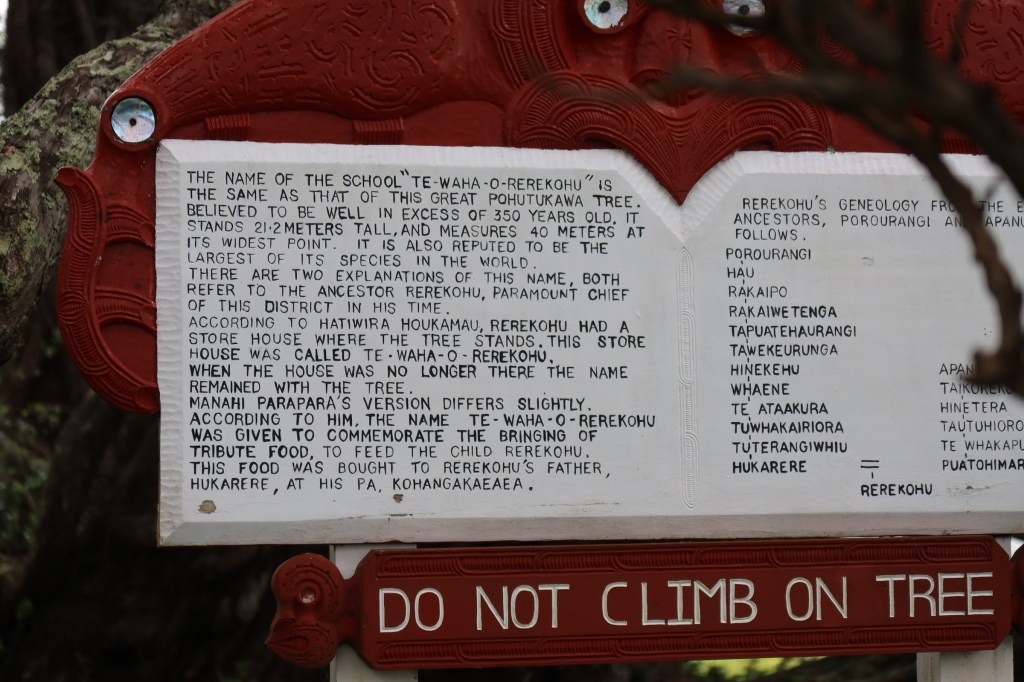
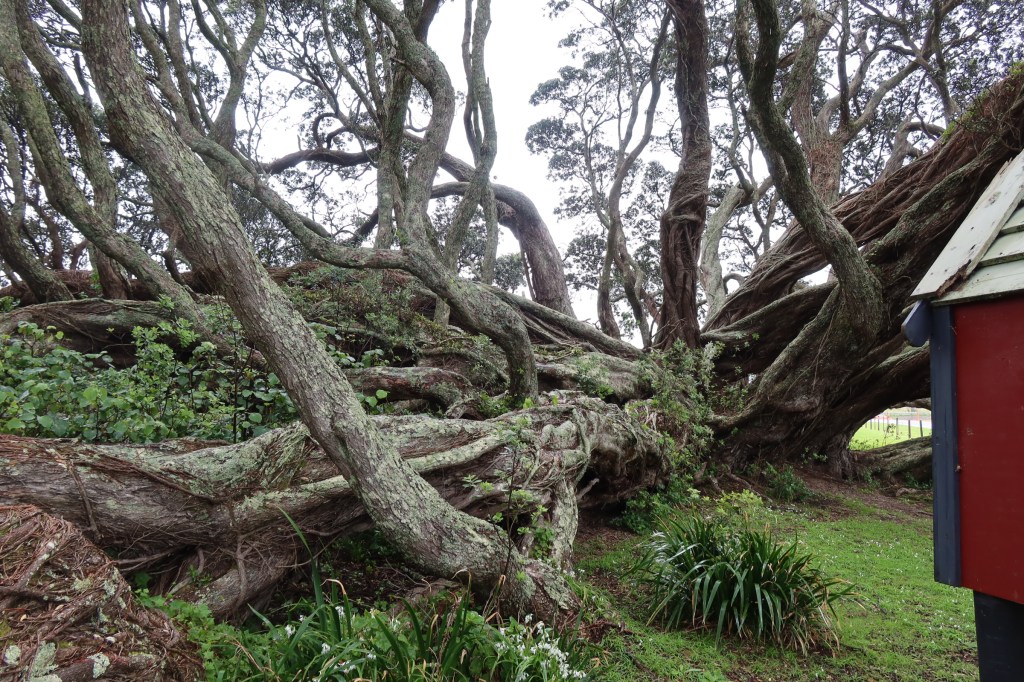
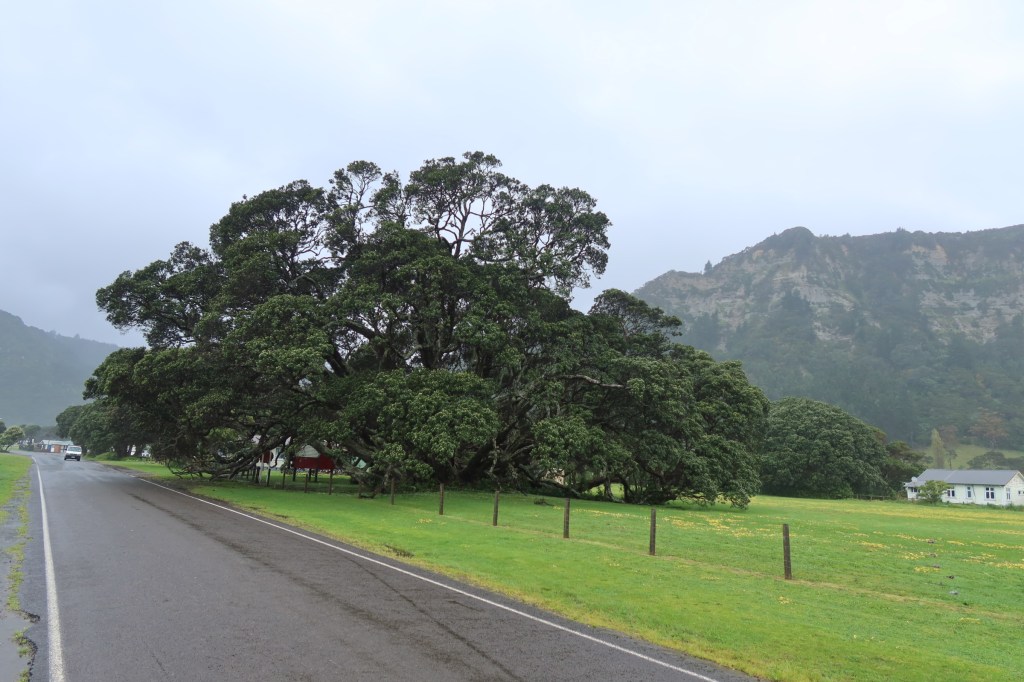
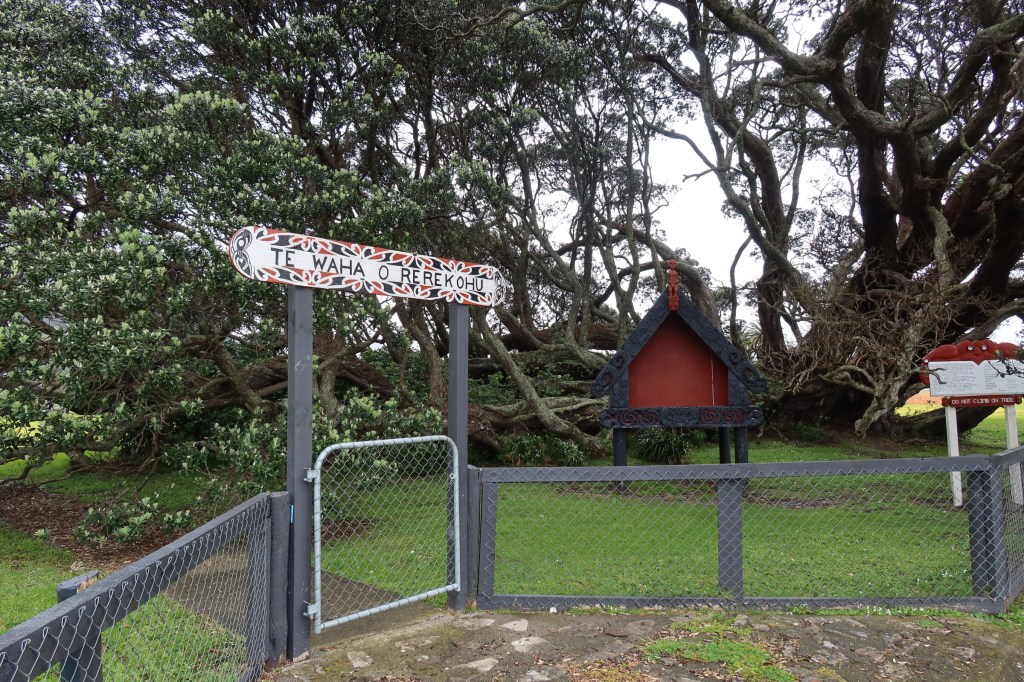
Not long after this we arrived in Te Araroa where we paid our respects to the country’s largest and reputedly oldest pohutakawa. Spent a short time communing with this ancient tree (350yrs approx.), even the husband was in awe and gave it a wee hug. I’ll make him a tree hugger yet…As I stared up and around at its twisted branches, I could only wonder what events that tree had witnessed. It was probably a only a sapling when Cook sailed past. It would be fabulous to do this trip in the summer when all the pohutakawa are in bloom – stunning!
It had been our intention to spend the night at the East Cape Campground, but the rain and the wind hadn’t eased and was predicted to continue for the rest of the day. After a bit of discussion, we decided it was safer and ultimately more pleasant to wait out the rain in Te Araroa where there was an NZMCA park up area. The afternoon stretched out in front of us. Someone took a nap and so did the dog, I read, drank tea and ate biscuits.
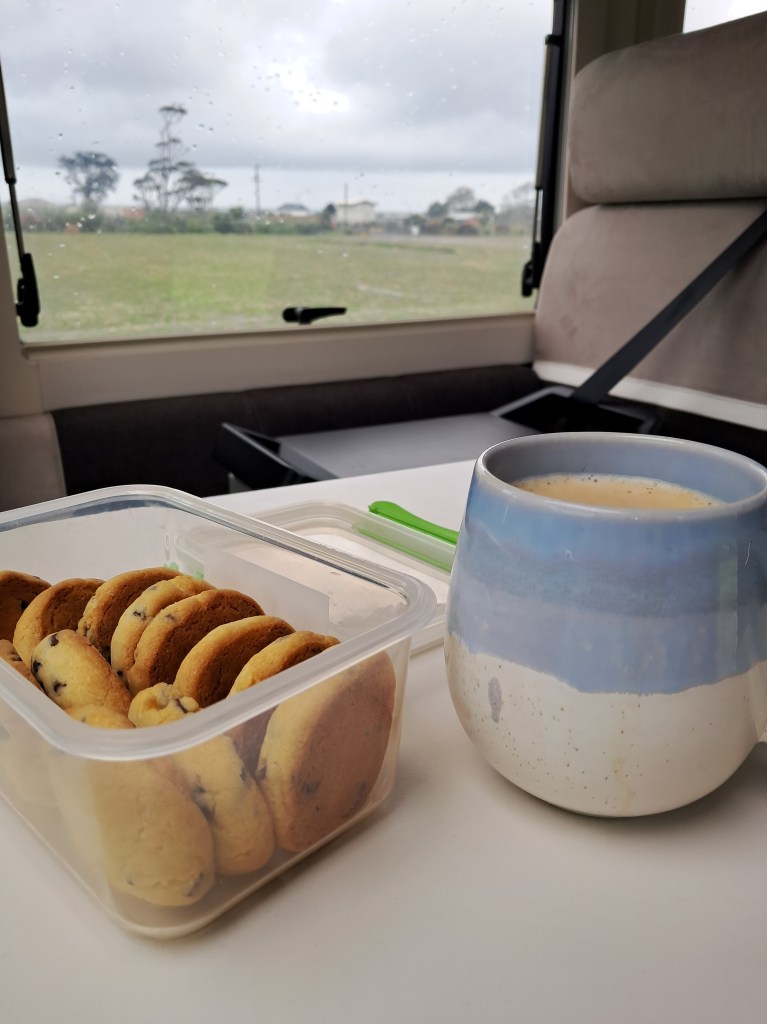
Tea and biscuits – perfect for a rainy afternoon!

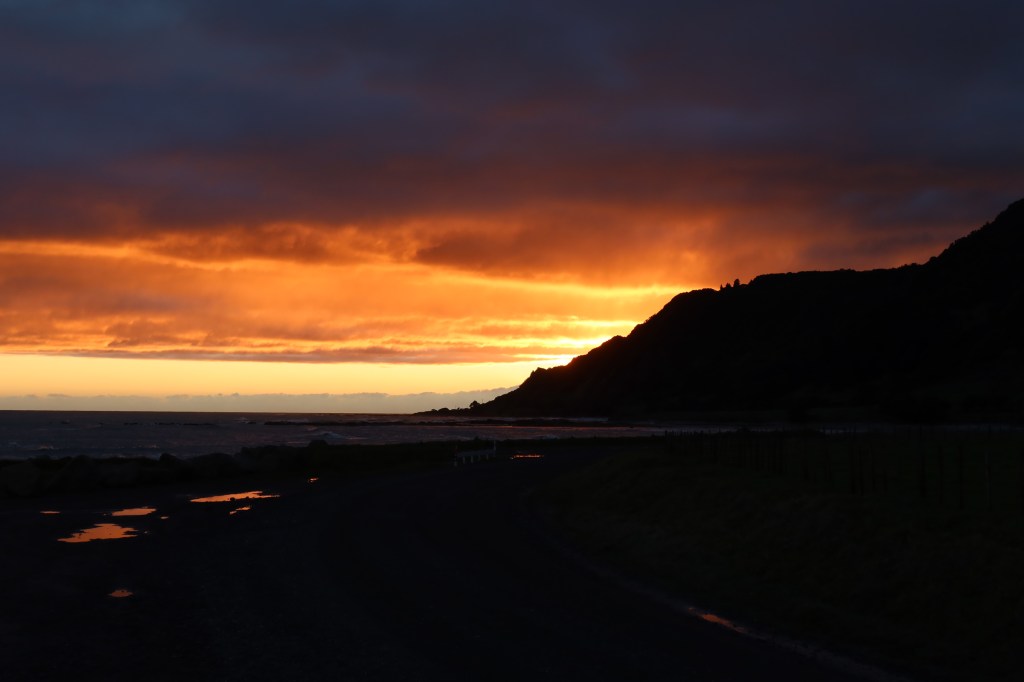
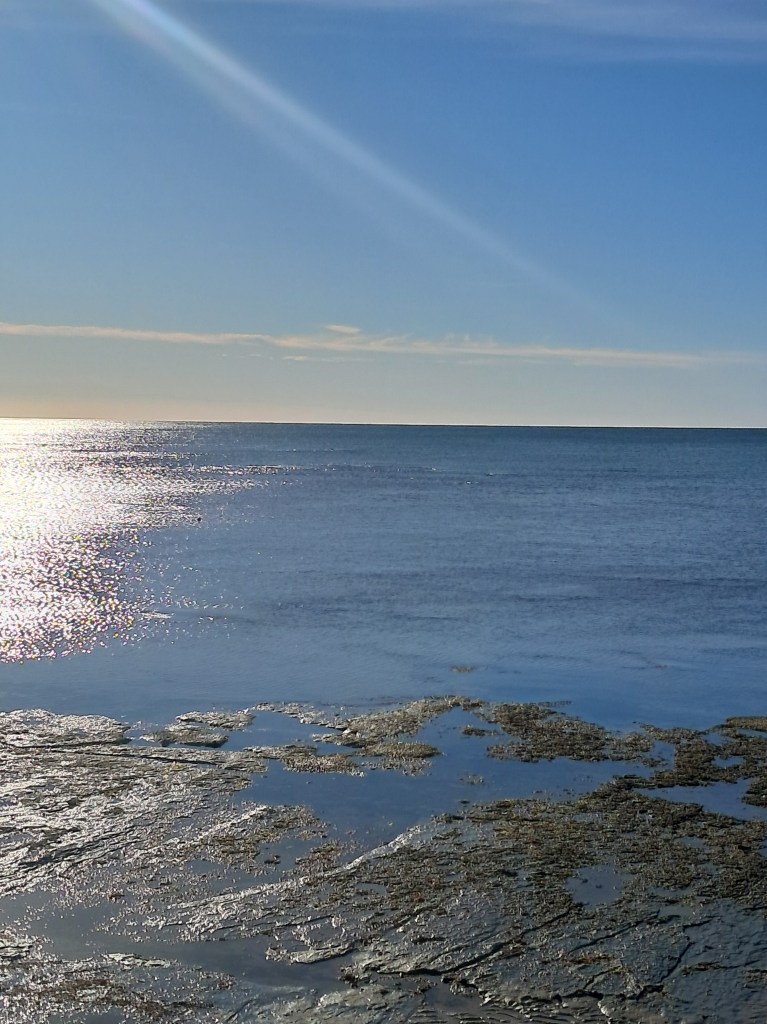
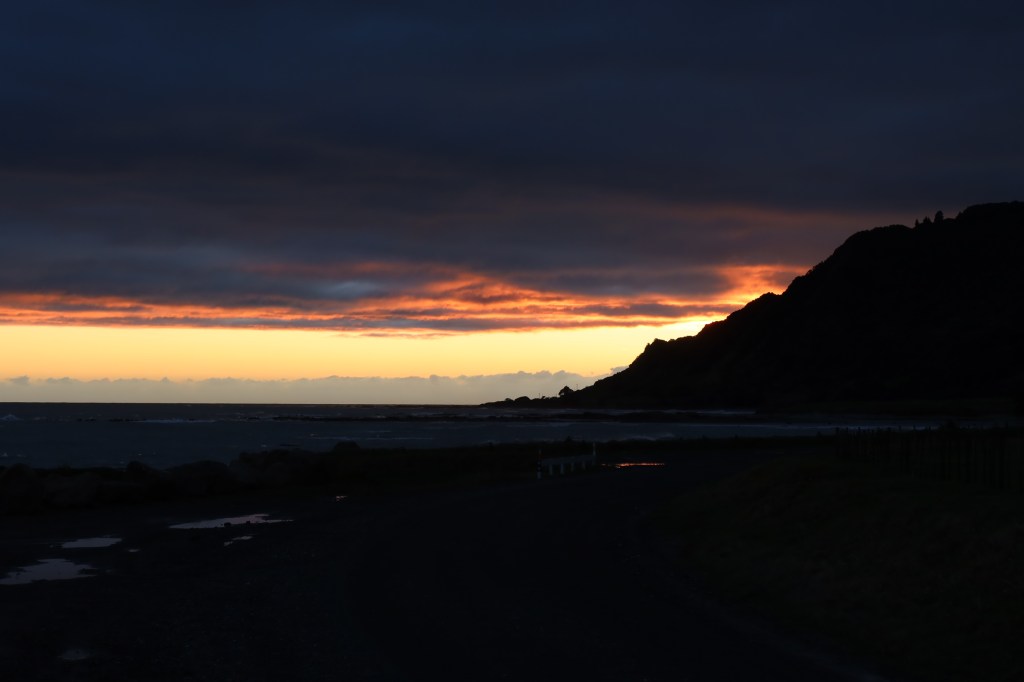
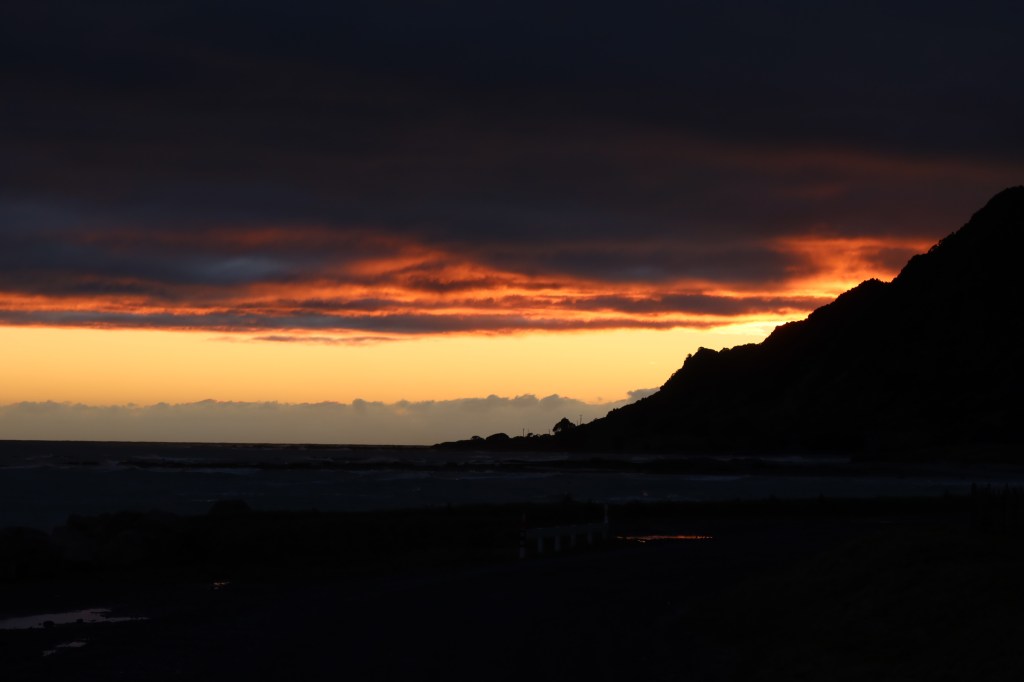
Day four – was awoken rudely by the husband who felt we should make an effort to see the sunrise. After a short drive along the dirt road that leads to the most easterly point (with me still in my pjs) we found a spot to park up. Turns out it was one of his better ideas…the East Cape is the first place in Aotearoa New Zealand to see the sunrise. It was stunning after all the rain the day before and we ate breakfast watching the morning begin in all its glorious colour. Once dressed and ready to face the rest of the day we then headed off, our final destination for the day would be Tatapouri.
Along the way we stopped briefly at Te Puia Springs general store, the husband bought a pie. This time it was pork belly, he initially did not hold out much hope for the pie. He literally at his words, it was excellent!
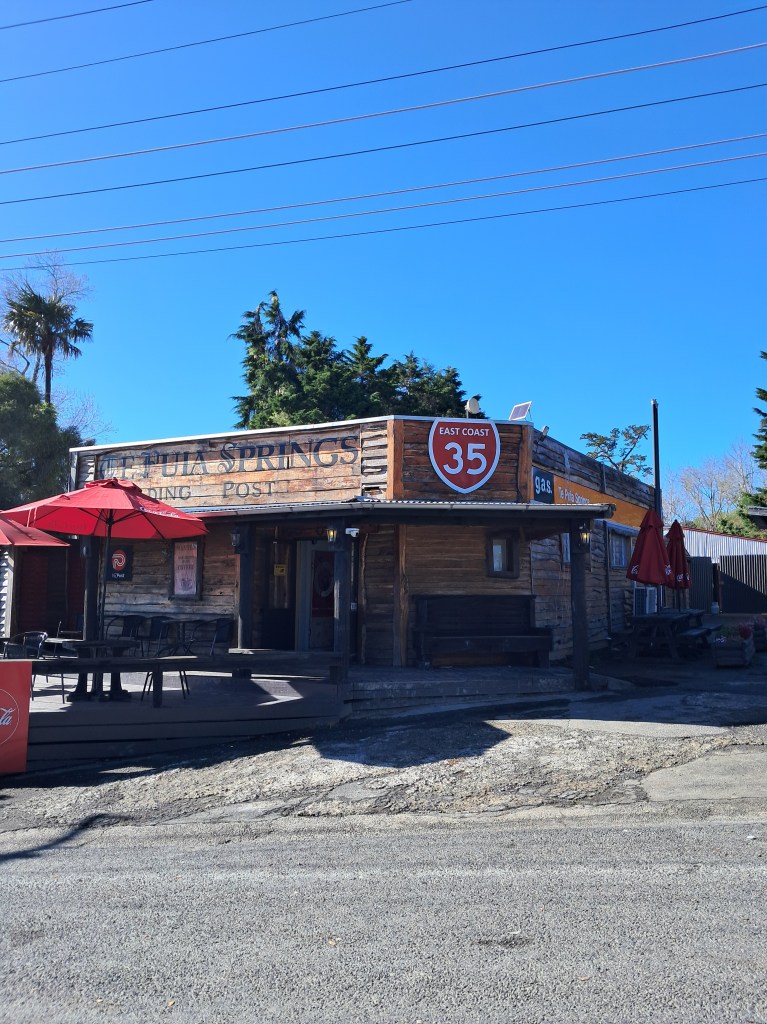
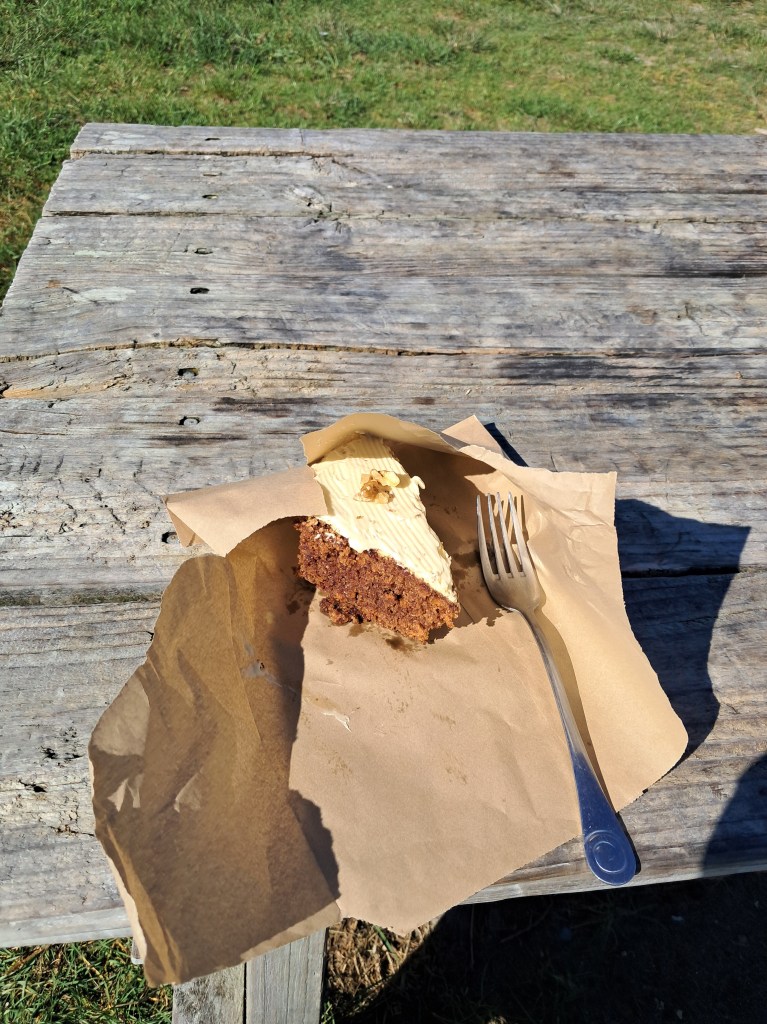
Our next stop was Tokomaru Bay where we stopped at Cafe 35 for you guessed it, another pie (I had a slice of lovely carrot cake). This time the pie was their world famous paua pie and it was apparently so good he had to go back and get another one for the freezer (as well as a pork belly pie for the freezer). The owners of the Cafe 35 make all their own pies and feature in book on Aotearoa New Zealand’s best pies – yes, we own a copy.
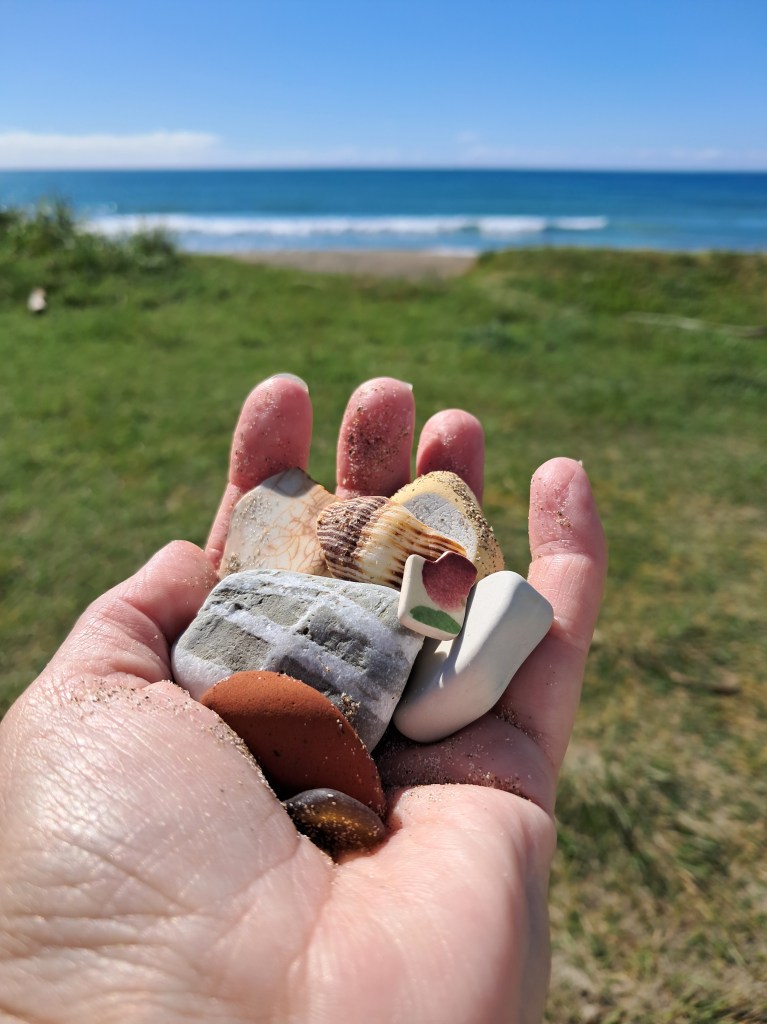
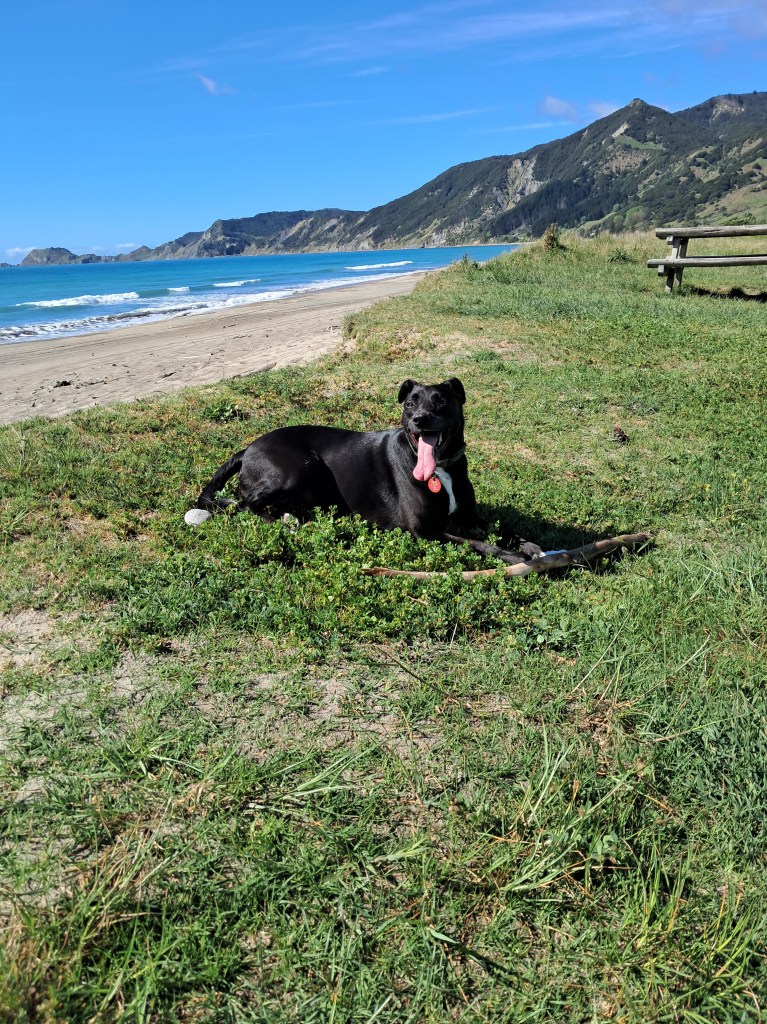
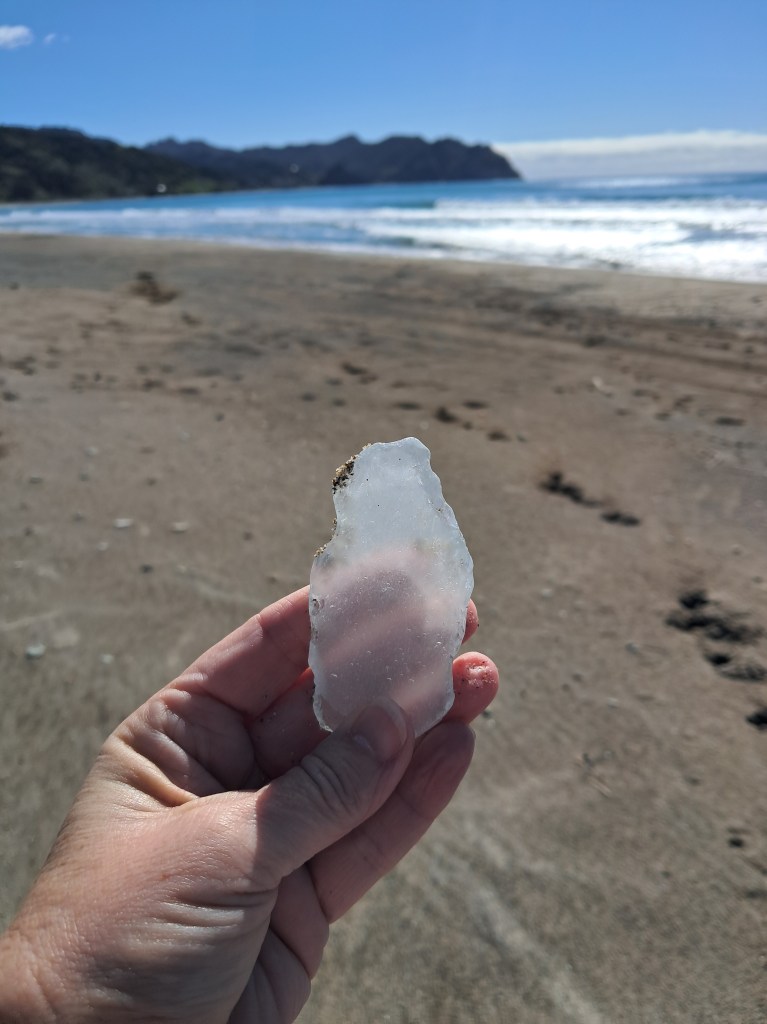
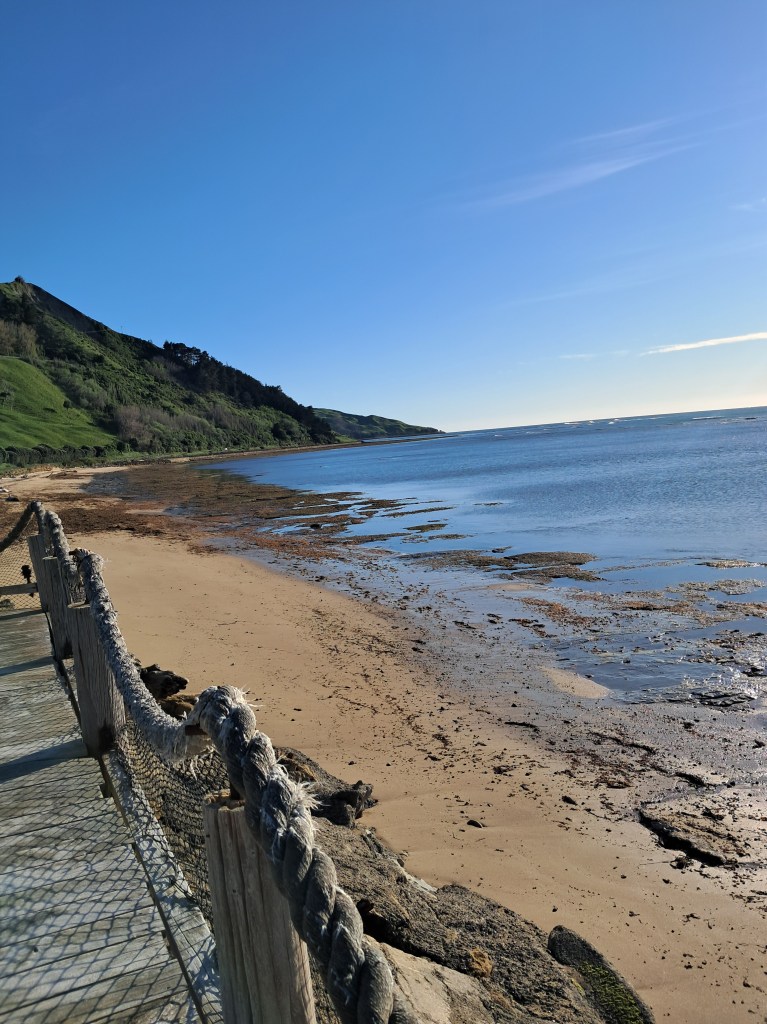
After a bit of walk along the beach finding a few treasures and throwing a stick or two for the dog we carried along state highway 35 (also known as Pie Way 35 for what should now be obvious reasons). This stretch of the highway was a challenging drive, with a great deal of ongoing remedial road works, lots of twists, turns, uneven surfaces and the odd wandering livestock. We came across four very confused calves who had made a break for freedom and then appeared to not know what to do with it once they had it.

The next stop for the day was Tolaga Bay, where, yes, that’s right he bought another pie…but I think he was all pie’d out by this stage as the comments were less enthusiastic then earlier in the day. Did the obligatory stroll down Tolaga Bay wharf, I had a bit of lunch and a coffee and then we were off again, bumping along the highway to Tatapouri Bay Oceanside Campsite.
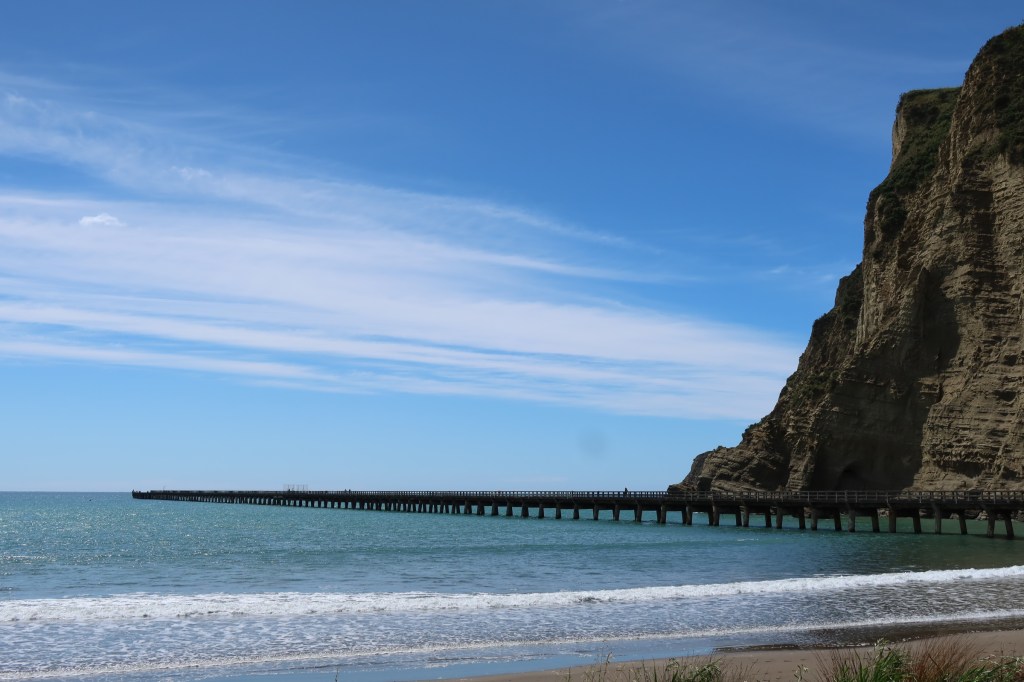
Tolaga bay wharf.

Day five – it was not a great night’s sleep, being beside the highway and so close to Gisborne the number of logging trucks that thundered past the campsite at all hours of the night was a problem, especially as they changed gear going up the hill. Having said that this is lovely campsite but perhaps next time I’d pick a spot further away from the road. But my morning was to greatly improve. Our purpose for stopping here was to join Dive Tatapouri on one of their Reef Tours where you get to do a meet and greet with the local stingray population. We were up early as we needed a low tide; the dog was feed and walked then given her lick mat to keep her occupied whilst we were busy.

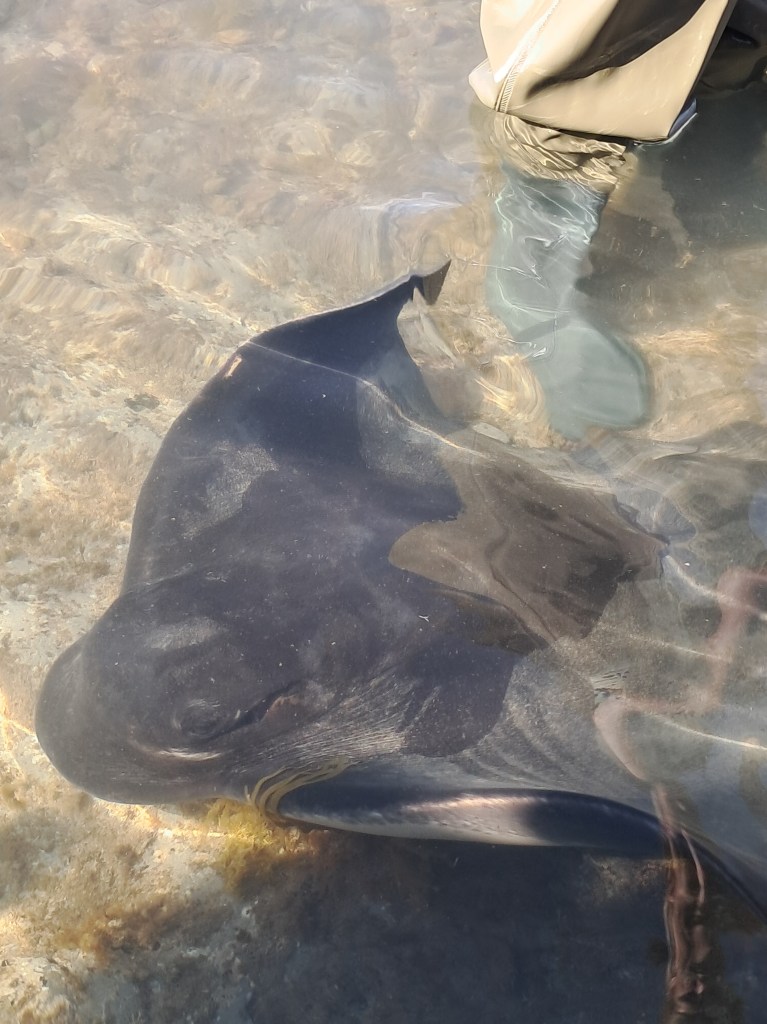
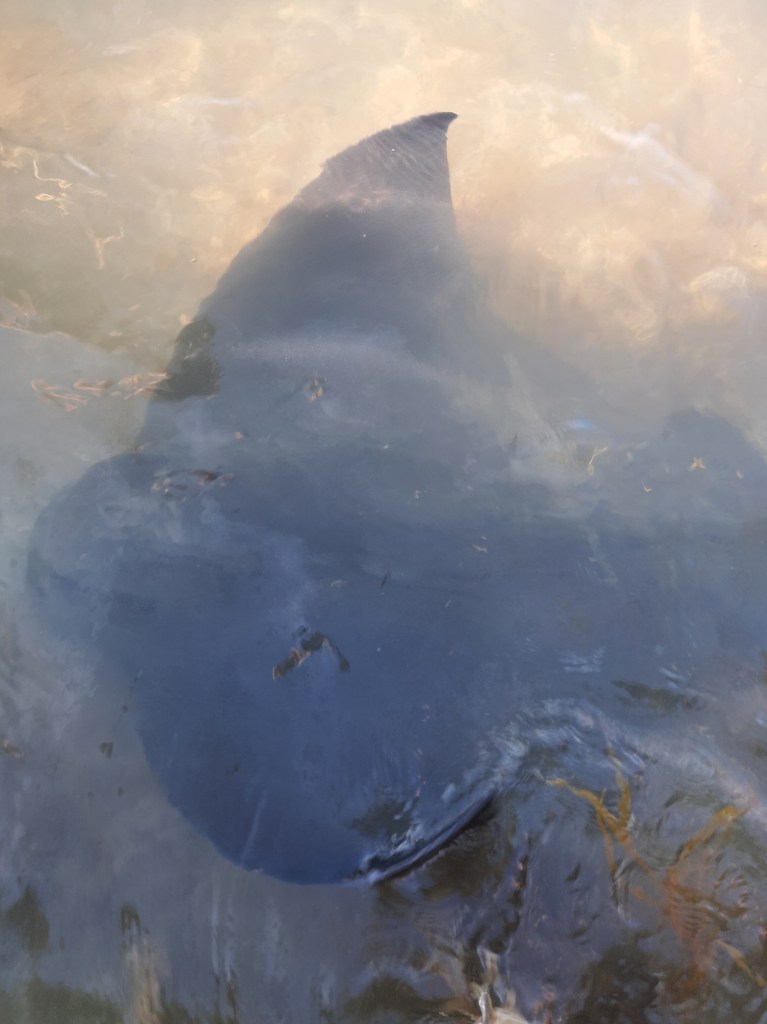
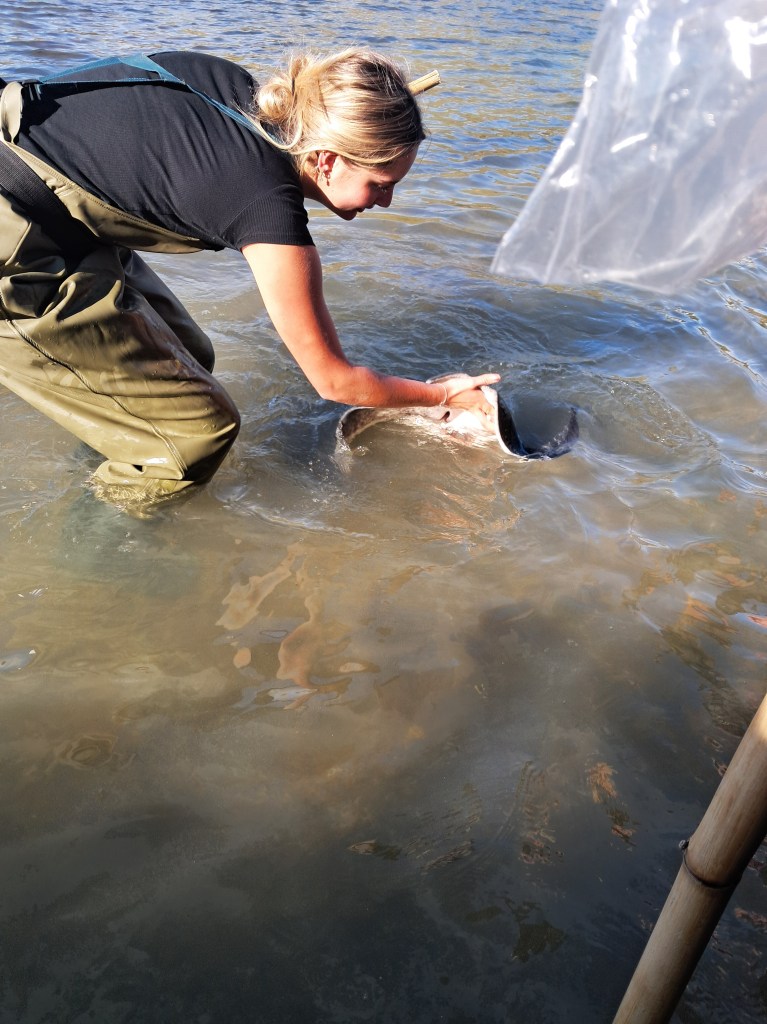
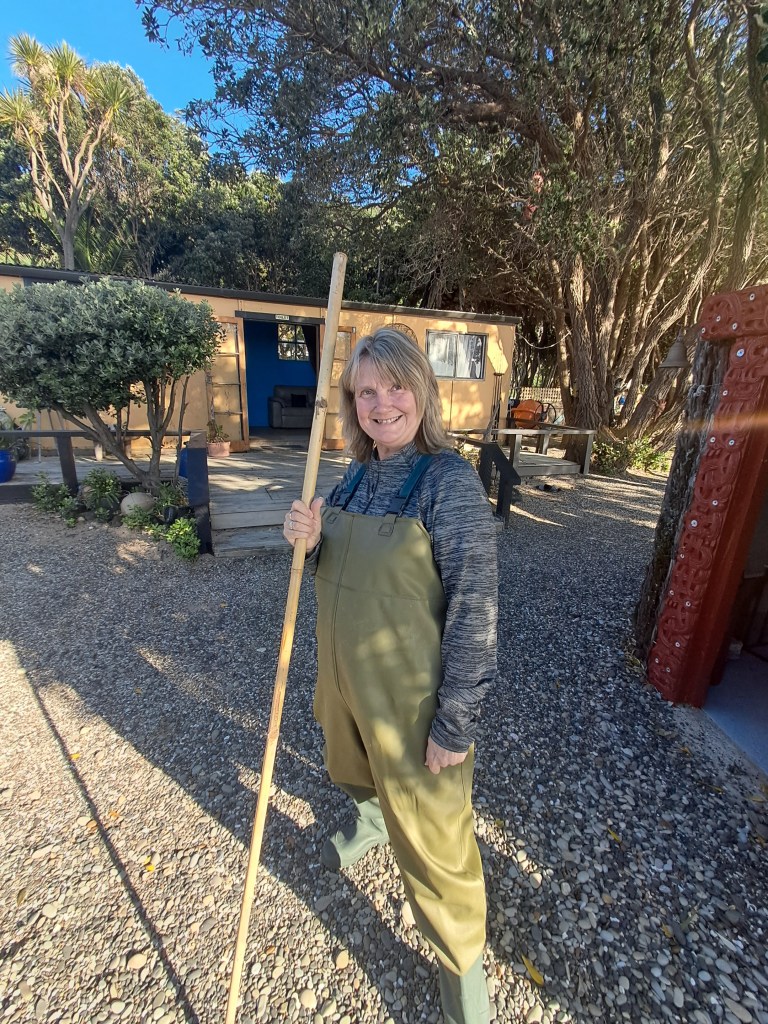
The tour begins with donning some very attractive waders, you’re given a stick to help you walk out over the reef and of course a safety briefing. We are then led across the rocks out to a depth that was about knee high and before you know it there were eagle rays and short tail (named Moana) ray coming over to say hi. They are extremely friendly and reminded me of mischievous puppies, we were allowed to stroke them and give them a wee fishy treat. It was surprising how soft their skin is. The guides were very knowledgeable, explaining how all the rays in the bay were females – the males lived further out to sea with their own territories. I learnt that rays respond to heartbeats and that if you are swimming in the sea, it is more than likely that a ray (especially the eagle rays) will be near by checking you out. Overall, it was fantastic experience and one I would highly recommend.
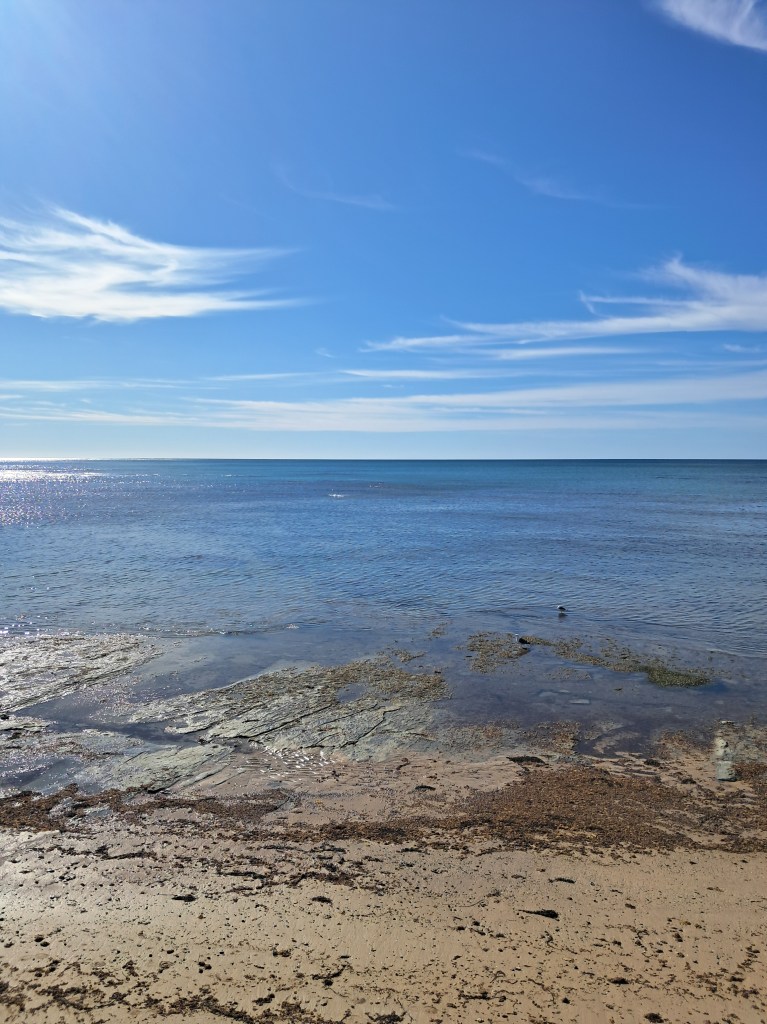
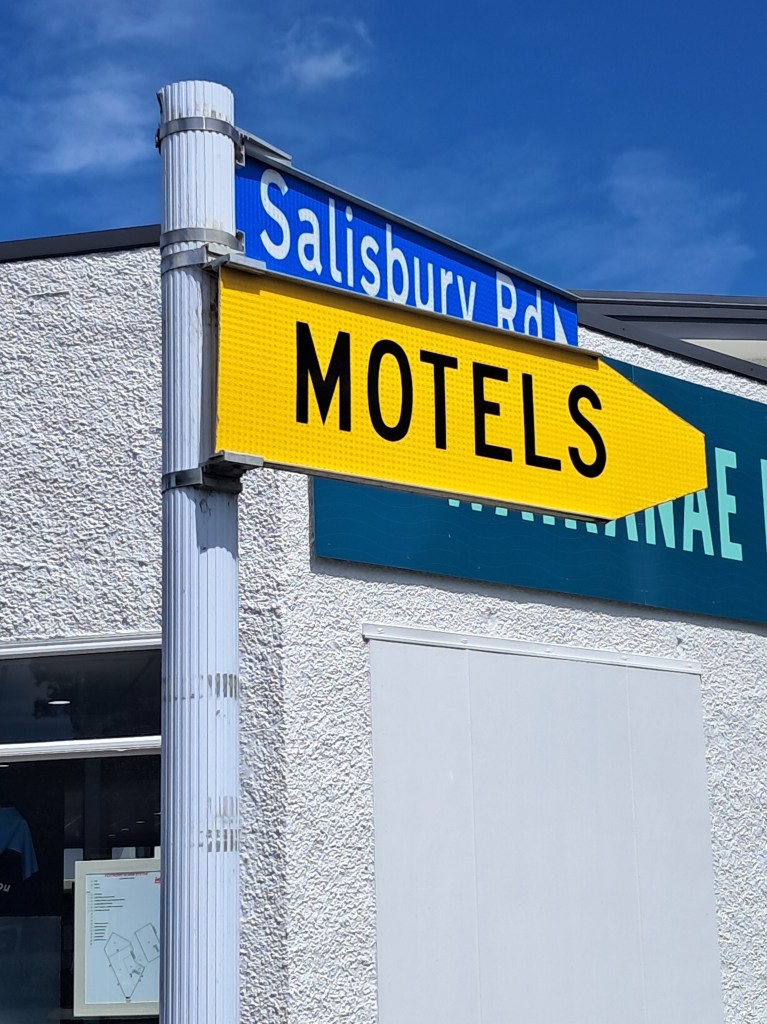
After our exciting morning we drove the short distance to Gisborne, where I paid a quick visit to the Tairawhiti Museum (Tairawhiti is the Māori name for the Gisborne area) and the husband got told off for walking the dog in a no dog park – oops! We then went in search of the ‘i’ site so I could buy some fridge magnets for the collection. Along the way we found another Salisbury road (our road in Auckland) and discovered our number was park – it’s the little things that keep life interesting…That night we parked up in the NZMCA park which was a very well looked after park in a great position across the road from the beach. Yes, there were walks and stick throwing for the dog. I also rescued a bag of small pieces of driftwood. Unfortunately, they were doing a major clean-up of the beach with trucks and diggers removing much of the larger pieces of timber that had washed up on the beach. One of the major issues in the area is when there is flooding etc much of the waste material from the forestry plantations washes down the rivers, onto beaches and out to sea.
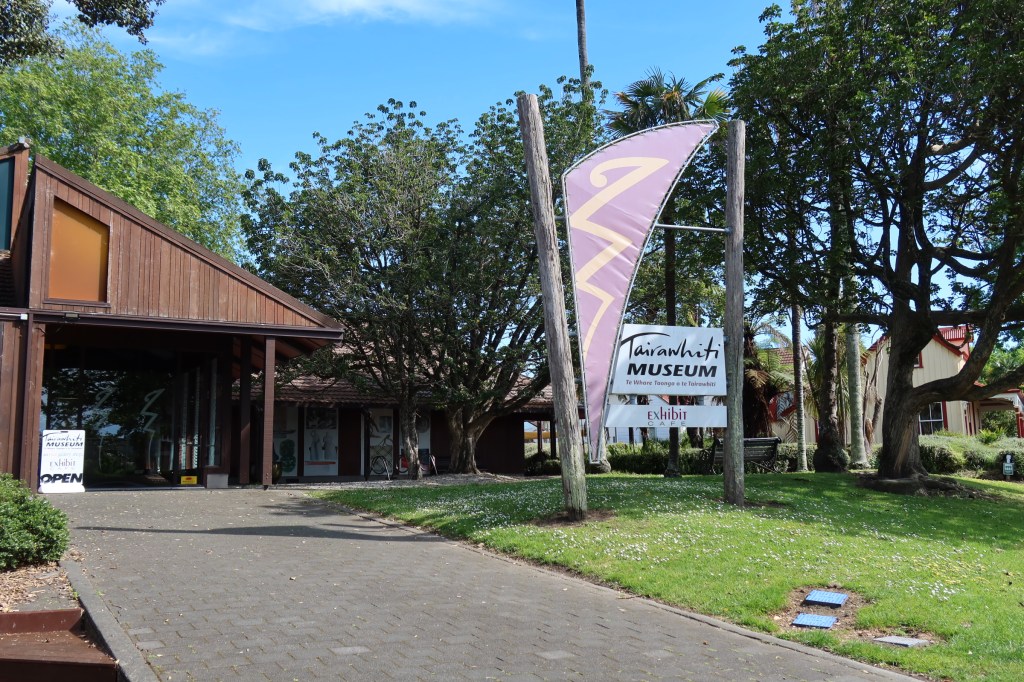
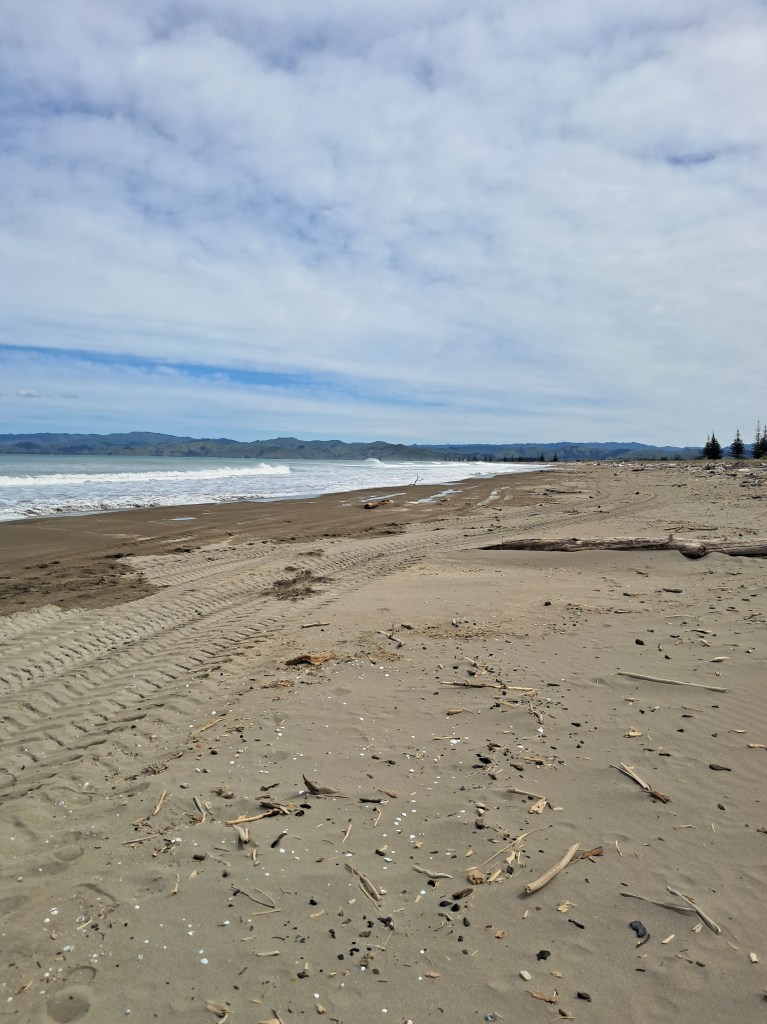
Midway beach, Gisborne.
Well, it had to be done!

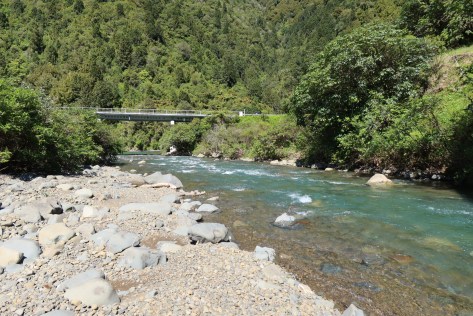
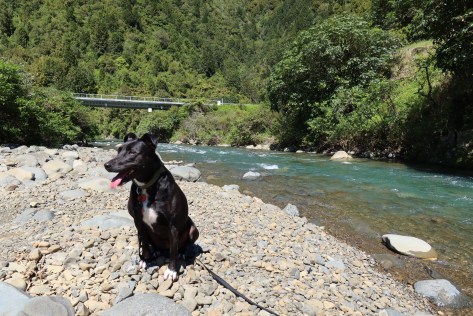
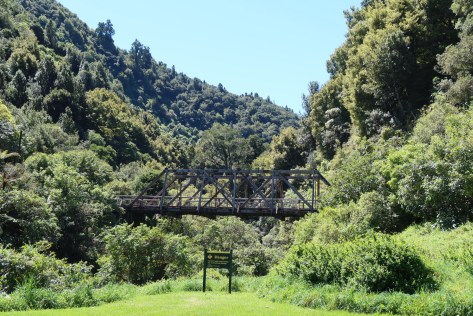
Day six started with the usual walk on the beach and stick throwing for the dog, dodging trucks and a digger going at speed! Our destination today was to be Opotiki via the beautiful (and long and twisty) Waioeka Gorge. Approximately halfway through the gorge is lovely wee campsite with fire pits, beside the river. We stopped here for some lunch and to stretch our legs, talking a loop walk across an old wooden bridge (the Manganuku Bridge) and along the river. The dog was grateful for the sniff stop.
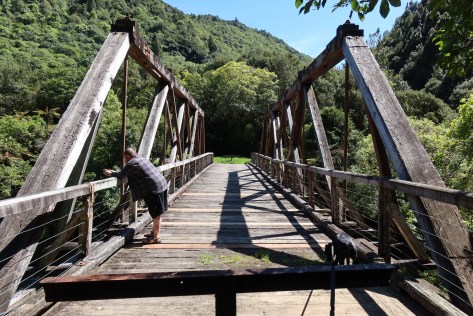
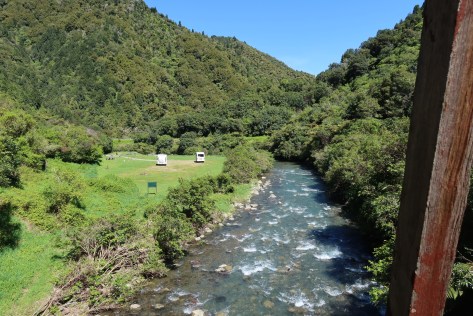
The husband as per usual got to chatting to another motorhomer who had also stopped for break, and they recommended a freedom camp on the other side of Opotiki for our nights stop. It was an excellent recommendation. The freedom camp was at the Te Ahiaua Reserve at the northern end of Waiotahi Beach and even though it was on the main road between Whakatane and Opotiki it was peaceful night’s sleep.
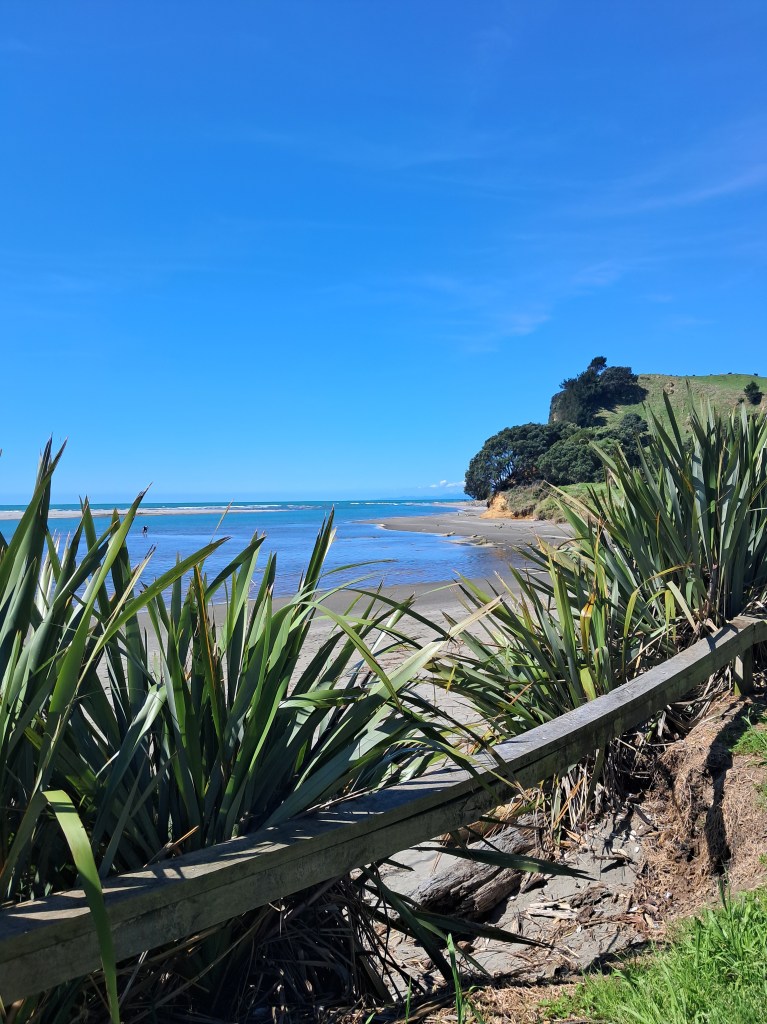
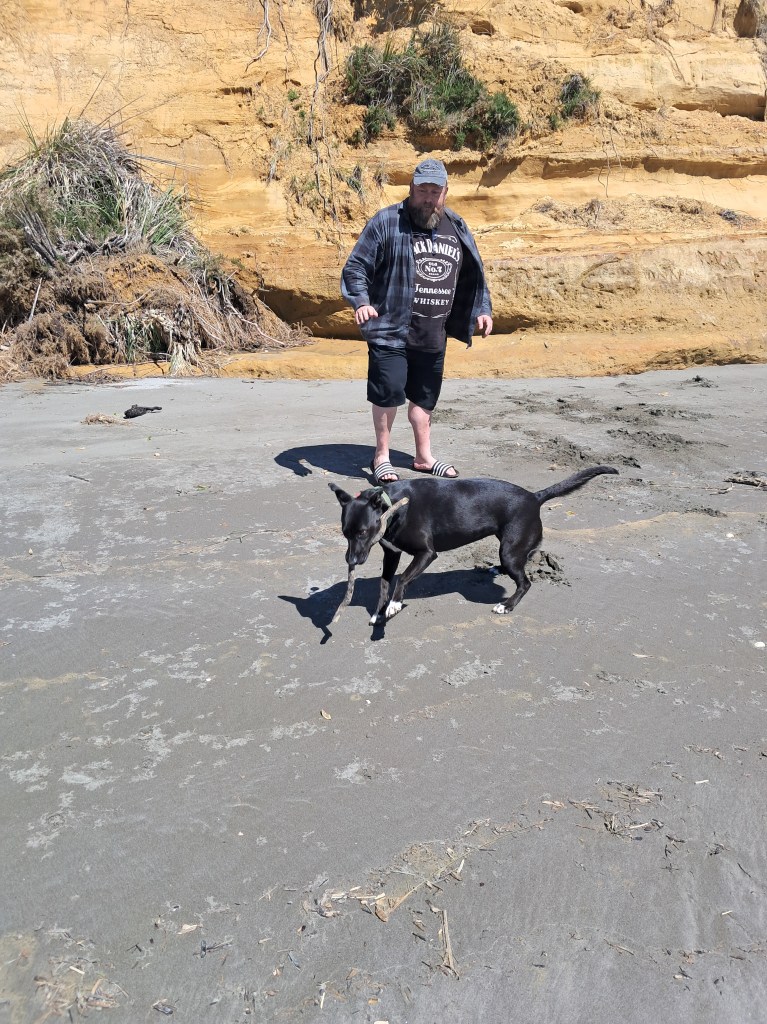
Another beach, another stick!

The next day we meandered our way to Rotorua where we did the usual and went for a walk in the redwoods, the dog met some well-mannered pooches, sniffed out a tree with a possum in it and generally had a ball. We had intended to stay the night at the Lakeview Golf Course, but a lack of room had us moving on and we found ourselves at the Horahora Domain on Lake Karapiro – a freedom camp we have stayed at before. It was busy but once the jet skiers had gone home for the day all was quiet.

Day seven saw us head for home feeling grateful that we could have this time to explore a small part of our country.
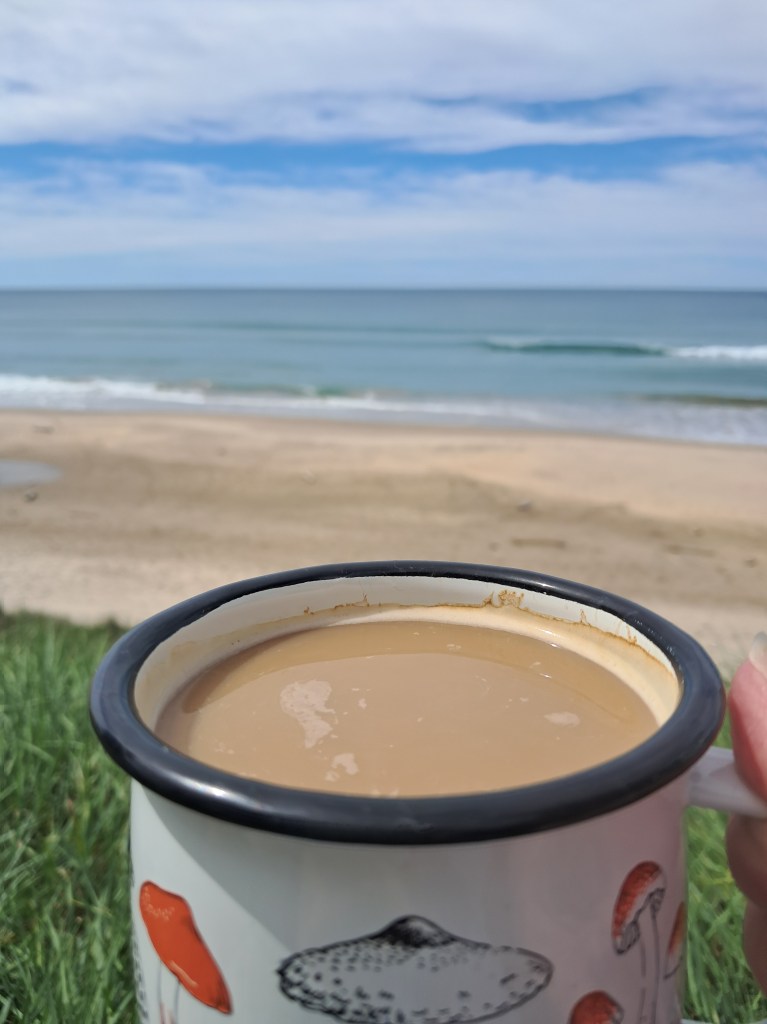
Cheers!

Discovering Aotearoa’s Rich Archaeological Heritage

A brief foray into what archaeology looks like in Aotearoa New Zealand.

The average kiwi, when questioned about archaeology in Aotearoa New Zealand will more often than not shrug their shoulders, mumble about pā and goldmines and then go on to say that surely archaeology is not a thing here? (something I have discussed in another blog here) After all, it’s not like in Europe or Egypt, is it?

So, lets break that down…

First, archaeology as a subject is defined as the study of the human past, where human modified/made objects and sites are studied in order to better understand our past. Aotearoa New Zealand has a human past and thus, yes there is archaeology to be studied. Interestingly, the country’s relatively short human past has meant that it is in a unique position to better understand the short term and long term effects of environmental changes. Not only how they have changed but also what factors have contributed to this are important questions when faced with an uncertain future. Such studies are often conducted using archaeological data sets. Excavations on Ōtata, an island in the Hauraki Gulf, has produced a significant data set allowing for comparisons with present day data. Read more about this here.

Excavations underway on Ōtata in 2021

Archaeology as a subject incorporates a wide variety of disciplines from math’s, biology, physics, chemistry, art, history, geology and geography and much more. Because of this it is dynamic discipline, always changing and adjusting ideas as new information or techniques come to light.

The fact that archaeology here in Aotearoa New Zealand has a dedicated association (the New Zealand Archaeological Association), as well as laws protecting archaeological sites and taonga; in addition to a government agency (Heritage New Zealand Pouhere Taonga) and numerous archaeological contractors would all suggest that archaeology is very much present in our small corner of the world. As mentioned in a previous blog there are over seventy thousand archaeological sites recorded here – and these are just the ones we know of…

The New Zealand Archaeological Association

Heritage New Zealand Pouhere Taonga

Second, our archaeology may not be about romantic, mystical ruins or great depths of time, but it is all around us if you know where look. In its most basic form (because this is a blog and not a textbook) archaeology can be divided into two columns – sites and artefacts. It is perhaps important to note here that archaeology, history and cultural heritage are not separate subjects but are deeply intertwined, especially so here in New Zealand.

The first humans to arrive here were the Polynesian ancestors of the Māori, this is not the place to discuss their arrival except to say it is generally agreed that it happened around 800 years ago. Some of the earliest radiocarbon dates are from around the mid to late 1200s but that’s not to say people weren’t here before that, only that this is currently the earliest dates we have. At this point I should mention that there is no proven evidence for non-polynesian settlement of Aotearoa prior to their arrival.

In 1642 Abel Tasman shined a brief light on the country and much later James Cook’s survey of New Zealand (1769) shone an even brighter light – the British (and the French and a few others) were not averse to new opportunities. The first to take advantage of this new land were the sealers and whalers and by the early 1800s the first settlers had arrived, usually missionaries with notions of spreading the word of God. Farmers, merchants, miners and anyone with an eye to making their fortune soon followed. All of whom left their mark archaeologically.

As mentioned above, the archaeology of Aotearoa can be divided into either sites or artefacts. A site is any place that has been used or modified by humans for any reason. An artefact can be defined on the same principles – an object that has been used, modified or created by humans. In this blog I will be touching upon some of the sites which can be found in the landscape of Aotearoa New Zealand (the subject of artefacts is perhaps too large for a simple blog).

Lets begin in ‘prehistory’ before the arrival of the Europeans…

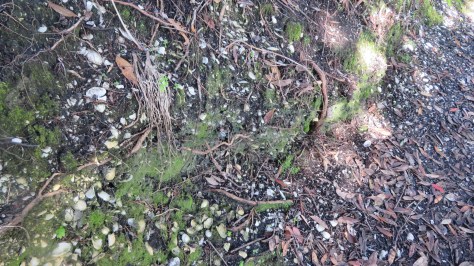
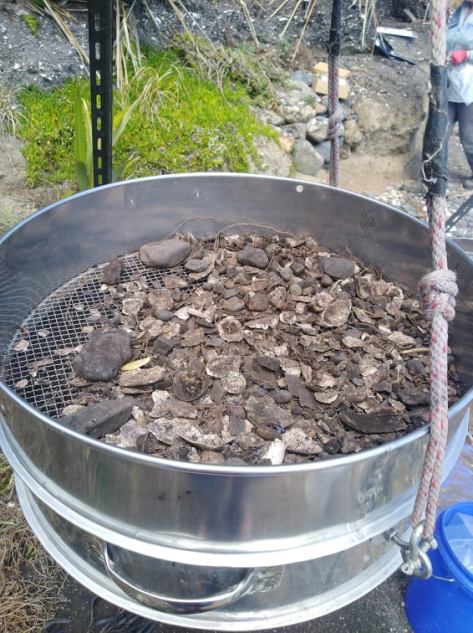
Middens – perhaps one of the most common archaeological sites known around the country, these sites present themselves as piles of broken shells and relate to the māori settlement of an area. Middens are useful to archaeologists as they can tell us a great deal of what resources were utilised, what the environment was like and they can provide material for dating (bird bones and or charcoal). They can be an archaeological site on its own or part of a larger archaeological site such as a pā.

A shell midden eroding out of bank in the Coromandel.
Excavated midden being sieved.

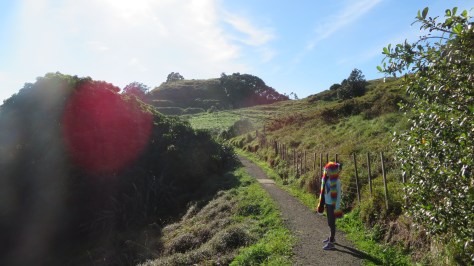
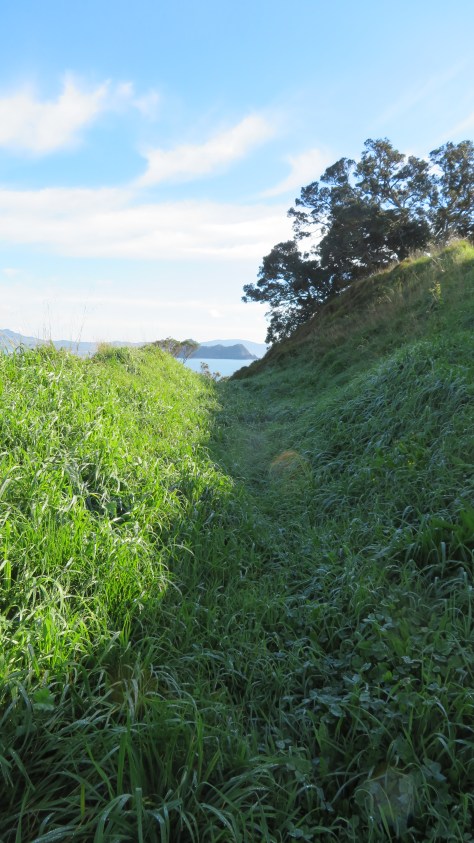
Pā – these are essentially defended settlements, most are found on high ground but there are examples of pā being found on low ground. The necessary element is for the site to have banks, ditches and evidence of palisading. Some pā can be complex sites with large numbers of banks and ditches covering many hectares others are much simpler. It is generally assumed that pā were used as places to retreat to in time of conflict and whilst this is a part of their story, it is not the whole story. The history and purpose of pā depends on the where and when. Each site needs to be considered within the wider physical and societal landscape.

Kainga – unlike pā these are ‘undefended’ settlements or places. They can be either permenant or temporary, (the latter also known as ‘camps’) and can include a wide range of activities, not just places where people lived. Within this category a range of individual features might be found from postholes for wooden structures (houses, storage, fences), cooking areas, storage pits, middens and open spaces.

Gardens – horticulture was an important part of the economy for māori and continued to be so beyond the arrival of the Europeans. Evidence on the ground for gardens can be seen in clearance of stones and rocks from an area, often creating low stone walls. In the Auckland area the best example of this can be seen at Ōtuatua Stonefields in Mangere.

Rock Art – almost 90% of known rock art is found in the South Island, it can drawn (using charcoal or red pigment known as kōkōwai), painted, carved, cut or scraped from rock. The designs vary but can include people, birds, dogs, waka, geometric designs and occasional mythical creatures such as taniwha. The Te Ana Rock Art centre near Timaru conducts tours of the nearby rock shelters to view the rock art.

Burials and urupā – Māori buried people of high status close to settlements, then disinterred the bones and placed them in secret locations. Burial sites are tapu (sacred) and should not be disturbed. These practices changed in the late 19th century, when European-style urupā or cemeteries developed near marae. Archaeologists often refer to kōiwi and these are when human bones are found in an archaeological context either during excavation or accidentally (ie eroding from cliff or dune).       

The arrival of Europeans created a whole range of archaeological sites, broadly speaking they can be divided into settlements, industry, roads and infrastucture, dump/midden sites and conflict.

Settlements – the name says it all, these are places were people lived and they can be large as a town or small as a single farmstead. Depending on size settlement sites will invariably include a number of other features which can be classed as sites, such as wells, drains, out buildings, churches, schools, hospitals, shops, inns, roads, gardens and much more. Many of these sites are still standing and usually come under a heading of ‘buildings archaeology’ or ‘heritage archaeology’. After the earthquakes of 2010/11 in Christchurch a vast amount of archaeological work was done ahead of the rebuild. Out of this The Christchurch Archaeology Project was born where the information and stories that emerged of Christchurch’s past could be made available to everyone.

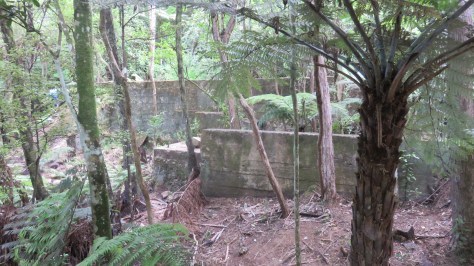
Above shows the site of the Te Rongokaupō village on the Old Coach Road, Ohakune. A once thriving settlement now only humps and bumps in the landscape.

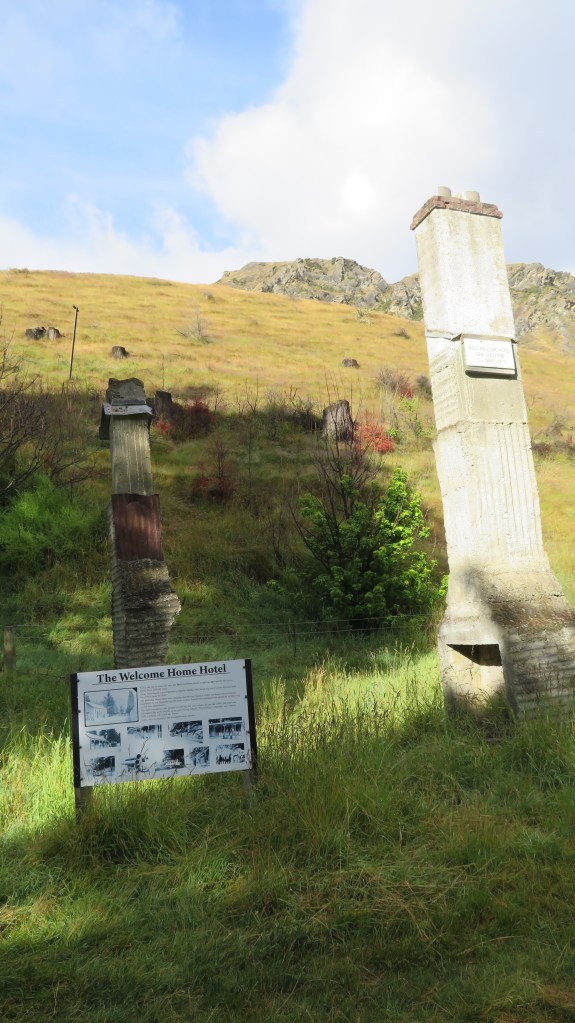
All that remains of the Welcome Home Inn on the road to Skippers Ridge and beyond, near Queenstown.

Industry – these are sites which include places that were worked by people to gain resources of some kind. Whaling/sealing stations are some of the earliest sites in this category. Mineral extractions left a range of site types from mines shafts, pumping stations, sluice gullies, out buildings, ore processing plants and more. Industrial sites such as these would often be associated with a nearby settlement which had evolved from a shanty town to a fully fledged and ‘proper’ town. In addition, other forms of industry such as milling (timber, paper and flour), brick kilns, lime kilns, gumdigging, breweries and iron works to name a few leave their mark on the landscape.

Roads and infrastructure – in the early days of Aotearoa New Zealand, the easiest way to travel was via water (this also goes for the period before European arrival). Wharves, jettys and quays are all evidence of this, looking at the placenames of early European settlements near the coast or rivers and the word ‘landing’ can often be found indicating a site where boats and the like would ‘land’ people and products.

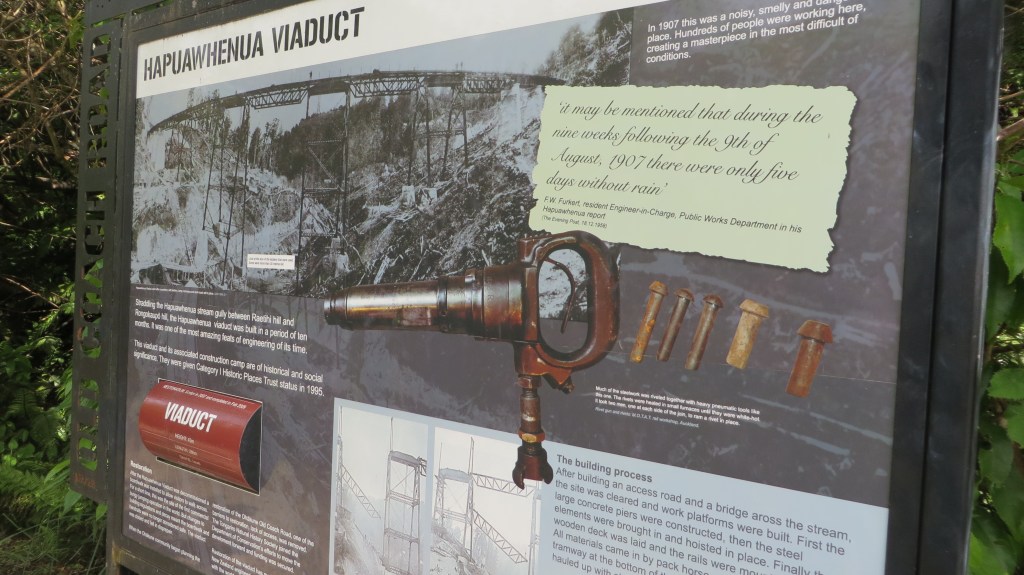
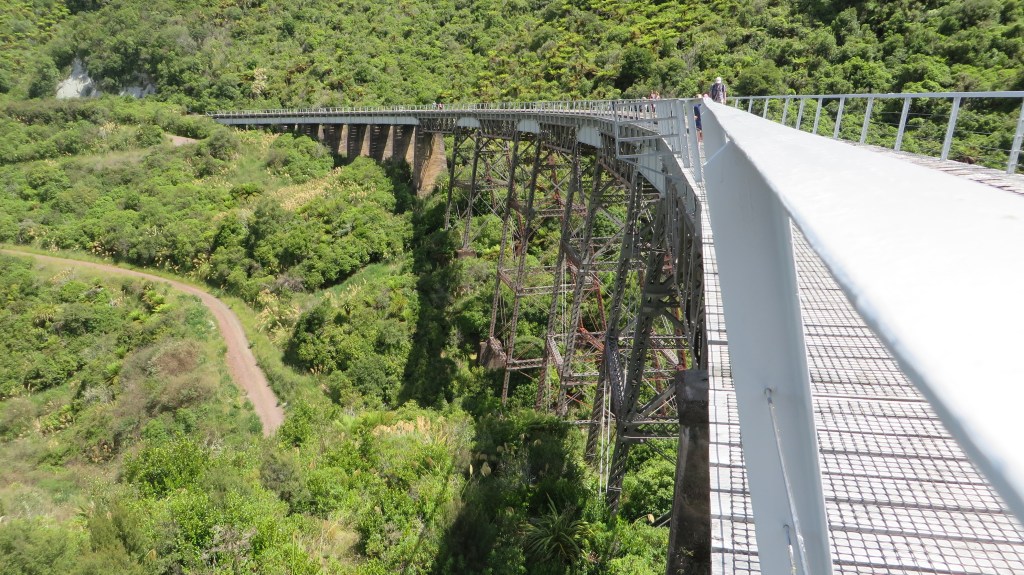
As the population grew so to did the need for actual roads, the name ‘old coach road’ is an obvious reference to an old road no longer in use. Roads, tracks and bridges all form the story of how people moved about the landscape. The railway made a late appearance and where no longer in use its route and any associated buildings add to the archaeological record.

Dump/midden sites – these are always found associated with a settlement or industrial site of some description. Often they are the only indicator that there was a settlement there at all (see my post on Fitzpatrick Bay here).

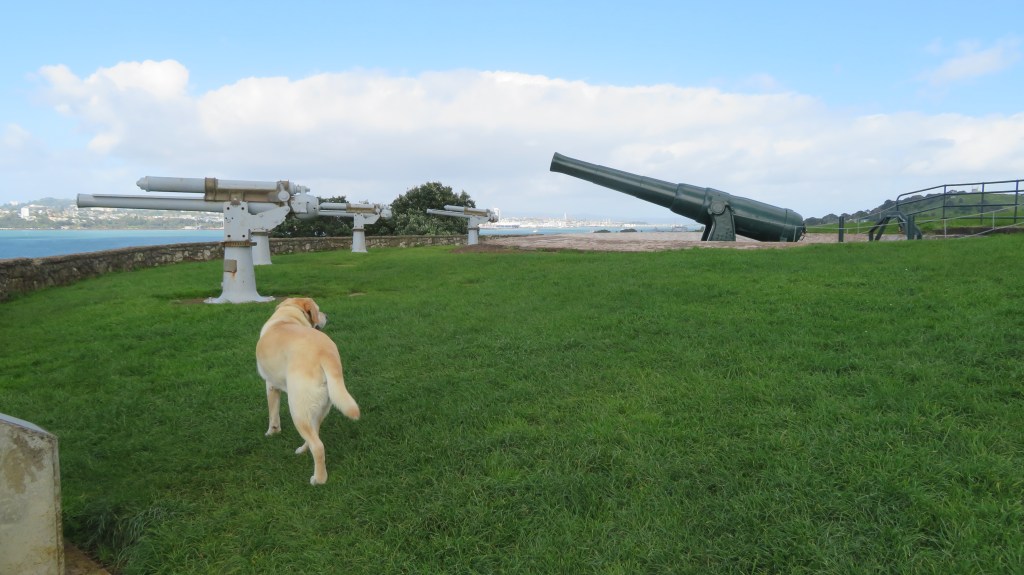
Conflict – here we can consider sites that relate to the various conflicts that have affected New Zealand over the years. In the 1800s wars with māori resulted in changes to pā construction (Ruapekapeka, Northland) and the creation of redoubts by European militia (Queen’s Redoubt, Waikato). In the early to mid 1900s there were various threats (perceived or otherwise) and a range of forts and coastal defences were constructed as part of this.

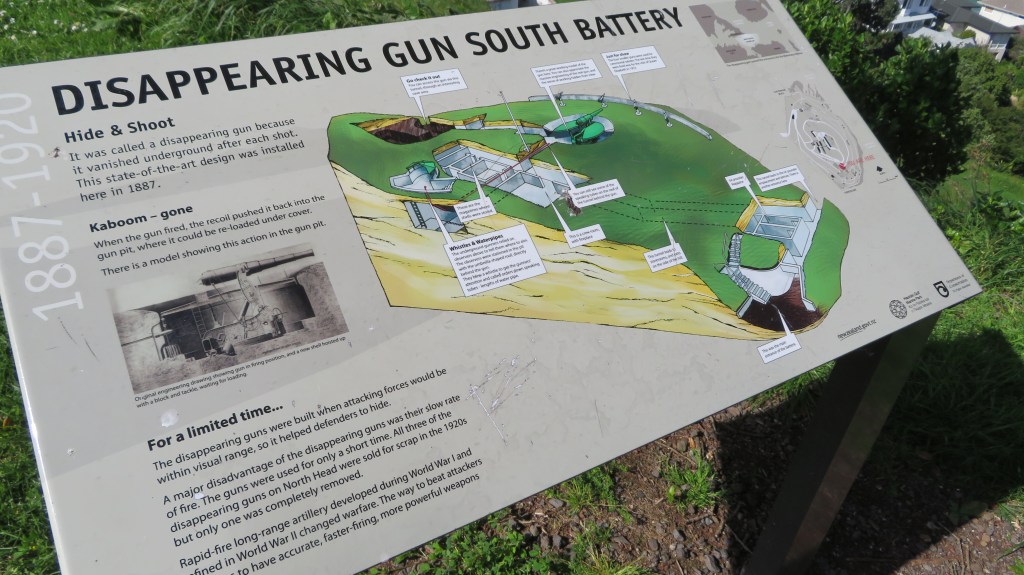
The above photos were taken on North Head, Devonport, Auckland – for more on this site read here.

That brings us to the end of our wee romp through some of the archaeological sites you might find in Aotearoa New Zealand. I hope you have enjoyed this read, feel free to check out some of my other posts.

Further Reading

Davidson J ‘The Prehistory of New Zealand’ (1984) – although over forty years old it is still a useful reference book if you can get hold of a copy.

Wilson J (ed) ‘From the Beginning’ (1987) another oldie but a goodie

Smith I ‘Pākehā Settlements in a Māori World – New Zealand Archaeology 1769-1860’ (2019)

King M ‘The Penguin History of New Zealand’ (2003) For serious history buffs…

Beyond Stonehenge: Where To Find Lesser-Known Prehistoric Sites in England

Stonehenge may be the most famous, but fascinating prehistoric monuments and sites can be found across England.

Beyond Stonehenge: Where To Find Lesser-Known Prehistoric Sites in England

Exploring Cornwall: A Journey Through Grief and Beauty

It has been almost a year since our last journey to Cornwall and so it seems appropriate to tell you all a bit about that time.

Normally any trip to Cornwall is one of expectation, hope and joy but on this occasion, it was a time of sadness. On the day we arrived in Penzance, my mother-in-law passed away. We were half an hour away from seeing her when we got the call…

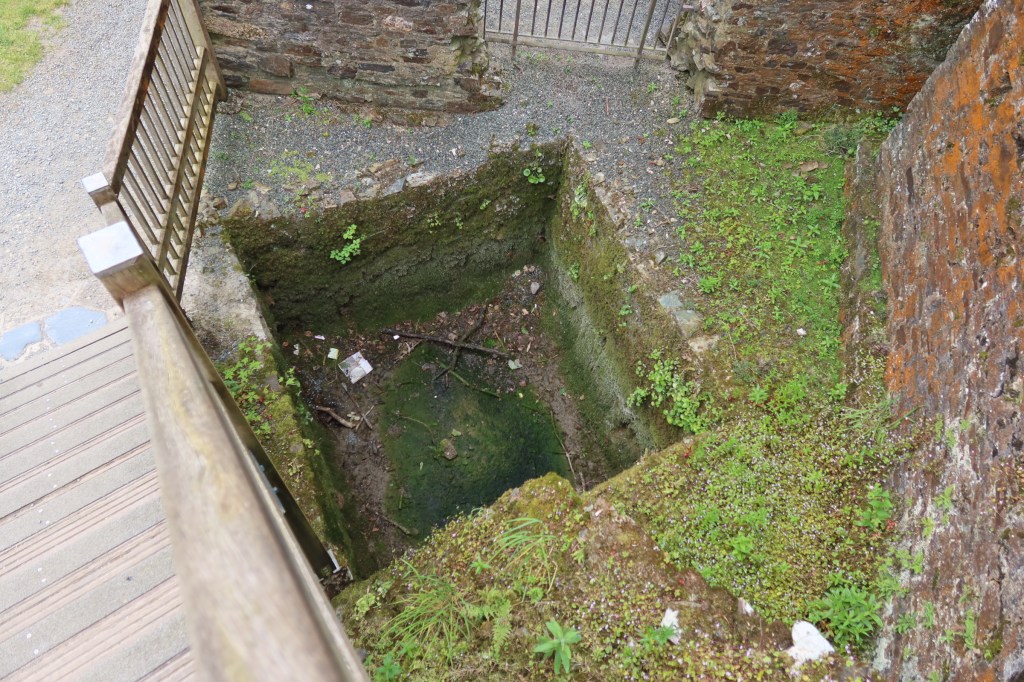
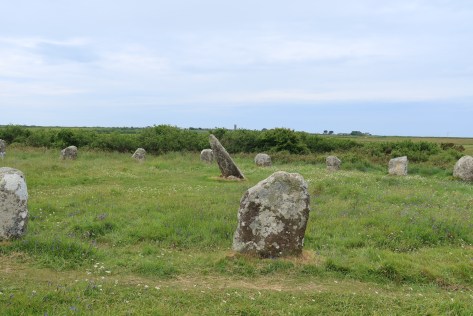
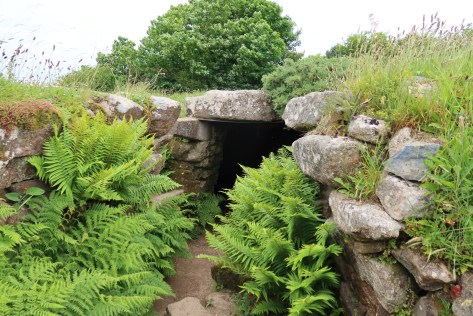
It was not an easy time but we did find moments to distract us, Cornwall, after all is a beautiful county filled with fascinating places. There were beach walks, pasty’s, drives down winding lanes, pub lunches, moors and visits to ancient places. Below is just a few of the places we visited in our down time between packing up a life well lived and saying goodbye. We knew it would be a long time before we came back and so we made the most of the time we had.

Getting fresh air and exercise became a part of our daily routine, early mornings sorting the house, followed by appointments with solicitors or funeral directors and then a good walk in ‘the nature’ to soothe the emotions. Cornwall is not short of a good walk. Below are a few photos from these walks.

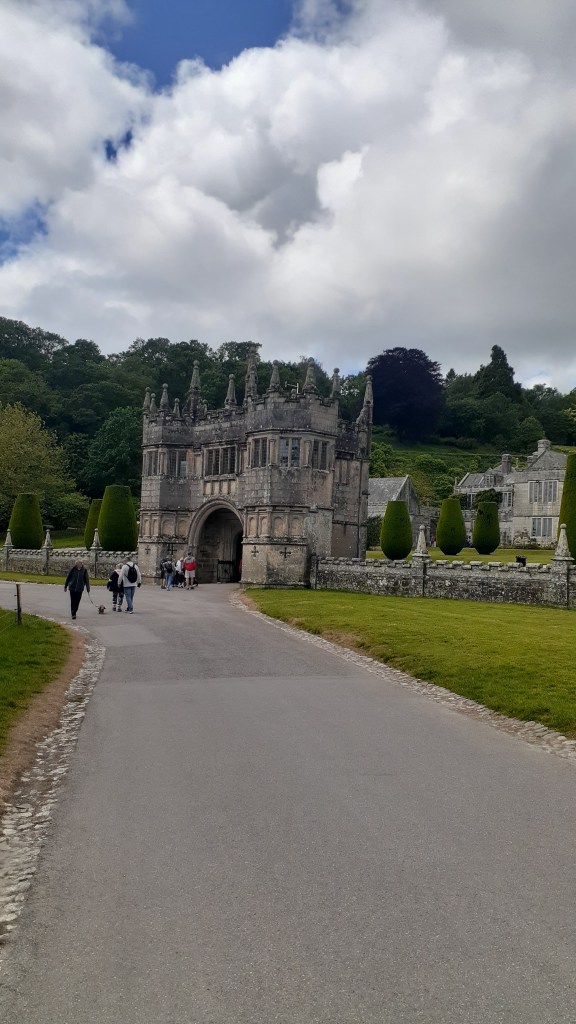
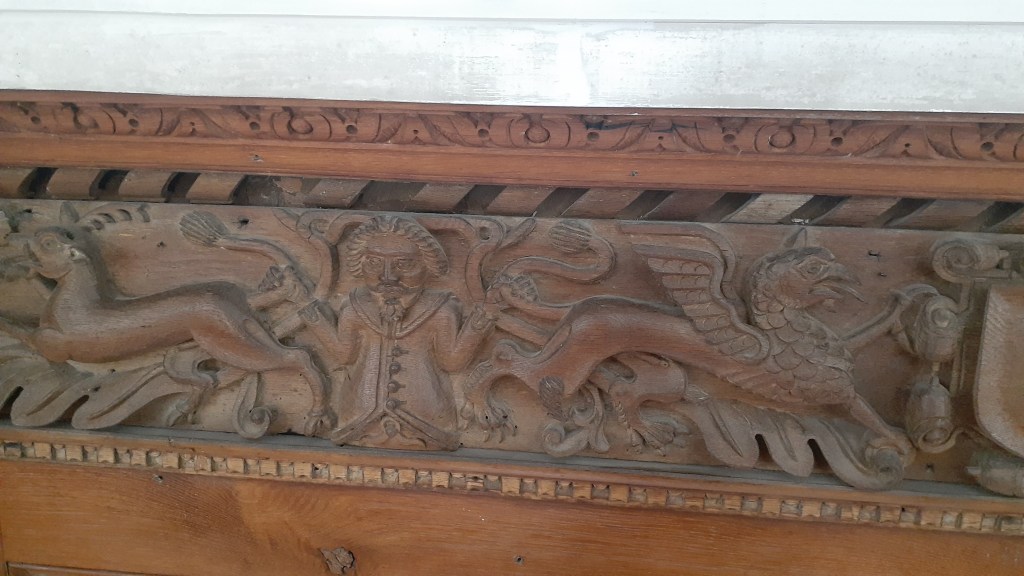
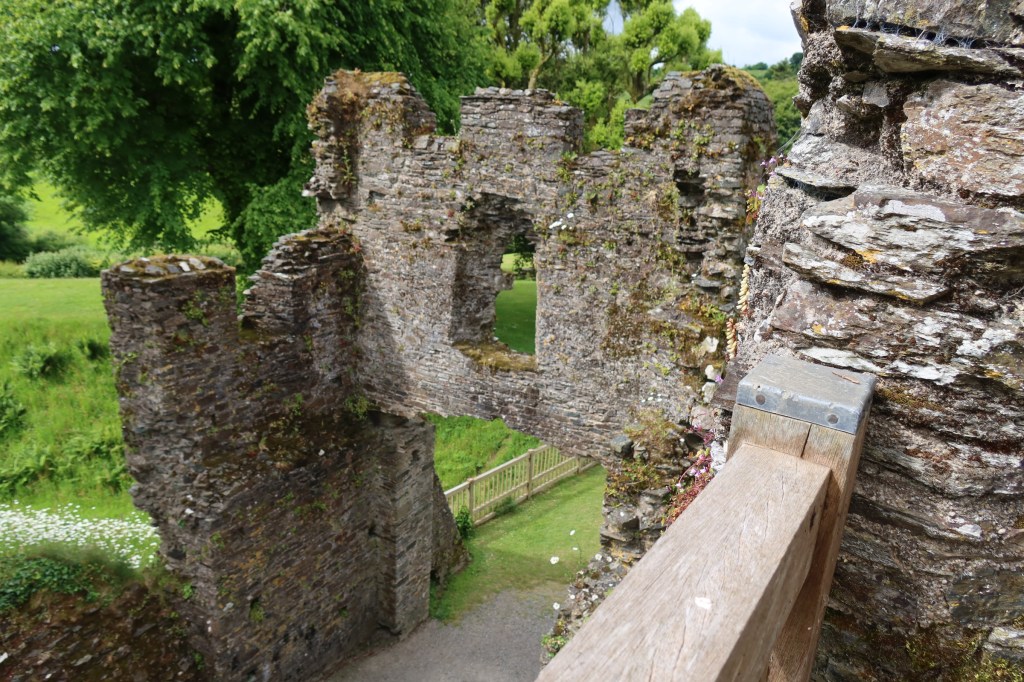
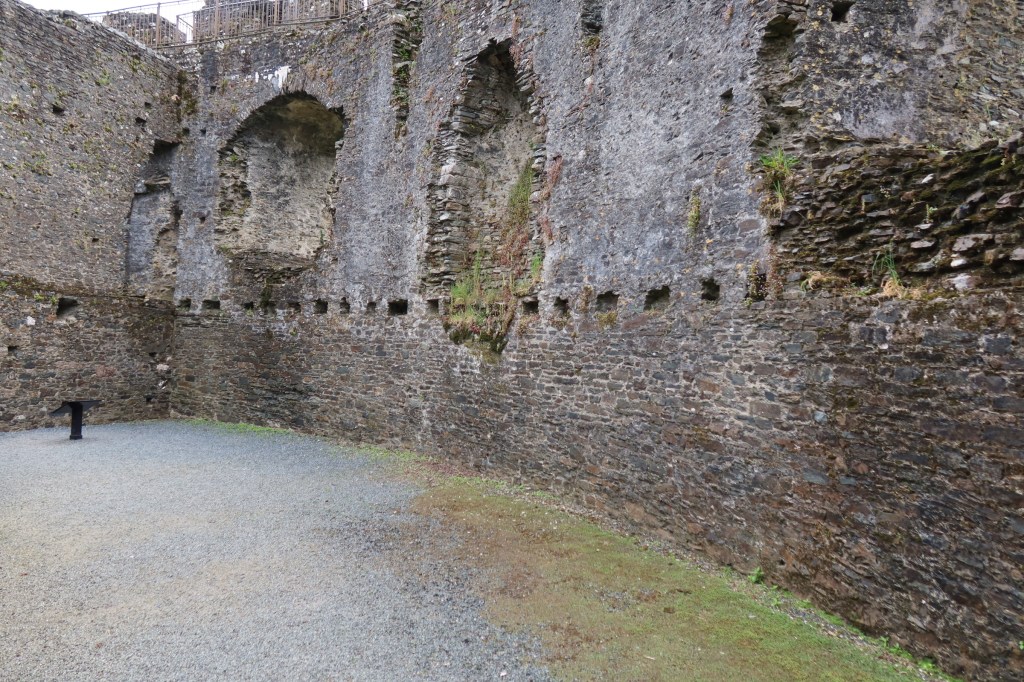
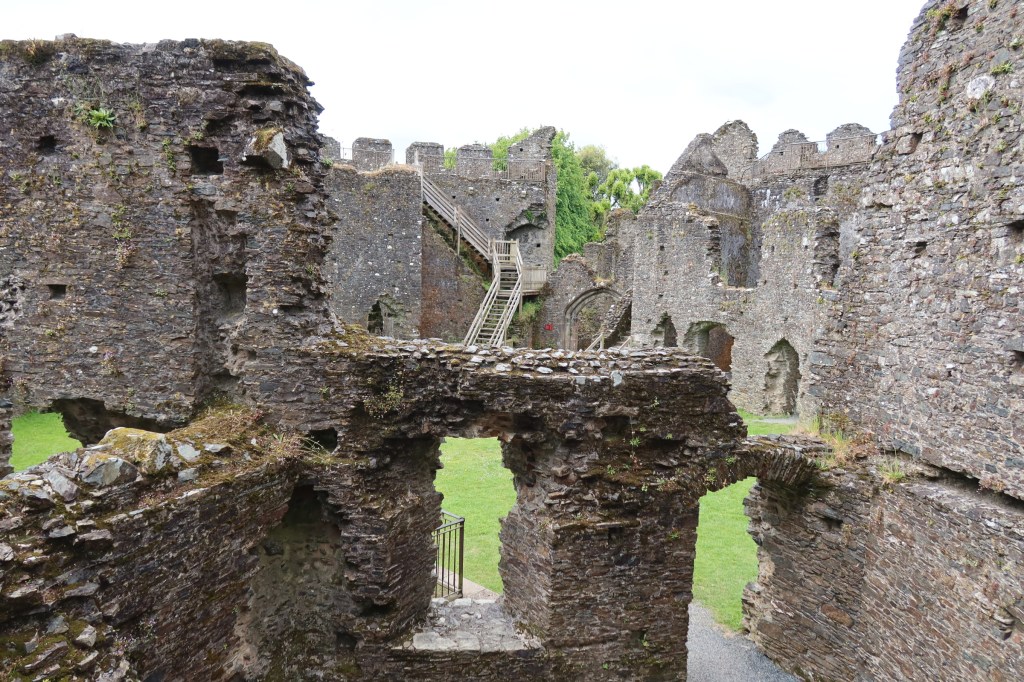
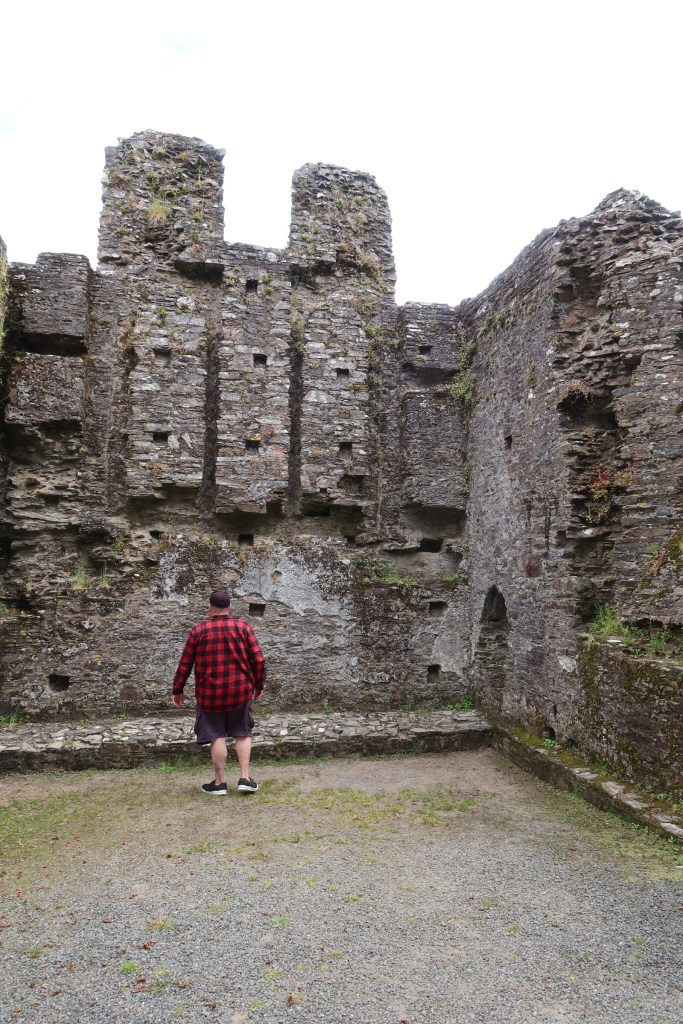
There were some days when we had more time on our hands and on these days we ventured a little further afield. As members of Heritage New Zealand we are allowed to visit both National Trust and English Heritage sites free of charge – Lanhydrock, Godolphin House, Restormel Castle. Tintagel and the gardens at St Michael’s Mount were all on the list.

The Gardens at St Michael’s Mount

Why just the gardens? We had visited the house on several other occasions and given the time of year and how busy it was we thought a good nosey around the gardens – which are not always open – would be nice on a sunny day.

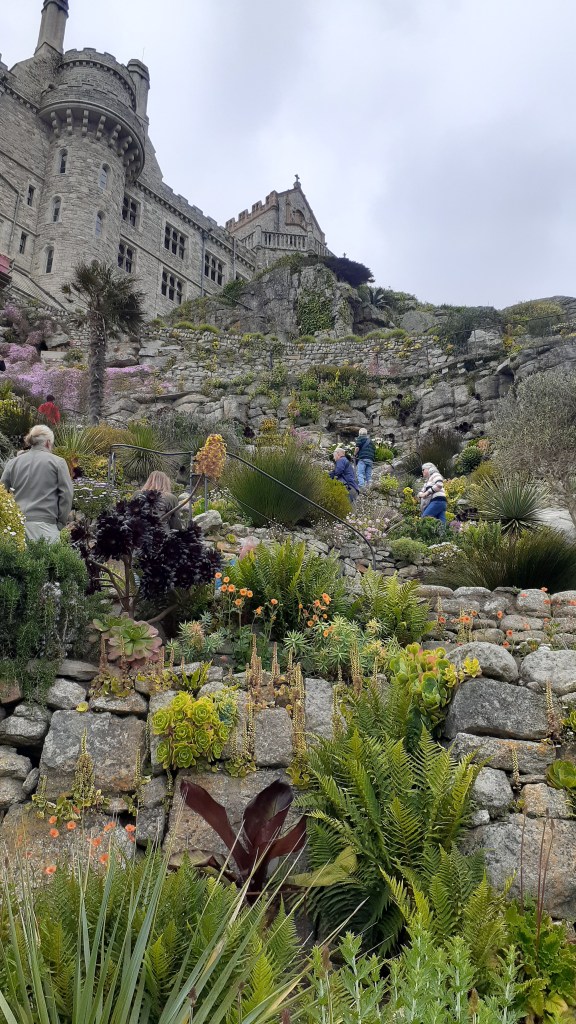
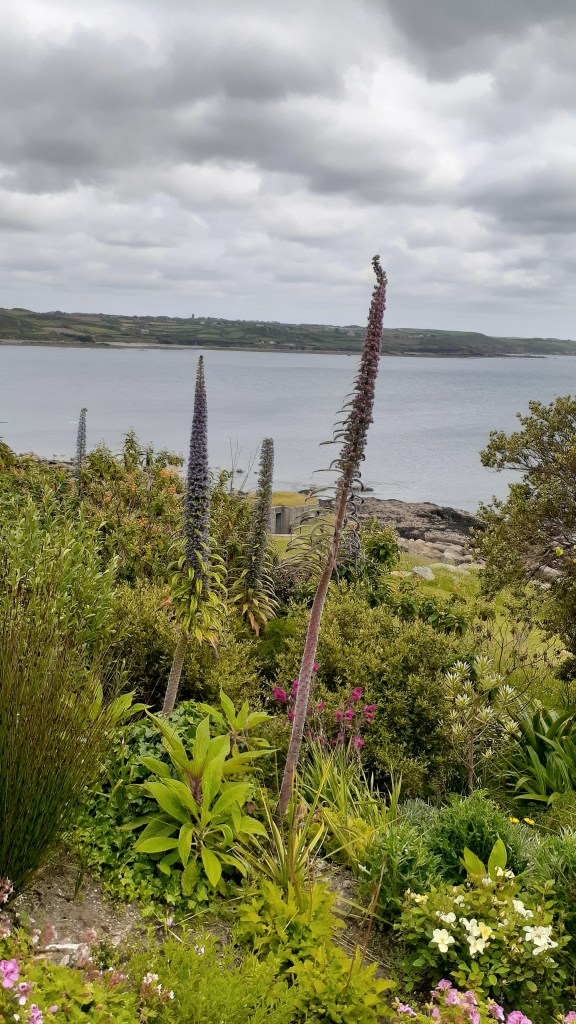
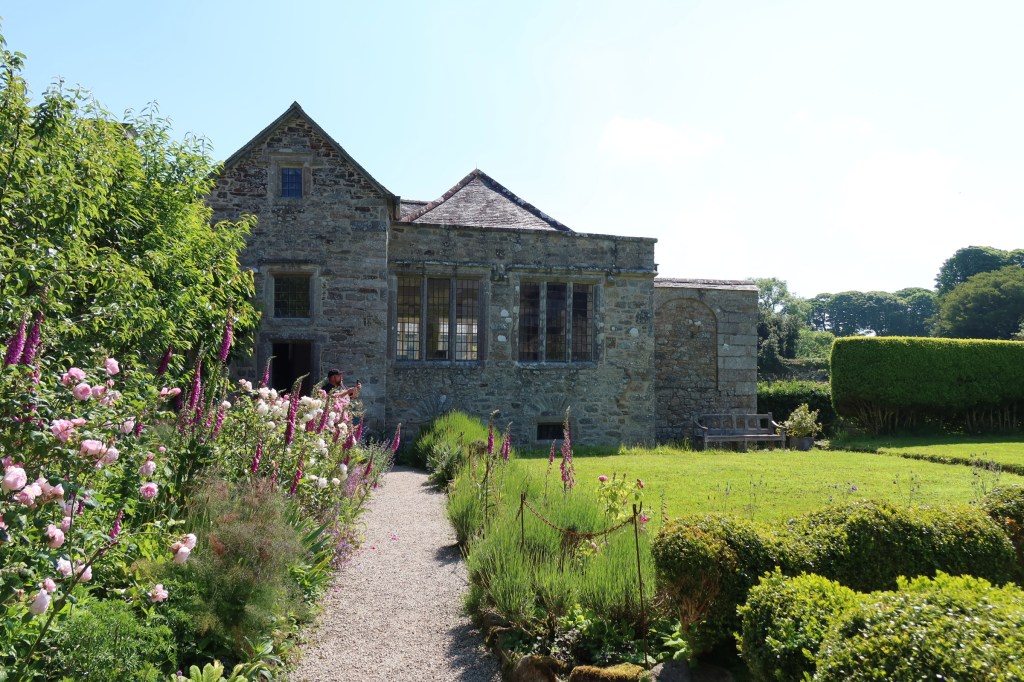
The gardens are situated on the lower terraces of the mount facing towards the Lizard Peninsula. They were first designed in 1878 for Sir John St Aubyn (later the first Lord St Levan). This part of the island has a microclimate and is able to grow a number of plants you would not expect.

The following are just a few photos of the gardens.

Godolphin House

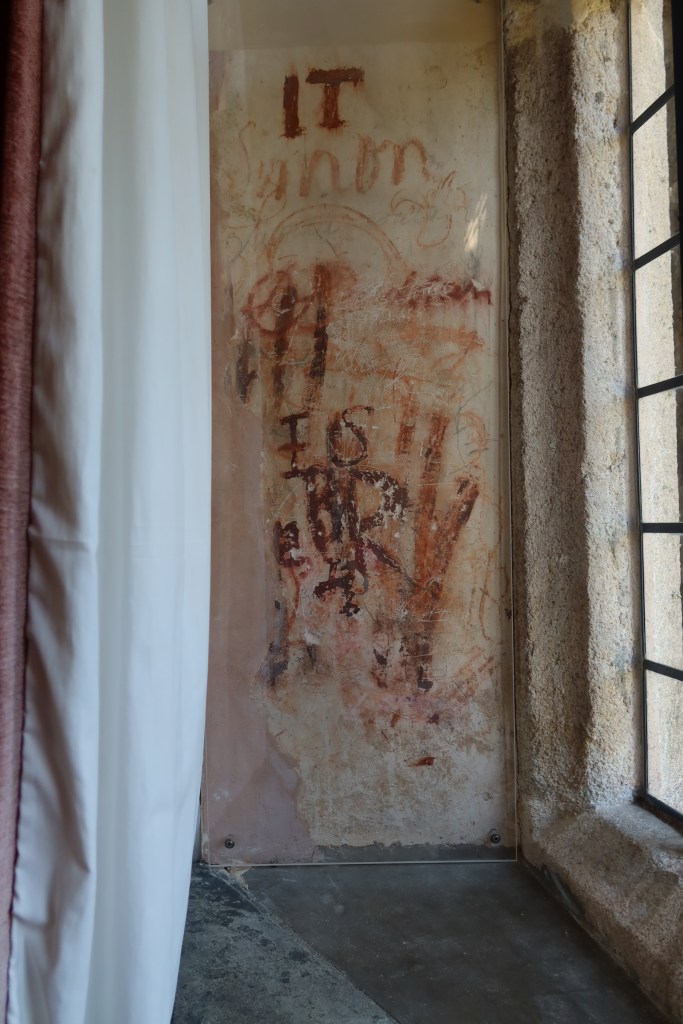
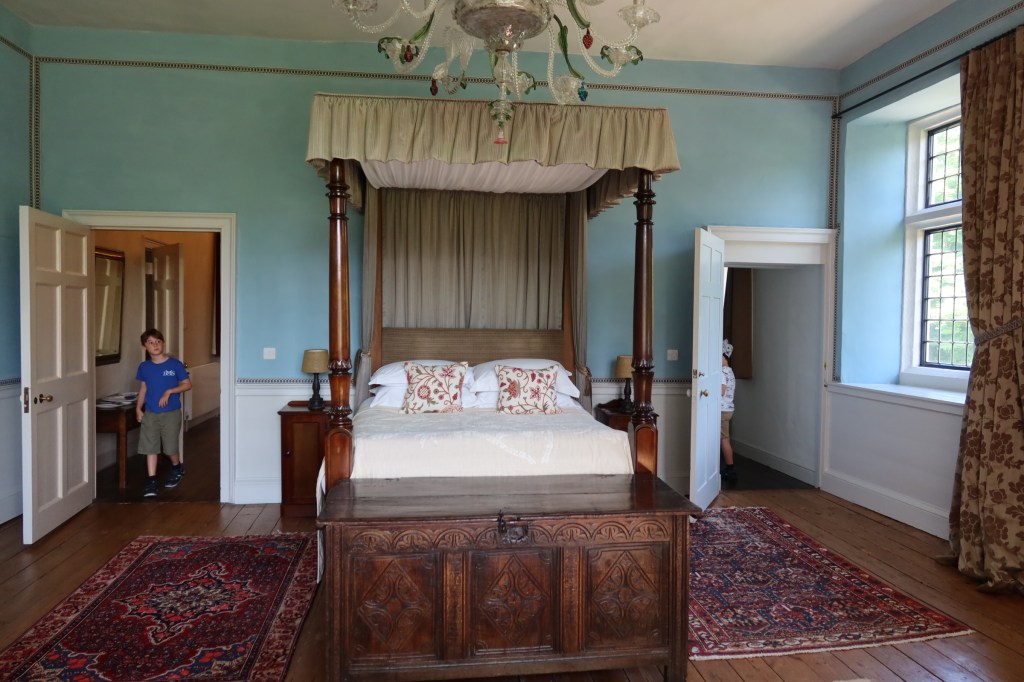
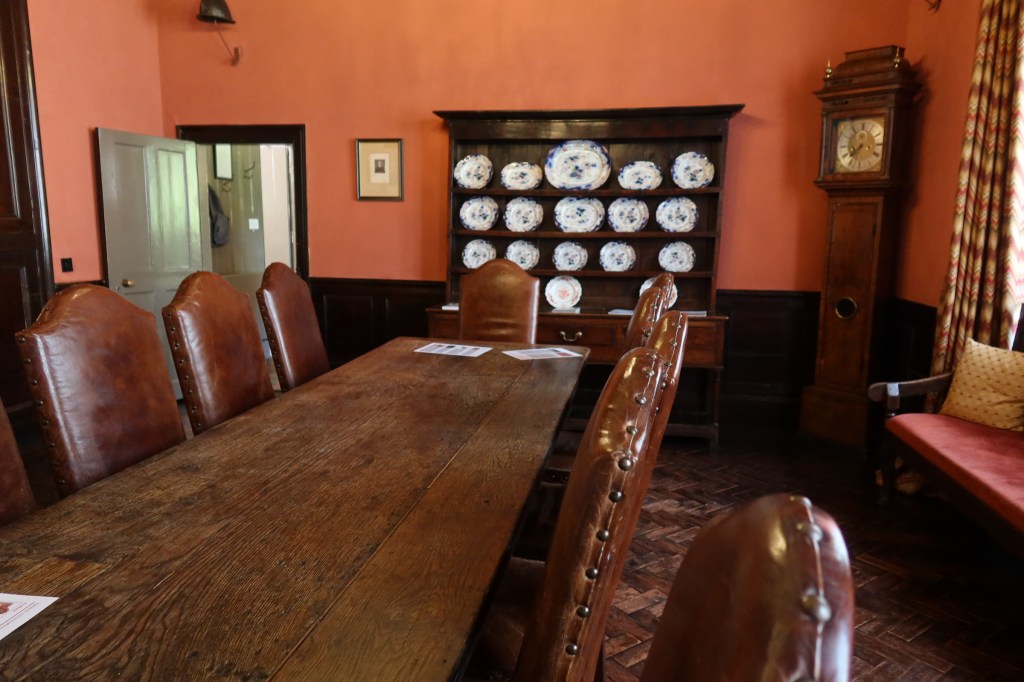
One of my favourite houses to visit in this part of Cornwall is Godolphin House. Only open to the public a few times a year (the house is let out as a holiday let), although the gardens and estate are regularly open to enjoy for walks and cups of tea in the little cafe. The story of Godolphin House is one ‘enormous mineral wealth, heavy industry, agriculture, high political office, war, decline, ruin and eventual rescue – a living timeline through Cornwall’s history’.

As the above quote would imply Godolphin House has a long and winding story to tell and is perhaps one for an article of its own. For now enjoy the following photos and if you do ever get a chance to visit the house, do so.

Lanhydrock

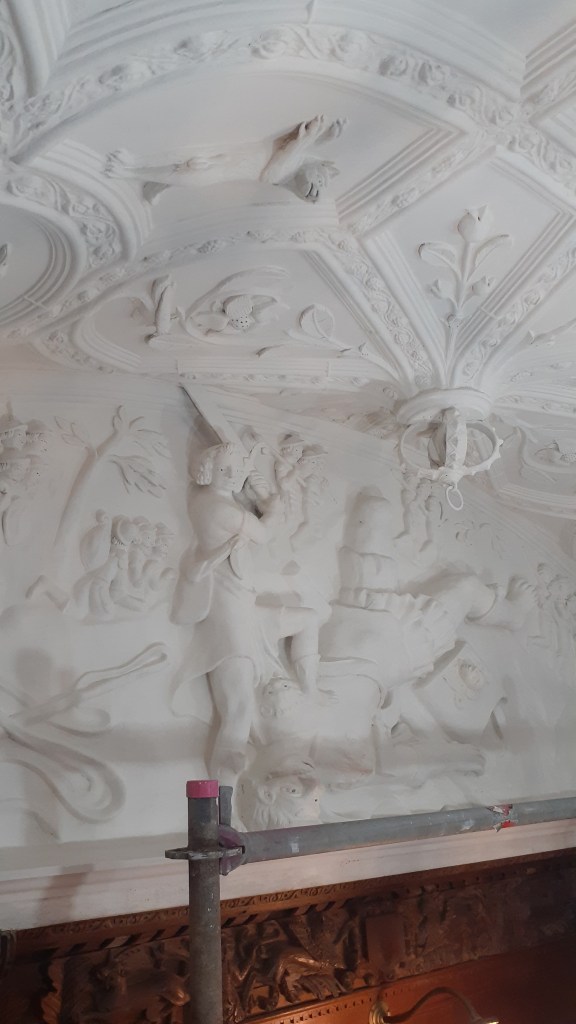
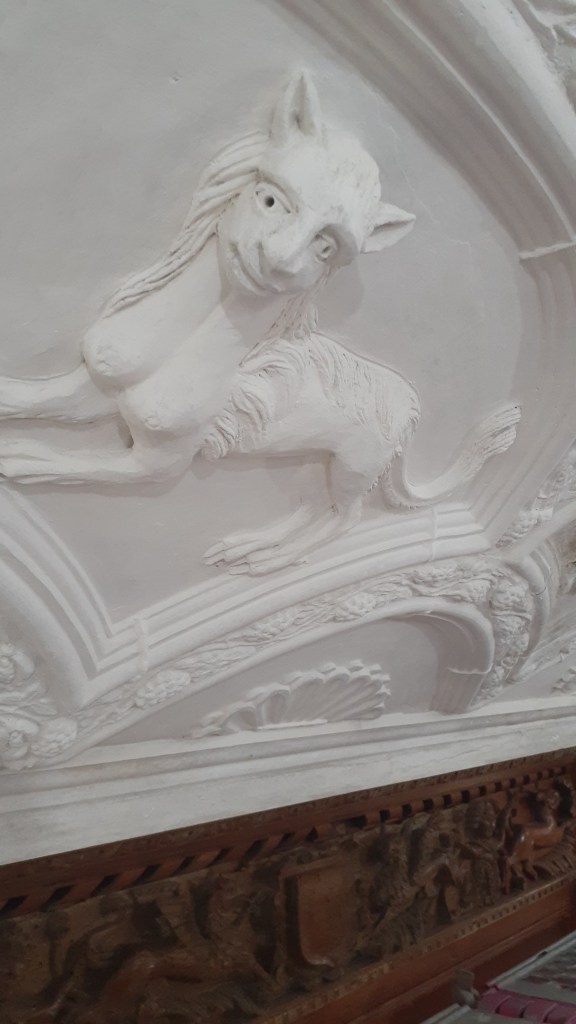
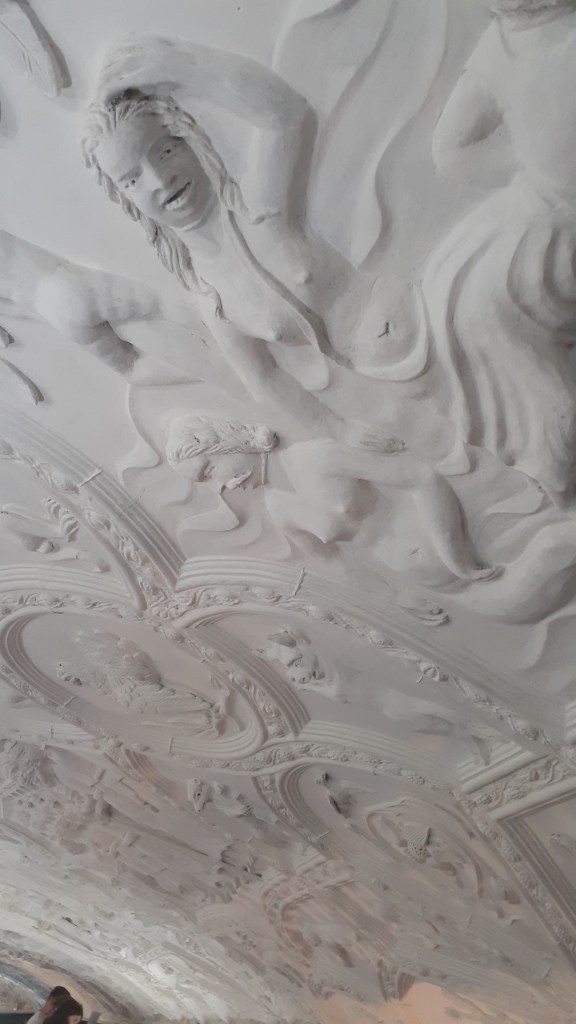
This particular National Trust House and Estate was much further afield. At the time of our visit the house and its contents were undergoing restoration work. Interestingly rather then block off sections and prevent people from viewing the work, the visitor was granted an opportunity to see what happens when a house of this size needs some love and attention. Our visit coincided with the restoration work on the ceiling of the hall and visitors were able to go onto the scaffolding and get a close look at a space that normally only the eagle eyed could view.

Below are a couple of photos of the ceiling.

Restormal Castle

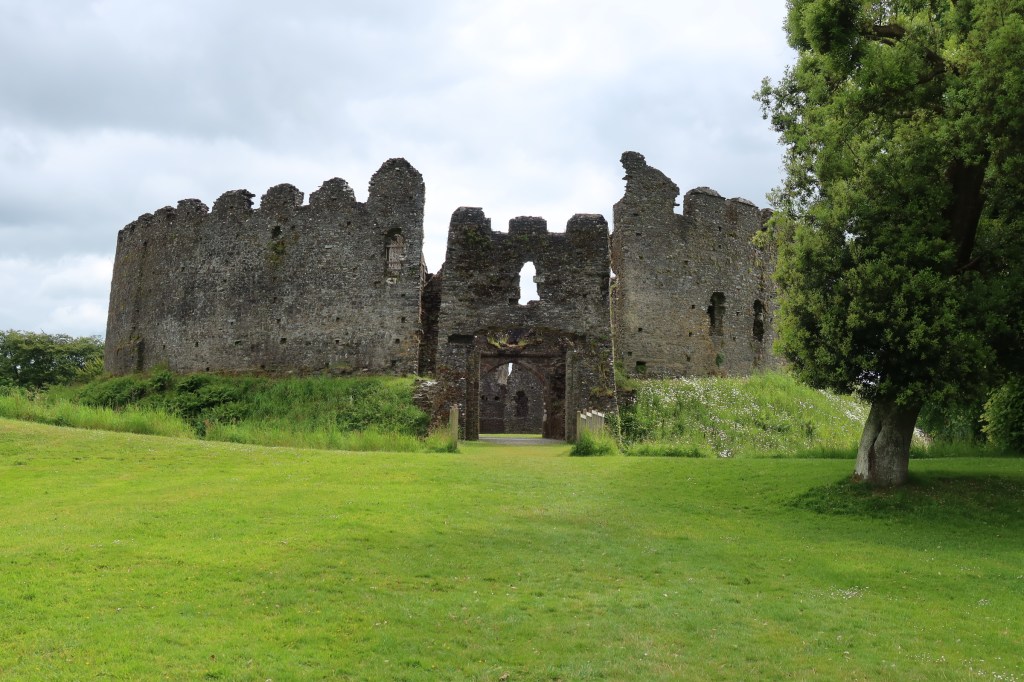
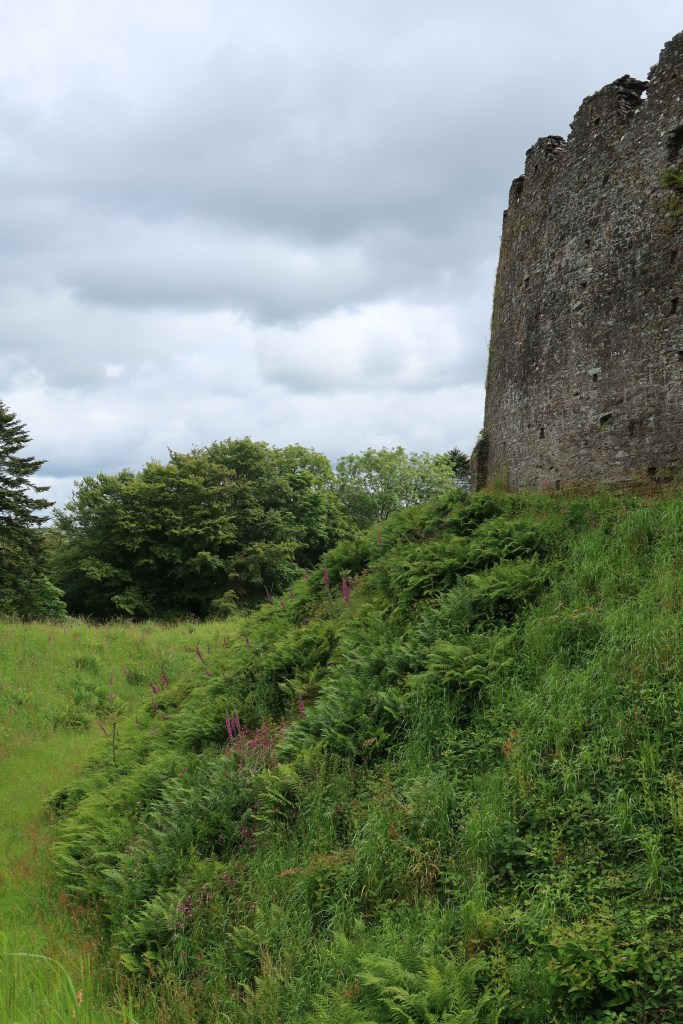
Our visit to Restormal Castle occurred as we were leaving the county, having done all we could. The castle providing a welcome pit stop and distraction.

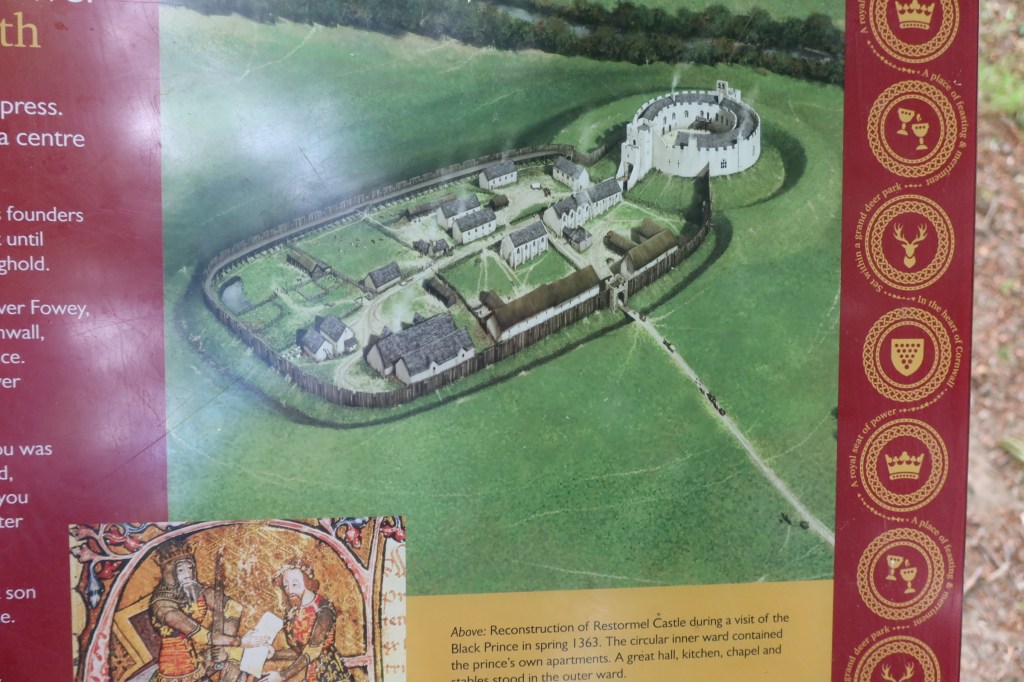
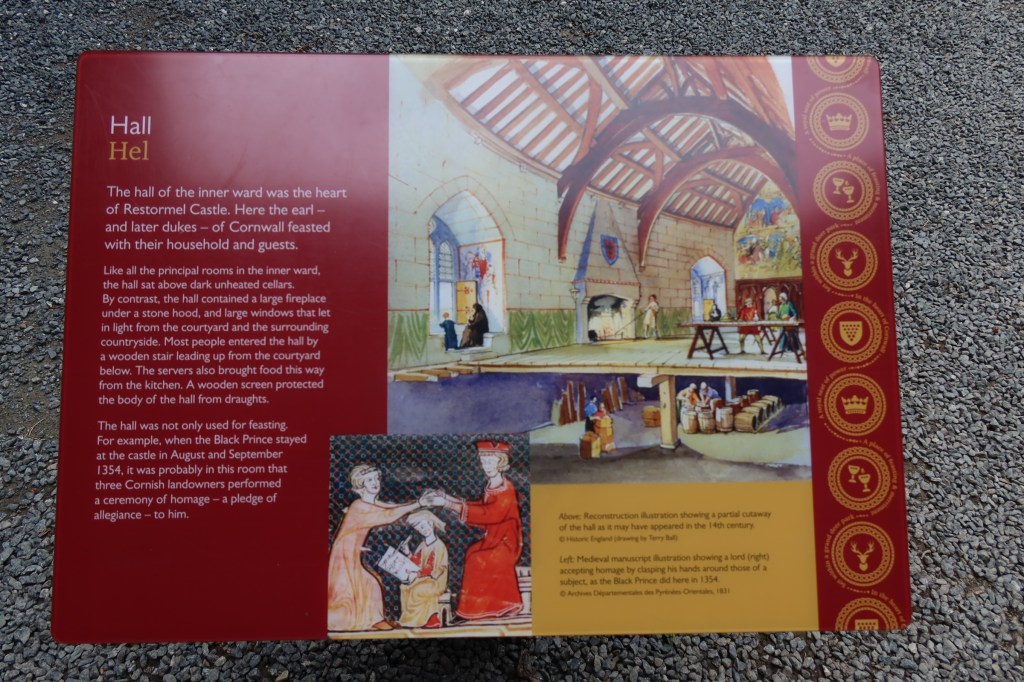
The early history of the site is not well understood, there is some evidence for a mid 12th century date but it the history from the 13th century onwards which is better understood. From the mid 12th the land on which the castle stands belonged to the Cardinham’s – a powerful landowning family from central Cornwall. In 1268  Cardinhams’ heiress, Isolda de Tracy, granted to Richard Earl of Cornwall and King of the Romans, the town of Lostwithiel – a fishery on the river Fowey – and the castle of Restormel, complementing his castles at Launceston and Tintagel. In 1270 he acquired a fourth castle at Trematon.

Earl Richard died in 1272, only four years after acquiring Restormel, so it seems more probable that it was his son Edmund who built the present castle. Edmund’s work at Trematon Castle is documented and provides a parallel. However, by the 1330s (and after the castle had changed hands a few times) documents refer to the castle being in need of repair. 1337 saw the son of Edward III being made Duke of Cornwall (also Edward – the Black Prince), along with a significant endowment of land and properties – including Restormal Castle.

This was a high point in the history of the castle, with many repairs and improvements being made to it and the surrounding park land. Apparently more time and money was spent on the boundary to the park land than on any other feature, an indication of its importance as a hunting park.

The history of the castle and its surrounding is one of neglect, repair and neglect once again. More can be found on its history here.

These are just a tiny fraction of the many places a person can visit in Cornwall, so I hope you have enjoyed this short meander through the county.

In memory of Christine Rowe and Alan Dalton – gone too soon but never forgotten.

The Dark History of Witchcraft in England

As you are all probably aware I am a fan of all things witchy – my book shelves are groaning under the weight of all the books on the history of witchcraft. Below is an interesting read from English Heritage regarding a handful of places connected to witchcraft in England, or should I say to do with the persecution of witches in the past (with the exception of Mother Shipton).

There are of course many places connected to witchcraft that do not involve their persecution but it is the gory details that people seem to want to read. Recently I have been reading about the difference (both legally and morally) between a witch and magic practitioner. The latter were tolerated to a certain extent even at the height of the witch hunts. But this will be the subject of new blog in the future so I shan’t say too much more. In the meantime read on and enjoy!

“Half A Nutshell Of Unicorn’s Horn in Three Tablespoonfuls of Dragon Water”

I was recently browsing a second hand bookshop (not an uncommon thing in my world) when I spied a small but curious book. The title ‘The Curious Cures of Old England’ had me hooked and on further investigation it found its way into my possession. The following is but a few of these curious and bizarre cures used by people when times were desperate.

Aches, pains, blemishes, maladies, disease, wounds and breakages, all of these and more have plagued our world since the beginning of time. The ways in which people have dealt with such issues has varied in terms of methodology and levels of success.

One of the most common ailments to afflict humankind is the headache and if blood letting was not your cup of tea then you could try one of the following.

  • Place a cabbage leaf or large lettuce leaf in your hat to cool your head.
  • Gargle mustard.
  • Tie a piece of hangman’s rope around your head, the fresher the better (these can be bought from your local hangman).
  • If the above was not available try a snakeskin.
  • Rub your temples with half an onion.
  • A poultice of raw potato.
  • And when all else fails there is always opium (please note I am not suggesting that you do this only that was what done ‘way back when’).

Headaches can sometimes be a precursor to other ailments such as the common cold, nowadays we take some paracetamol, drink plenty of fluids and spend the day in bed. In the past there were more inventive methods to deal with coughs and colds…

  • Soak a thick piece of toast in vinegar and bind it your throat.
  • Go to bed at night with a dirty sock or stocking around your neck with the heel (very specifically) on your larynx.
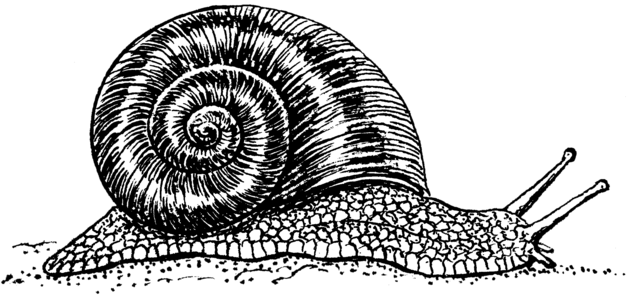
  • Extract the juice from a bucketful of snails by adding some brown sugar and hanging over a bowl in a meat cloth overnight – the resulting liquid was said to cure sore throats.
  • Stick orange peel up your nose.
  • A chesty cough can be healed with two drops of turpentine on a lump of sugar (please don’t try this at home).
  • Or strap rashers of bacon to the chest area (waste of good bacon…)
  • Or make a vest of brown paper and goose fat.
  • An earache can be helped by sticking a variety of things in your ear – snail juice, a cockroach dipped in oil or a garlic clove dipped in honey.
  • Serious bronchial problems can be solved by inhaling the breath of a cow.

A serious childhood complaint was that of whooping cough and our ancestors had some rather bizarre means of dealing with it.

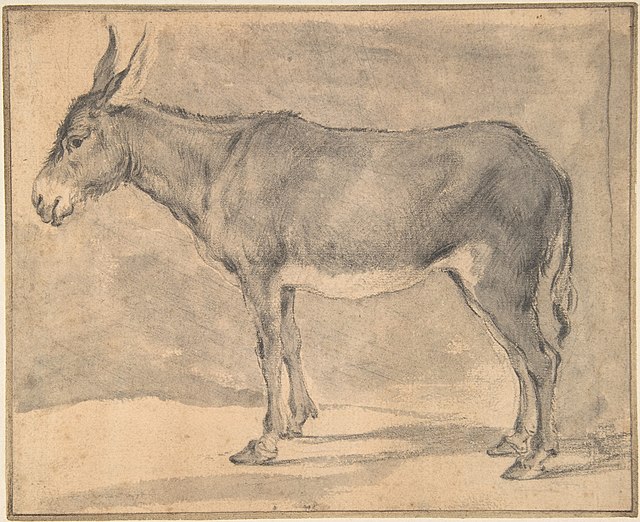
  • Pass the child under the belly of a donkey (particularly popular in regions with a lot of donkeys).
  • Rub the feet with hogs lard and keep the child warm (the last is quite sensible).
  • Swallow four wood lice in a spoonful of jam or treacle.
  • ‘A field mouse skinned and made into a pie, then eaten, the warm skin bound hair side to the throat and kept there nine days…’ (as from The Bedale Book of Witchcraft).
  • Or ‘catch a frog, open its mouth then cough into three times, then throw the frog over your left shoulder’ (also from the above book).
  • An Irish remedy from the 17th century says to put a live trout in the child’s mouth and then throw it back into the water – the trout will carry off the cough. But if you can’t manage a trout a frog is a good subsitute.
  • Pluck a hair from the child and feed it to the dog.
  • Tie a spider in a muslin bag and hang over the mantelpiece.
  • Make a broth from owls and feed to the child or try some fried mice or make cakes from barley and the child’s urine…

Sore eyes and cataracts had cures for which the wildlife of old England needed to be afraid of…

  • A 6th century cure tells the sufferer of cataracts to catch a fox and tear out its tongue, releasing it back into the wild. The tongue should be carried around wrapped in a red rag.
  • Or, bind the lungs of a hare over the eyes.
  • Or, lick the eyes of a frog (?!), chicken dung, a salve of a lizard, bats blood or blood taken from the tail of a black cat were all believed to be equally effective.
  • The Anglo Saxons used the lungs of a squirrel to bandage sore eyes.
  • If you didn’t fancy hurting an animal, the spittle of a starving peasant may well help…

The past was a dangerous place and physical injury/wounds were areal threat but don’t fret they had a cure for that too.

  • A mix of red wine and earthworms with the moss from a skull of a man recently dead applied to the wound was favored by some.
  • Skull moss could be replaced by blood or human fat however in these cases the ointment would be applied to the object which caused the wound as some form of sympathetic healing.
  • Some 16th century doctors (I use the word loosely) liked to use a salve made from cats boiled in oil…
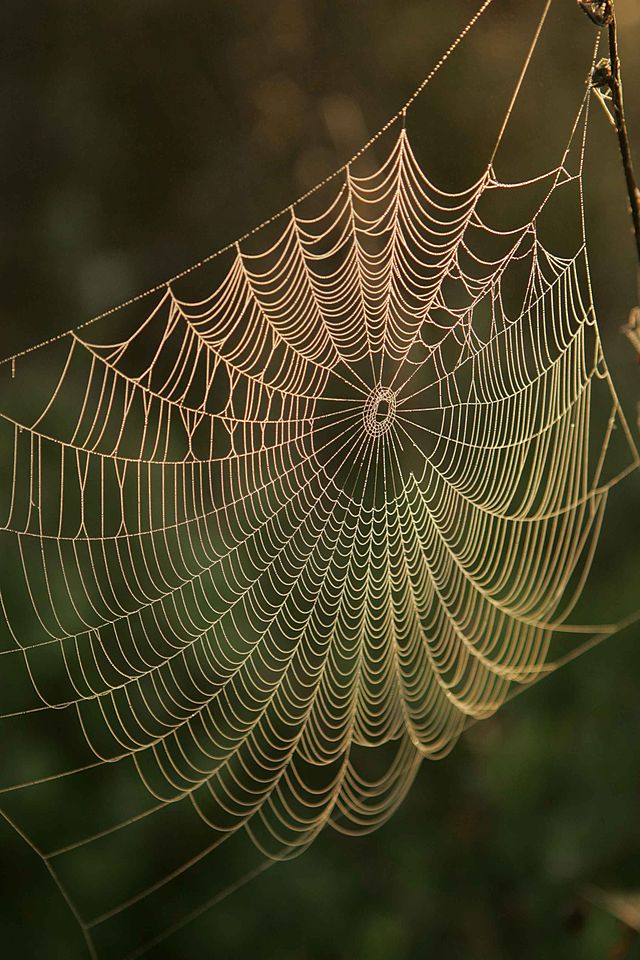
  • If that doesn’t appeal try covering the wounds in spiders webs.
  • Minor cuts could be treated with toasted cheese, mouldy bread or tobacco and calf dung mixed with crushed earthworms.
  • Broken bones could be healed by swallowing powdered dog skull (or the more traditional tea of comfrey).

Plagues and pestilence were an unknowable part of life in times gone by and indeed as recent events have demonstrated it remains the case. In 1348 the Black Death struck England, devastating the population. It made regular reappearances up until the 17th century by which stage many realised prevention was better than a cure. Some preventative measures included –

  • Prayer
  • Onions – the smell of which was believed to purify the air.
  • Beer – as sold by the Green Dragon Tavern in Cheapside.
  • Stay indoors with the windows closed.
  • Don’t eat fish, waterfowl, poultry or beef.
  • Don’t cook in rainwater or olive oil.
  • Avoid exercise, sleeping during the day and bathing.
  • And, weirdly, catch syphilis…

If you did catch the Plague then possible remedies included – pressing roasted onions stuffed with treacle and figs against the buboes or drying a toad over an open fire and pressing against the swollen glands as a way of drawing out the disease. Not to mention the plague pills and cordials which all guaranteed prevention and/or cure against the plague.

Beyond the extreme case of the Black Death, there was cholera, tuberculosis and a whole range of fevers/sweating sicknesses/agues to contend with. Once again, the cures sometimes can be worse than the cause.

  • A cure for cholera involved the drinking of rhubarb juice or rosehip syrup.
  • A recipe for a life saving stew against tuberculosis (consumption) begins tamely – pieces of chicken flattened with dates and herbs, add pearls and gold and cook in a pot, in another pot…oh and the chicken, which is actually a cockerel has to be torn to pieces while still alive…
  • Or you can eat slugs…
  • Or drink snail soup.
  • For an ague the right foot of a black dog hung over the right arm.
  • Or, boil the contents of a horses hoof in water – although it is not clear if it should be drunk or bathed in…
  • Fasting for seven days, eating only seven sage leaves or woodlice rolled into balls or eating a spider could effect a cure for fevers, chills and sweating.
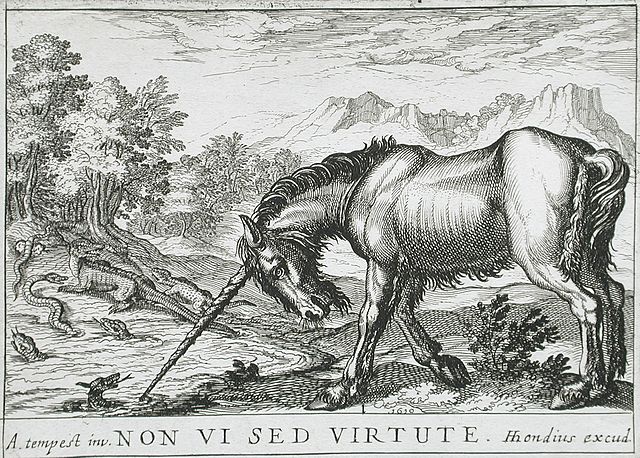
  • A Tudor remedy for sweating sickness was to take half a nutshell of unicorn’s horn in three large spoonfuls of dragon water, but only if you were rich enough.
  • Or, you could use a combination of mercury (please don’t), marigold, endive and nightshade.

Perhaps one of the most common cure all that many would have heard of was the act of blood letting either by way of leeches, cupping or scarification (small cuts into the skin). This particular form of healing has a history going back into the distant past, Hippocrates who lived in the 4th and 5th centuries BC and who is considered the father of medicine highly recommended it.

The biggest issue (and there were several) was regarding how much to take, some believed that the job wasn’t properly done until the patient had lost all sensation and fainted – today we would say they had gone into ‘shock’ – and for many this would have been their undoing.

Leeches have an interesting history in this story, they could be applied all over for bleeding purposes. All manner of issues could be solved with a good dose of leechcraft – earache, tonsilitis, gout, headaches and mental illness to name a few. Their use fell out of fashion in the 19th century only to be revived in the mid 20th century as an aid in skin grafts etc, the anticoagulant in leech saliva encourages blood flow and has anesthetic and an antibiotic qualities.

An extension of bloodletting was the next step in any serious illness to purge a body by means of vomiting etc. Seen as a means of curing all manner of ailments from headaches, fever, bowel disorders to deafness and insanity. For a price a person could buy any number of powerful laxatives and purging pills as a cure all. Unicorn horn being the most expensive…

I hope you have enjoyed this short romp through the weird and downright bizarre world of medicinal history, if you want more (you know you do) then I recommend reading Nigel Cawthorne’s book, ‘The Curious Cures of Old England’.

It’s All A Lark

Just a few of my favourite things…

My addiction to beachcombing came about as I was walking my old dog, Brad, and I started to spot bits of pottery and glass in the sand of our favourite haunt. So begun a collection which I have written about elsewhere on here. But my curiosity and collecting did not stop with just one wee beach on the edge of the Waitemata…this blog is short catalogue of just some of the pieces I have found, these are prize possessions.

As some may be aware I live in New Zealand and as some may also be aware we have a relatively short history of human occupation – approximately 800 years give or take a decade or two – compared to other countries around the world. The finds below are restricted to the last one hundred and fifty years or so when Europeans first arrived in Aotearoa New Zealand and are by far the most numerous things to be found.

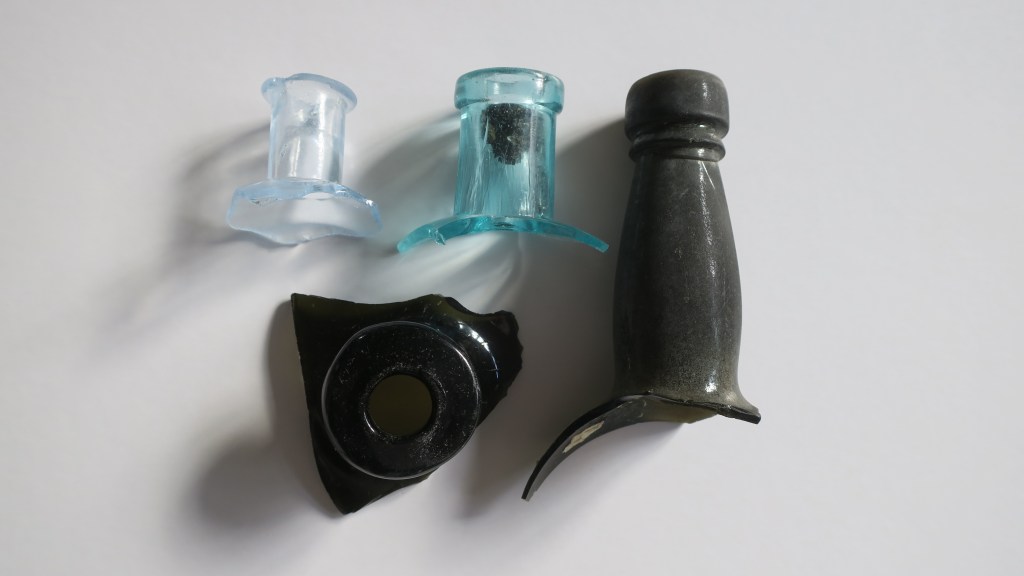
1, Glass stoppers

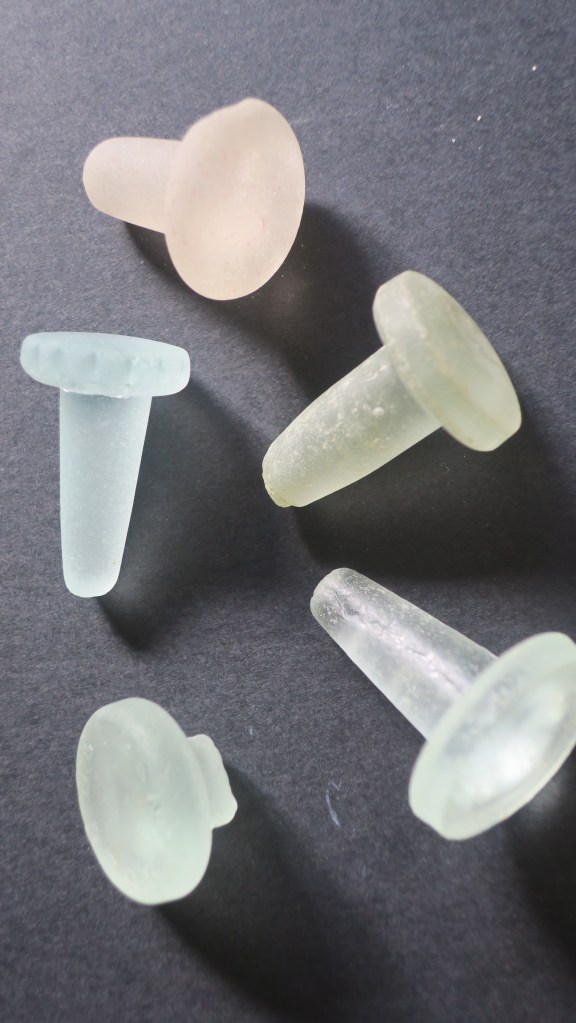
Long before plastic and screw tops many bottles were closed off with a glass stopper. The most common variety found are the ones in the picture below, used to seal sauce or relish bottles. Originally they would have had a ring of cork around the neck to ensure a tight seal. These very durable objects are a beachcombers delight. It is not a huge collection but each find of a glass stopper gives me an odd sense of joy…

2. Ceramics

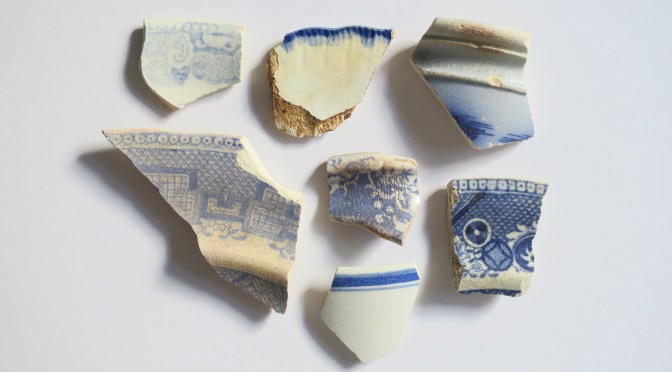
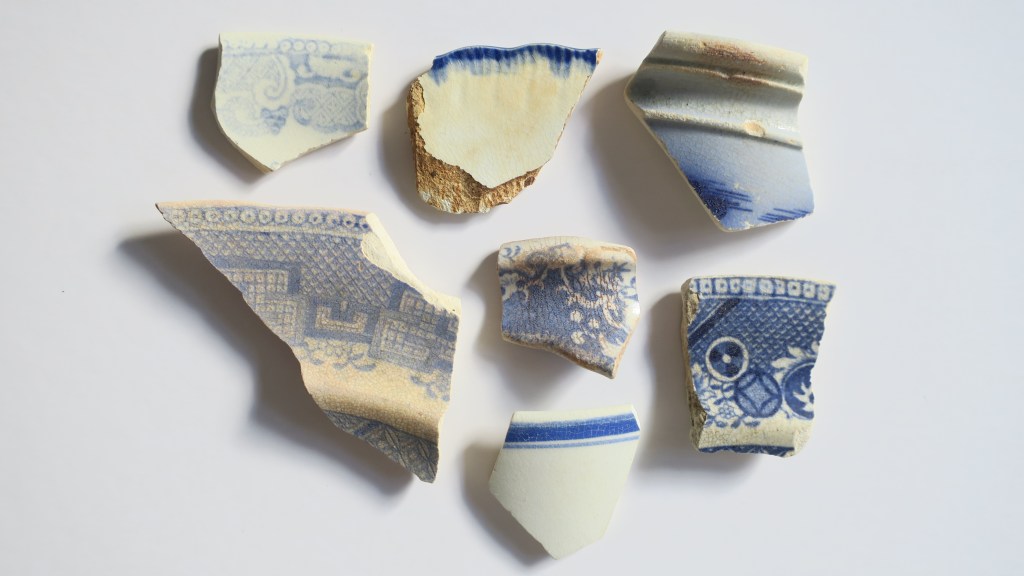
Sea pottery is also a relatively common find on beaches and waterways around the world and here in New Zealand it is no different. The variety of ceramics is often quite surprising, the most common are the plain white or cream pieces. But the most sought after are the early pieces of transfer print earthenwares imported from the UK or brought out with the first settlers. These come in a variety of patterns and colours, my favourite (along with many others) are the blue and white patterned pieces including the ever present ‘willow pattern’. I have written extensively on the ceramics found at Fitzpatrick’s Bay, please feel free to check it out here. Included in this category are also stonewares, I have yet to find a complete example but I have many neck sections and bases.

Just a small selection of my blue and whites…typical of what can be found.
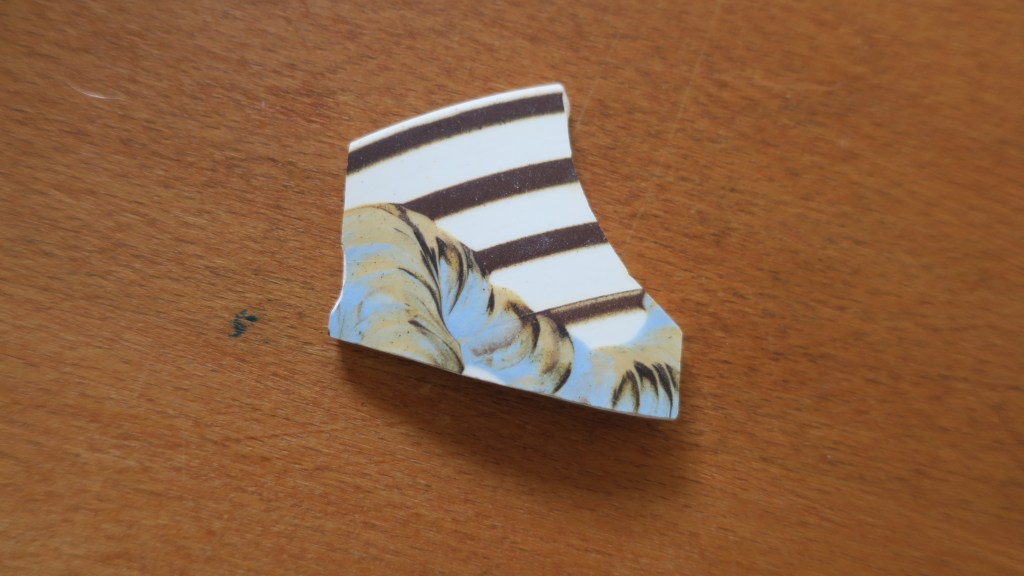
My one and only mocha ware piece.
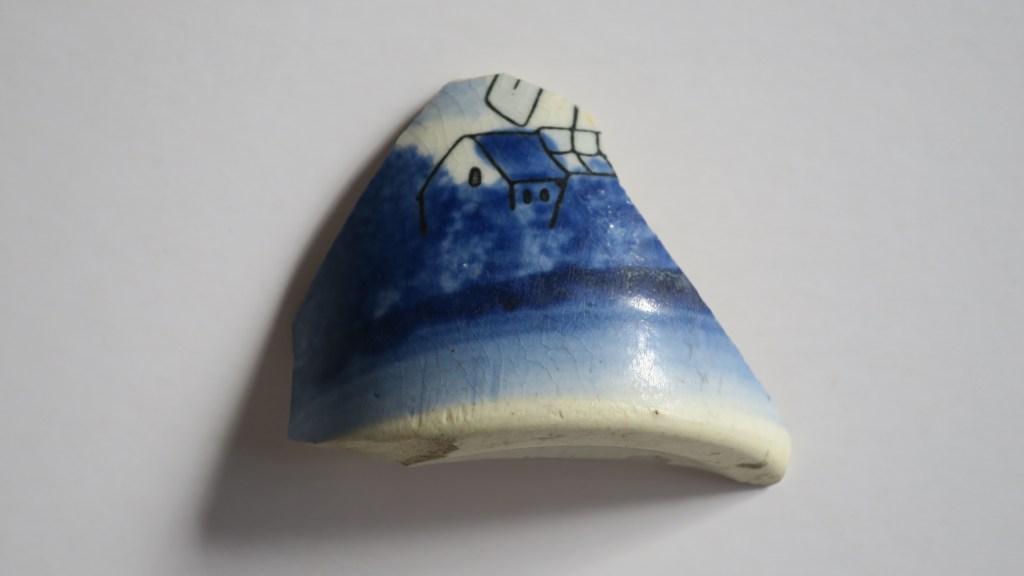
And perhaps my favourite piece thus far, part of small cup with a hand painted house and windmill.
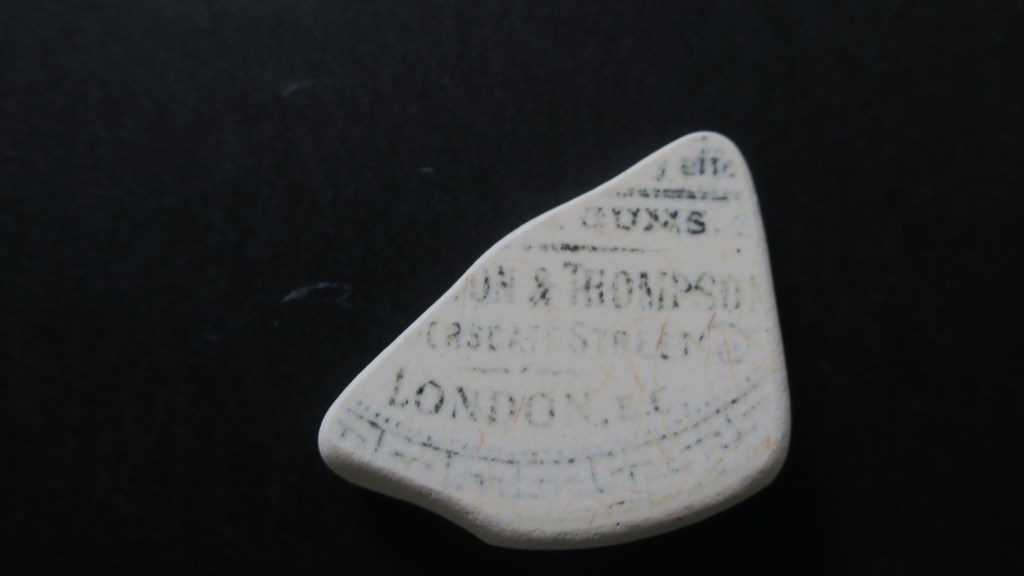
Unlike the pretty pieces often easily spotted, I thought I was very lucky to find amongst the detritus this well worn fragment of a toothpaste lid.

3. Glass

I have chosen to call this section glass as opposed to seaglass as there will be some who dispute my examples as seaglass. When I started to collect I was most surprised to find that there is an International Seaglass Association and they have defined true seaglass as;

Genuine sea or beach glass comes from discarded bottles, tableware, or household items and is found in oceans, lakes, and rivers. Genuine sea or beach glass tends to have: Lettering, embossed images, and distinguishing features such as handles, bottle necks, etc. A frosted patina on the surface with small “C”-shaped patterns, surface cracking, rounded edges, and small crevices where grains of sand may be found.

Much of the glass I find does fall into this category but the most interesting pieces are not so worn by tide and time. These are the bottle necks or fronts with lettering that can be researched. The other smaller (proper seaglass) pieces I collect go into the art pieces I make to sell at a local market (Magpie Designs)

The triangular piece is the top of a gin bottle with its distinct squat neck, on the right is a beer bottle.

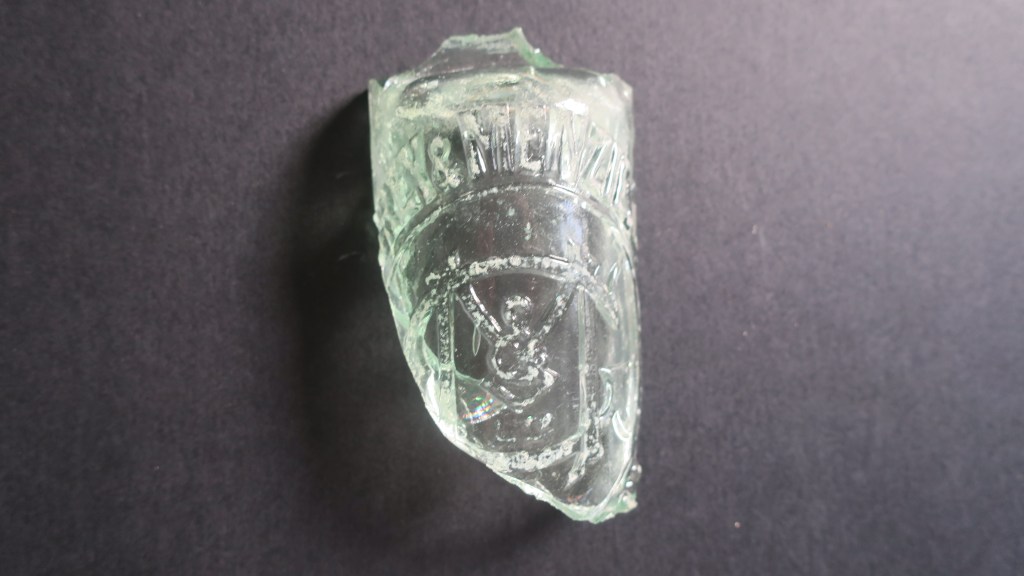
The next photos shows a knarly chunk of sharp glass I found whilst larking under the harbour bridge. I wouldn’t normally have bothered to bring this home but the lettering got me curious. A quick search online found the following on the Auckland Museum website.

Grey & Menzies Ltd (1902-1962)
Established in 1902 following the merger of J Grey & Sons and Thames cordial manufacturer Menzies. The firm operated as Grey and Menzies until 1964 when a merger with CL Innes Ltd resulted in the soft drink brand of Innes Tartan. John Grey established J Grey cordial & aerated water manufacturers at Eden Cres. Auckland in 1874, and in 1880 his sons joined the business it became J Grey & Sons 1880-1902

Robert Menzies was born in Scotland in 1854 and came to New Zealand in 1858, working initially for Buteman Bros, Thames. He later worked for B Ballin (Thames), John Grey and George Gledhill before purchasing Buteman Bros. in partnership with Samuel Hirst to form Menzies & Co at Thames. In August 1902, with two partners he established Menzies Ltd, and leased a property in Stanley Street, Auckland but a month later joined with John Grey & Sons to form Grey & Menzies Ltd

The Grey and Menzies merger occurred in 1902 – the company now covered a considerable area including Northland, Auckland, South Auckland and Thames. The company began to introduce new lines including the ginger beer that became Tartan Dry Ginger Ale. In 1916 the company purchased the Paeroa spring, aerating and bottling the water in Auckland under the “Paeroa Water” label – later to become Lemon & Paeroa. In the early 1920s they began making Orange and Lemon Crush under license from the Crush Co’s reg’d USA patent office.”

Every object has a story…

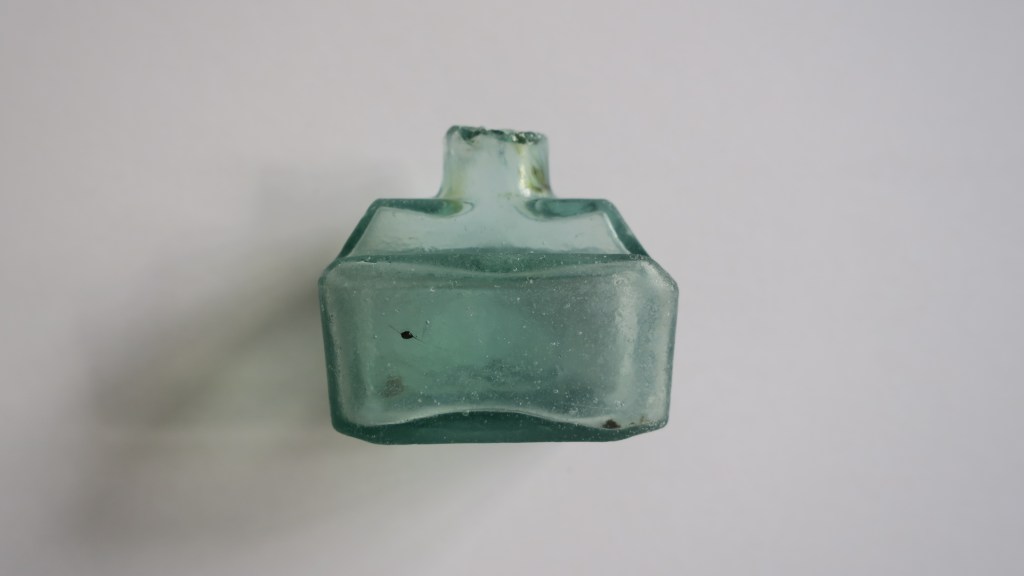
The next photo is of a sweet wee ink bottle, again found under the Harbour Bridge. It was a strange moment…I was about to leave the area having found very little that morning, thinking about a post I had seen on Instagram about these cute glass ink bottles when I spotted nestled in the seaweed one of the very same. Known as Boat ink bottles for their shape and distinctive lip used for a pen rest they come in a variety of colours. During a recent visit to the Dargaville Museum north of Auckland I saw a vast collection of these bottles in all their beautiful colours.

I did a happy dance, much to the dog’s surprise, when I found this.

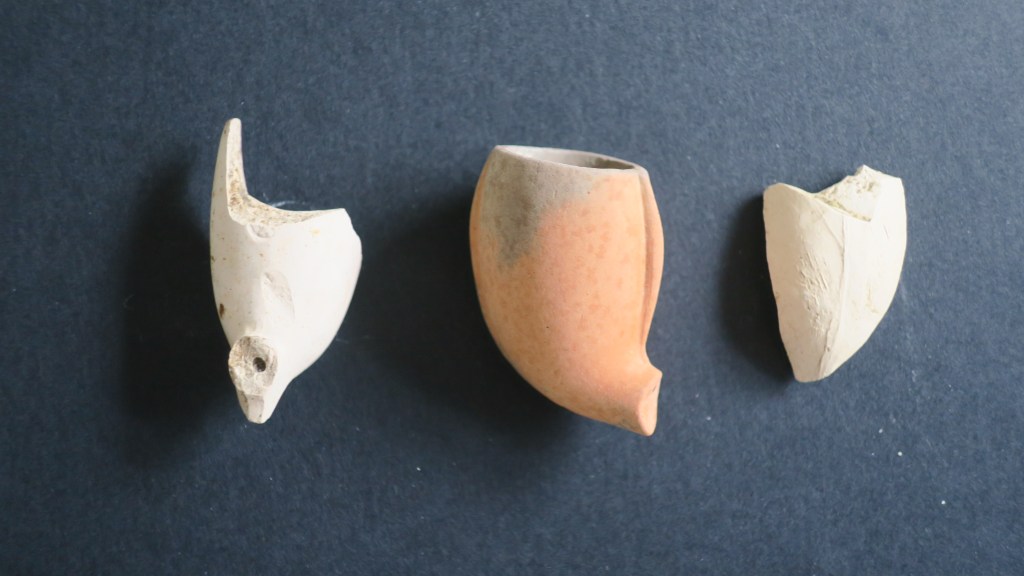
4. Clay Pipes

Finding clay pipes on the shores of Auckland’s harbour can be a bit hit and miss, however I do have a small collection of pipe stems and bowls. None of which have any visible decoration or makers mark, given the softness of the kaolin clay used to make these items it should not be surprising that it would easily wear away. Not so long ago I was sent pictures of a pipe stem found at Fitzpatrick’s Bay which did have a stamped name on it, ‘squatters budgeree’ which I have written about here.

For those who would like to know more about clay tobacco pipes in New Zealand the following links may be of interest. For those elsewhere there are a multitude of websites and books on the humble clay pipe.

Mechanics Bay, Auckland

Underground Overground, Christchurch

As you can see pipe stems are far more numerous than bowls due to the tendency for stems to go soft with long use and be broken off and discarded. The center bowl is a much prized part of the collection being a terracotta bowl rather then the usual kaolin, which may be why it survived in better condition than the others.

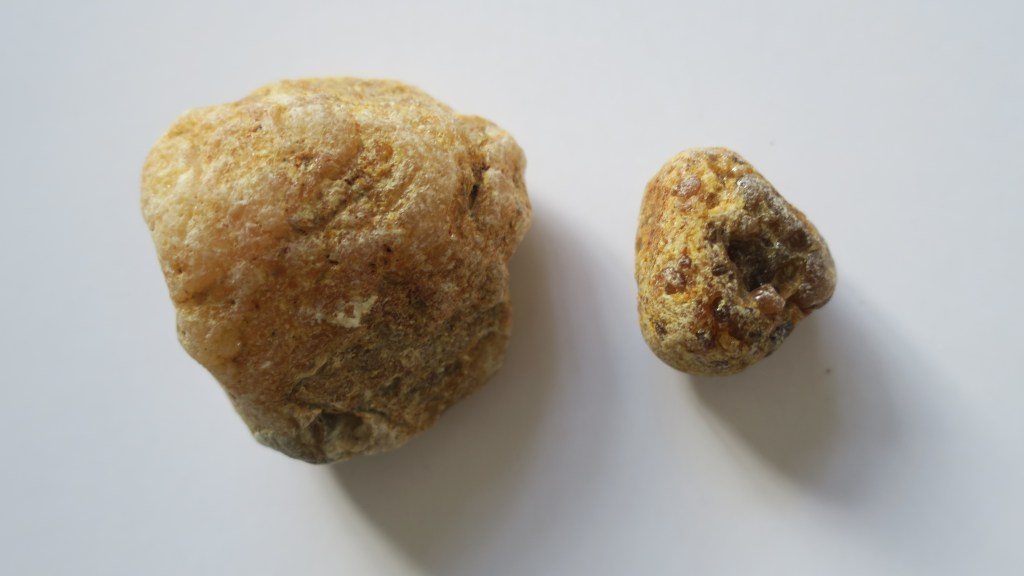
5. Kauri Gum

For those who are not familiar with Aotearoa New Zealand’s flora, there is a native tree called kauri. It is a slow growing hardwood which was much sought after by settlers and Māori alike. Its many attributes was the tendency to ooze sap which over time solidifies and becomes much like amber. Early settlers would often turn to gumdigging as a way of supplementing other income or when there was no other income.

The gum was used by Māori as a type of chewing gum (fresh gum), as a fire starter and when burnt and mixed with animal fat for tattoo moko. The early settlers used it in a variety of ways, much like amber for trinkets and jewellery. However, in the mid 1800s it was discovered that when mixed with linseed oil it made an effective varnish and as such was in great demand in the UK and Europe. Kauri gum became Auckland’s main export at this time – between 1850 and 1950 approximately 450,000 tons were exported. The growth of early Auckland owed much to this industry.
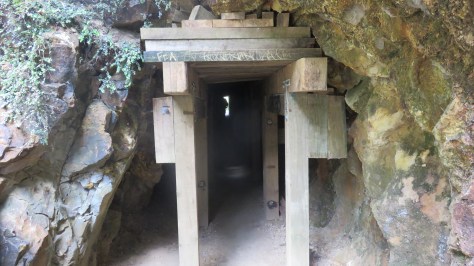
The area in which I live once had extensive kauri forests, so it is not surprising to find chunks of gum washing up (and down) onto the beaches. I collect them because of the history they remind me of. Below are a just a couple of the many pieces currently residing in my rockery…

For more on kauri gum read here.

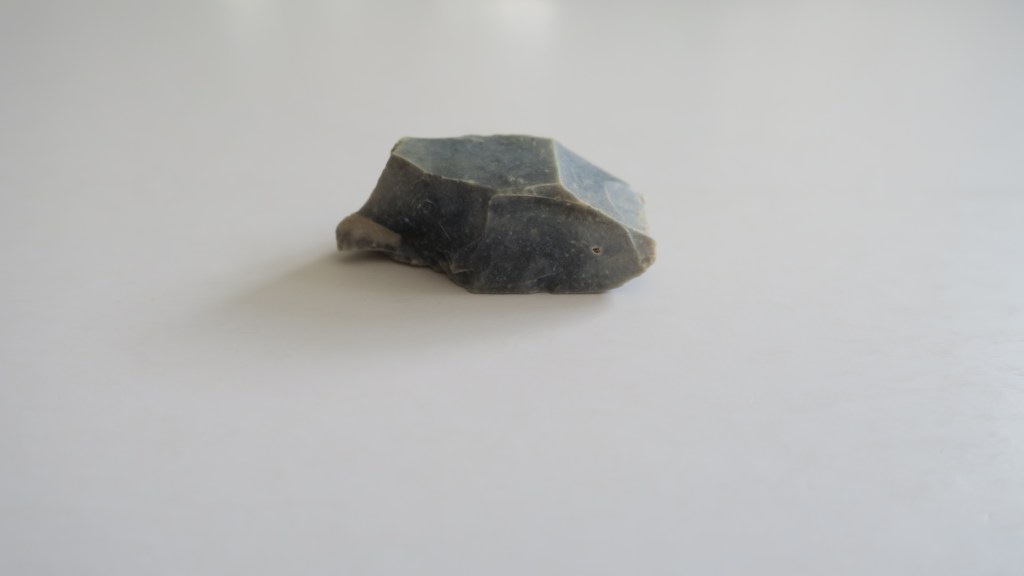
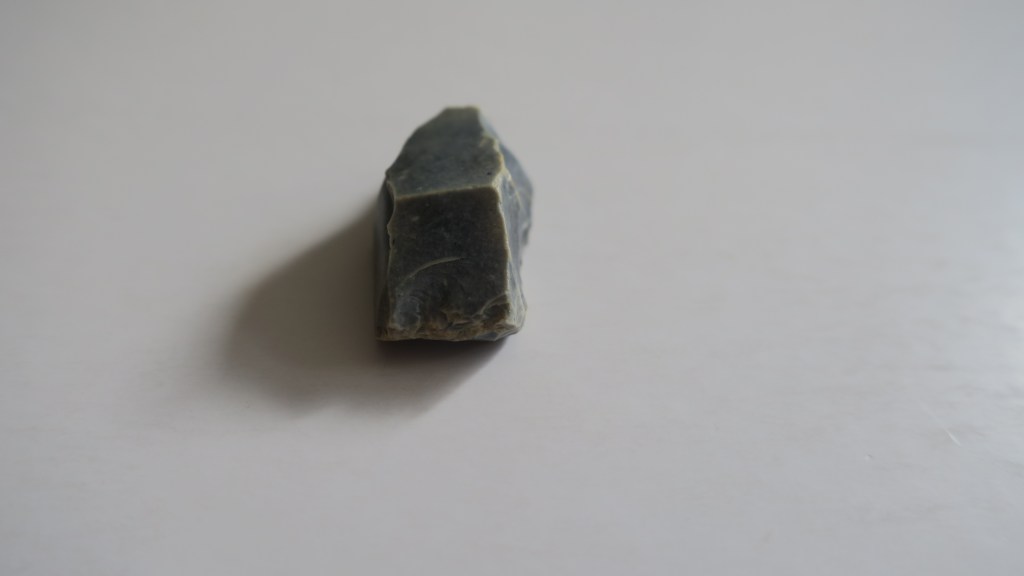
6. A Gun Flint

I only have one gun flint and only a partial one at that. Gun flints are part of the striking mechanism for a flintlock gun and were in use in the UK from the 17th to the 19th century. For more on how they were used read here. Here in New Zealand the musket, which also used a flintlock mechanism, contributed to a period in our history known as the Musket Wars.
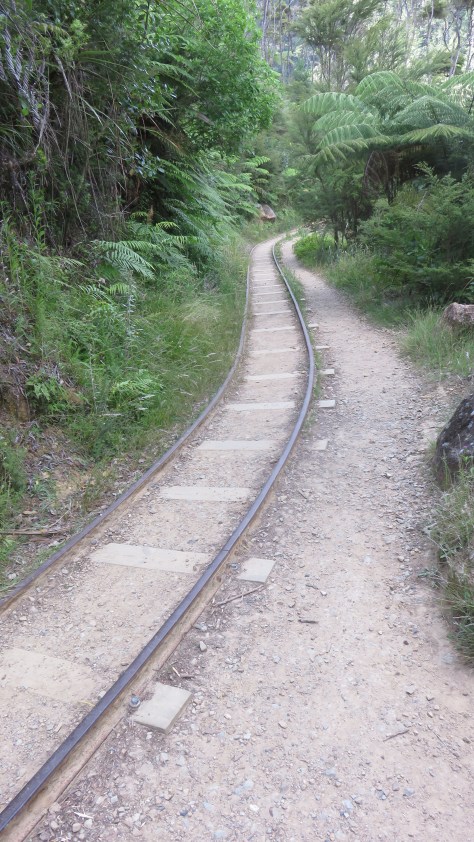
‘After Europeans brought muskets (long-barrelled, muzzle-loading guns) to New Zealand, these weapons were used in a series of battles between Māori tribes, mostly between 1818 and 1840. As many as 20,000 people may have died, directly or indirectly. Tribal boundaries were also changed by the musket wars.’ From Te Ara Encyclopedia
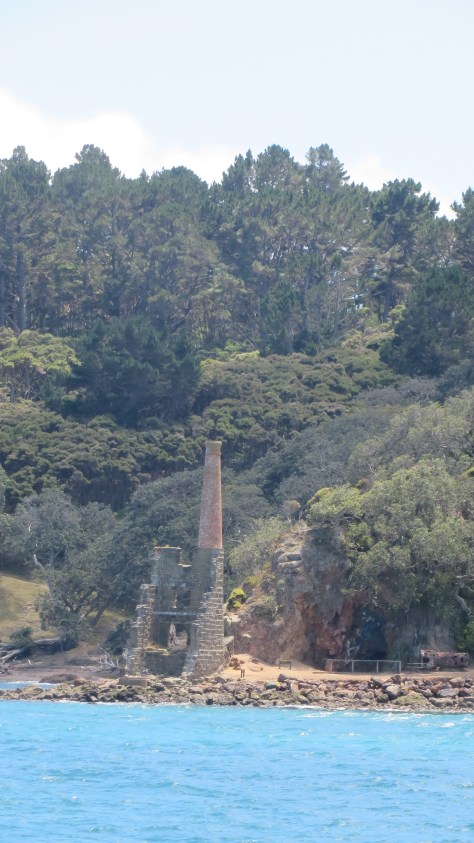
Although there is no telling who used this particular gun flint (it was found at Fitzpatrick’s Bay) it is a sobering reminder of our past – the good and the bad.
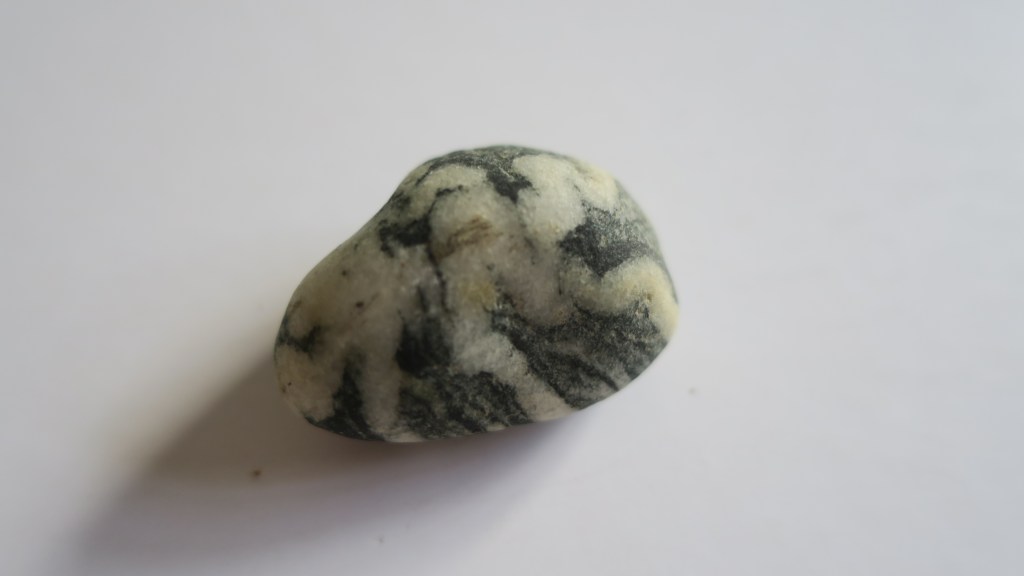
7. A Fossil

No I’m not talking about the other half…but rather this small reminder that the earth is old and for me at least, a reminder that our time here is but a moment.

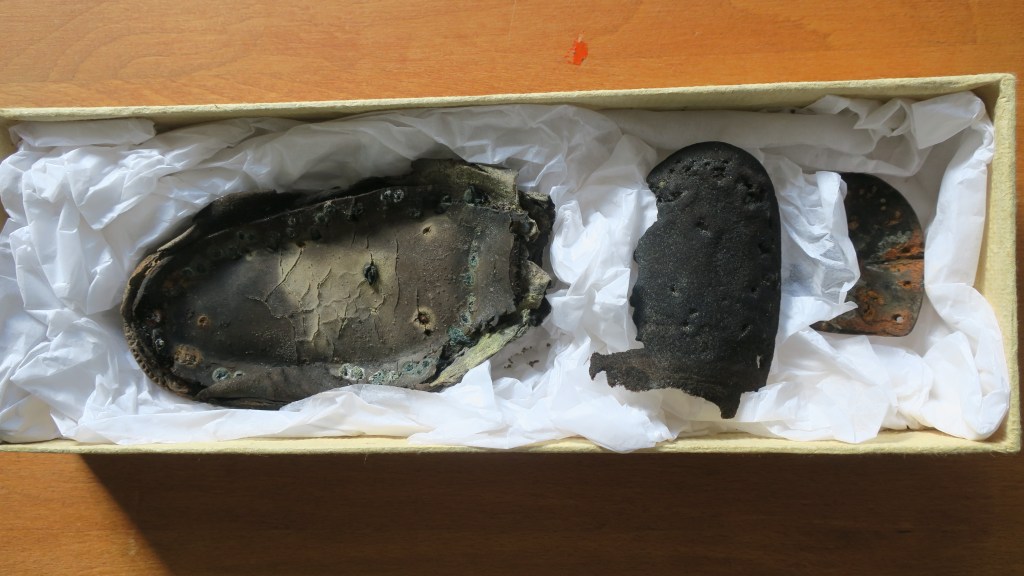
8. Shoes

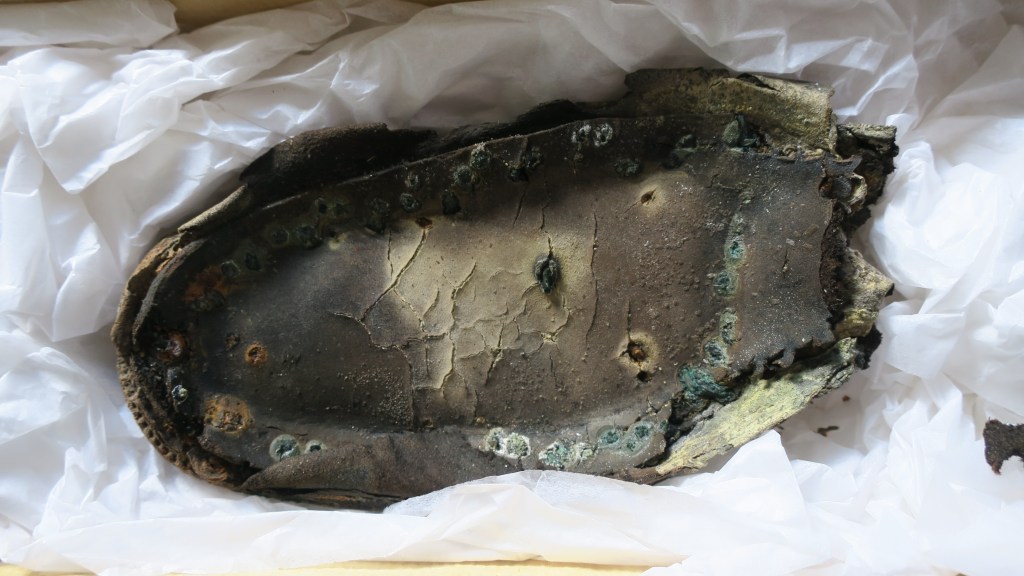
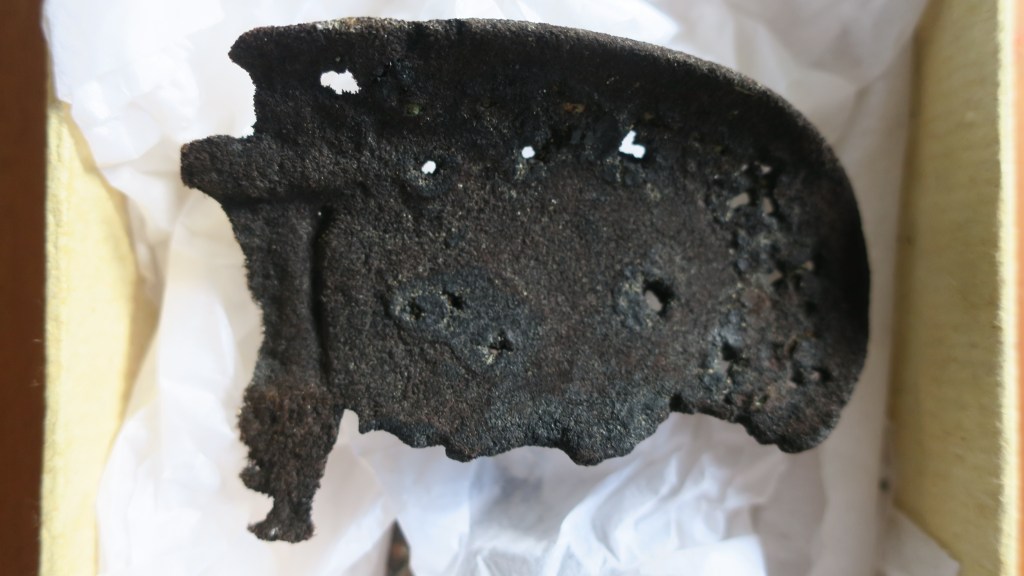
Occasionally I find parts of shoes, sometimes they are modern (so many jandals) and head straight to the bin but other times they are much older. When I look at these shoes parts I wonder who wore them, what was their life like? Oddly shoes feel very personal and connect me to someone in the past – will a person in the future find the sole of my favourite ugg boots and wonder about me too?

This sole consists of several layers and the copper nails are evidenced by the green spots around the edge.
This piece appears to be part of a heel, the rust suggestive of a ferrous metal. I can hear the wearer tapping their way across the floorboards…

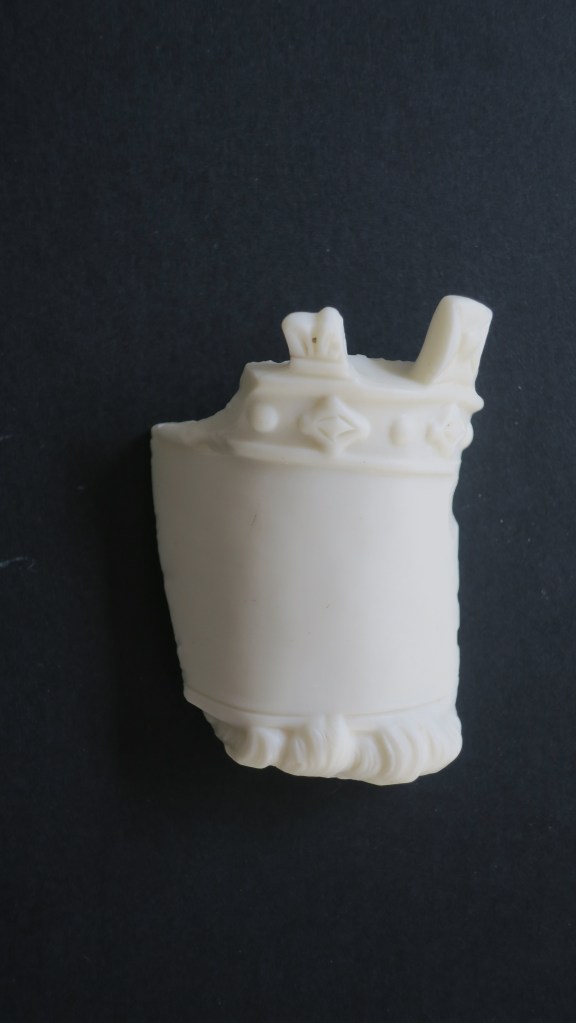
9. A Mystery Object…

This final object confounds me and I hope there is someone out there who might be able to shed some light.

As you can see it is an interesting shape, being 6cm at its tallest, it looks like a crown with a blank space for perhaps a label (?) and locks of hair below. The material at first glance looks like milk glass but I am not sure as it it is quite matt and more like alabaster in appearance. All suggestions welcome…

And there you have it, just a few of my favourite things…

If you have enjoyed this blog please feel free to share, like and comment – tell me your favourite finds!

My Top Five Archaeology Books

With a British Bias…And Why I Chose Them…

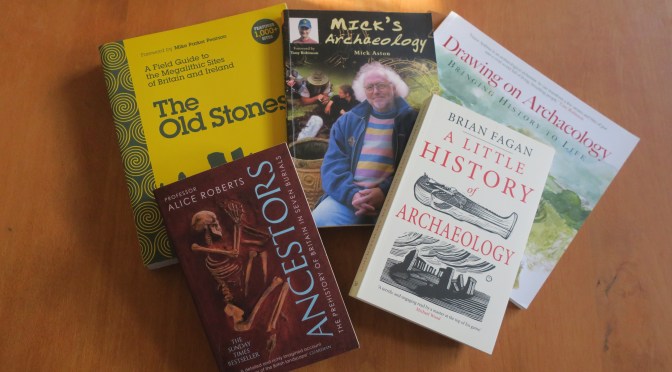
Books, they are my friends, they transport me into different worlds, past and present, real and imaginary. So imagine my difficulty in choosing just five to tell you about! Thus this will be the first in a short series of my top five book posts. Moving on…this particular post is centered around my favourite general books related to archaeology in the UK. Please note that the opinions in this blog are purely my own and are listed in no particular order.

1. ‘A Little History of Archaeology’ Brian Fagan

More often than not when studying archaeology at University, there is always one paper that is required – the history of archaeology. For some this can be the ‘dull as dishwater’ topic, the one you dread every week but for myself I always found it fascinating. Archaeology is such a strange discipline, it borrows from just about every other subject to become something unique, constantly evolving.
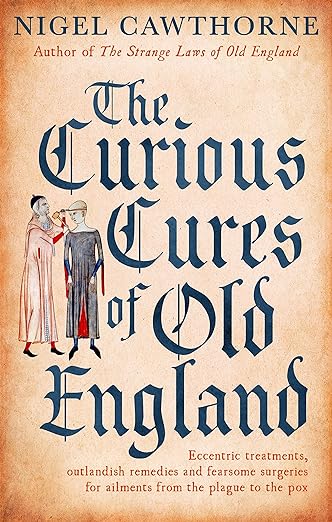
Brian Fagan’s book takes the reader on an adventure in archaeology around the world, from it’s very beginnings with antiquarians and collectors to the present day science based enquiry. There are tales of wandering antiquarians in the American Southwest at a time when Apache tribes were on the warpath to the Mesolithic finds trawled up from the North Sea. Ever wondered about how radiocarbon dating became a thing? Or why we have the ‘three age system’? The answers and more are all here.

Fagan writes in an engaging style with a hint of adventure and is more than a match for those ‘dull as dishwater’ lectures. I thoroughly enjoyed reading this book and highly recommend it to everyone interested in archaeology.

A History of Archaeology by Brian Fagan

2. ‘Ancestors’ Professor Alice Roberts

Subtitled ‘The Prehistory of Britain in Seven Burials’ Alice Roberts takes the reader on an interesting journey into the past via the dead. Regardless of our views on whether the dead should be disturbed/excavated, there are situations when this is inevitable and in this book Roberts picks apart these burials to tell the human story of British prehistory.

‘Burials are like time capsules – each one, a physical biography, written into a skeleton.’

From the back of the book

For each of the burials she chooses (which range from the paleolithic – the red lady of Paviland – to the Iron Age and the Pocklington Chariot), Roberts gives a history of the discovery of each burial as well as the research past and present that has gone into each discovery. She also widely discusses the new science of genomics and how it is changing the way we view the past in Britain.

Alice Roberts writes in chatty style, having seen her on tv many times I could easily hear her voice narrating the story in my head. Through her writing the reader gets a clear sense of her curiosity and knowledge, her willingness to explore avenues to find answers. Even when she is warning of caution she does so with friendly caution. It is up to the reader to draw their own conclusions. This is in essence why this book makes it to my top five, Alice Roberts does not lecture, she leads you along a path of discovery and allows you to come to your own conclusions.

Ancestors by Professor Alice Roberts

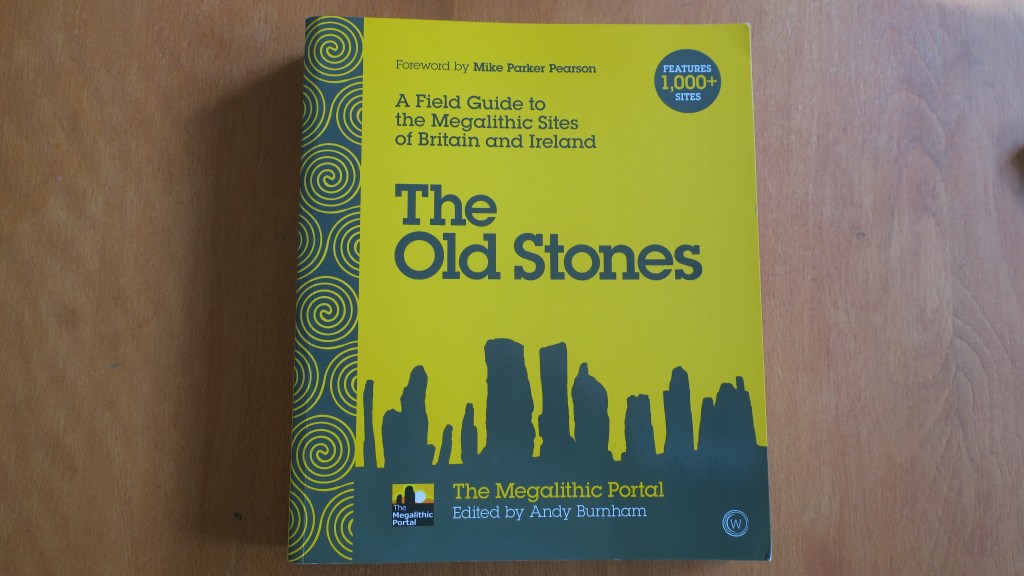
3. ‘The Old Stones’ Edited by Andy Burnham

For those interested in the megaliths that are found through the United Kingdom this is the go to book. Coming off the back of the successful website ‘The Megalithic Portal‘ this book details all the fabulous sites listed online with extra short essays on topics such as astronomy, archaeoacoustics, stone axes and more, written by users and contributors to the website. There are maps, photos and drawing galore as well as a well written introduction to the Neolithic and Bronze Age in the UK. It is the kind of book that you can dip into as and when you need to.

I would highly recommend this book to anyone who wants an adventure back through time, who has ever stood and stared at a stone circle and wondered why or for those who want to just make a walk in the countryside more interesting.

The Old Stone edited by Andy Burnham

4. ‘Mick’s Archaeology’ Mick Aston

For fans of the tv show ‘Time Team’ Mick Aston will be a familiar face, his shaggy hair and stripey jumpers are things of legend, and although no longer with us his legacy in archaeology remains strong. This book is for those who want to know more about Mick, his beginnings in archaeology (in Cornwall), the reasons behind Time Team, his love of teaching, landscape archaeology and all things monastic.

I met Mick on several occasions, twice with Time Team and once at tea whilst at a friends house in Cornwall. He was a lovely man with a genuine interest in everything around him. When you talked to him he really listened and was always open to ideas, even if they didn’t necessarily align with his own.

I recommend this book for lots of reason, not only because Mick Aston is a man I admire and respect but also because of his ethos that archaeology belongs to everyone not just the academics. His belief in the importance of community archaeology permeates this book and is also an ideal I hold dear.

Mick’s Archaeology by Mick Aston

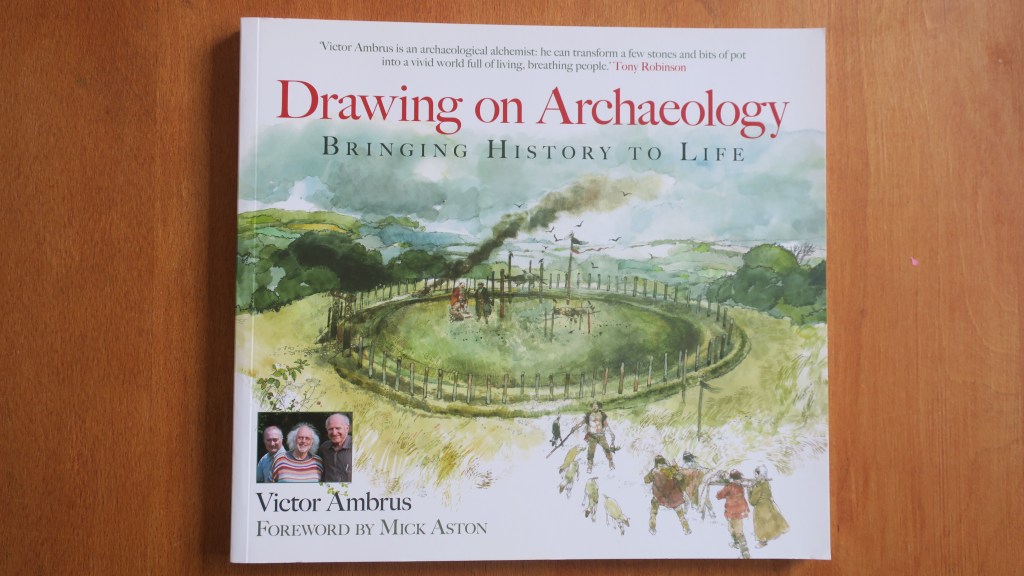
5. ‘Drawing on Archaeology’ Victor Ambrus

Victor Ambrus was another Time Team regular, his reconstruction drawings bringing the past to life in a way that was very human. Todays digital reconstructions are nice but there is always a sense of life in the hand drawn pictures by Ambrus. Many of the drawings in this book are from sites featured on Time Team but not all.

Victor Ambrus draws/paints a site and then places people in it, using the site as it may have been used, there are animals, trees, birds and more. Reminding us all that a site was not isolated, it was part of an environment both natural and human. Some of his drawings depict characters we all know from the past, such as Henry VIII or King Cnut. There are scenes of warfare, crime and punishment, prehistoric rituals, medieval feasting, Mesolithic life and many more. Each of the drawings are accompanied by a short commentary by Ambrus with the background to the picture. Throughout the book you are constantly reminded of the lives that came before. I particularly like to look out for the wee dog that always seems to be barking at something…

Drawing on Archaeology by Victor Ambrus

And there you have it…my top five books on archaeology, perhaps not the most conventional choices but they are the ones I have enjoyed reading the most and from which I have gained the most insight into what it means to be an archaeologist.

Hampton Park – Te Puke o Tara

Back in October the Auckland Council hosted the Auckland Heritage Festival, where, as the name would suggest all things heritage and Auckland was celebrated. There are a wide range of events during the festival weeks from walks, talks, exhibitions and workshops. I was able to attend two events – a talk at the Devonport Museum on Mt Cambria (more on that down the page) and a walk ‘n’ talk at Hampton Park.

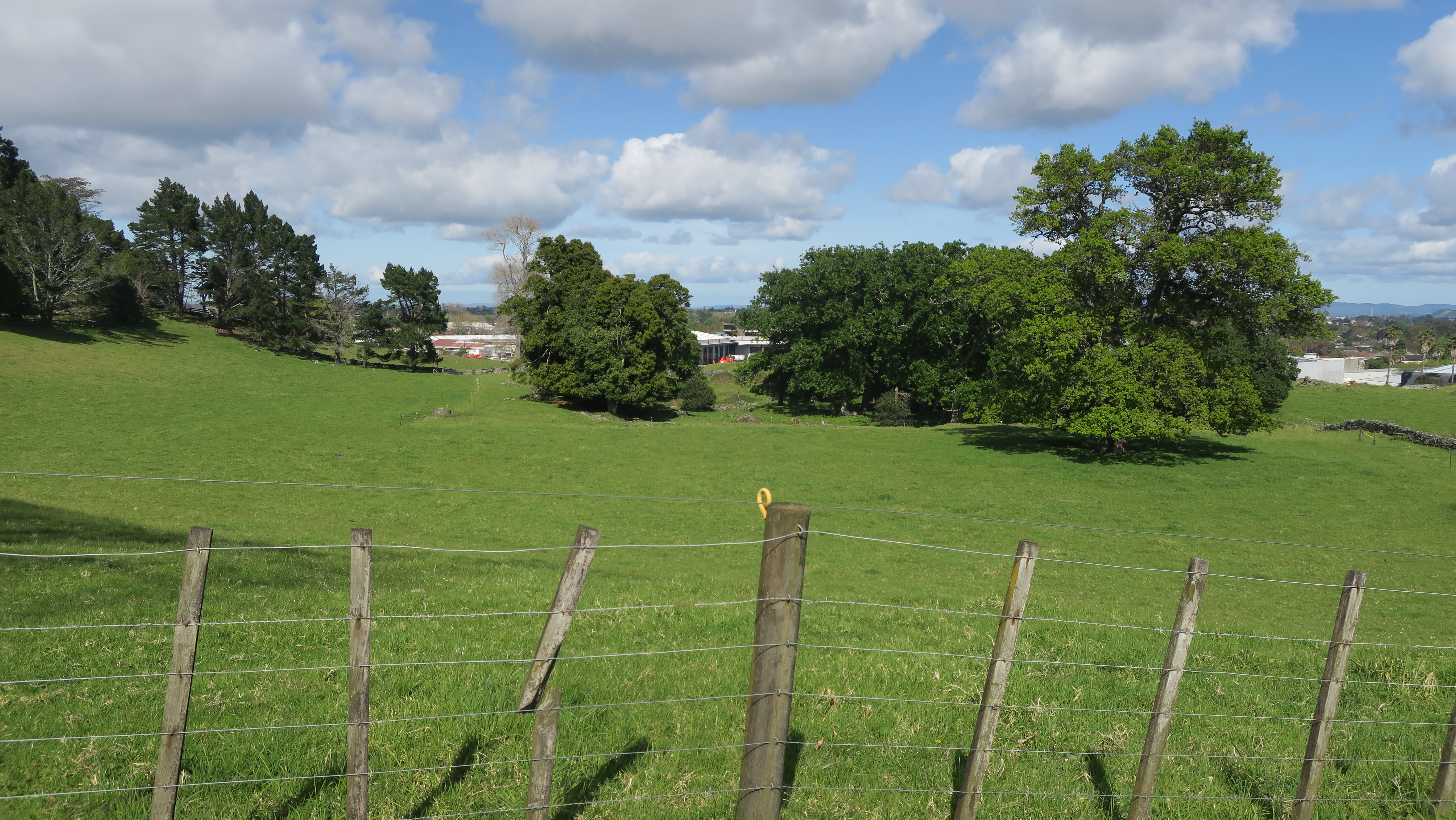
Hampton Park is situated in the heart of commercial Otara, a pocket of farm land amongst the warehouses, factories and offices. Having never been there or even for that matter heard of it, I was intrigued to find out more. The park is in fact a working farm and whilst the public are able to walk around it there are no proper footpaths and no other facilities (there is a house and it is lived in by the family who farm the park as well others – if visiting please respect their privacy).

The story of Hampton Park begins long before people arrived in the area. Geologically it is part of the wider volcanic landscape of Auckland, here in Otara there are (or were) three volcanoes, the largest of which was called Te Puke o Taramainuku (‘the hill of Taramainuku’, a Tainui ancestor). The small scoria cone that sits in Hampton Park is the smallest of the three and is probably the smallest of all the Auckland volcanoes. It is so small that it has no formal name, simply being referred to as the Hampton Park volcano.

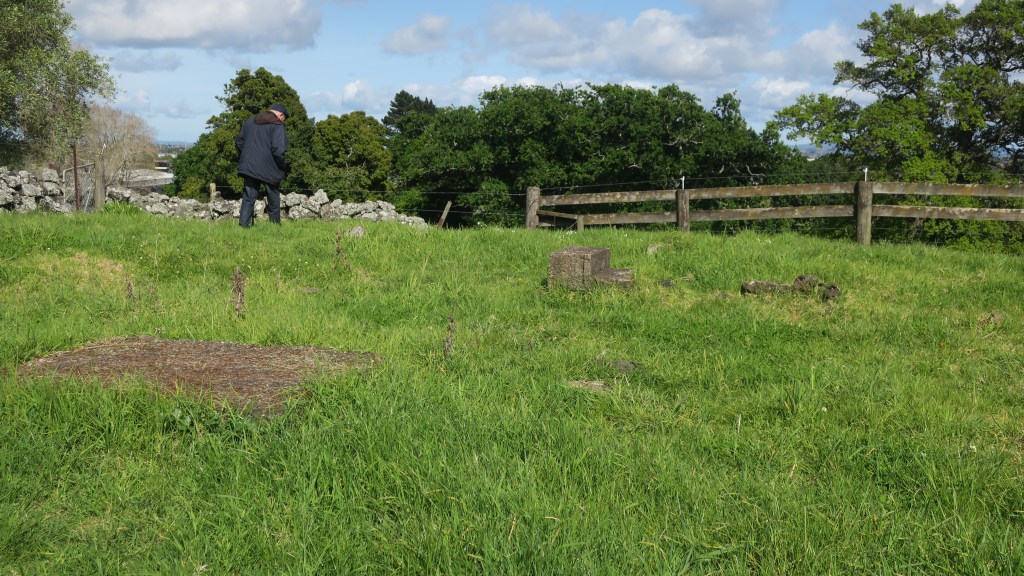
The beginnings of the human story in the area is much like the human story all over Tamaki Makaurau. Here like everywhere else Māori terraced the flanks of the cones and grew crops in the good volcanic soil. The larger cones would have provided a place of refuge when in need. The small cone in Hampton Park shows some evidence of terracing but later changes has blurred this somewhat. Alongside the driveway between the house and the church there is a large rectangular kumara pit which has remarkably survived. For more on the Māori use and occupation of the maunga of Tamaki Makaurau read here.

The large rectangular kumara pit between the house and the church.
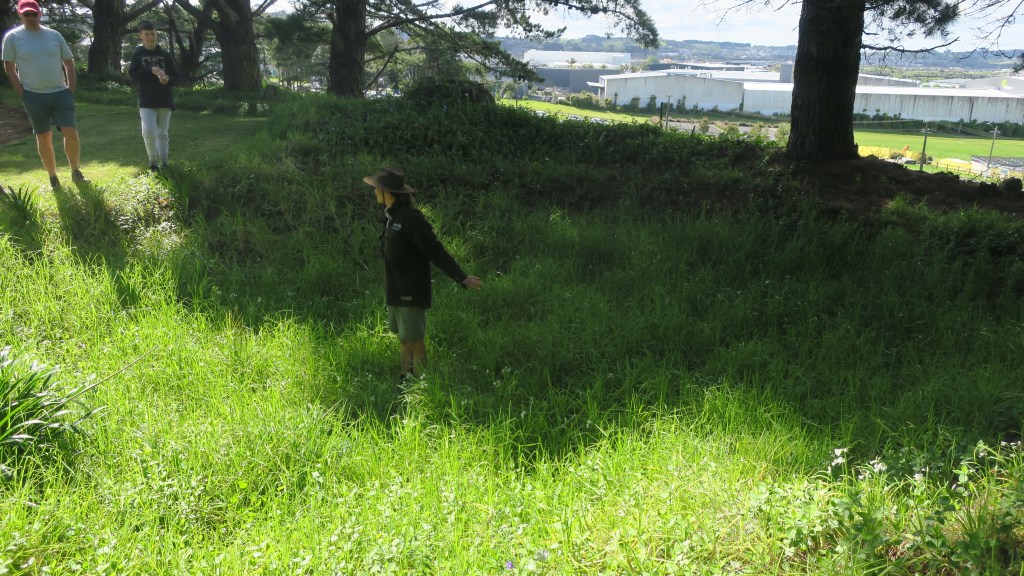
Terracing on the sides of the Hampton Park volcano.

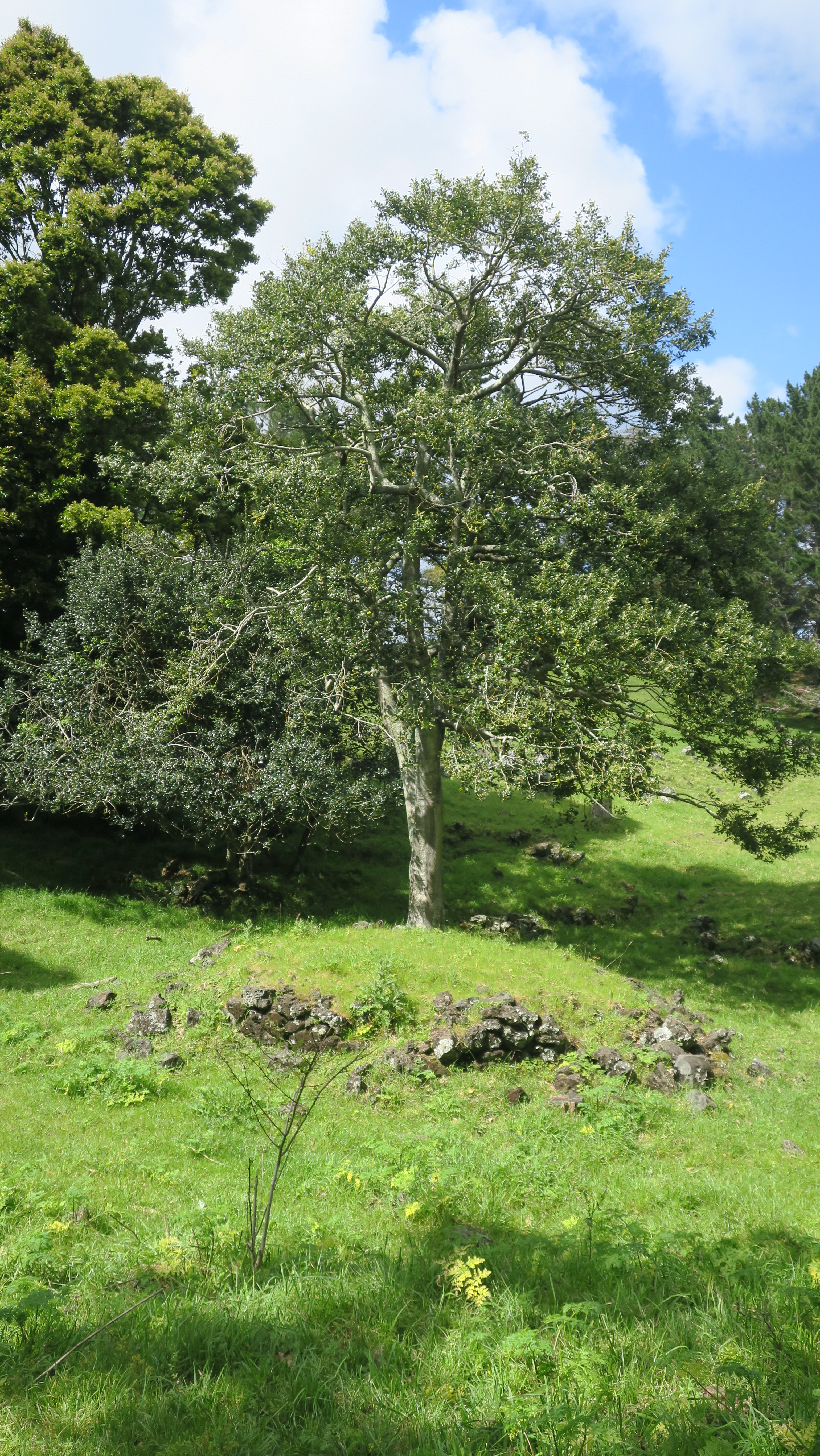
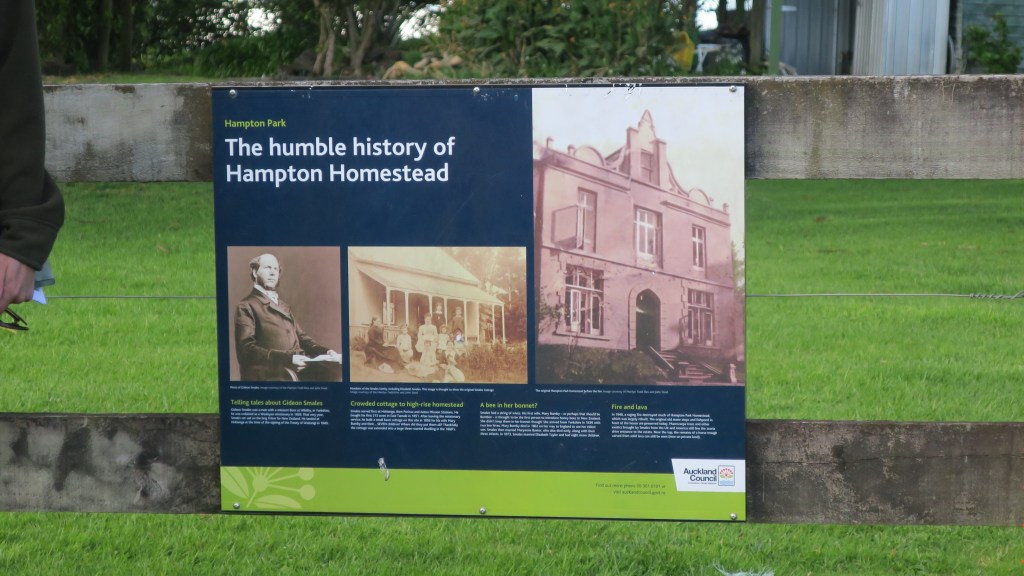
In 1852 the Rev. Gideon Smales, a Wesleyan missionary, bought 460 acres from the fencible Major Gray, settling there with his wife and children in 1855. The land was cleared of rocks, stone walls were built and crops and livestock brought in. Gideon Smales called the farm Hampton Park as he wished to model it on the English gentleman’s estate. It was said to have once rivalled Sir George Grey’s Kawau Island estate for its ‘botanical excellence’.

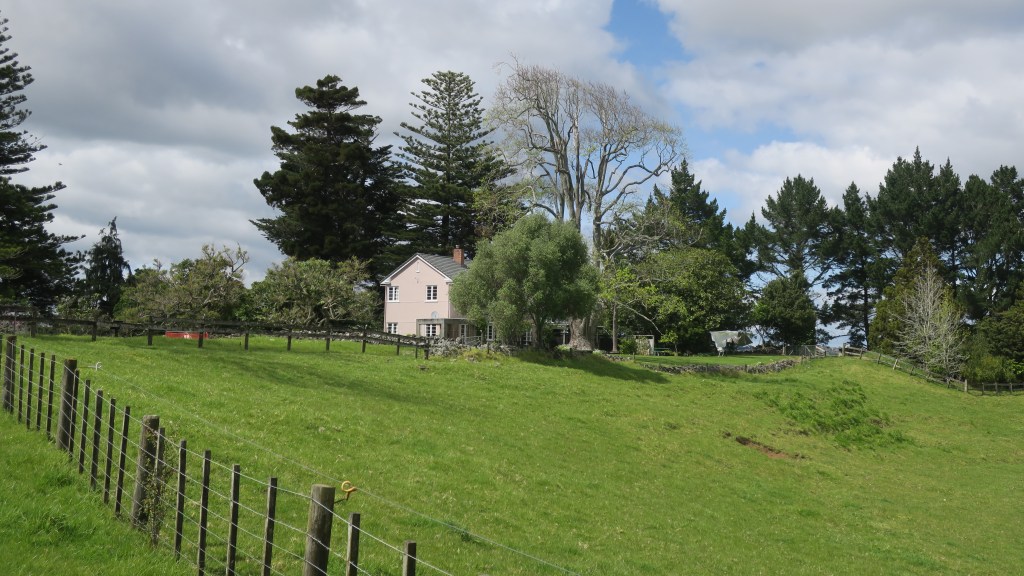
The current homestead.
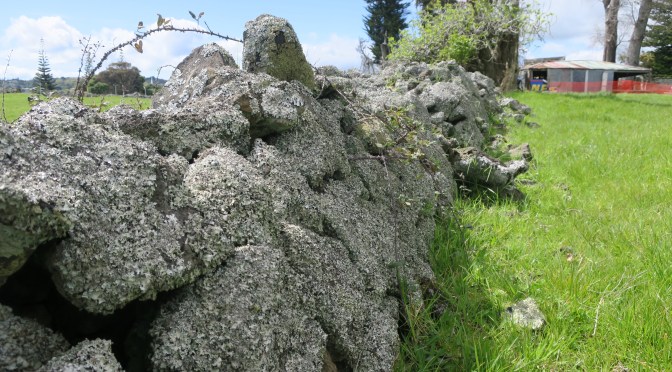
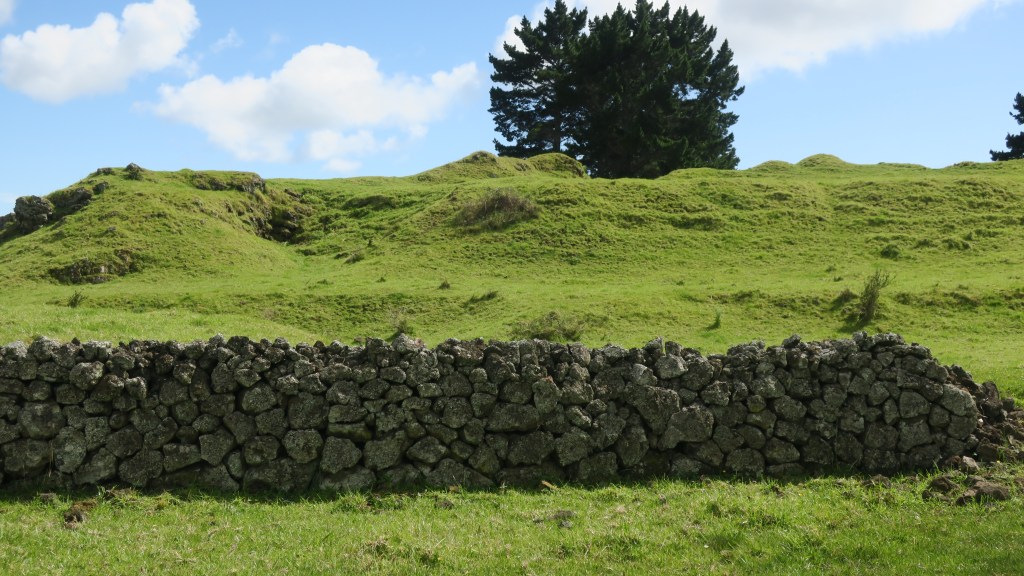
One of the many stone walls found on the farm, in the background is the cone of Hampton Park volcano

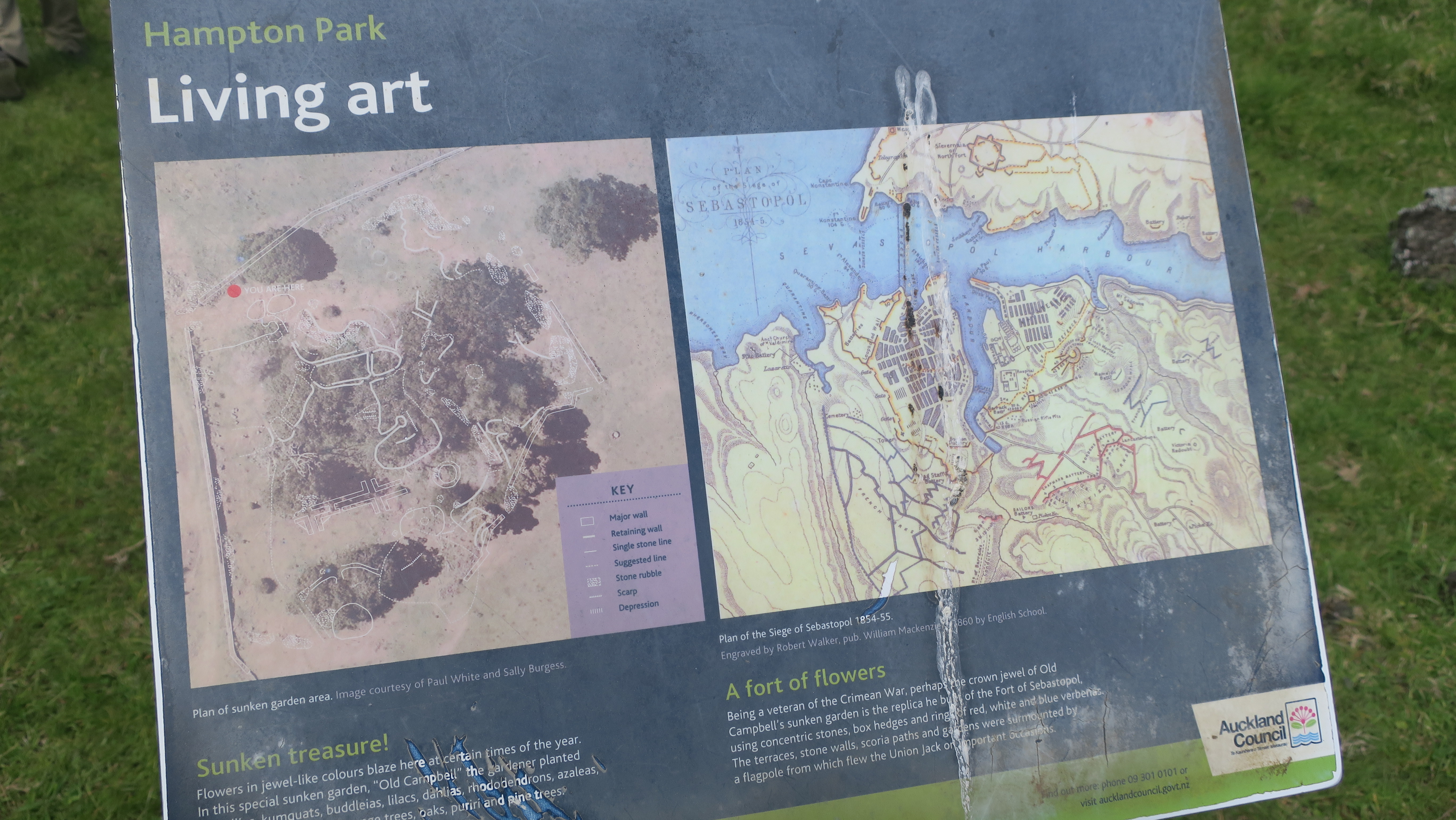
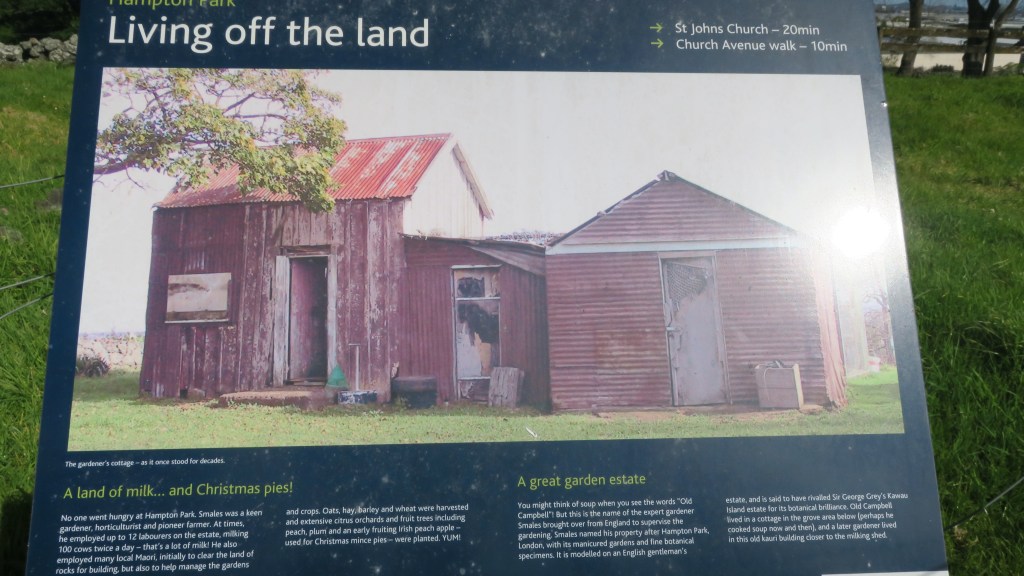
The farm grew oats, hay, barley, wheat and had an extensive orchard which included cider apple trees, pomegranates, oranges, figs and plums to name a few. In addition, to the more practical elements of the farm, the gardener – a veteran of the Crimean War – built a sunken garden in the form of the fort of Sebastopol. The remains of which can still be seen today. The excessive amount of stone on the estate resulted in it being used for a great many projects including the sunken garden, a rockery with a high stone wall and cave and of course the stone walls.

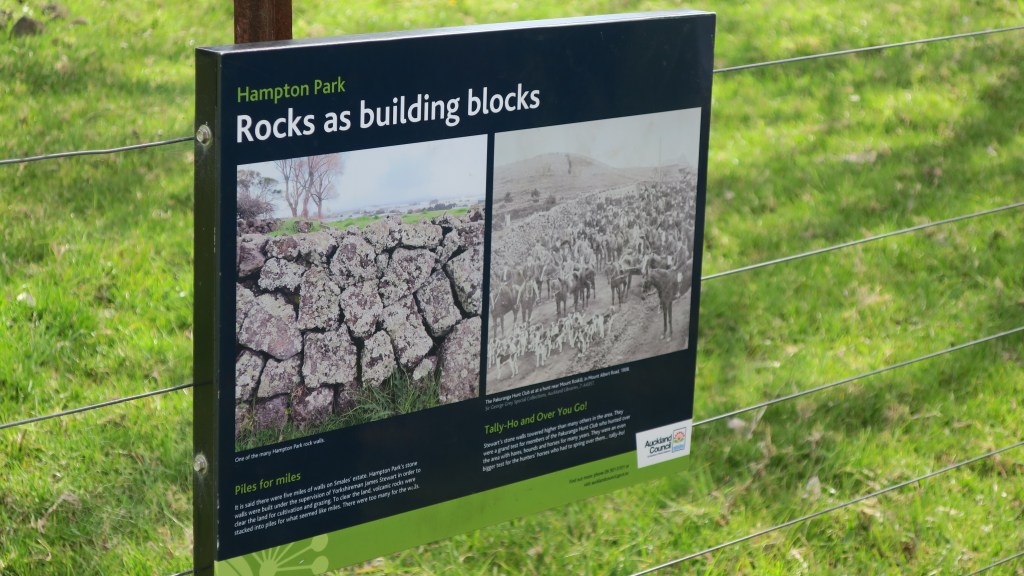
The stone walls which were constructed with the stone cleared away for cultivable fields was done so under the supervision of James Stewart who immigrated to New Zealand from Yorkshire. Due to the vast quantity of stone the walls were higher than was the norm and it was said there was over five miles of walls on the estate.

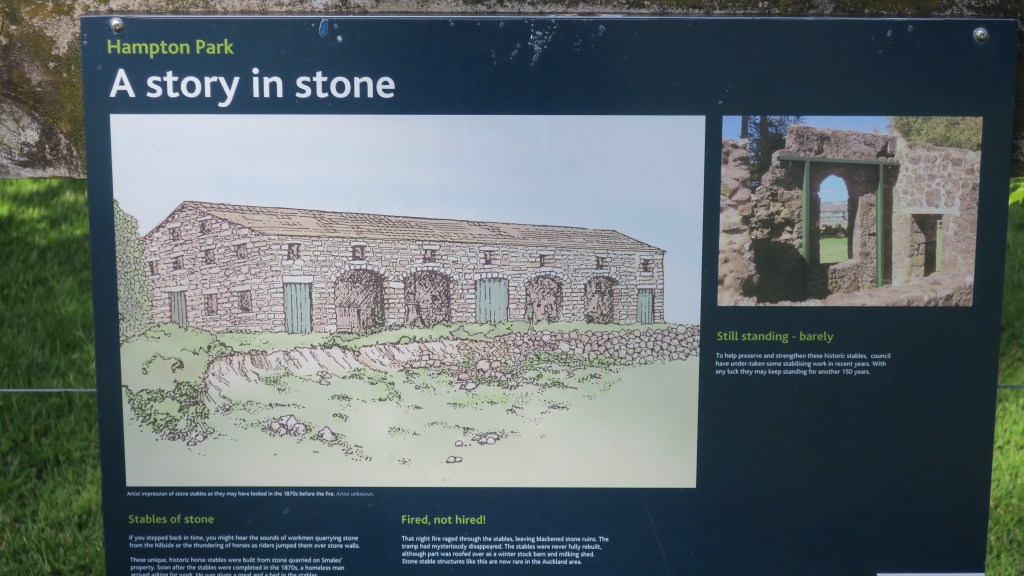
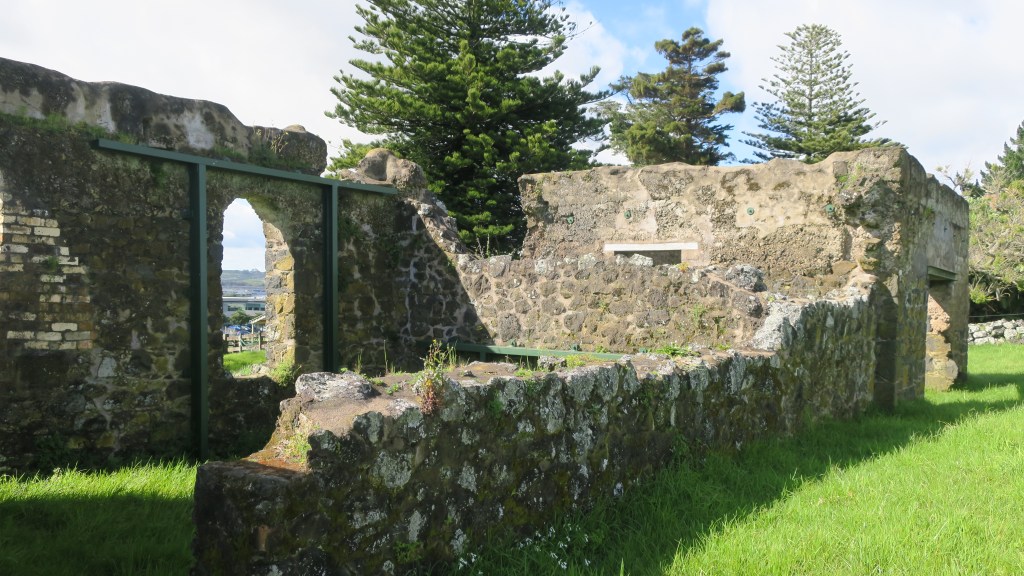
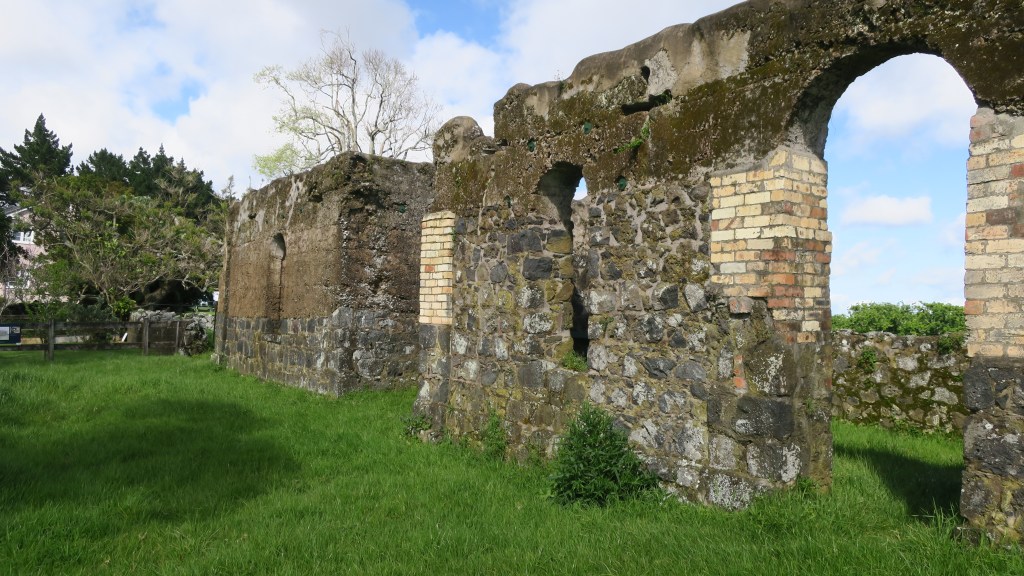
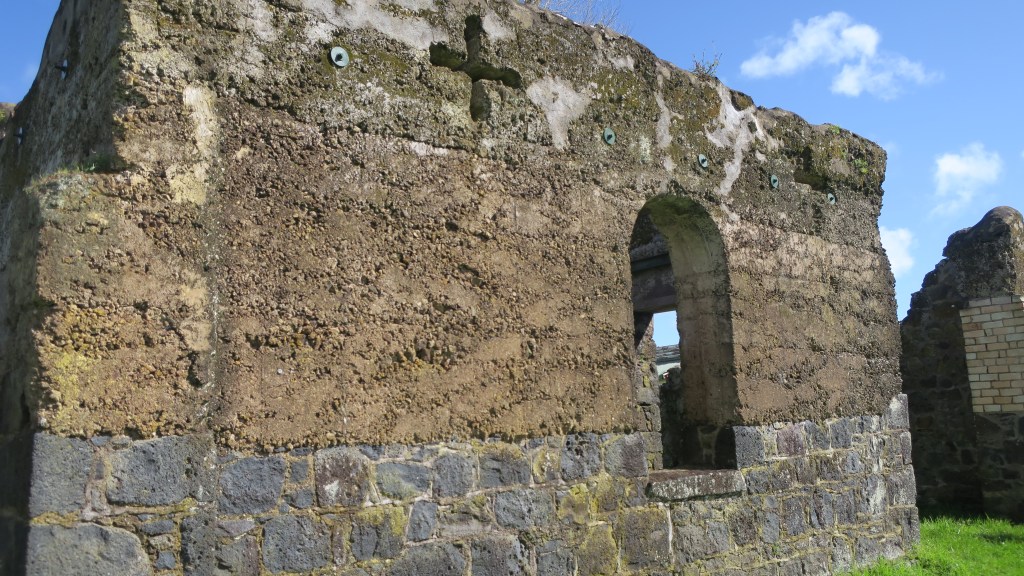
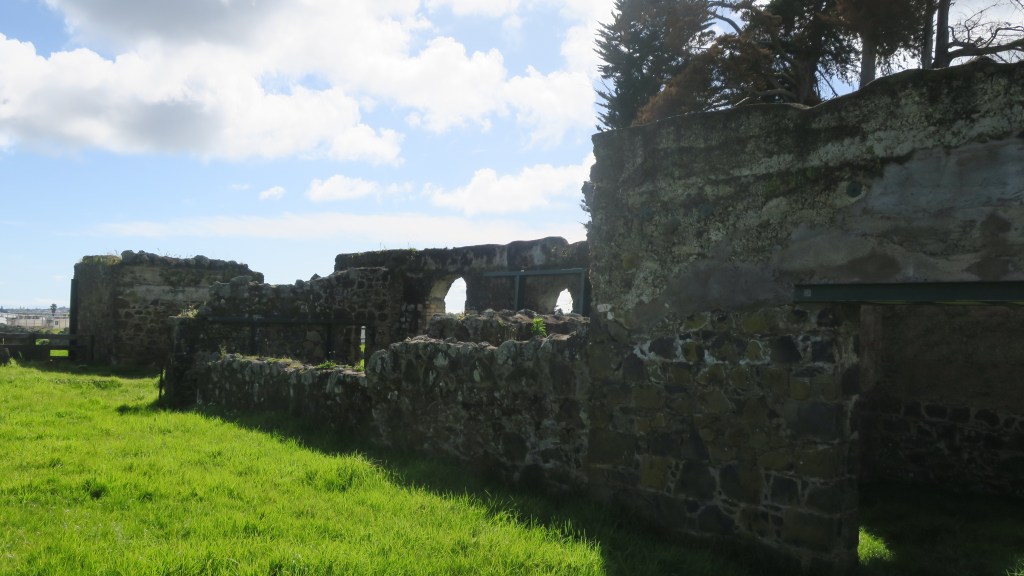
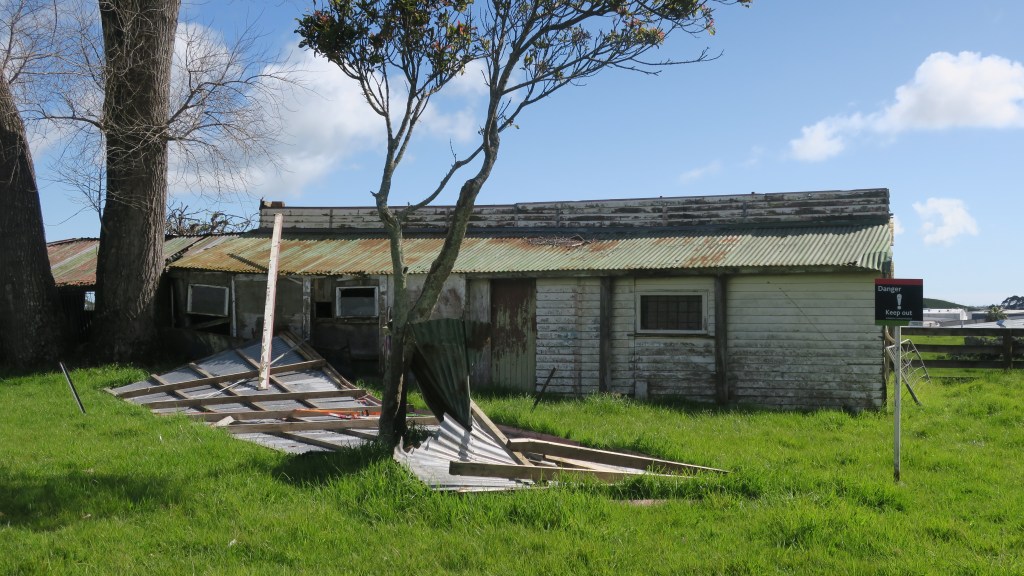
As is to be expected on a farm there are a number of buildings but perhaps the most striking are the remains of the stone stables, again built from stone quarried from the estate. Although not long after they were built a vagrant worker came to the estate looking for work, he was given a meal and allowed to sleep in the stables. That night the stables burnt down and the vagrant disappeared. They were never rebuilt properly although they were partly roofed over as barn and milking shed. Nearby are the derelict tin shed of the 1930s barn.

Two other buildings which still stand are the homestead and the church. The current homestead is the second to have stood on the estate, the first was burnt down in 1940 and the current homestead was built – only the front steps remain of the original house. The first homestead was built in 1855, it was three storied and had ten rooms which was later extended to eighteen rooms in 1869.

Images of the first two homesteads on site with the Rev. Gideon Smales on the left.

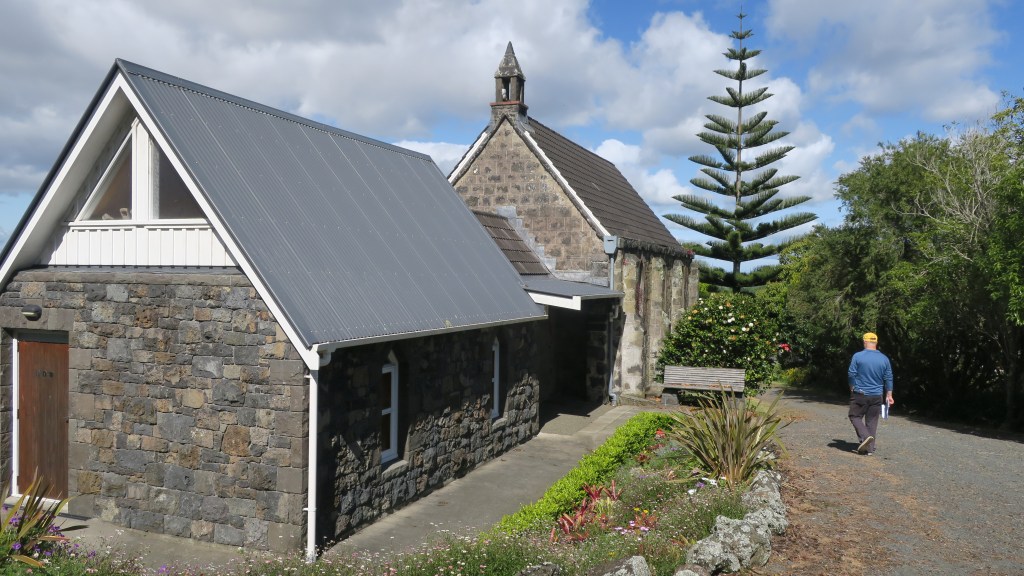
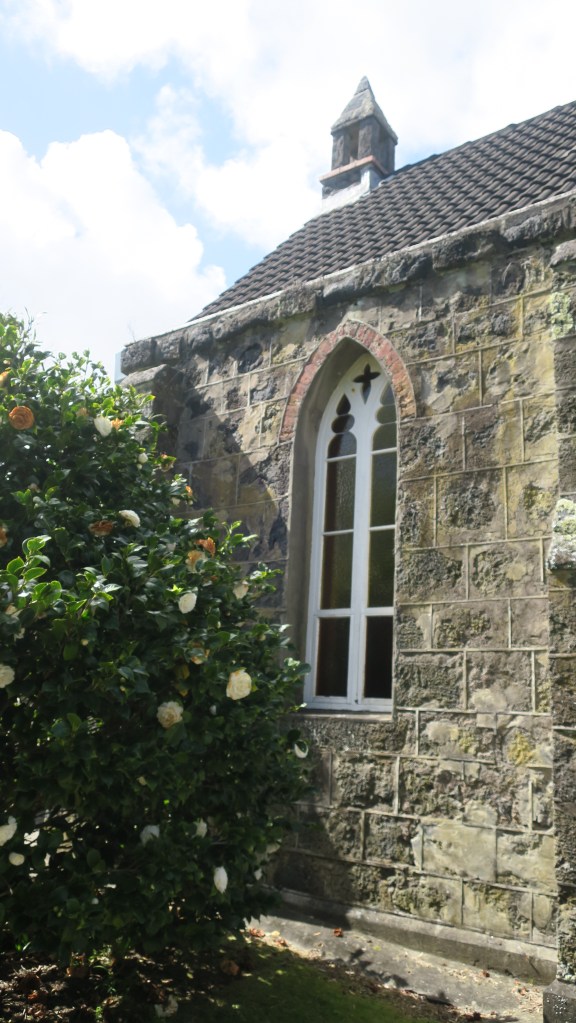
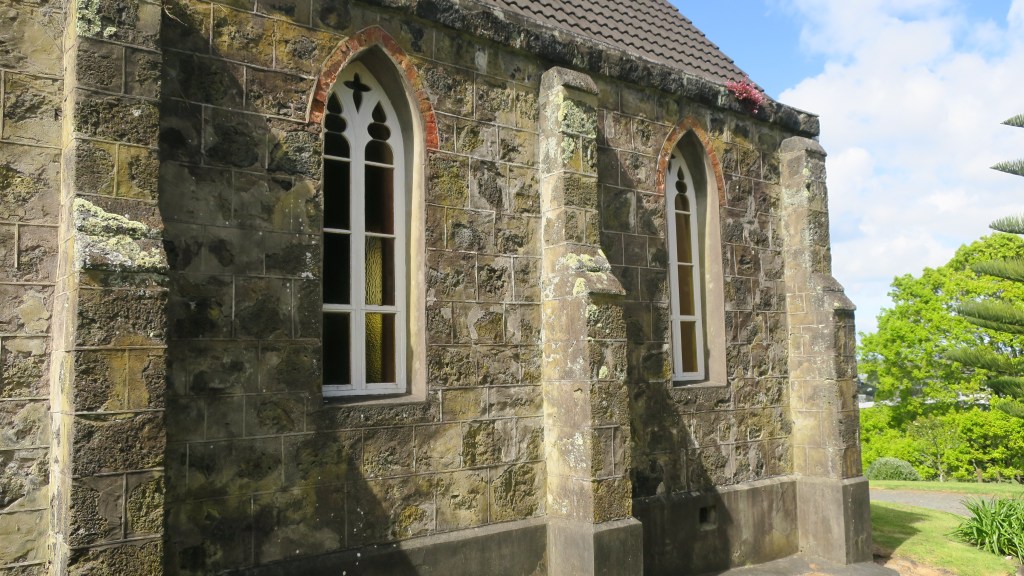
The small chapel – St John’s church – is also constructed using stone from a nearby quarry. Interestingly, the mortar for both the church and the house was made of burnt shell from Howick beach, the timber arrived via the Tamaki river and was brought overland by bullock teams. The first service to be held in the church was on Sunday the 12th January 1862. When the Rev. Gideon Smales died in 1894 he bequeathed the chapel and four acres jointly to the Anglican and Methodist Churches. It is still used today for services once a month.

The Missing Maunga

Beyond the settler history of the park there is another story that is reflected in the wider landscape of Auckland Tamaki Makaurau. As mentioned earlier the small volcano cone at Hampton Park is one of three in the immediate area, which may confuse the visitor, as nothing of the other two remain to be seen.

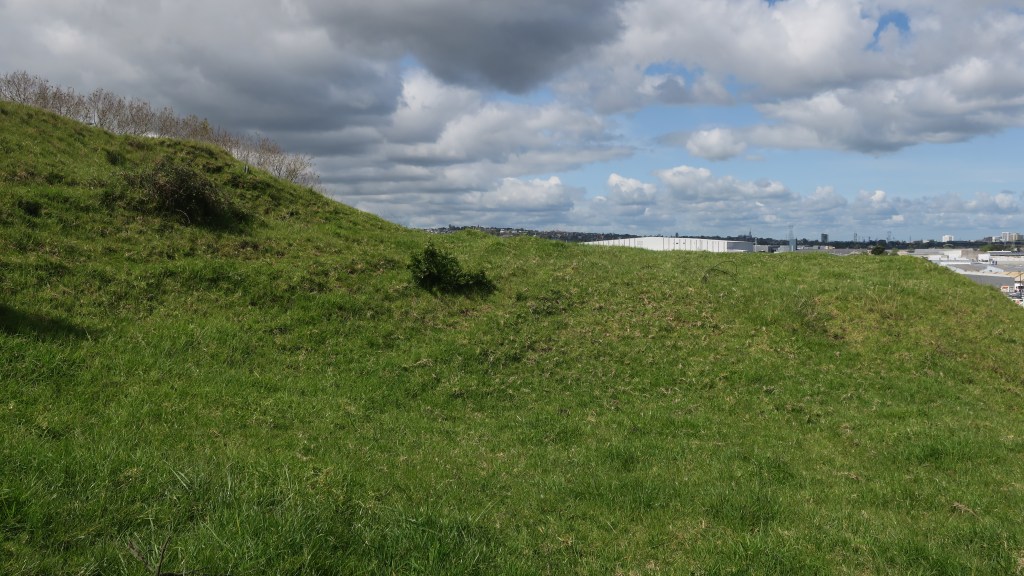
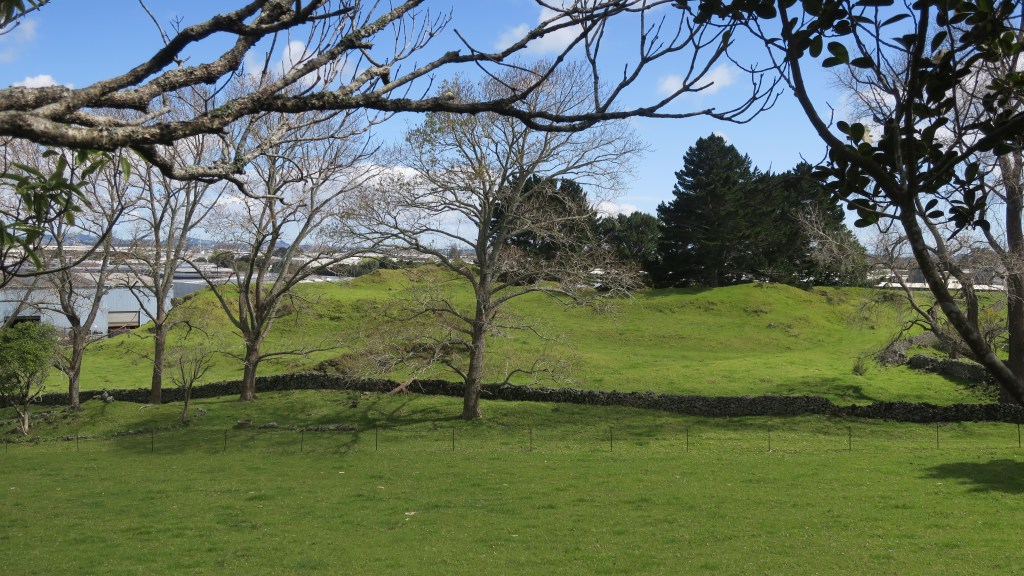
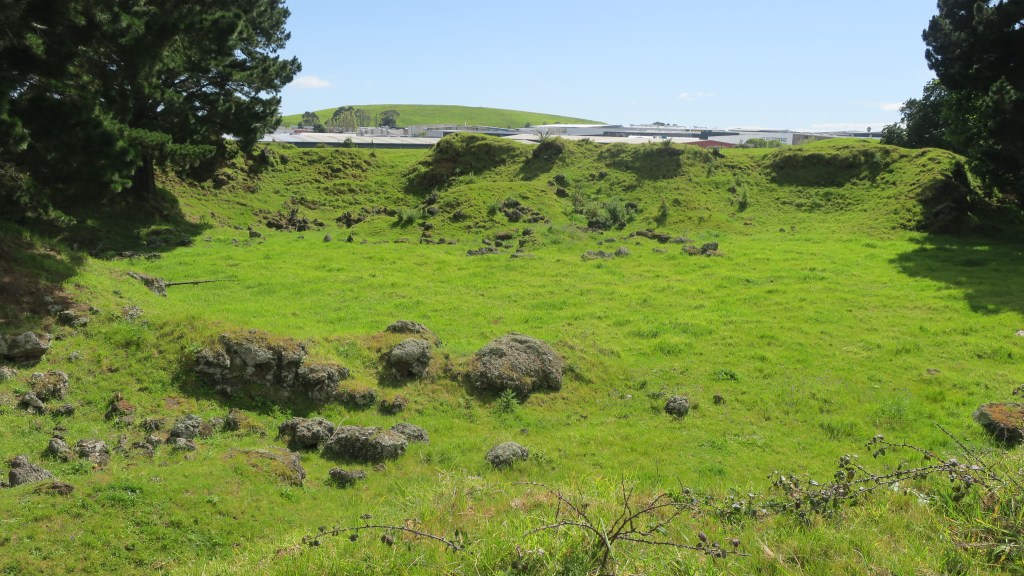
The inside of the Hampton Park volcano. The roofs of the industrial estate in the background is where Te Puke o Taramainuku would have stood and the green mound at the rear is all that is left of Matanginui (see below).

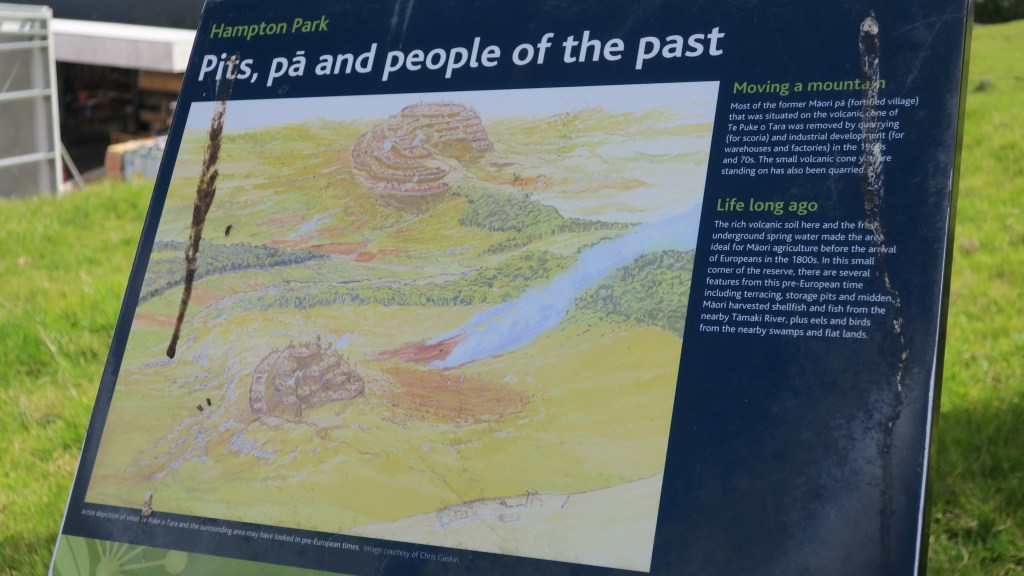
Te Puke o Taramainuku has been completely quarried away beginning in 1955 and now is vast expanse of factories, beyond is Greenmount or Matanginui which had minor quarrying from around 1870 which began in earnest during the 1960s. The quarry eventually became a landfill giving way to the gently sloping mound/hill we see today.

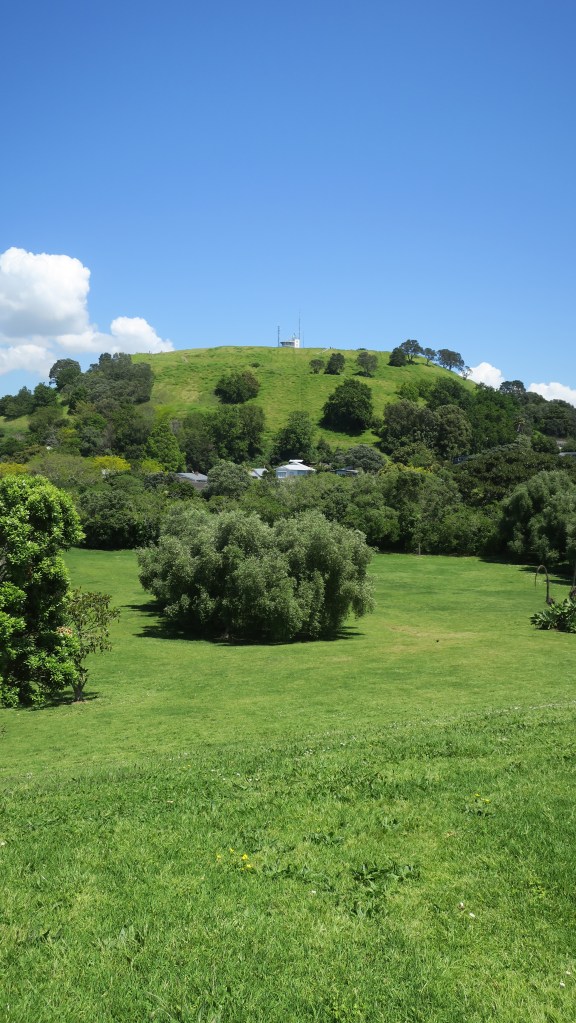
Another view of the missing maunga/volcanoes.

The quarrying of the volcanic cones around Auckland in the late 1800s up until the mid fairly recently was not an unusual. Many of the cities defining features were quarried away to make way for development and to use the raw material of scoria and basalt in the infrastructure of a city. An earlier event at the Devonport Museum told of the history of Takararo/Mt Cambria, another volcanic cone wedged between Takarunga/Mt Victoria and Maungauika/North Head which was mostly quarried away and only more recently became the pleasant parkland area it is today.

The parkland that was Takarora/Mt Cambria with Takarunga/Mt Victoria in the background.

Other volcanoes that have been subjected to quarrying to the point of total removal include –

Te Apunga-o-Tainui/McLennan Hills; Waitomokia/Mt Gabriel; Ōtuataua Volcano/Quarry Hill; Maungataketake/Elletts Mountain; Te Pou Hawaiki (the second smallest cone and now a carpark);Te Tātua-a-Riukiuta/Three Kings; Rarotonga/Mt Smart; Maungarahiri/Little Rangitoto; Te Tauoma/Purchas Hill to name a few.

There are also many others which have been partially quarried, of the fifty three volcanoes in Auckland only thirteen appear to have been untouched by the bulldozer and the digger. This is not to say that those that remain have been completely untouched by human hands. For as long as there has been people in Tamaki Makaurau then the landscape and its features will have been adapted and utilised to suit the needs and requirements of its inhabitants.

For more information regarding the volcanoes of Auckland I recommend the following book –

B. W. Hayward (2019) The Volcanoes of Auckland. A field guide. Published by Auckland University Press