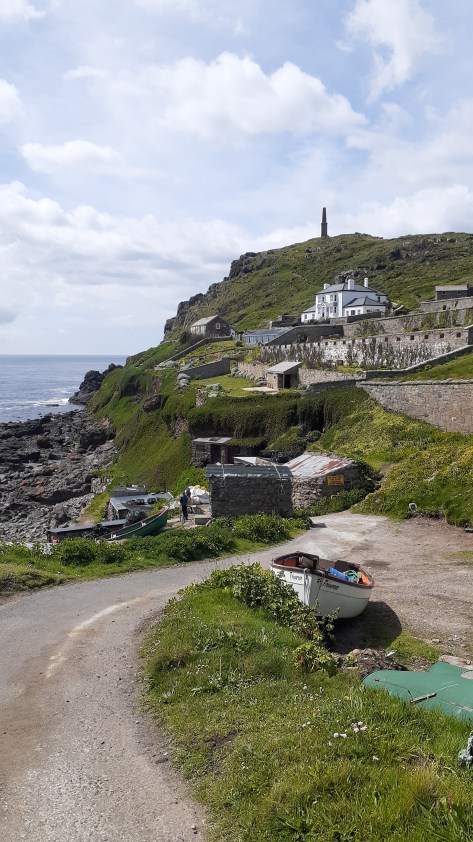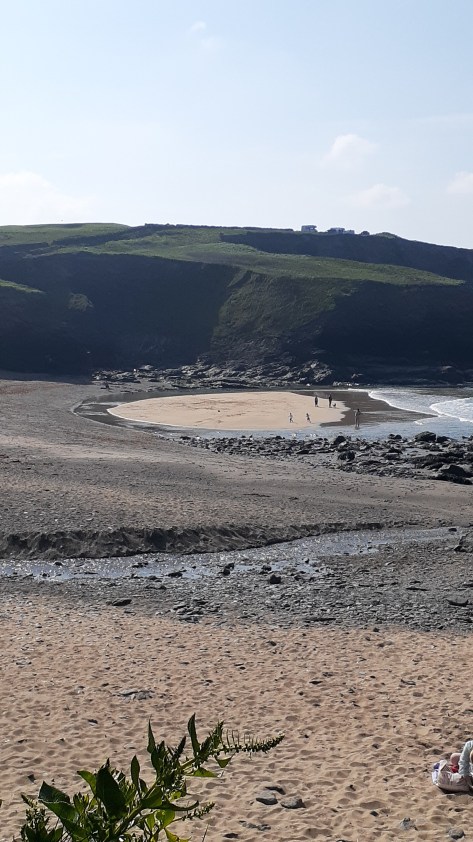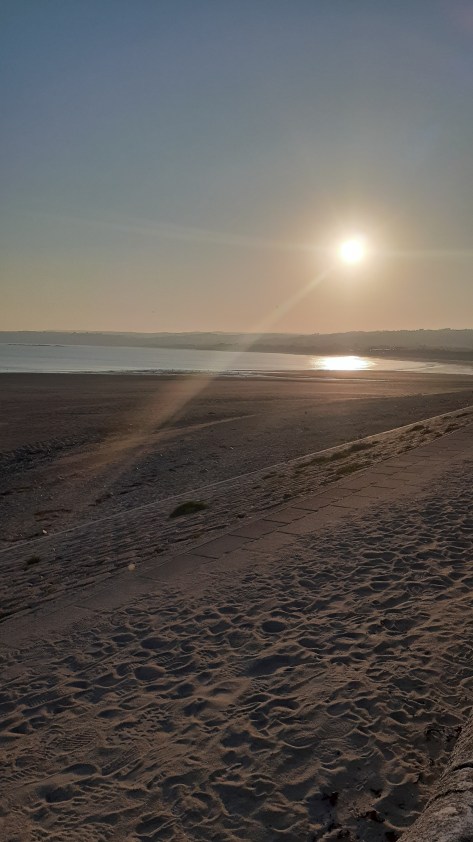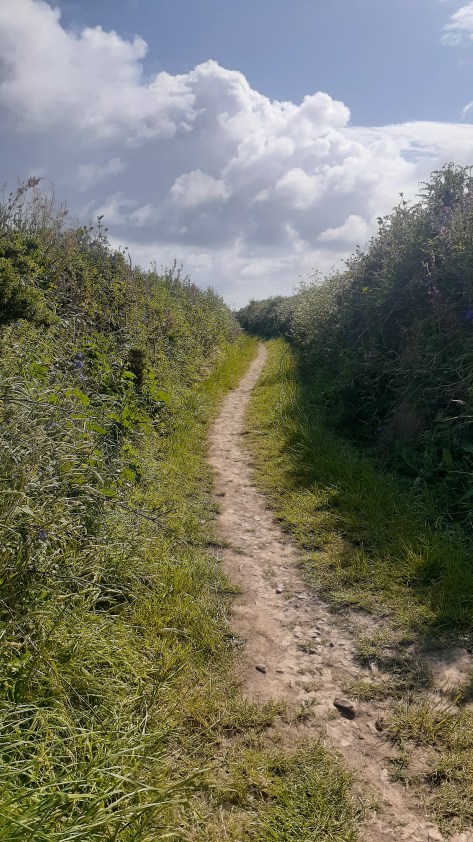
Category Archives: Gallery

An Adventure to the East Cape

One of the great traditions in New Zealand is the ‘roadie’ – the road trip. As a country whose nearest neighbours are a minimum of a three-hour flight away it has always been considered a must do to explore our own backyard. Something we as a family have endeavored to do, even more so now we have ‘Miffo’ the motorhome. Recently we decided to take a week to explore the beautiful East Cape, an area we had yet to visit.
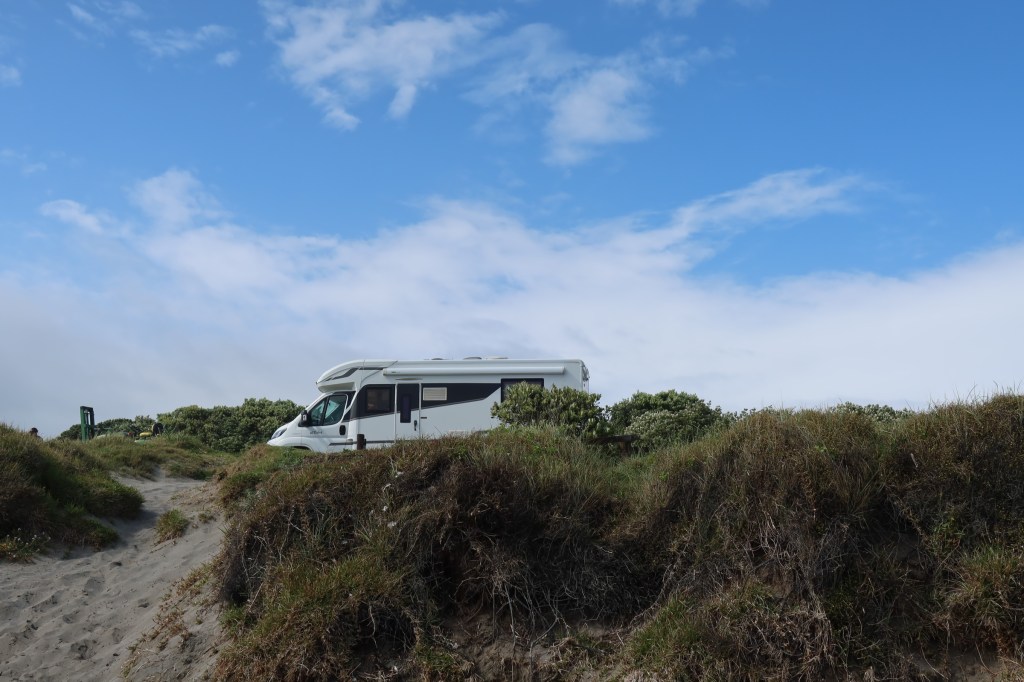
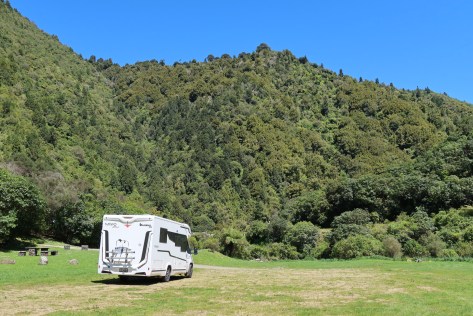
Miffo the Motorhome at one of the many roadside stops on our journey.

Our journey began as it always does with the husband being impatient and wanting to leave at the crack of dawn…the dog and I objected and we compromised – we left a short while after the crack of dawn. The drive from Auckland to Ohope Beach, our starting point, was predictable, much of the road was one we had travelled before. There was a brief stop in Katikati for a visit to the farmers market where we bought honey and we got slightly turned around when himself decided he did not want to pay the toll on the Tauranga East road. It was not a huge sum but sometimes it is very hard to get a Cornishman to part with his money. Apparently, it was the ‘principle’…eventually after a bit of swearing we found the free route.

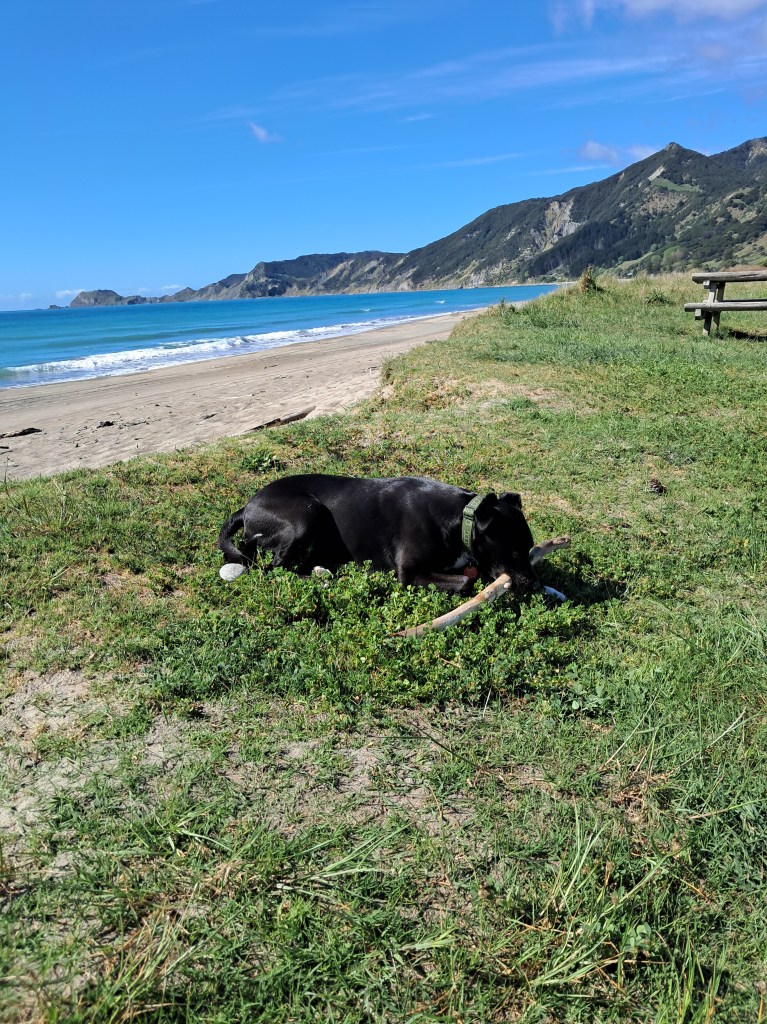
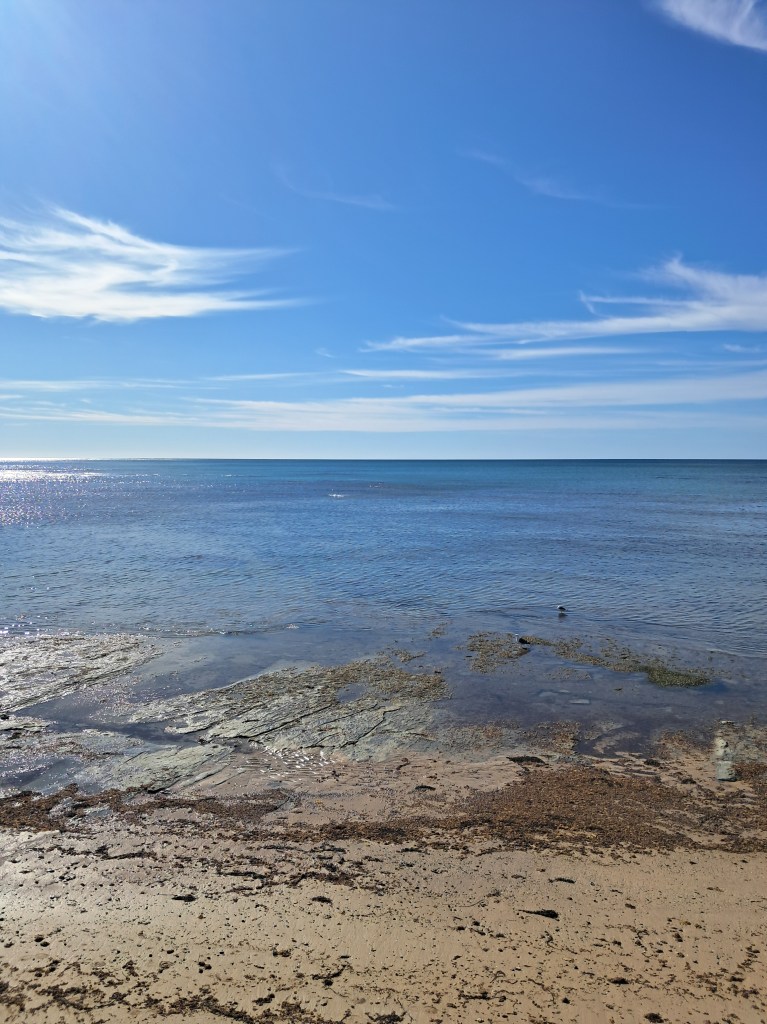
Our first night as mentioned was at Ohope Beach at the freedom camp at the far end of the harbour. Unsurprisingly, it was a popular spot being on the water and quiet. There was a typical husband moment where he lost his phone down one of the side panels in the sleeping area, it was eventually retrieved amidst much swearing and after borrowing a screwdriver (note to self – bring toolbox next time) from a neighbour so I could surgically retrieve said phone. After all that excitement we took a pre-dinner stroll across the dunes to the surf beach and for an Aucklander it was fabulous to have a beach as beautiful as this one to ourselves. The dog found what was to be the first of many sticks…
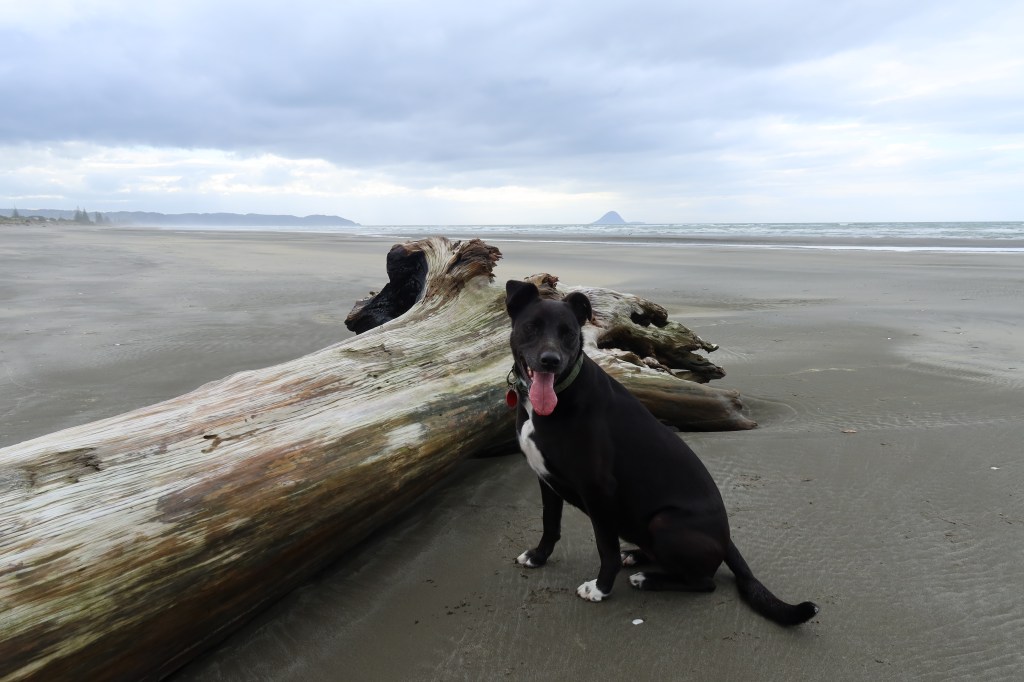
I think this ‘stick’ was just a tad too big to throw – Ohope Beach surf side.
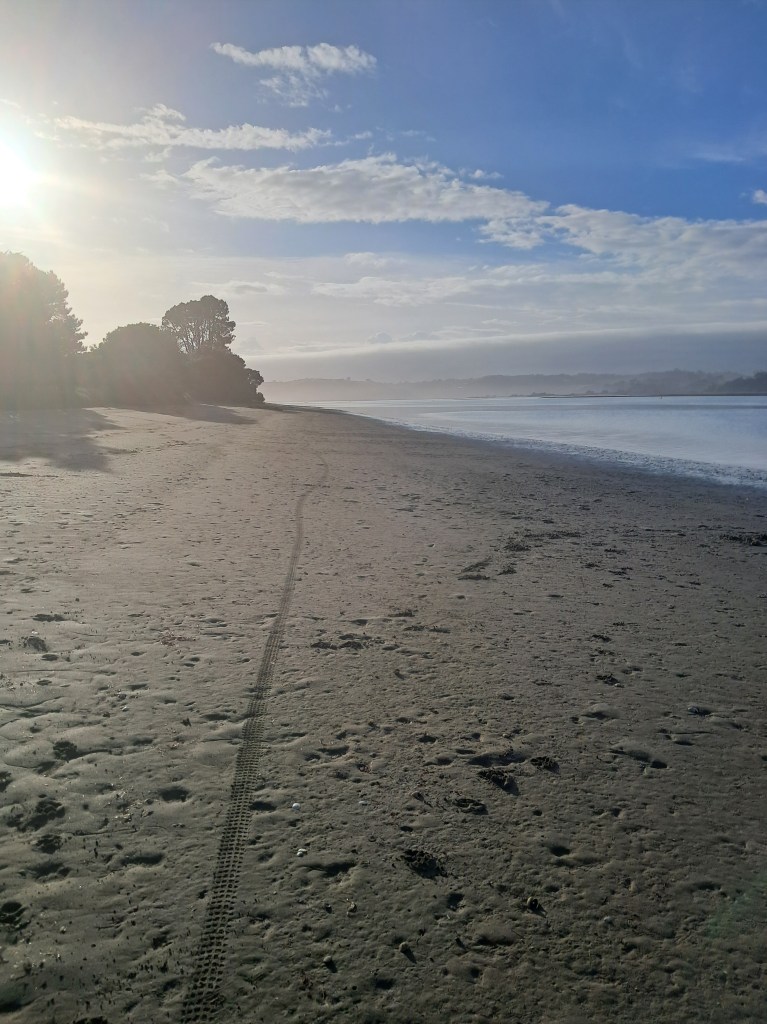
Early morning walk over the fence from our campsite – Ohope Harbour.

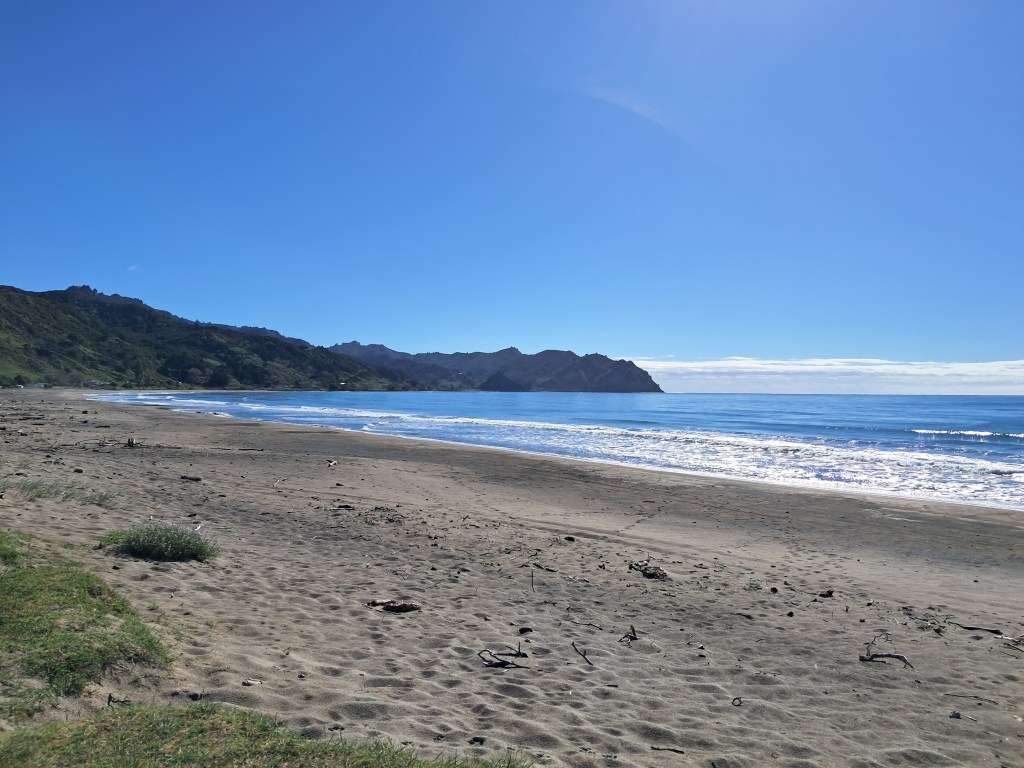
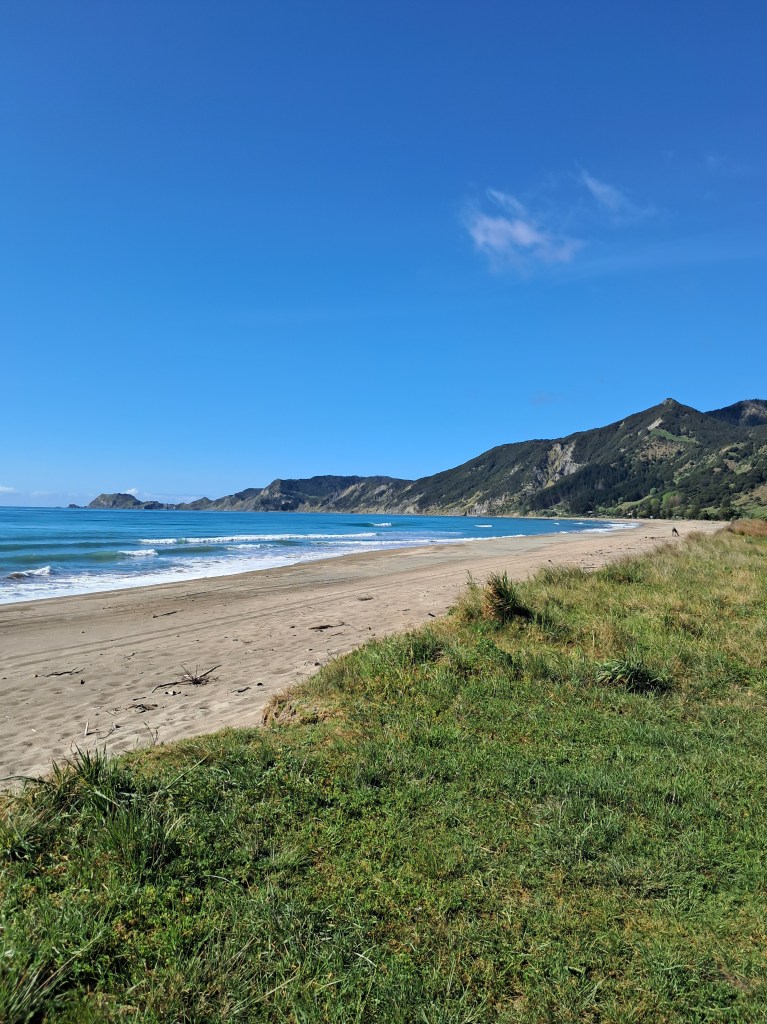
Day two started with the necessary walk and stick throwing for the dog, followed by a mercy mission into Whakatane. The husband had a footwear malfunction and required a new pair – hello Whakatane Warehouse! But it did enable me to purchase the necessary fridge magnets for our collection. After this short side quest we were on our way properly, our target for tonight’s camp was Te Kaha. Along the way, we had a few stops at some lovely beaches (the dog was happy, more sticks!). We arrived at Te Kaha at around lunch time and after some food and a cup of coffee and wee womble on the beach we decided to motor on to Waihau Bay. One of the joys of having a motorhome is the flexibility it offers, sometimes plans change and with our home on wheels we can go with the flow.
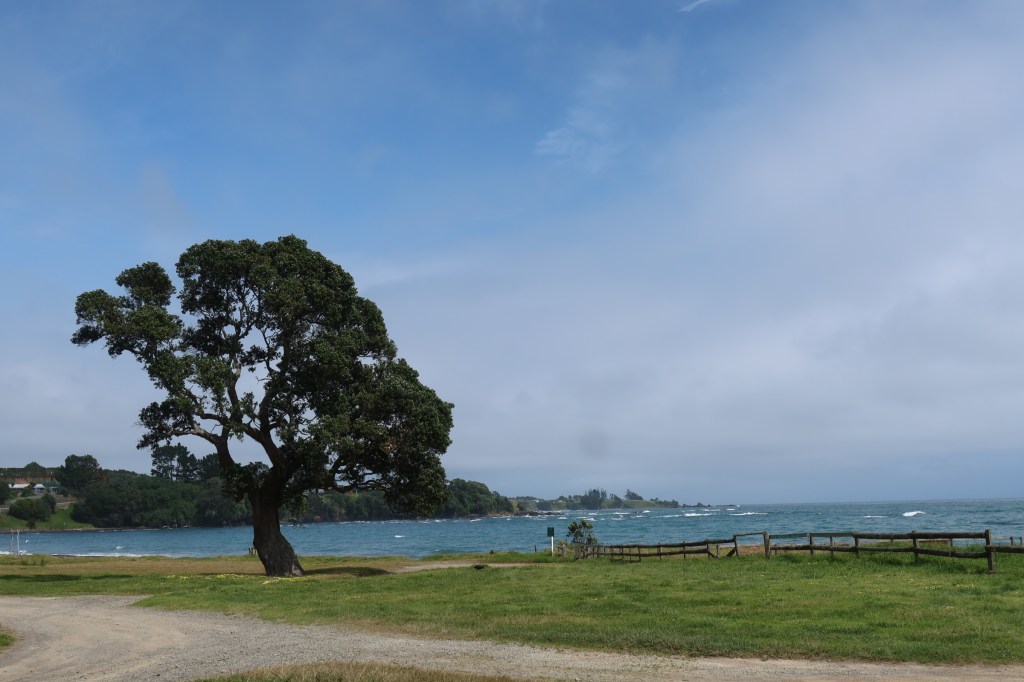
The rest stop at Te Kaha.

Before we reached Waihau Bay we stopped to admire the Kokorore Church. Perhaps one of the prettiest churches I have seen in New Zealand, perched on a small peninsula with its tall wooden spire, it is certainly eye catching. Visiting the small urupa (cemetary) at the rear of the church, it was clear that this was a family church with several names dominating the headstones. I was particularly touched to see the names of three young lads who I presumed to be brothers, who died in an accident in the late 80s. Such young lives to be cut so short, who might they have become, what might they have achieved. With a son the same age I could only imagine their family’s heartache.
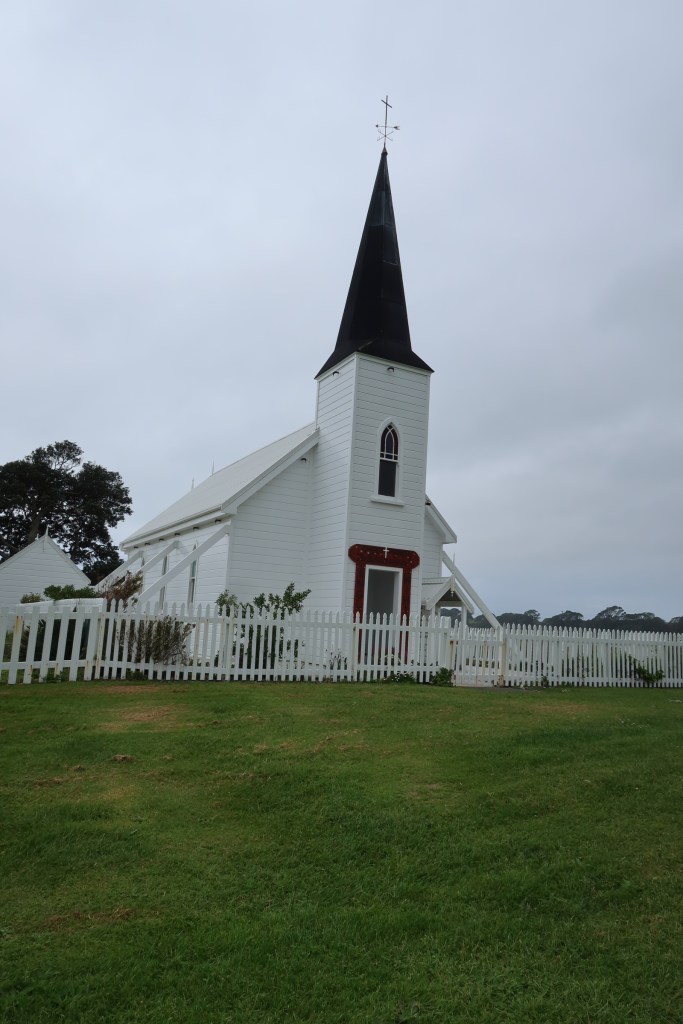
Kokorore Church.

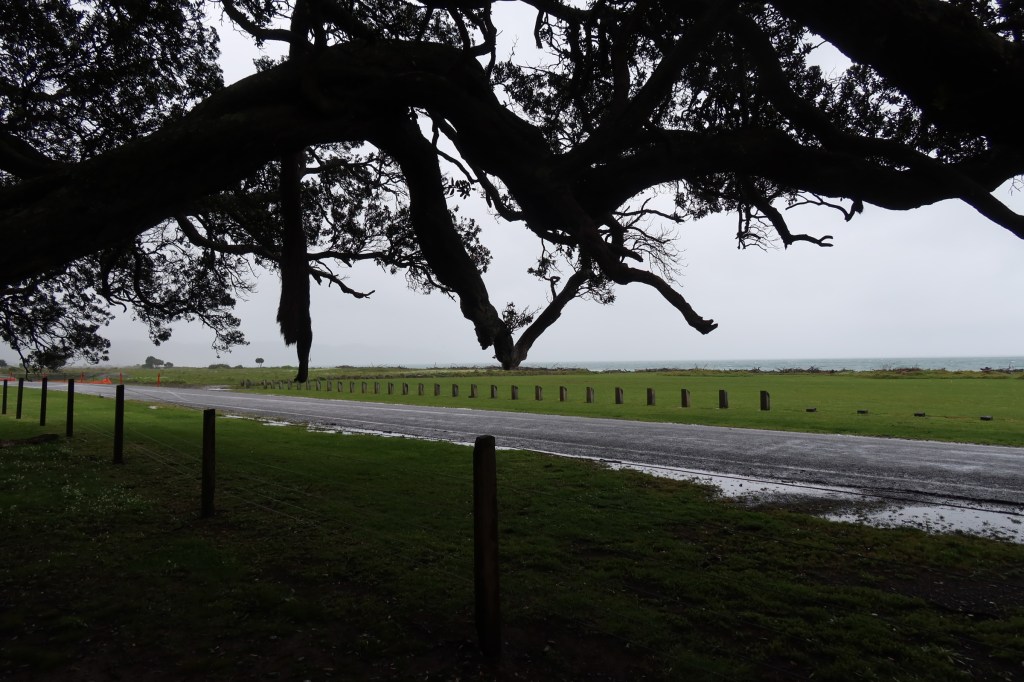
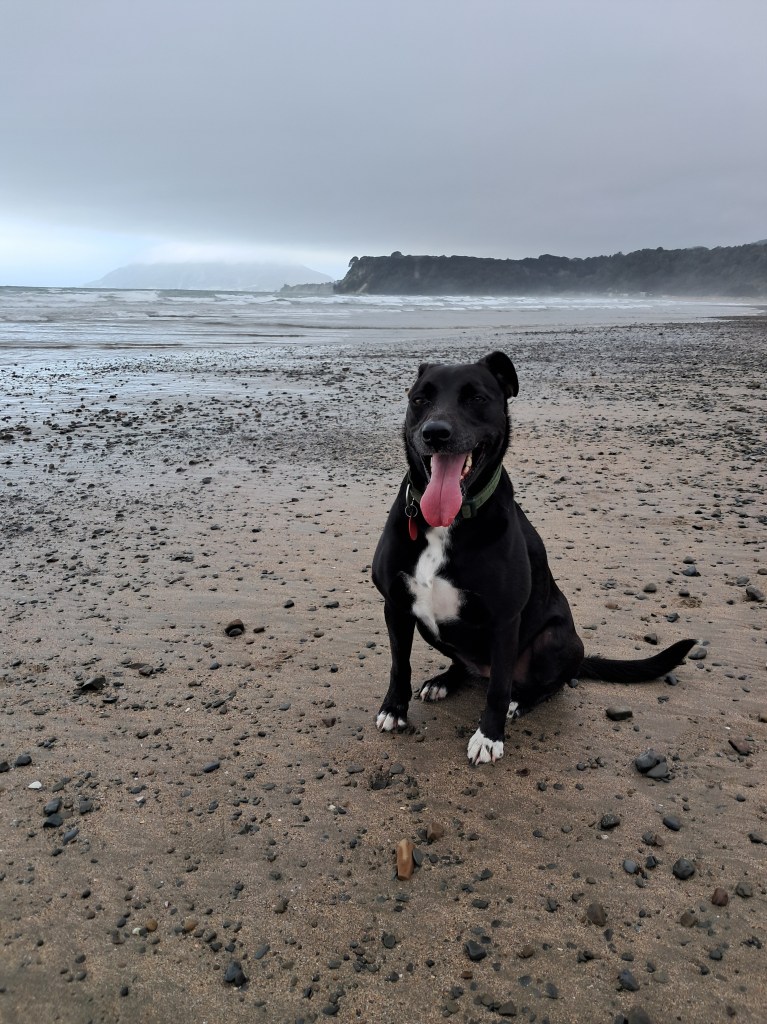
Arriving at the campsite in Waihau Bay we were greeted by the friendly hosts and showed to spot under an old puriri tree. The campsite itself was perhaps a little dated but for the money was perfectly acceptable. It was situated on the main road but to be honest that was not a problem, I think we had a ‘rush hour’ the next morning around 8am where about half a dozen cars and two school buses went past. On the other side of the road was the beach and yes you guessed it more sticks for the dog!
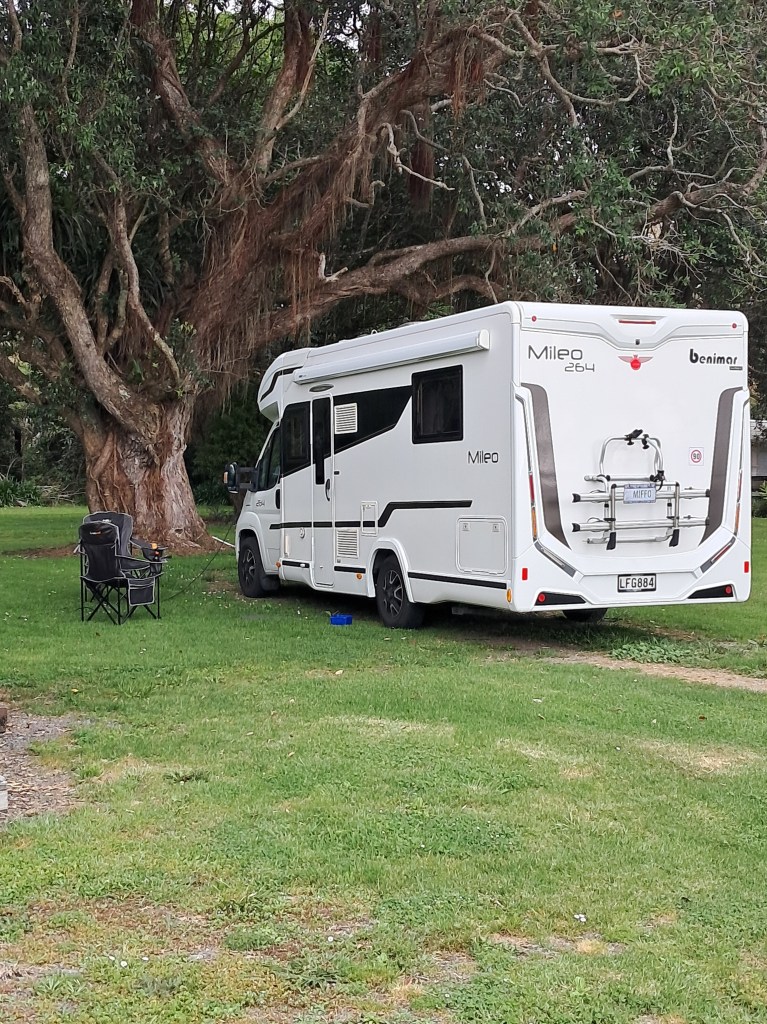
Under the puriri tree.

Day three – we woke up to rain and when I attempted to take the dog for a walk on the beach promptly discovered how well the dunes protected the campsite – it was far windier and rainier than anticipated and was a walk cut short – even the dog was happy to leave the beach. An hour up the road and we stopped at the general store in Hicks Bay, a coffee for myself and what was to be the first of many pies for the Cornishman. The pie is worth a mention here, as it was a Ruatoria pie (Ruatoria is an East Cape town and thus this was a locally produced pie). The husband is always on the lookout for locally produced foodstuffs. His verdict on the pie (steak and cheese) was excellent, apparently, they had used proper cheese (not the fake stuff many pie producers use). I am an awful kiwi, not being a fan of ‘the pie’, so it is good that the husband makes up for my shortcomings.

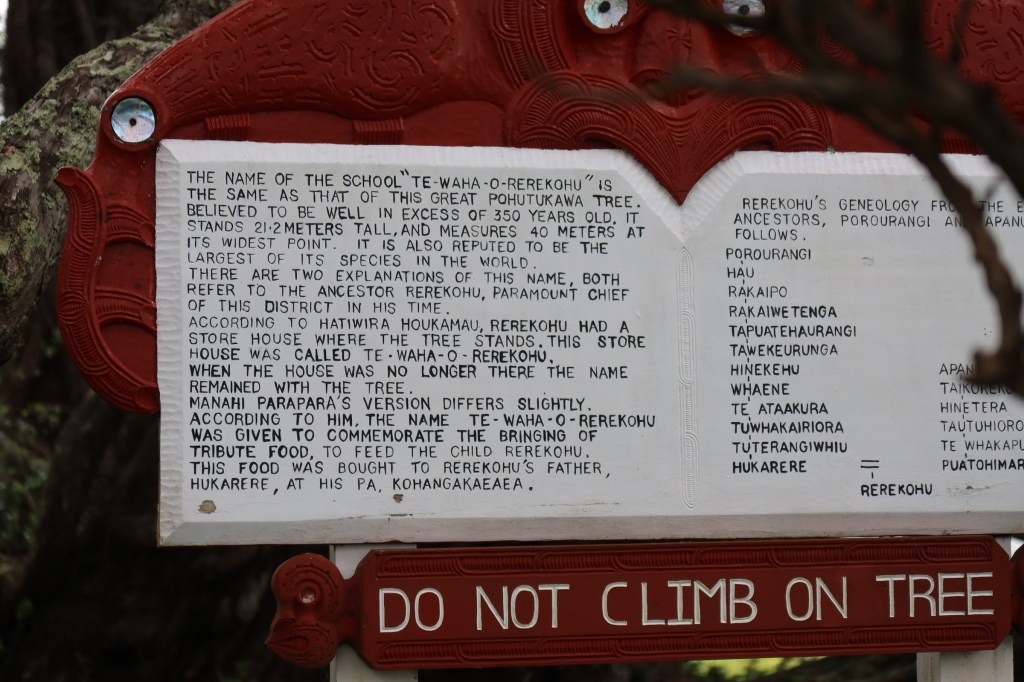
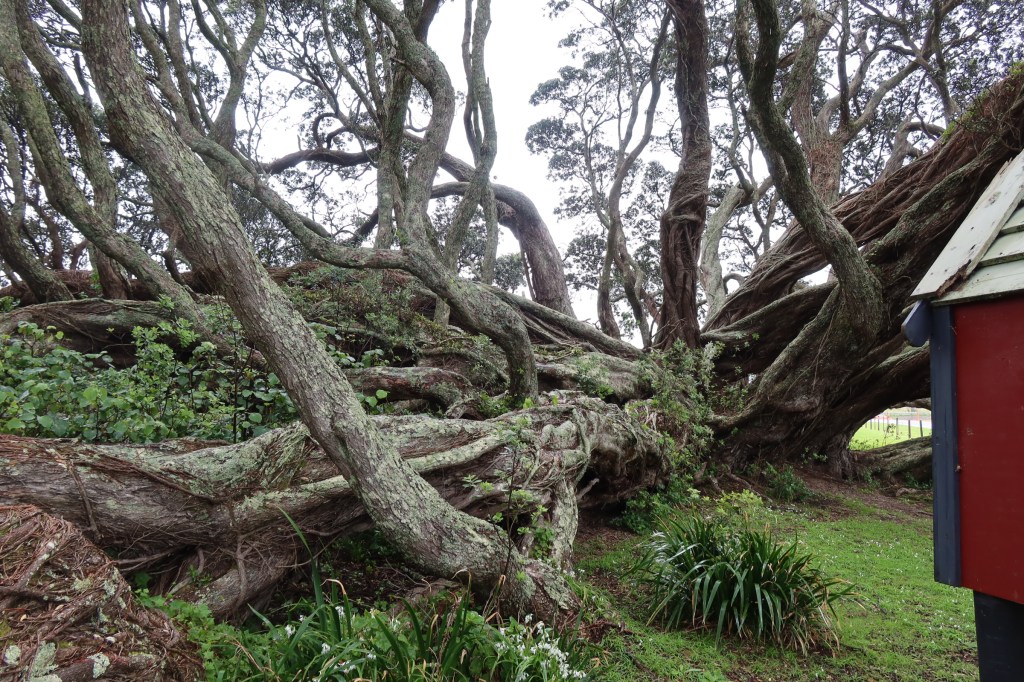
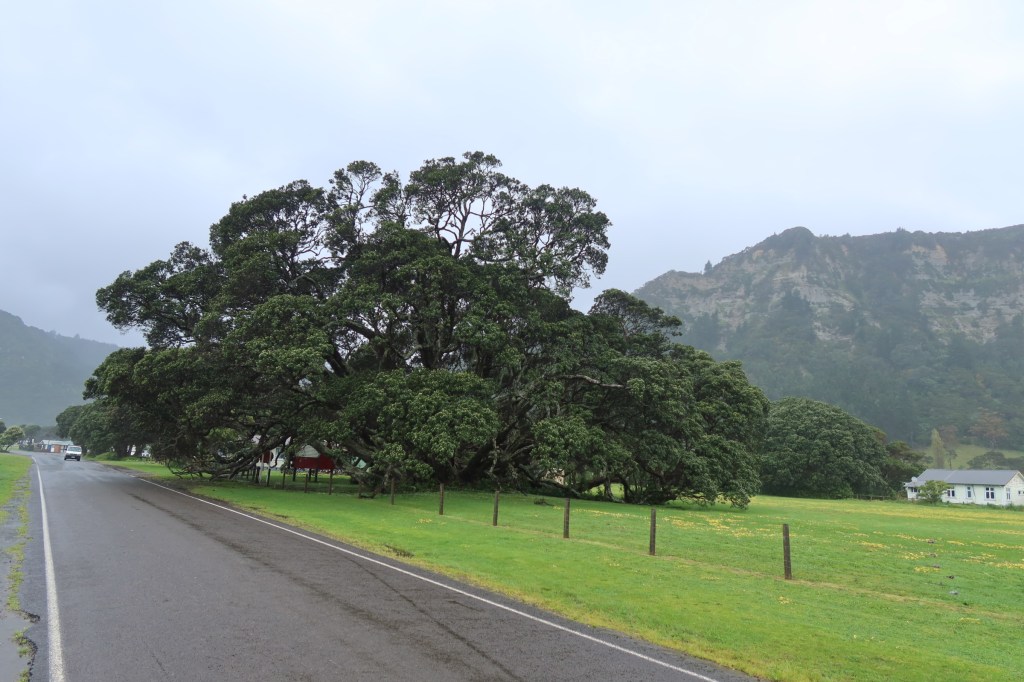
Not long after this we arrived in Te Araroa where we paid our respects to the country’s largest and reputedly oldest pohutakawa. Spent a short time communing with this ancient tree (350yrs approx.), even the husband was in awe and gave it a wee hug. I’ll make him a tree hugger yet…As I stared up and around at its twisted branches, I could only wonder what events that tree had witnessed. It was probably a only a sapling when Cook sailed past. It would be fabulous to do this trip in the summer when all the pohutakawa are in bloom – stunning!
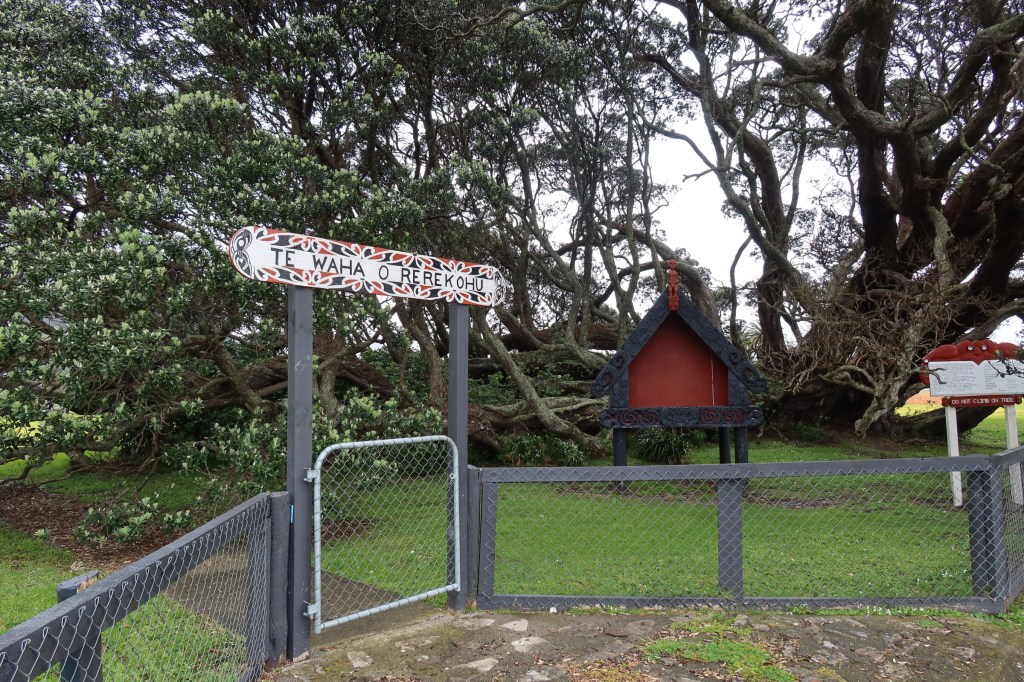
It had been our intention to spend the night at the East Cape Campground, but the rain and the wind hadn’t eased and was predicted to continue for the rest of the day. After a bit of discussion, we decided it was safer and ultimately more pleasant to wait out the rain in Te Araroa where there was an NZMCA park up area. The afternoon stretched out in front of us. Someone took a nap and so did the dog, I read, drank tea and ate biscuits.
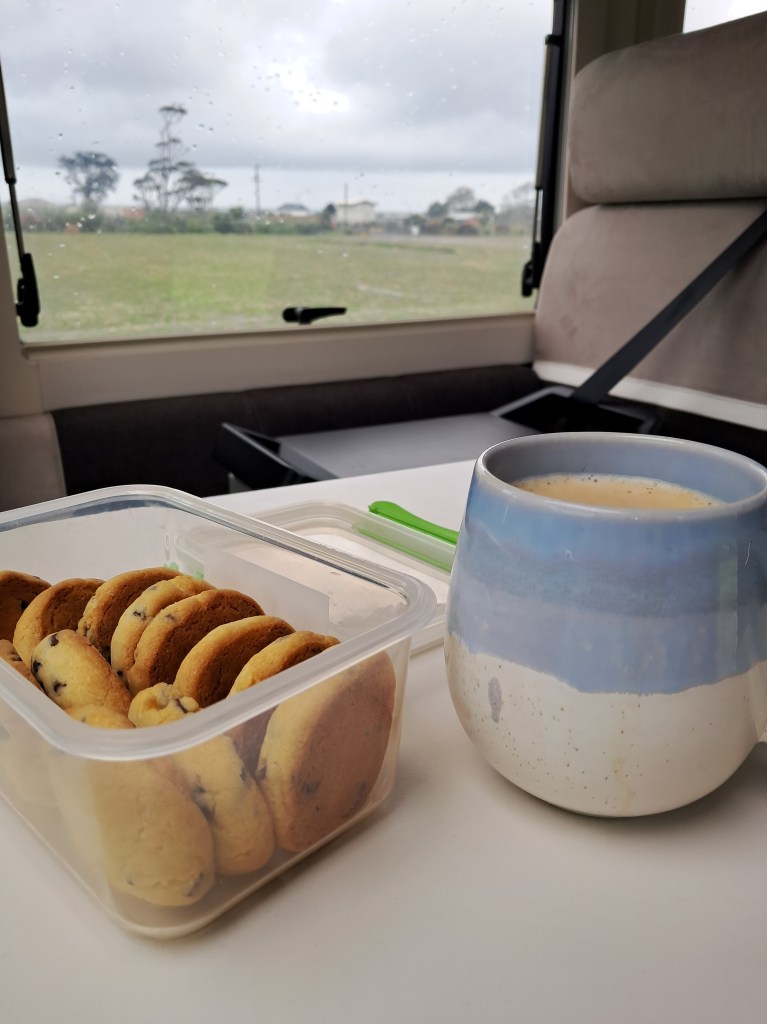
Tea and biscuits – perfect for a rainy afternoon!

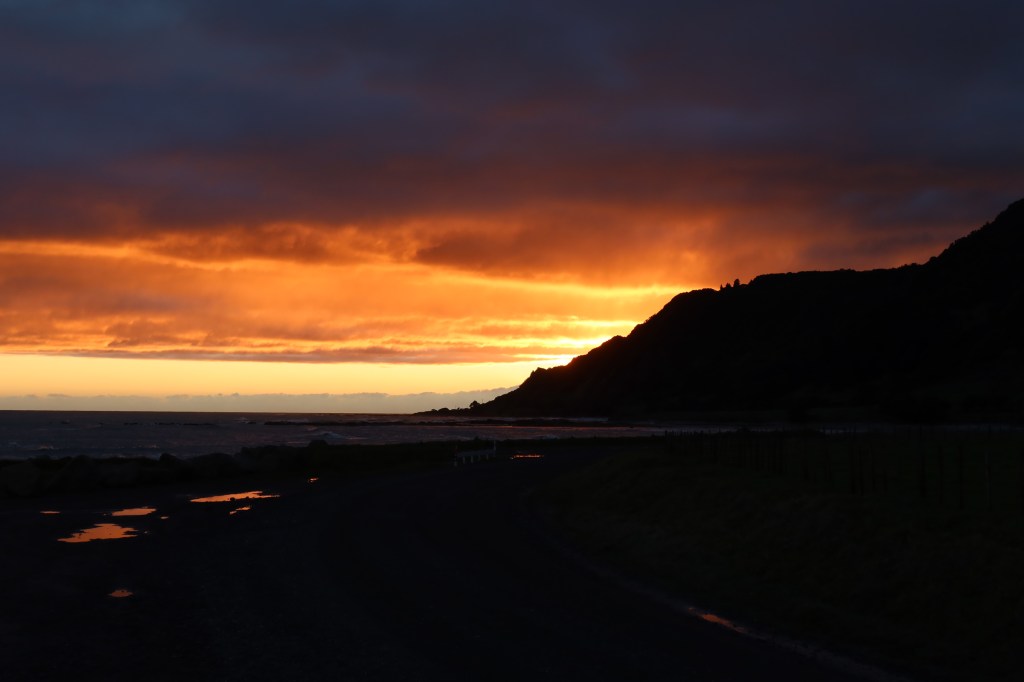
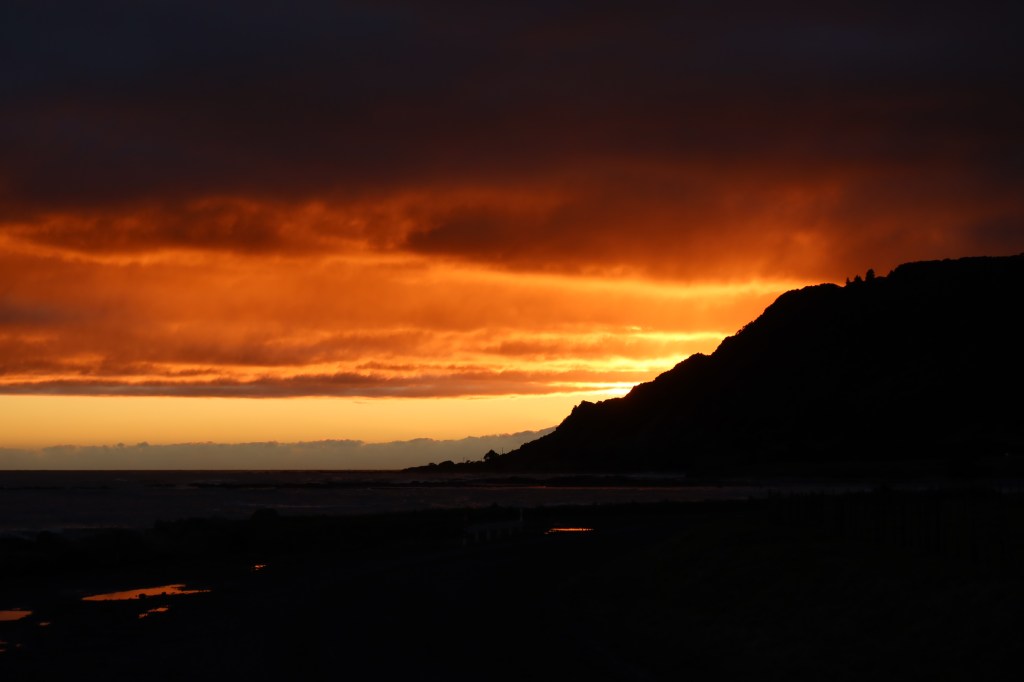
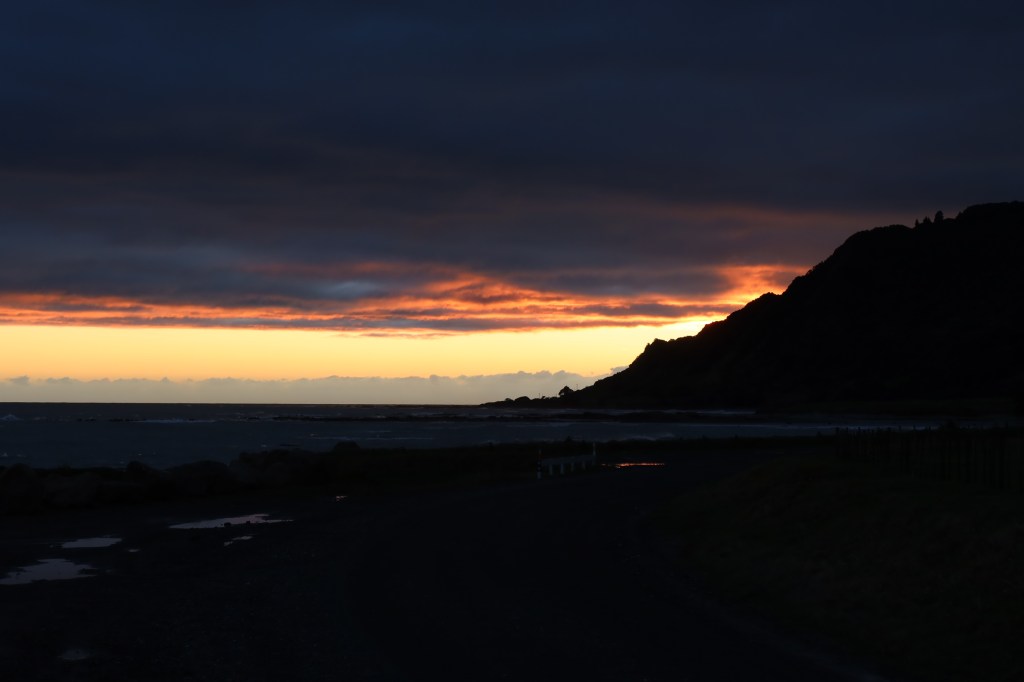
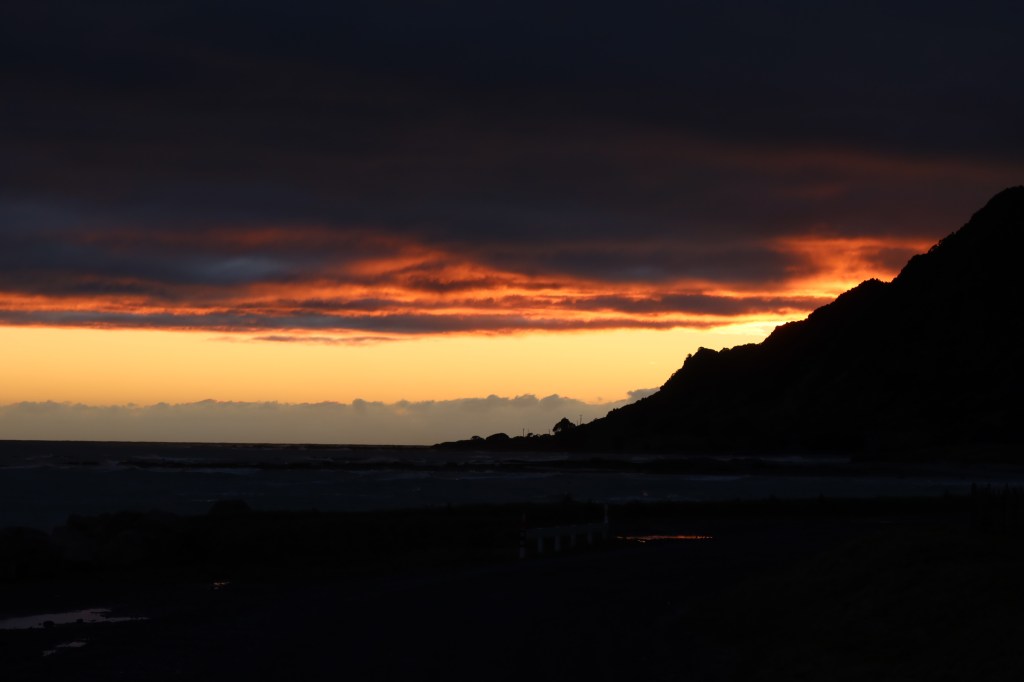
Day four – was awoken rudely by the husband who felt we should make an effort to see the sunrise. After a short drive along the dirt road that leads to the most easterly point (with me still in my pjs) we found a spot to park up. Turns out it was one of his better ideas…the East Cape is the first place in Aotearoa New Zealand to see the sunrise. It was stunning after all the rain the day before and we ate breakfast watching the morning begin in all its glorious colour. Once dressed and ready to face the rest of the day we then headed off, our final destination for the day would be Tatapouri.
Along the way we stopped briefly at Te Puia Springs general store, the husband bought a pie. This time it was pork belly, he initially did not hold out much hope for the pie. He literally at his words, it was excellent!
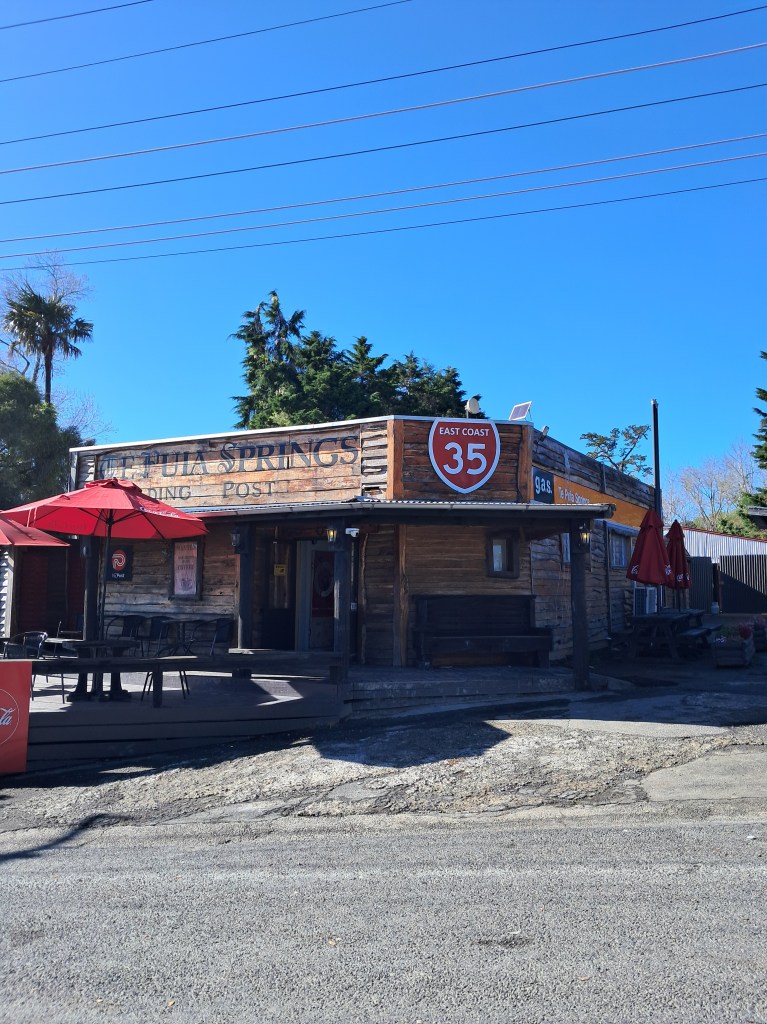
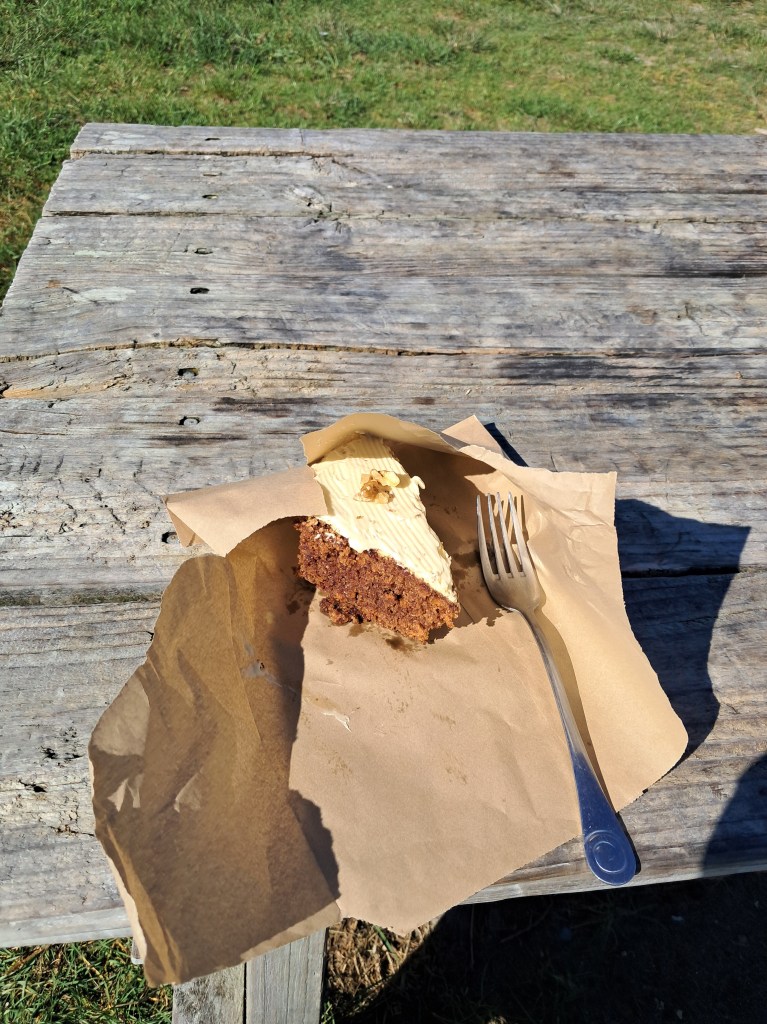
Our next stop was Tokomaru Bay where we stopped at Cafe 35 for you guessed it, another pie (I had a slice of lovely carrot cake). This time the pie was their world famous paua pie and it was apparently so good he had to go back and get another one for the freezer (as well as a pork belly pie for the freezer). The owners of the Cafe 35 make all their own pies and feature in book on Aotearoa New Zealand’s best pies – yes, we own a copy.
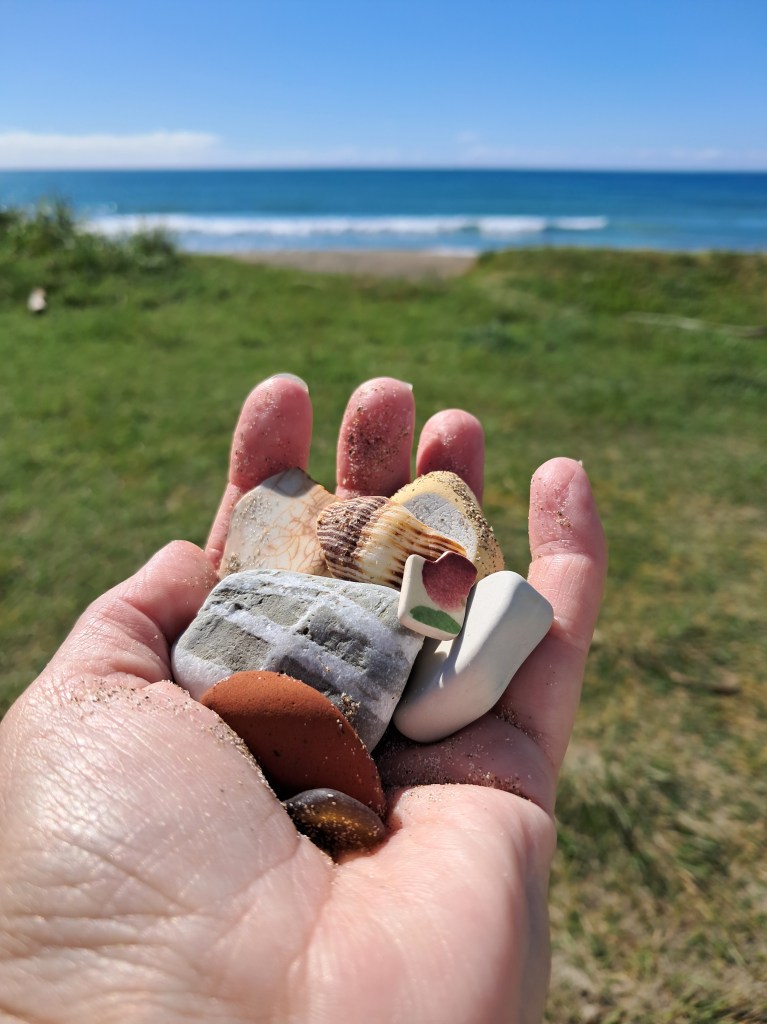
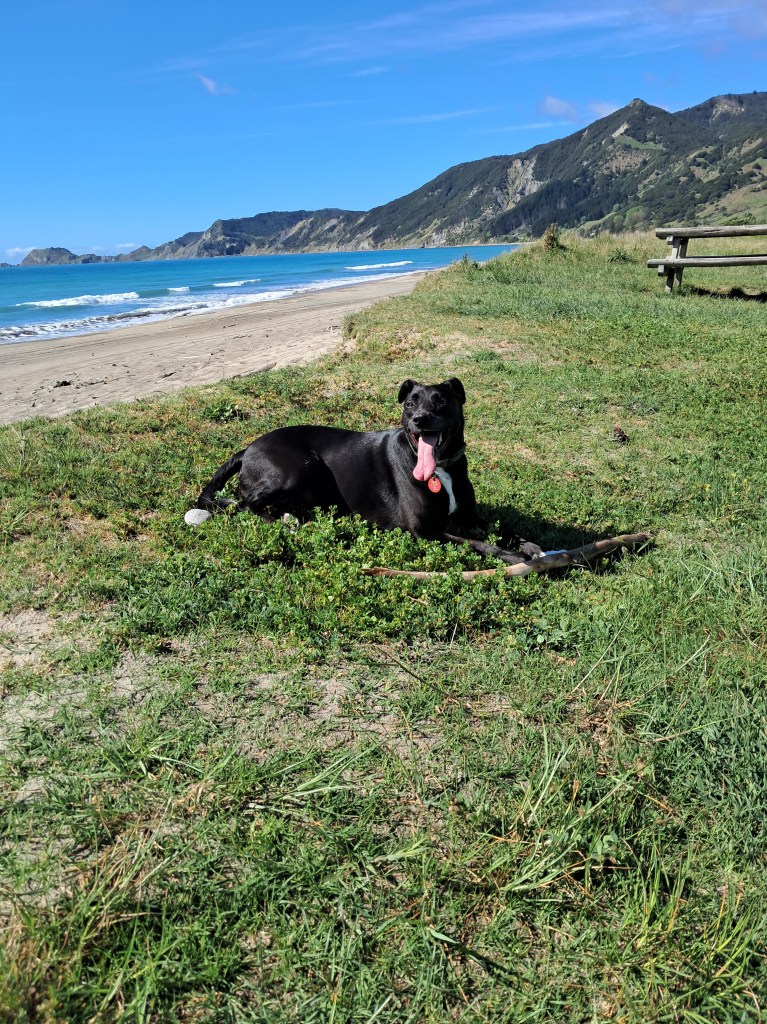
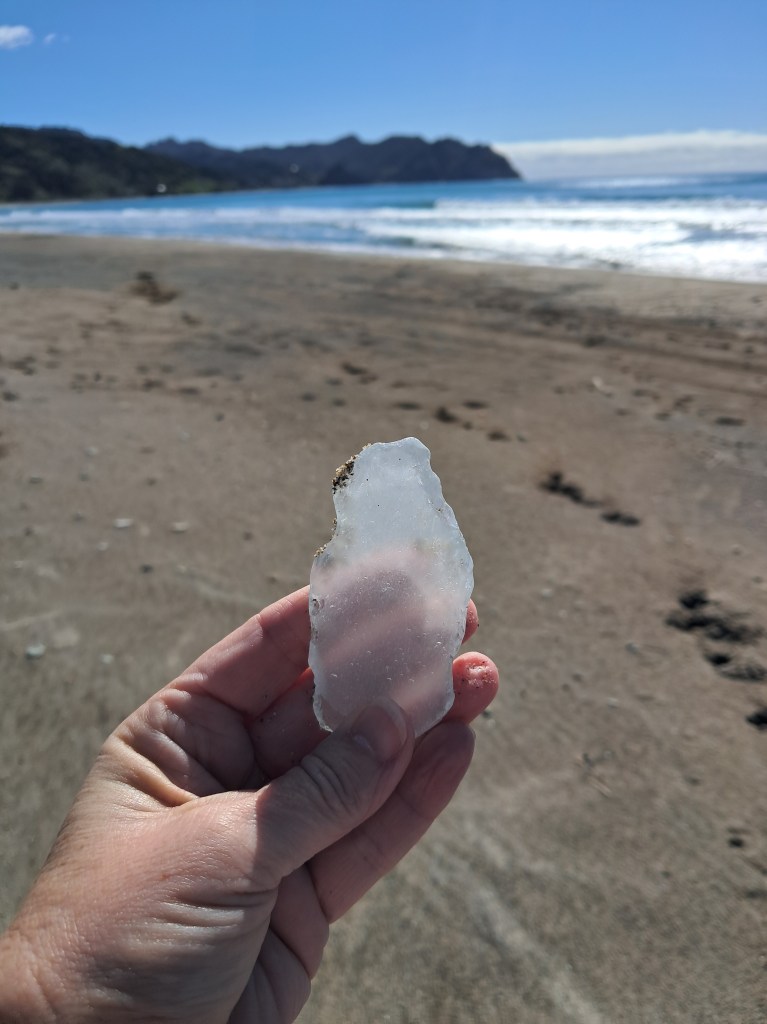
After a bit of walk along the beach finding a few treasures and throwing a stick or two for the dog we carried along state highway 35 (also known as Pie Way 35 for what should now be obvious reasons). This stretch of the highway was a challenging drive, with a great deal of ongoing remedial road works, lots of twists, turns, uneven surfaces and the odd wandering livestock. We came across four very confused calves who had made a break for freedom and then appeared to not know what to do with it once they had it.

The next stop for the day was Tolaga Bay, where, yes, that’s right he bought another pie…but I think he was all pie’d out by this stage as the comments were less enthusiastic then earlier in the day. Did the obligatory stroll down Tolaga Bay wharf, I had a bit of lunch and a coffee and then we were off again, bumping along the highway to Tatapouri Bay Oceanside Campsite.
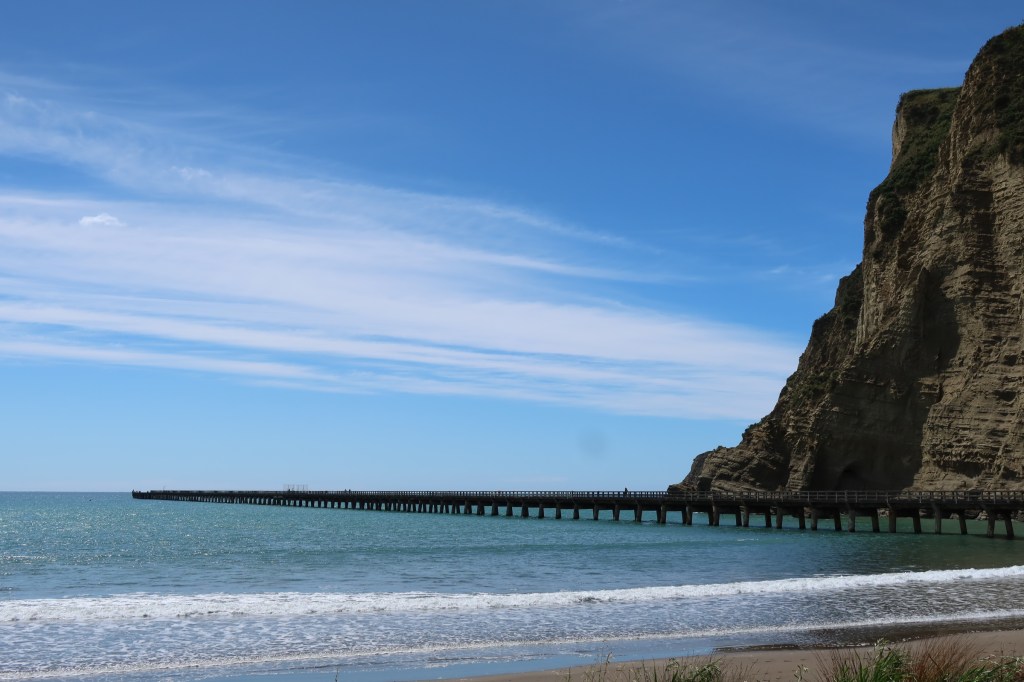
Tolaga bay wharf.

Day five – it was not a great night’s sleep, being beside the highway and so close to Gisborne the number of logging trucks that thundered past the campsite at all hours of the night was a problem, especially as they changed gear going up the hill. Having said that this is lovely campsite but perhaps next time I’d pick a spot further away from the road. But my morning was to greatly improve. Our purpose for stopping here was to join Dive Tatapouri on one of their Reef Tours where you get to do a meet and greet with the local stingray population. We were up early as we needed a low tide; the dog was feed and walked then given her lick mat to keep her occupied whilst we were busy.

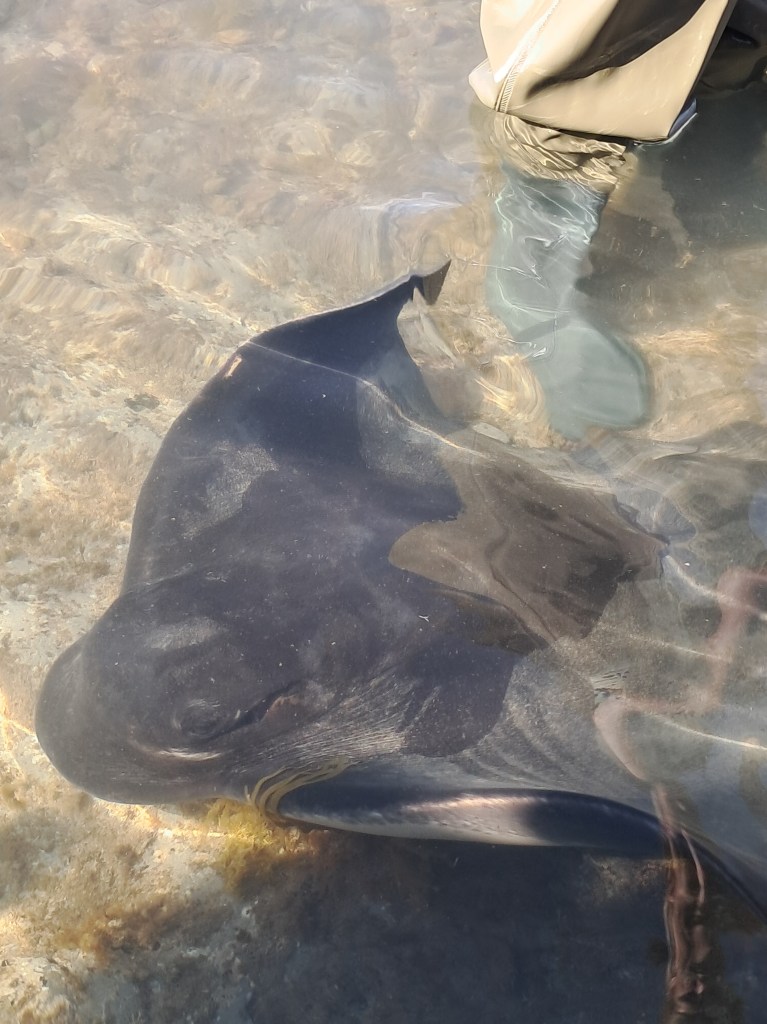
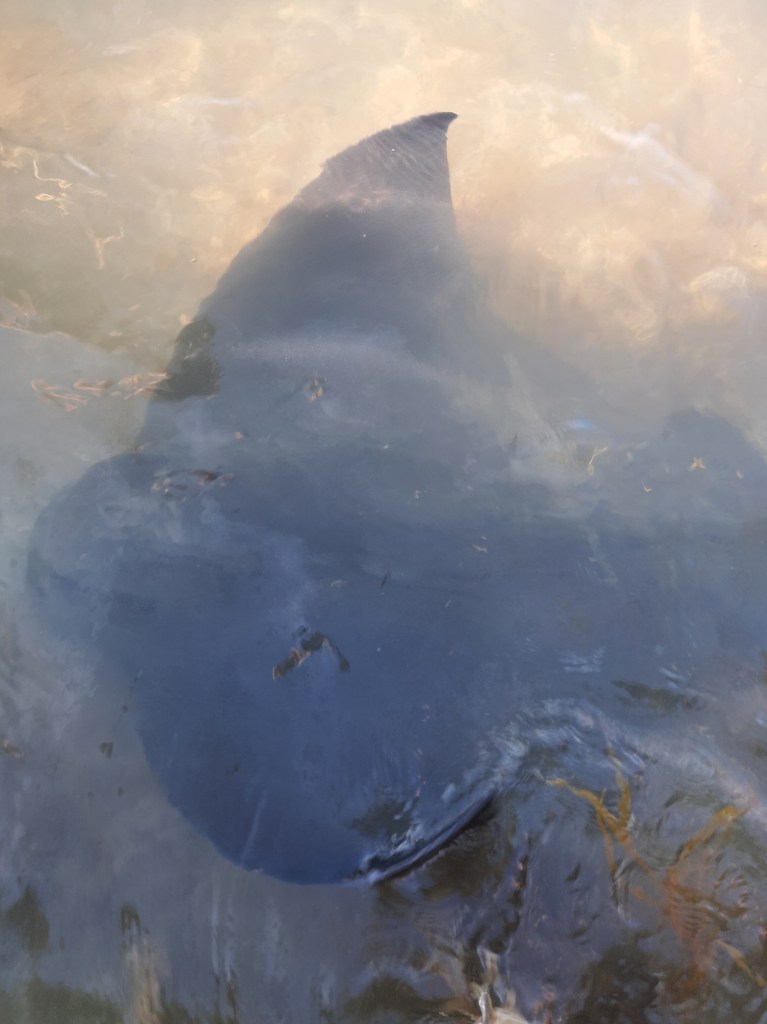
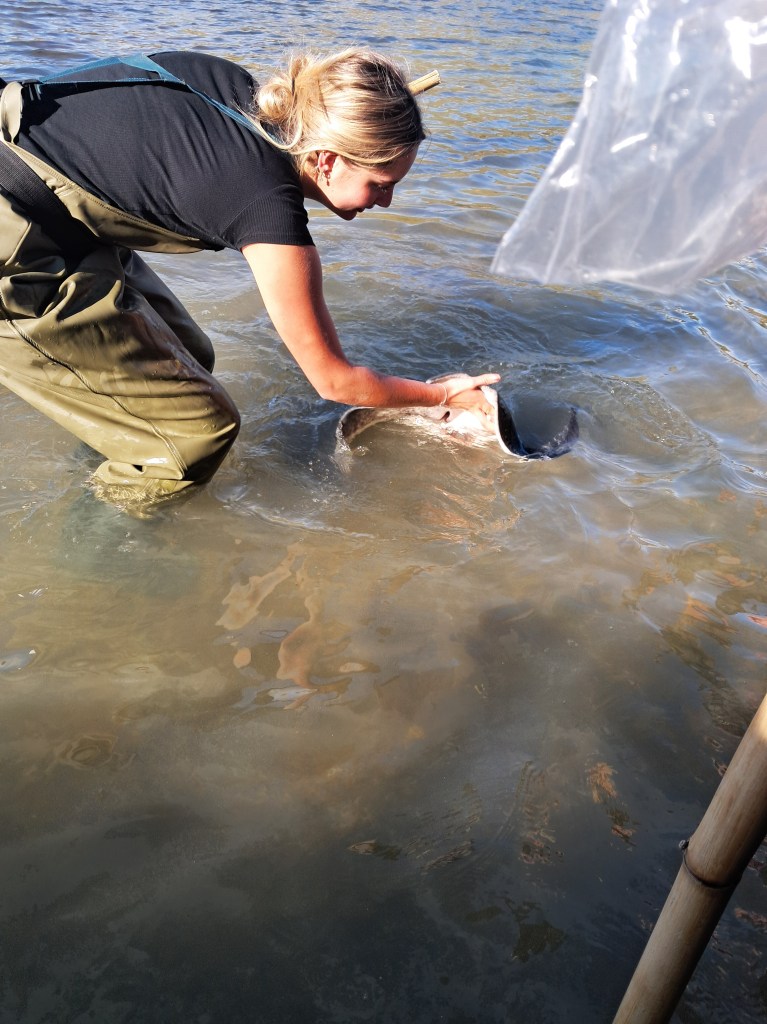
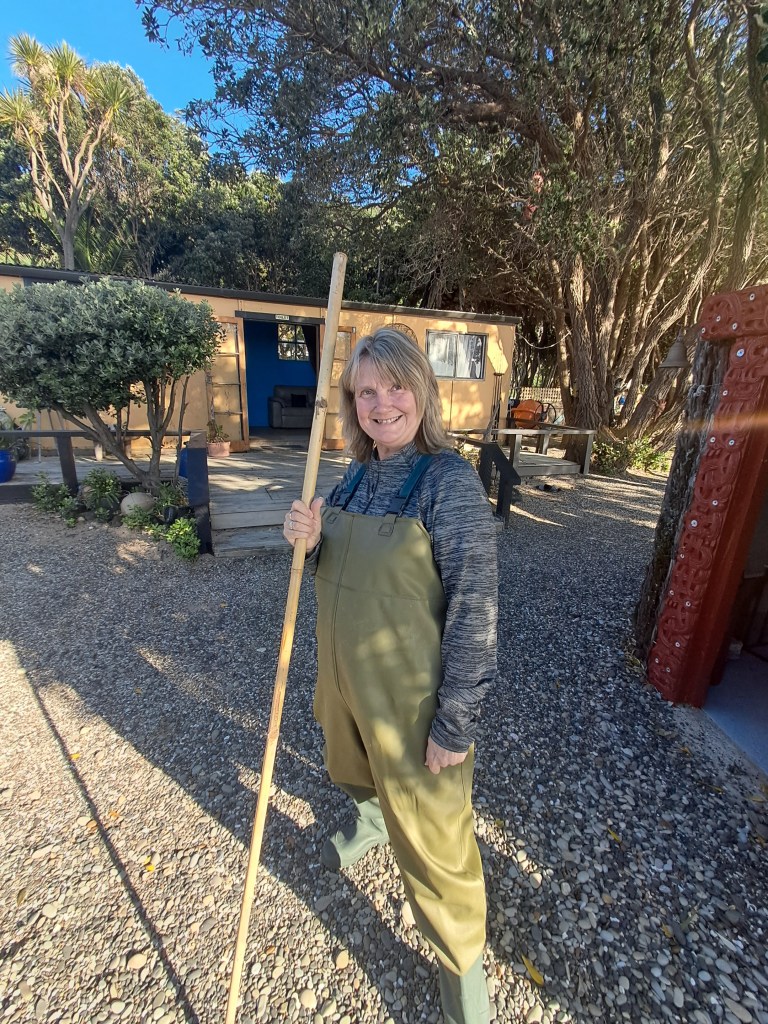
The tour begins with donning some very attractive waders, you’re given a stick to help you walk out over the reef and of course a safety briefing. We are then led across the rocks out to a depth that was about knee high and before you know it there were eagle rays and short tail (named Moana) ray coming over to say hi. They are extremely friendly and reminded me of mischievous puppies, we were allowed to stroke them and give them a wee fishy treat. It was surprising how soft their skin is. The guides were very knowledgeable, explaining how all the rays in the bay were females – the males lived further out to sea with their own territories. I learnt that rays respond to heartbeats and that if you are swimming in the sea, it is more than likely that a ray (especially the eagle rays) will be near by checking you out. Overall, it was fantastic experience and one I would highly recommend.
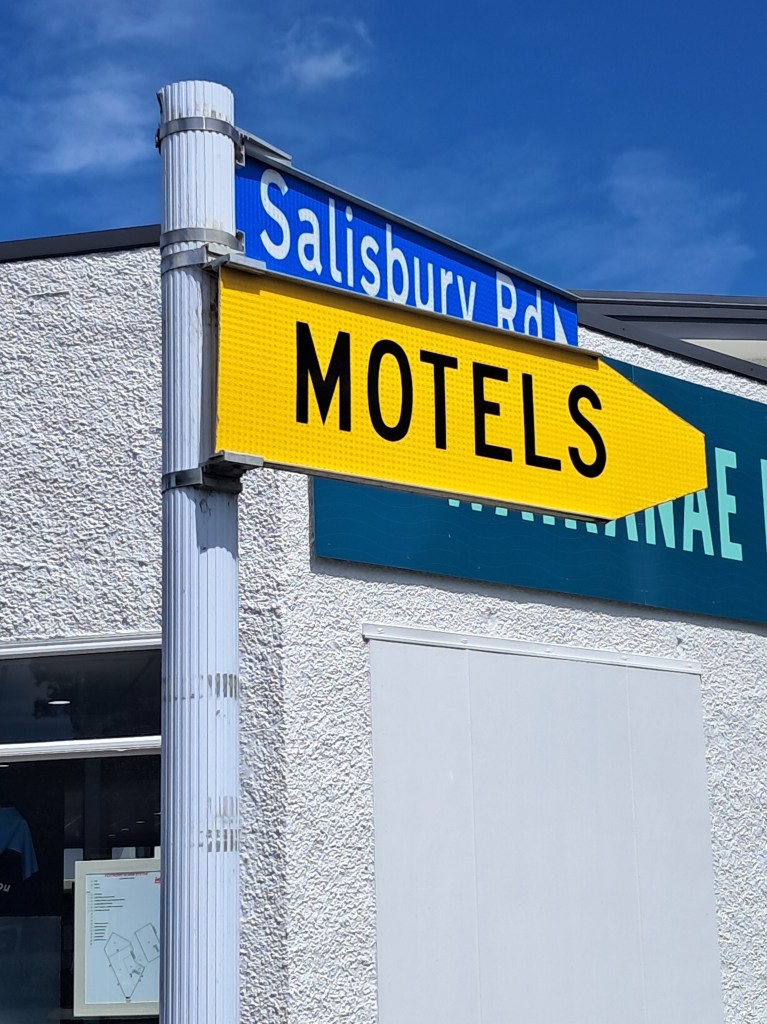
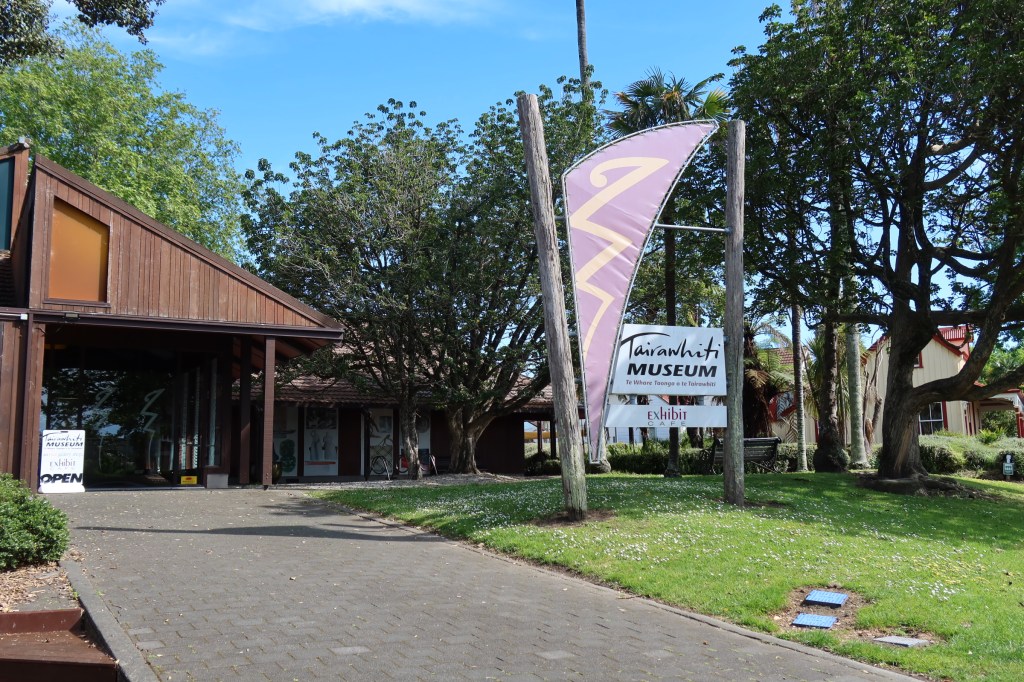
After our exciting morning we drove the short distance to Gisborne, where I paid a quick visit to the Tairawhiti Museum (Tairawhiti is the Māori name for the Gisborne area) and the husband got told off for walking the dog in a no dog park – oops! We then went in search of the ‘i’ site so I could buy some fridge magnets for the collection. Along the way we found another Salisbury road (our road in Auckland) and discovered our number was park – it’s the little things that keep life interesting…That night we parked up in the NZMCA park which was a very well looked after park in a great position across the road from the beach. Yes, there were walks and stick throwing for the dog. I also rescued a bag of small pieces of driftwood. Unfortunately, they were doing a major clean-up of the beach with trucks and diggers removing much of the larger pieces of timber that had washed up on the beach. One of the major issues in the area is when there is flooding etc much of the waste material from the forestry plantations washes down the rivers, onto beaches and out to sea.
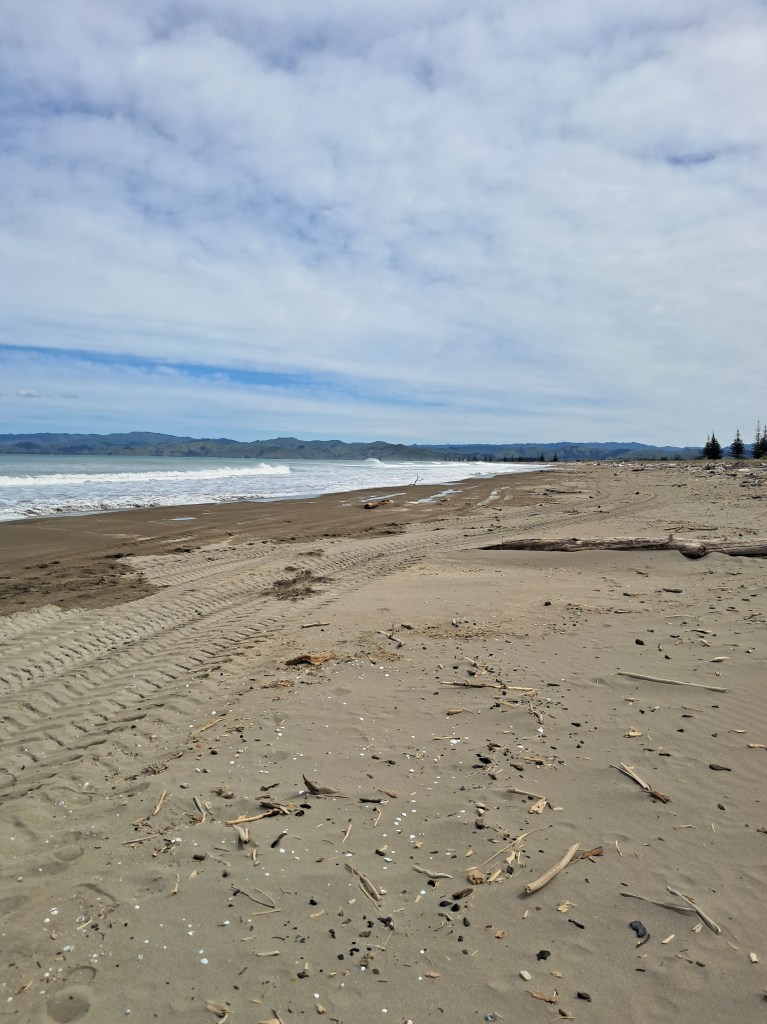
Midway beach, Gisborne.
Well, it had to be done!

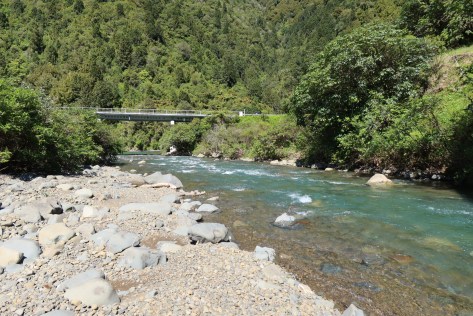
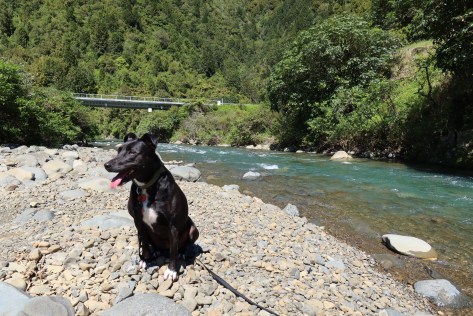
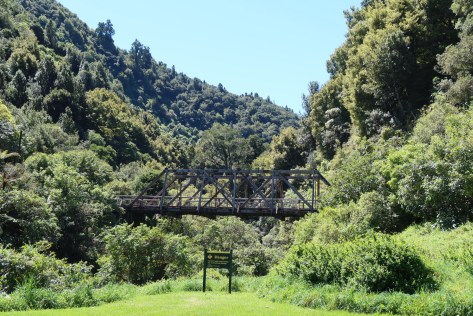
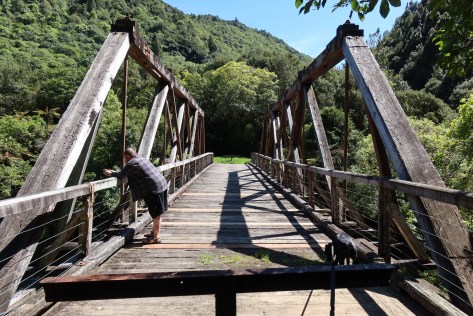
Day six started with the usual walk on the beach and stick throwing for the dog, dodging trucks and a digger going at speed! Our destination today was to be Opotiki via the beautiful (and long and twisty) Waioeka Gorge. Approximately halfway through the gorge is lovely wee campsite with fire pits, beside the river. We stopped here for some lunch and to stretch our legs, talking a loop walk across an old wooden bridge (the Manganuku Bridge) and along the river. The dog was grateful for the sniff stop.
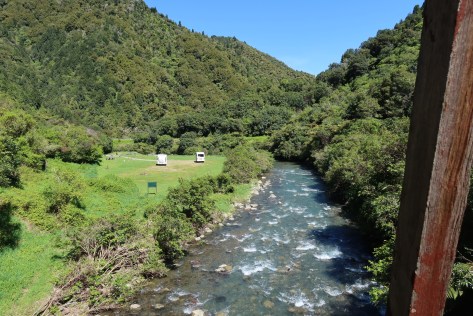
The husband as per usual got to chatting to another motorhomer who had also stopped for break, and they recommended a freedom camp on the other side of Opotiki for our nights stop. It was an excellent recommendation. The freedom camp was at the Te Ahiaua Reserve at the northern end of Waiotahi Beach and even though it was on the main road between Whakatane and Opotiki it was peaceful night’s sleep.
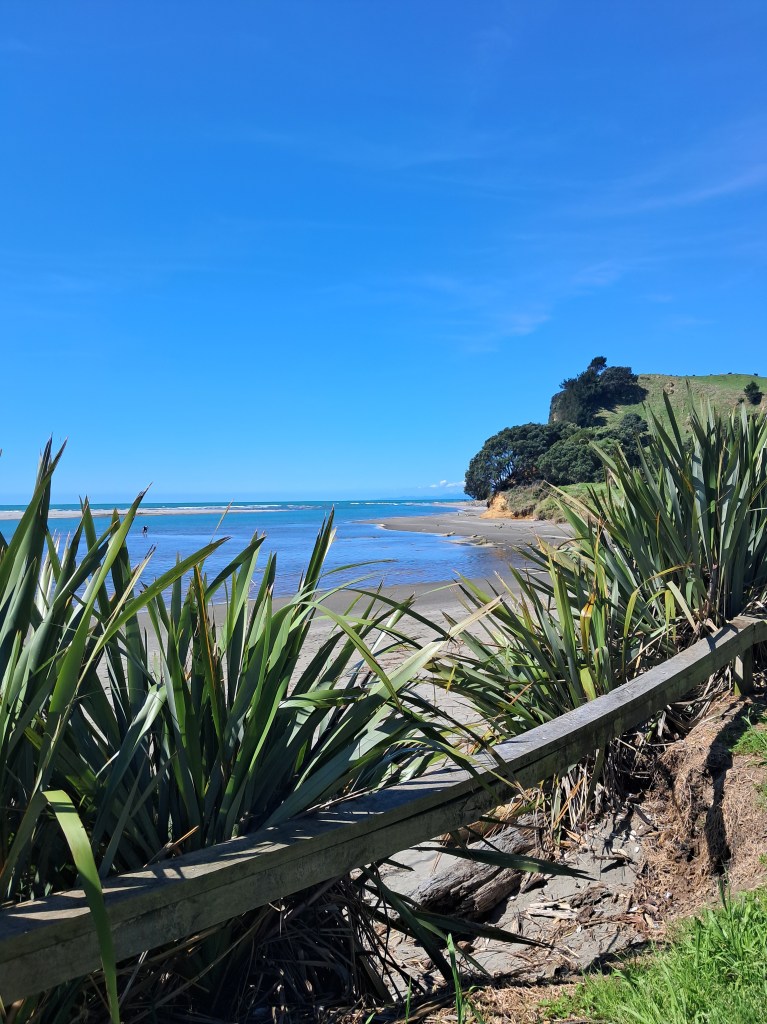
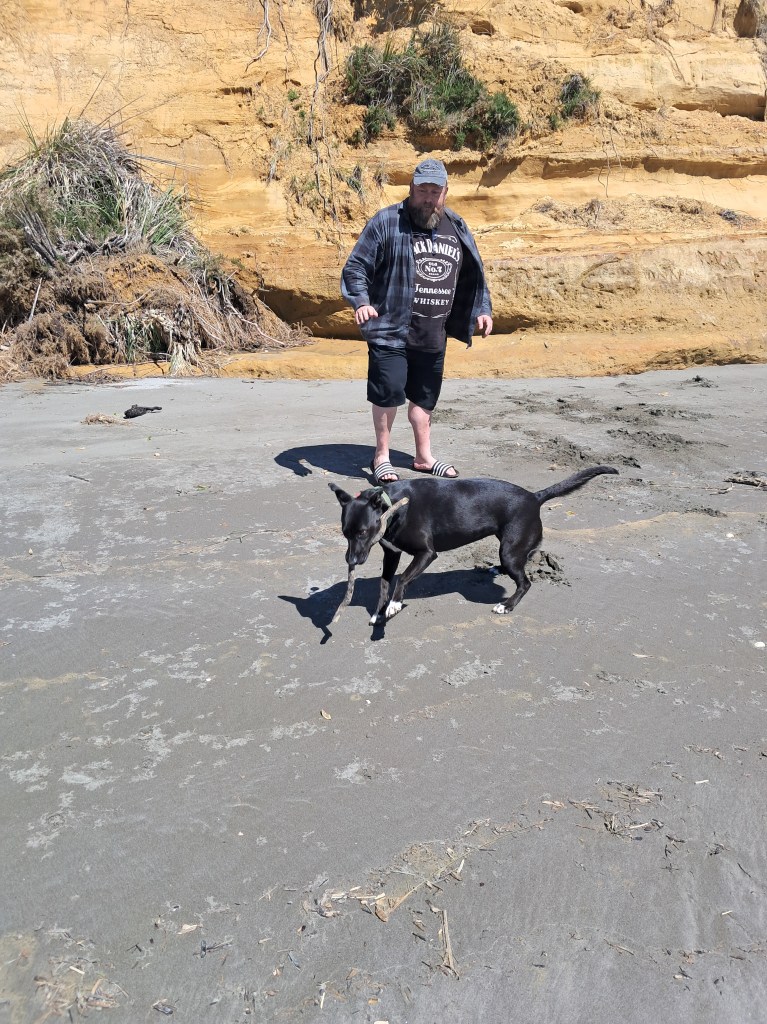
Another beach, another stick!

The next day we meandered our way to Rotorua where we did the usual and went for a walk in the redwoods, the dog met some well-mannered pooches, sniffed out a tree with a possum in it and generally had a ball. We had intended to stay the night at the Lakeview Golf Course, but a lack of room had us moving on and we found ourselves at the Horahora Domain on Lake Karapiro – a freedom camp we have stayed at before. It was busy but once the jet skiers had gone home for the day all was quiet.

Day seven saw us head for home feeling grateful that we could have this time to explore a small part of our country.
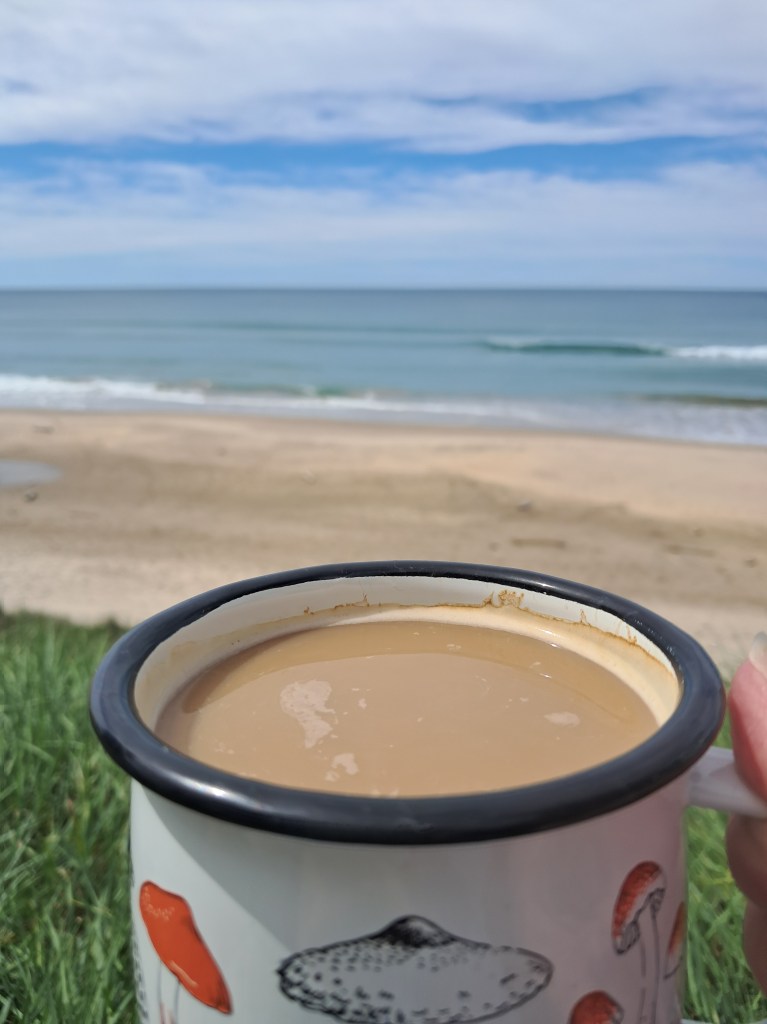
Cheers!

Exploring Cornwall: A Journey Through Grief and Beauty

It has been almost a year since our last journey to Cornwall and so it seems appropriate to tell you all a bit about that time.

Normally any trip to Cornwall is one of expectation, hope and joy but on this occasion, it was a time of sadness. On the day we arrived in Penzance, my mother-in-law passed away. We were half an hour away from seeing her when we got the call…

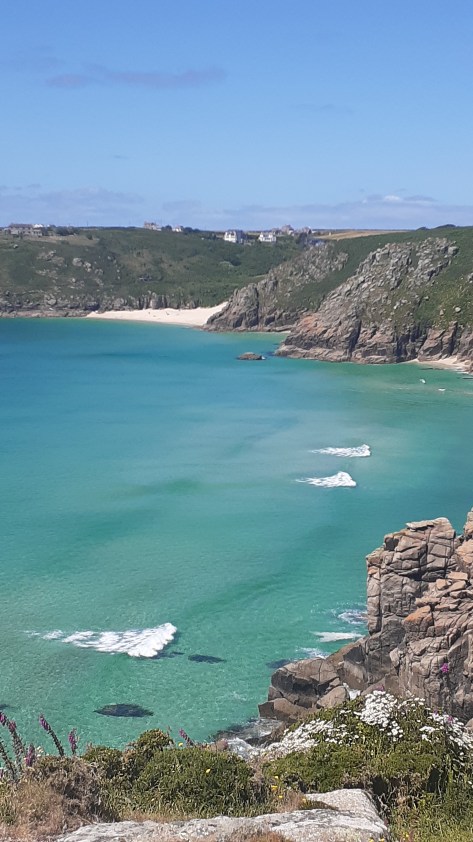
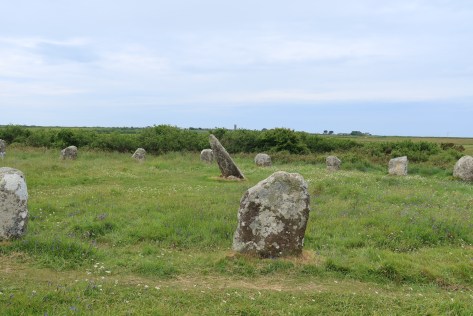
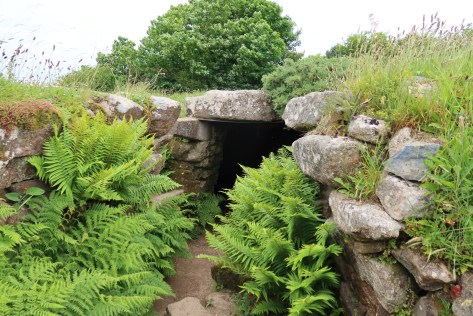
It was not an easy time but we did find moments to distract us, Cornwall, after all is a beautiful county filled with fascinating places. There were beach walks, pasty’s, drives down winding lanes, pub lunches, moors and visits to ancient places. Below is just a few of the places we visited in our down time between packing up a life well lived and saying goodbye. We knew it would be a long time before we came back and so we made the most of the time we had.

Getting fresh air and exercise became a part of our daily routine, early mornings sorting the house, followed by appointments with solicitors or funeral directors and then a good walk in ‘the nature’ to soothe the emotions. Cornwall is not short of a good walk. Below are a few photos from these walks.

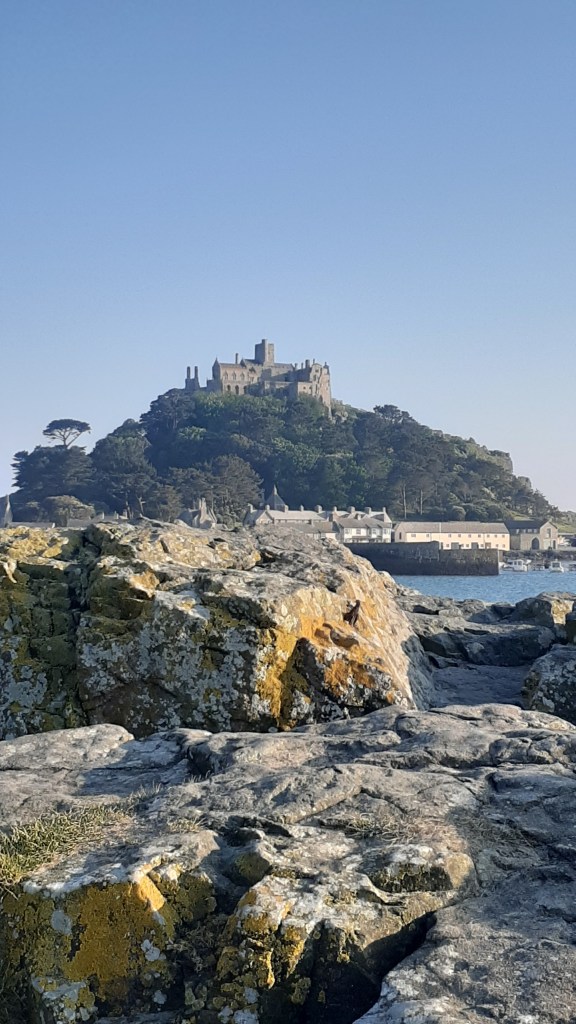
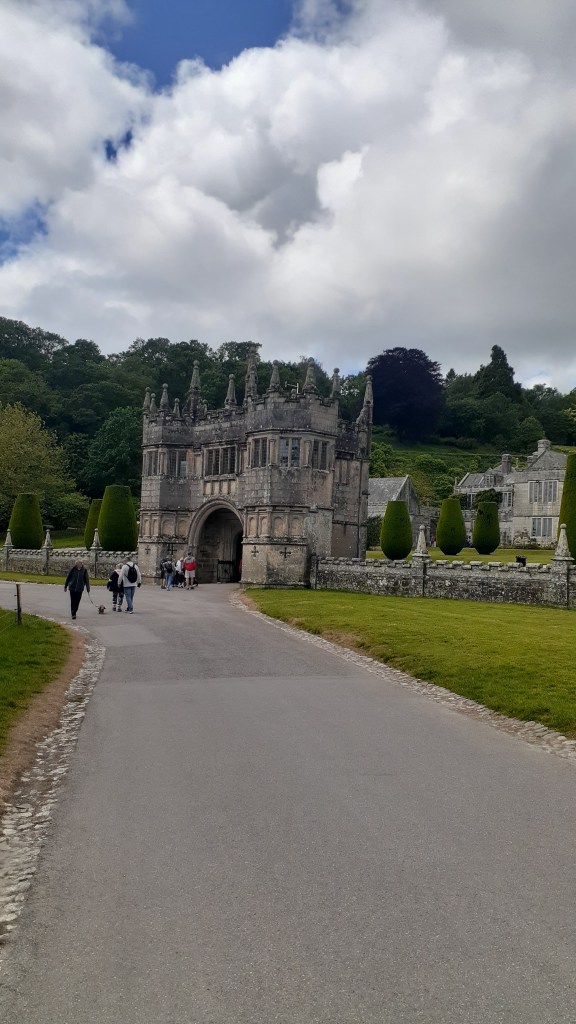
There were some days when we had more time on our hands and on these days we ventured a little further afield. As members of Heritage New Zealand we are allowed to visit both National Trust and English Heritage sites free of charge – Lanhydrock, Godolphin House, Restormel Castle. Tintagel and the gardens at St Michael’s Mount were all on the list.

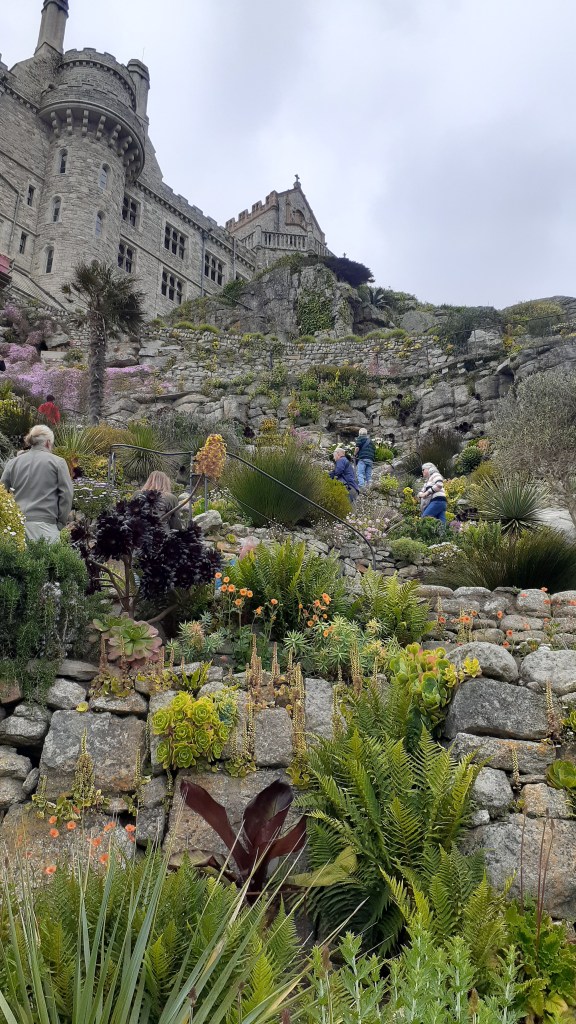
The Gardens at St Michael’s Mount

Why just the gardens? We had visited the house on several other occasions and given the time of year and how busy it was we thought a good nosey around the gardens – which are not always open – would be nice on a sunny day.

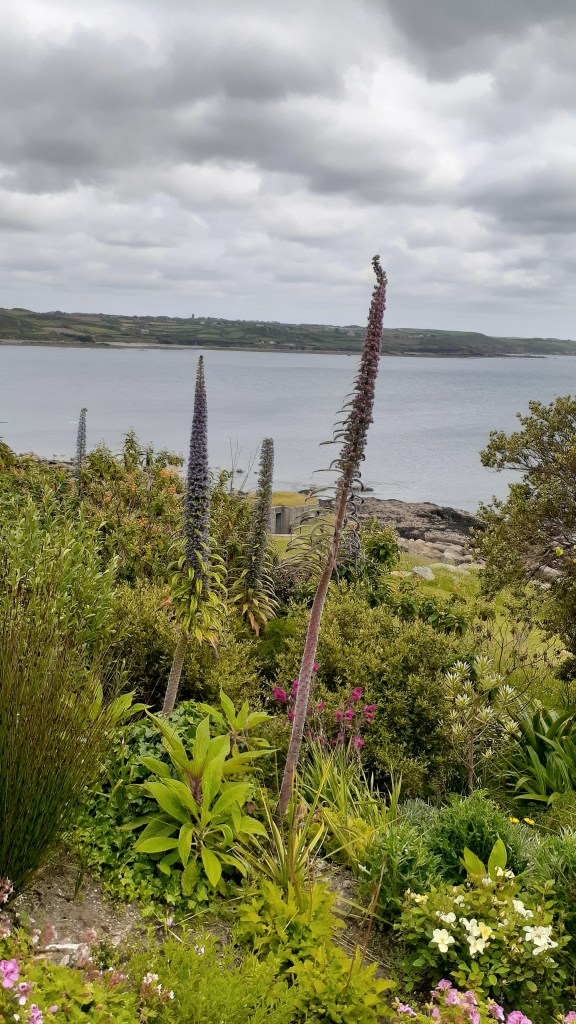
The gardens are situated on the lower terraces of the mount facing towards the Lizard Peninsula. They were first designed in 1878 for Sir John St Aubyn (later the first Lord St Levan). This part of the island has a microclimate and is able to grow a number of plants you would not expect.

The following are just a few photos of the gardens.

Godolphin House

One of my favourite houses to visit in this part of Cornwall is Godolphin House. Only open to the public a few times a year (the house is let out as a holiday let), although the gardens and estate are regularly open to enjoy for walks and cups of tea in the little cafe. The story of Godolphin House is one ‘enormous mineral wealth, heavy industry, agriculture, high political office, war, decline, ruin and eventual rescue – a living timeline through Cornwall’s history’.

As the above quote would imply Godolphin House has a long and winding story to tell and is perhaps one for an article of its own. For now enjoy the following photos and if you do ever get a chance to visit the house, do so.

Lanhydrock

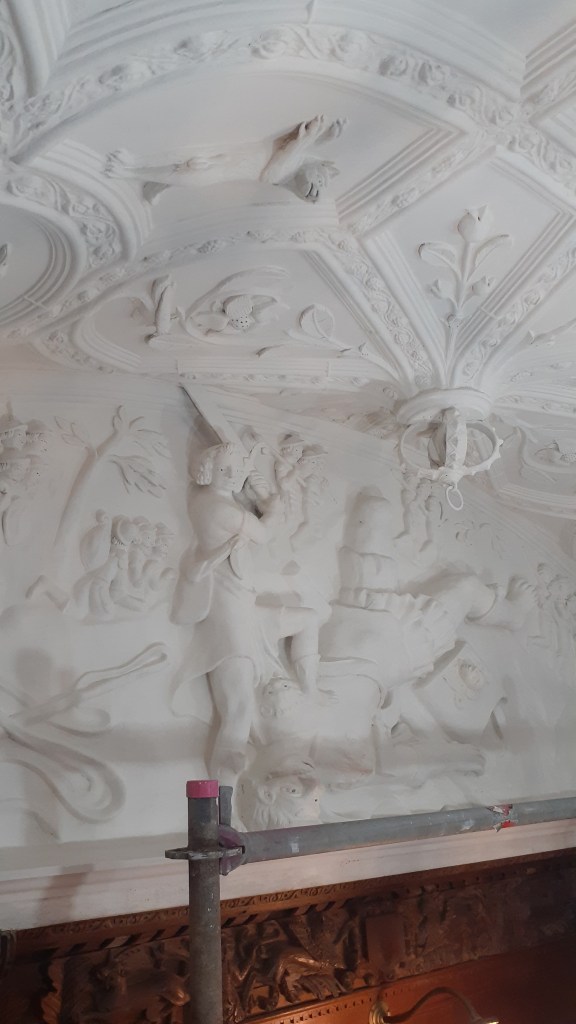
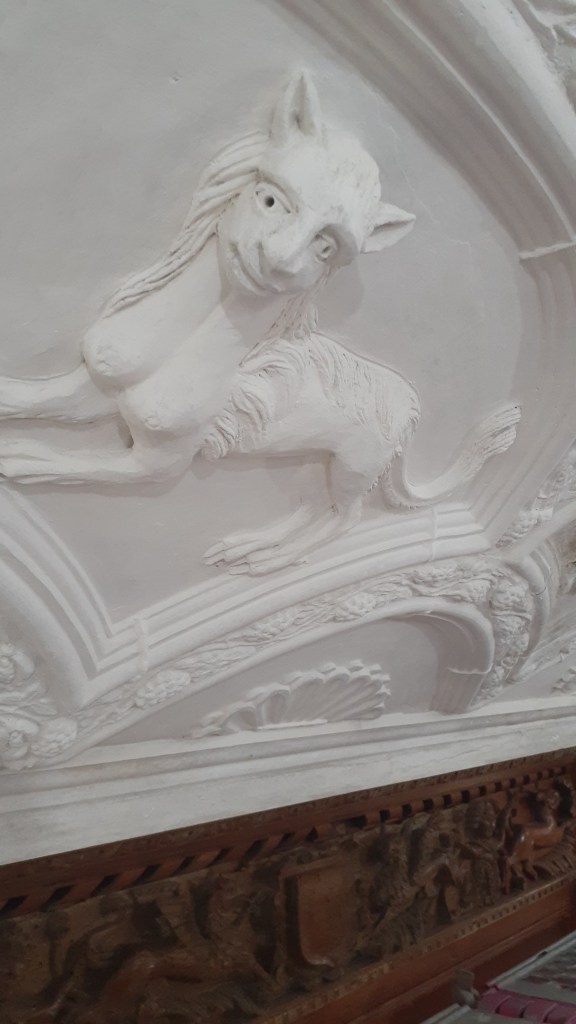
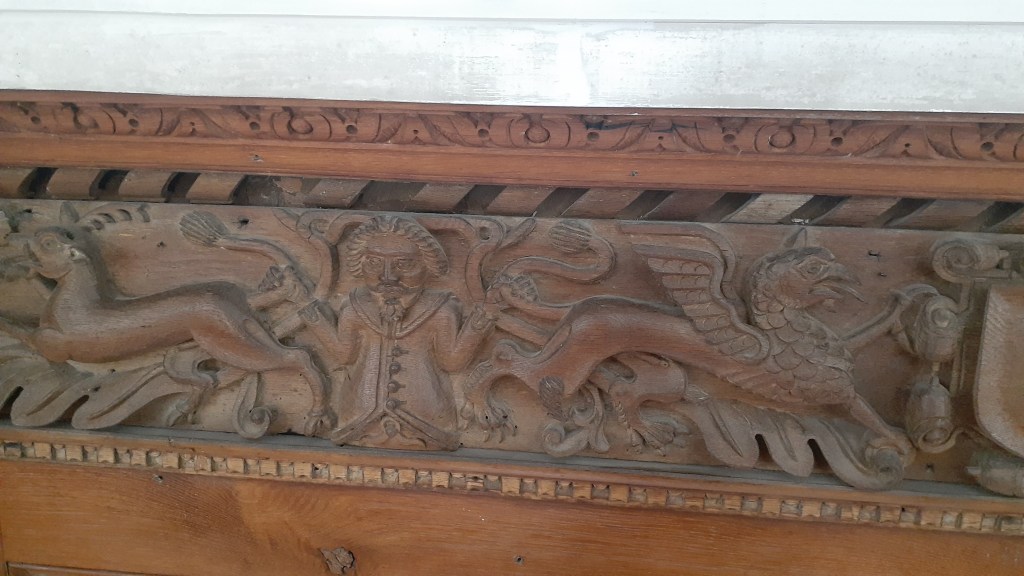
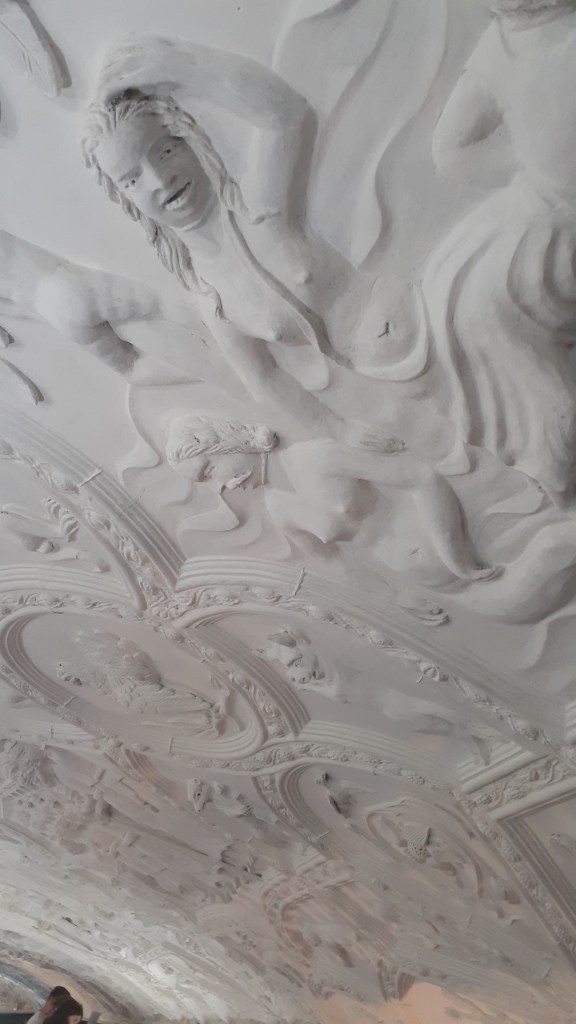
This particular National Trust House and Estate was much further afield. At the time of our visit the house and its contents were undergoing restoration work. Interestingly rather then block off sections and prevent people from viewing the work, the visitor was granted an opportunity to see what happens when a house of this size needs some love and attention. Our visit coincided with the restoration work on the ceiling of the hall and visitors were able to go onto the scaffolding and get a close look at a space that normally only the eagle eyed could view.

Below are a couple of photos of the ceiling.

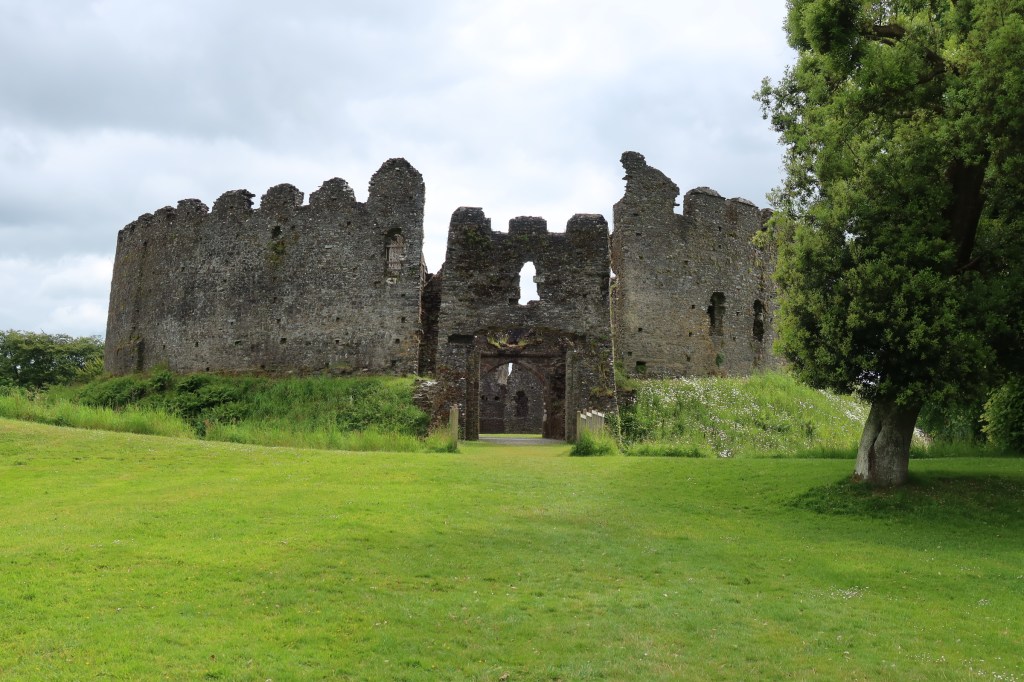
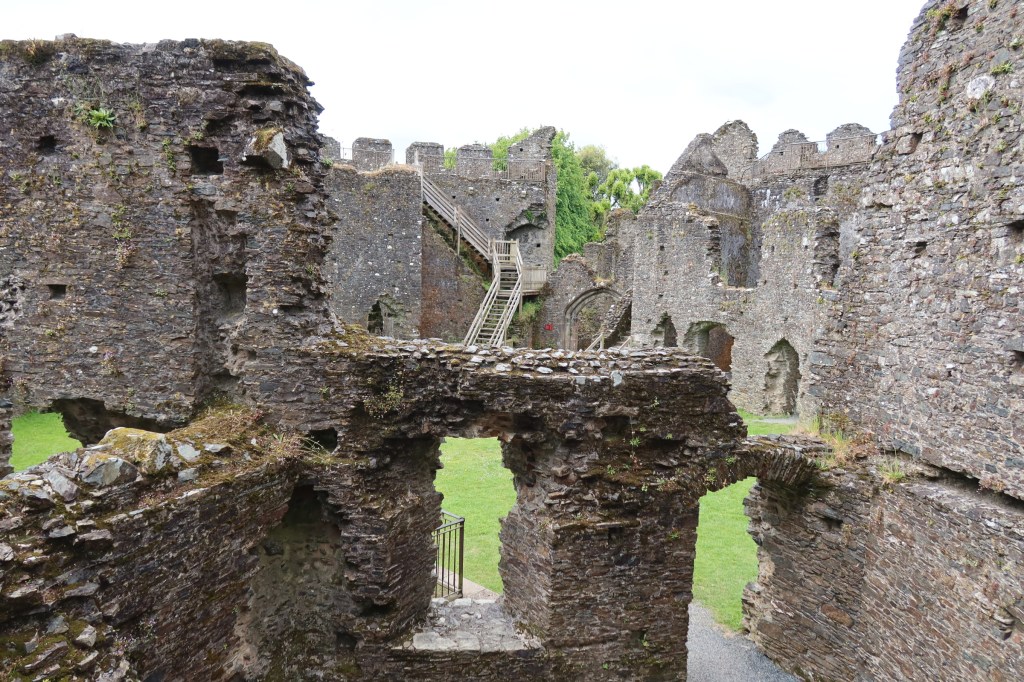
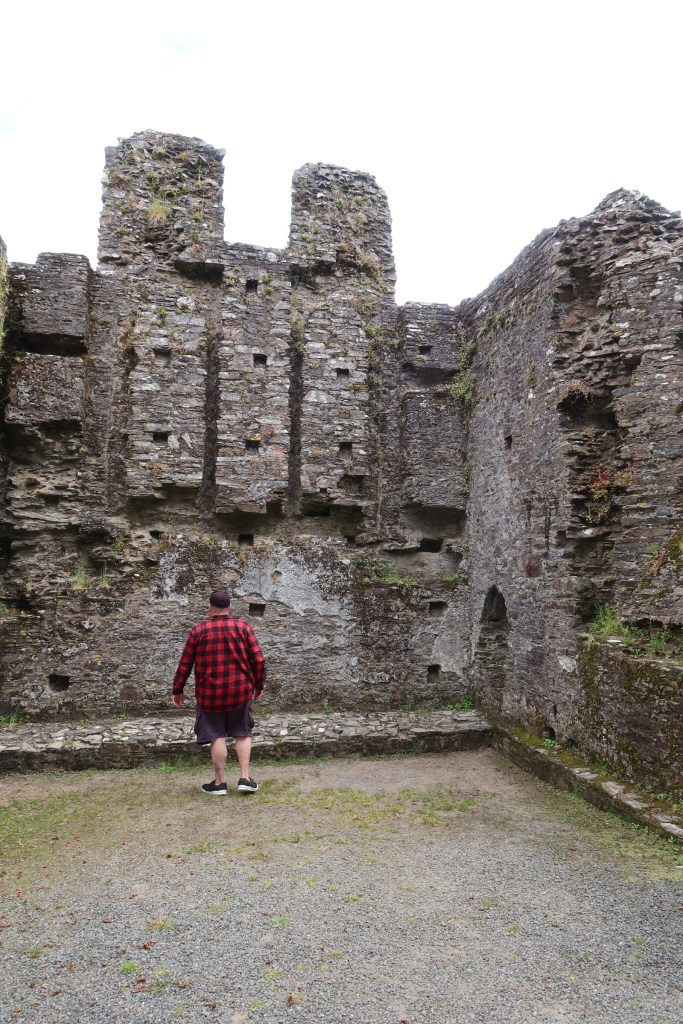
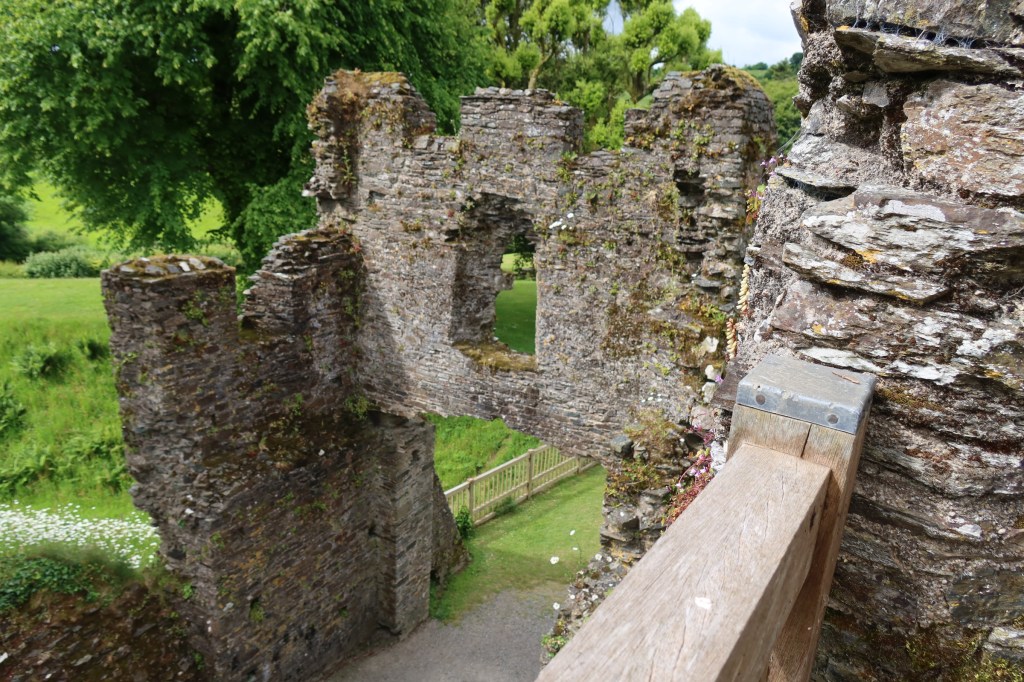
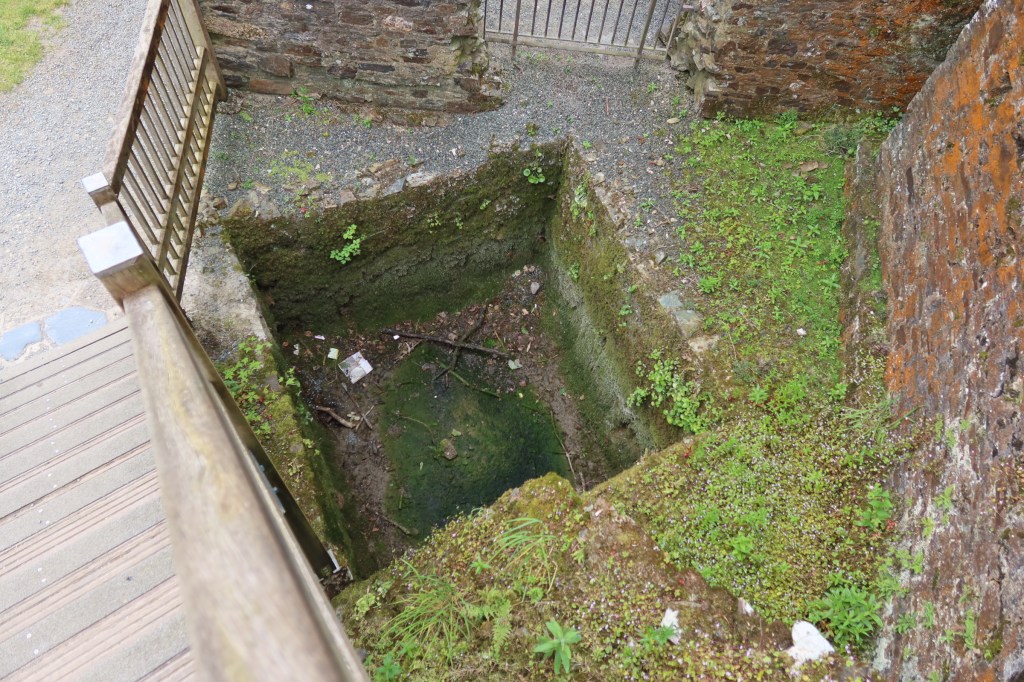
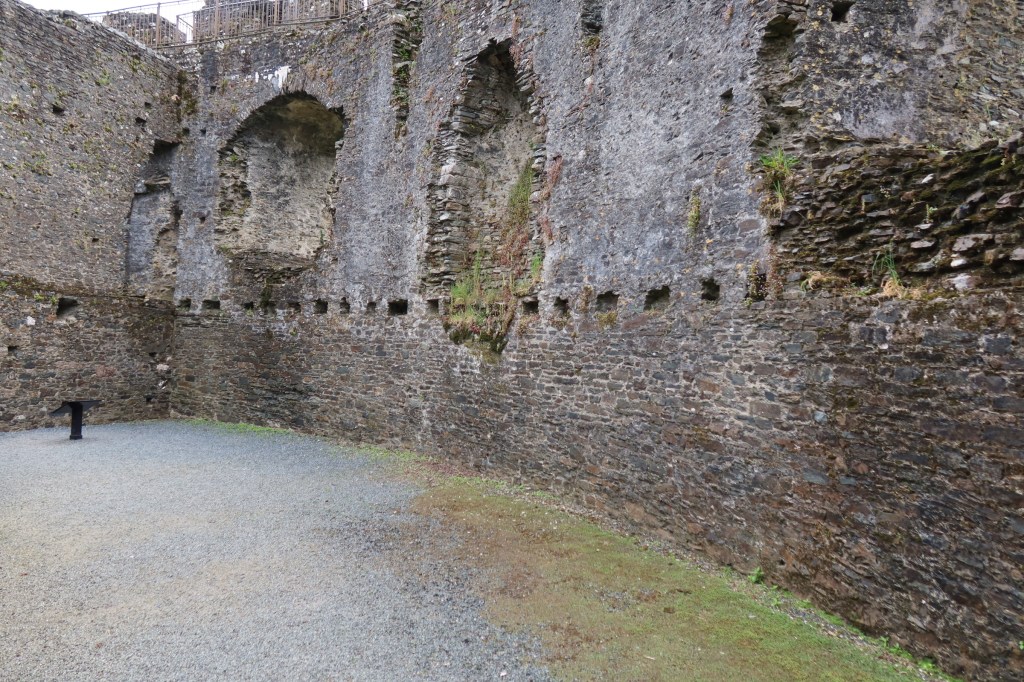
Restormal Castle

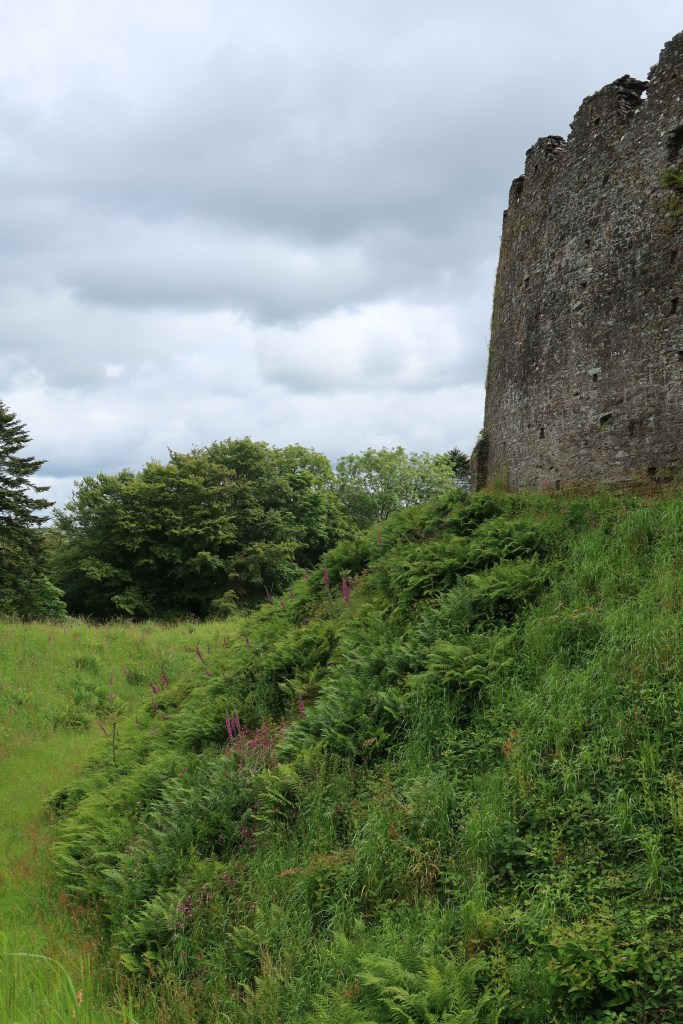
Our visit to Restormal Castle occurred as we were leaving the county, having done all we could. The castle providing a welcome pit stop and distraction.

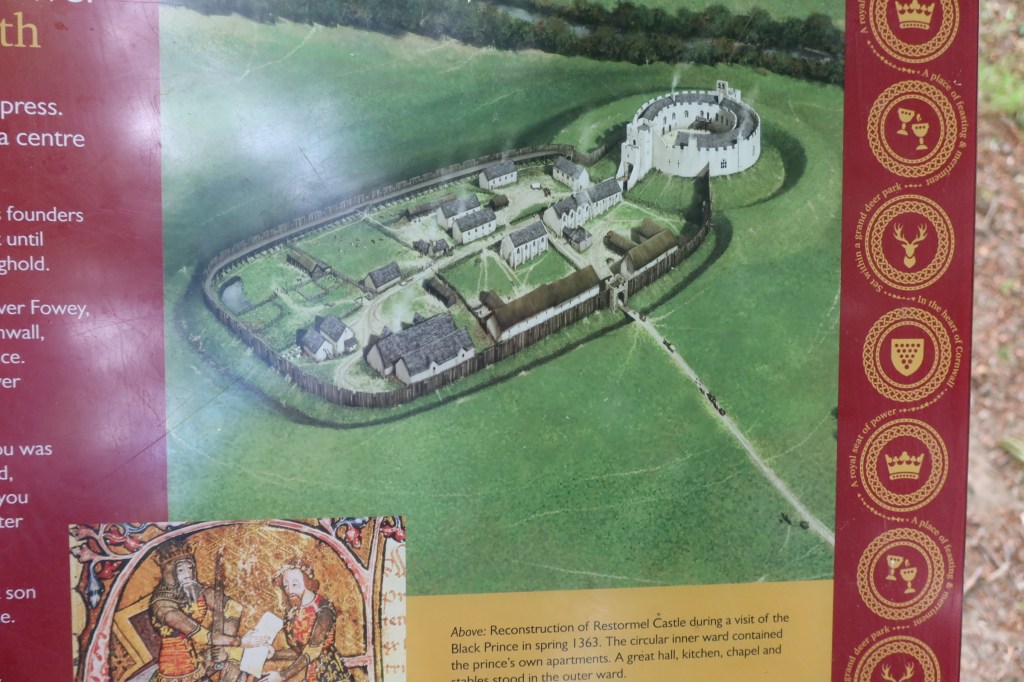
The early history of the site is not well understood, there is some evidence for a mid 12th century date but it the history from the 13th century onwards which is better understood. From the mid 12th the land on which the castle stands belonged to the Cardinham’s – a powerful landowning family from central Cornwall. In 1268  Cardinhams’ heiress, Isolda de Tracy, granted to Richard Earl of Cornwall and King of the Romans, the town of Lostwithiel – a fishery on the river Fowey – and the castle of Restormel, complementing his castles at Launceston and Tintagel. In 1270 he acquired a fourth castle at Trematon.

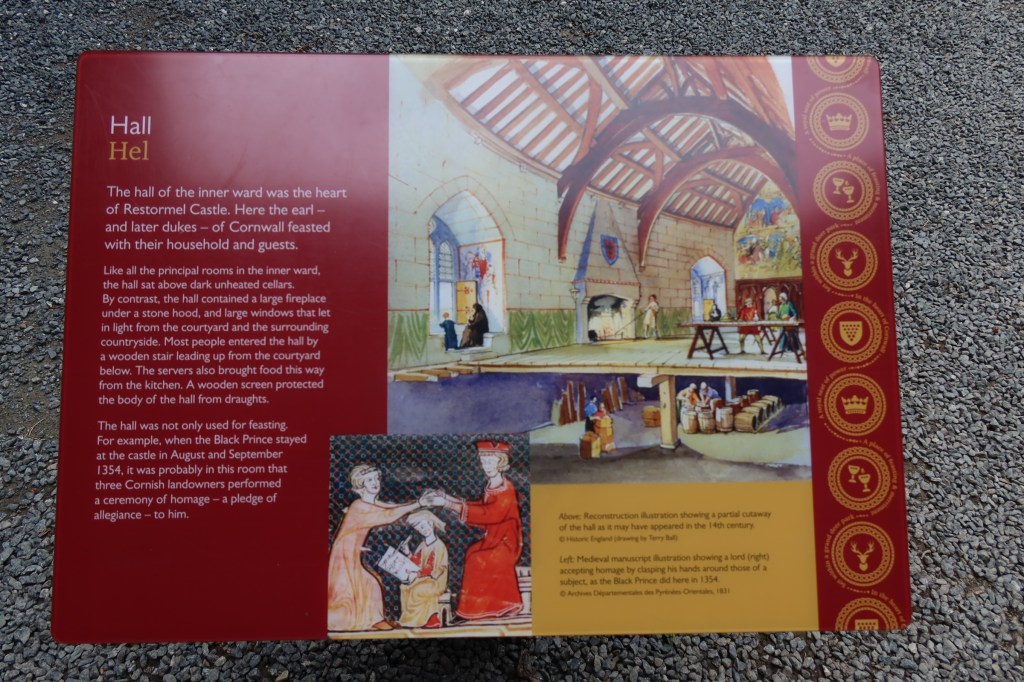
Earl Richard died in 1272, only four years after acquiring Restormel, so it seems more probable that it was his son Edmund who built the present castle. Edmund’s work at Trematon Castle is documented and provides a parallel. However, by the 1330s (and after the castle had changed hands a few times) documents refer to the castle being in need of repair. 1337 saw the son of Edward III being made Duke of Cornwall (also Edward – the Black Prince), along with a significant endowment of land and properties – including Restormal Castle.

This was a high point in the history of the castle, with many repairs and improvements being made to it and the surrounding park land. Apparently more time and money was spent on the boundary to the park land than on any other feature, an indication of its importance as a hunting park.

The history of the castle and its surrounding is one of neglect, repair and neglect once again. More can be found on its history here.

These are just a tiny fraction of the many places a person can visit in Cornwall, so I hope you have enjoyed this short meander through the county.

In memory of Christine Rowe and Alan Dalton – gone too soon but never forgotten.

How to travel back in time…

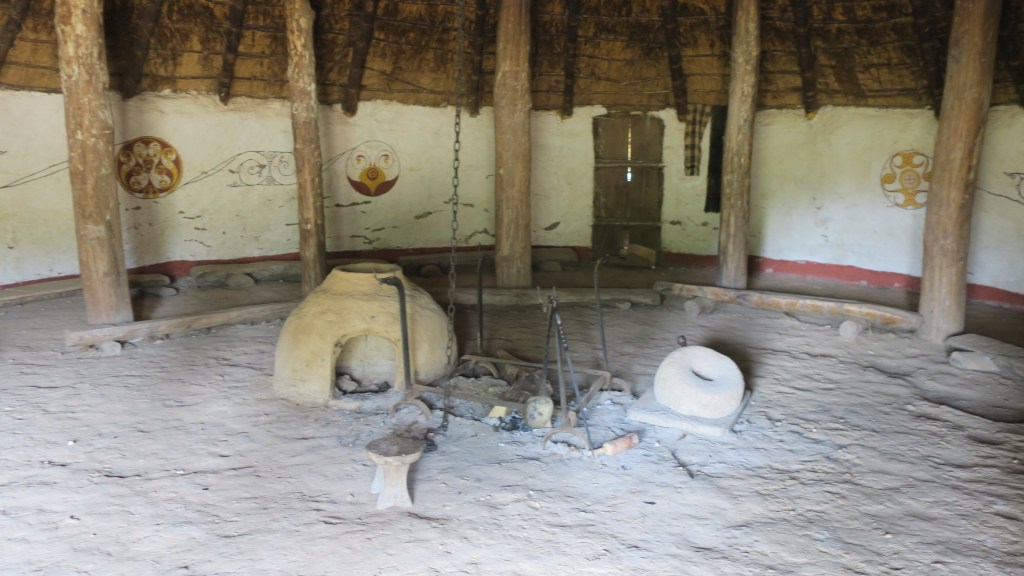
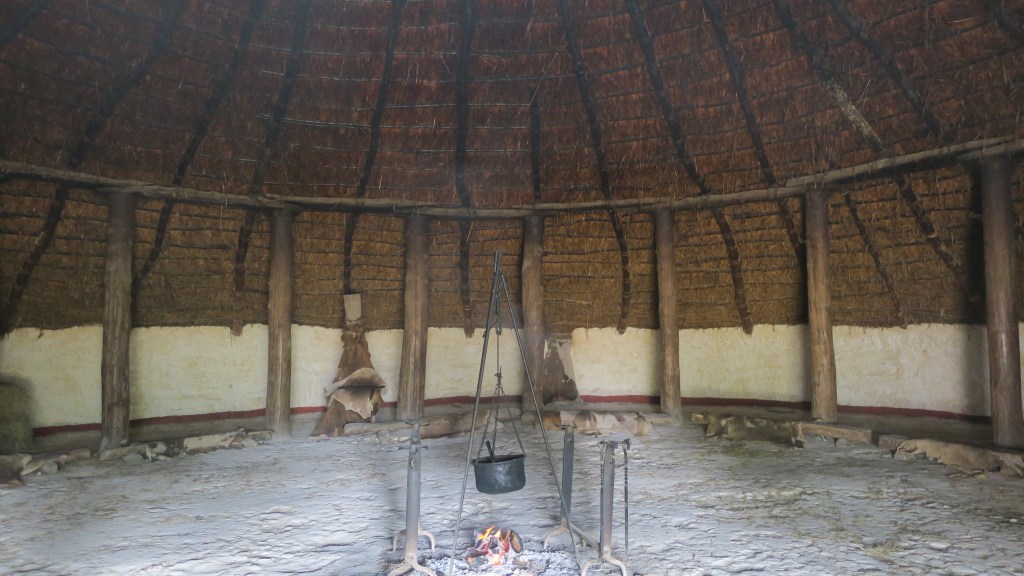
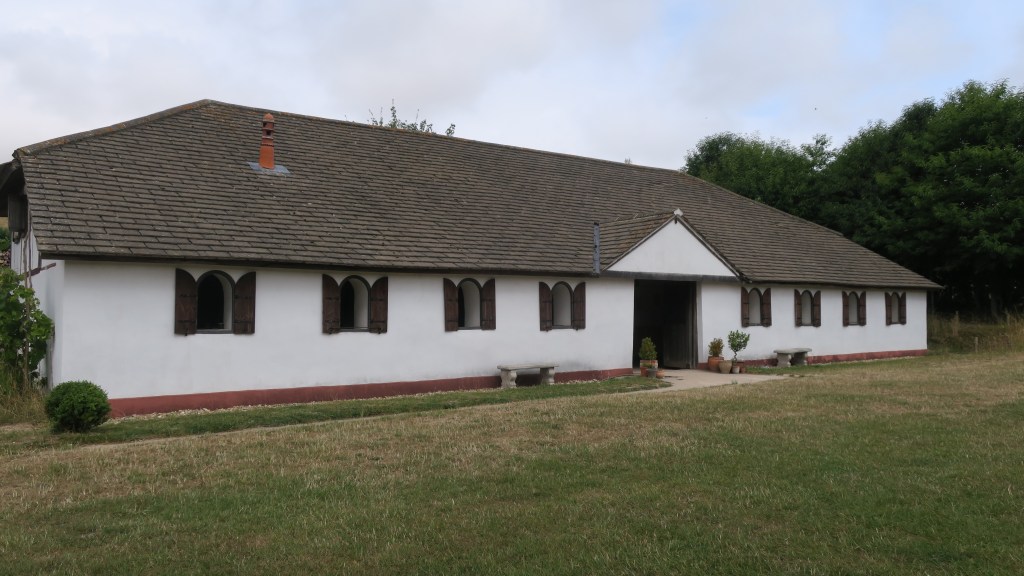
A view from the Roman villa back into the Iron Age.

Experimental archaeology is the one path that virtually anyone can take to travel back in time; to get an idea of what life may have been like in the distant past. One such place which encapsulates this philosophy is Butser Ancient Farm, a place I had the chance to visit recently.

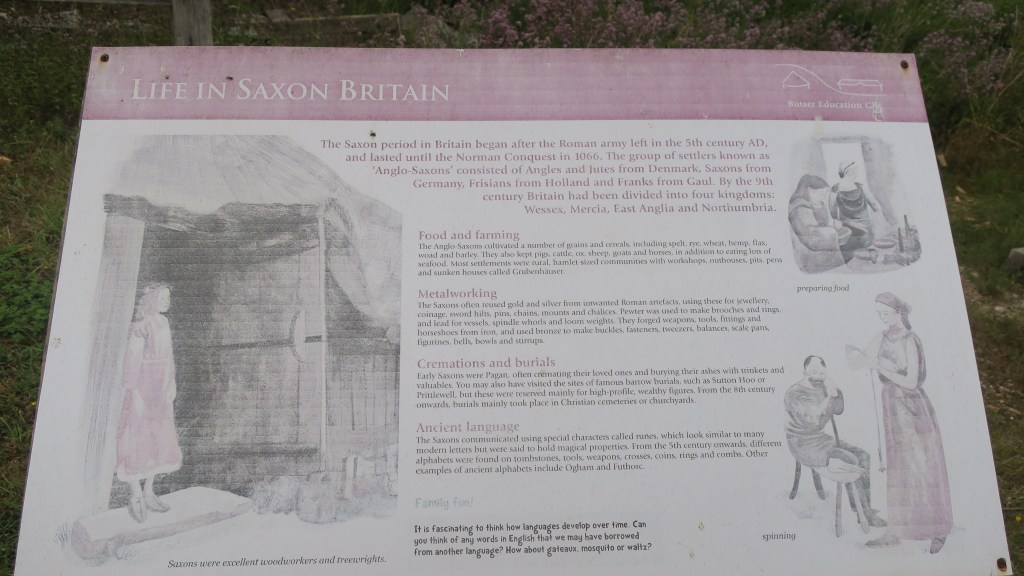
Butser began life in 1972, in a different location by the late Peter Reynolds, whose passion for experimental archaeology was contagious. The original farm was situated on Butser Hill, in what is now the Queen Elizabeth Country Park, in part because of the evidence for extensive Iron Age field systems on Butser Hill, still visible in the prehistoric field boundaries and earthworks that cover the landscape. However, it did not open to the public until 1974 and because of its popularity moved to a more accessible site at the bottom of Butser Hill. In 1991 the farm moved to its present location (near Chalton, Hampshire – just off the A3).

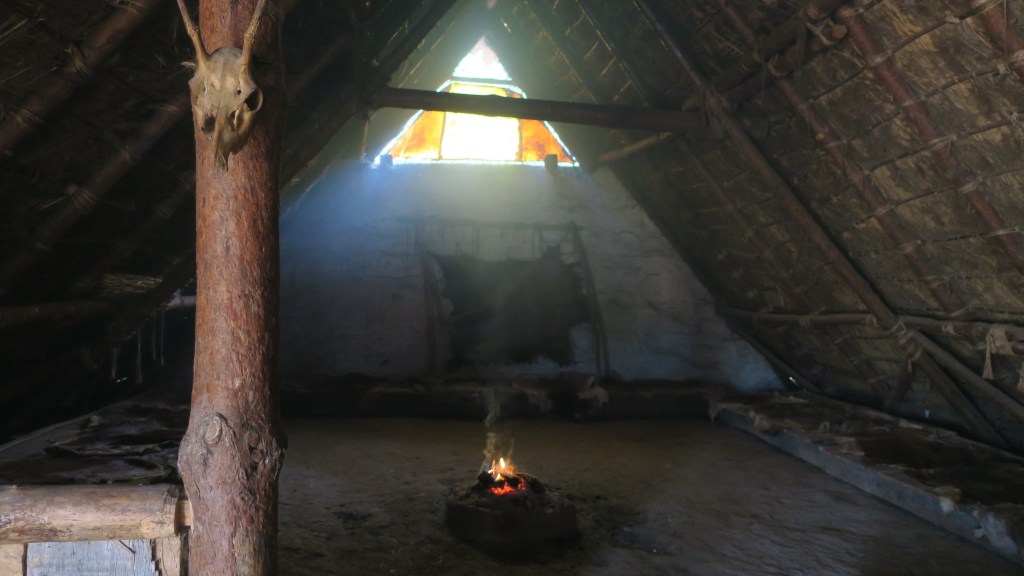
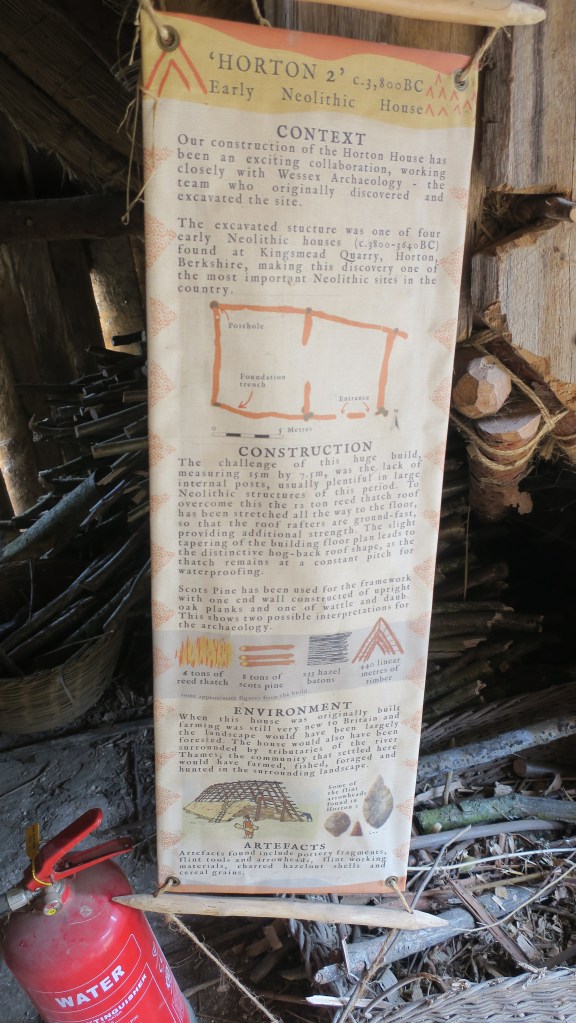
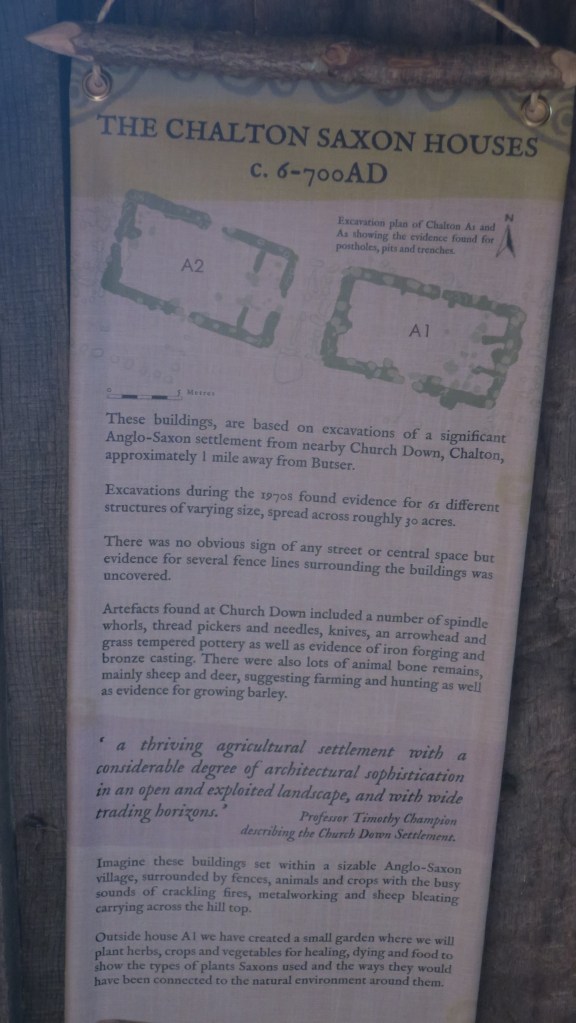
At Butser it is possible to see ten thousand years of history come to life; to see plans of archaeological sites rise up from the ground; to feel, touch, smell and absorb some of what it may have been like in the past is an experience that should not be missed. All of the buildings which have been reconstructed are based on actual archaeological sites that have been discovered through excavation.

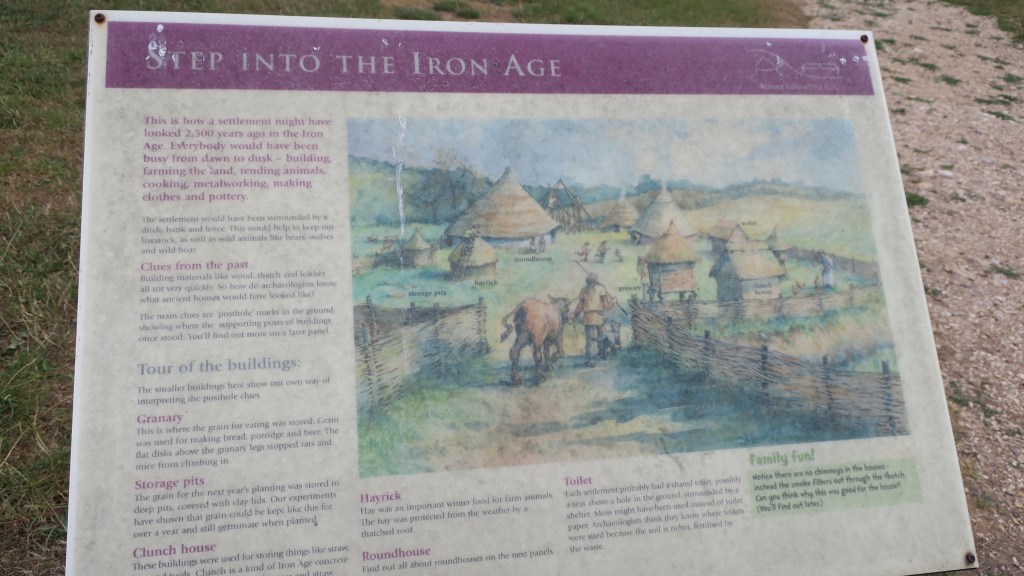
These excavations often only reveal the faintest of remains, the postholes and their layout is usually all archaeologists have to go on as to the type of building. The artefacts found and their position in the structure can also provide clues as to the use of the space inside and outside. Understanding all the fragmentary pieces of evidence can often take a leap of faith particularly for the general public. In this case Butser provides a physical and tangible connection to the past for the visitor.

However, it is much more than that, it is a place where those who study the past can test theories in, not only ancient technologies and construction techniques but also in how sites degrade. Our understanding of how archaeological sites are formed depend very much on understanding how a place degrades, becoming the humps and bumps we see in the landscape.

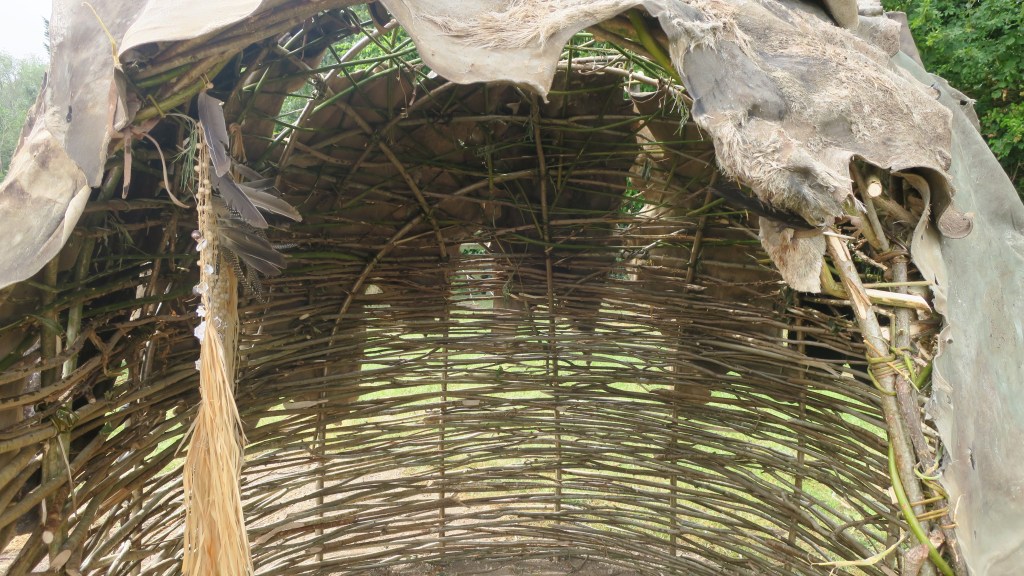
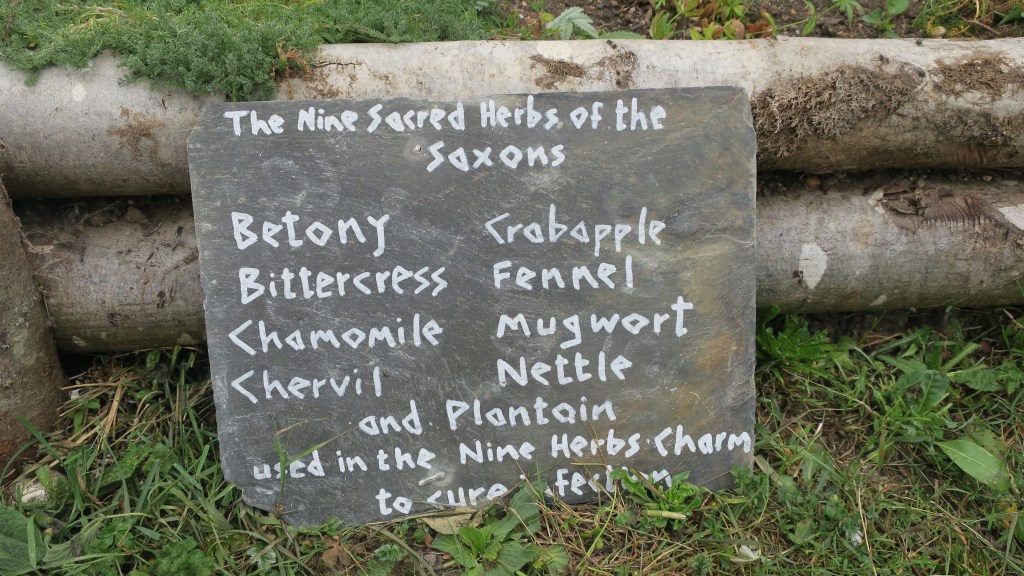
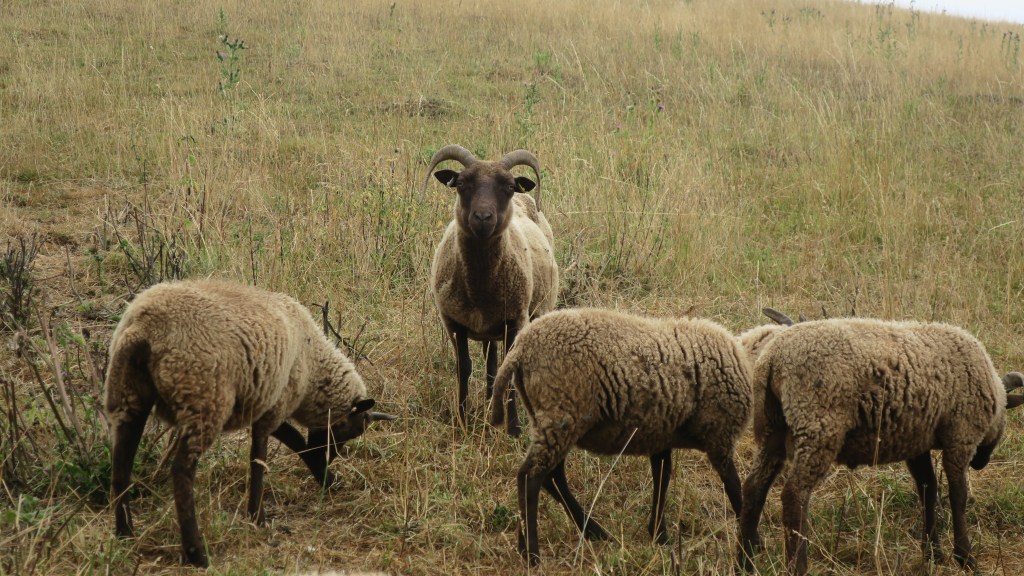
In addition to the buildings, there are also gardens containing plants that would have been in use at a particular time – known from faunal analysis during excavations. Ancient breeds of sheep, goat and pig are also a feature of the farm, giving the visitor a well-rounded experience. At certain times of the year, they also host various events such as flint knapping weekends, re-enactment groups, storytelling, solstice celebrations and more.

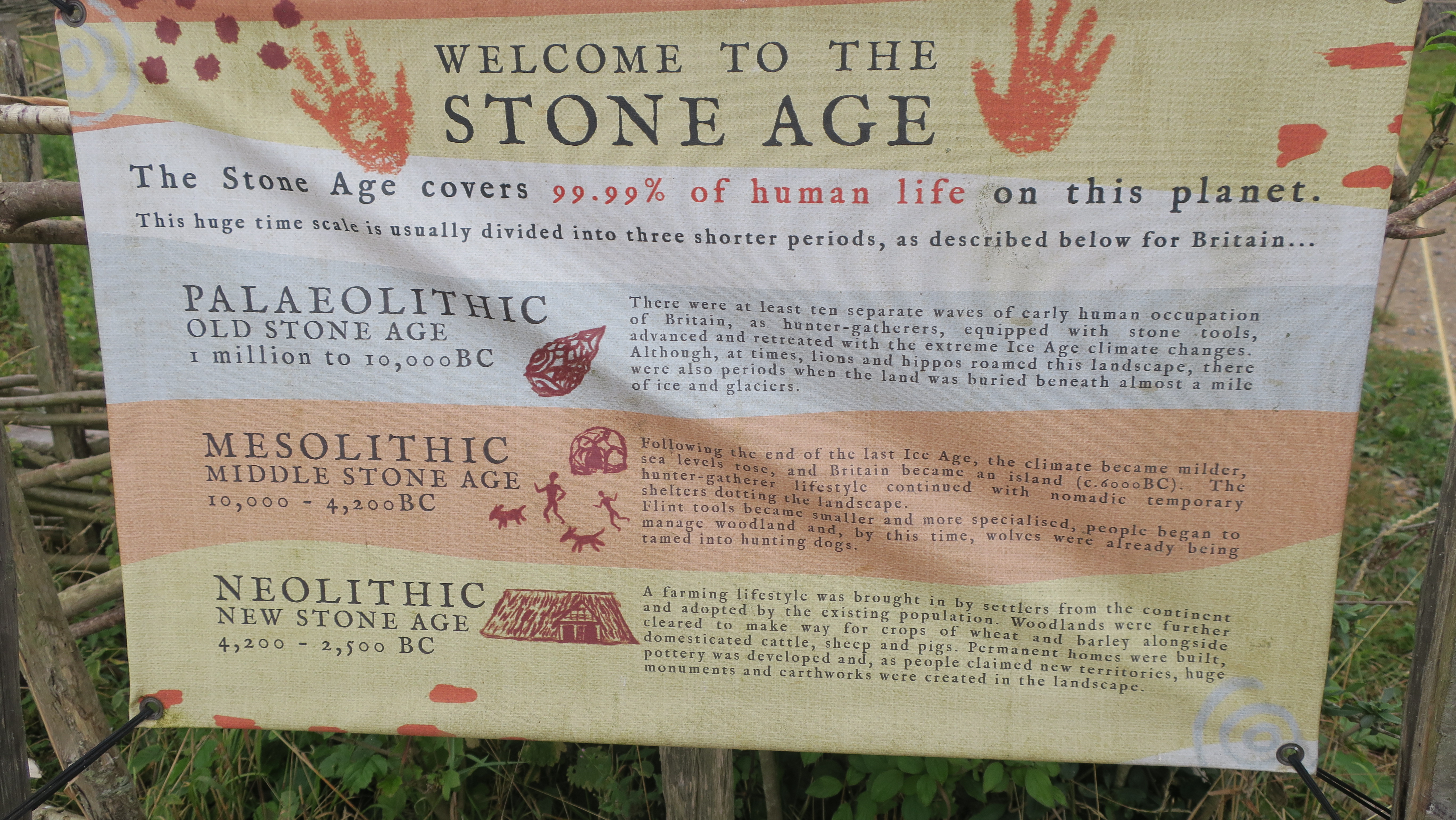
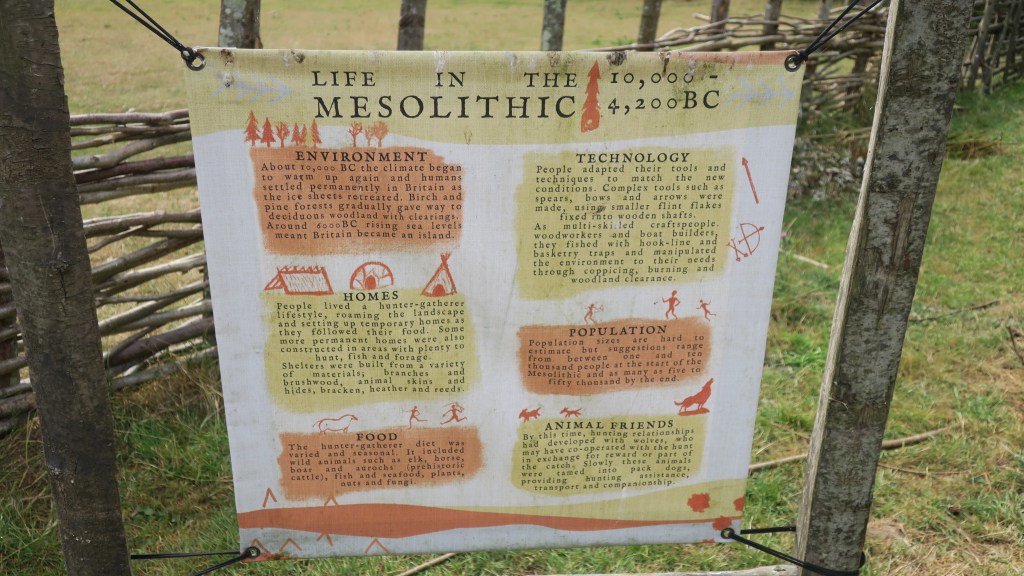
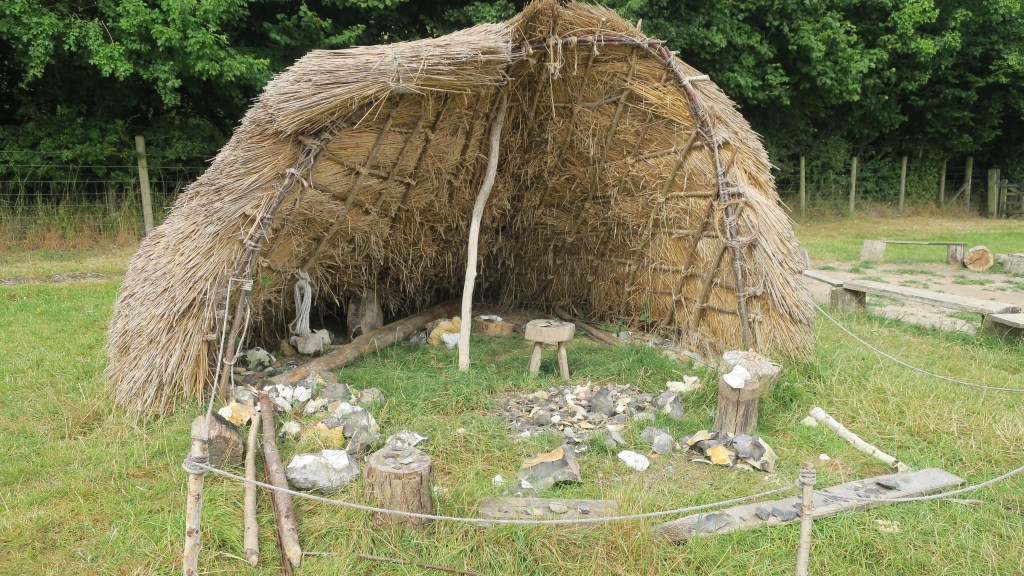
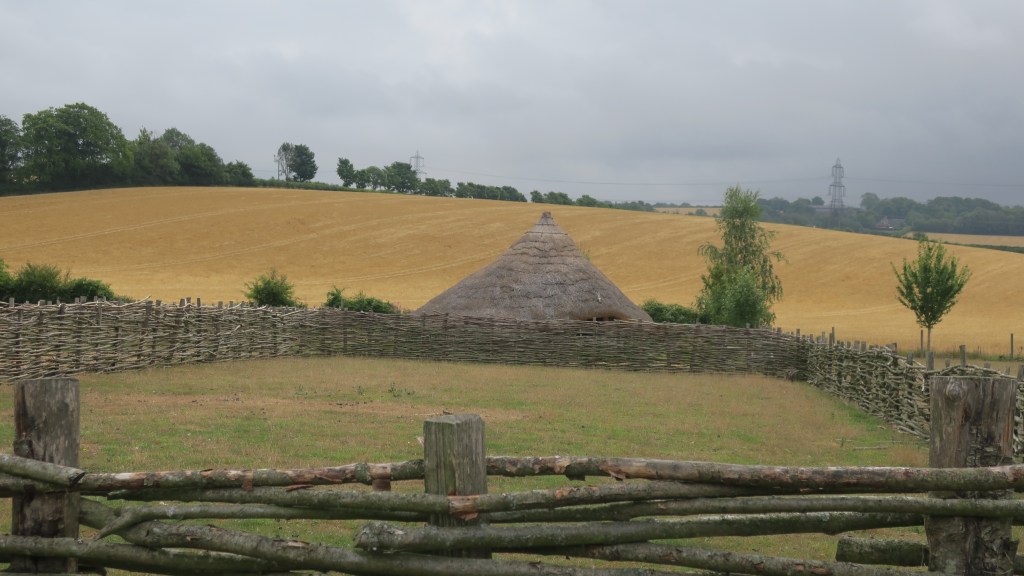
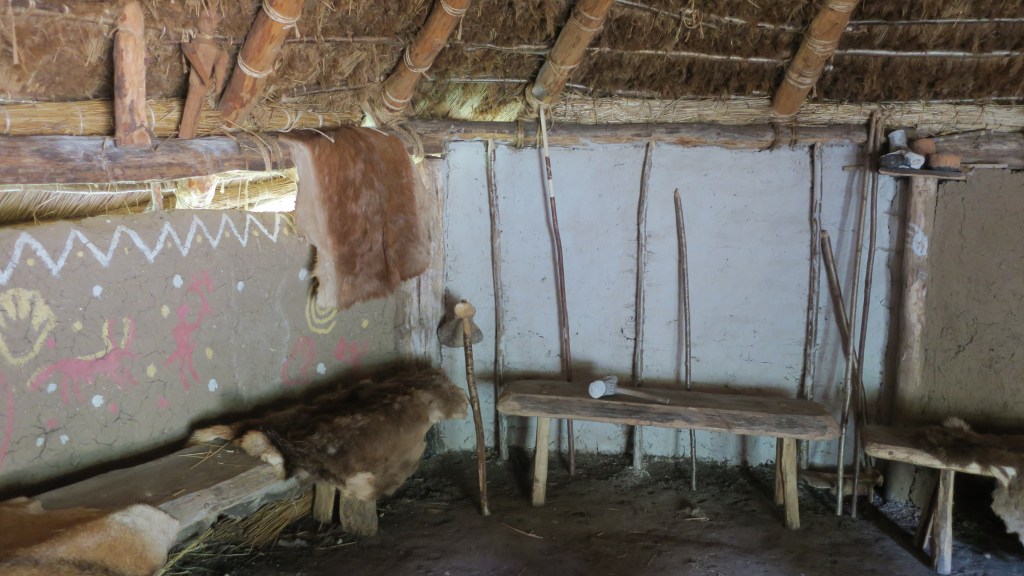
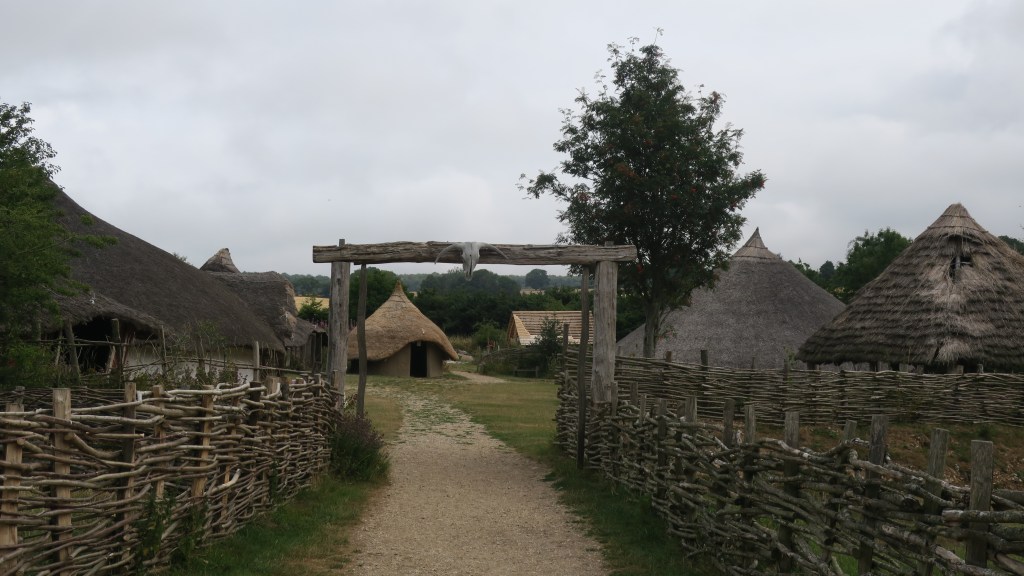
The following are few photos from my visit this year…beginning in the very distant past of the Mesolithic and Neolithic.

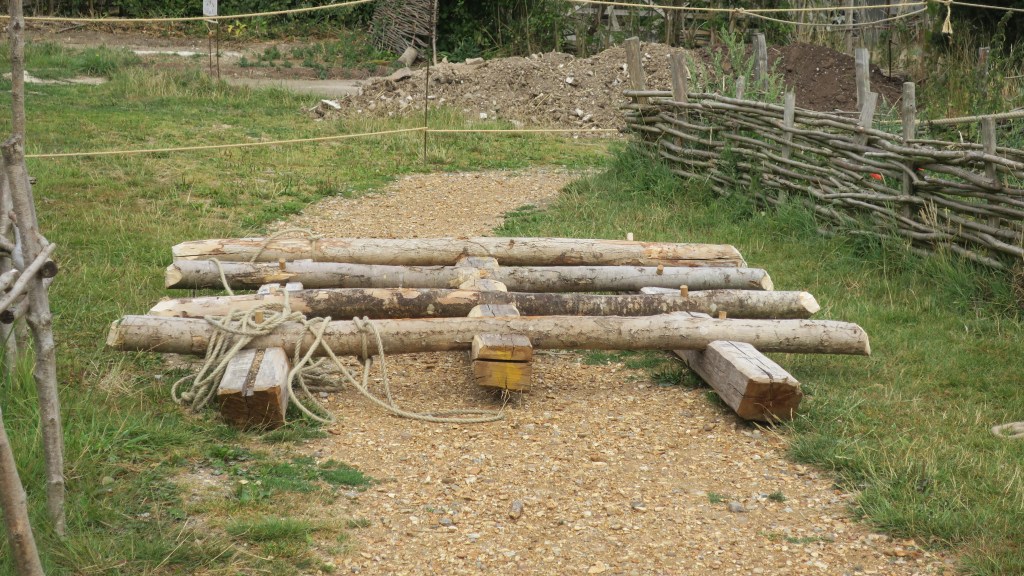
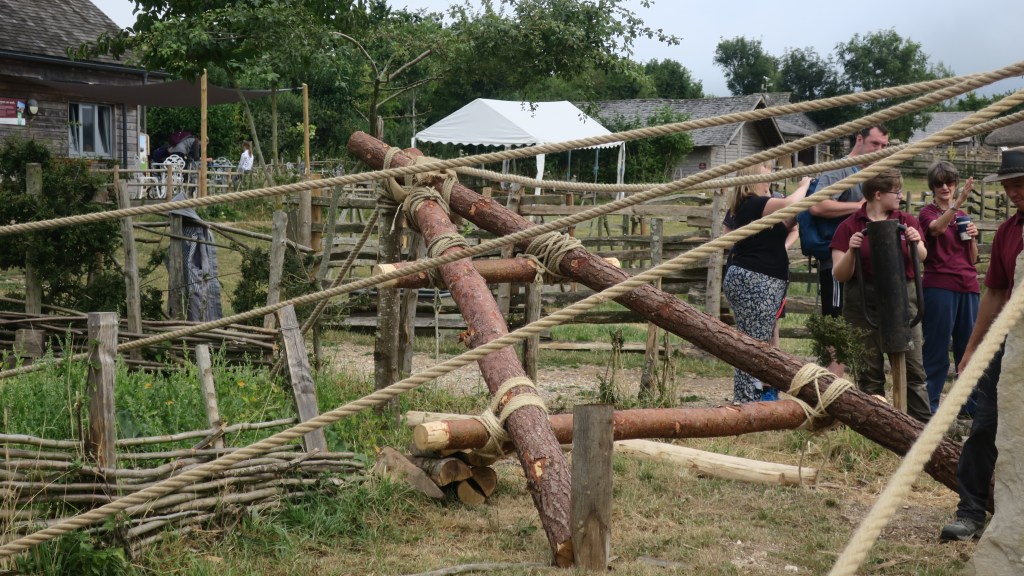
In the days preceding my visit the team at Butser along with volunteers from the HMS Queen Elizabeth had a go at erecting a megalith using only the types of technology available in the Neolithic. They moved and raised a 3.5 ton piece of Purbeck limestone using theorised prehistoric techniques. The stone is roughly the same weight as the smaller bluestones at Stonehenge, which were moved over 140 miles around 5000 years ago. 

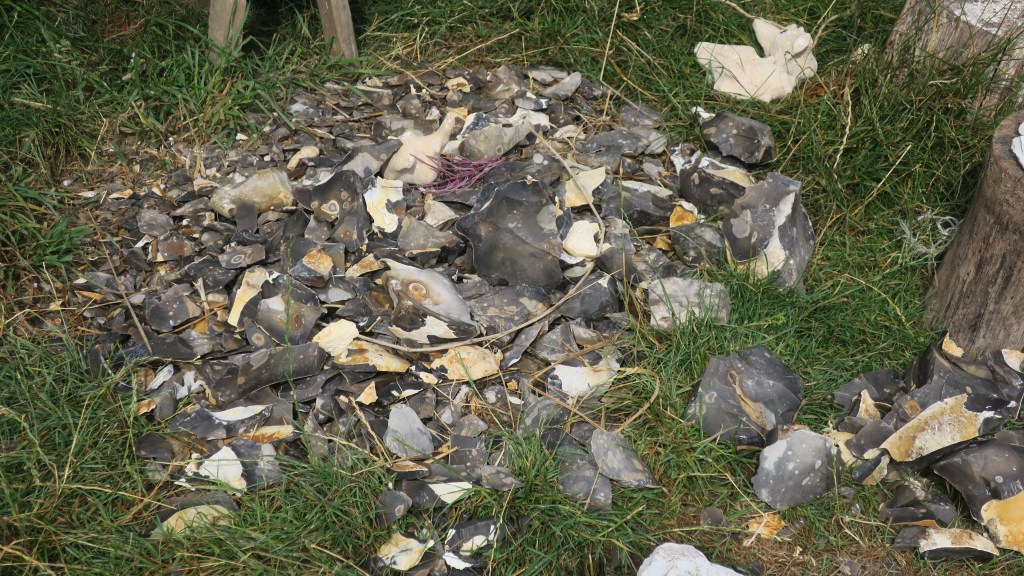
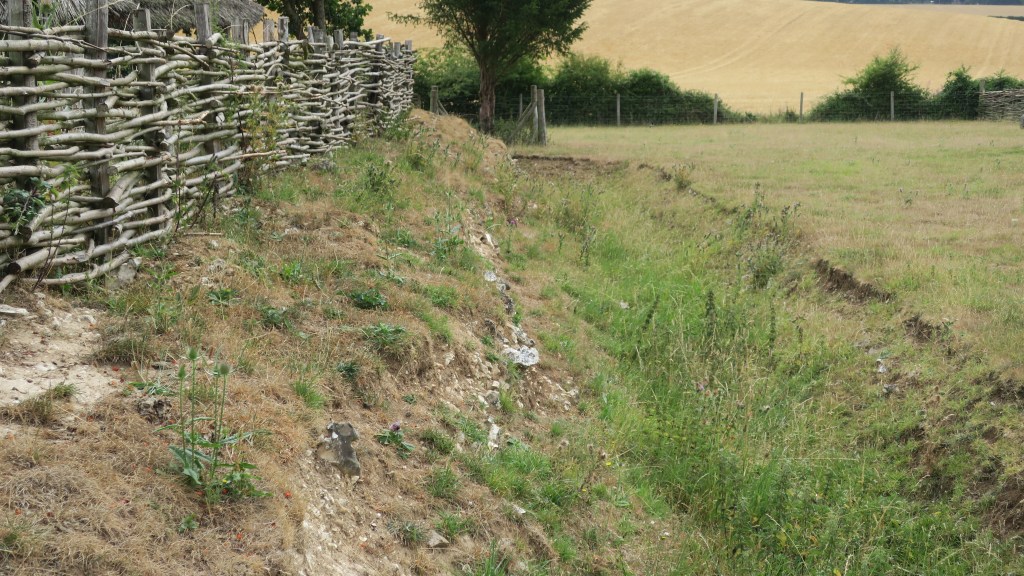
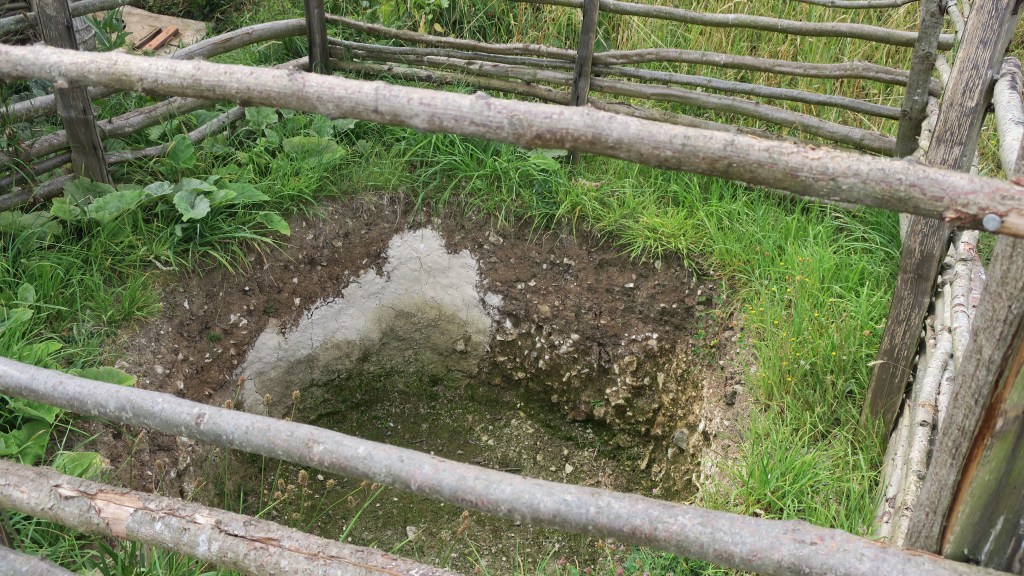
When performing such tasks it is also useful to observe what is left behind, these ephemeral remains are often the hardest to interpret.

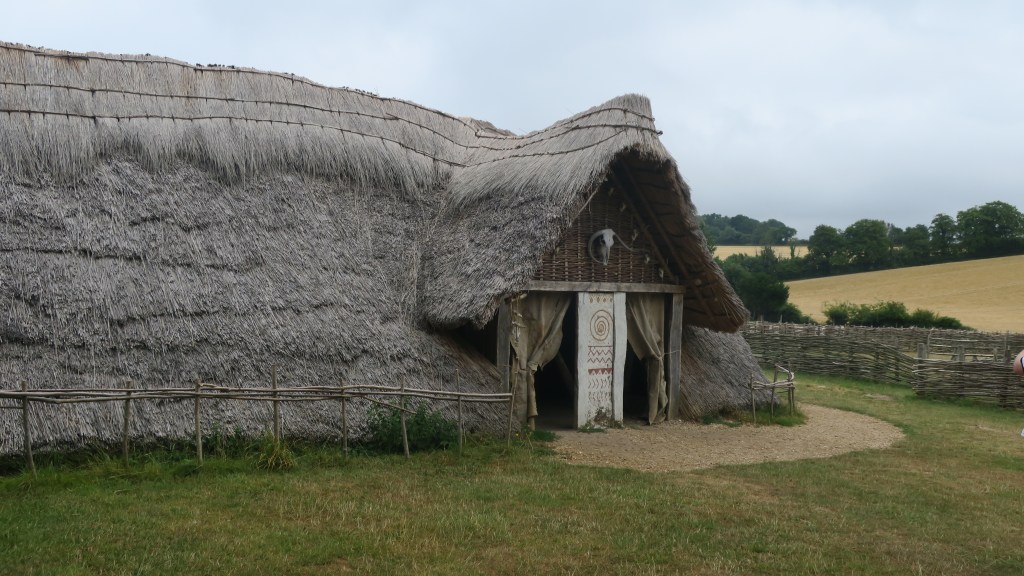
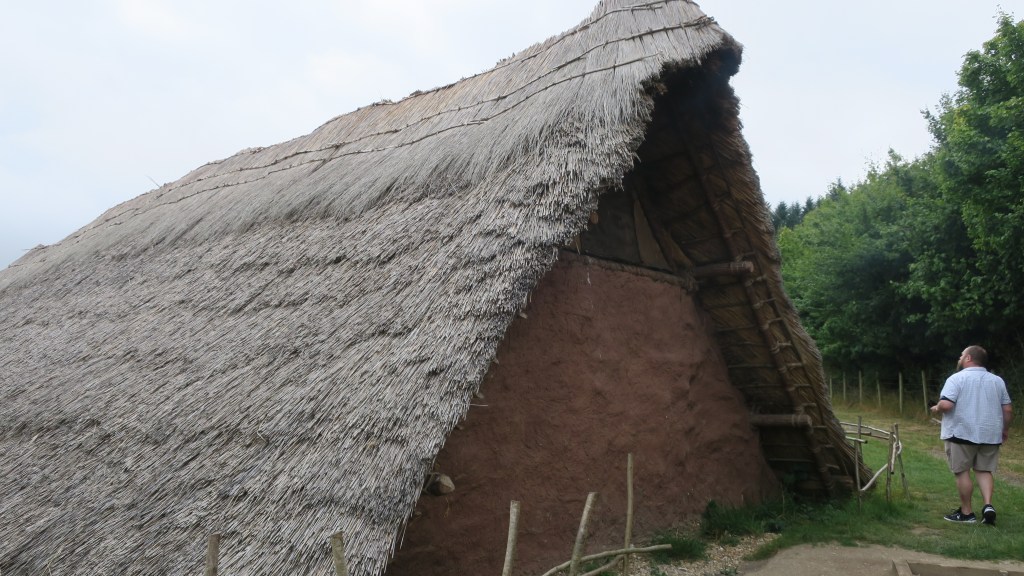
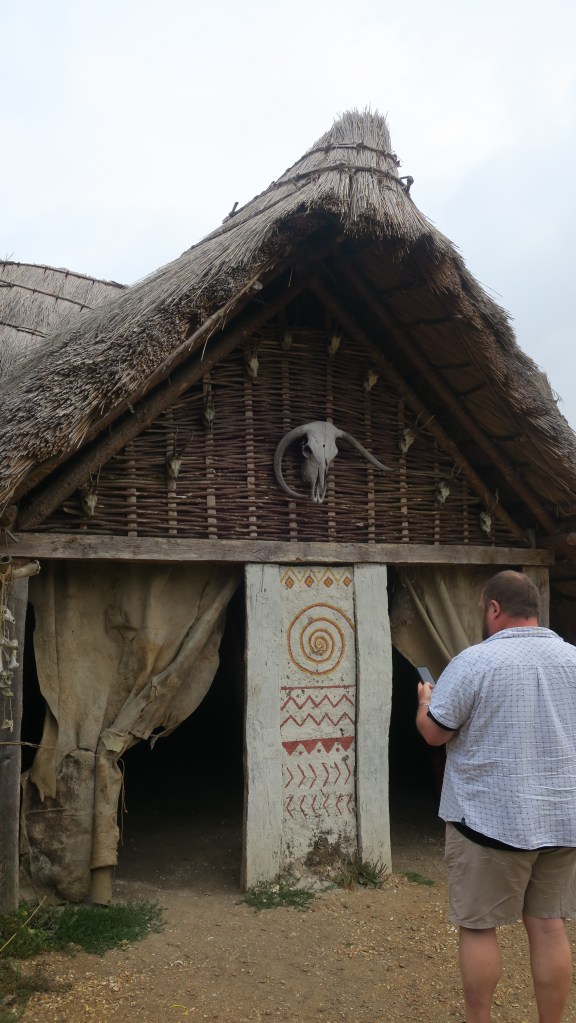
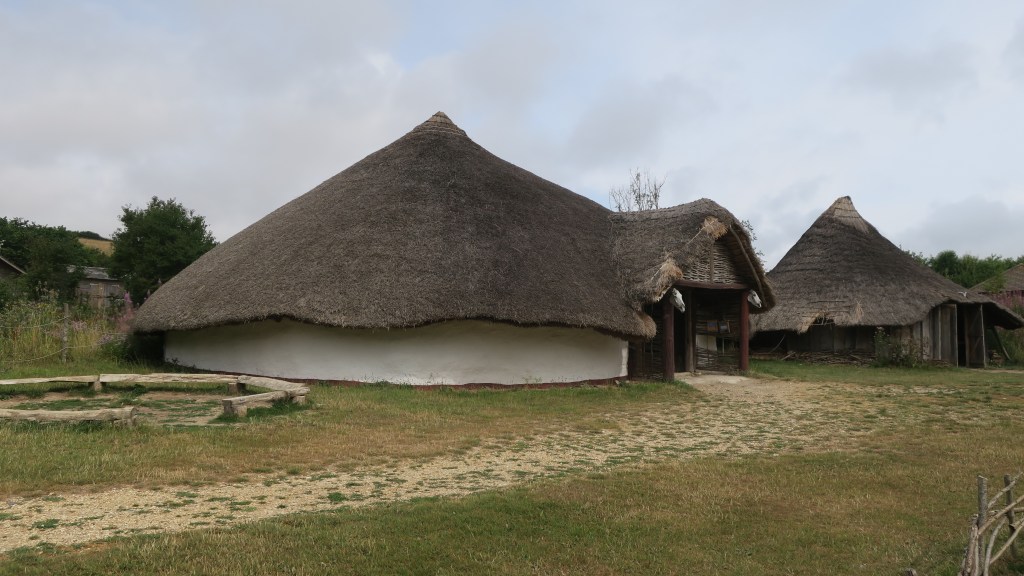
From the Neolithic we carefully saunter into the Bronze Age, the time of the roundhouse and metal working…

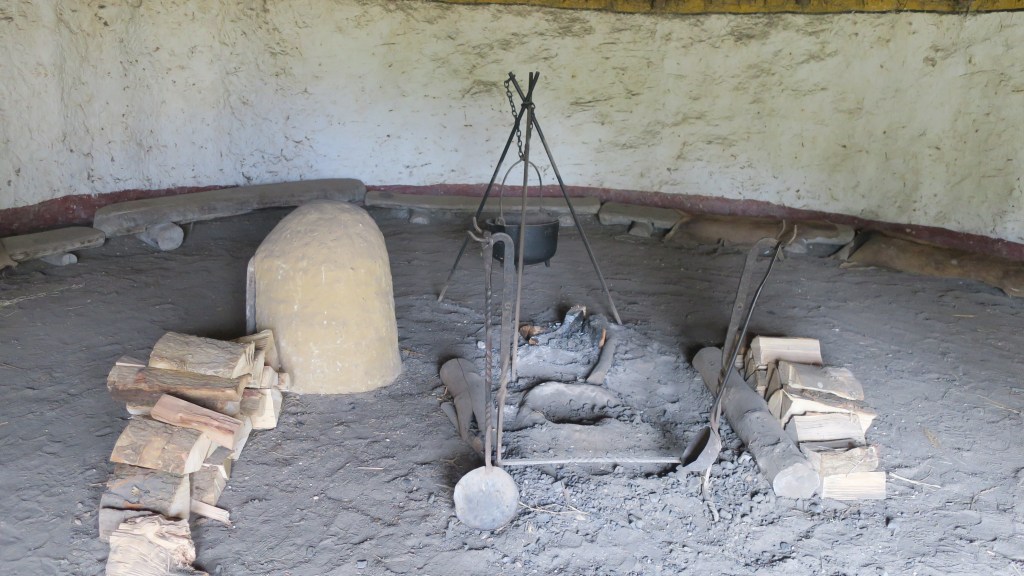
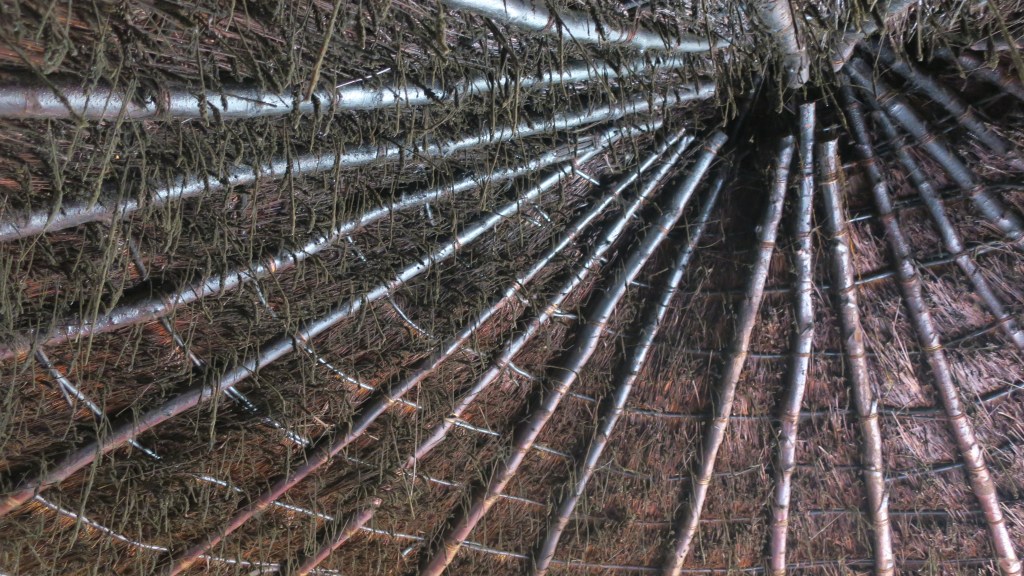
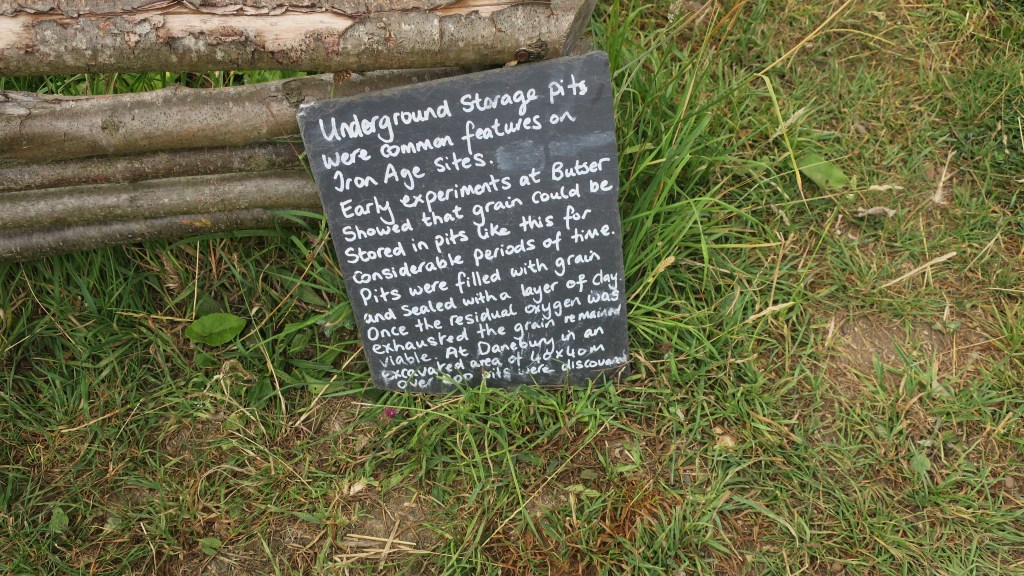
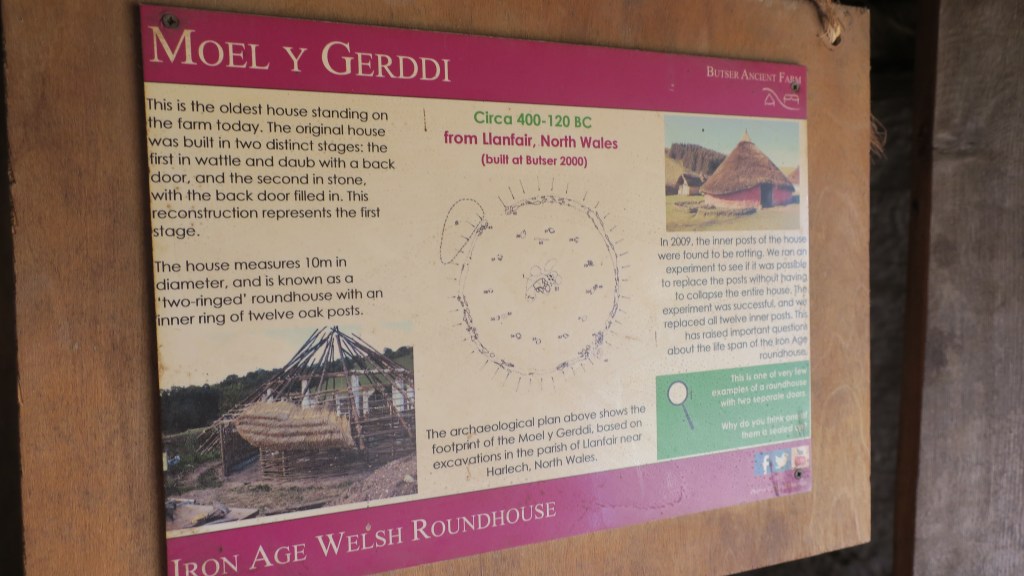
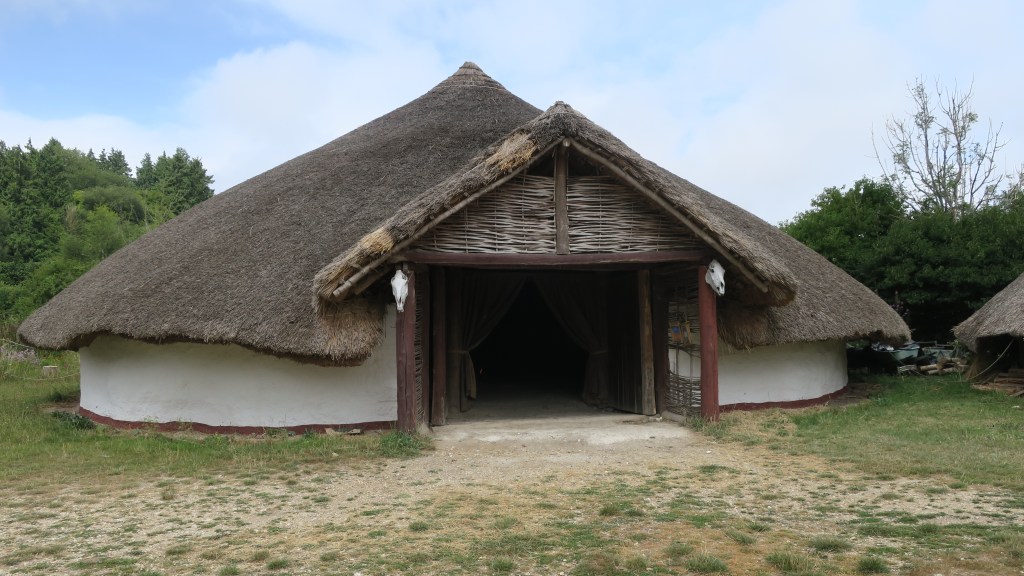
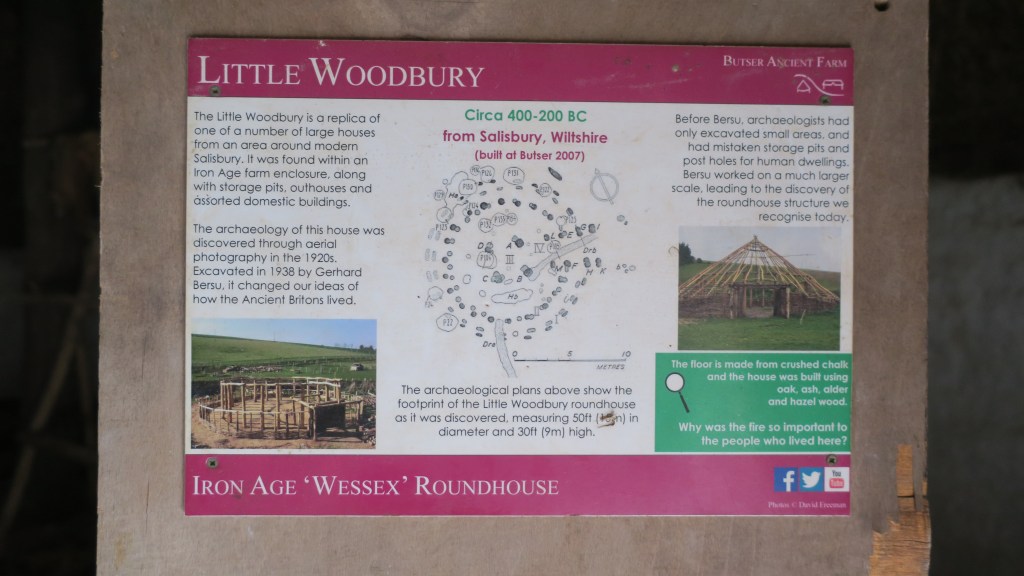
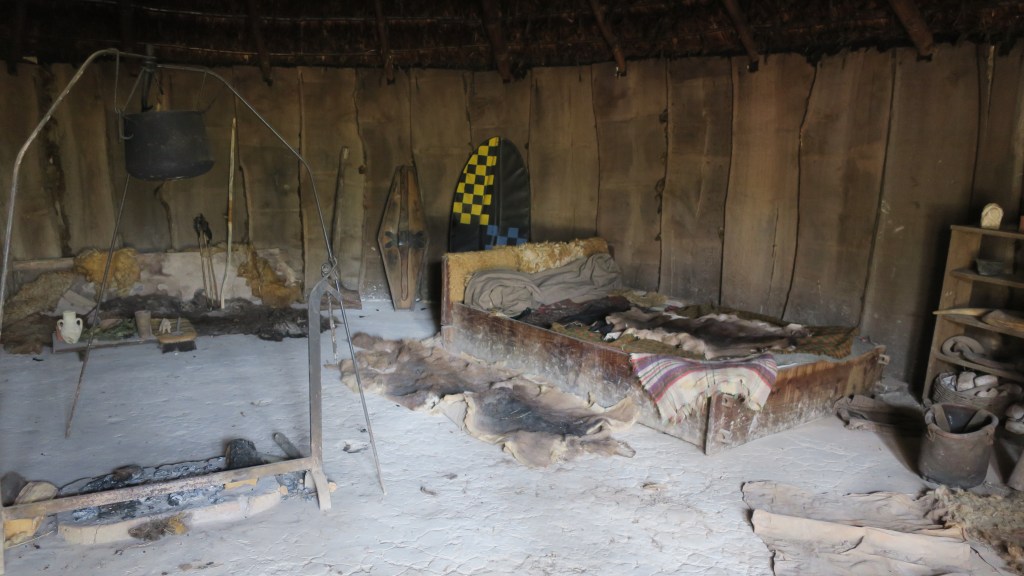
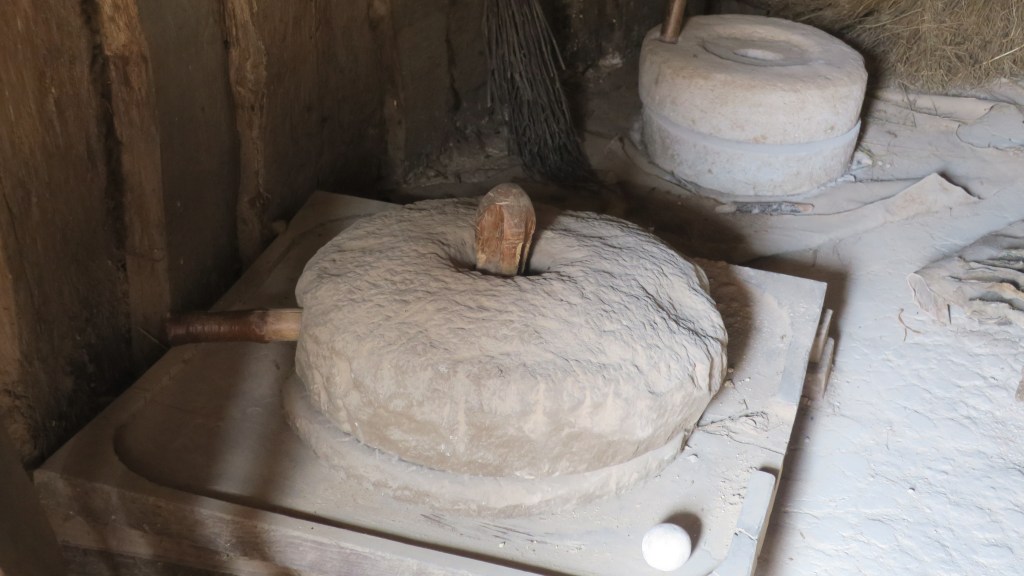
The Iron Age –

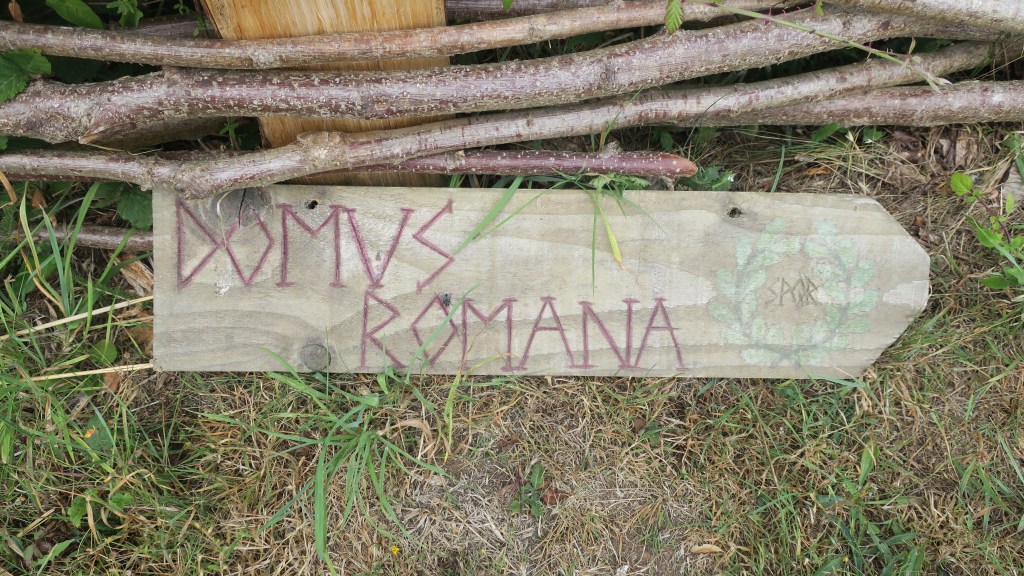
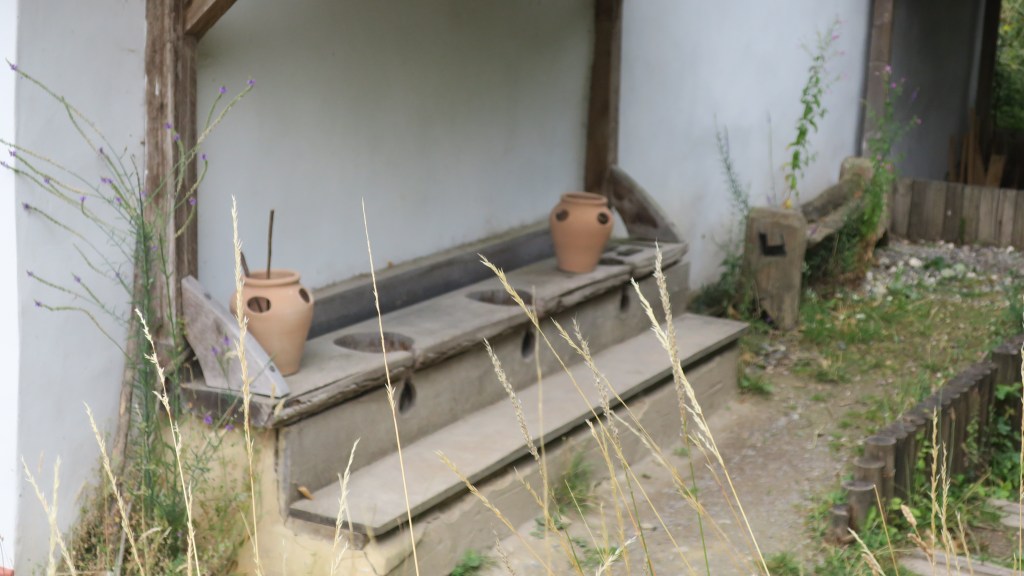
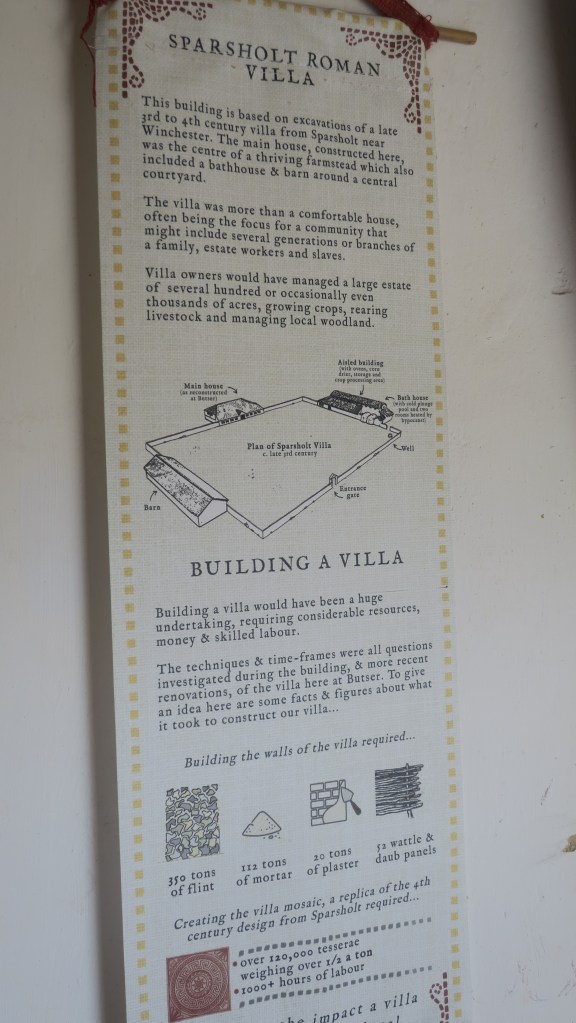
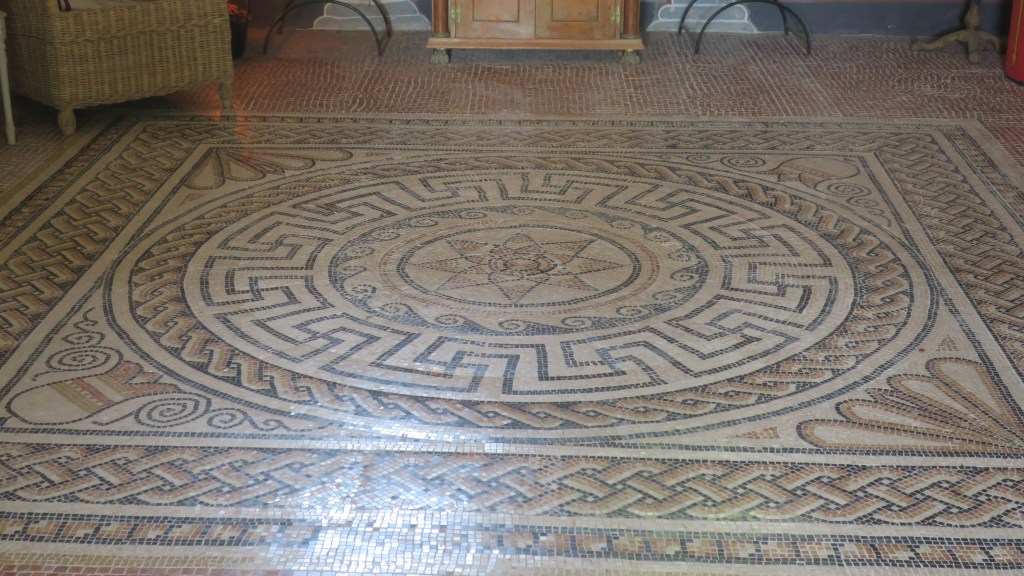
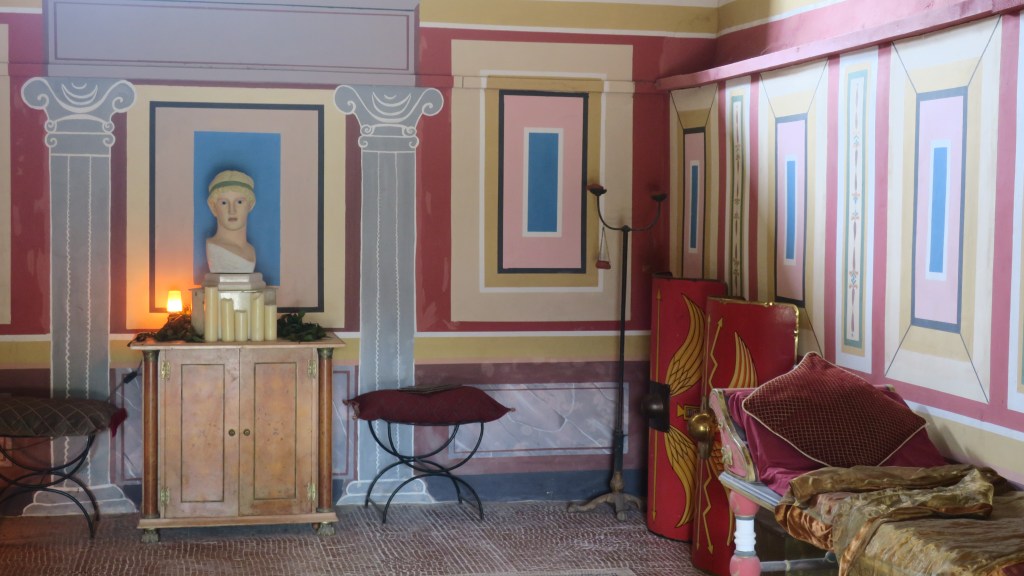
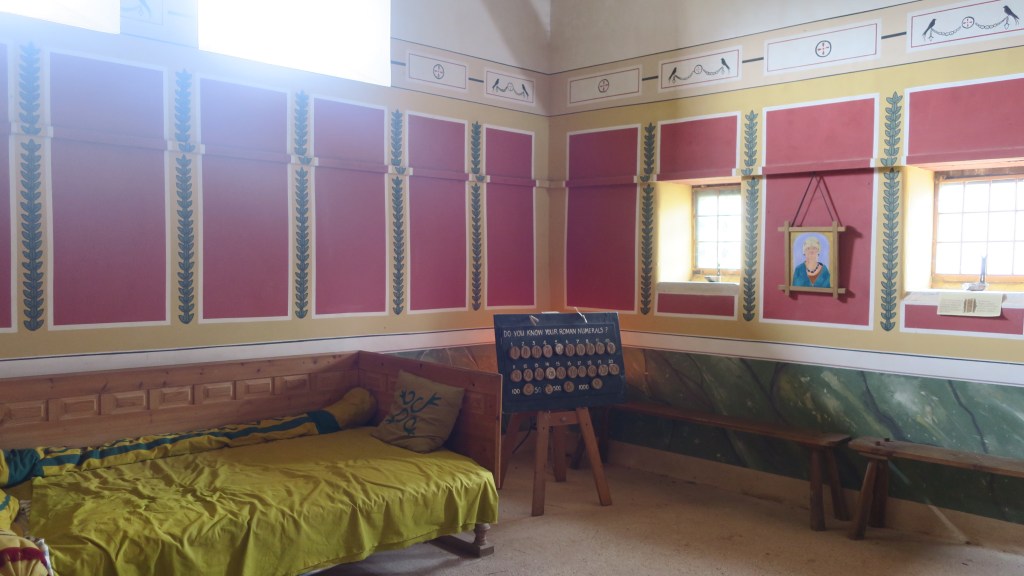
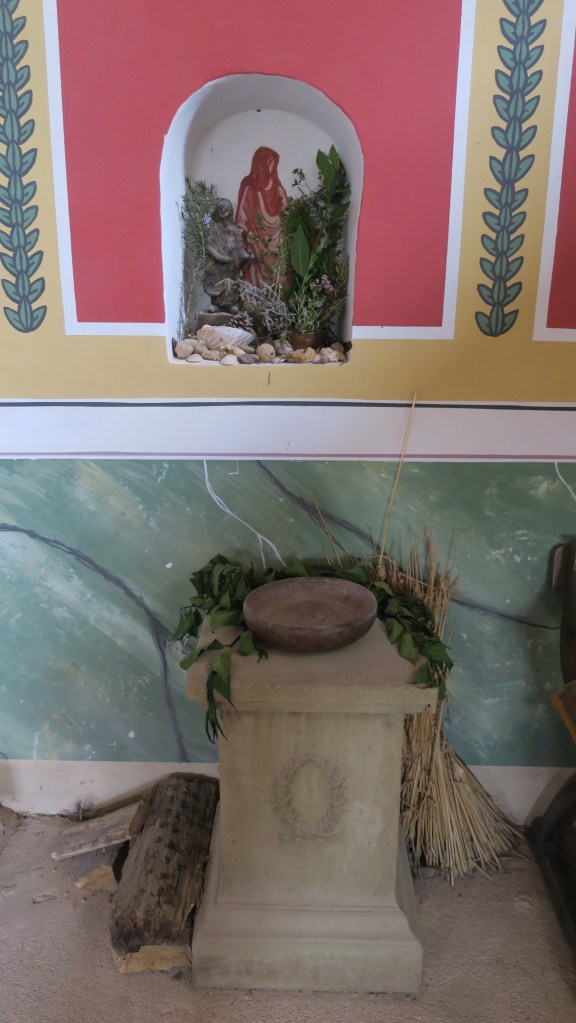
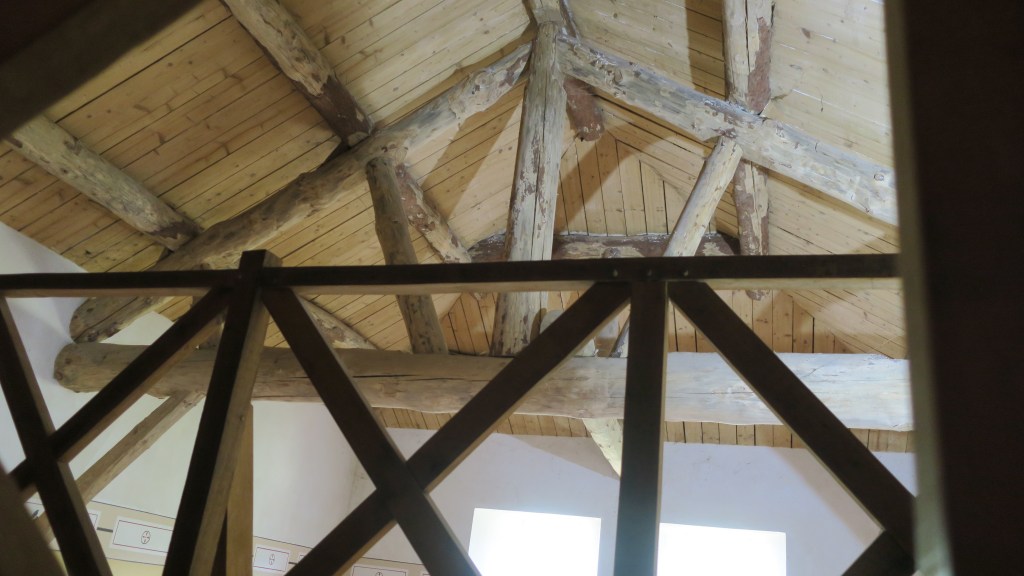
The Roman villa – as with all the structures at Butser the villa was built using only construction techniques known to be used in the Romano-British period. The mosaic is the only known reconstruction in the UK and the aim was to understand some of the finer points in mosaic construction but also to see what happens to it over time.

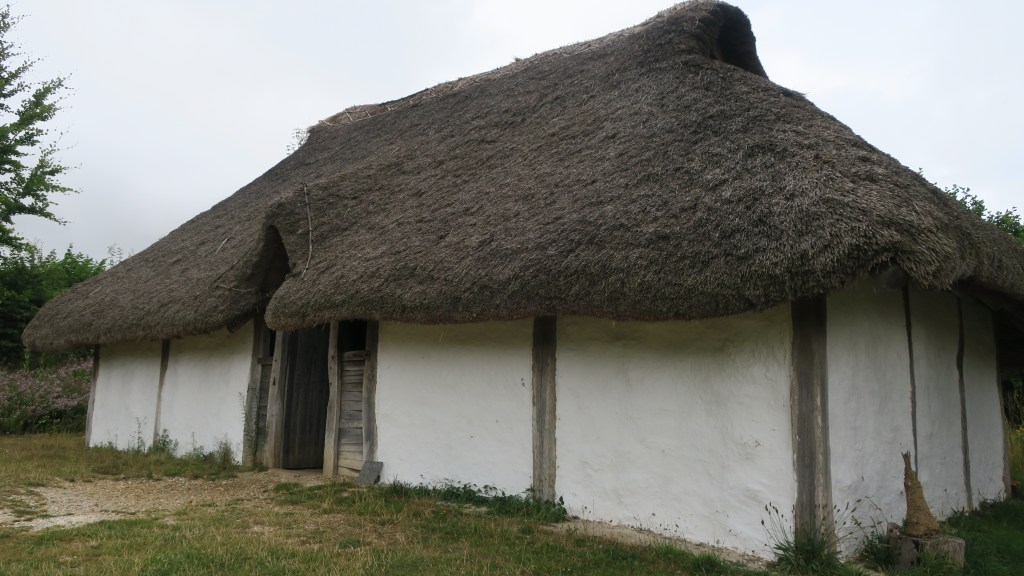
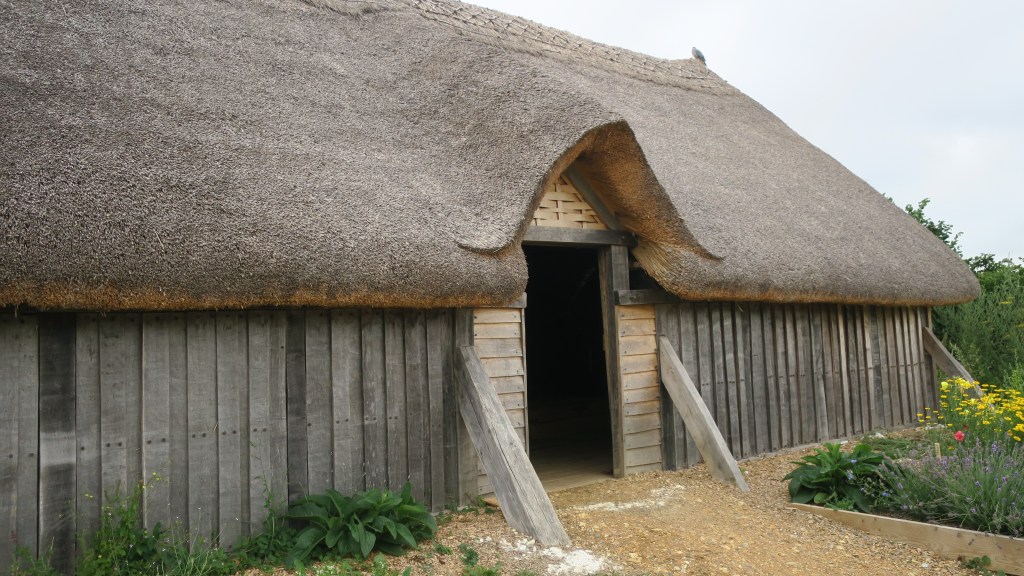
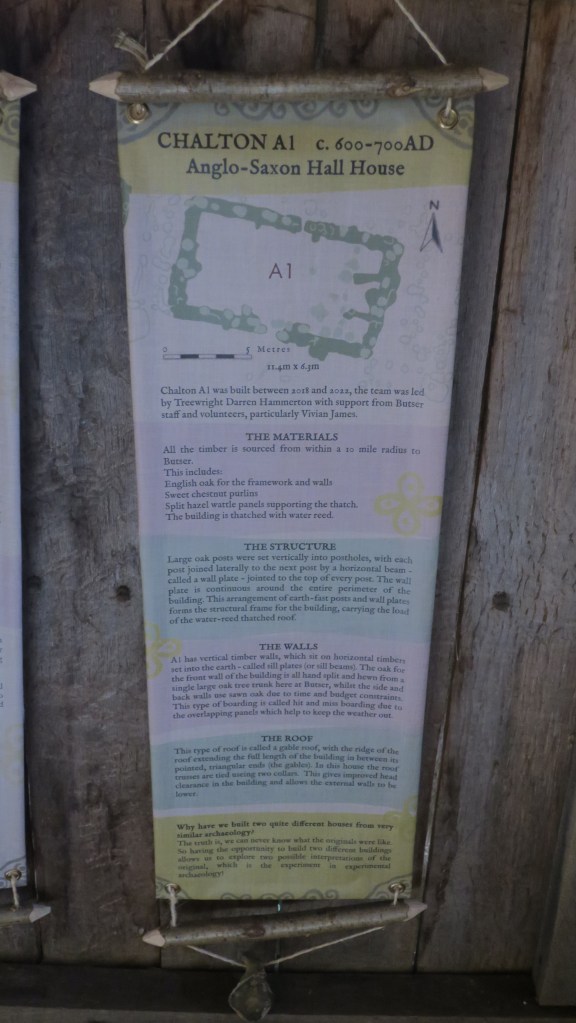
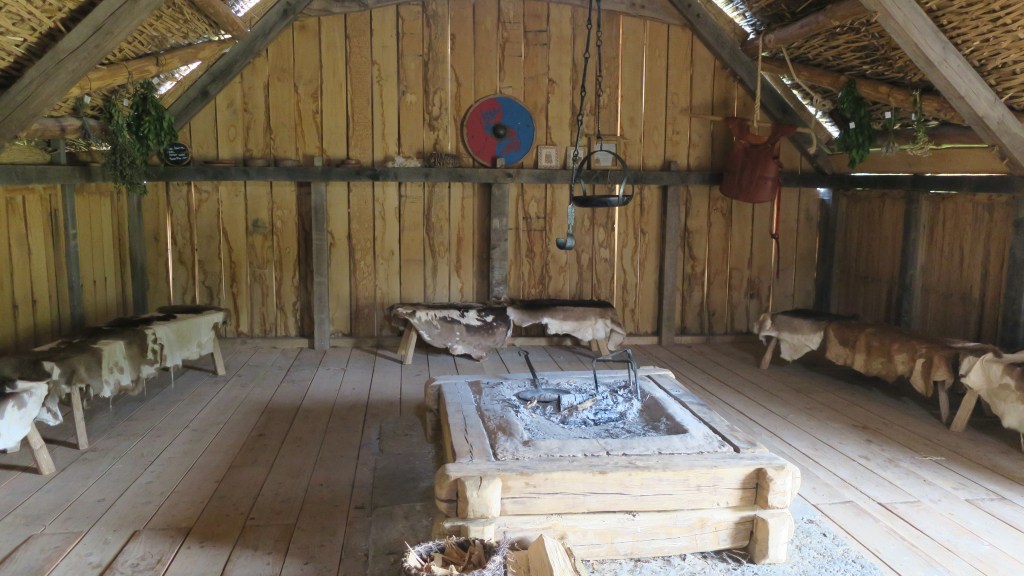
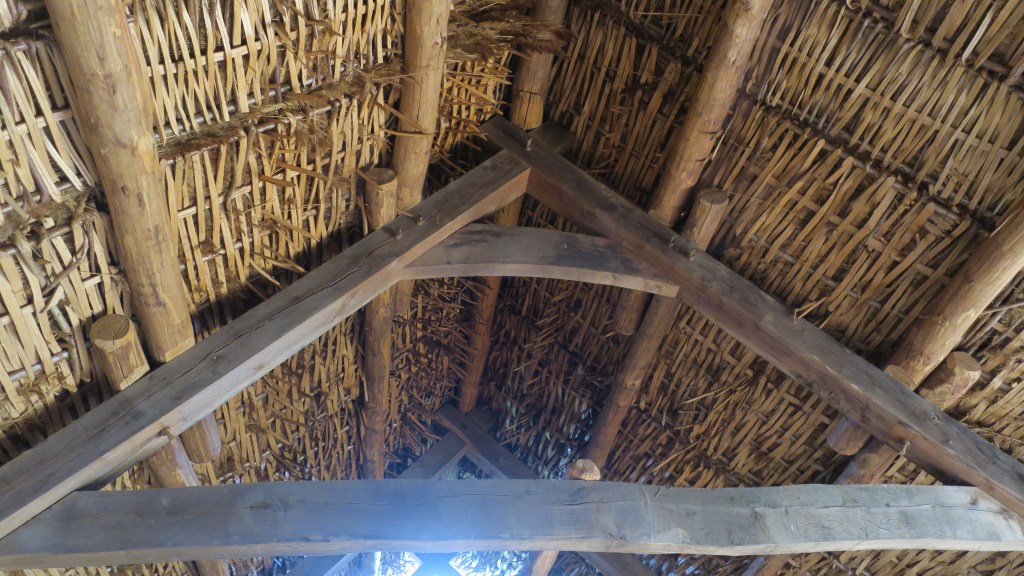
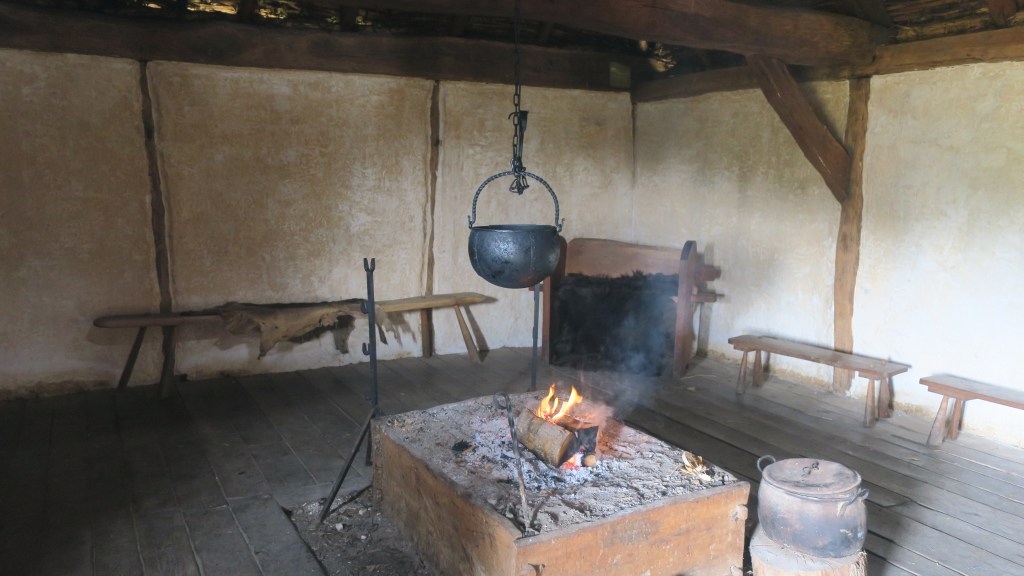
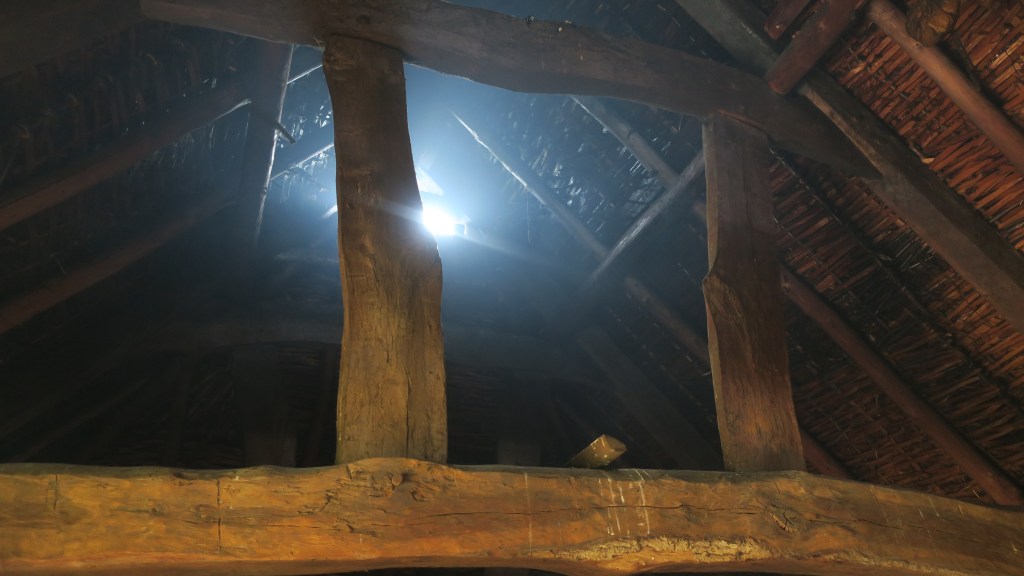
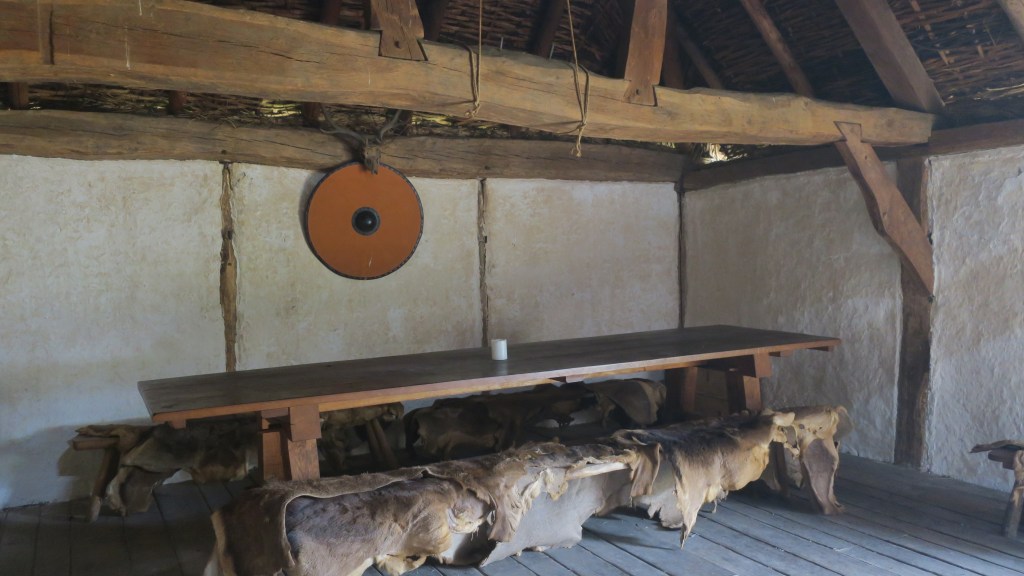
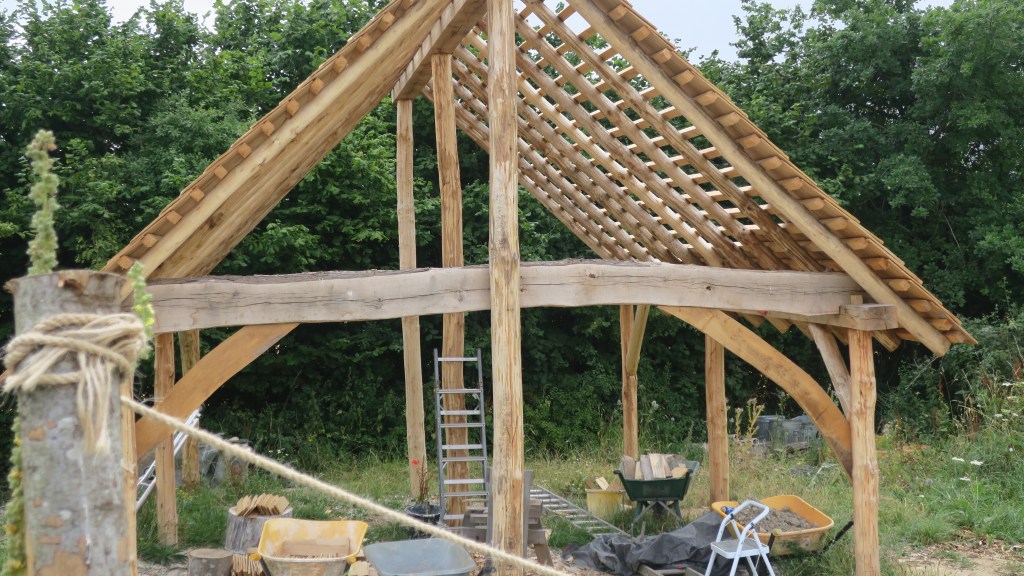
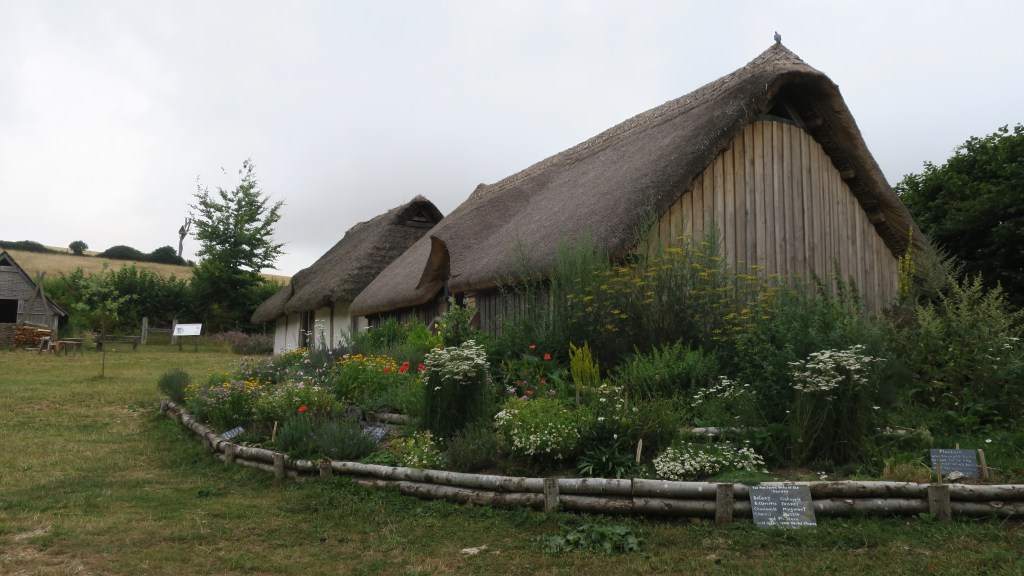
The Anglo-Saxon halls are the most recent addition to the farm and demonstrate two different types of building style.

As mentioned before Butser also engages in research and education, none of the buildings, gardens or spaces are static museum pieces, they are constantly evolving – adding to our knowledge. Most years the farm is well attended by schools wide and far who get a hands on perspective of life in the past, archaeology and history.

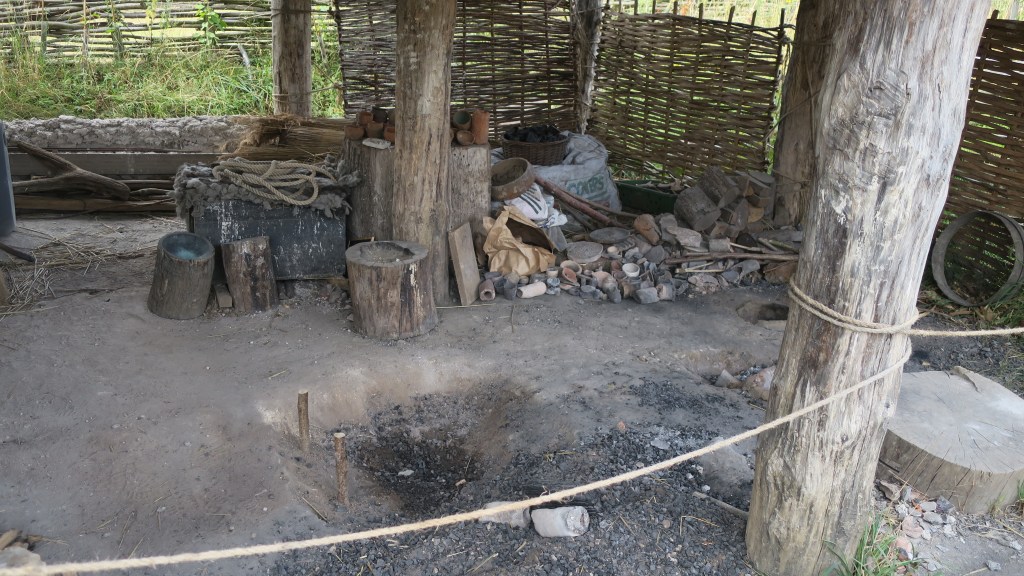
A building dedicated to hot technologies under construction – a dedicated space for smelting, metal casting, pottery firing, bead making etc.
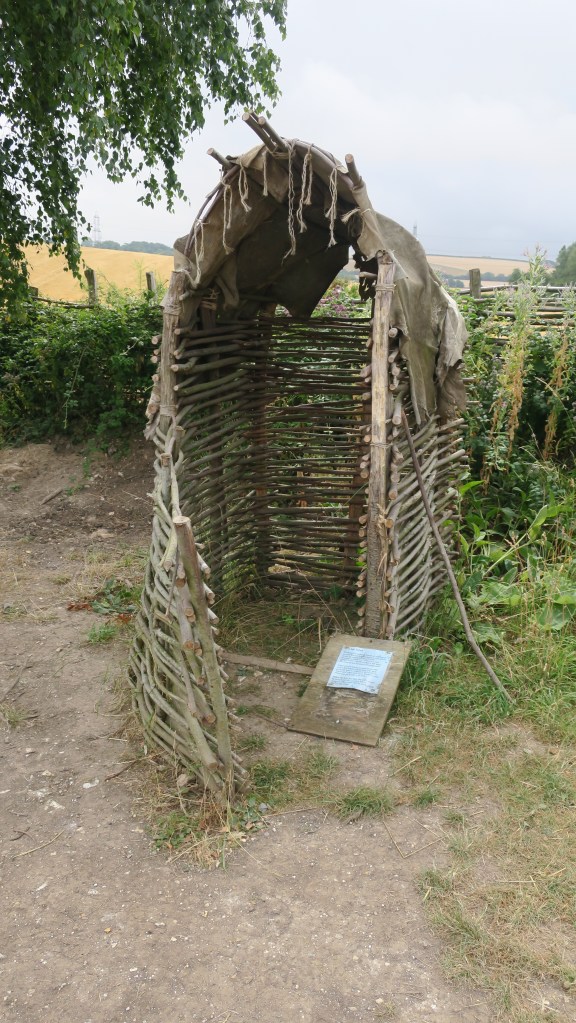
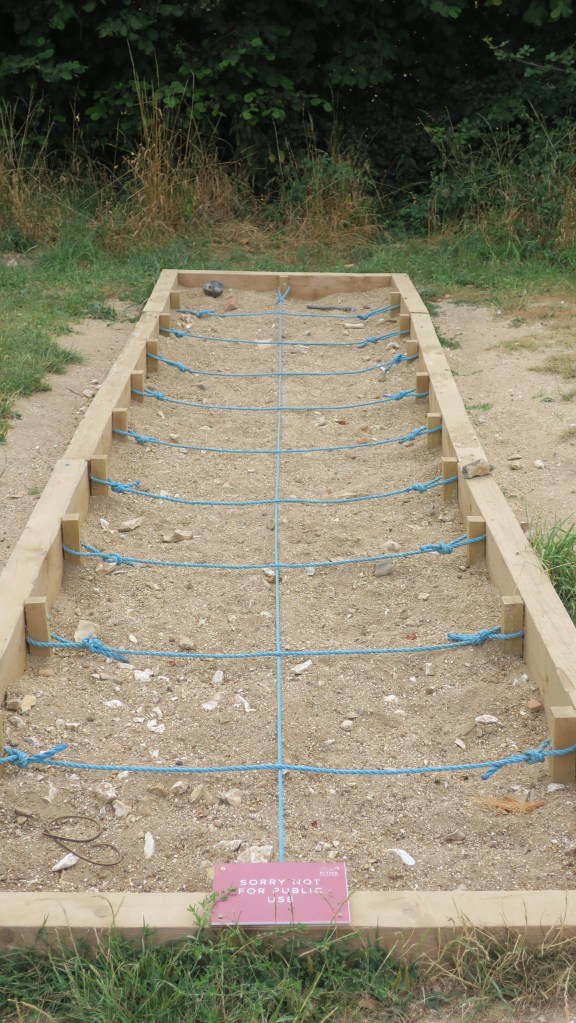
In several places around the farm are these curious structures. Used for school visits they give the children hands on experience at excavation and archaeological practices.
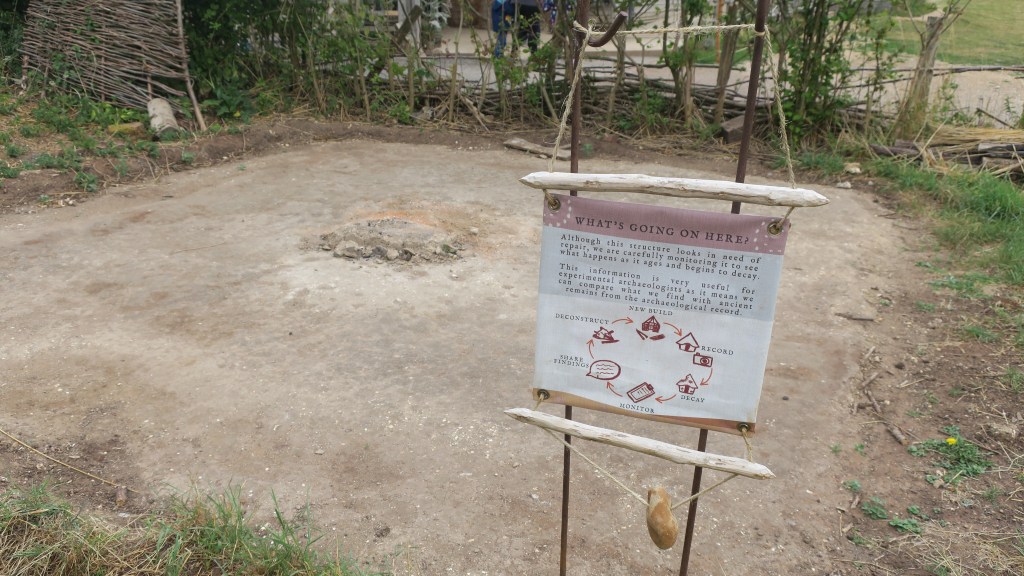
The archaeology of decay…

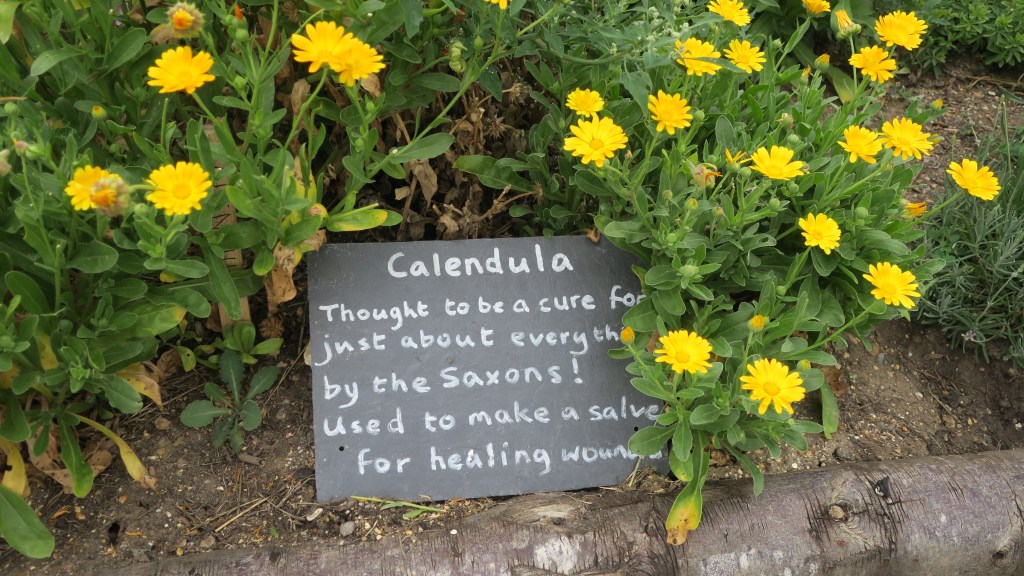
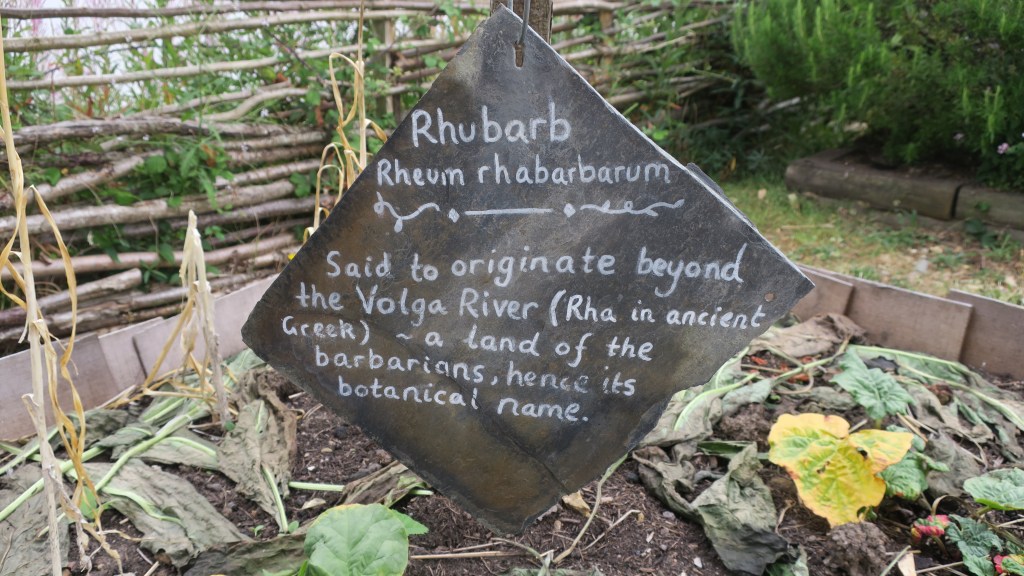
The gardens and the animals are an equally fascinating aspect to the farm, endeavoring to give a much more rounded picture of the past.

For more information I would highly recommend their website (and archive) – Butser Ancient Farm

Christmas Greetings!

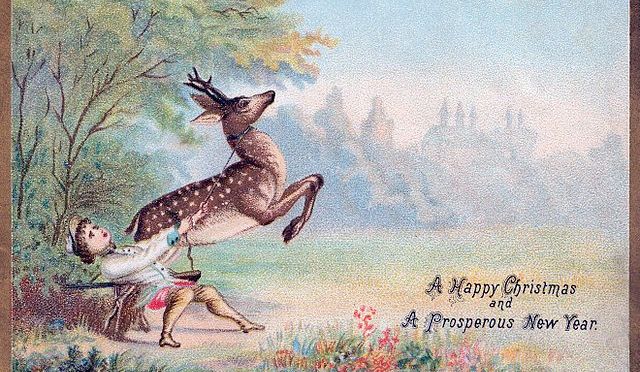
In today’s world where the internet rules, the desire to send and receive Christmas cards is fast losing favour. Instead people send memes, GIFs and quick texts to celebrate the event. However, a study of old Christmas cards can be informative of times past. The earliest cards rarely featured winter or religious themes, often preferring scenes of fairies, flowers and such as a reminder that Spring was on the way (like many midwinter traditions). War time cards had a strong patriotic theme, whilst later cards gave emphasis to the religious aspects and others encourage values that were felt to be important to a well functioning society – the first commercial card produced showed a scene of three generations of a family toasting the recipient with scenes of charity to one side. But perhaps for me personally it is the quirky cards from the Victorian era which often has me wondering what the card designers were thinking.

The following is less a history of the Christmas card then a gallery of some of the strange, bizarre and downright weird designs found on Christmas cards.

Here is a classic example of a card looking to the future and the coming Spring.
“The fox has given doubtful bliss – But tis a friend who sends you this” – this time we have a Winter scene but with a dubious message. Don’t trust the fox even when he comes bearing gifts…

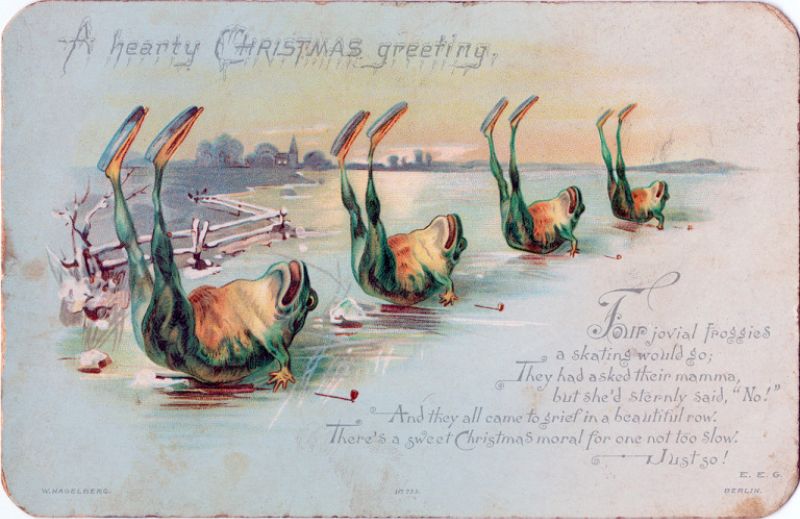
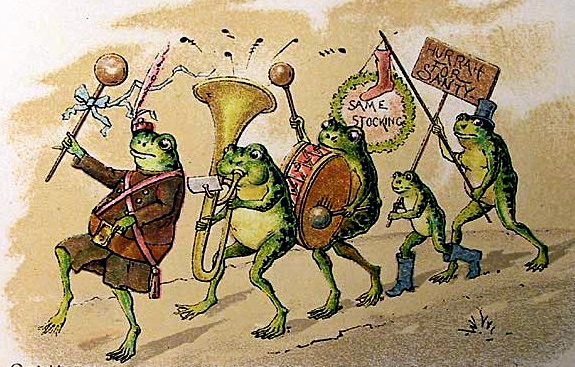
Frogs tend to feature quite often in Christmas card design – although it is hard to say what exactly is being said with the first card…

The following few card designs feature food but not in ways you would expect.

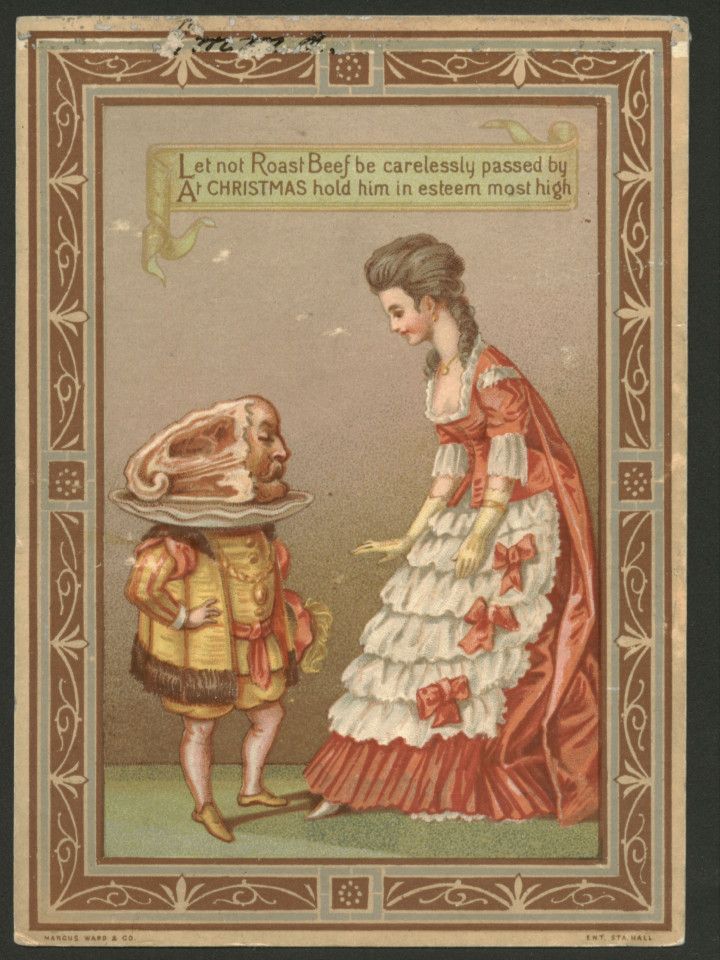
Here we are encouraged to treat the roast beef with respect.
Once again the side of beef is being given due respect – in this case it is being knighted whilst the goose, the pig, the turkey and the hare look on (all of which were also acceptable for Christmas feasting, although the roast beef was of the highest esteem).
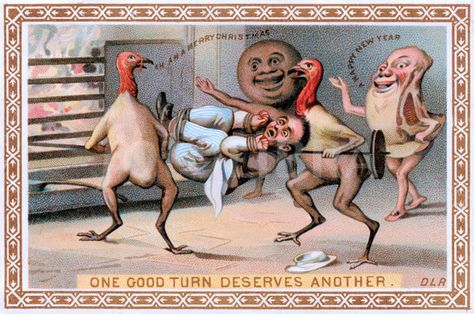
This one is for those who prefer a less meat laden feast…the revenge of the turkey…
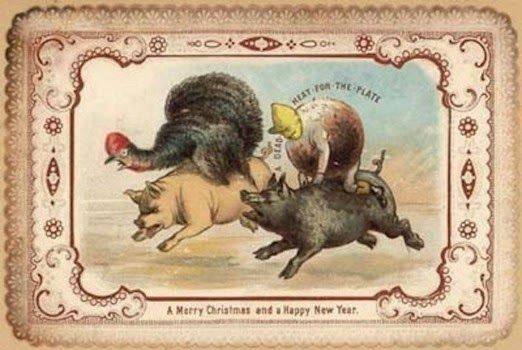
“A dead heat for the plate” reads the caption – I can’t even fathom what is supposed to be happening here.
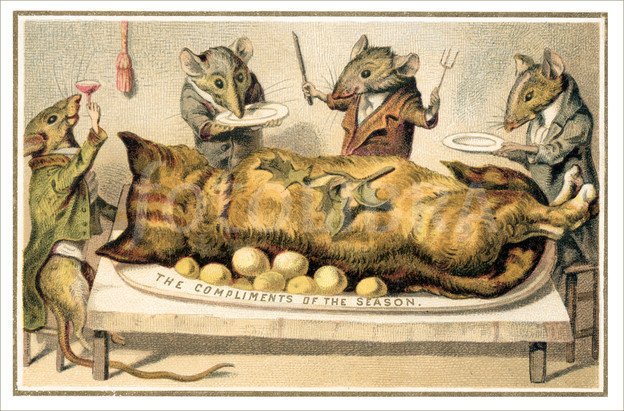
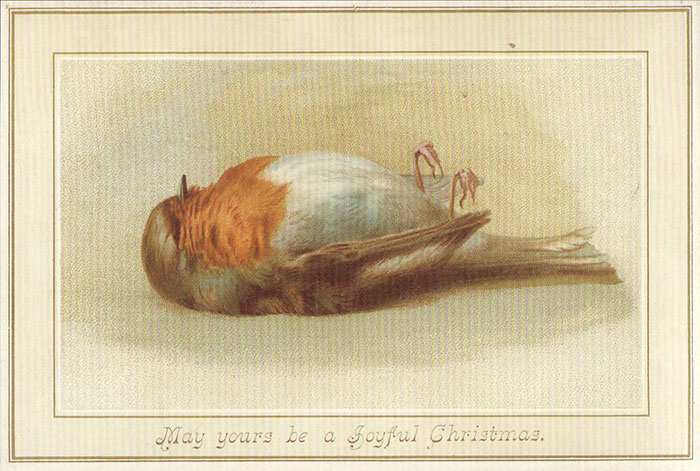
This disturbing image is pretty self explanatory – even if it is a tad uncomfortable.

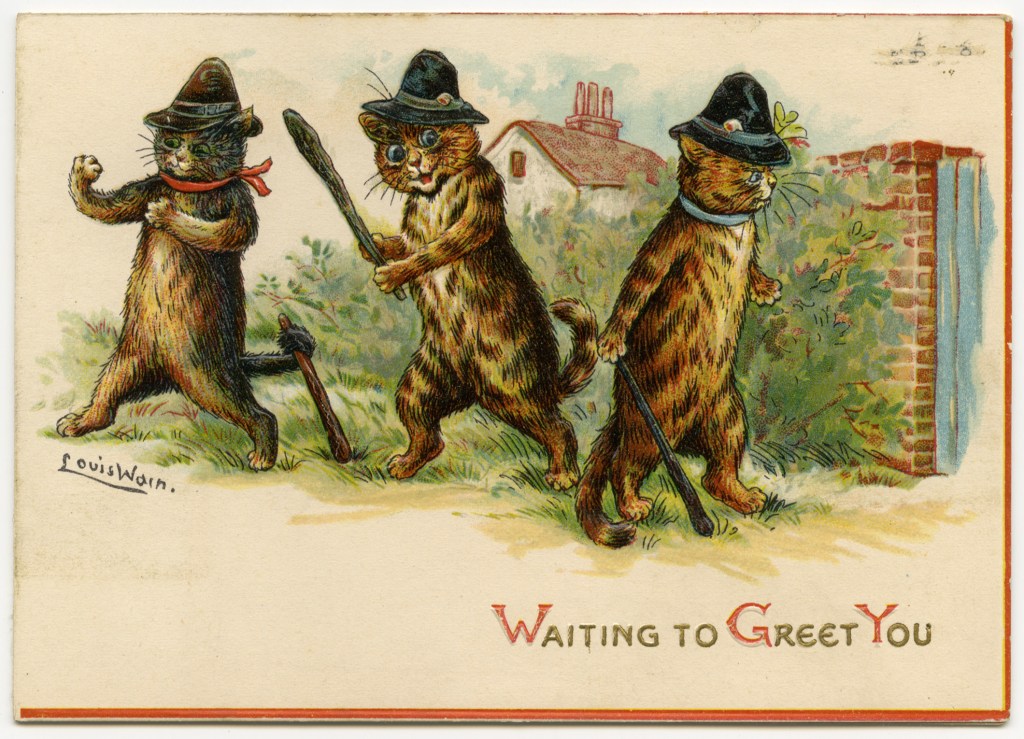
Kittens often feature on Christmas cards, sometimes cute, sometimes not and as the card above shows not always in ways we expect either.

And here are the cute kittens – or are they?
For those who own cats, perhaps this is the more appropriate card.
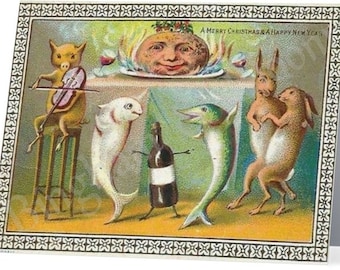
Apparently even the food rejoice during the season of good cheer!

The following cards are simply those which are too weird for explanations.

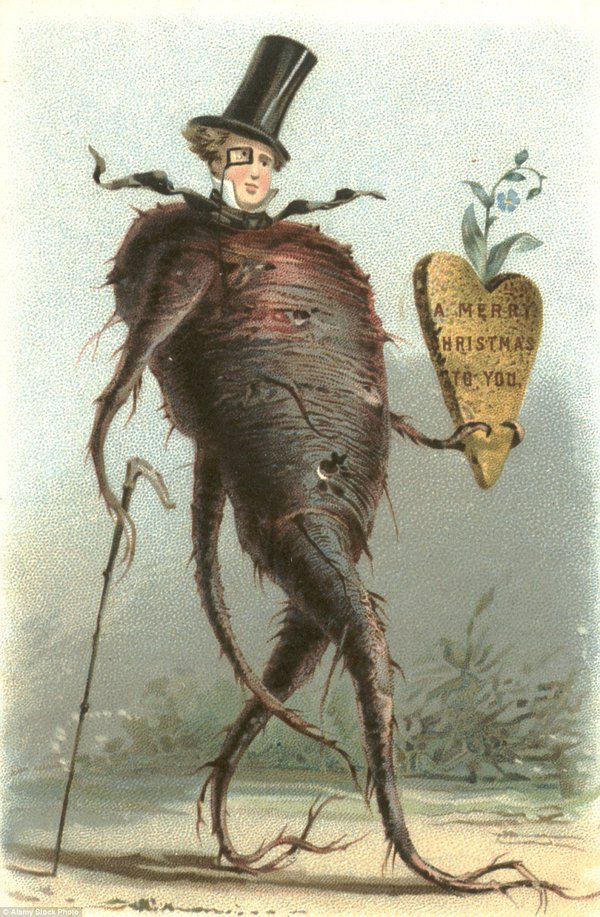
I believe it is the Christmas turnip…
Nope…no idea…although it is a New Year card…
The caption seems to be in opposition to the picture.
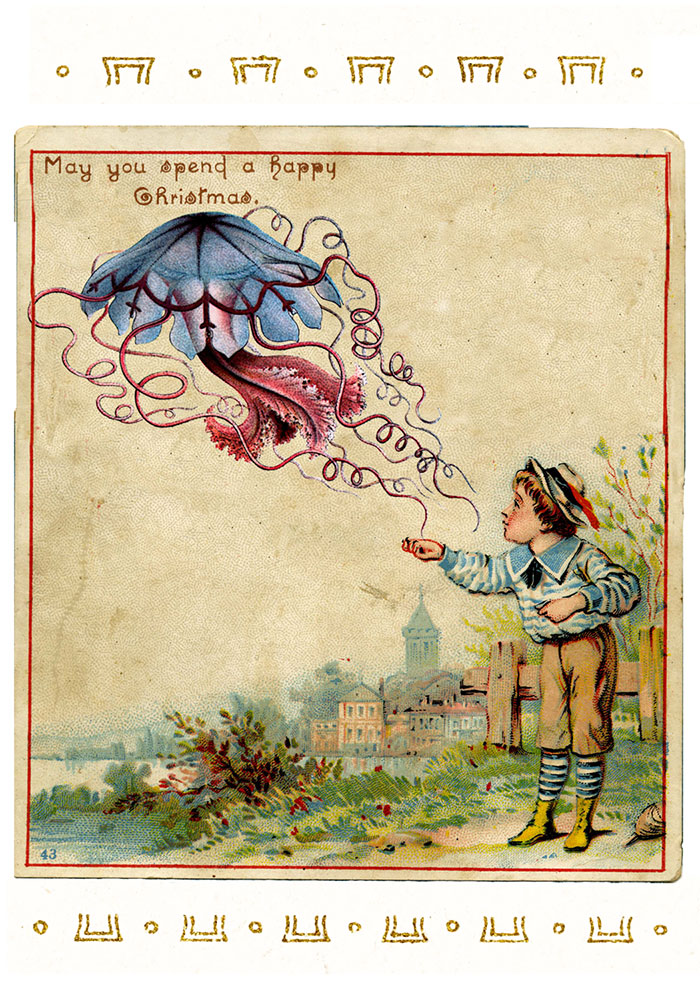
Don’t ask…
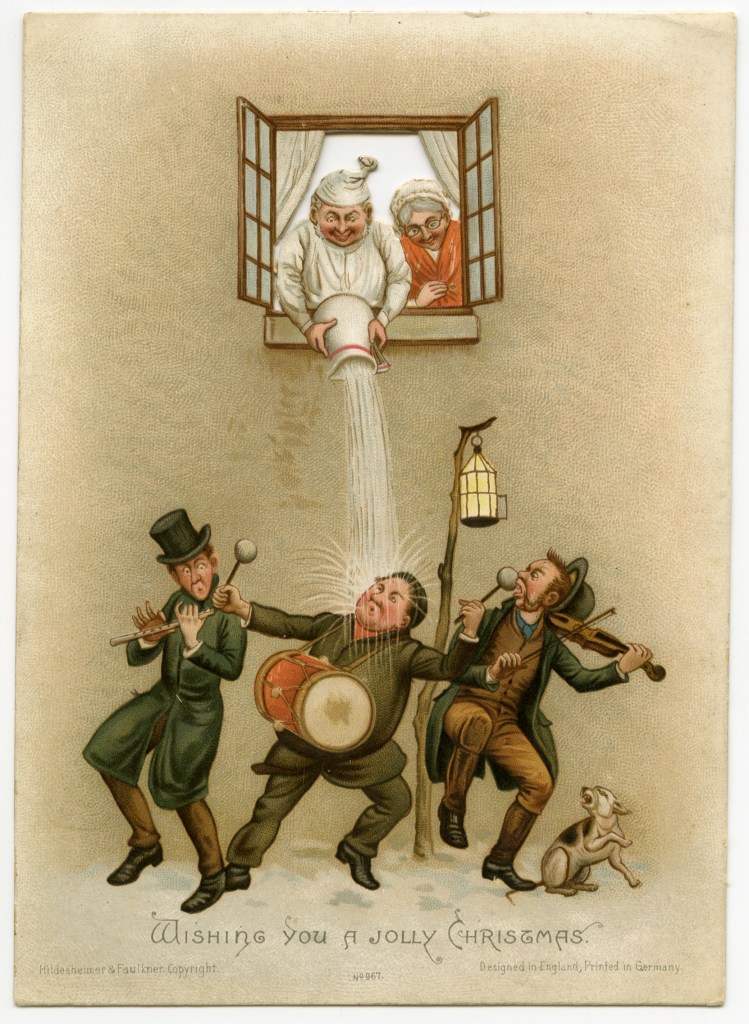
And now for some light relief…and don’t say you’ve never wanted to do this to carolers …

For more interesting and quirky facts about Christmas please check out the other blog on Christmas traditions here (there are also some more carzy cards…)

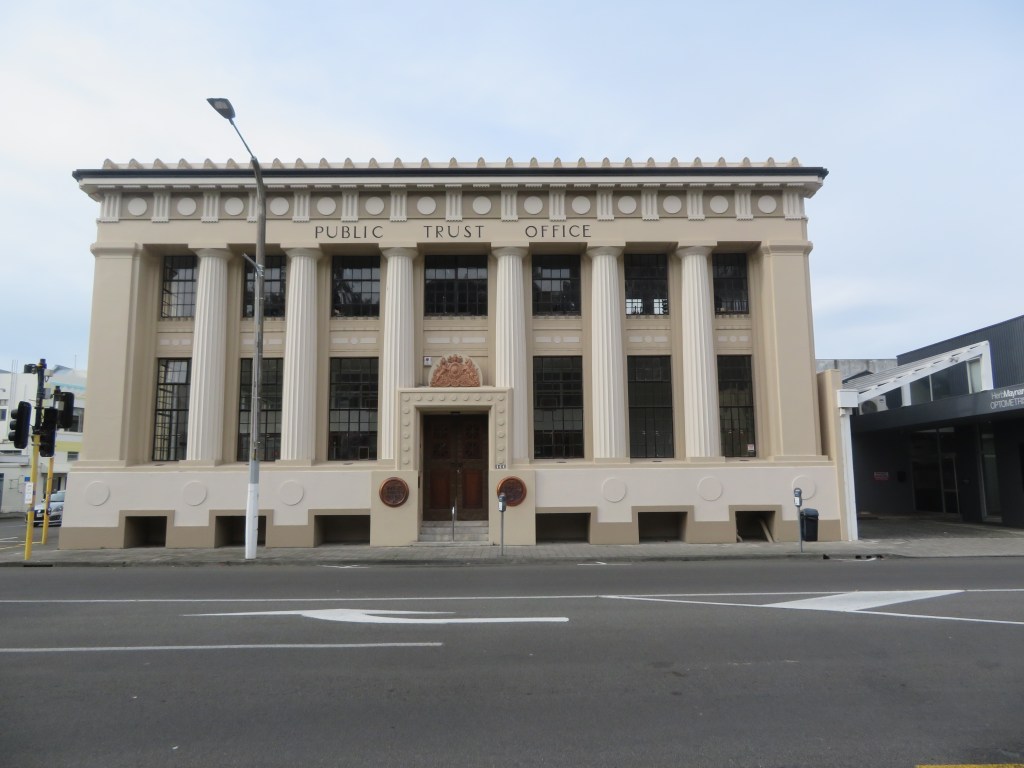
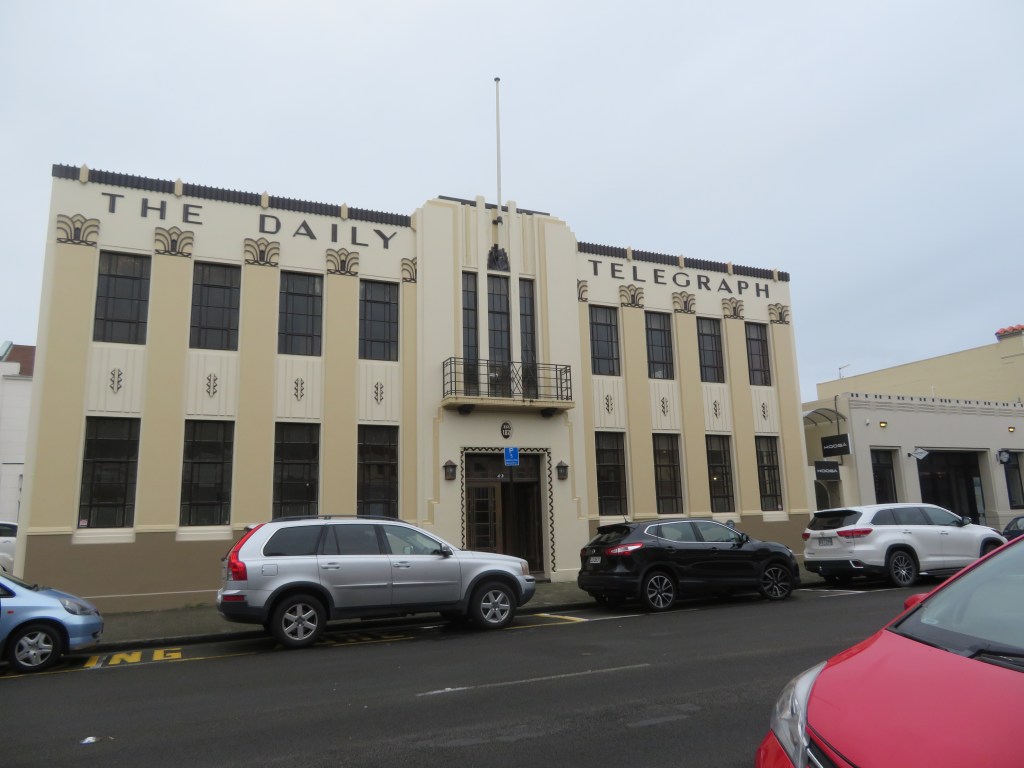
Two Days in Napier

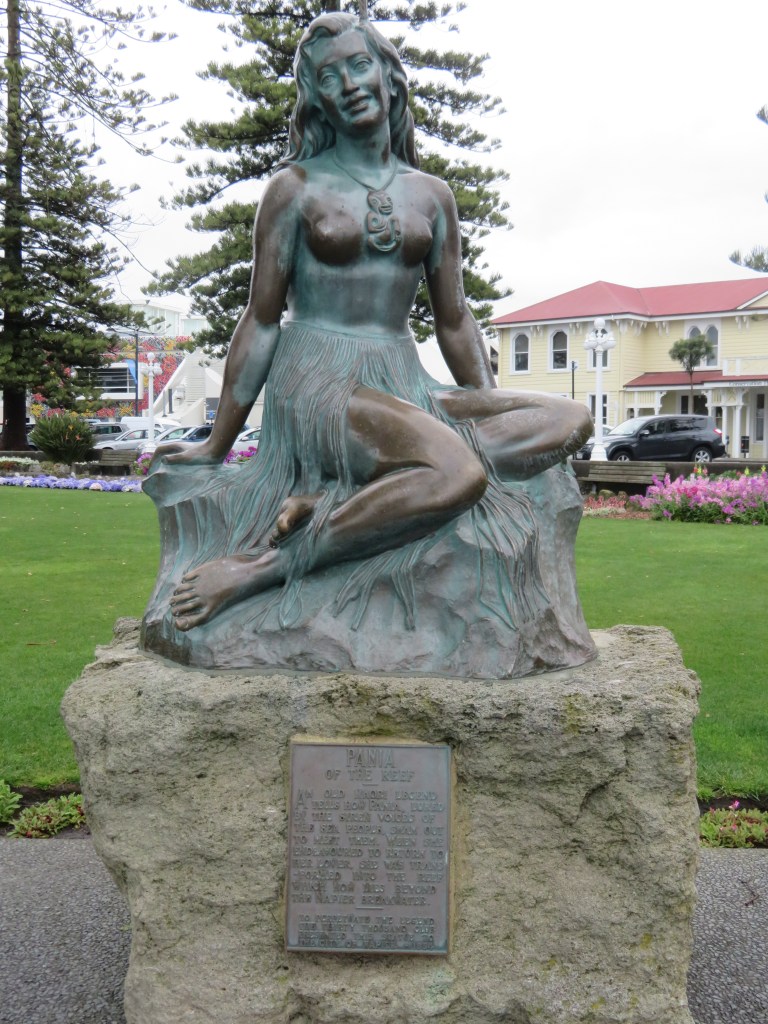
Just recently the husband and I had a child free weekend away, during this time we spend two days exploring the town of Napier in the Hawkes Bay.  Naturally I was drawn to the town’s heritage and as per usual my first stop was to the local museum – MTG Hawkes Bay.

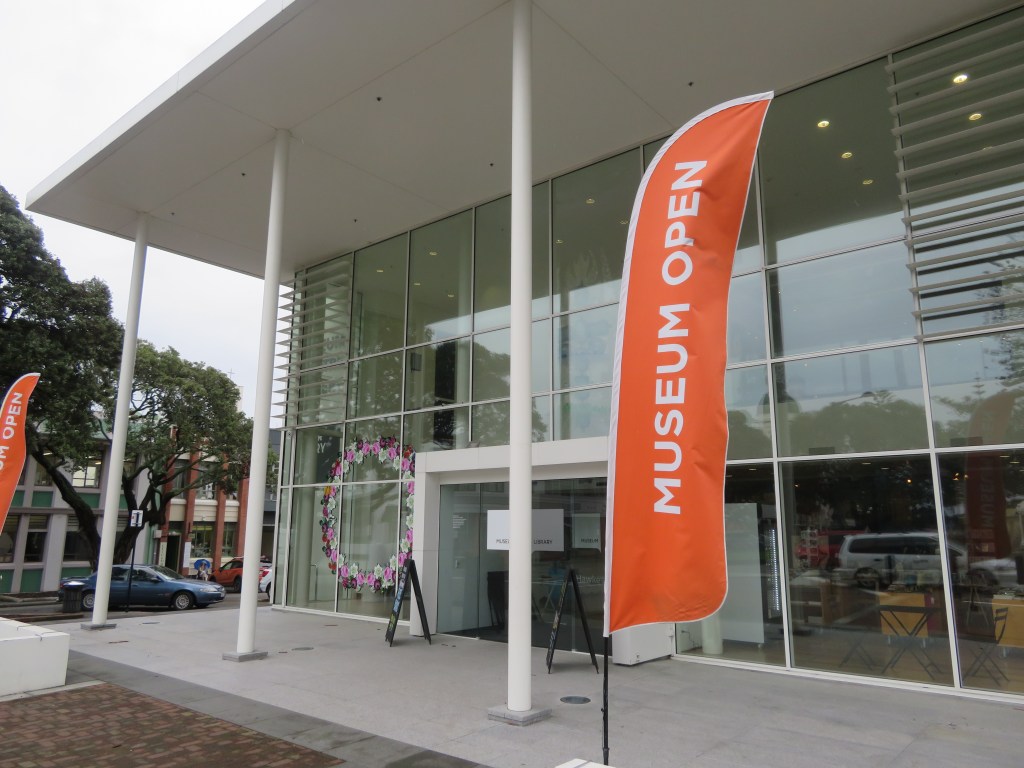
The exterior of the museum.

Situated in the main part of town near the seafront, it is attached to the library and spread over three floors.  The ground floor gallery is taken up by two exhibitions – Tenei Tonu and Turuturu, Fingers, Feathers and Fibre. Tenei Tonu showcased the taonga, both historic and contemporary, alongside the stories of the local Iwi Ngati Kahunguru. Turuturu took up a space which joined the museum to the library and is a fascinating albeit brief look at the importance of weaving in Maori culture.

Turuturu are weaving pegs used to keep a garment off the ground when it is being made. The main peg is the right one and can be elaborately decorated. It represents the mana of Te Whare Pora – the knowledge-bank of the art-form. The peg itself upholds the mana of the growing garment and it spiritually connects the maker to the world of thought and concentration. The peg also grounds the maker so they do not get lost in their intellectual world. (quoted from the MTG Hawkes Bay website)

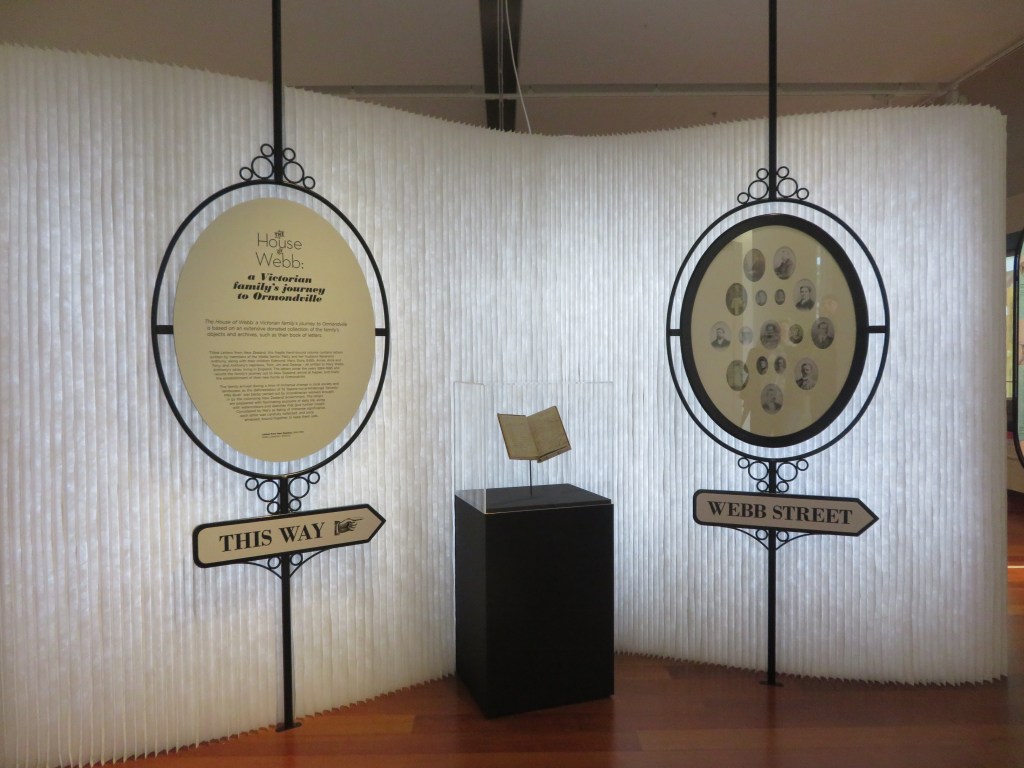
On the second floor was three collections – one of an amazing display of heirloom silverware whilst the second was called Five Pakeha Painters – Perspectives on the Hawkes Bay.  This small exhibition of artwork acknowledged the importance of art as a form of dialogue between the artist, the land and the social norms of the time.  The third exhibition was titled The House of Webb – A Victorian Family’s Journey to Ormondsville.  This is a temporary exhibition (it finishes on the 3rd November) showcasing life in Victorian Napier through the belongings, diaries and letters of the Webb Family.  In 1884 the Webb family left their comfortable life in England and travelled to Napier and then further south to Ormondsville, this exhibition showed what life was like for these early settlers, some of their trials and how they survived those early days. 

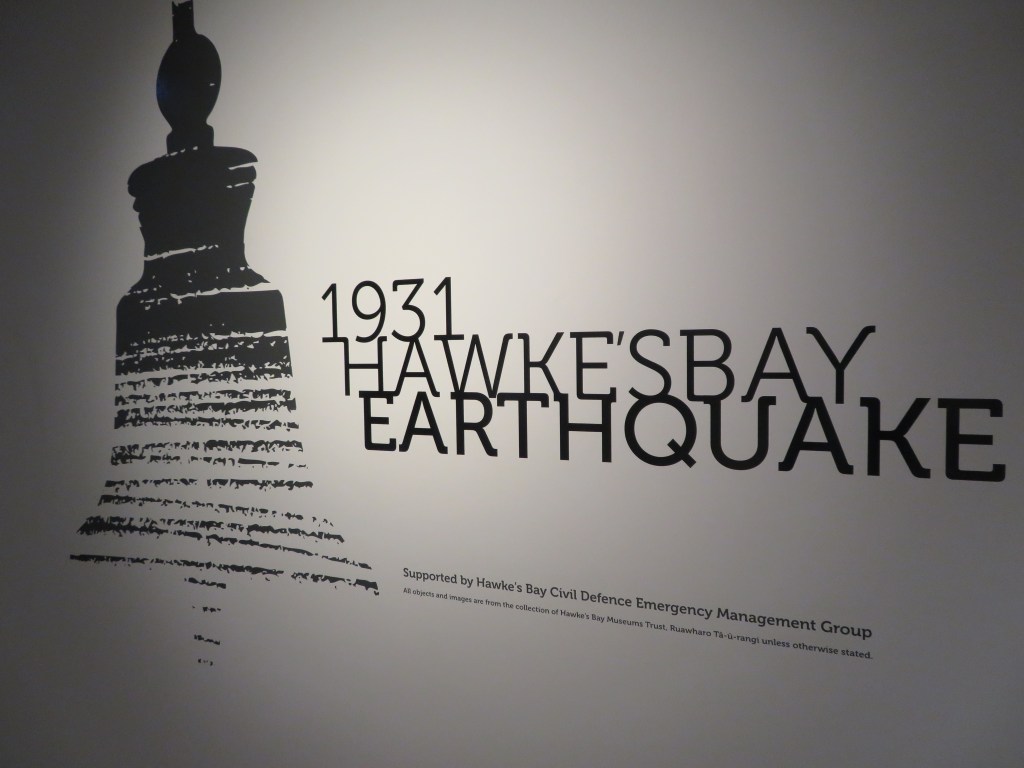
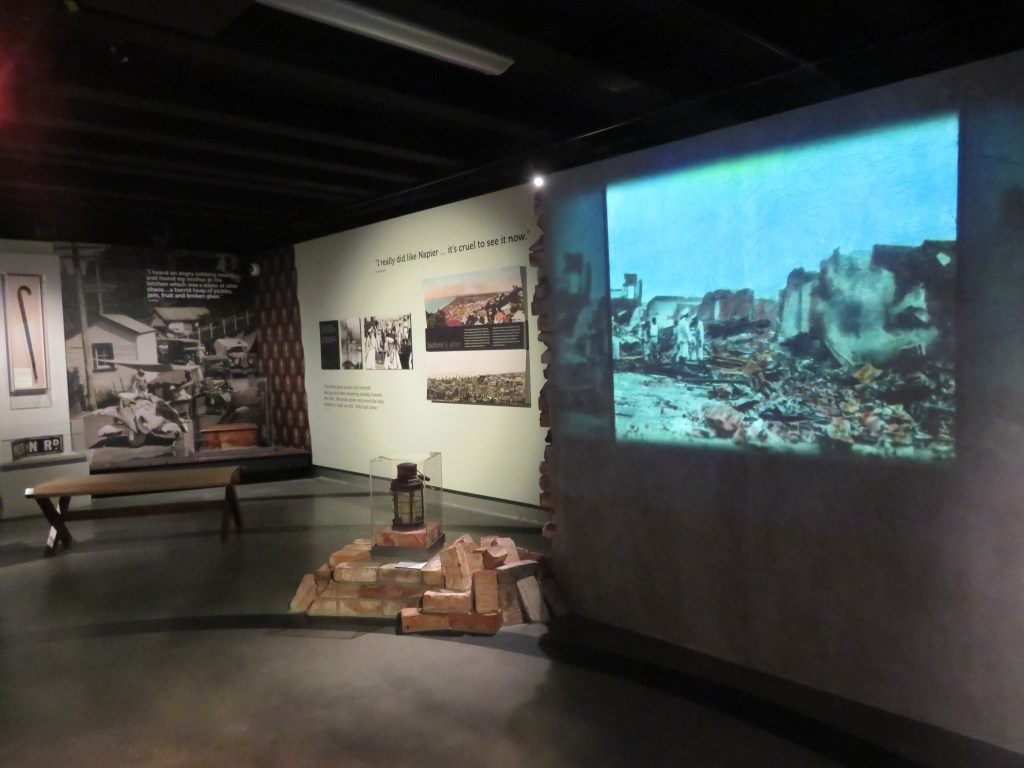
The final gallery to be explored was in the basement of the museum – here the visitor is taken through that fateful day in 1931 when the Hawkes Bay was hit by a massive earthquake which destroyed almost all of Napier and killed over three hundred people.

At 10:47am on 3 February 1931, a devastating earthquake struck Hawke’s Bay. In that moment it seemed the end of the world had come. People were thrown off their feet; buildings shuddered and collapsed as the ground pitched violently. In central Napier, fires broke out within minutes and rushed through the city. Amidst the burning, falling buildings, the bright blue sky of a summer’s day was obscured by smoke and dust. People could only watch as their home was destroyed around them. In desperation the injured screamed for help, others ran for the safety of the beach, or home to find their families. (Quoted from the MTG Hawkes Bay website)

As well as the thoughtful display of objects and stories, there is also a short film of ‘Survivor Stories’ which brings home how devasting the earthquake was to the people of the Hawkes Bay.  Time here will forever be divided between ‘before and after the earthquake’.

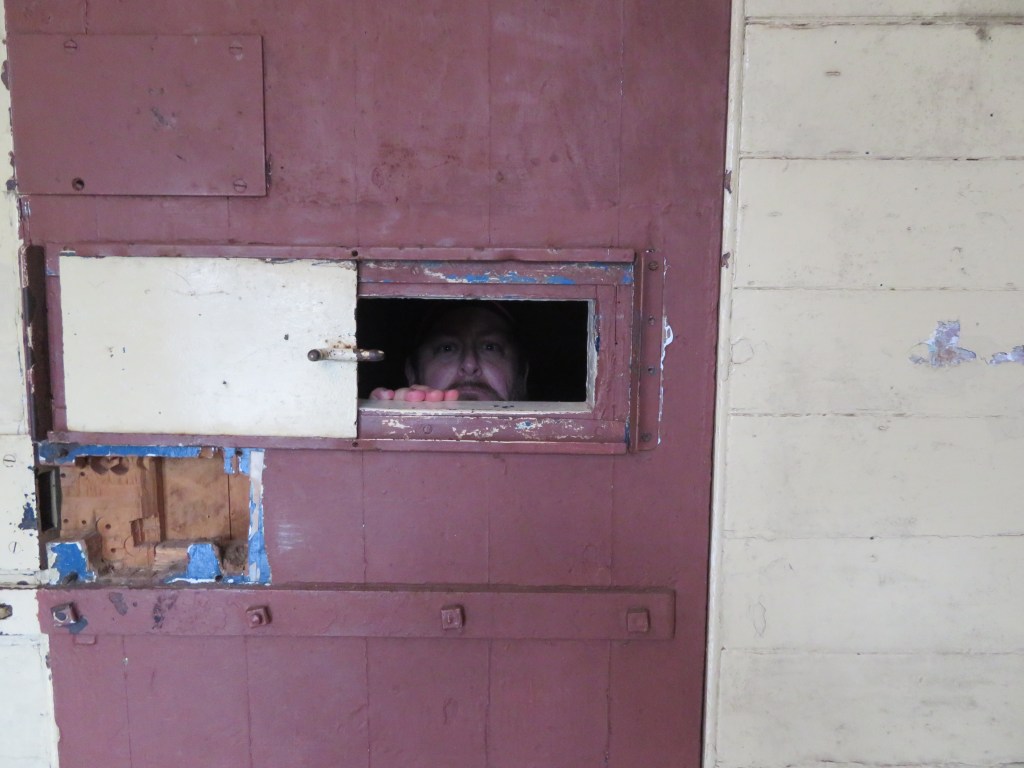
The second place to be visited was the Napier Prison…yes on purpose…and no not in shackles…

Napier Prison is New Zealand’s oldest prison, it was first opened in 1852 and was closed to inmates in 1993.  Situated on Bluff Hill and next to the quarry where early inmates were expected to do hard labour extracting the stone that would build walls which now surround the prison.  In 2002 the prison was restored to the state it is in by a local family who turned it into a back-packers (not my first choice of accommodation) but nowadays it is a tourist attraction and even on the cold wet day we visited there were a quite a few visitors.

The forbidding entrance of Napier Prison – visitors must knock…

As a visitor you can either go on a guided tour or do the self-guided audio tour which we did.  The facilities also host scare tours in the evenings and has an Escape Room Experience for those wanting something a bit different.  On two separate occasions and for quite different reasons, the prison has been the focus of a TV show – one looking to enhance the visitor experience from a heritage perspective and the other capitalising on the prison’s spookier stories. The prison has also through its time been used as a psychiatric unit, a lighthouse and a meeting place for Alcoholic Anonymous groups.

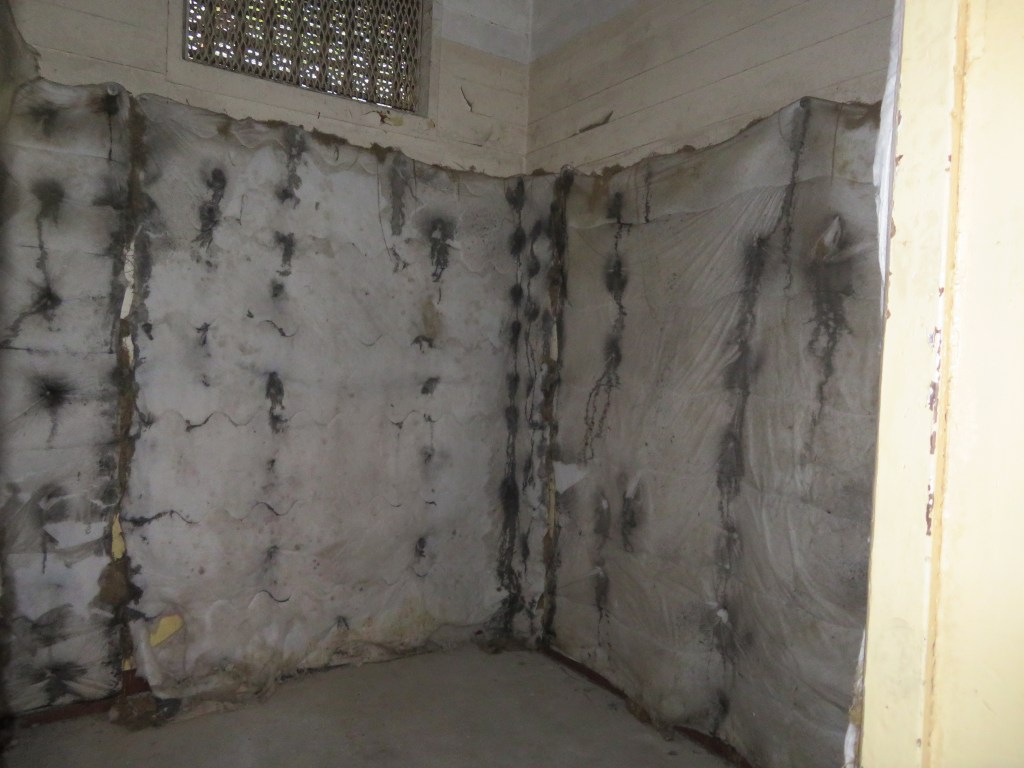
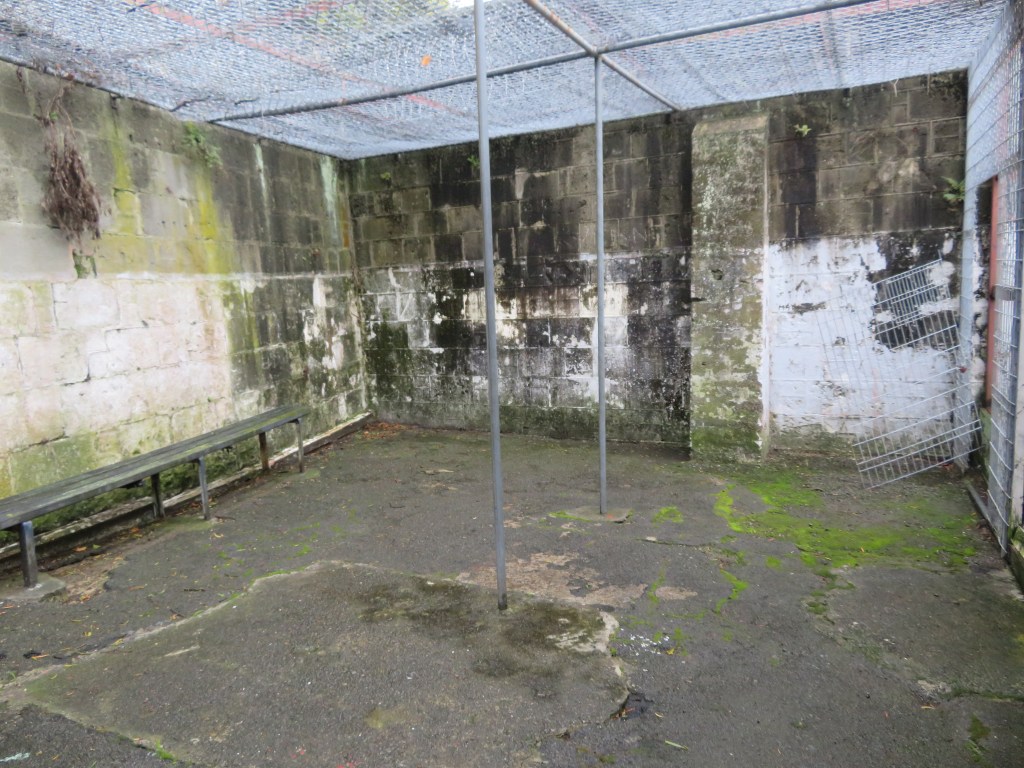
Above is a block called ‘The Pound’ – the padded cells and caged exercise area chilling reminders that once upon a time mental illness was treated with a lot less compassion.

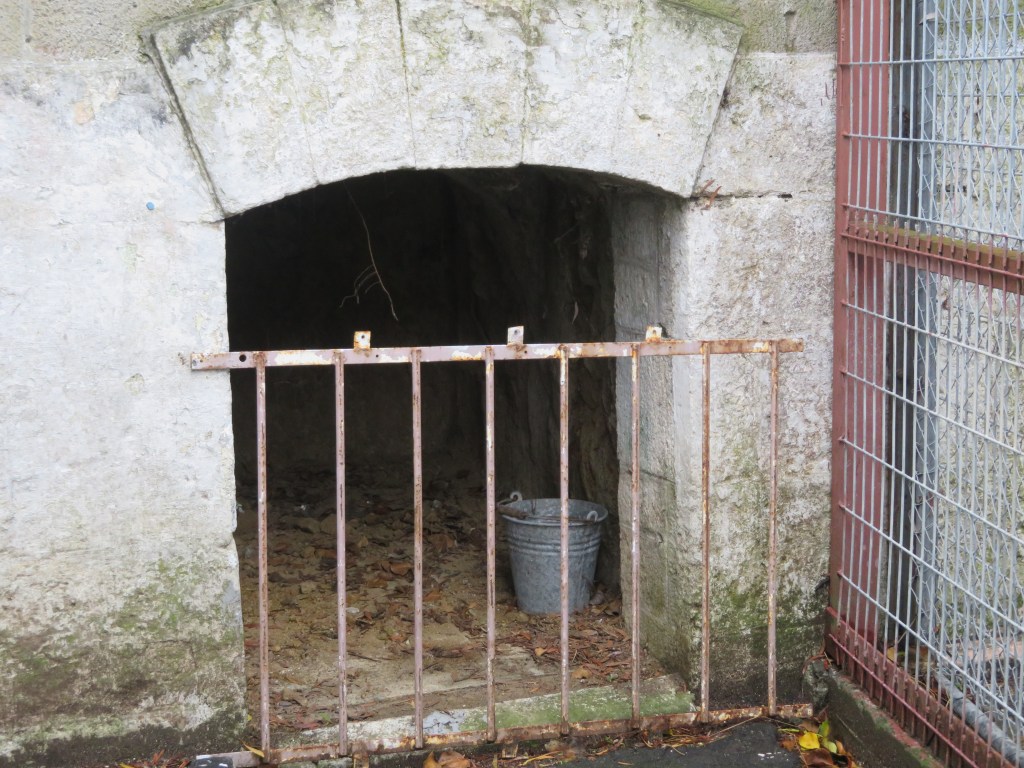
Beside The Pound is ‘The Hole’ – use your imagination…

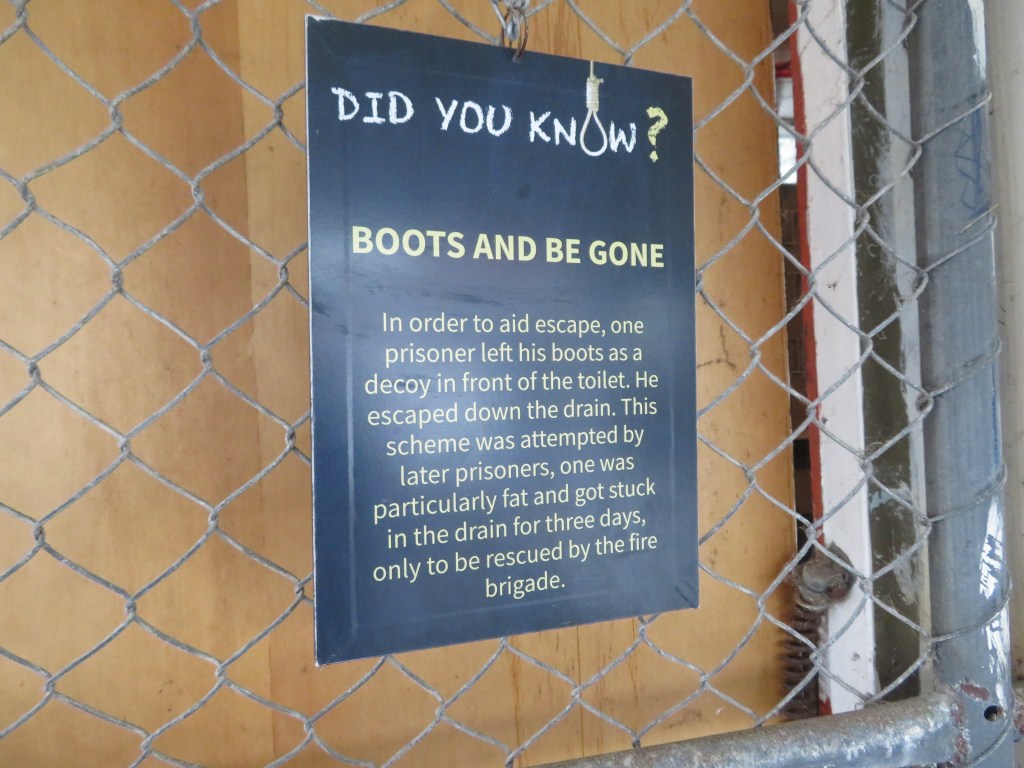
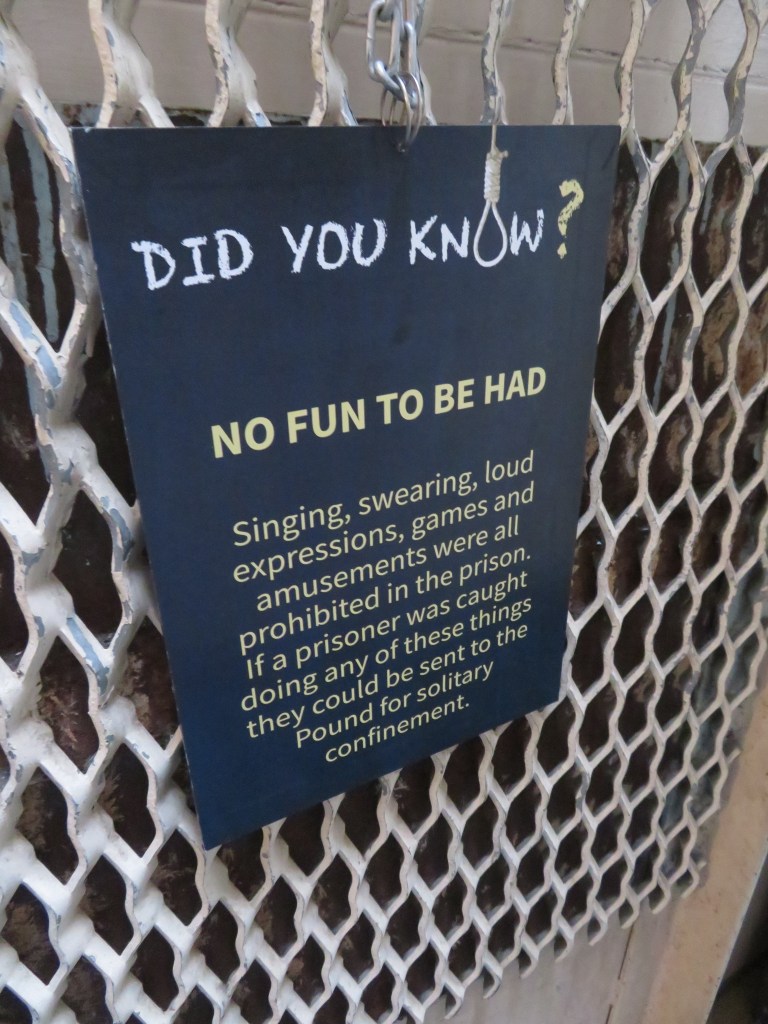
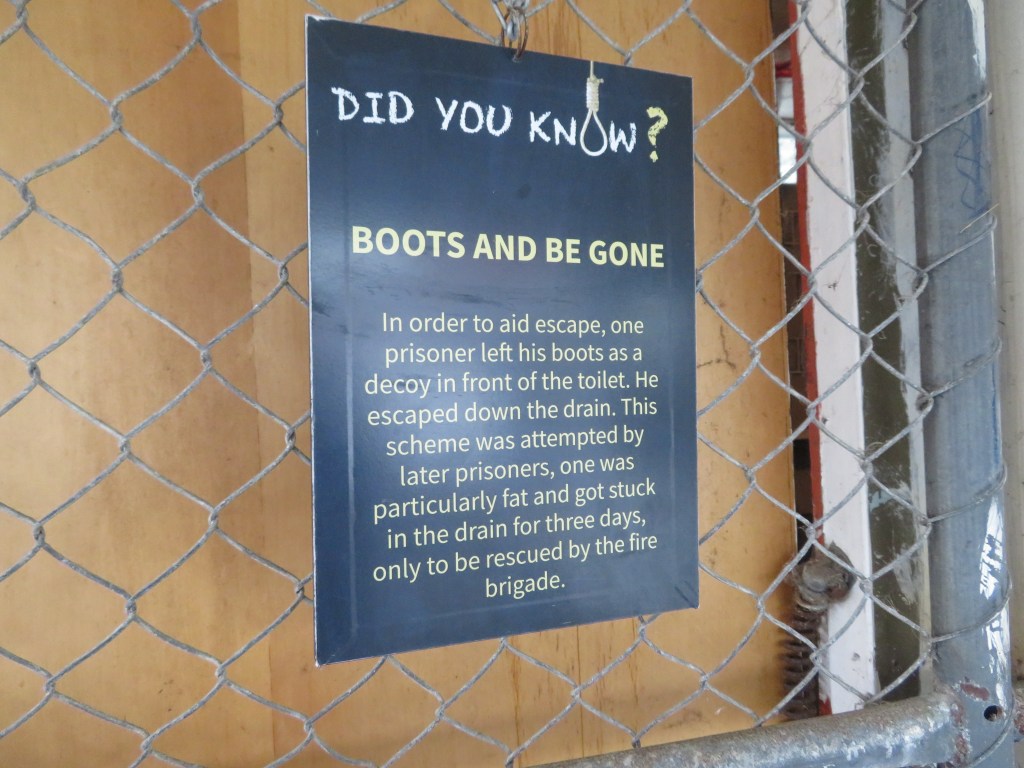
The above photos show a small selection of numerous information boards that provide a light moment amongst the many somber ones.

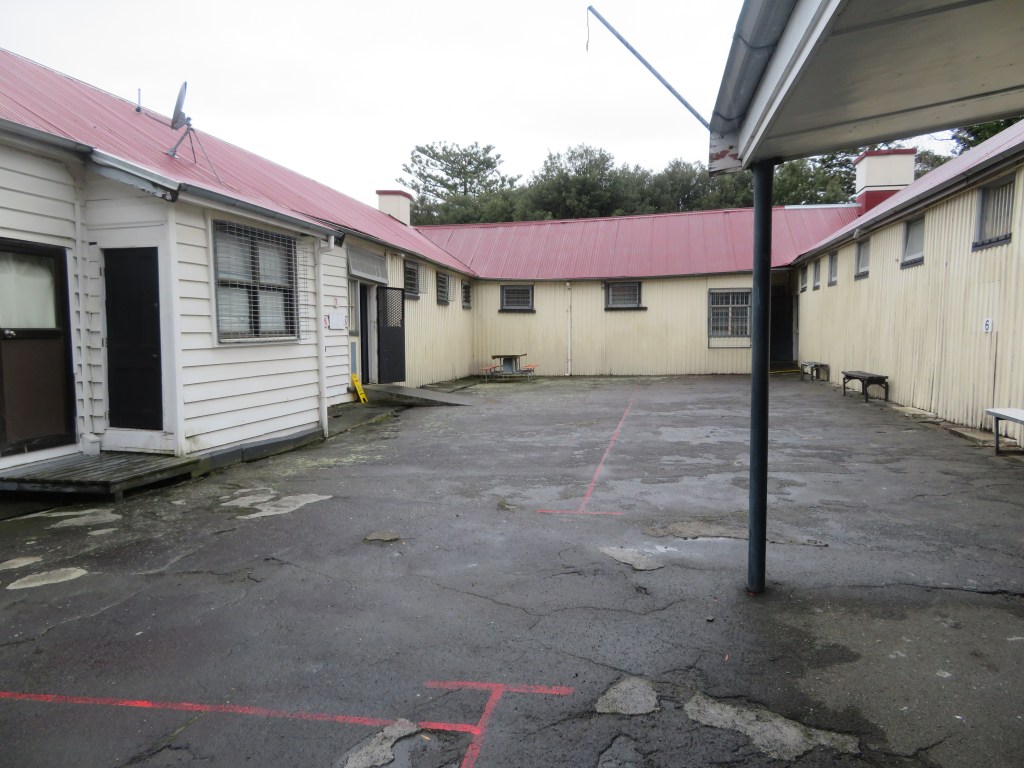
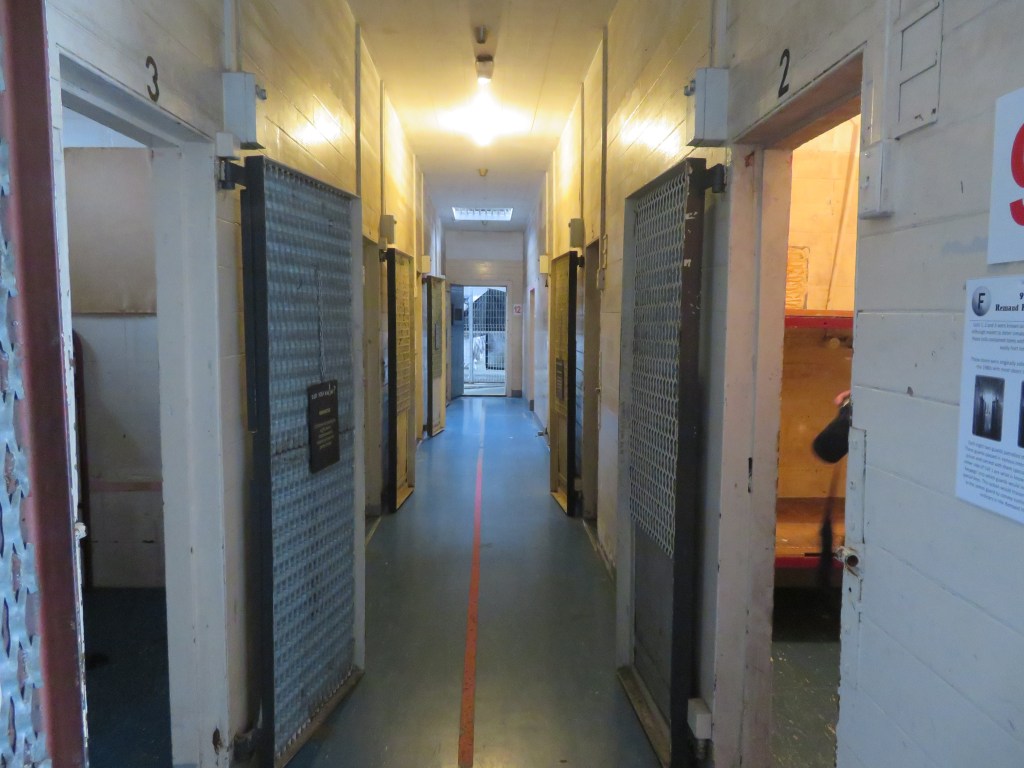
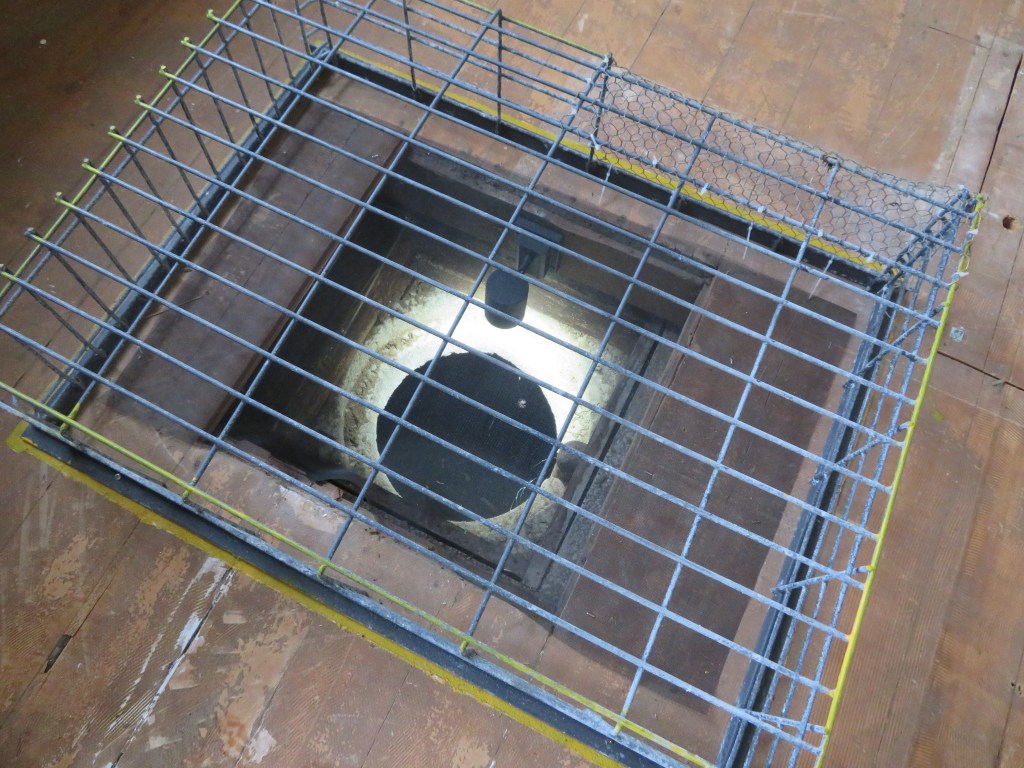
The above photos are of the main block and exercise yard, the bottom picture is of a well discovered a short while ago. The well room is in what was once the infirmary before being divided into other rooms during the prisons back packing days.

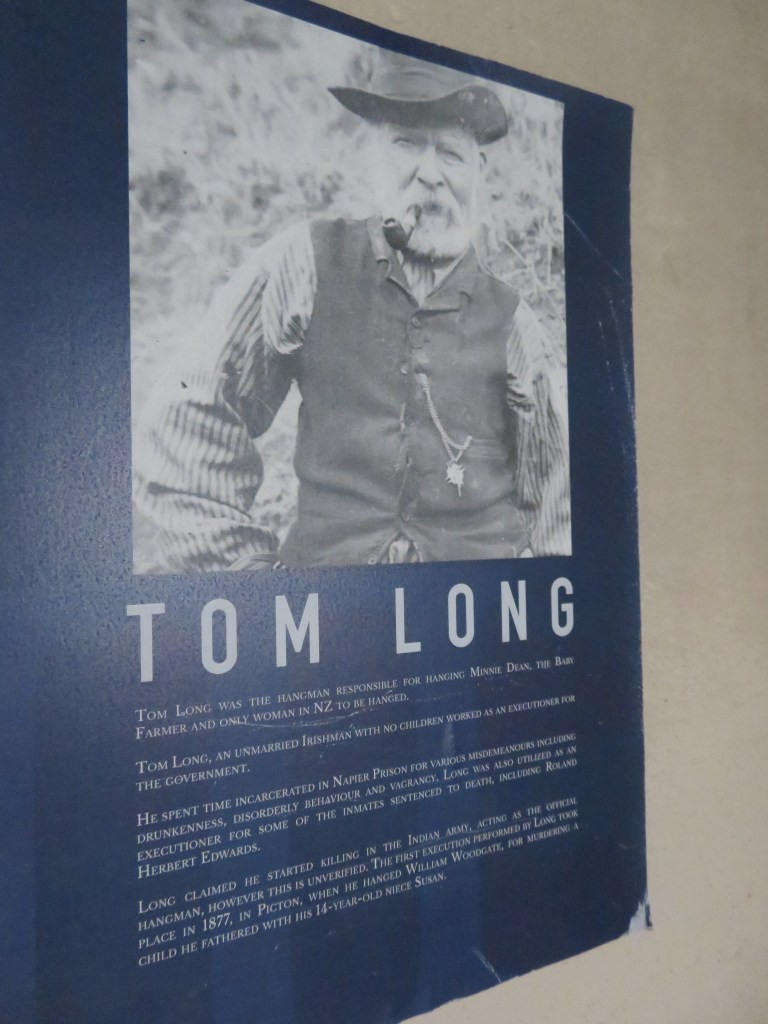
Above is a plaque about one of the prison’s most well known executioners. – the role of executioner would often fall to one of the inmates and Tom Long was no exception.

On a personal note, it was a fascinating place, however the sense of relief when I walked back out the front gates was immense. The heavy sense of foreboding made for an uncomfortable visit, there were places I simply could not enter.  I took no photos of the ‘hanging yard’ or the graveyard (where only three burials are had), the feelings of deep sadness were enough to stop me pressing the shutter. The ‘hanging yard’ in particular had an effect on me…but having said that I am glad I went, it was educational and an eye-opener to life behind bars in New Zealand’s oldest prison.

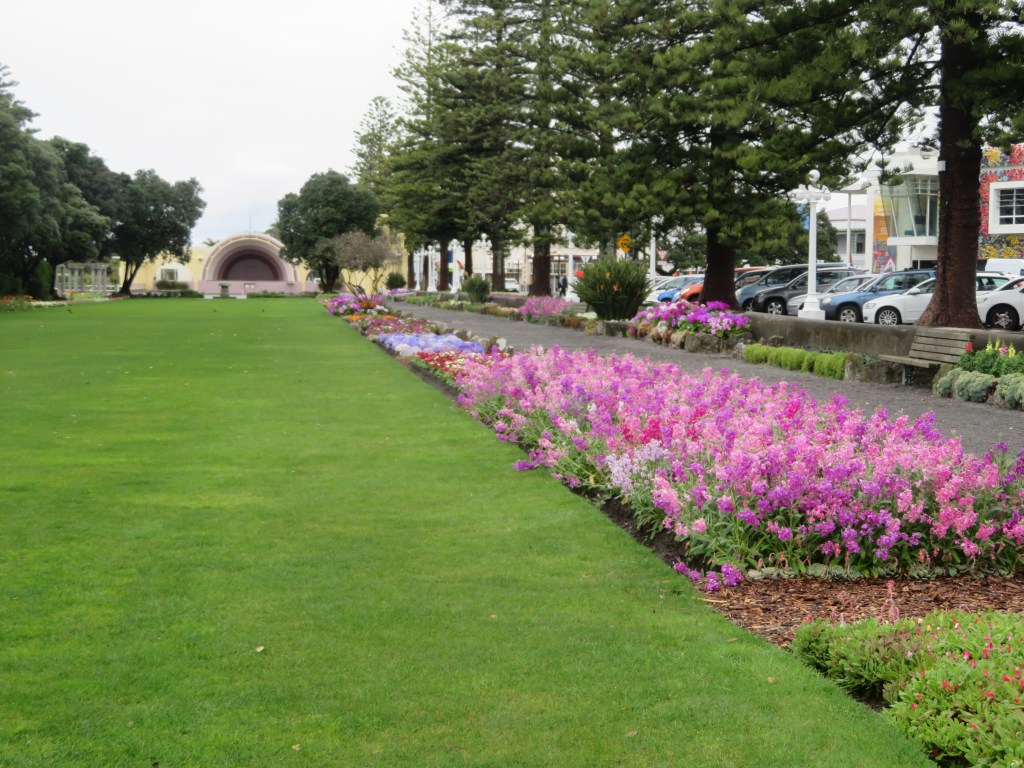
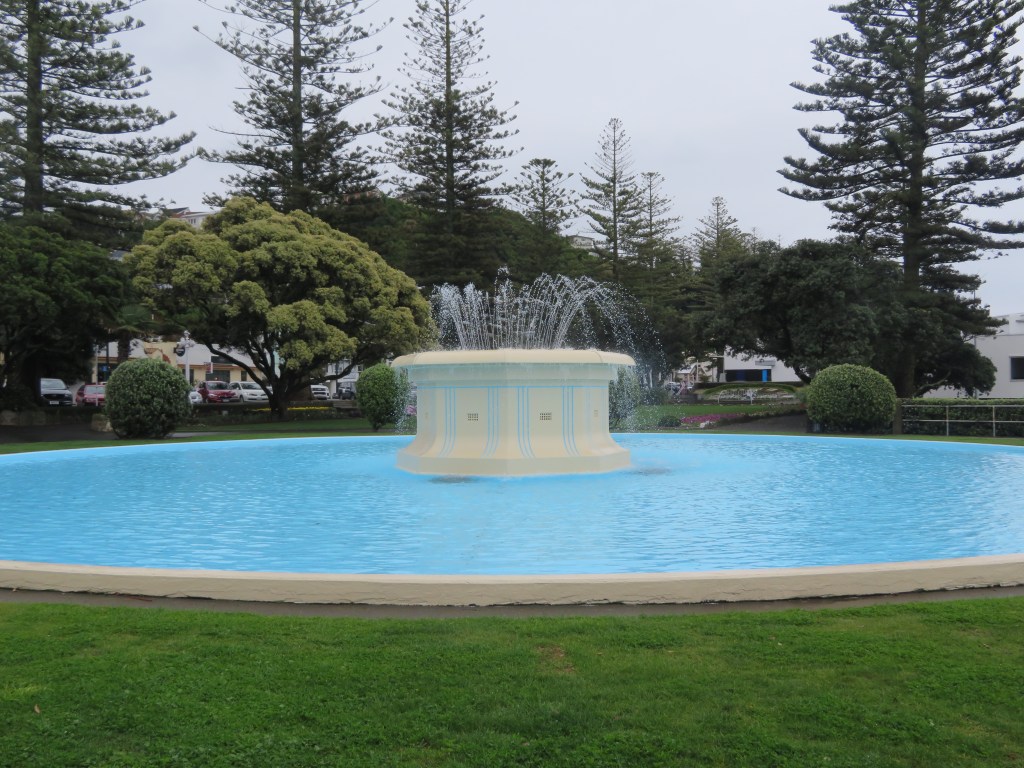
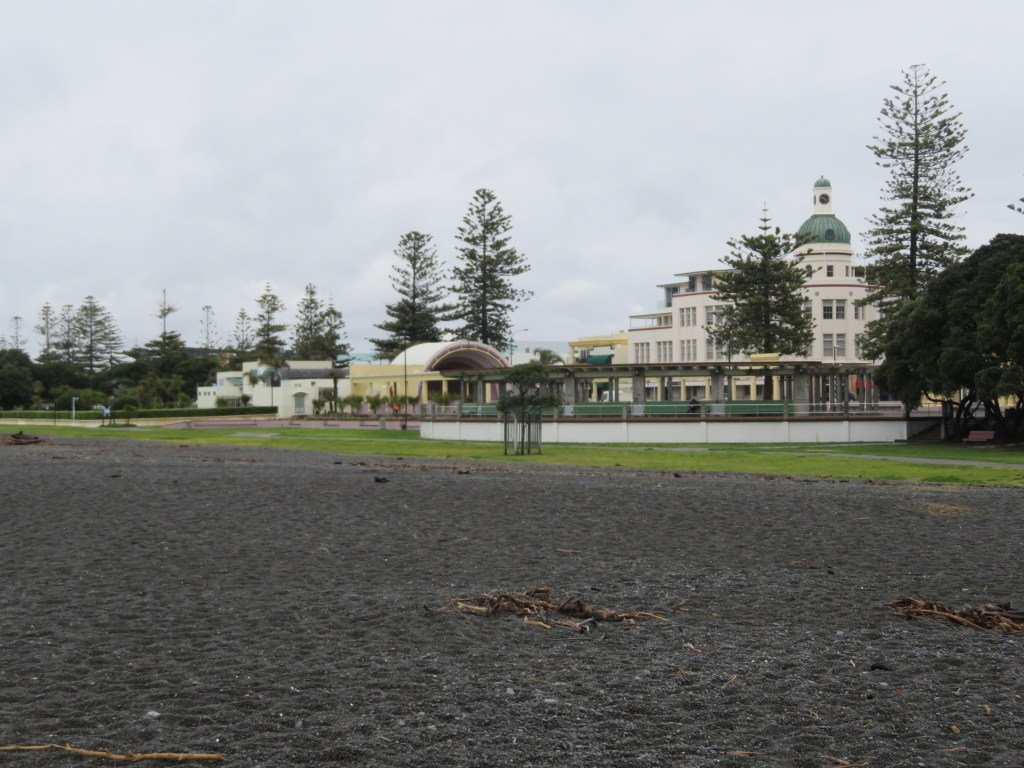
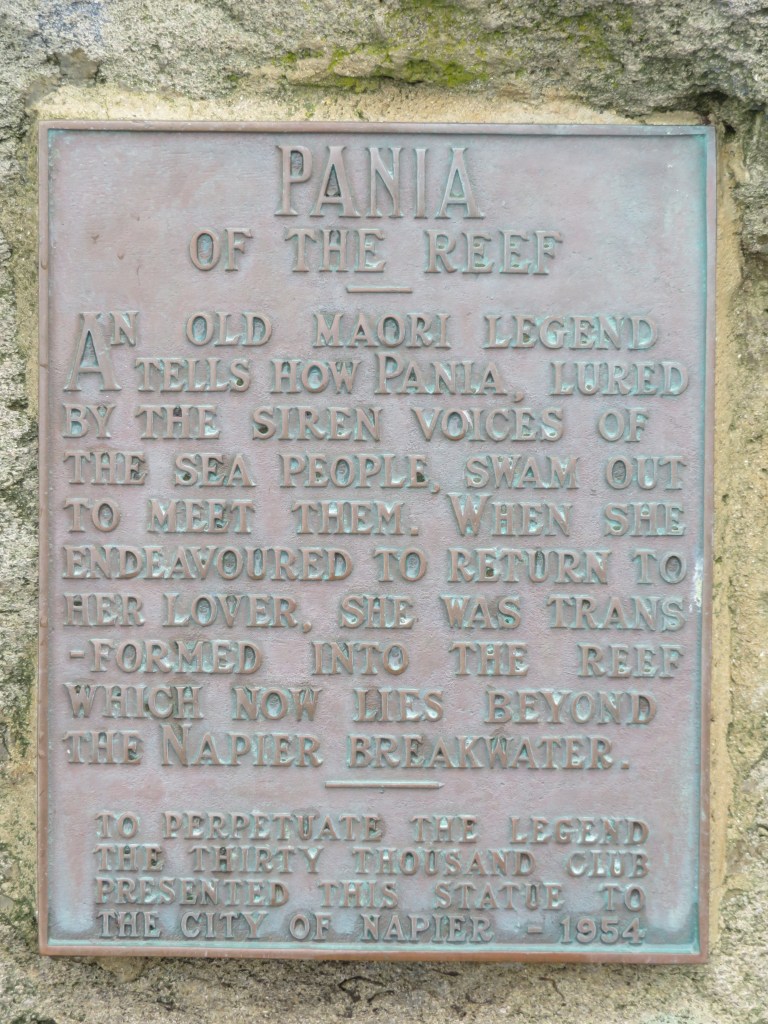
The remaining photos are just a few from around a city well known for its art deco architecture and seafront gardens.

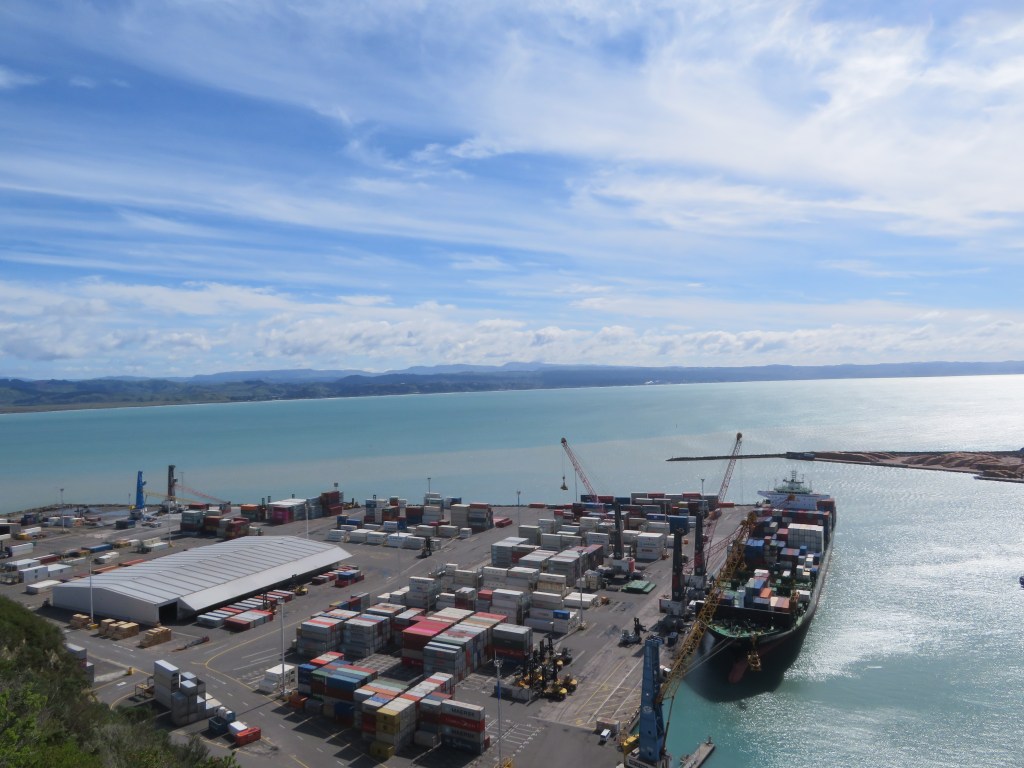
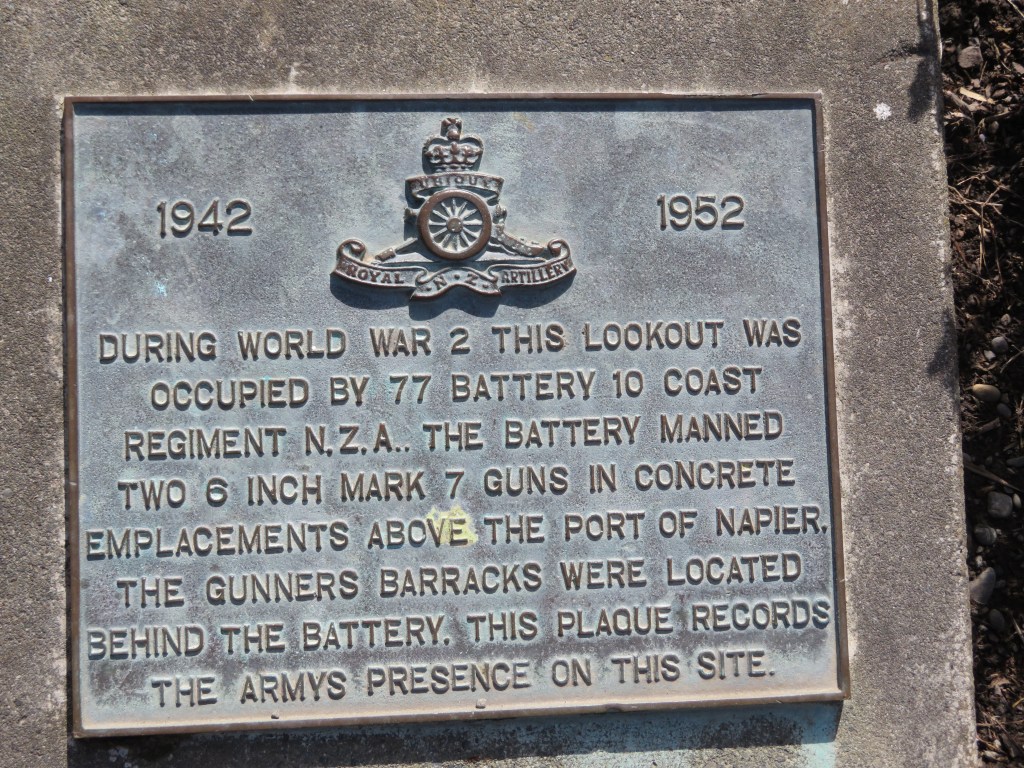
The view of Napier Port from the lookout on Bluff Hill.

Please note that all photos are my own – the MTG Hawkes Bay do not allow photography in many of their galleries, hence the paucity of photos from this lovely museum.

Symonds St CEMETERY

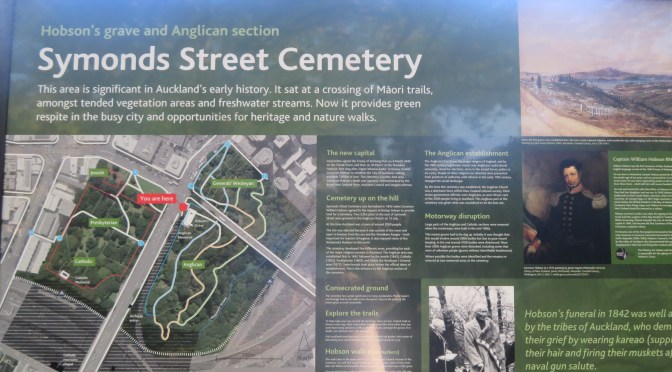
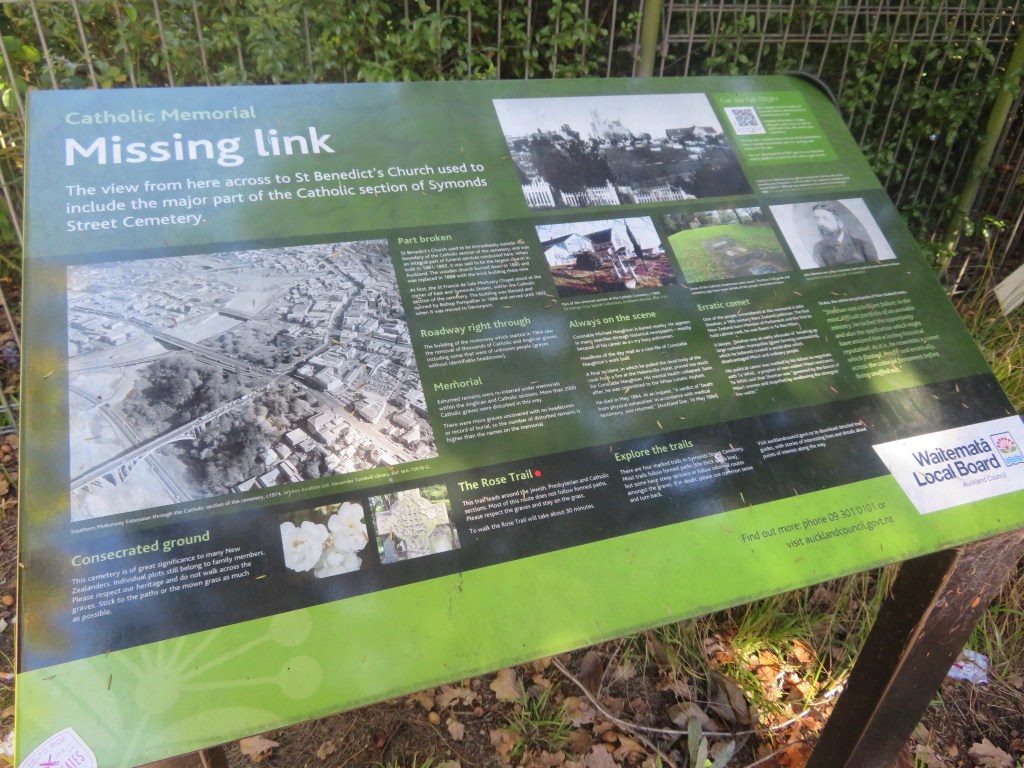
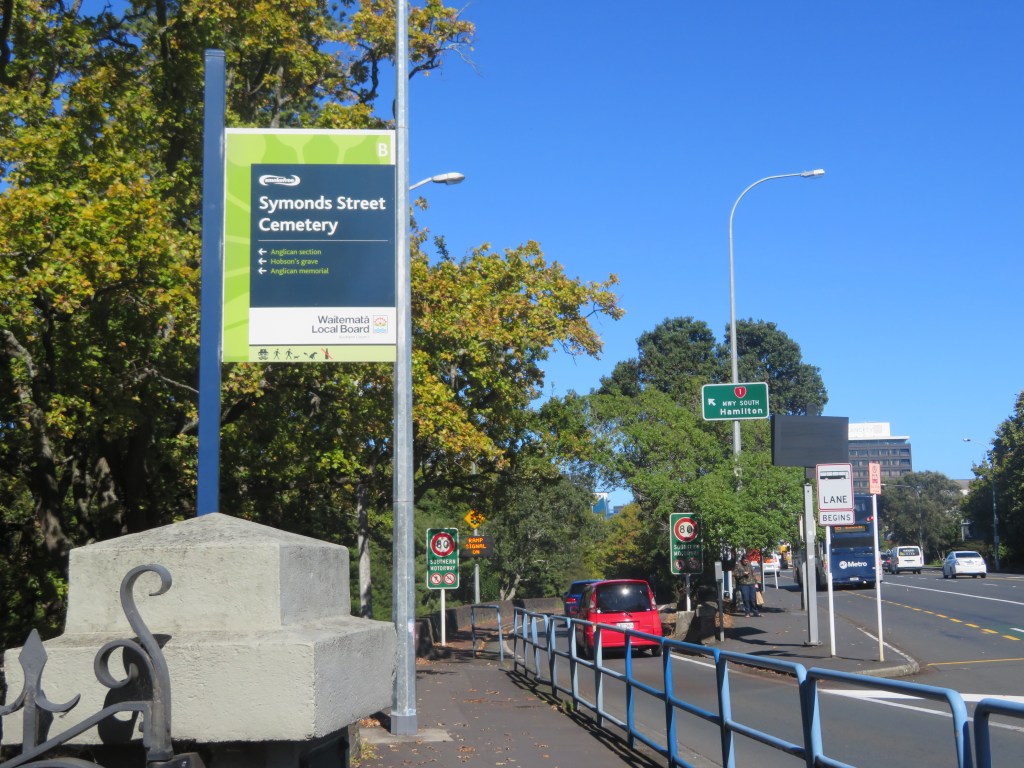
Last week was New Zealand Archaeology Week and as part of this I joined a group of like minded people with the aim of learning a bit more about Auckland’s early history via the evidence provided with one of our earliest cemeteries – the Symonds St Cemetery. The commentary was provided by Dr Heather Battles and our hosts were the Auckland Archaeological Society/NZAA.

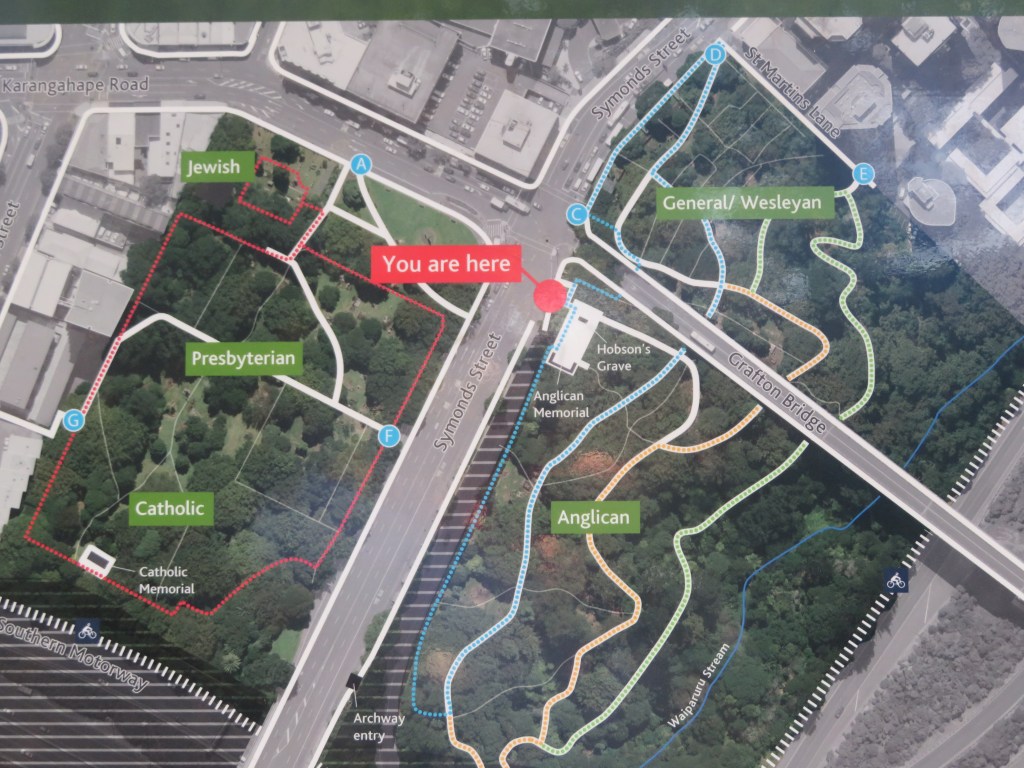
The above shows an aerial view of the cemetery as it is today and its divisions based on the religious affiliations of the interred.

The cemetery is one of New Zealand’s oldest urban cemeteries and was established in 1841, the same year Auckland became the capital of this fledgling colonial country. Although today it is part of the inner city back in the mid 1800s it was some distance from the colonial township.
This was unusual for the time – burials were usually found within a churchyard setting whilst in this case the churches for the various denominations were some distance from the cemetery itself. It has been suggested that concerns over public health were what prompted this new urban model but also it “reflected the influence of broader Enlightenment ideas on the new colony, which stressed the seperation between church and state” (from NZ Heritage listing summary).

Enlightenment values could also be seen in the idea of a cemetery for all – here religious affiliations became less important – to an extent…whilst the cemetery is the last resting place of a diverse range of religions, they are segregated within the cemetery itself. One of my earliest pieces of fieldwork as an undergrad student at Auckland University was to do a comparative study of two of the areas within the cemetery looking at the monuments and asking what can they tell us about colonial society. Unfortunately it has been quite some time since then and I do not remember much but what did stand out to me was how elaborate the Wesleyan monuments were when compared to the other parts of the cemetery which is in direct contrast to their sermons on humility and modesty.

The earliest phase of the cemetery was probably about 3.75 hectares but by 1842 it had expanded to around 7.5 hectares. This part of Auckland is one of many ups and downs and today you can see many of the monuments are beginning to tumble down the gully (if they haven’t already). The cemetery was divided into the four main denominations (Anglican, Catholic, Jewish and Wesleyan/non-conformist) on either side of the main route south out of Auckland. This ridgeway later became known as Symonds Street. The land size that each group received was based upon the census of the time.

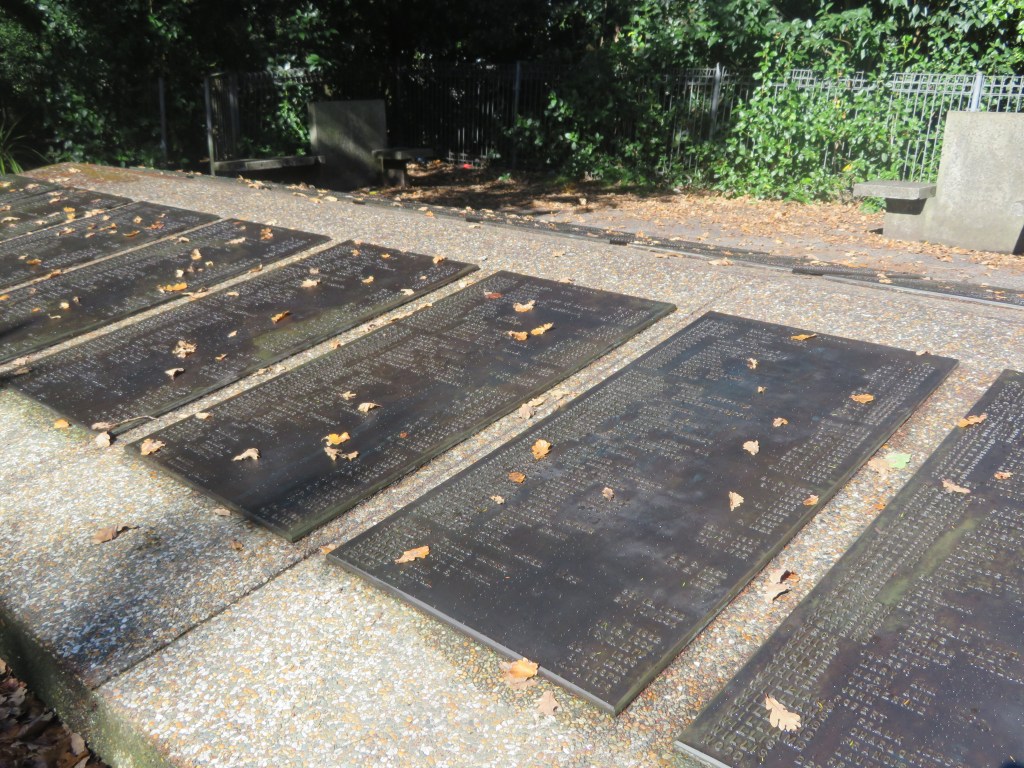
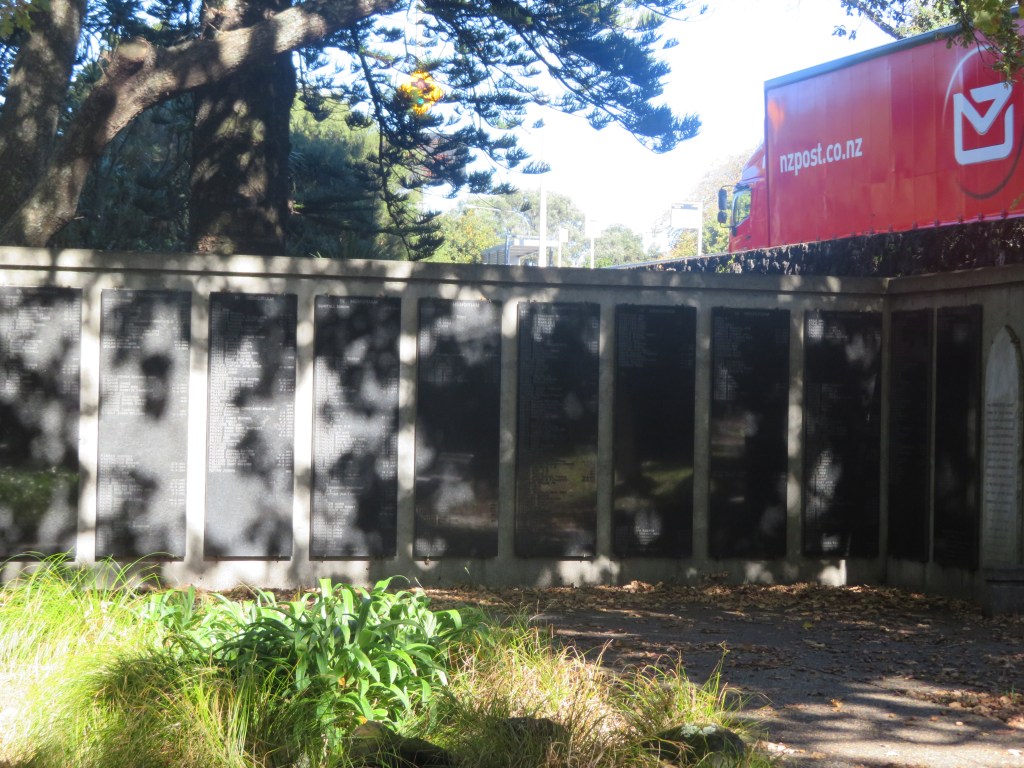
The 1860s and 1870s saw a change in attitude towards the cemetery and some beautification occured, with trees being planted (some are still there today) and paths being laid. In turn the monuments start to become more elaborate. Eventually, space became an issue and the cemetery was closed to new burials in 1886 unless you already had family members interred there. At the same time a new urban cemetery was created at Waikumete. By 1909 Symonds Street Cemetery became a public reserve suffering from various modifications when the Grafton Bridge was built to span the steep sided gully. Much later in the mid 1960s further damage was done to the cemetery with the southern motorway was constructed. During this time some 4100 bodies were removed and reinterred in two memorial sites within the cemetery.
Today the cemetery is around 5.8 hectares with approximately 10,000 individuals interred there, however it is estimated only around a quarter of those have any kind of visible monuments. Even so it is still an important repository of information on early colonial Auckland and New Zealand.

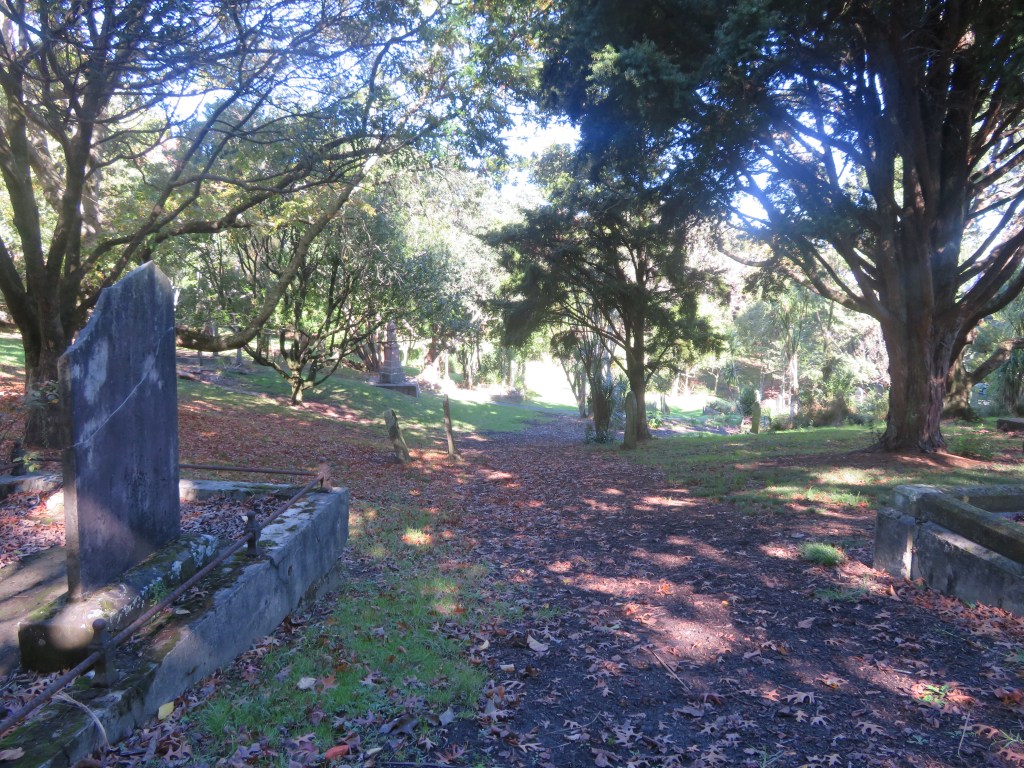
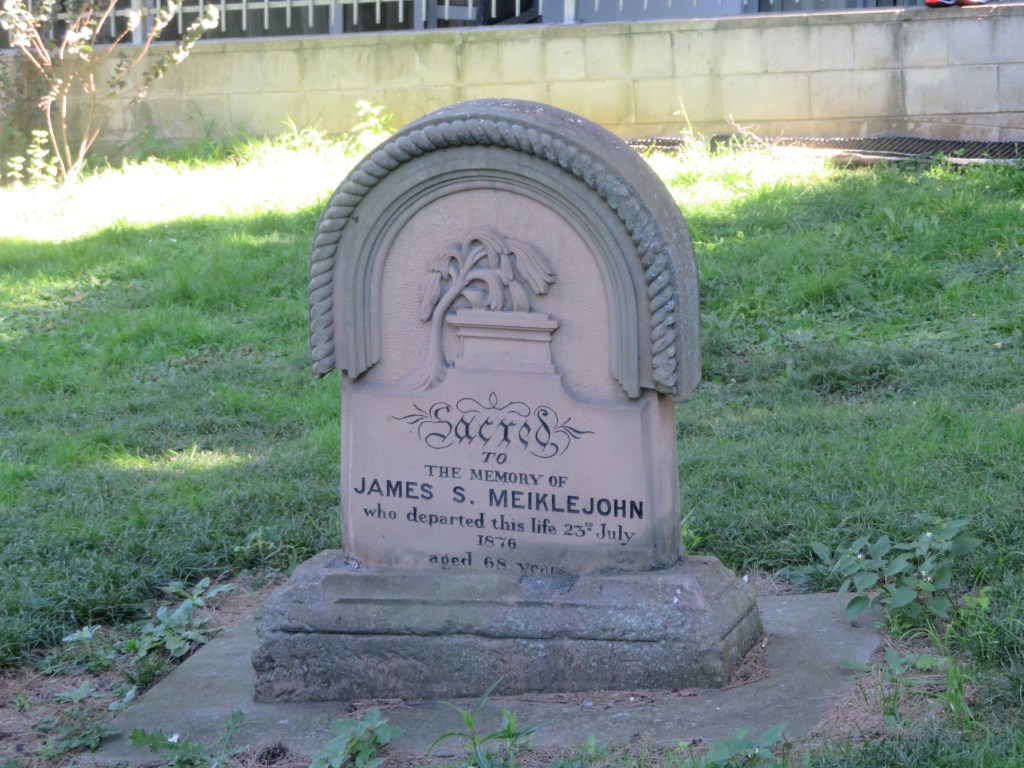
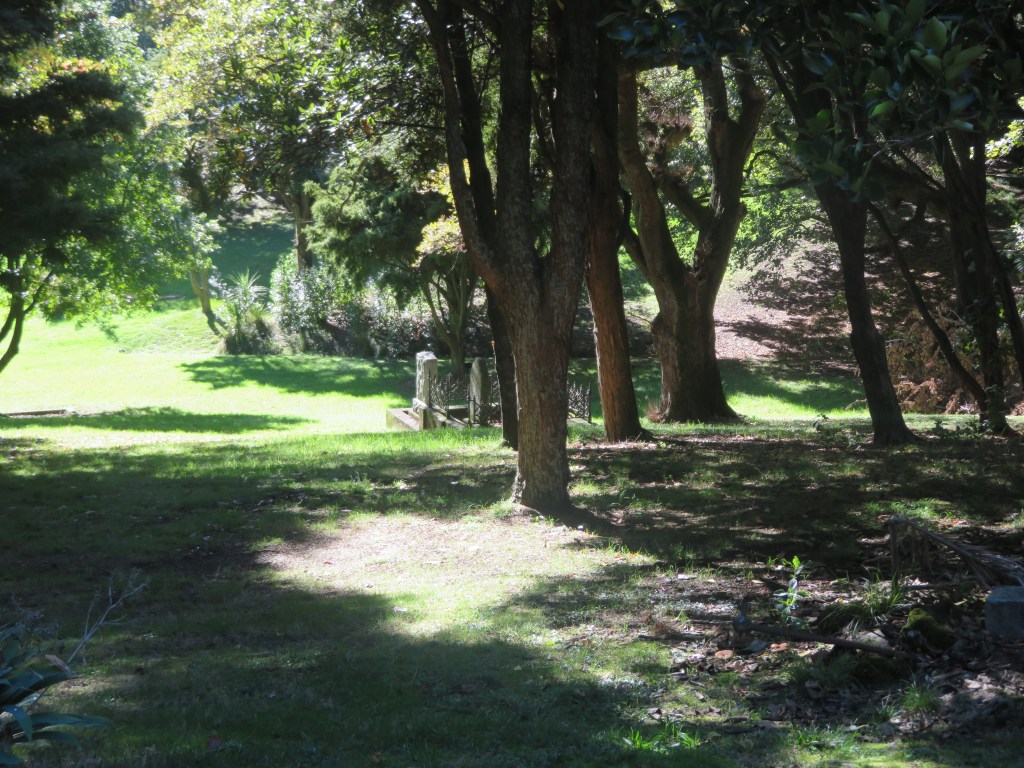
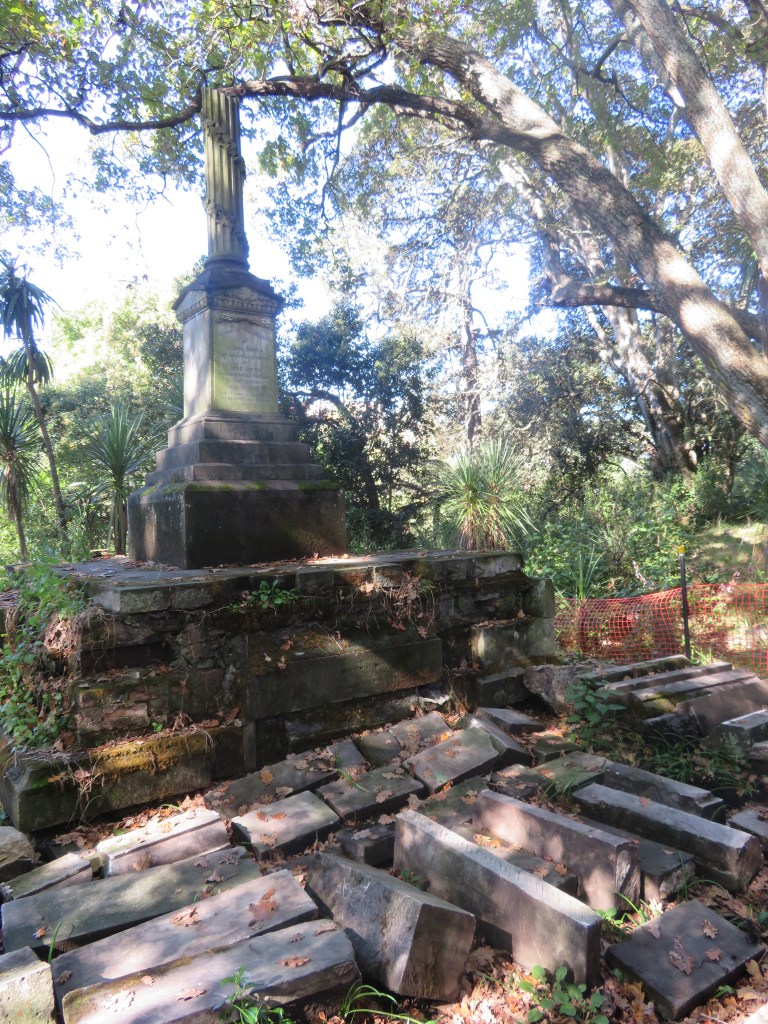
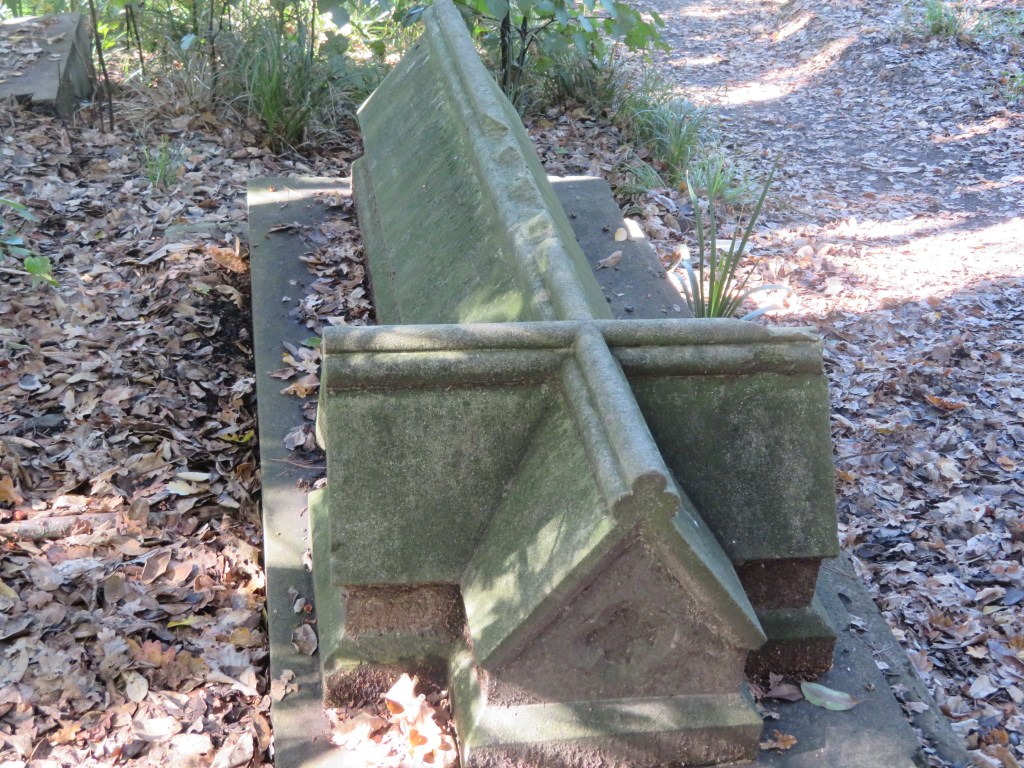
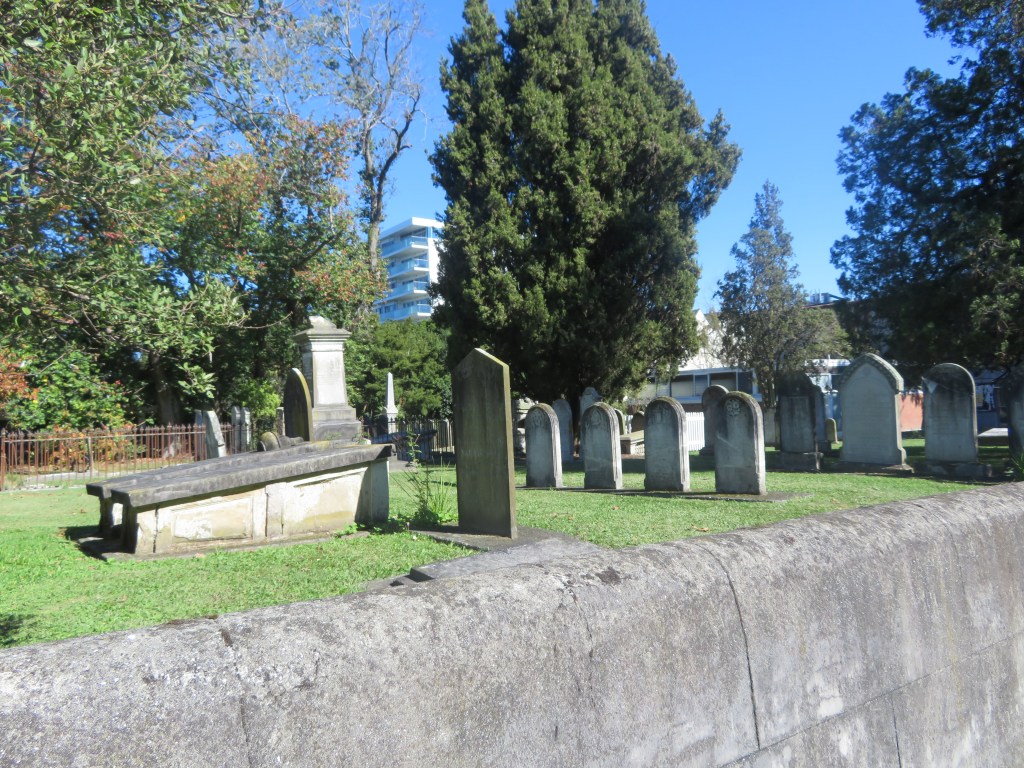
Below are some images from the Catholic part of the cemetery.
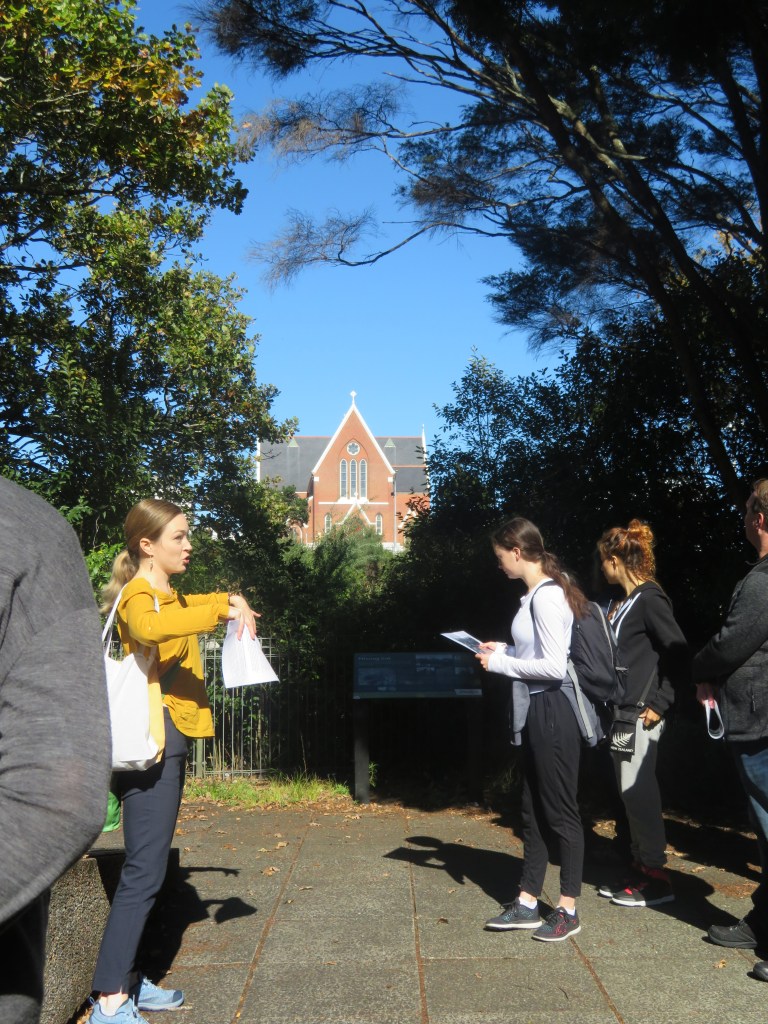
The following images are also from the Catholic part of the cemetery, the first shows the Catholic church some distance away and separated by the southern motorway. The second photo shows the memorial plaque for those whose bodies were re-interred as a result of the motorway construction.
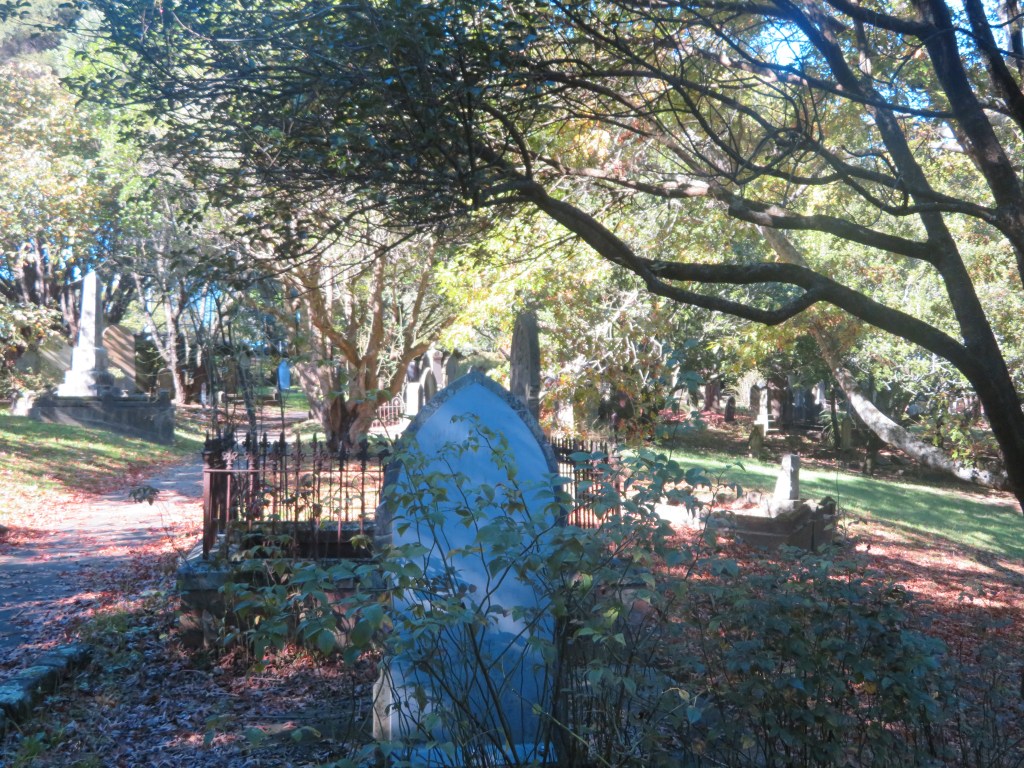
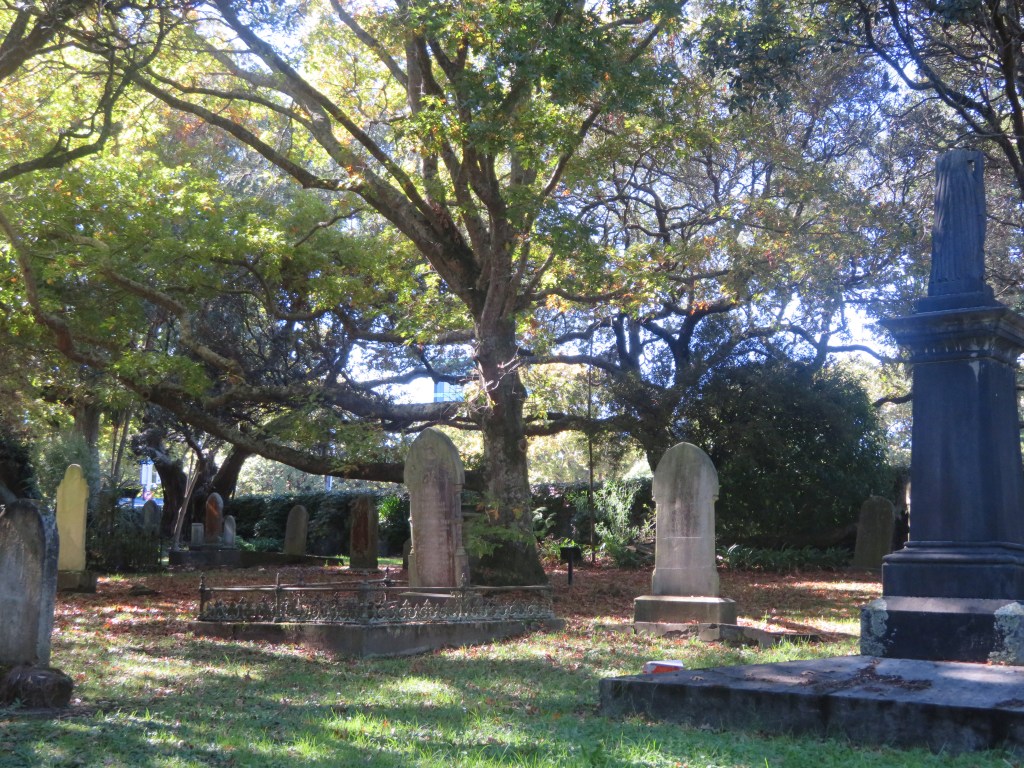
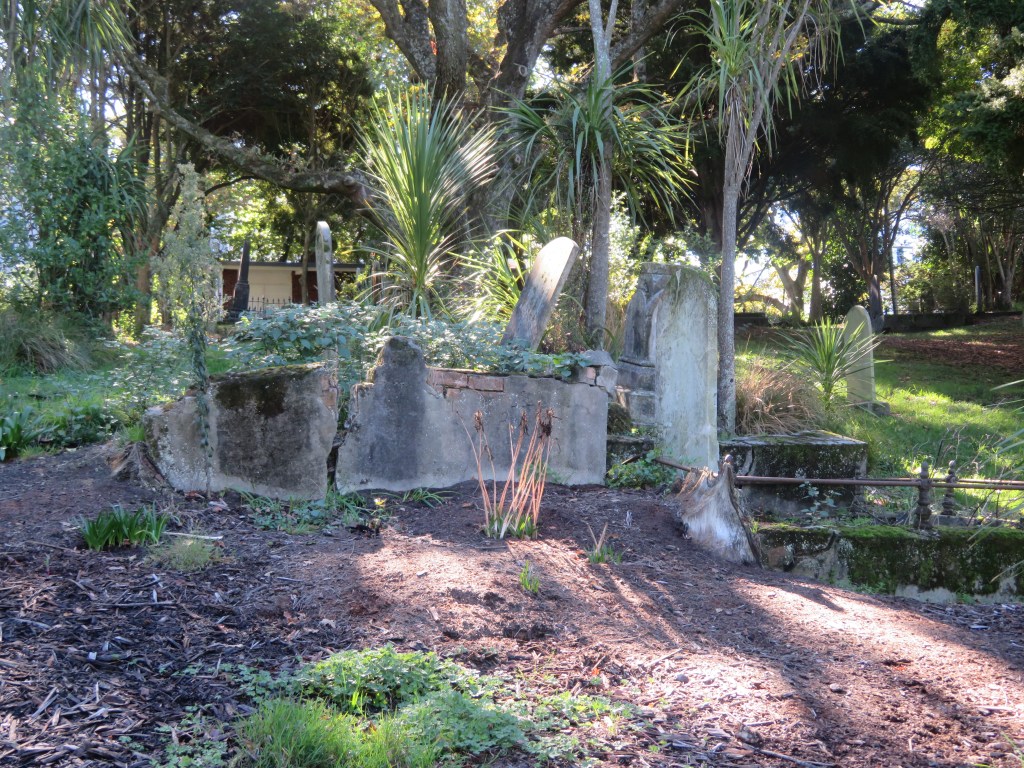
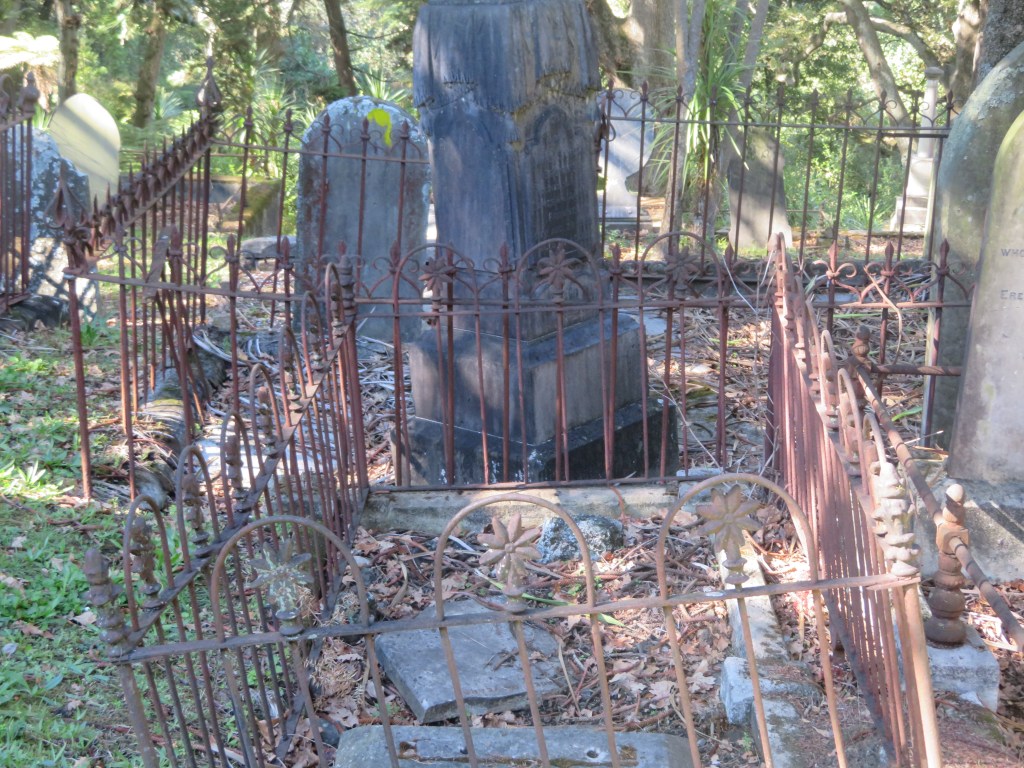
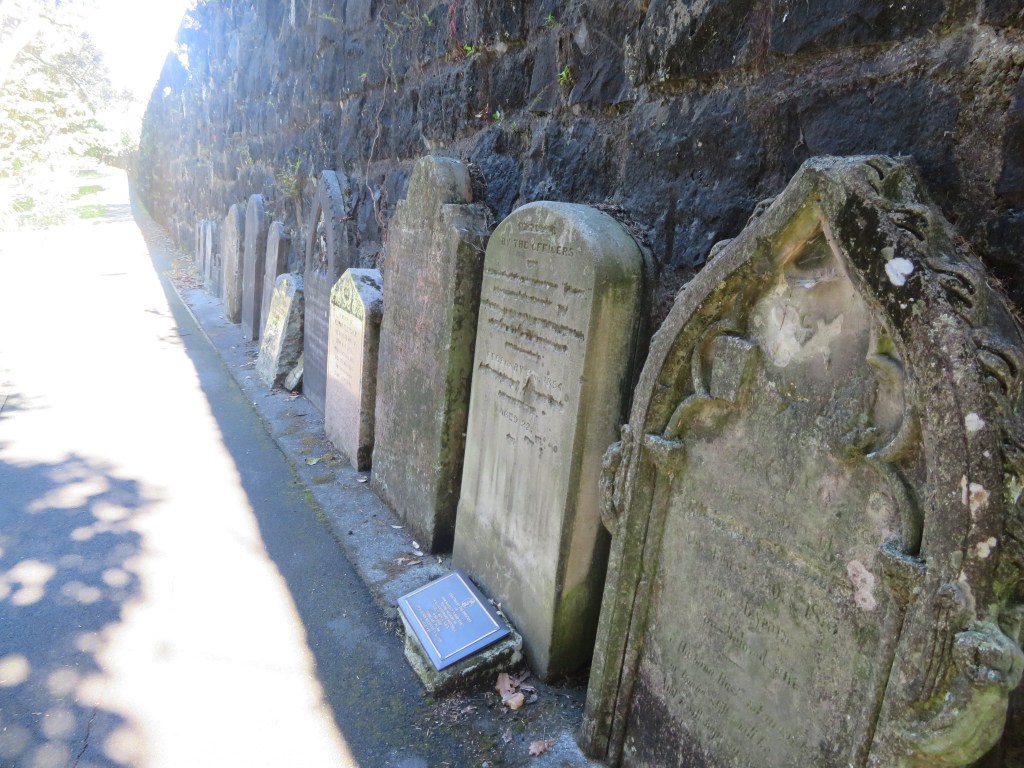
The pictures below are from the Anglican part of the cemetery and show some of the disrepair the monuments are in. The third photo along is of a very distinctive memorial in the shape of a church.

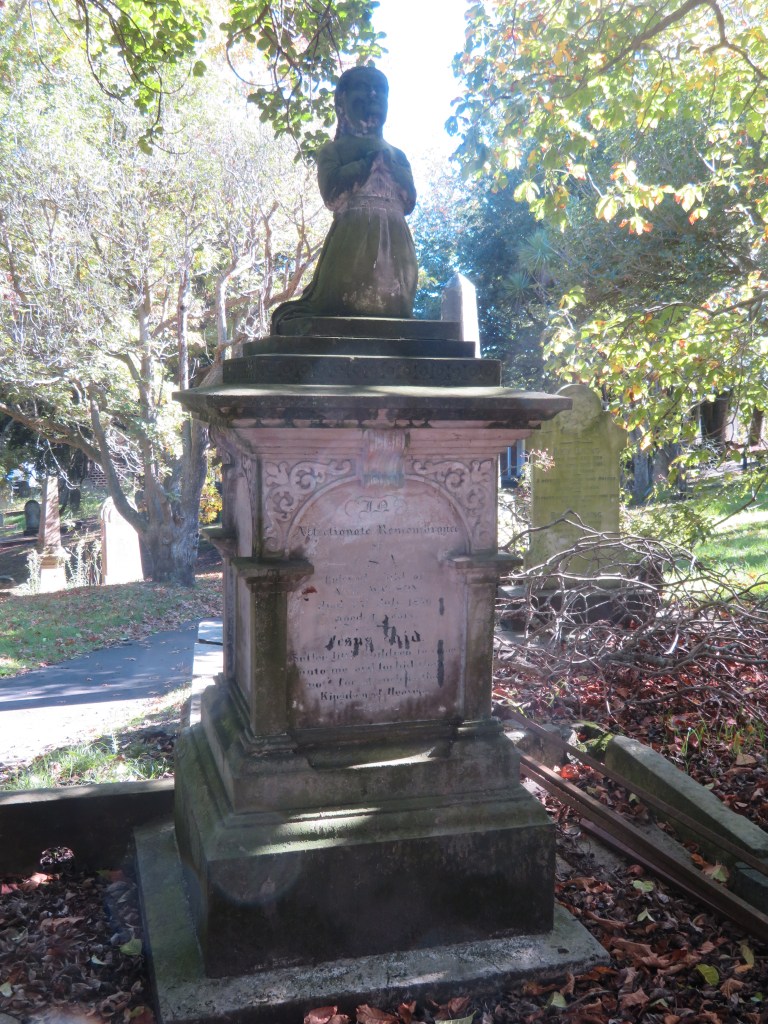
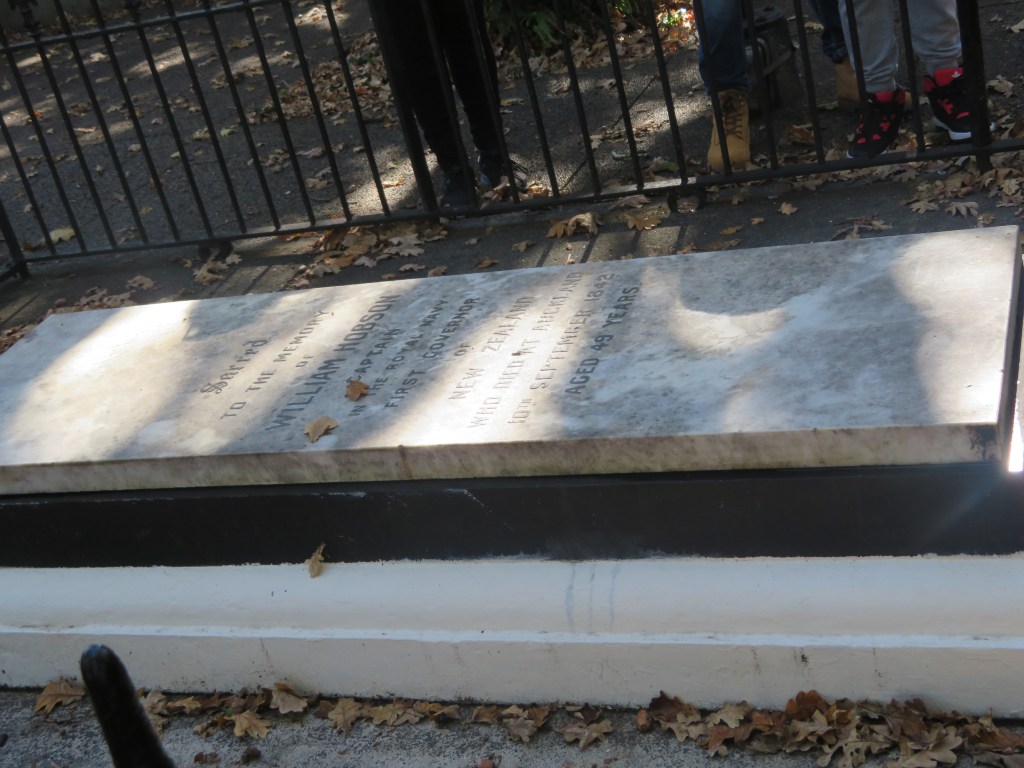
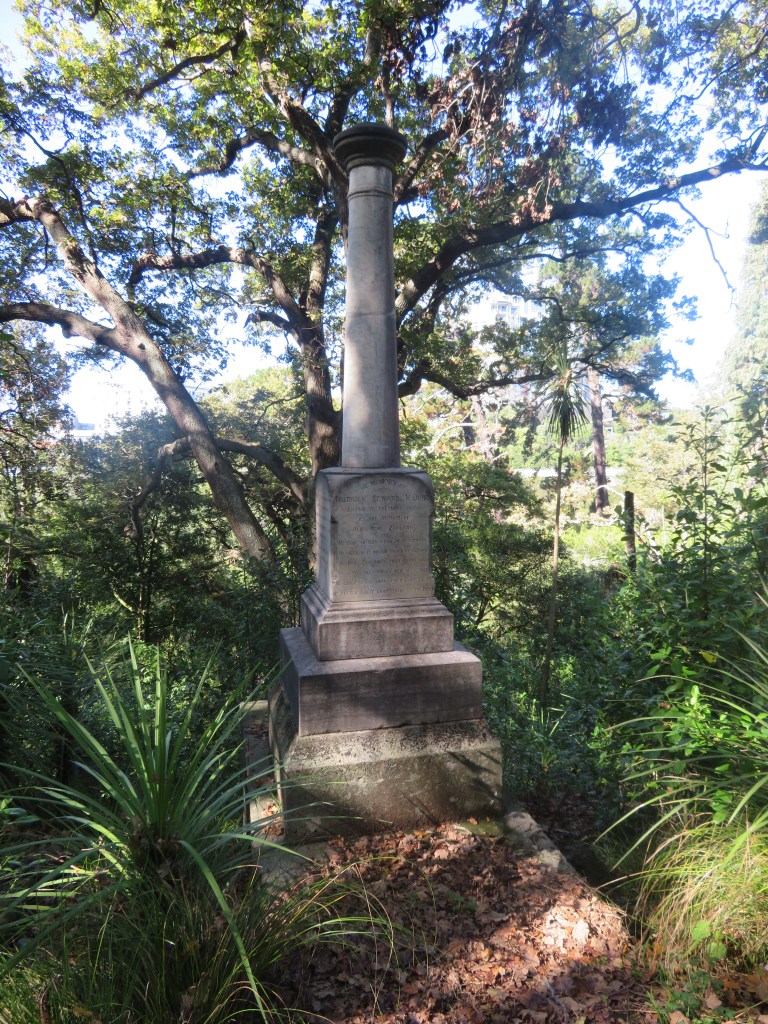
There are several well known New Zealanders buried in the cemetery such as William Hobson, New Zealand’s first Governor who signed the Treaty of Waitangi and died in 1842. The first picture is his memorial whilst the remaining two pictures are of Frederick Manning’s burial, another well known New Zealander.

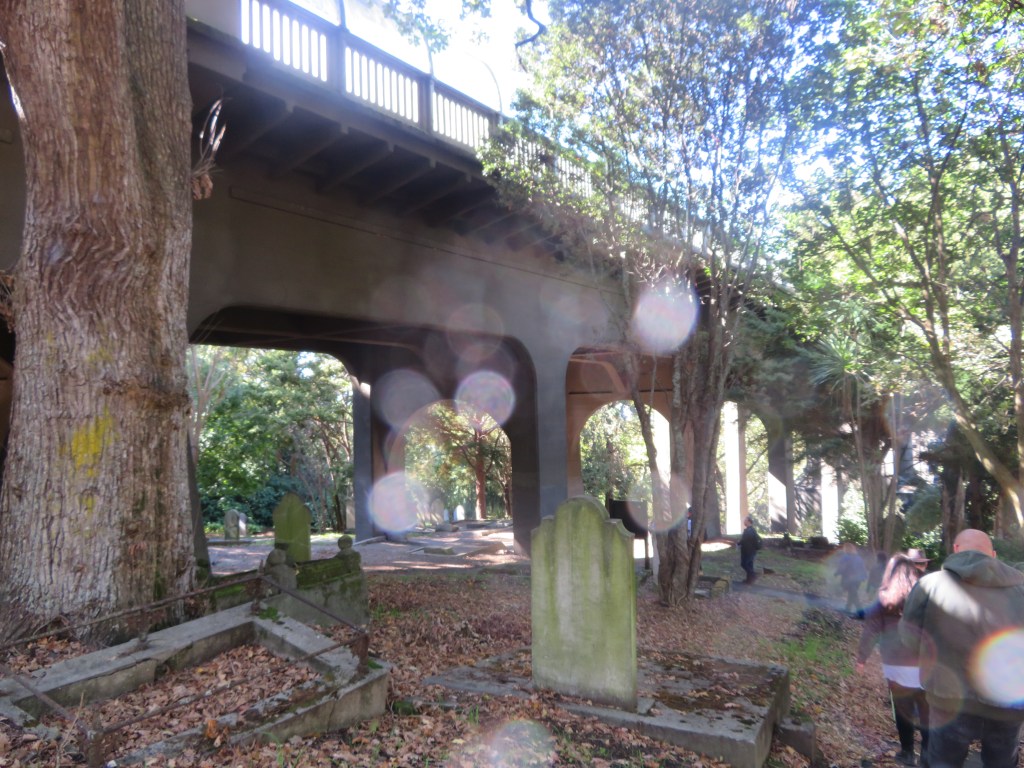
The construction of Grafton Bridge caused some modifications to the cemetery below.
Last but no least is the walled Jewish cemetery, perhaps the most well kept area of the whole cemetery…

Further information

The construction of the motorway and its impact on the cemetery.
Timespanner

Symonds Street Cemetery – Our Auckland Stuff

https://www.symondsstreetcemetery.com/new-page

My Son – Temples in the Jungle

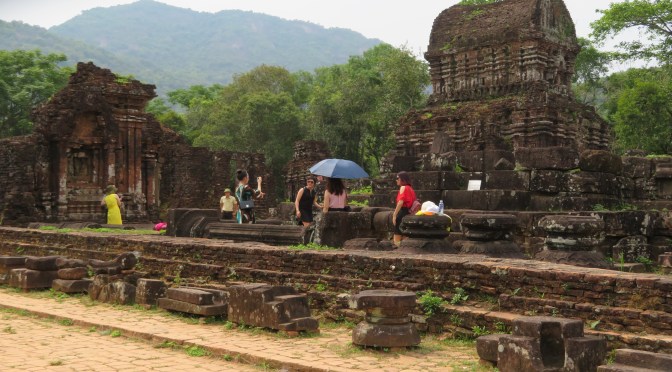
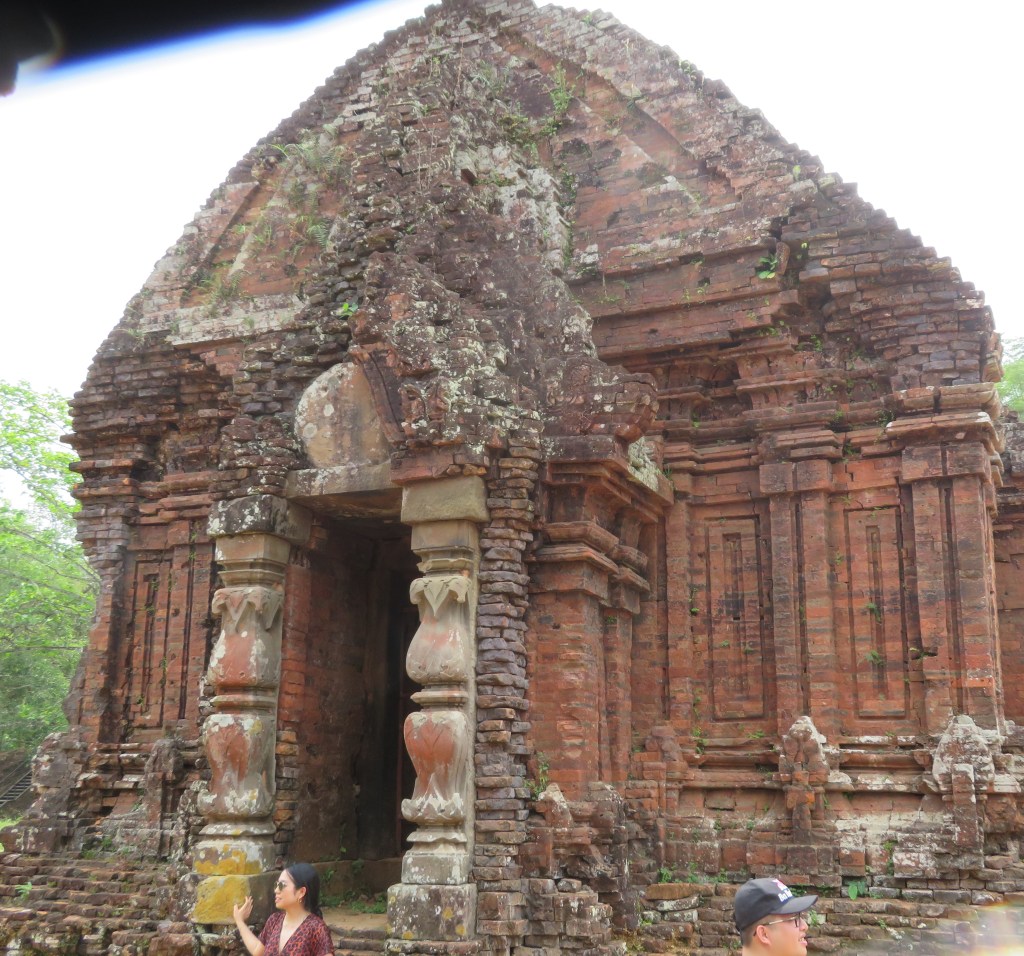
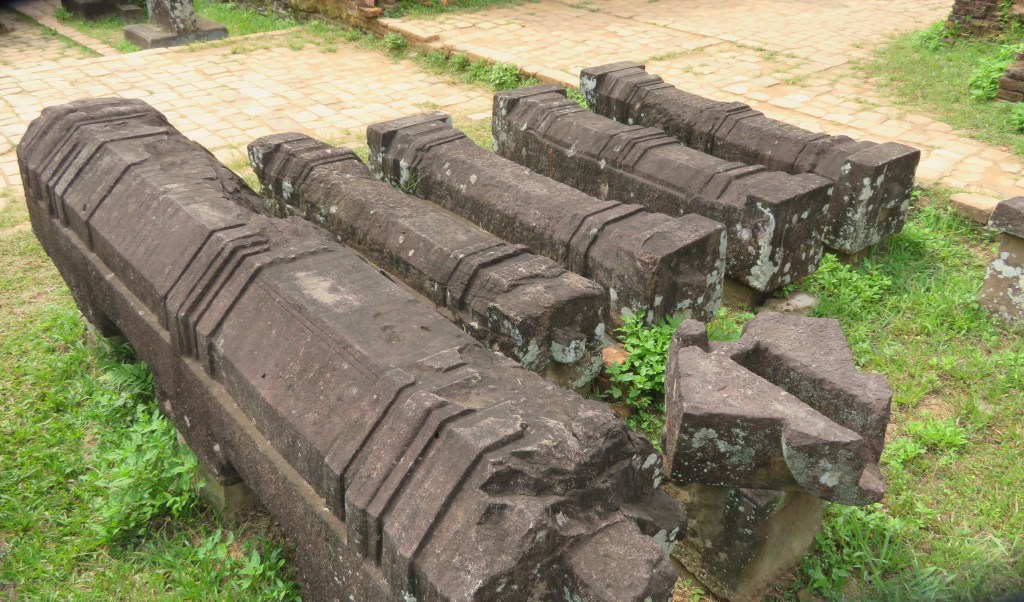
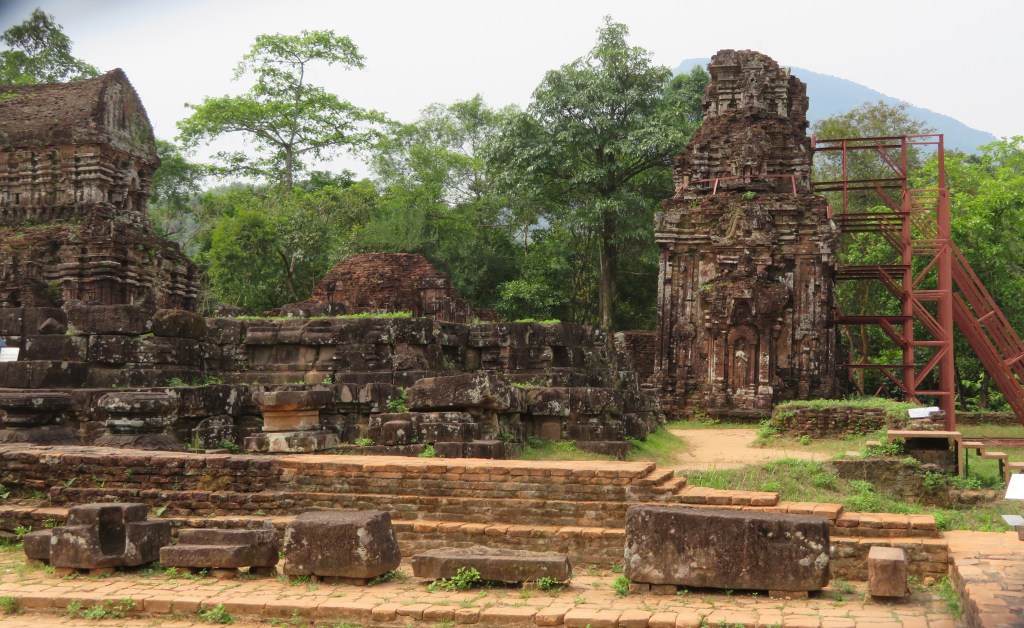
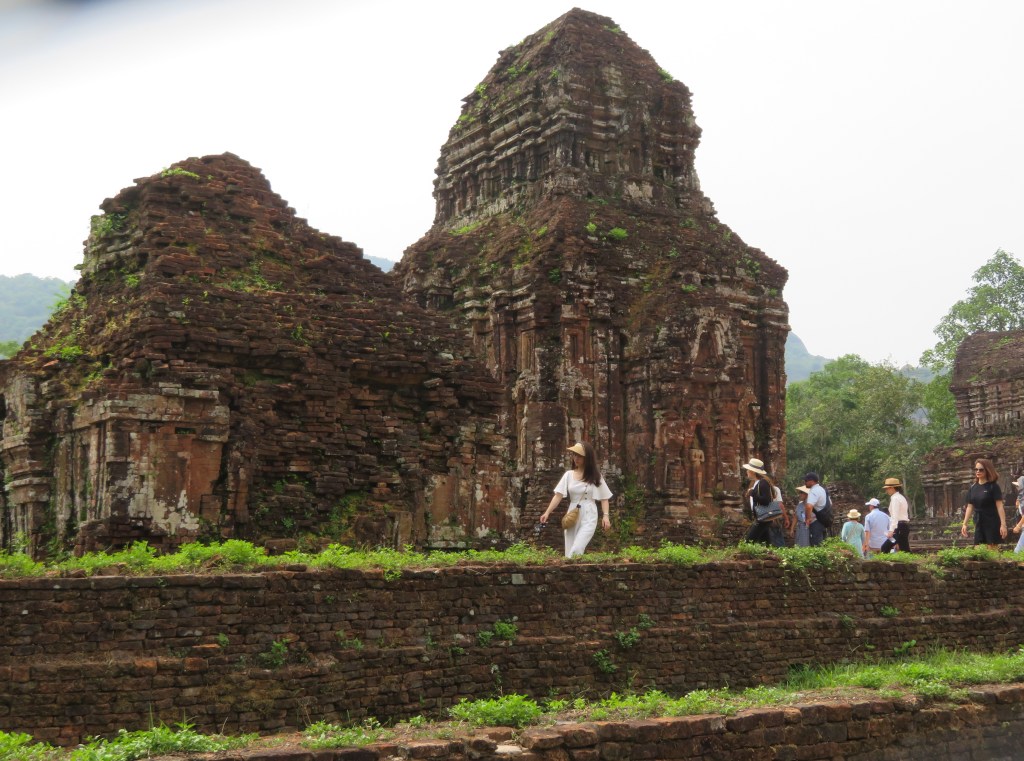
During a recent holiday in Vietnam I visited the temple precinct of My Son, the principal religious center of the Champa. The following are a few photos (read many) of this day trip with a bit of background for good measure.

Who were the Champa?

Essentially the Champa were a collection of independent polities who ruled central and southern Vietnam from around the second century AD. The independent states became united in the fourth century under the rule of King Bhadravarman of Indrapura during the 4th century. Between the 7th and 10th centuries the Cham controlled the trade in spices and silk out of the South China Sea. Hoi An was the main port of the principality of Indrapura and whilst the capital of the Champa was in the area of the modern village of Dong Duang – both are situated near to My Son.
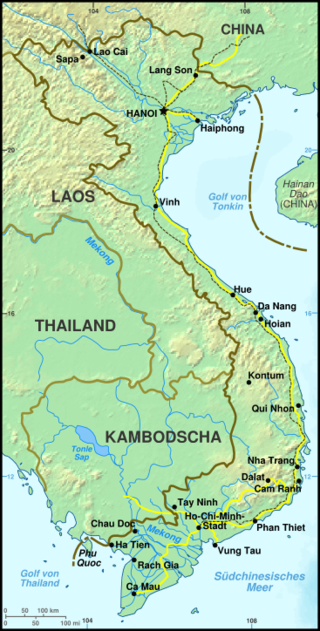
Map of Vietnam – Hoi An and Da Nang are roughly central on the coast.

From around the fourth century the Cham adopted Hinduism as their principle religion although many were eventually converted to Islam from the 10th century onwards. Today whilst the majority are Muslim there are still some that retain the Hindu faith and traditions.

The name Champa comes from the Sanskrit word ‘campaka’ which refers to species of flowering tree similar to a magnolia.

By 1832 the northern Vietnamese Emperor Minh Mang had annexed and absorbed the Cham polities

My Son

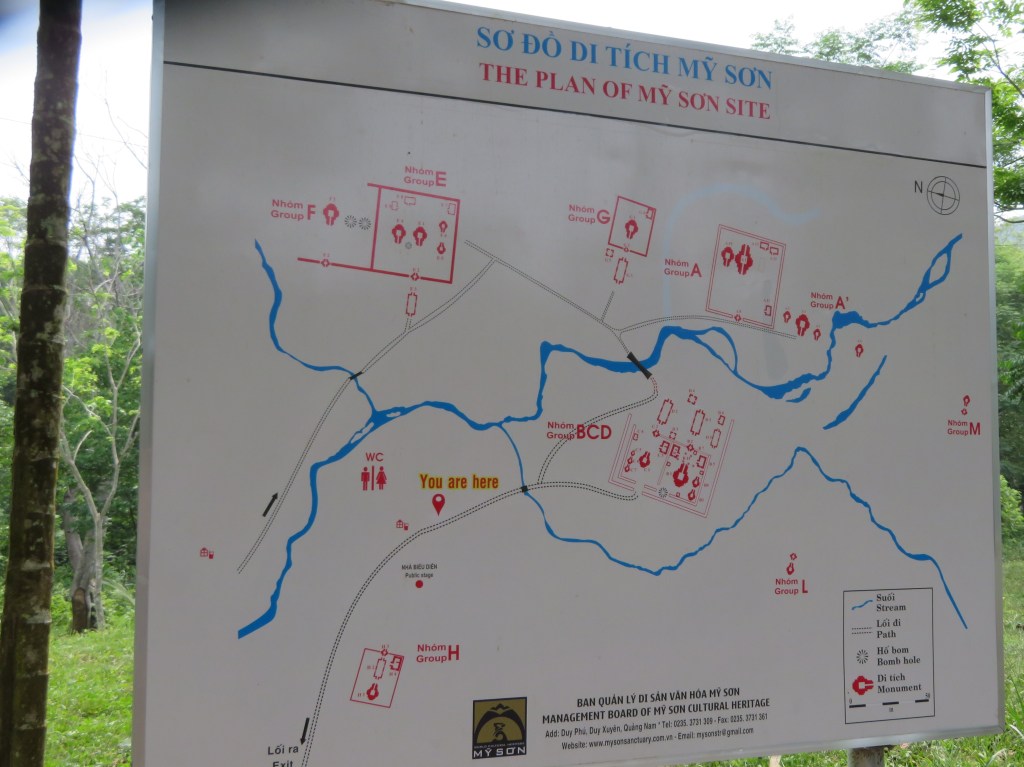
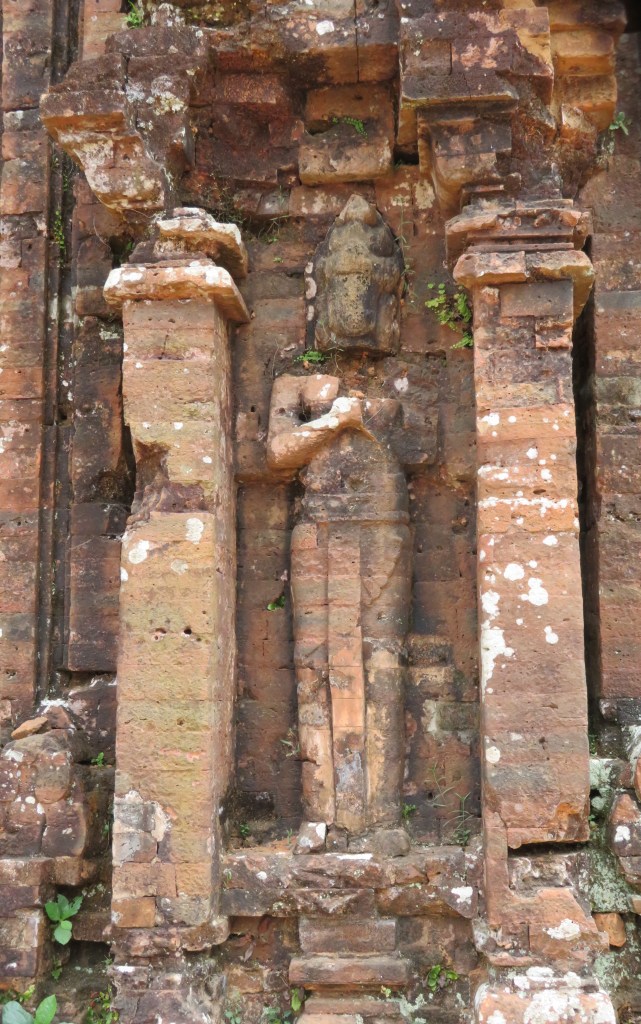
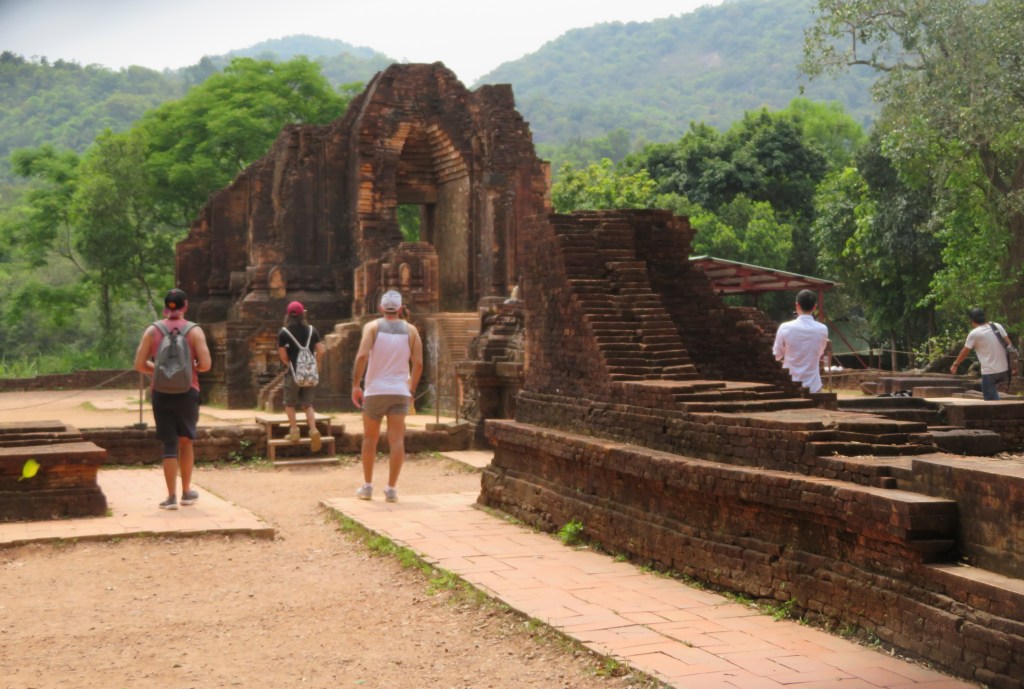
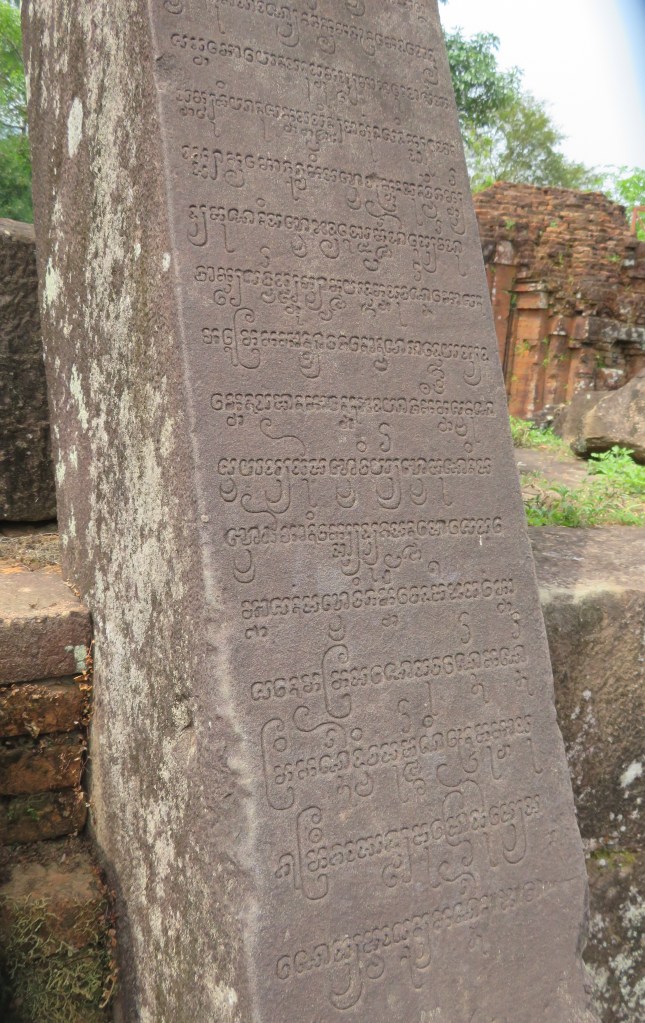
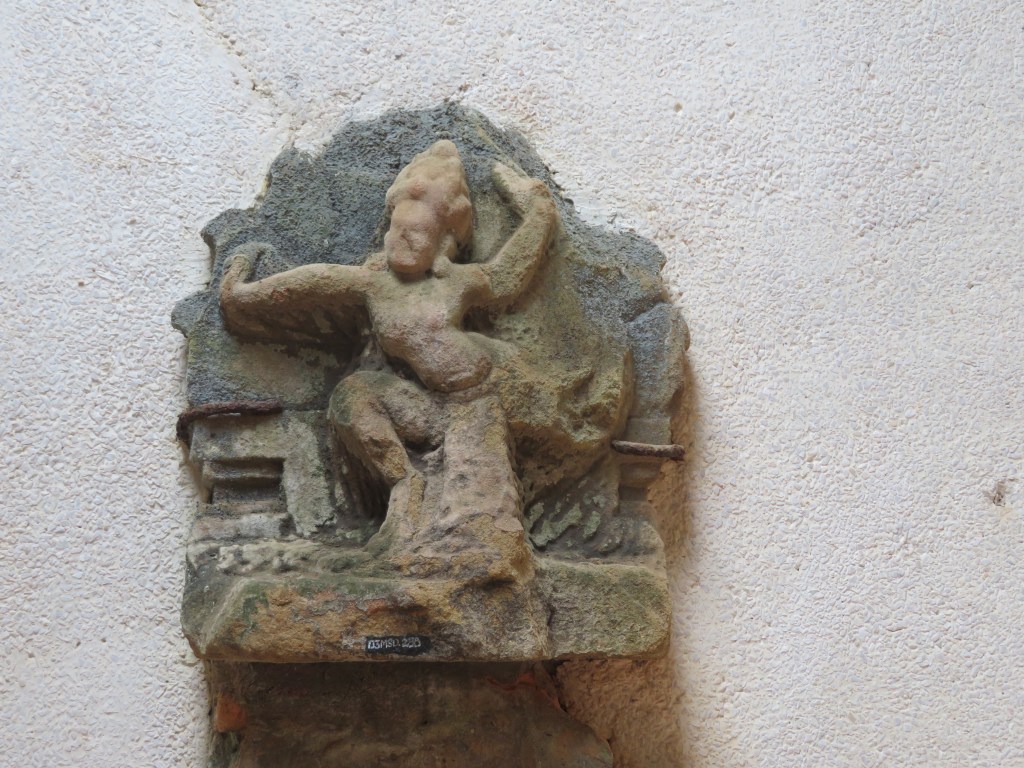
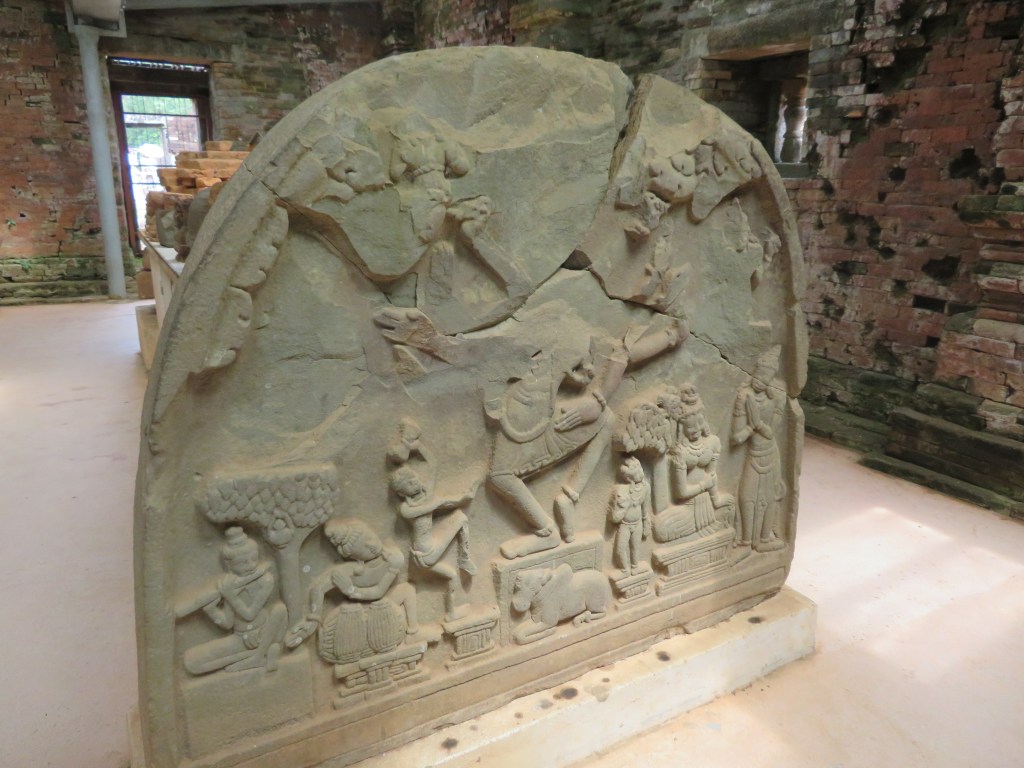
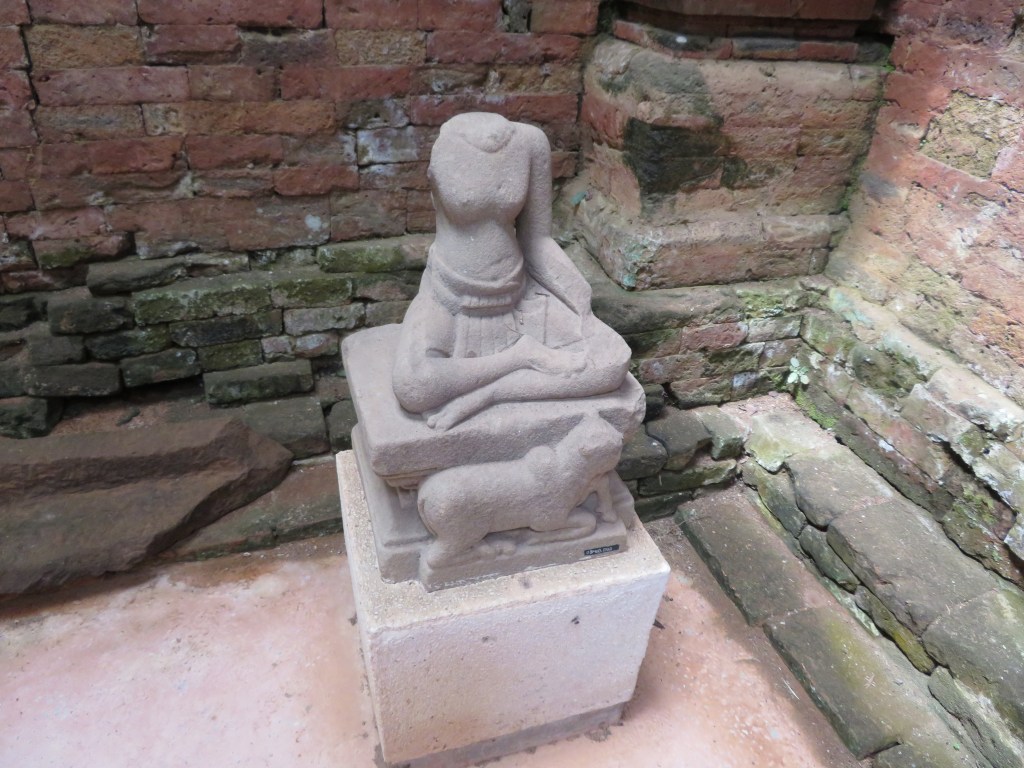
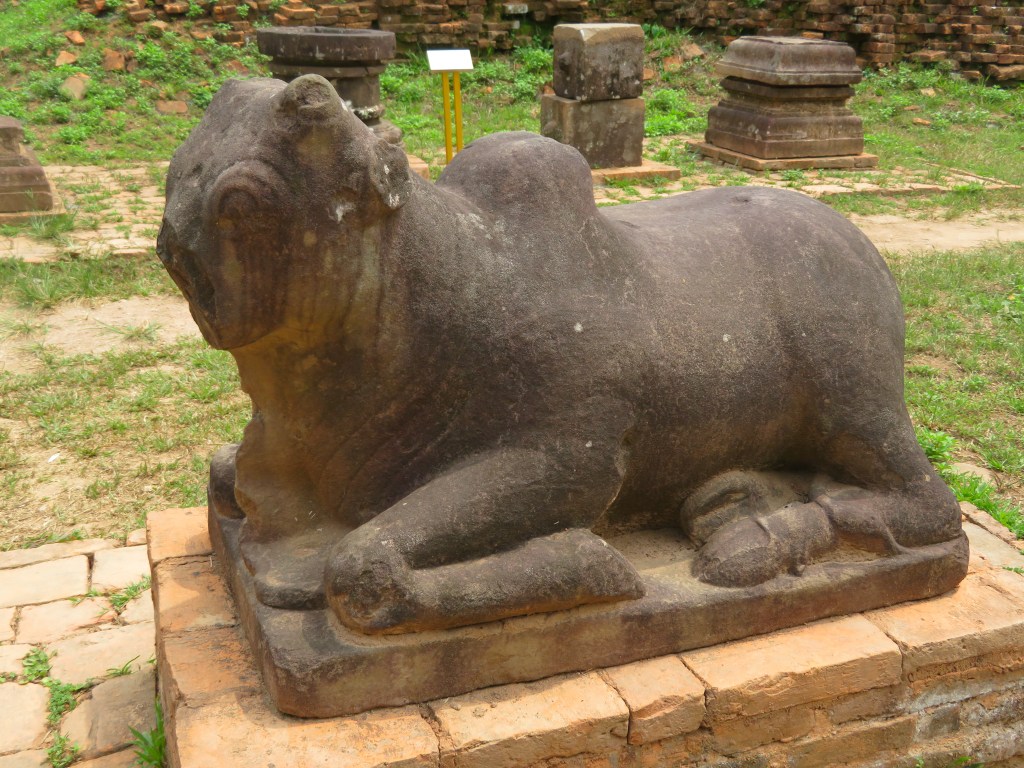
My Son is situated in a valley near the village of Duy Phu approximately 69km from DaNang and was the site of religious ceremonies for the HIndu Cham rulers between the 4th and 14th centuries. It also served as a royal burial place. There are in excess of seventy temples in addition to many stele containing important inscriptions in both Sanskrit and Cham.

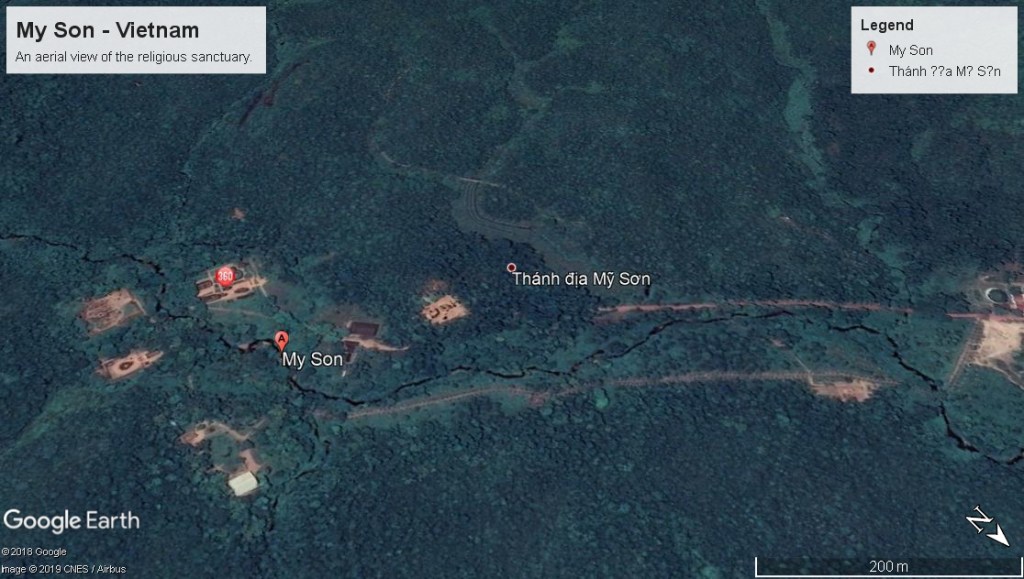
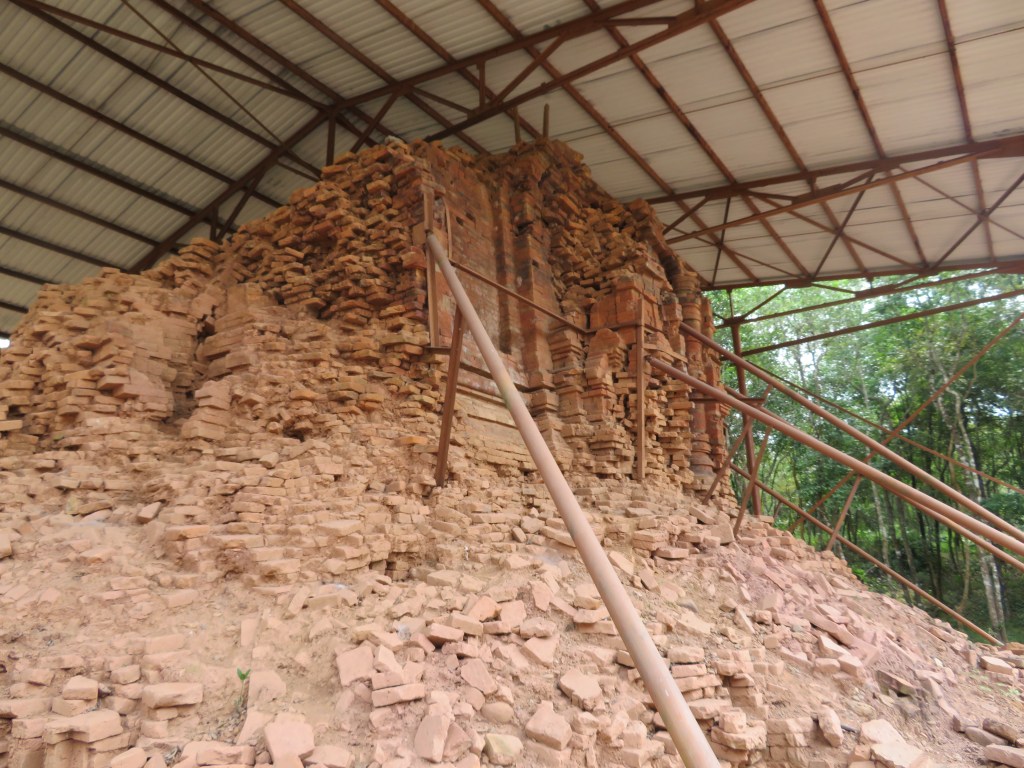
An aerial view of the now jungle covered valley, the bare patches are some of the temples accessible to the visitor.

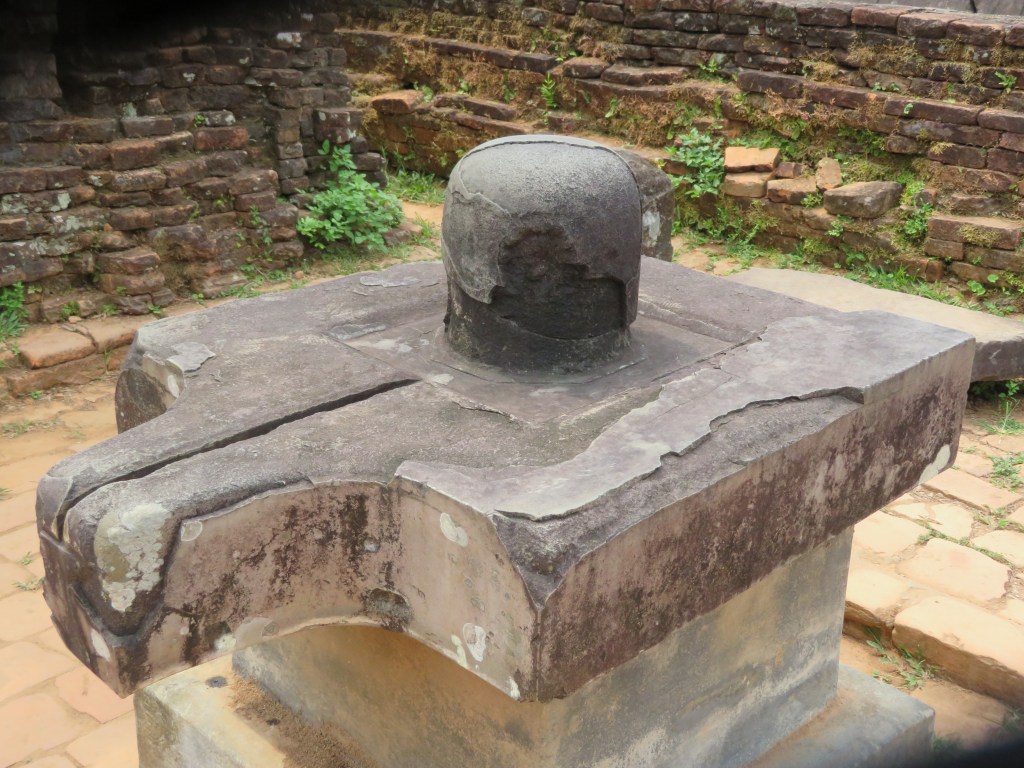
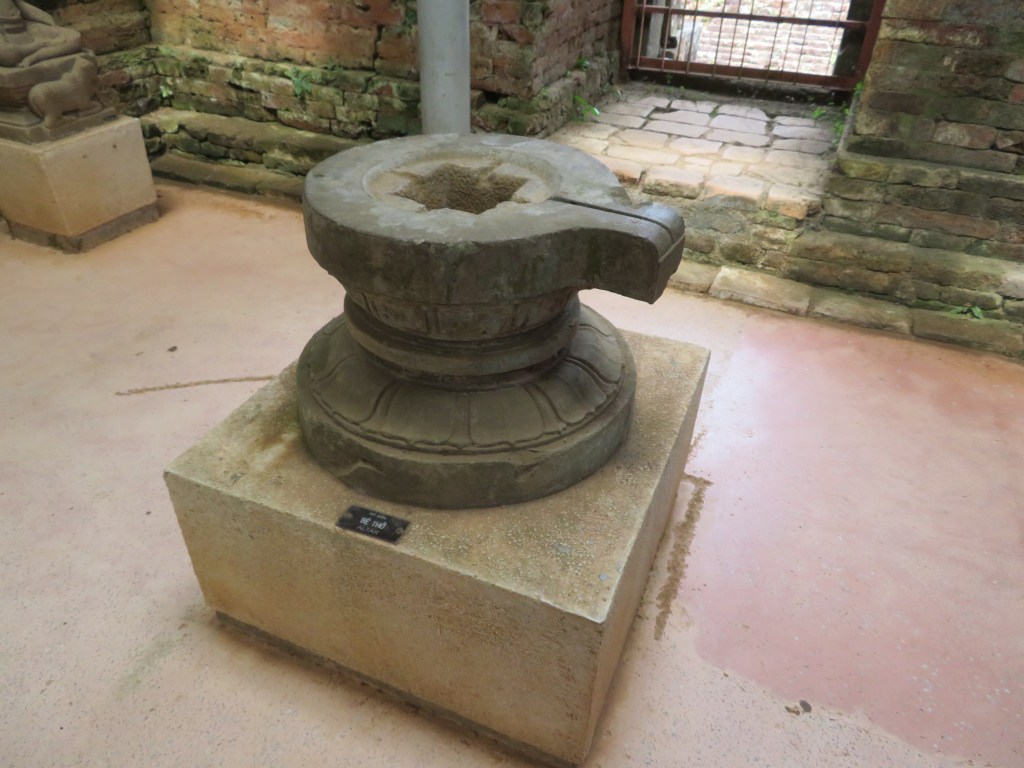
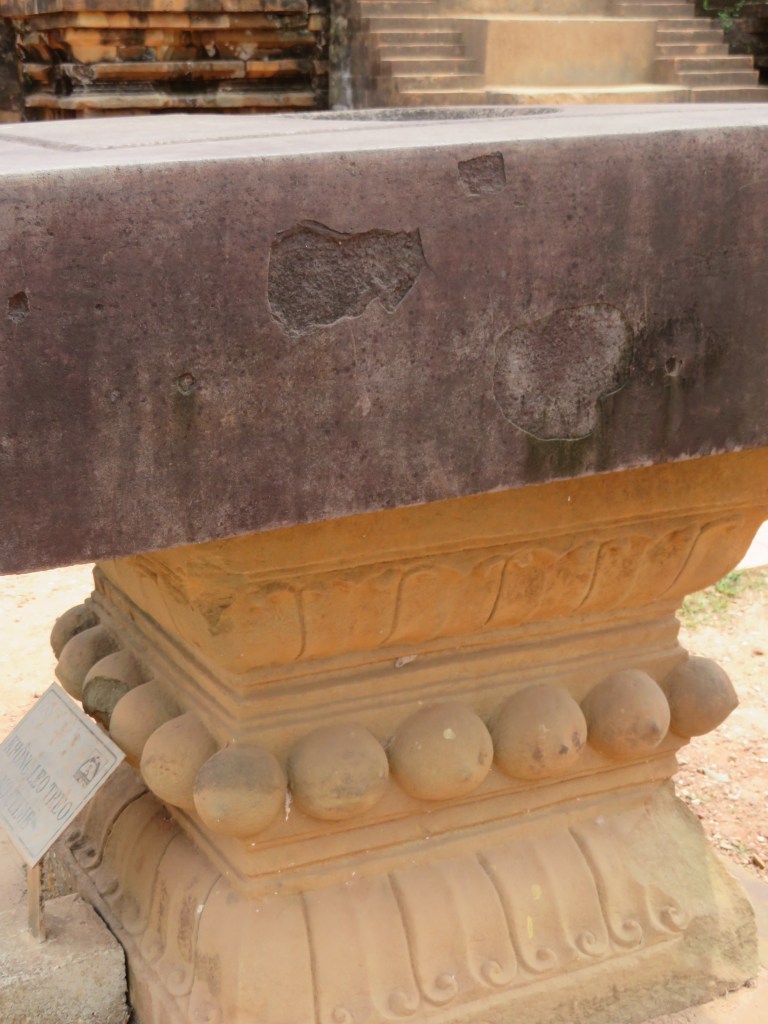
The Hinduism of the Champa was Shaiva with elements of local religious cults such as that of the earth goddess Lady Po Nagar. A number of the features at My Son are the linga – a black stone pillar representing Shiva and the yoni representing the mother.

Unfortunately the valley was carpet bombed by the Americans during the Vietnam war and many of the temples were severely damaged and in some cases totally destroyed. In recent years efforts have been made to rebuild the temples (the work is ongoing).

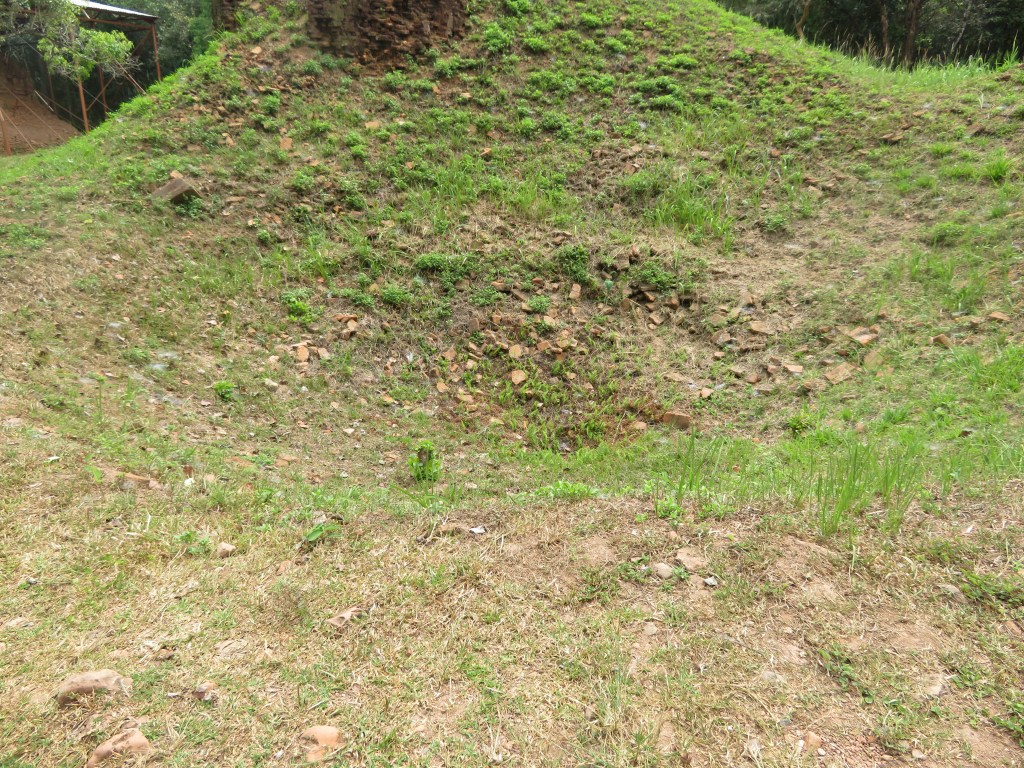
The hollows are indeed bomb craters – this part of the site has been left untouched – as awful as the bombing of such an important site is, the act is part of the history of My Son and as such needs to be remembered and preserved if we are to learn anything from it.

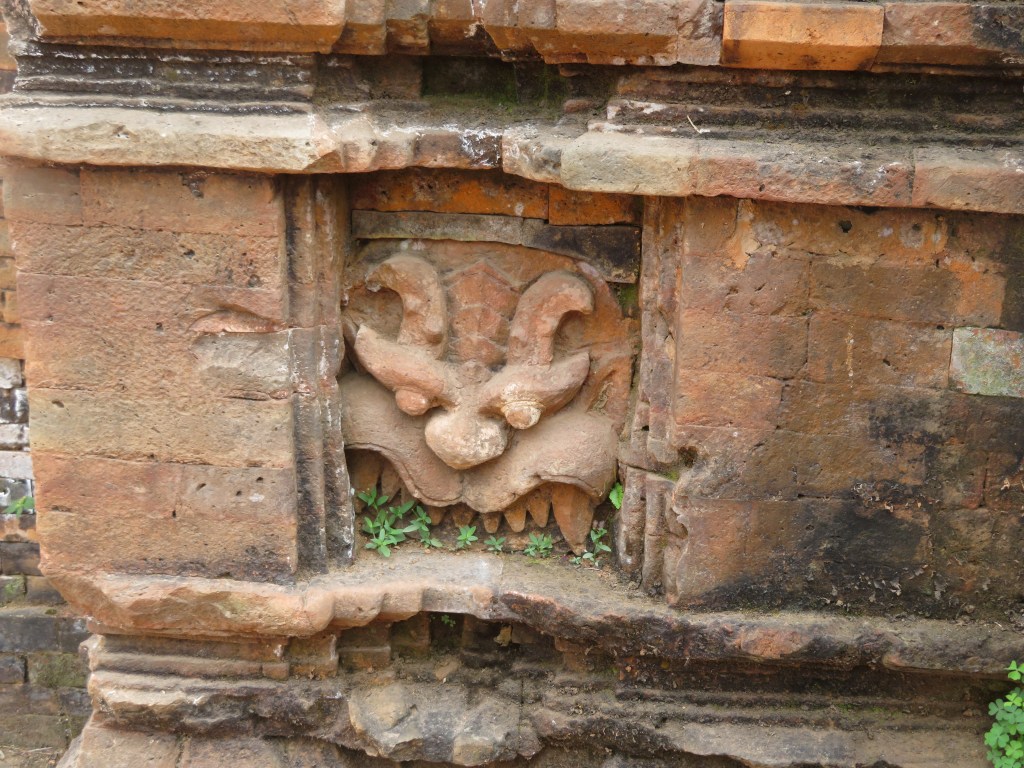
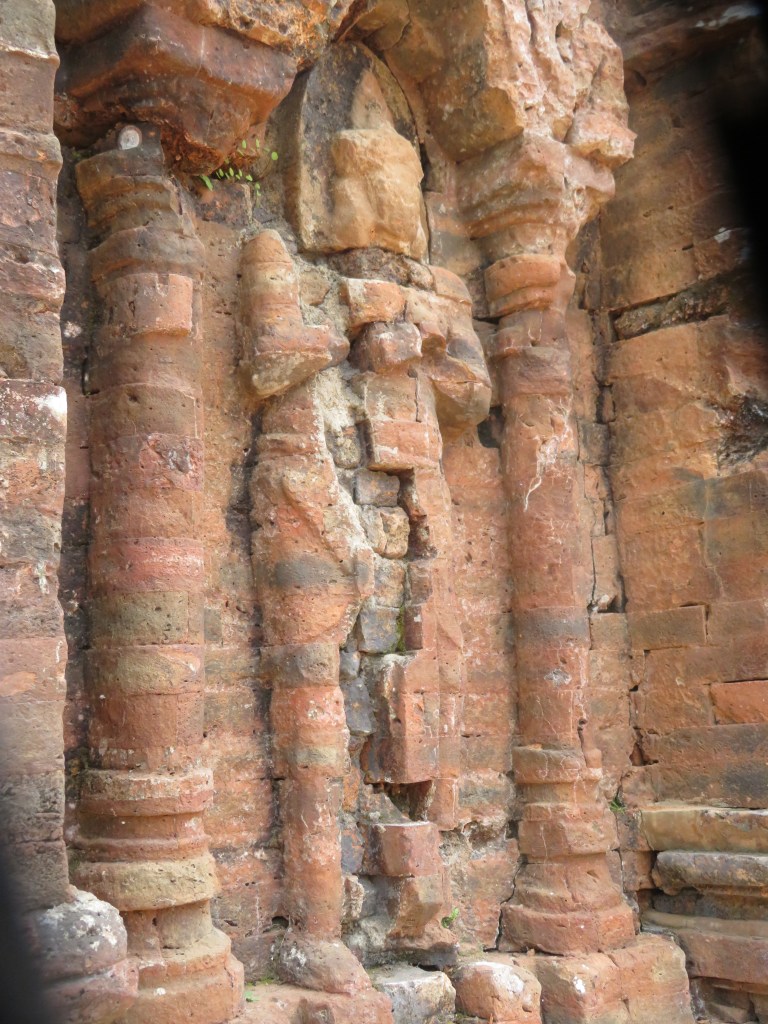
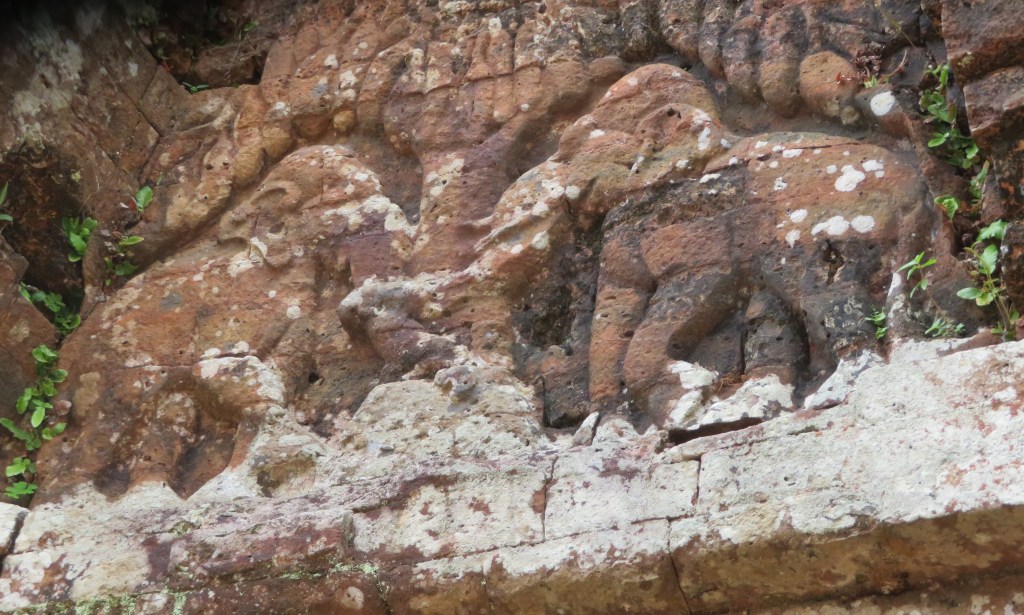
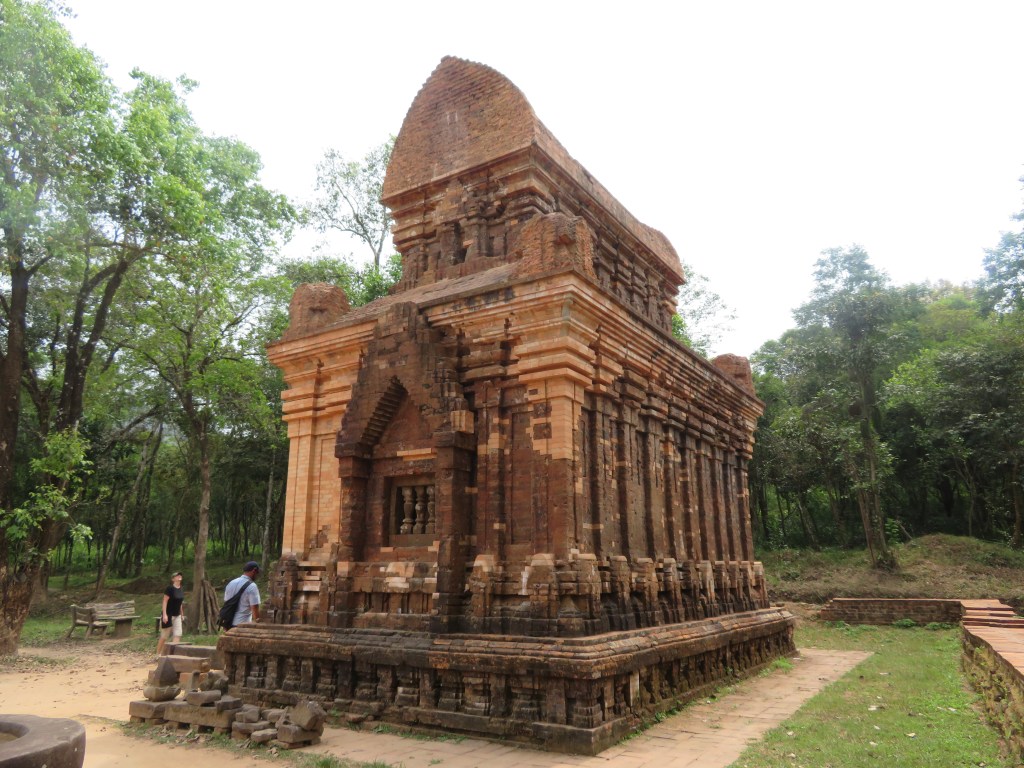
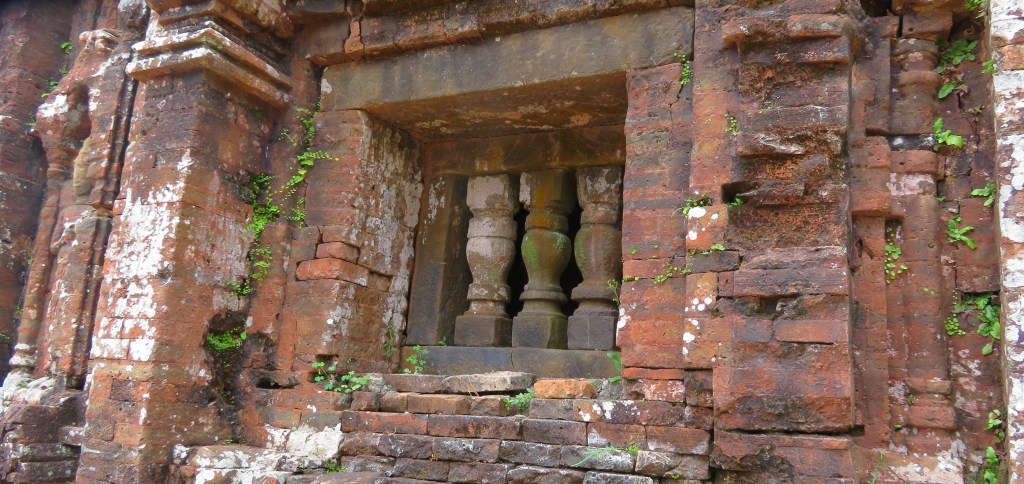
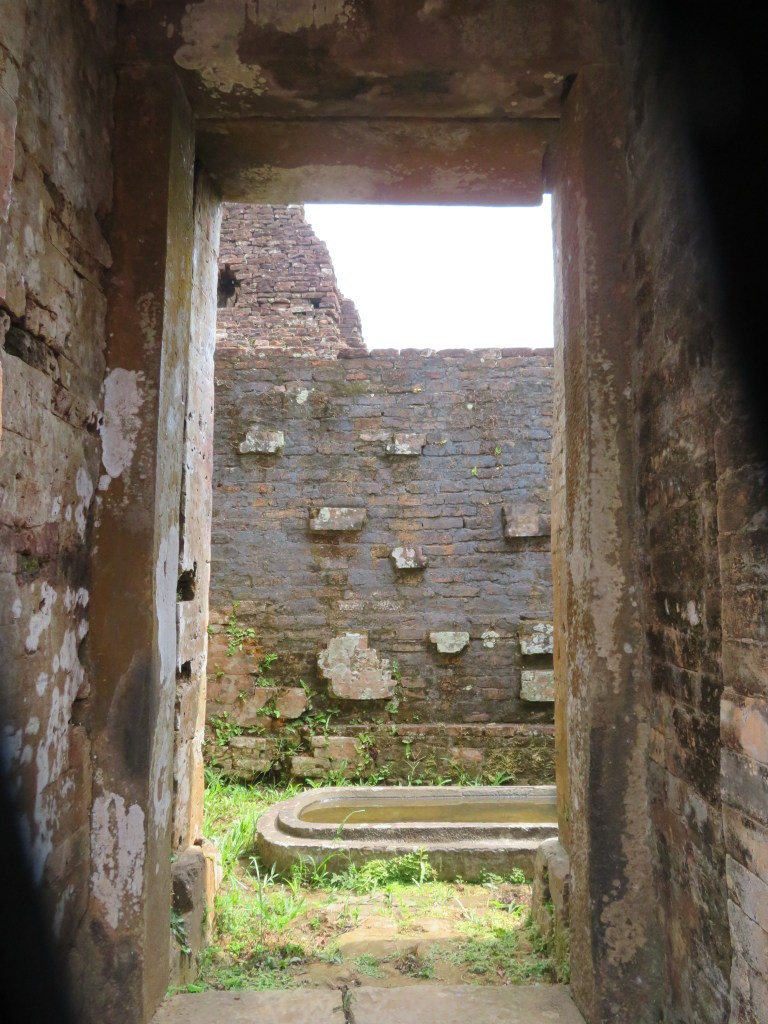
All but one of the temples are constructed from red brick (the only stone built temple is in the area known as B1). The decorative carvings which adorn the temple exteriors were cut directly into the bricks themselves. Although there has been some discussion about the type of mortar used in construction of the temples, it is now generally accepted that the mortar consisted of a sticky clay solution similar to the brick clay.

There are four types of buildings –

  1. Kalan – the brick sanctuary used to house the diety.
  2. Mandapa – the entry hallway associated with a sanctuary.
  3. Kasagrha – ‘fire-house’ usually with a saddle shaped roof and used to house valuables or to cook for the diety.
  4. Gopura – the gate tower leading into a walled temple complex.

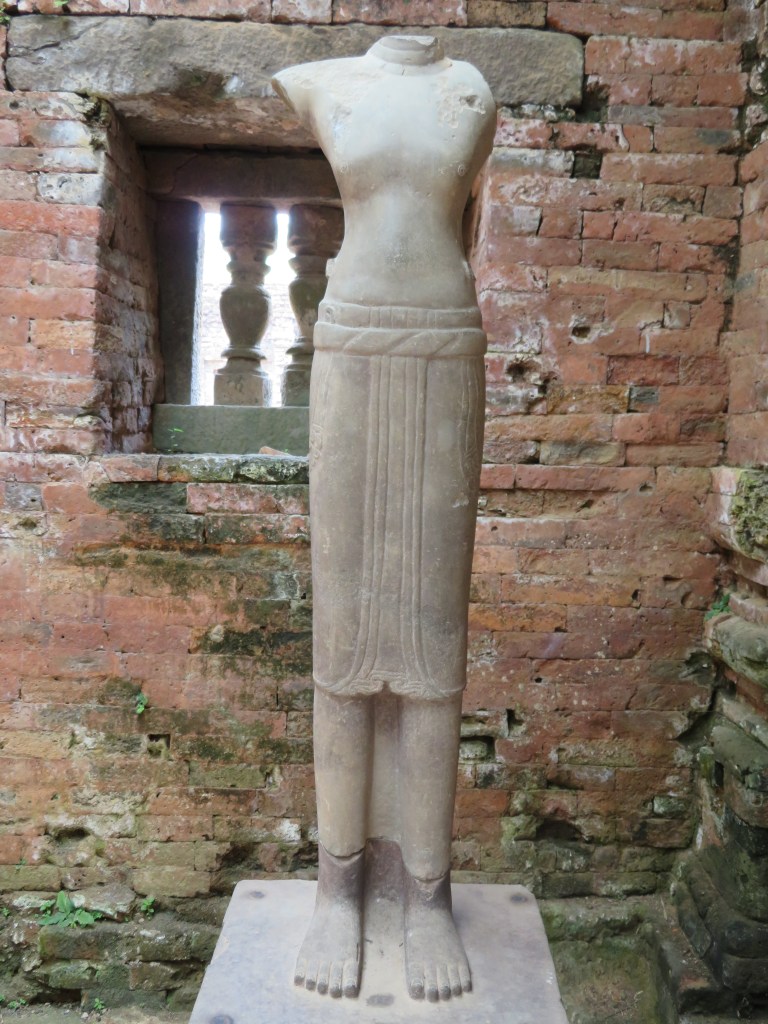
In addition to the many sculptures and statues there are numerous stele (32 known in total) dating between the 5th and 12th century. The stelae can refer to a foundation of a temple, altar or pedestal. As historical documents they are very useful as they list names of kings, cities and occasionally describe important historical events such as the wars between Champa and Cambodia in the 12th century. The statues and carvings are usually representations of Shiva, also there are guardian statues found outside the temples.


The monuments of the My Son sanctuary are the most important constructions of the My Son civilization. The tower temples have a variety of architectural designs symbolizing the greatness and purity of Mount Meru, the mythical sacred mountain home of Hindu gods at the center of the universe, now symbolically reproduced on Earth in the mountainous homeland of the Cham people. They are constructed in fired brick with stone pillars and decorated with sandstone bas-reliefs depicting scenes from Hindu mythology. Their technological sophistication is evidence of Cham engineering skills while the elaborate iconography and symbolism of the tower-temples give insight into the content and evolution of Cham religious and political thought.  

From the UNESCO world heritage centre website
https://whc.unesco.org/en/list/949

Some Photos from Roman Baths in Bath (and why it inspired me to write “A Roman Moon”)

Holidaying in the UK in winter can be rather satisfying.  Mainly because you don’t have to contend with the vast crowds which are usual in the warmer months at popular spots.  One such place was the Roman bath complex in Bath, here we were able to meander around the buildings and displays without being jostled by eager tourists trying to capture the perfect selfie.  This physical space allowed the imagination a chance to wander the halls of time.  A multitude of questions and possible scenarios playing out in my minds eye and so ‘A Roman Moon’ was born.


IMG_7459
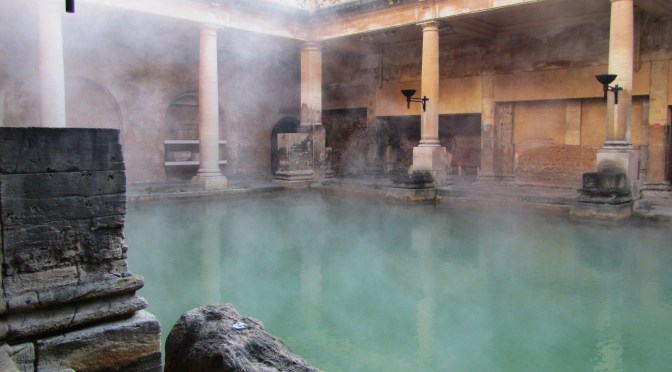
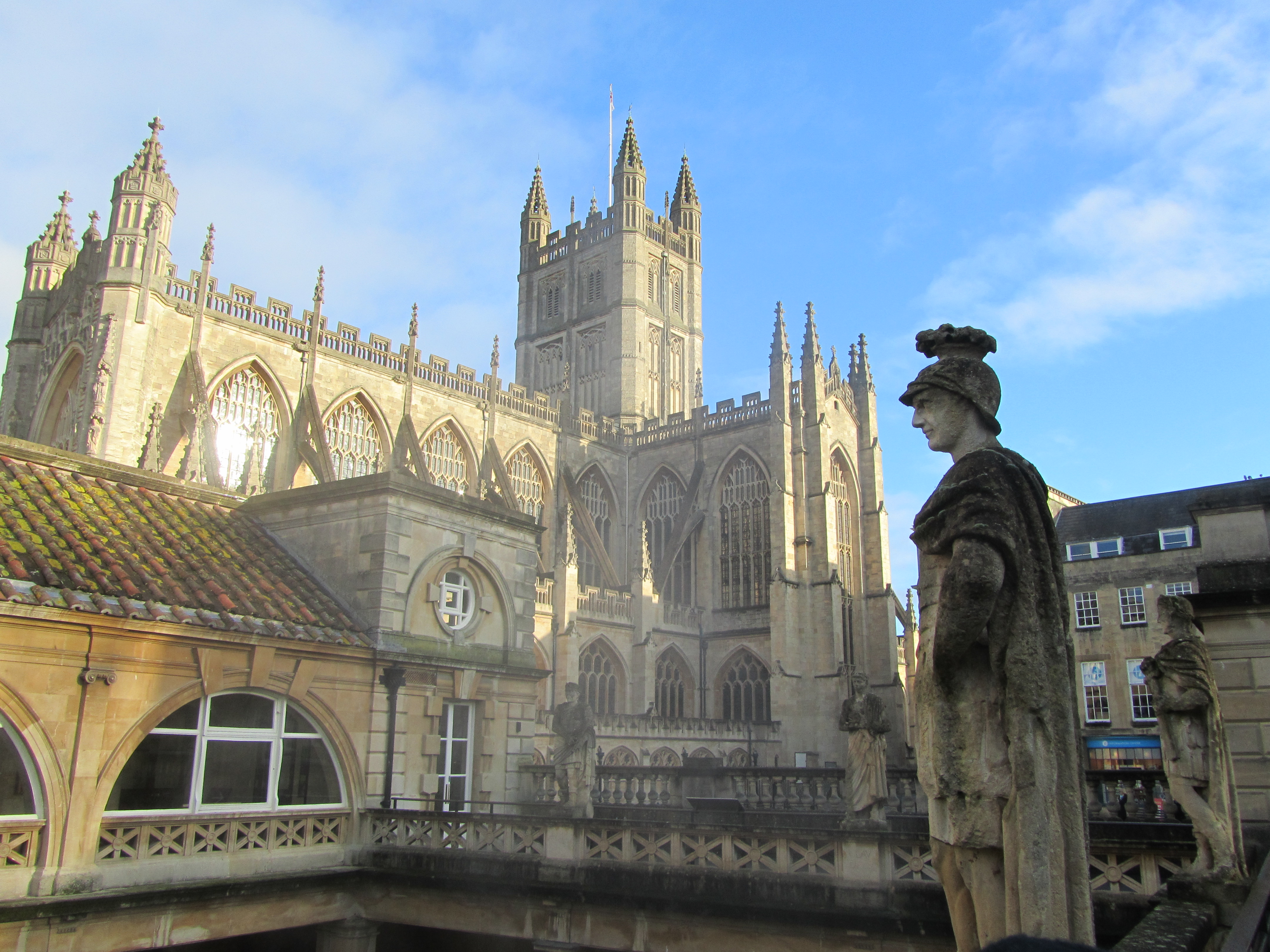
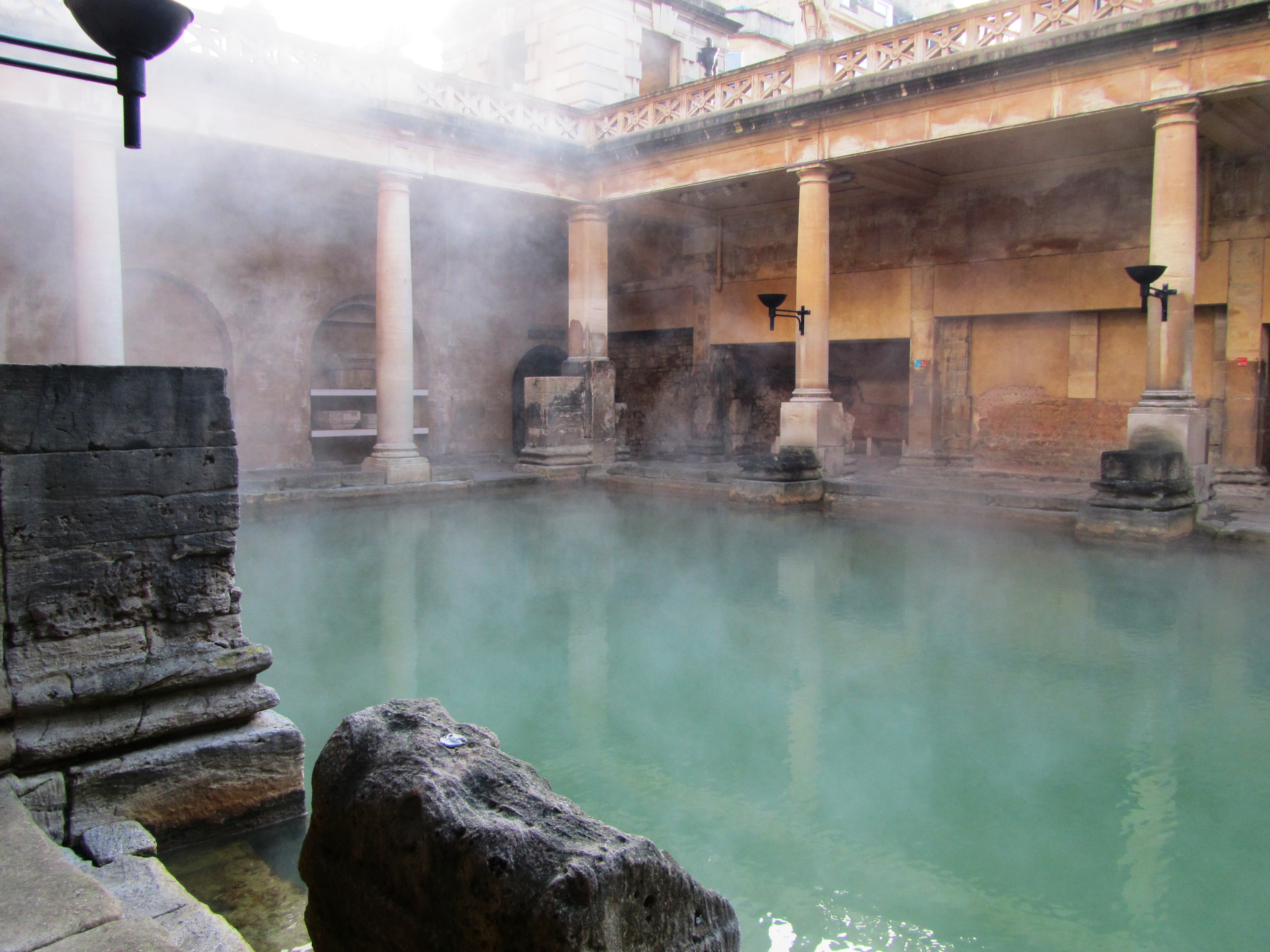
The imposing stucture of Bath Abbey looms over the now open Great Bath – originally the Great Bath would have been roofed, most likely with an arched roof.


IMG_7458
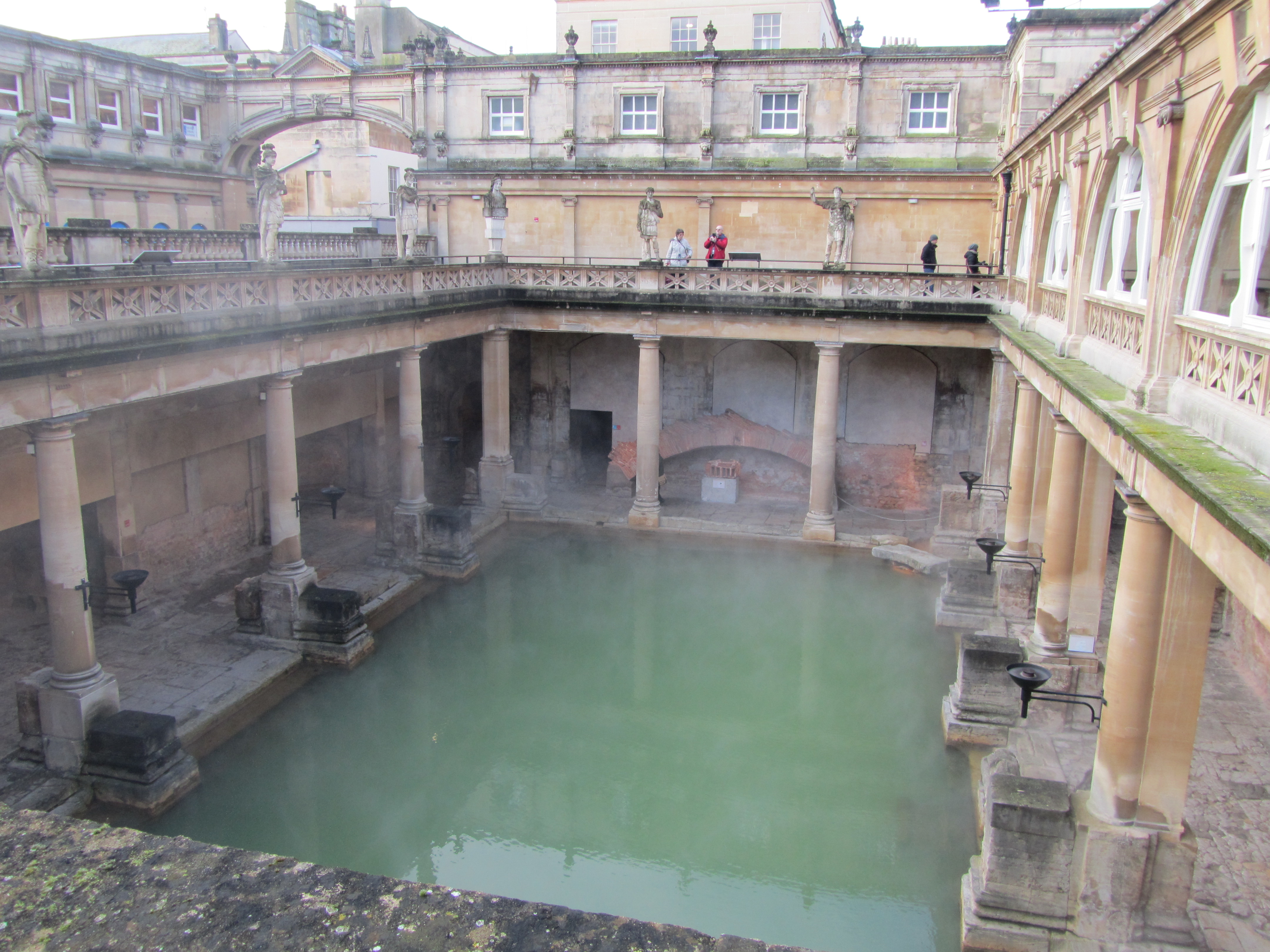
Looking down on the Great Bath.

Bath complexes in the Roman period were not simply places to wash and clean the body but also places to meet, socialise, to be seen and make those all important contacts.  At the Roman town of Aquae Sulis (Bath) the baths rose to prominence from the late first century AD as a result of the natural hot springs which were a feature of the landscape and worshipped for many generations prior to the arrival of the Romans.

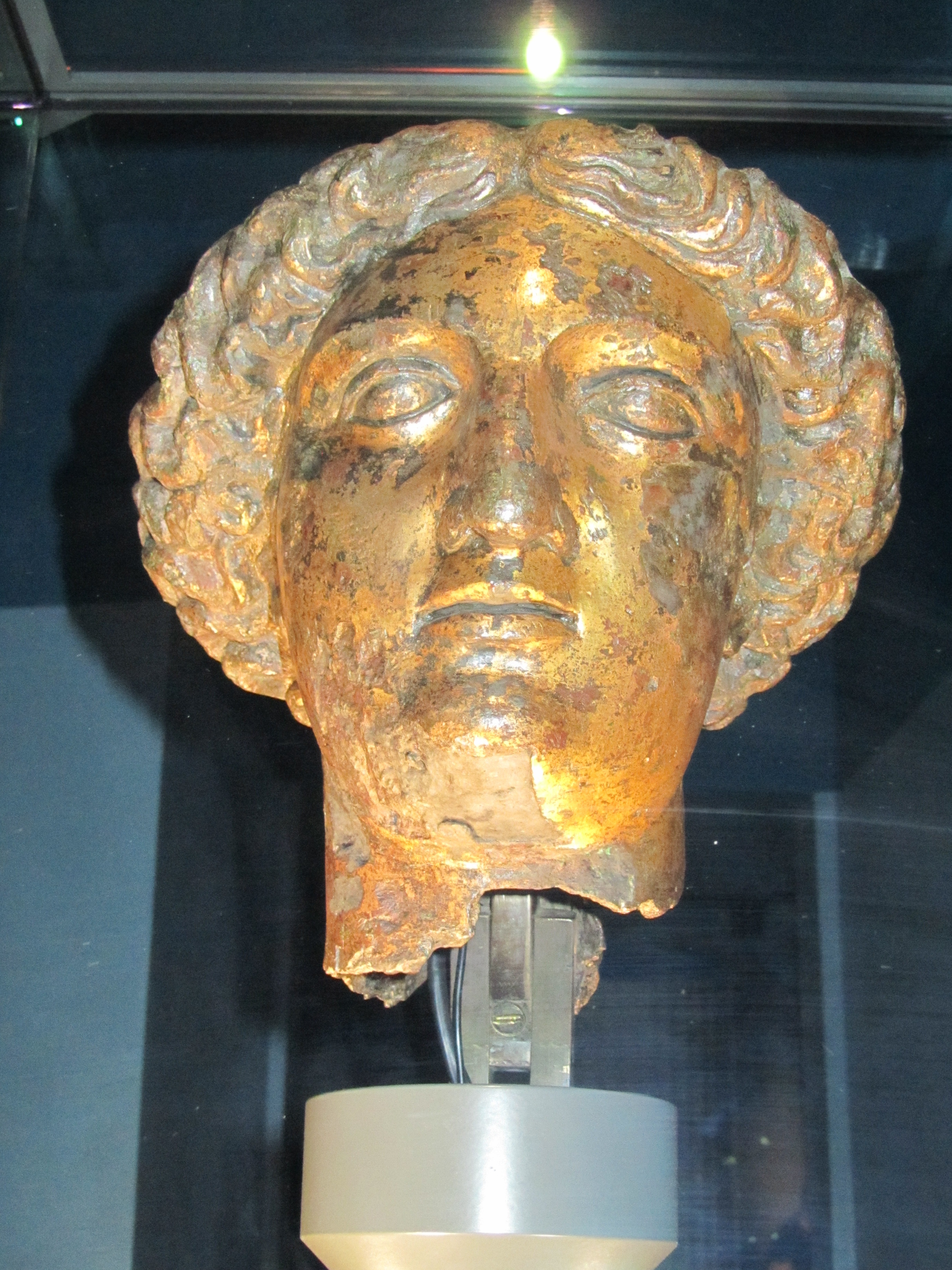
As with so many aspects of the Iron Age/Celtic landscape of the time, the natural springs here had its own diety who was recorded by the Romans with the name of Sulis.  The Romans were very good at adopting and blending local cultures with their own as part of their overall colonisation package. For the Romans the local goddess Sulis had much in common with one of their own – Minerva.  Thus the hot springs became dedicated to the amalgamated goddess of Sulis Minerva.

IMG_7477
The very roman looking head of a statue believed to be Sulis Minerva herself – most likely stood within the sacred space of the actual temple.

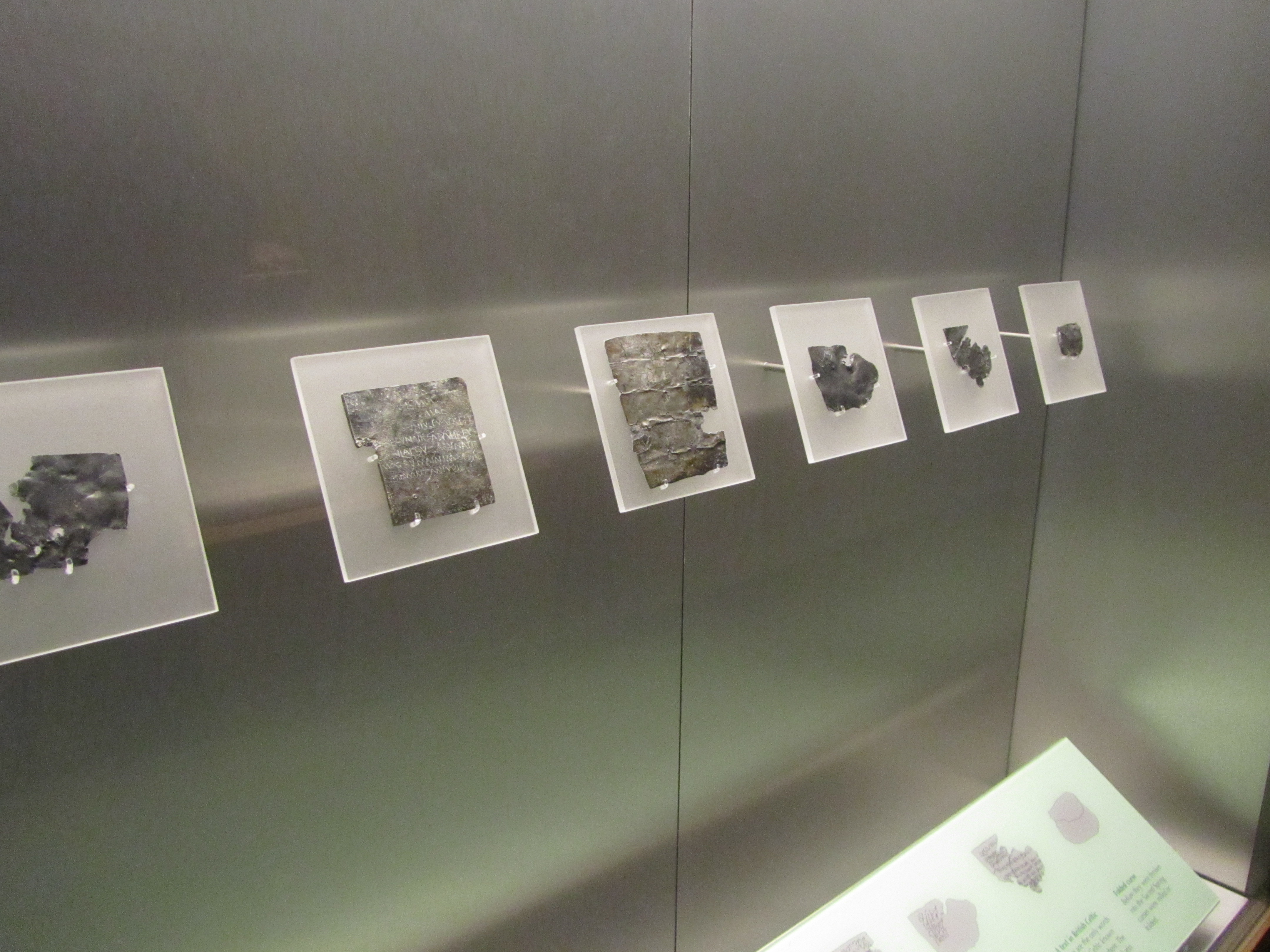
The success of Aquae Sulis (even the towns name pays homage to the goddess – ‘the waters of Sulis’) is down to it also being a place of pilgrimage.  People from all around would come to the town to make offerings or petitions to the goddess.  One such method to ensure the goddess knew what was required was to write a message on a sheet of lead.  For this purpose a trained scribe would be employed.  Once  the wording was just so the lead sheet was folded or rolled and then thrown into the sacred spring – a number of these have been recovered from the spring, mostly they were curses for relatively small wrong doings.

IMG_7474
A few examples of the inscribed lead sheets.

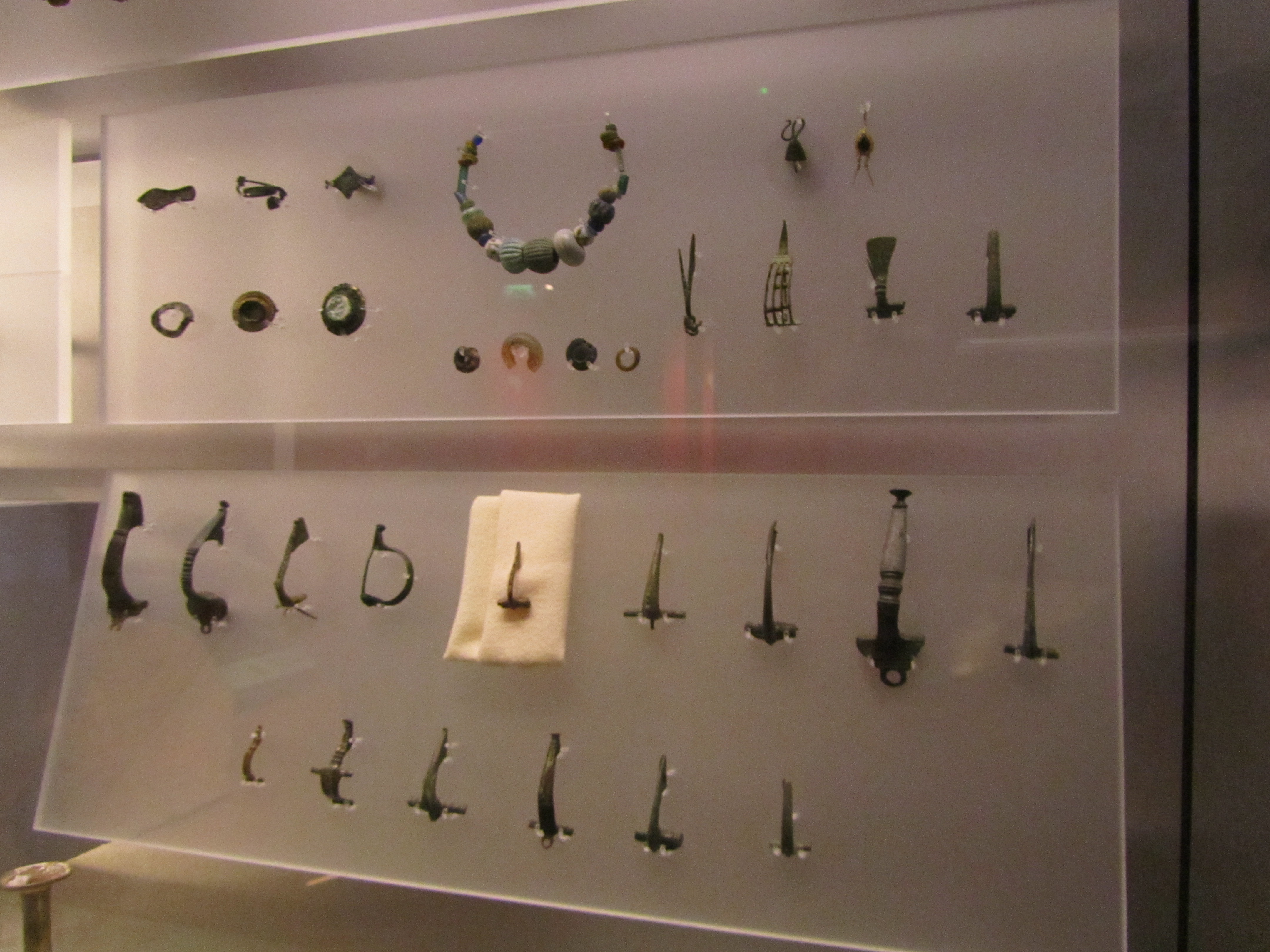
As well as the lead sheets, other gifts were found during excavations.  Thousands of coins (and even today people throw coins into the spring), jewellery, pewter dishes and cups usually inscribed with a dedication to Sulis Minerva.  The cups may have been used to drink the waters (as we continue to do so today) or as libation vessels.  The belief in the healing powers of the spring waters was an important part of the towns fame.

IMG_7469
Some of the jewellery finds from the spring.  It is interesting to note the continuity of ritual in this act of depositing important items into a watery context.  For more on this read here.

IMG_7468
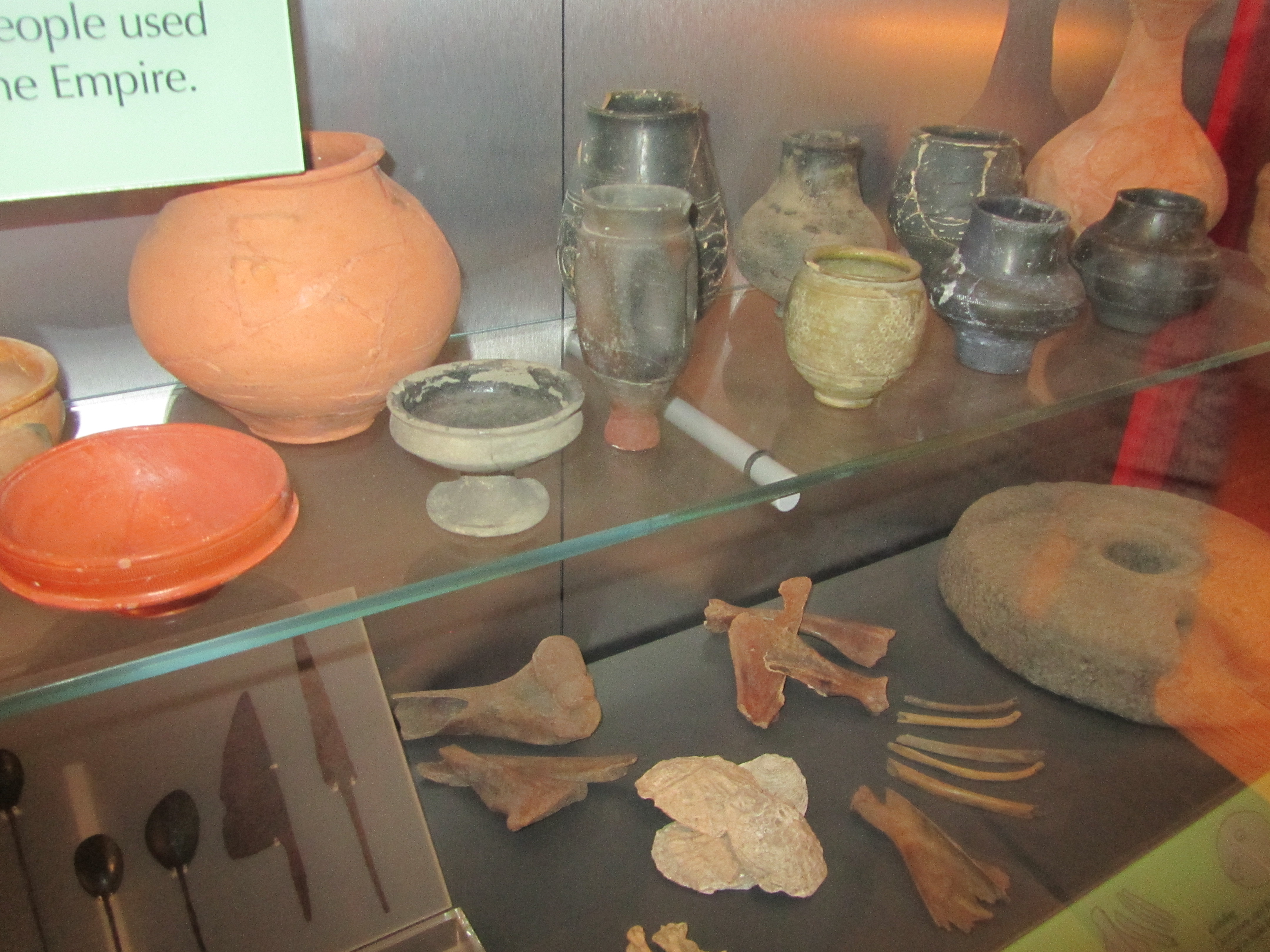
And a few of the more everyday items found during excavations – people lived and worked here too.

Besides Sulis Minerva there were within the temple complex depictions of other deities.

IMG_7471
A relief carving of the goddess Luna – the disc of the moon can be seen behind her head and she holds a whip for driving her chariot across the sky.  This carving would have decorated one of the buildings in the temple precinct. 

IMG_7463
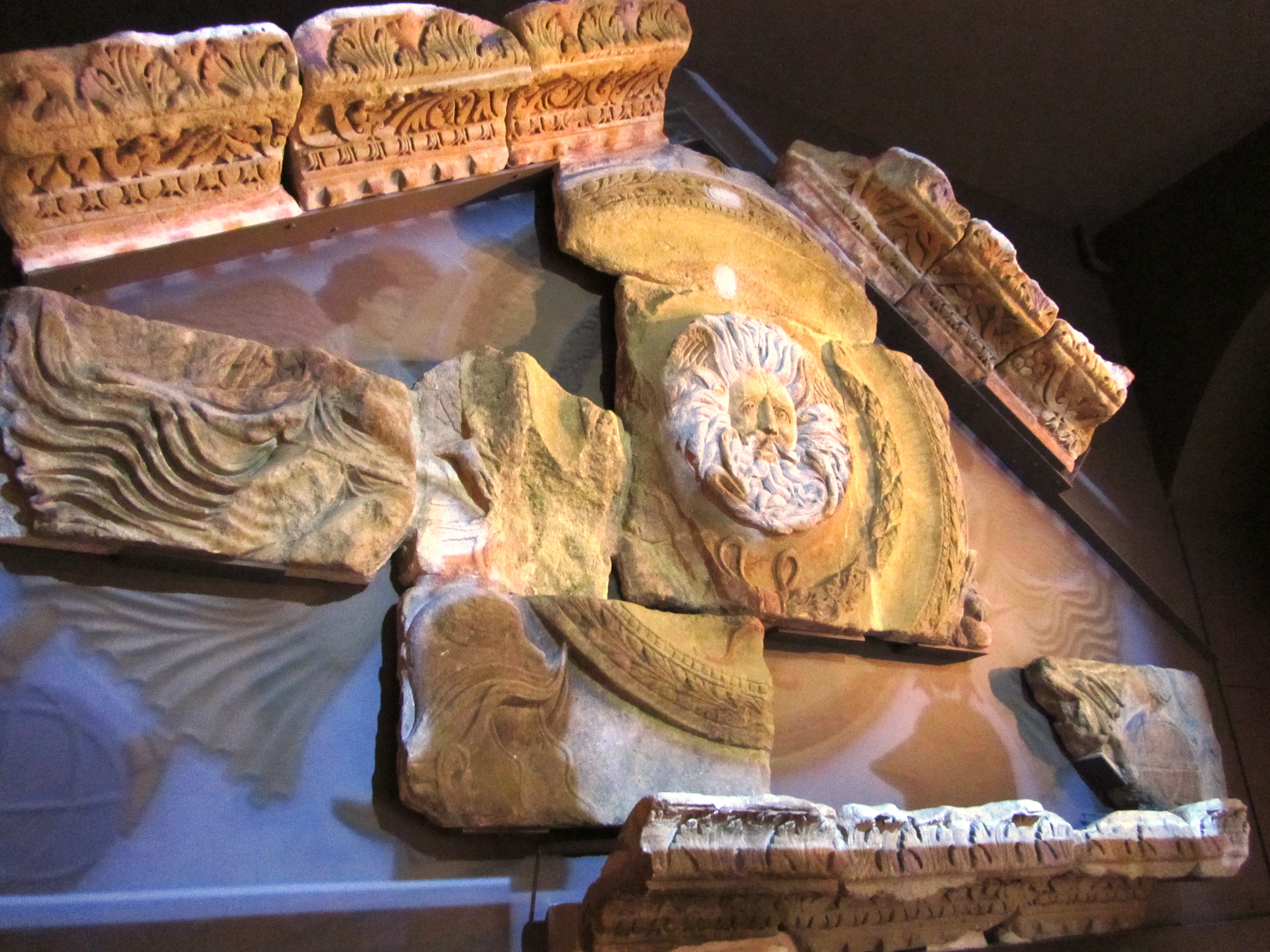
This massive pediment would have originally adorned the entrance to the temple of Sulis Minerva.  Although interpreted as a gorgon others have suggested it may in fact be Oceanus or even the sun god Sol (or Bel, ‘the shining one’ if you are looking for Celtic diety which is also the nickname of our heroines bodyguard and friend…). 

IMG_7472
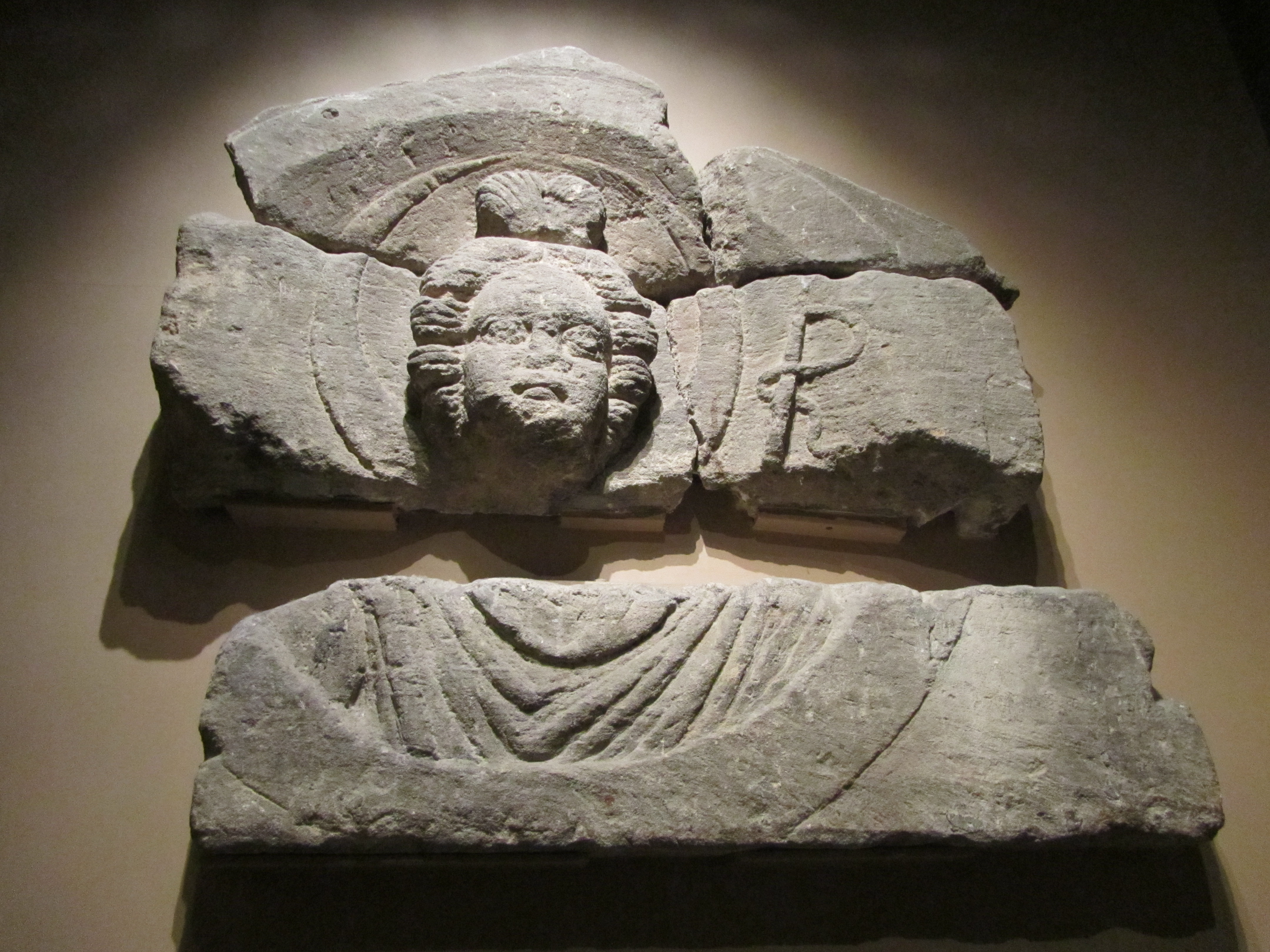
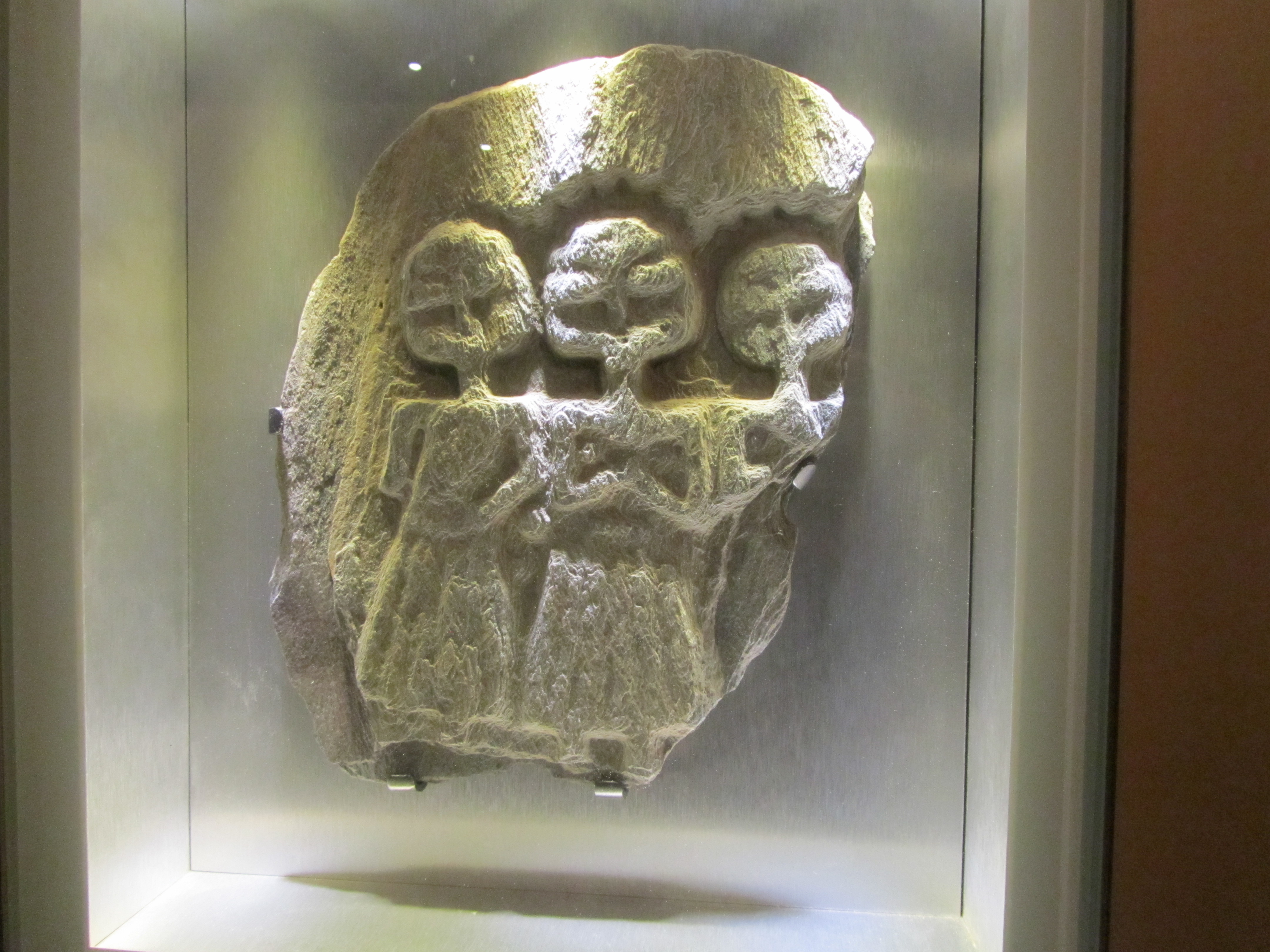
This unassuming relief carving is believed to depict the triple goddess, a distinctly Celtic personification.  As to who and what this may be is a complicated discussion but foremost is the ability of the goddess to have many faces – to be one and the same.  Often the triple goddess in modern pagan/wiccan practice refers to the maiden, the mother and the crone however there is no way of telling if this was the case in the past.   An interesting take on this can be read here.

The rituals in Roman religion took place mostly outdoors, the temples buildings were often small affairs where only the priests or priestesses would be allowed to enter.  Public ceremonies would have been conducted outside in the surrounding precinct.  Within the precinct there would have been altars dedicated to the diety set up by individuals in anticpation of a divine favour or to give thanks, these would have been decorated in offerings of all kinds or with bowls of incense.

“The temple, in its original late first century form, was a purely classical building set on a high podium reached by a steep flight of steps.  Its porch was dominated by four massive Corinthian columns supporting an ornate pediment.  Behind lay a simple room, the cella, where only priests could enter to tend the flames kept burning around the life-sized cult statue of Sulis Minerva” (from ‘The Essential Roman Baths” – a guidebook).

The above is a selection of the numerous altar stones and memorials found in the Roman layers during excavations.


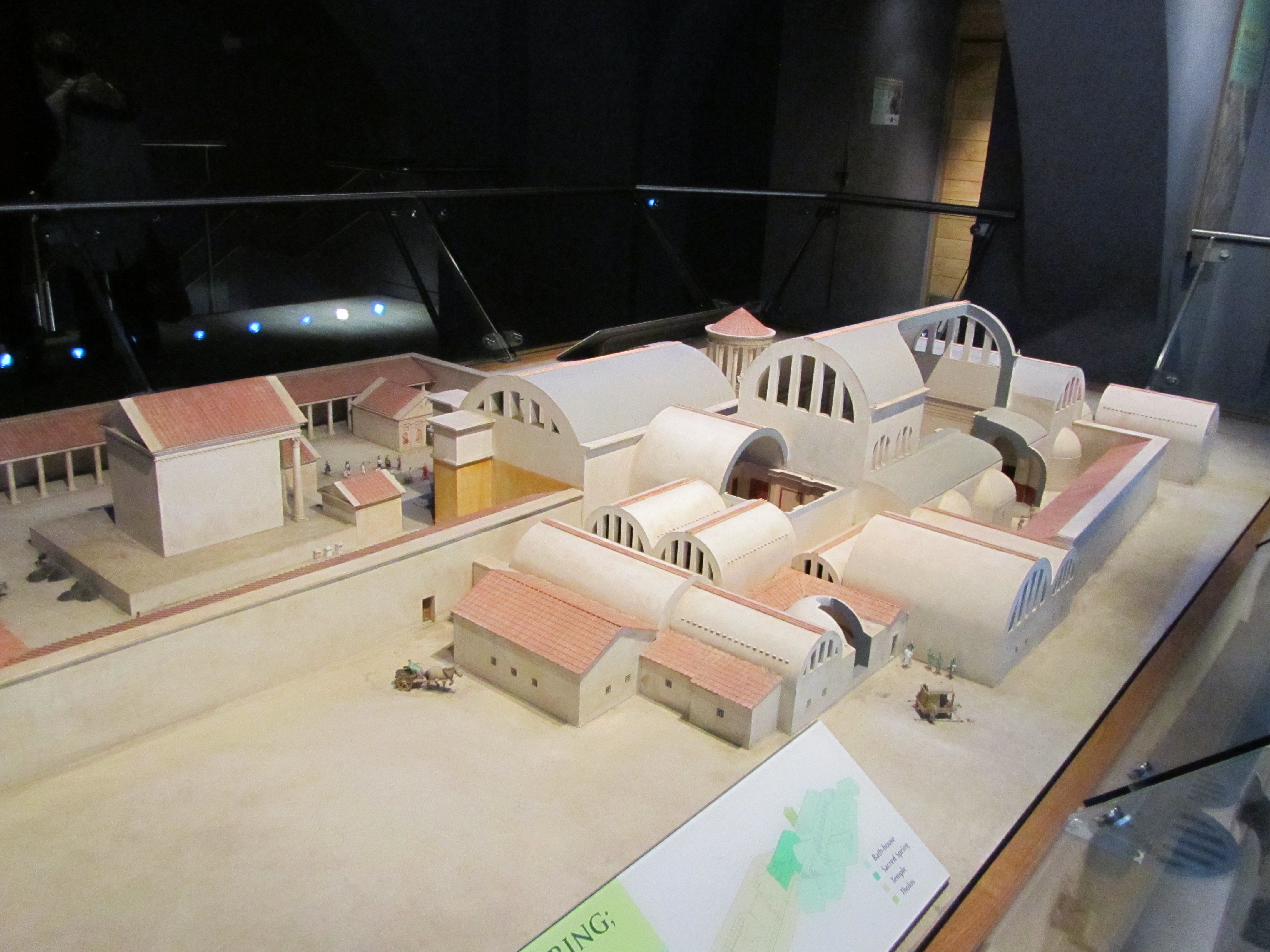
The complex at Aquae Sulis was quite extensive – with facilities for men and women to bath seperately which was rare and spoke volumes about the wealth of the town.  At the heart of the complex is the Great Bath, a rectangular swimming bath surrounded by a walkway with alcoves for people to sit and relax in.  The bath itself was and still is lined with 45 sheets of Mendip lead.


IMG_7460
A model of the bath and temple complex in its heyday. 


IMG_7479
The Great Bath – looking across to one of the alcoves.


IMG_7484
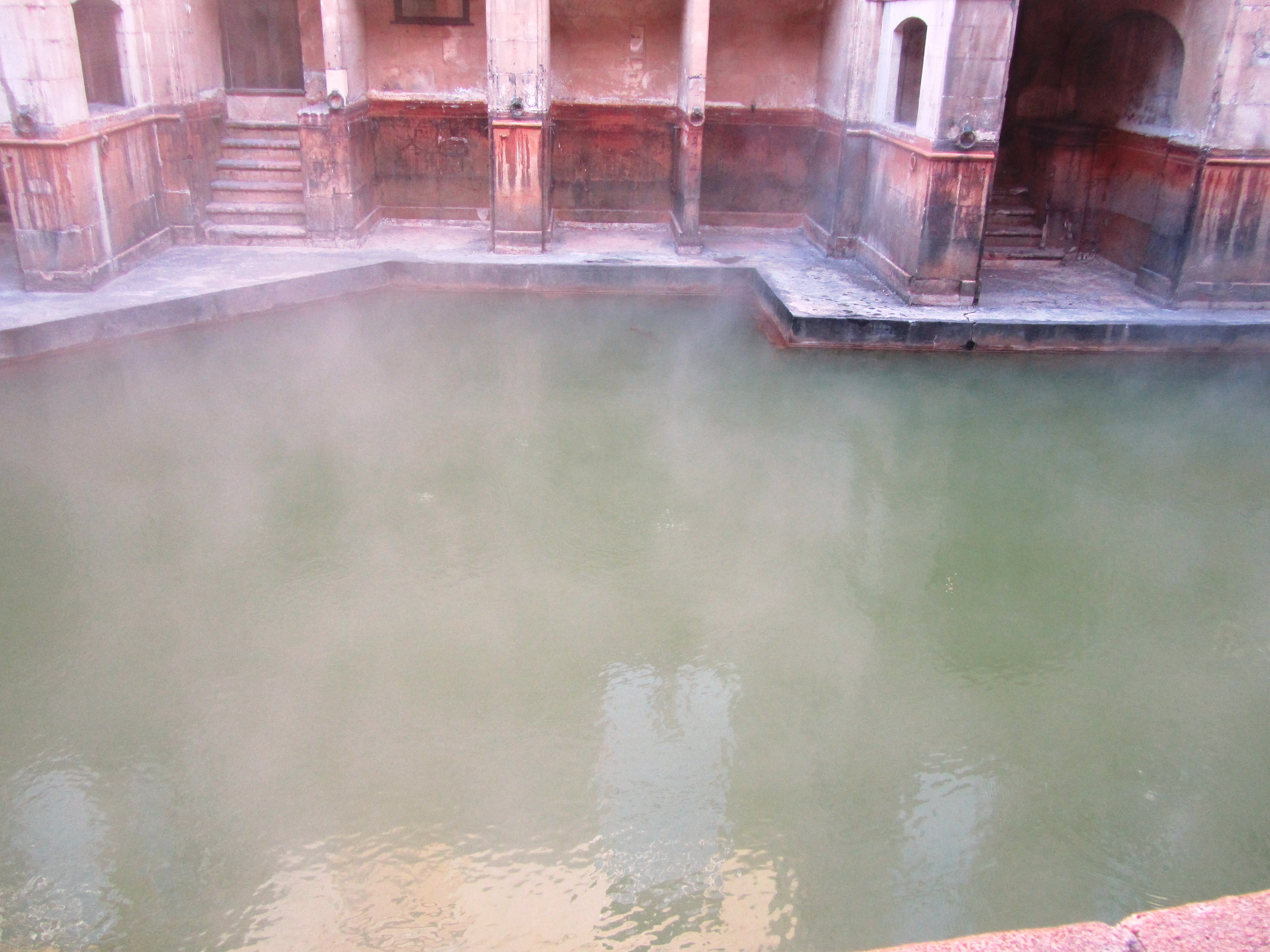
The East Bath – a rectangular tepid bath – the doors would have led to heated rooms known as tepidariums. 


IMG_7486
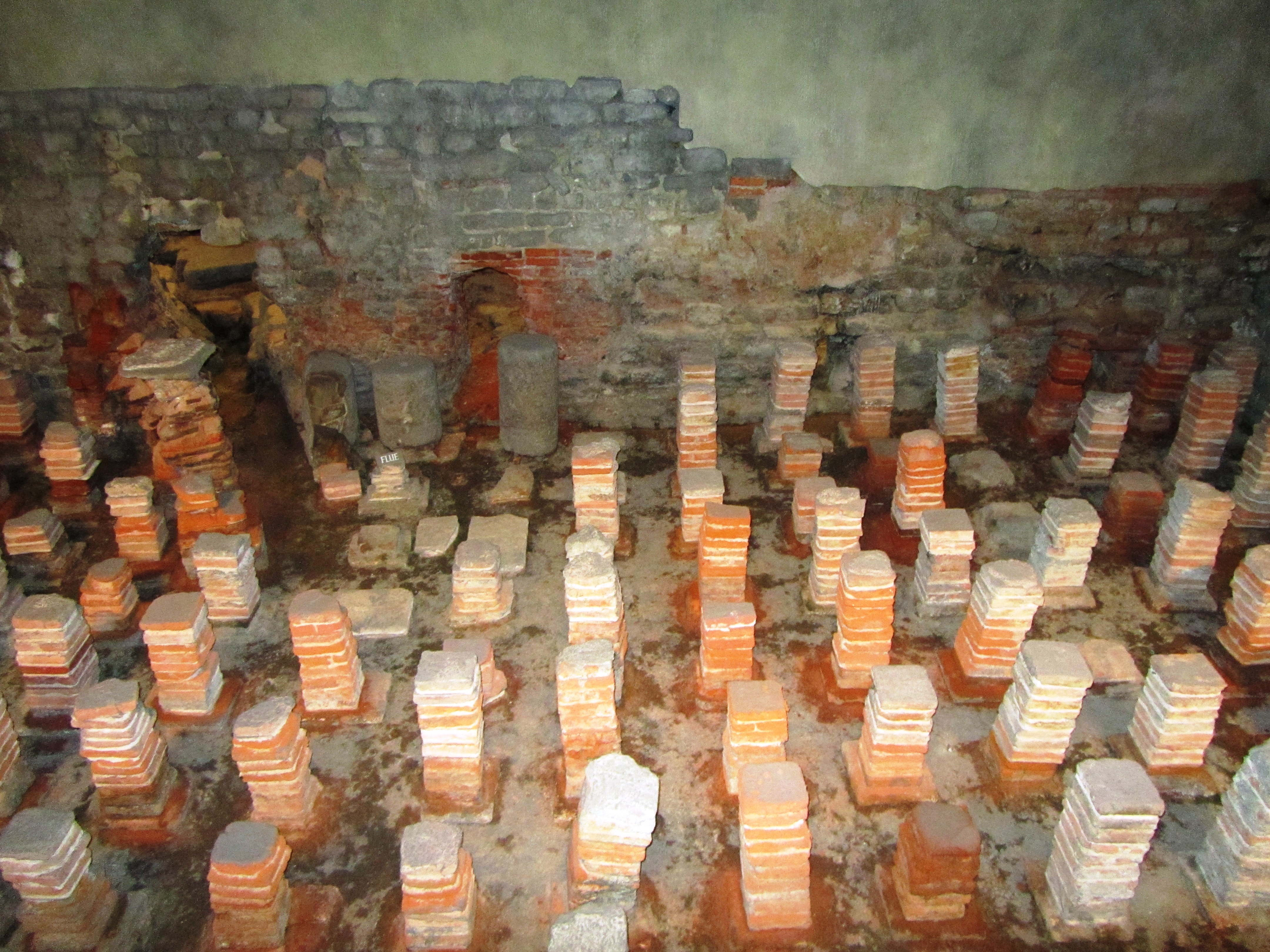
The remains of the extensive hypercaust system – ensuring visitors were kept warm and comfortable at all times.


IMG_7466
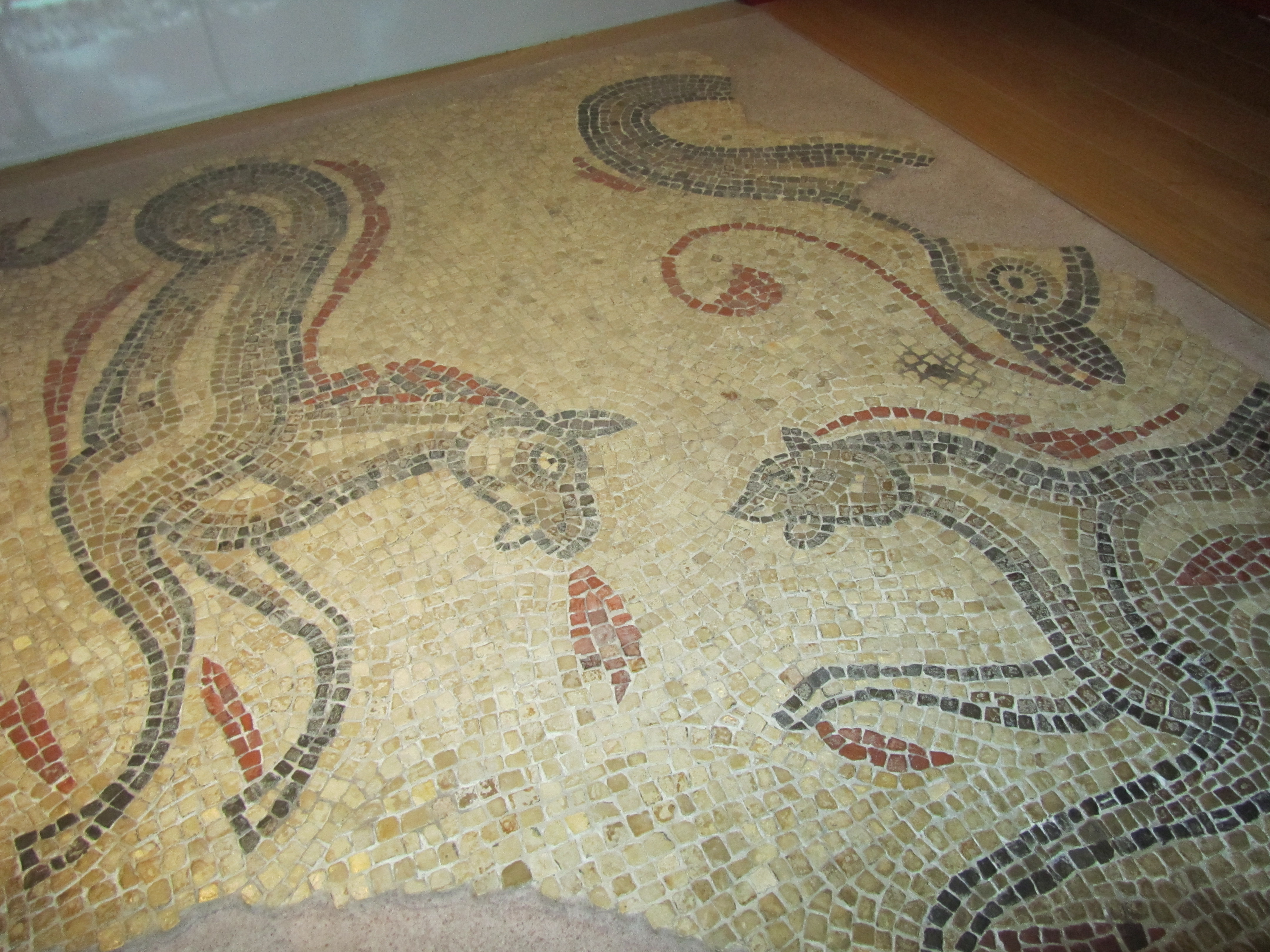
One of many mosaics which would have adorned the floors of the rooms within the complex.


IMG_7478
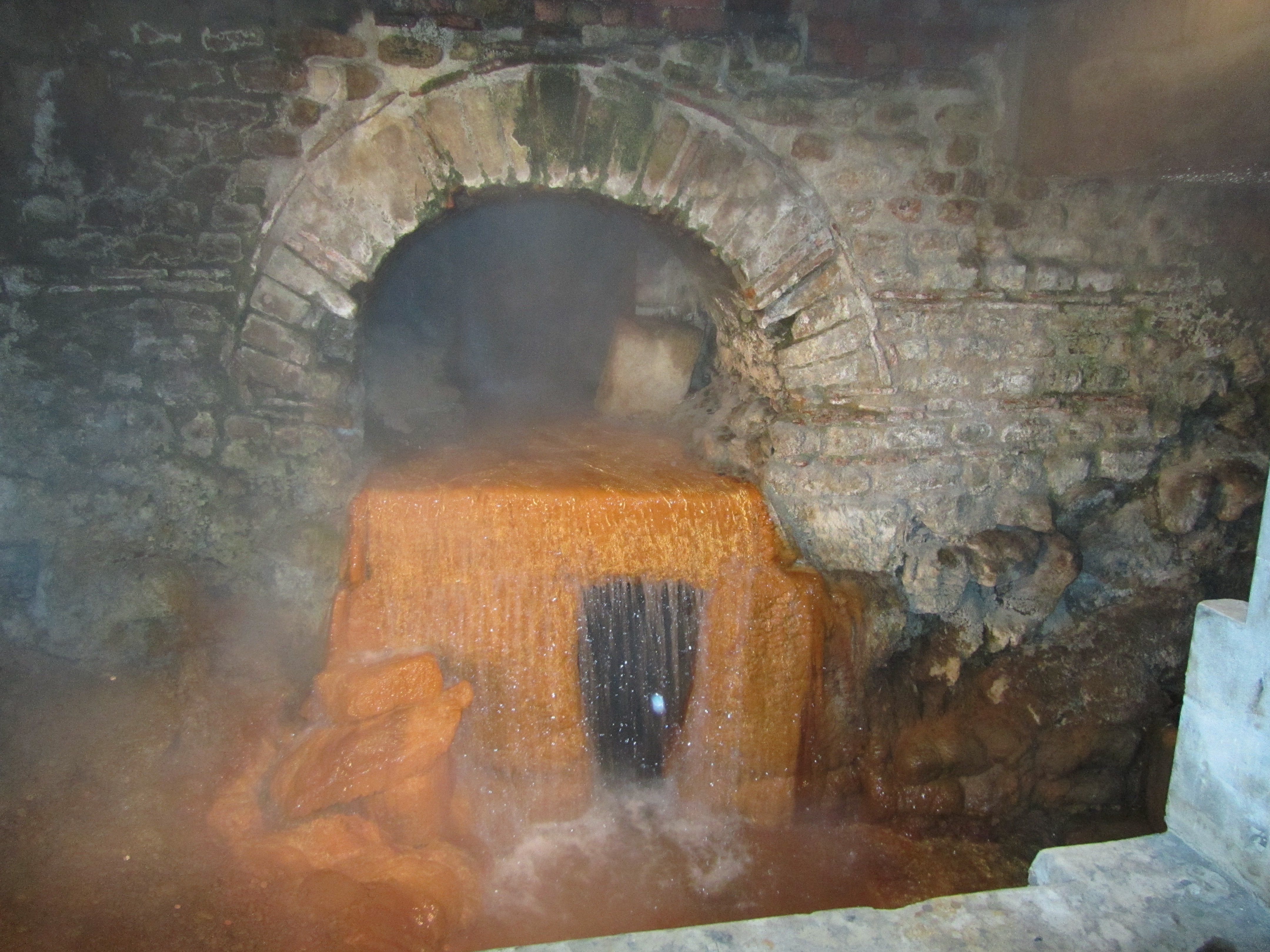
The arched overflow was part of the Roman engineering which kept the water flowing through the complex and still does today.


IMG_7485
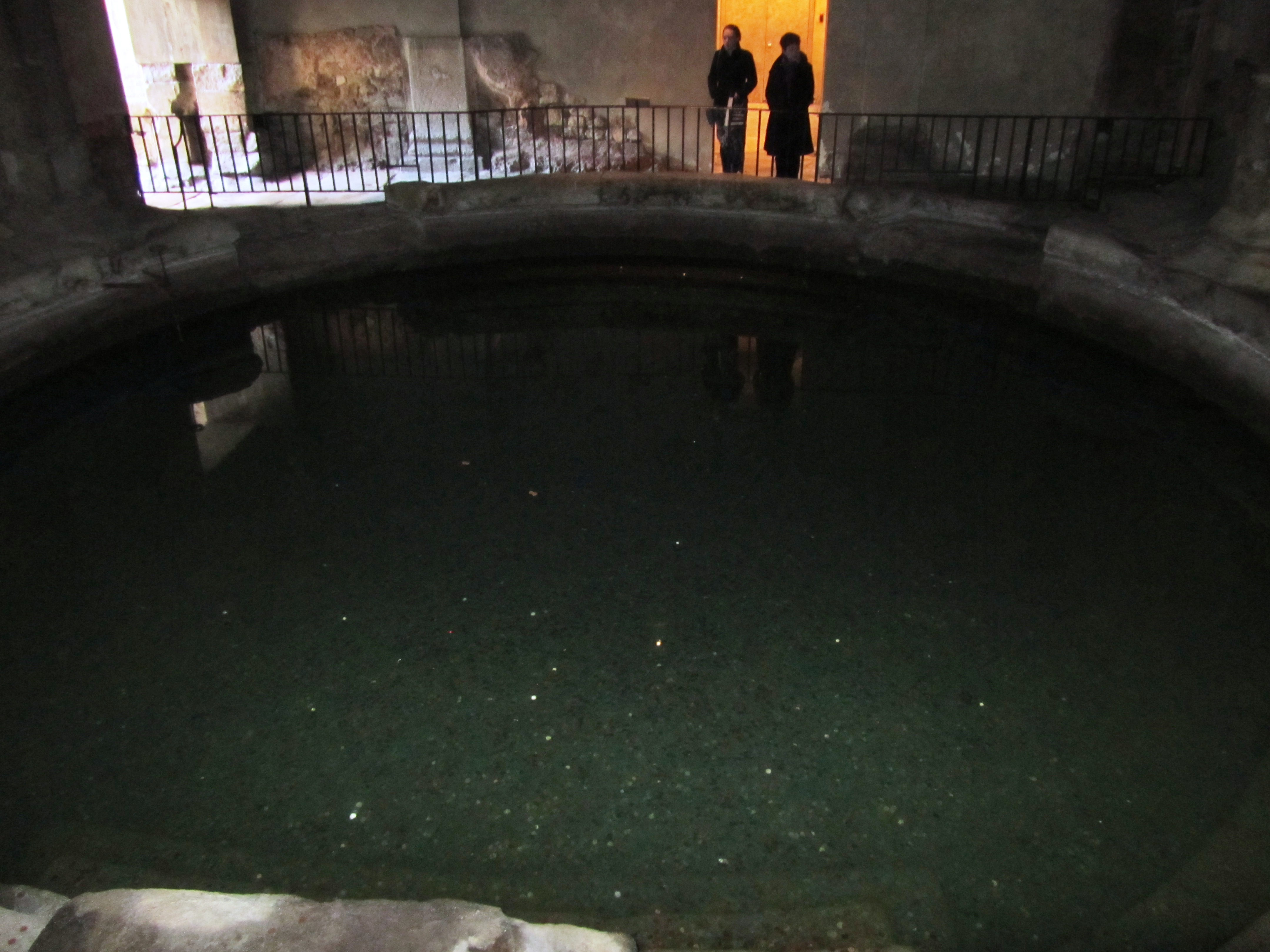
The dark interior of the circular bath, here bathers would complete their visit to the steam rooms with a cold plunge to rinse off – note the coins littering the bottom of the pool. 

The complex at Aquae Sulis was quite extensive – with facilities for men and women to bath seperately which was rare and spoke volumes about the wealth of the town.  At the heart of the complex is the Great Bath, a rectangular swimming bath surrounded by a walkway with alcoves for people to sit and relax in.  The bath itself was and still is lined with 45 sheets of Mendip lead.


IMG_7460
A model of the bath and temple complex in its heyday. 


IMG_7479
The Great Bath – looking across to one of the alcoves.


IMG_7484
The East Bath – a rectangular tepid bath – the doors would have led to heated rooms known as tepidariums. 


IMG_7486
The remains of the extensive hypercaust system – ensuring visitors were kept warm and comfortable at all times.


IMG_7466
One of many mosaics which would have adorned the floors of the rooms within the complex.


IMG_7478
The arched overflow was part of the Roman engineering which kept the water flowing through the complex and still does today.

IMG_7461


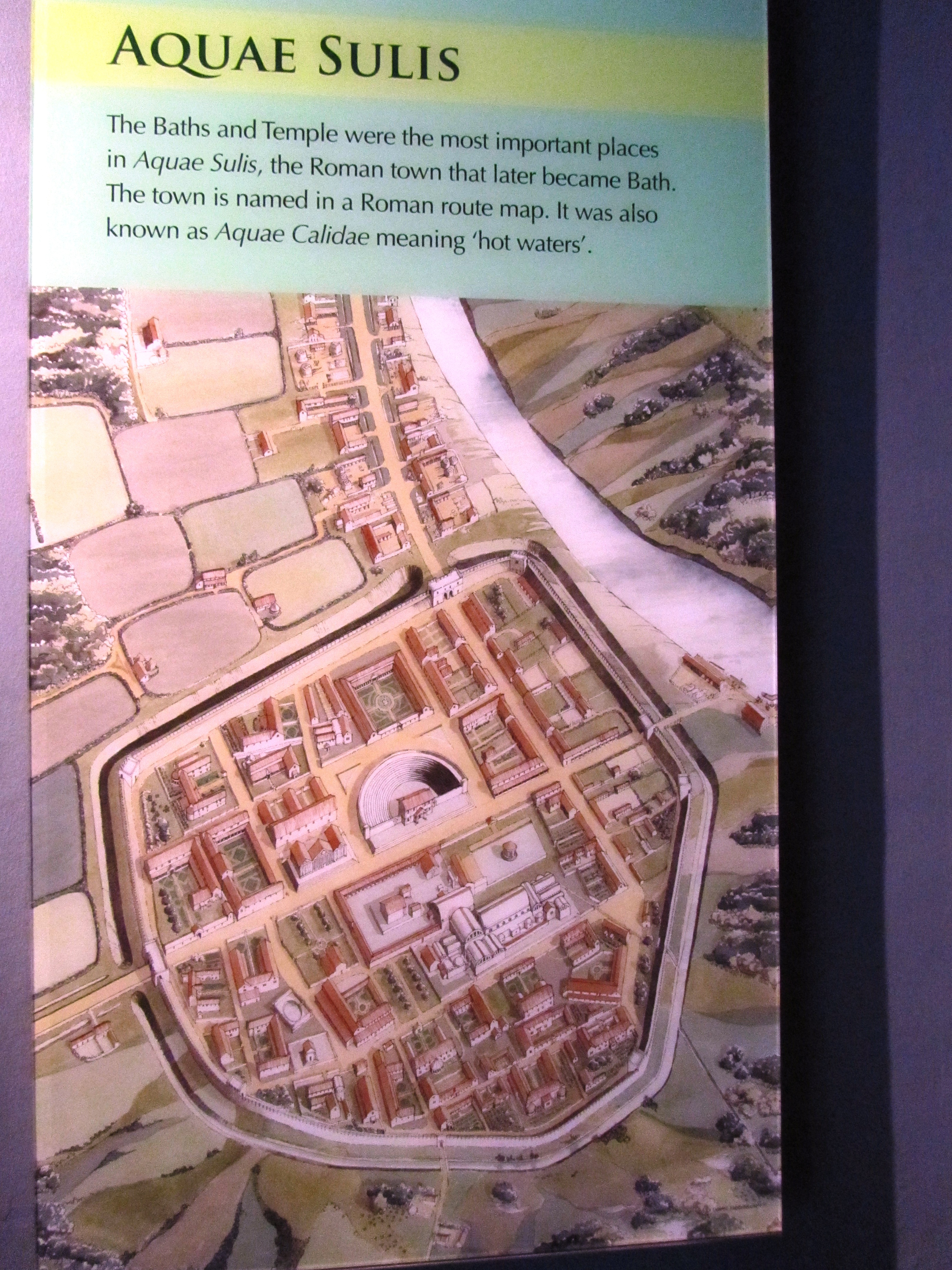
The above shows a reconstruction picture of how the town may have looked at its height based upon what has been discovered through various archaeological excavations.  In “A Roman Moon” astute readers will note that I did away with the amphitheatre, replacing it with a Forum.  Why? Well, to begin with the evidence for an amphitheatre is at this stage is quite thin on the ground and I am sure that a town of such importance would have had a Forum.  In addition, you can also put it down to the authors whim, a bit of ‘literary licence’.

The river running beside the town is the Avon, known then as Afon which is Welsh for river (amusingly making the name of the River Avon, the River River)…

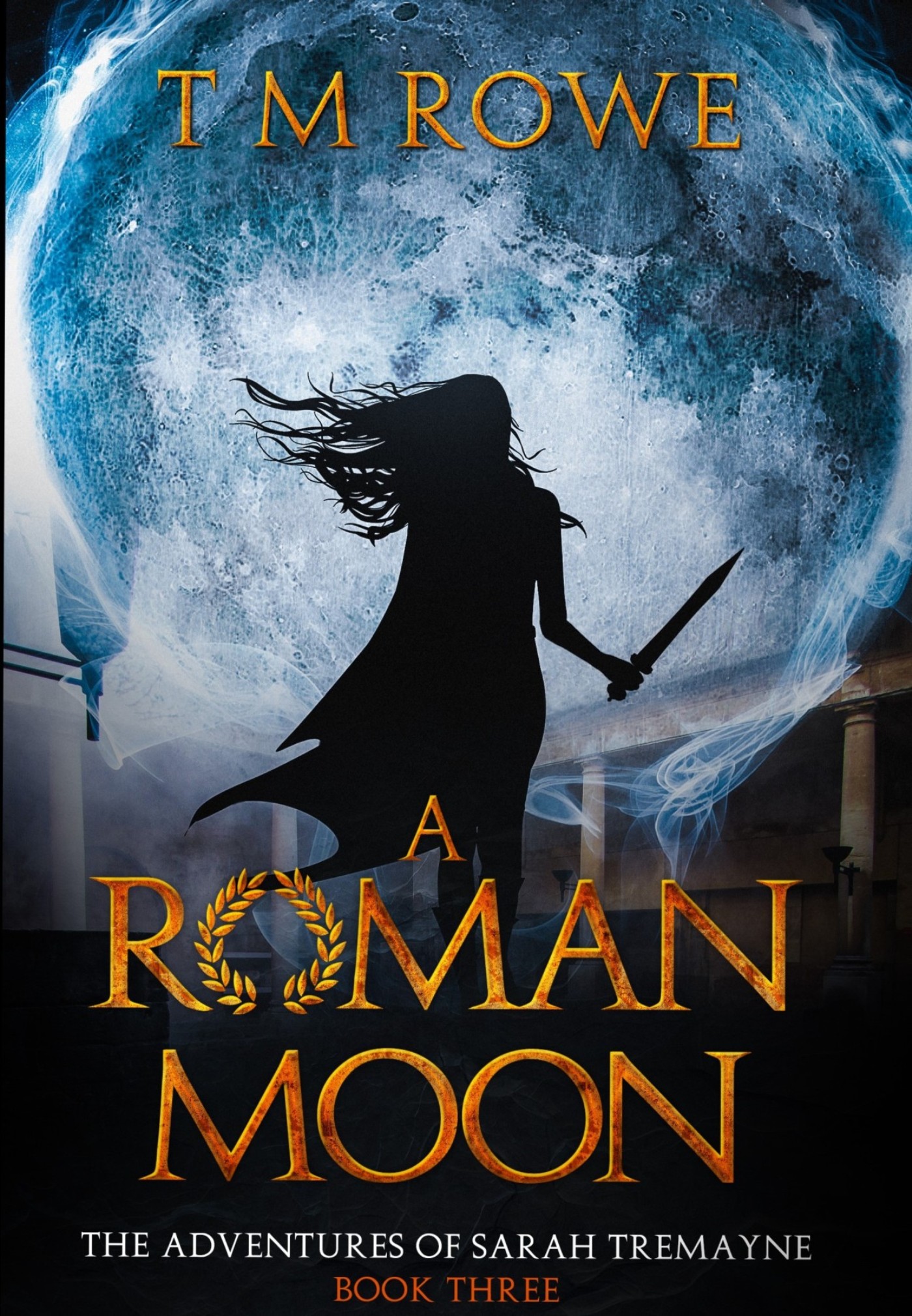
I hope you can see why the ancient town of Aquae Sulis inspired me to write ‘A Roman Moon’ – from the presence of Luna, the triple goddess and the sacred spring all play a part in Sarah’s story.


RM cover 1 (2)


The Roman Baths Official Website

Wikipedia – Roman Bath


Caerphilly Castle

So, I was in the mood for castle…

But before we get to pictures, a bit of background…

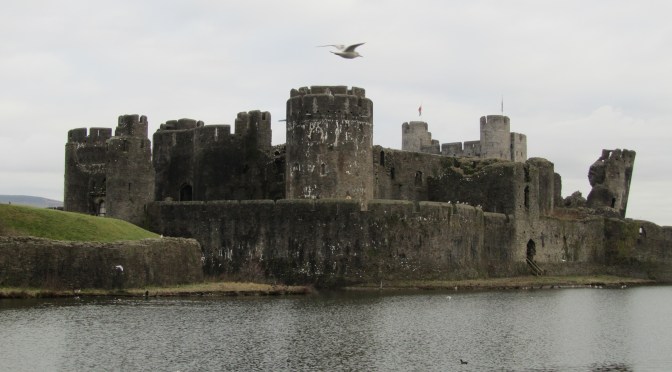
Built in 1268 by Gilbert de Clare (also known as “Red Gilbert” due to his hair colour) as part of his conquest Glamorgan and the continuing subjugation of the Welsh by the Normans.  It is constructed on a natural gravel bank in the middle of a river basin and consists of two large artificial lakes within thirty acres making it the second largest castle in Britain.

The water defences of the castle were most likely inspired by a similar design at Kenilworth which de Clare would have witnessed in action during the seige of Kenilworth in 1266.  The vast lakes prevents the castle walls from being undermined – a popular siege tactic at the time.   Caerphilly was also the first concentric castle to be built in Britian and its walls were built using Pennant Stone.

A Brief Timeline

1268 – Construction begins with the daming and digging of the lakes, temporary wooden palisades and buildings.

1270 – Rising tensions with Welsh resulted in the castle being attacked by Llywelyn ap Gruffudd and supporters – the wooden structures were burnt to the ground.

1271 – In an effort to quell the tensions between the Welsh and the Normans the castle is taken over by royal officials who promise to negotiate and arbitrate a solution to the ongoing problems.

1272 – de Clare’s men seize back the castle and work recommences, the castle is completed later that year.

1294 – Once again the castle is attacked but this time by Madog ap Llywelyn.

1316 – And again the castle is attacked, during the Llywelyn Bren uprising.

1326-27 – And again during the overthrow of Edward III…

From the fifteenth century the castle begin to decline…

1776 – Caerphilly is acquired by the Marquesses of Bute but it is not until the third and fourth Marquesses that extensive restoration work begun.

1950 – The castle and grounds were given to the state.

Today – The site is managed by CADW – the Welsh heritage organisation.

IMG_7437
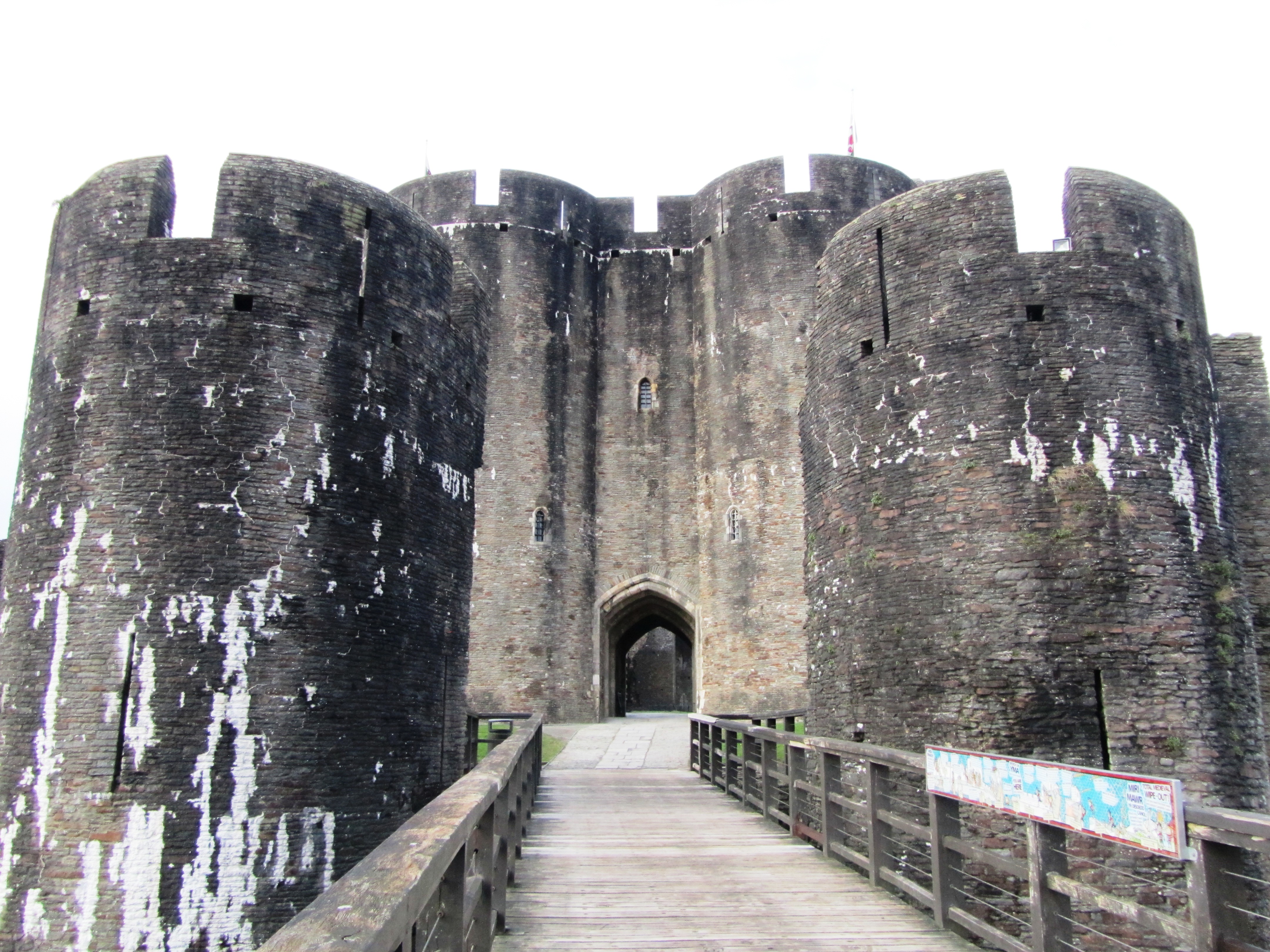
The massive gatehouse entrance  – the large tower in the rear of the picture was designed to be defensible postion even if the entire castle was breached.  A working portcullis and murder holes are visible today.

IMG_7441
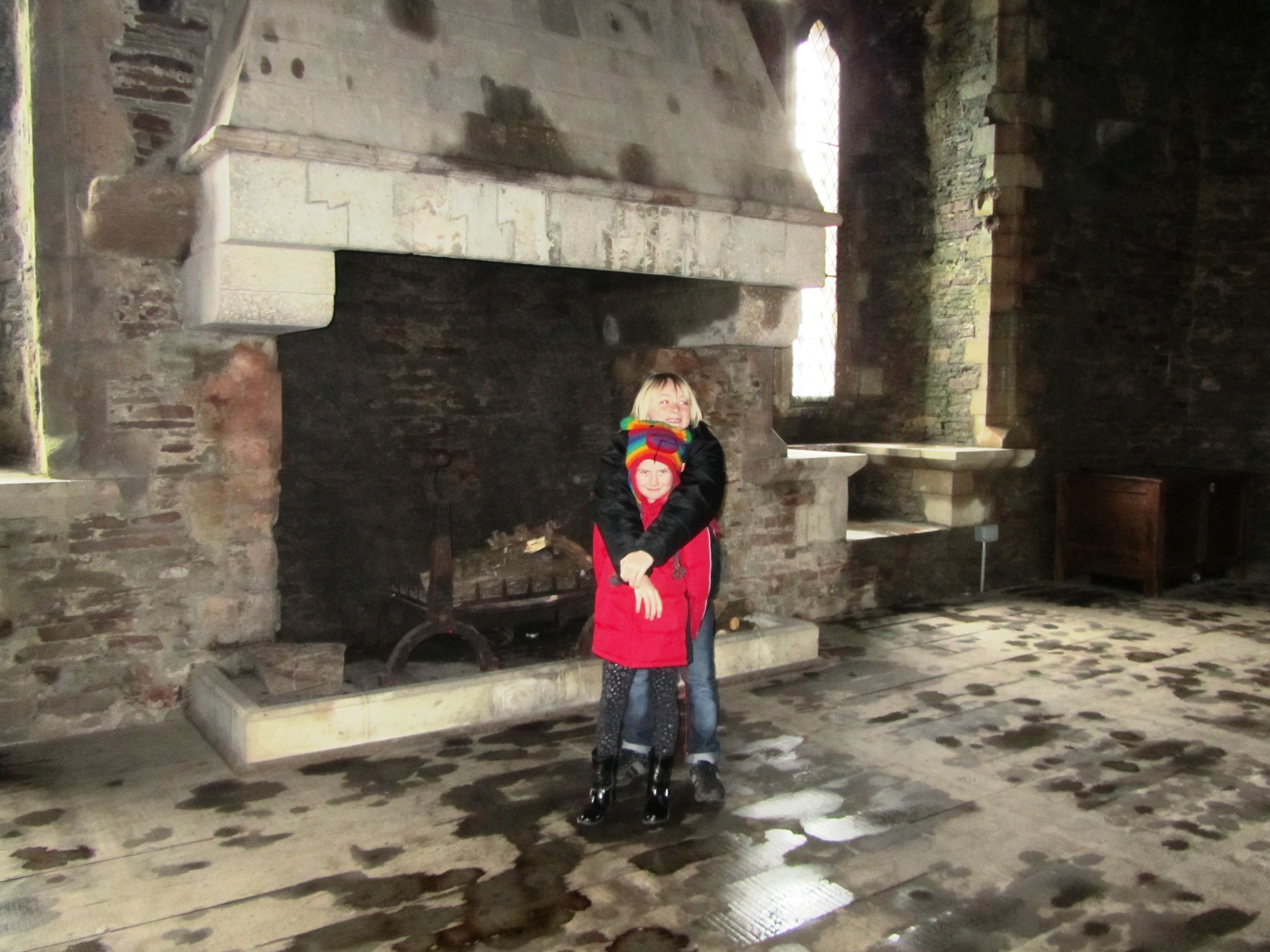
One of the massive fireplaces in the gate tower.

IMG_7440
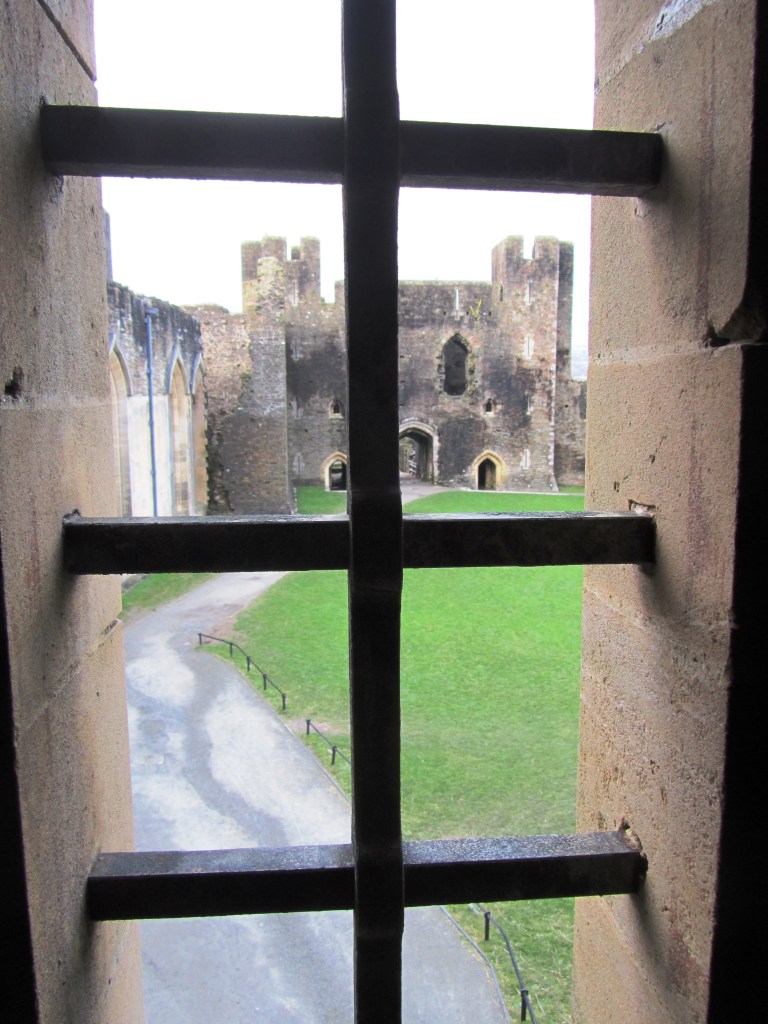
Looking out onto the inner courtyard.

IMG_7443
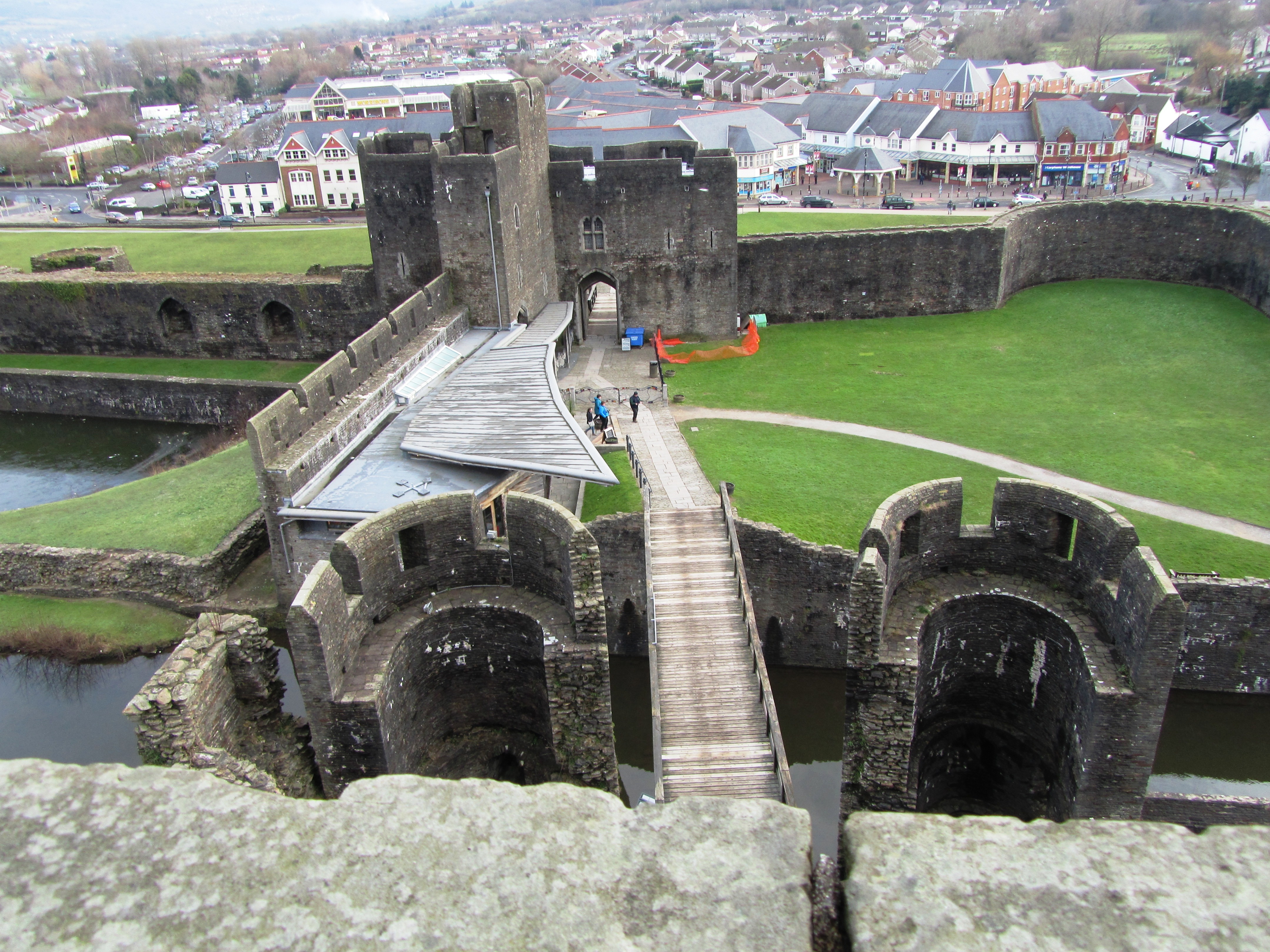
Looking down onto the tower gatehouse and outer gatehouse towards town.  Originally there would have been a drawbridge across the moat.

This slideshow requires JavaScript.


IMG_7447
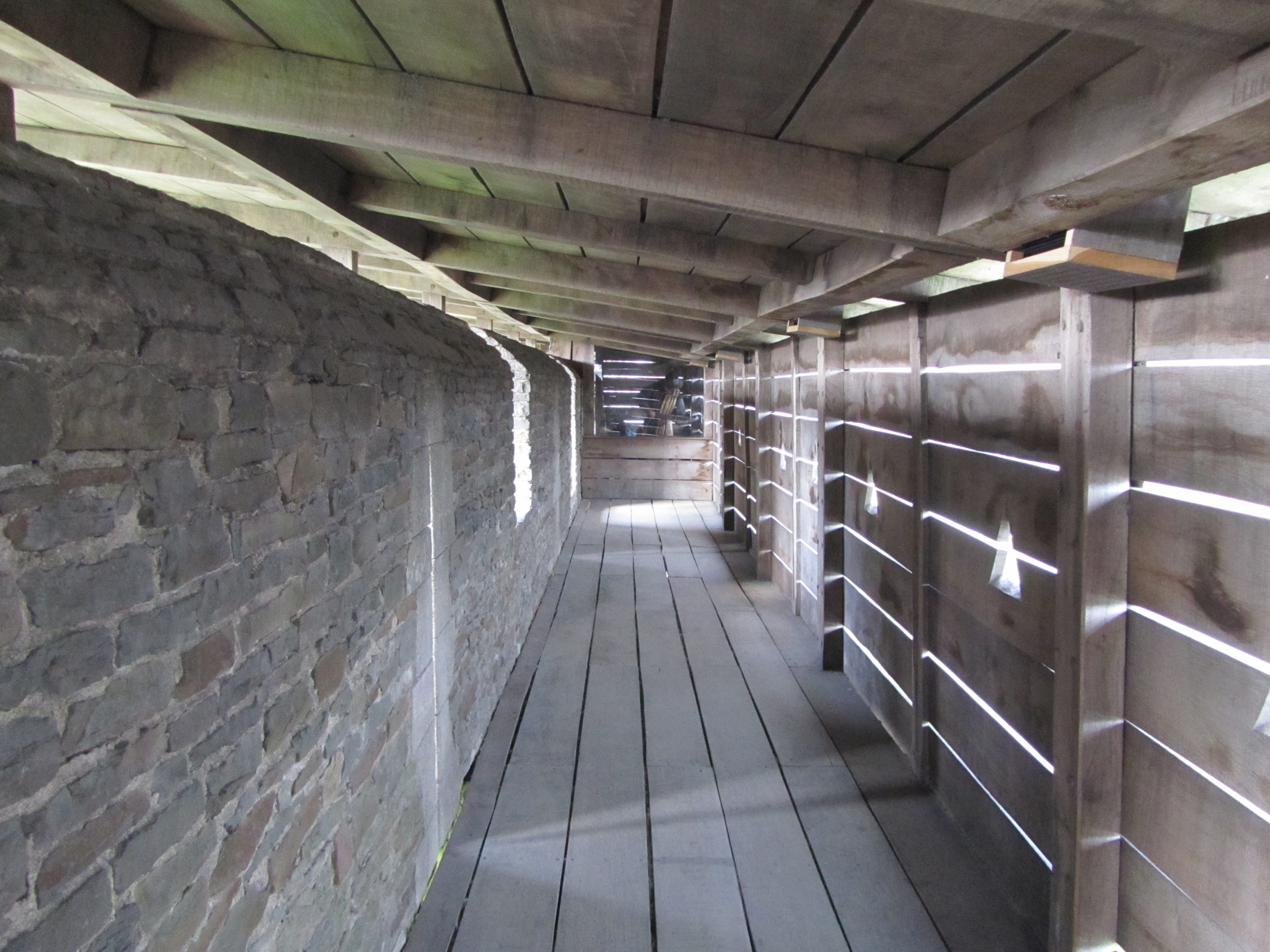
The archers corridor – made of timber with apertures for the archers to aim through and roofed this would have hung of the exterior walls of the castle and provided greater protection to the archers.

IMG_7439
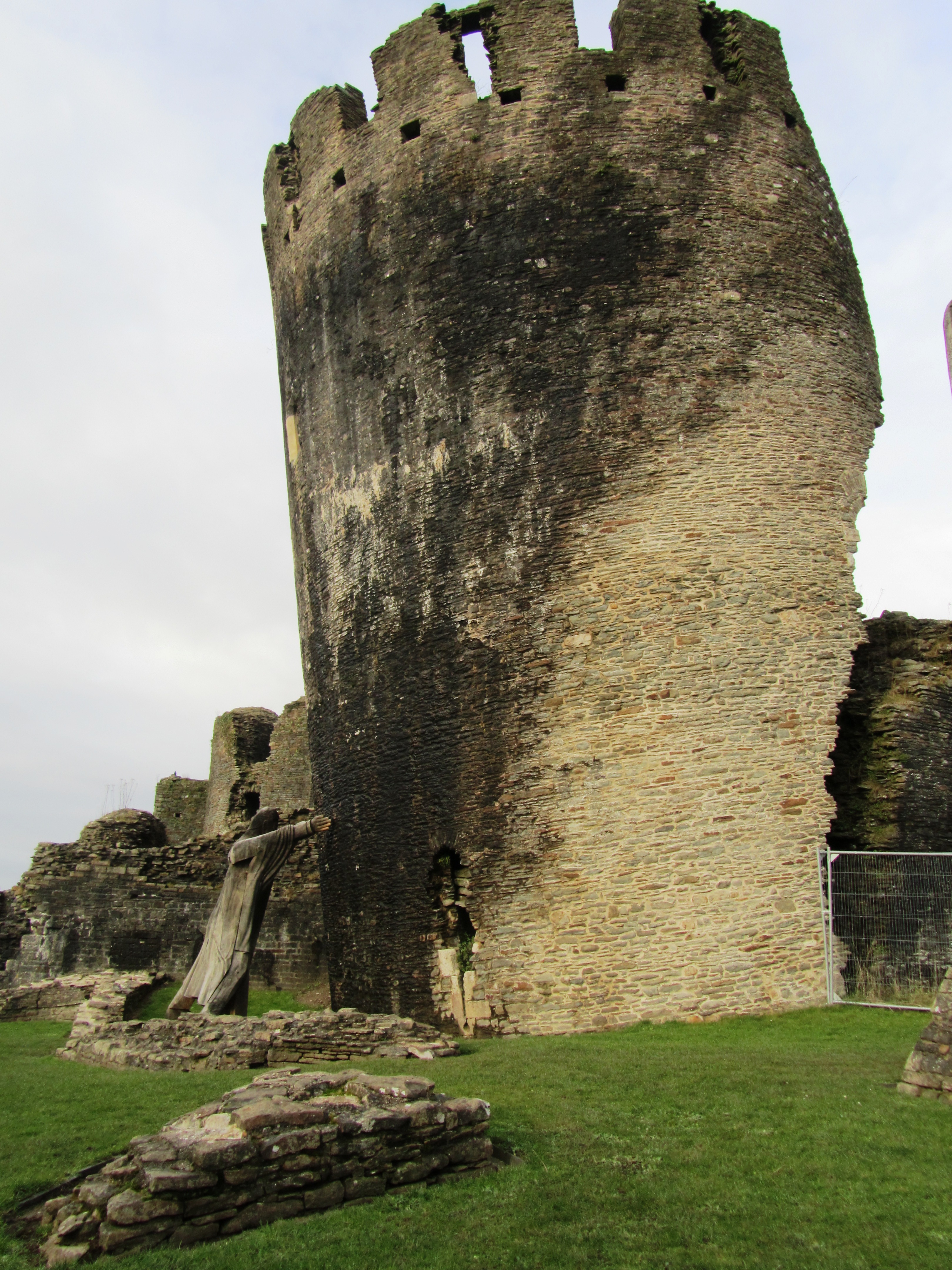
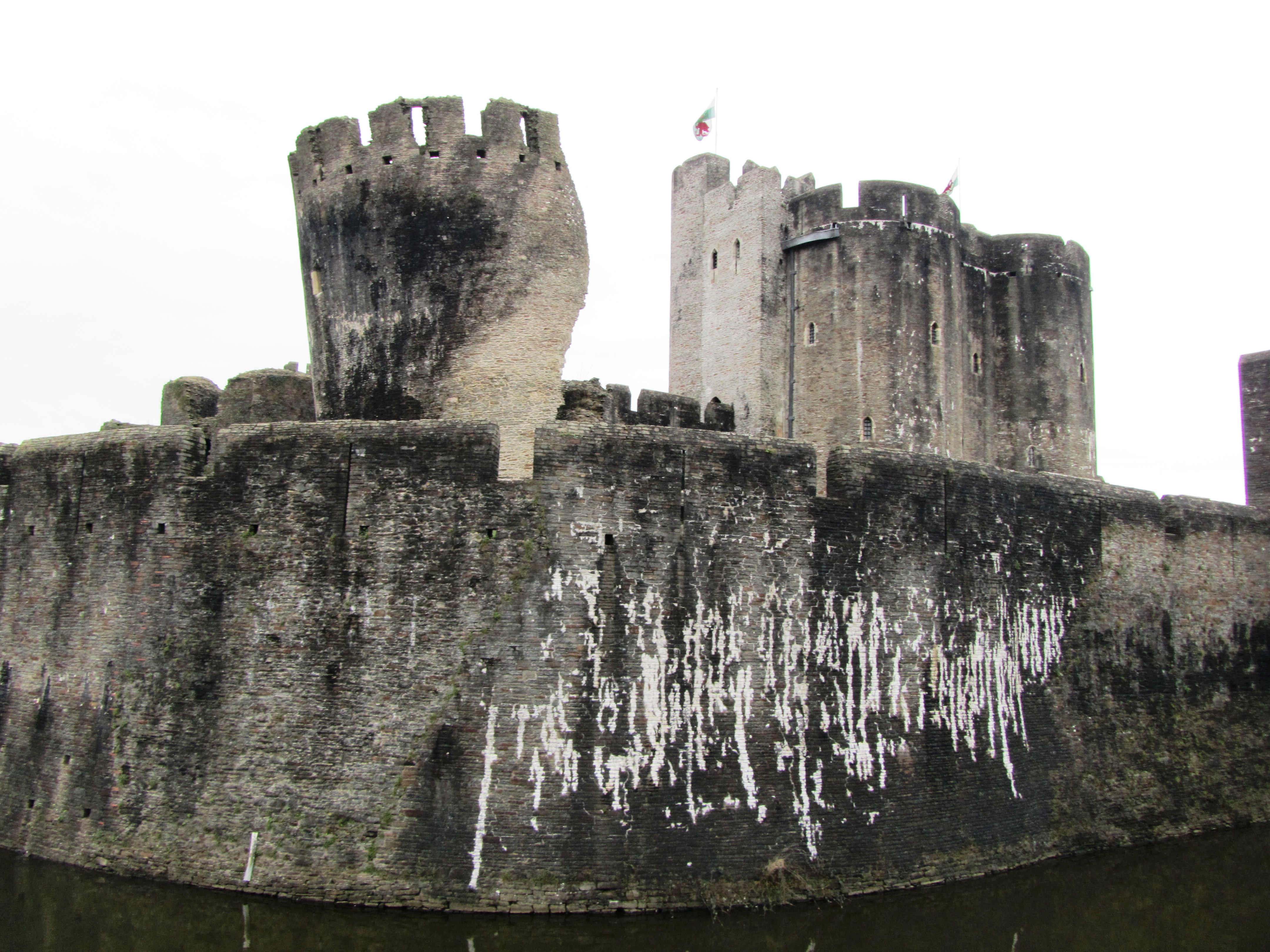
The leaning tower – natural subsidence or as a result of Oliver Cromwell decreeing that the castle be ‘slighted’ during the Civil War?

This slideshow requires JavaScript.


IMG_7452IMG_7435


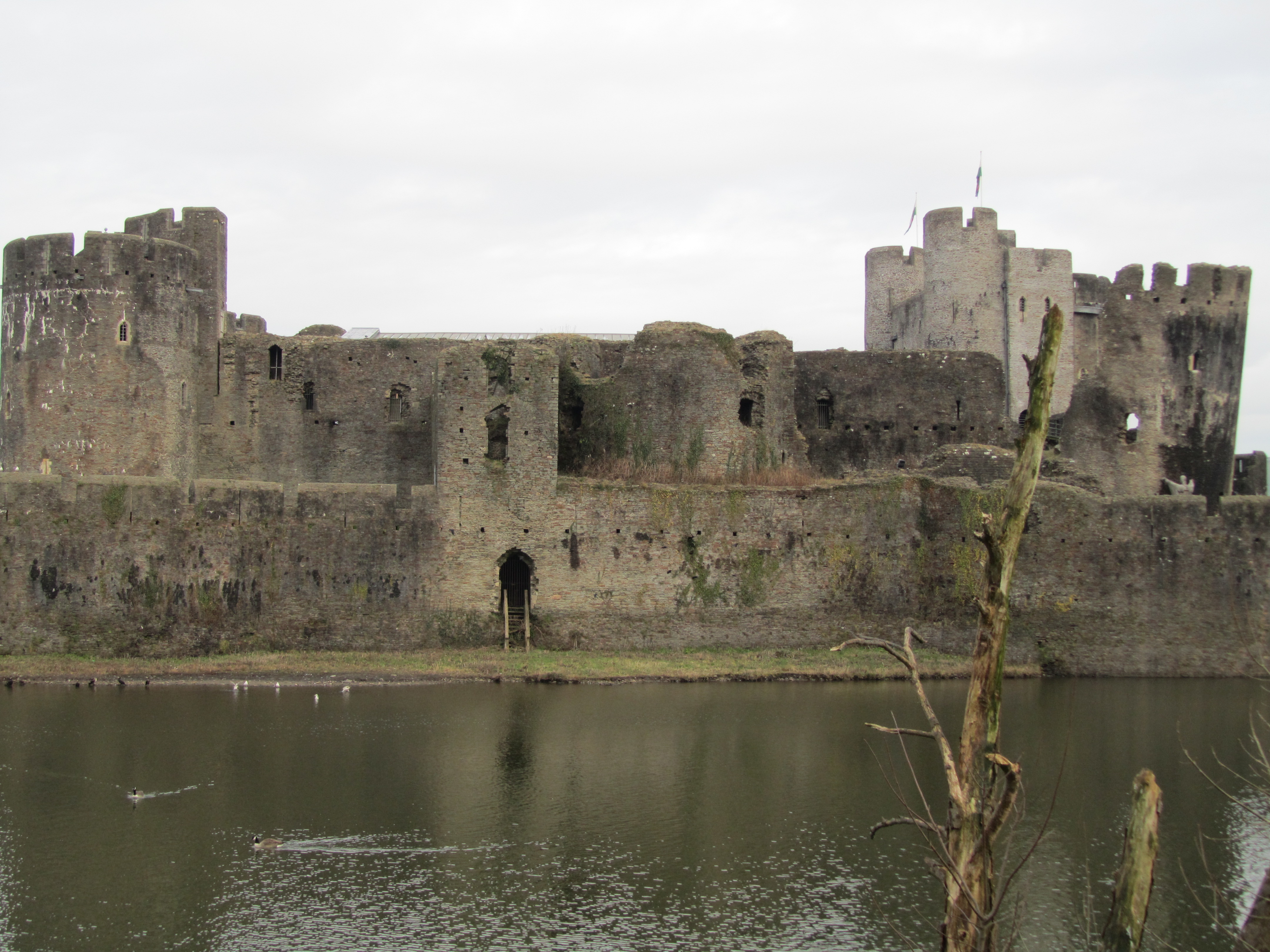
Caerphilly Castle was a defensive stronghold – the lack of windows and decoration combined with forbidding walls was testimony to this fact – it was a castle which meant business.


More Information can be found at the following links:

Caerphilly Castle

CADW