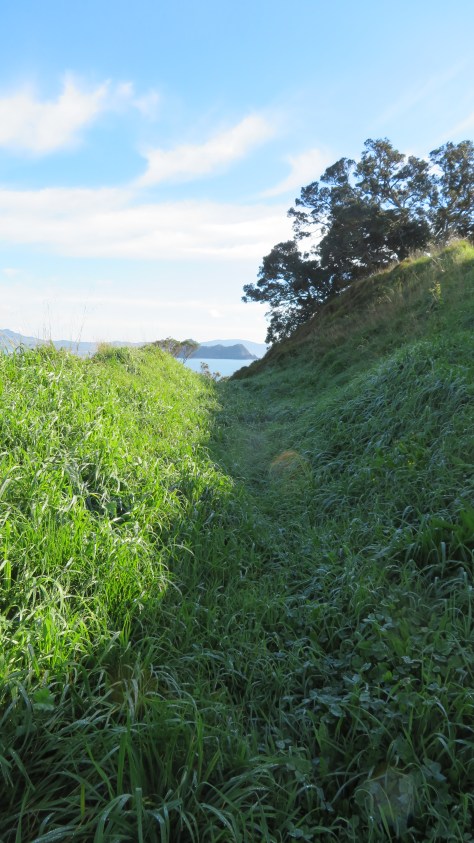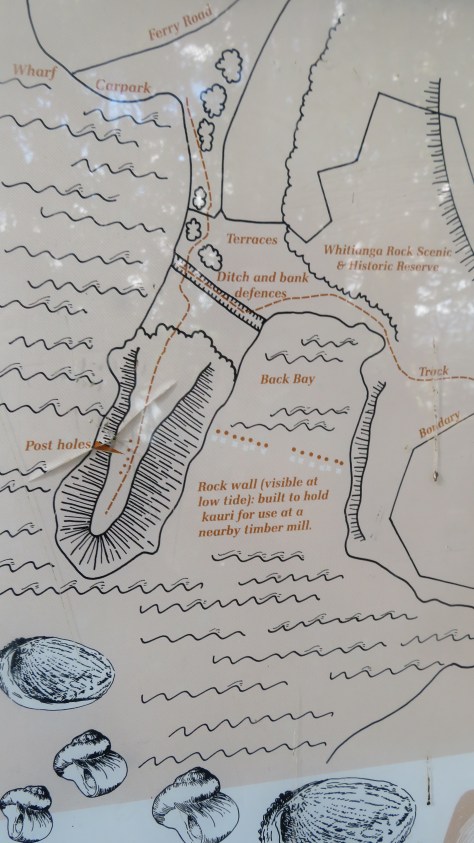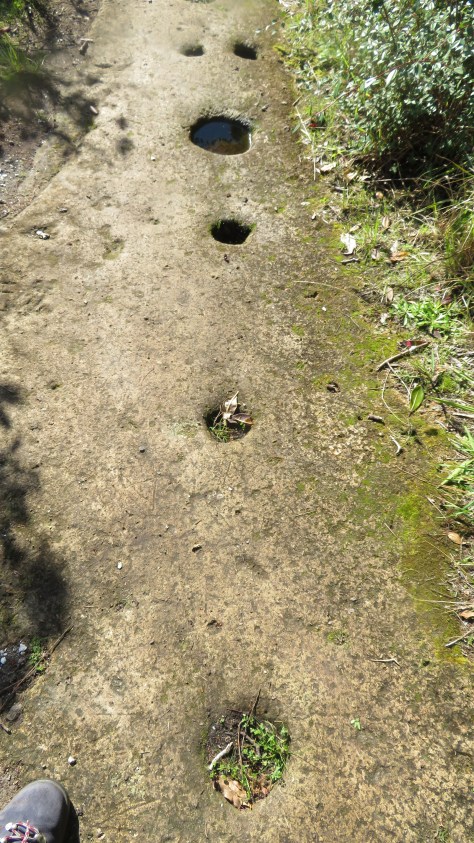
Tag Archives: heritage

Discovering Aotearoa’s Rich Archaeological Heritage

A brief foray into what archaeology looks like in Aotearoa New Zealand.

The average kiwi, when questioned about archaeology in Aotearoa New Zealand will more often than not shrug their shoulders, mumble about pā and goldmines and then go on to say that surely archaeology is not a thing here? (something I have discussed in another blog here) After all, it’s not like in Europe or Egypt, is it?

So, lets break that down…

First, archaeology as a subject is defined as the study of the human past, where human modified/made objects and sites are studied in order to better understand our past. Aotearoa New Zealand has a human past and thus, yes there is archaeology to be studied. Interestingly, the country’s relatively short human past has meant that it is in a unique position to better understand the short term and long term effects of environmental changes. Not only how they have changed but also what factors have contributed to this are important questions when faced with an uncertain future. Such studies are often conducted using archaeological data sets. Excavations on Ōtata, an island in the Hauraki Gulf, has produced a significant data set allowing for comparisons with present day data. Read more about this here.
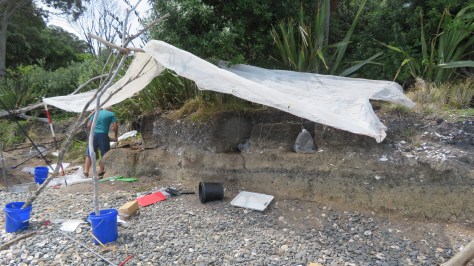
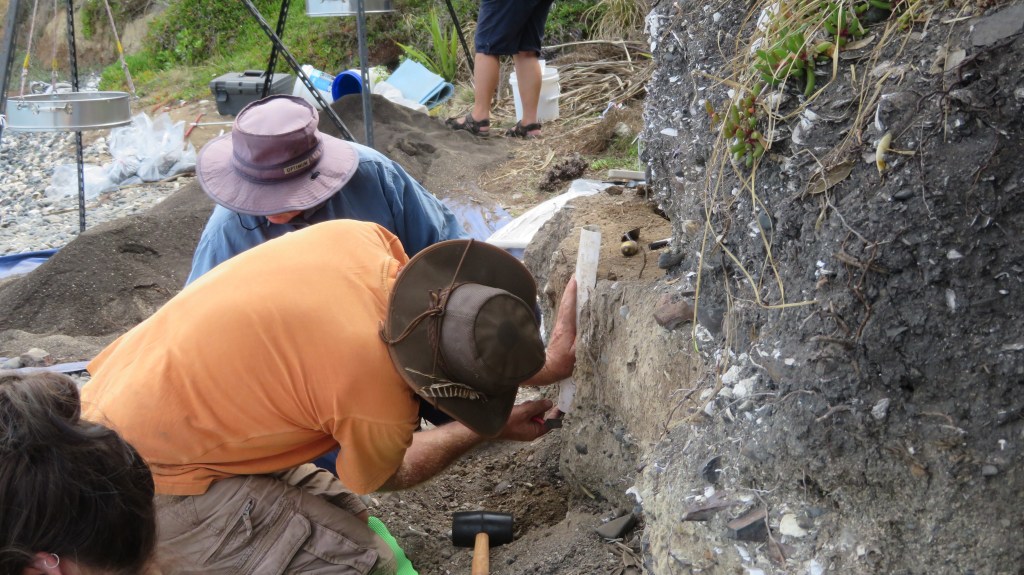
Excavations underway on Ōtata in 2021

Archaeology as a subject incorporates a wide variety of disciplines from math’s, biology, physics, chemistry, art, history, geology and geography and much more. Because of this it is dynamic discipline, always changing and adjusting ideas as new information or techniques come to light.

The fact that archaeology here in Aotearoa New Zealand has a dedicated association (the New Zealand Archaeological Association), as well as laws protecting archaeological sites and taonga; in addition to a government agency (Heritage New Zealand Pouhere Taonga) and numerous archaeological contractors would all suggest that archaeology is very much present in our small corner of the world. As mentioned in a previous blog there are over seventy thousand archaeological sites recorded here – and these are just the ones we know of…

The New Zealand Archaeological Association

Heritage New Zealand Pouhere Taonga

Second, our archaeology may not be about romantic, mystical ruins or great depths of time, but it is all around us if you know where look. In its most basic form (because this is a blog and not a textbook) archaeology can be divided into two columns – sites and artefacts. It is perhaps important to note here that archaeology, history and cultural heritage are not separate subjects but are deeply intertwined, especially so here in New Zealand.

The first humans to arrive here were the Polynesian ancestors of the Māori, this is not the place to discuss their arrival except to say it is generally agreed that it happened around 800 years ago. Some of the earliest radiocarbon dates are from around the mid to late 1200s but that’s not to say people weren’t here before that, only that this is currently the earliest dates we have. At this point I should mention that there is no proven evidence for non-polynesian settlement of Aotearoa prior to their arrival.

In 1642 Abel Tasman shined a brief light on the country and much later James Cook’s survey of New Zealand (1769) shone an even brighter light – the British (and the French and a few others) were not averse to new opportunities. The first to take advantage of this new land were the sealers and whalers and by the early 1800s the first settlers had arrived, usually missionaries with notions of spreading the word of God. Farmers, merchants, miners and anyone with an eye to making their fortune soon followed. All of whom left their mark archaeologically.

As mentioned above, the archaeology of Aotearoa can be divided into either sites or artefacts. A site is any place that has been used or modified by humans for any reason. An artefact can be defined on the same principles – an object that has been used, modified or created by humans. In this blog I will be touching upon some of the sites which can be found in the landscape of Aotearoa New Zealand (the subject of artefacts is perhaps too large for a simple blog).

Lets begin in ‘prehistory’ before the arrival of the Europeans…

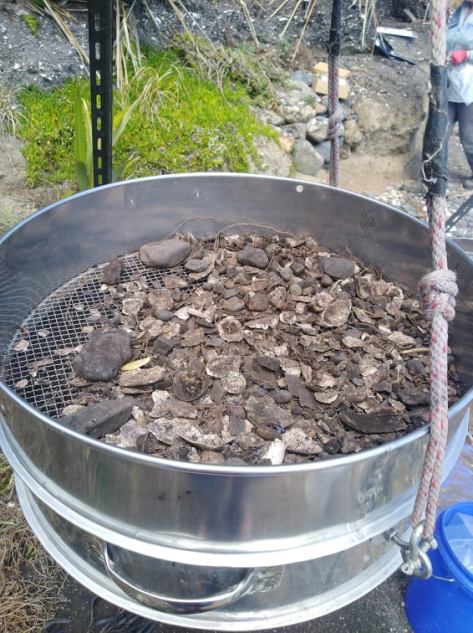
Middens – perhaps one of the most common archaeological sites known around the country, these sites present themselves as piles of broken shells and relate to the māori settlement of an area. Middens are useful to archaeologists as they can tell us a great deal of what resources were utilised, what the environment was like and they can provide material for dating (bird bones and or charcoal). They can be an archaeological site on its own or part of a larger archaeological site such as a pā.
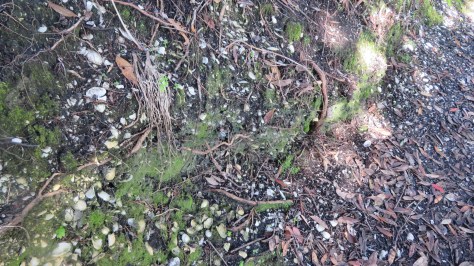
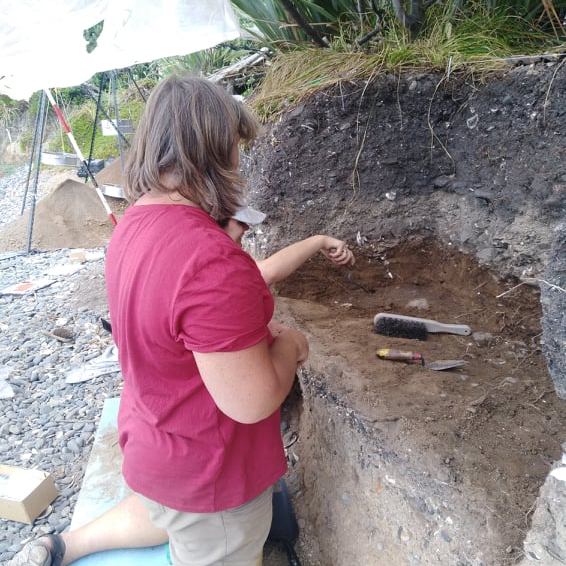
A shell midden eroding out of bank in the Coromandel.
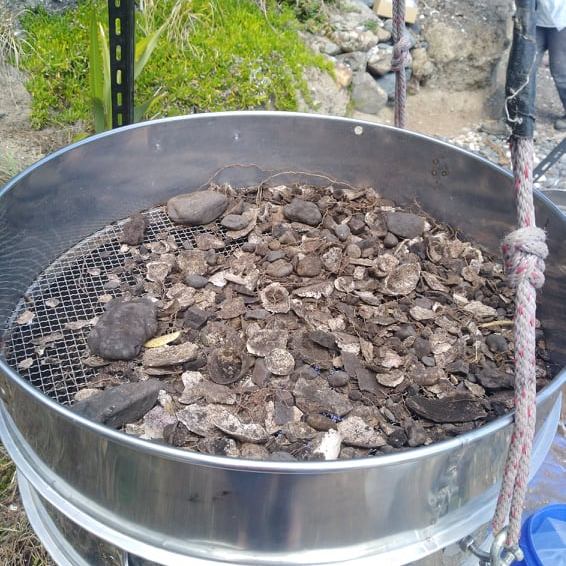
Excavated midden being sieved.

Pā – these are essentially defended settlements, most are found on high ground but there are examples of pā being found on low ground. The necessary element is for the site to have banks, ditches and evidence of palisading. Some pā can be complex sites with large numbers of banks and ditches covering many hectares others are much simpler. It is generally assumed that pā were used as places to retreat to in time of conflict and whilst this is a part of their story, it is not the whole story. The history and purpose of pā depends on the where and when. Each site needs to be considered within the wider physical and societal landscape.
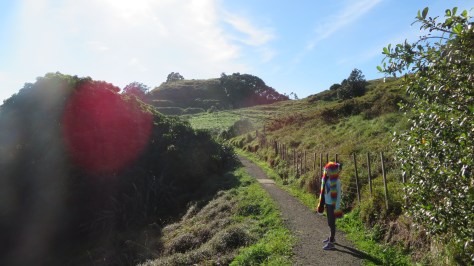
Kainga – unlike pā these are ‘undefended’ settlements or places. They can be either permenant or temporary, (the latter also known as ‘camps’) and can include a wide range of activities, not just places where people lived. Within this category a range of individual features might be found from postholes for wooden structures (houses, storage, fences), cooking areas, storage pits, middens and open spaces.
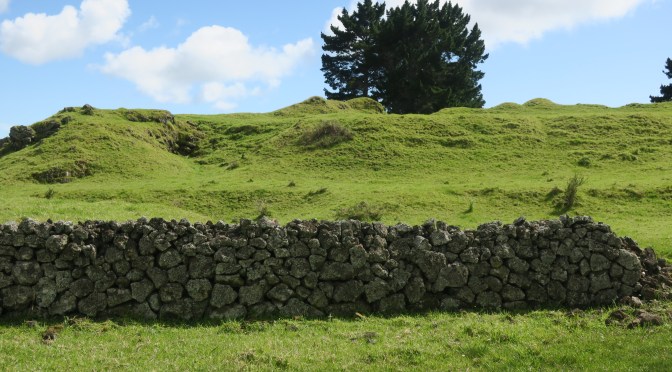
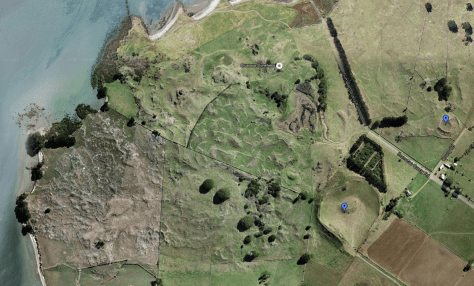
Gardens – horticulture was an important part of the economy for māori and continued to be so beyond the arrival of the Europeans. Evidence on the ground for gardens can be seen in clearance of stones and rocks from an area, often creating low stone walls. In the Auckland area the best example of this can be seen at Ōtuatua Stonefields in Mangere.
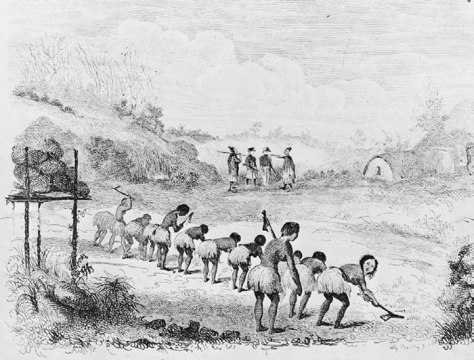
Rock Art – almost 90% of known rock art is found in the South Island, it can drawn (using charcoal or red pigment known as kōkōwai), painted, carved, cut or scraped from rock. The designs vary but can include people, birds, dogs, waka, geometric designs and occasional mythical creatures such as taniwha. The Te Ana Rock Art centre near Timaru conducts tours of the nearby rock shelters to view the rock art.

Burials and urupā – Māori buried people of high status close to settlements, then disinterred the bones and placed them in secret locations. Burial sites are tapu (sacred) and should not be disturbed. These practices changed in the late 19th century, when European-style urupā or cemeteries developed near marae. Archaeologists often refer to kōiwi and these are when human bones are found in an archaeological context either during excavation or accidentally (ie eroding from cliff or dune).       

The arrival of Europeans created a whole range of archaeological sites, broadly speaking they can be divided into settlements, industry, roads and infrastucture, dump/midden sites and conflict.

Settlements – the name says it all, these are places were people lived and they can be large as a town or small as a single farmstead. Depending on size settlement sites will invariably include a number of other features which can be classed as sites, such as wells, drains, out buildings, churches, schools, hospitals, shops, inns, roads, gardens and much more. Many of these sites are still standing and usually come under a heading of ‘buildings archaeology’ or ‘heritage archaeology’. After the earthquakes of 2010/11 in Christchurch a vast amount of archaeological work was done ahead of the rebuild. Out of this The Christchurch Archaeology Project was born where the information and stories that emerged of Christchurch’s past could be made available to everyone.
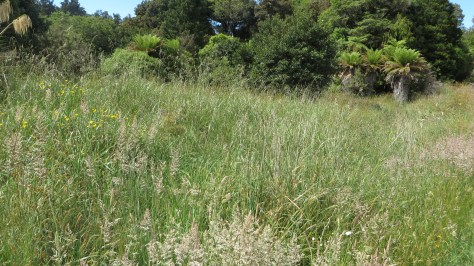
Above shows the site of the Te Rongokaupō village on the Old Coach Road, Ohakune. A once thriving settlement now only humps and bumps in the landscape.
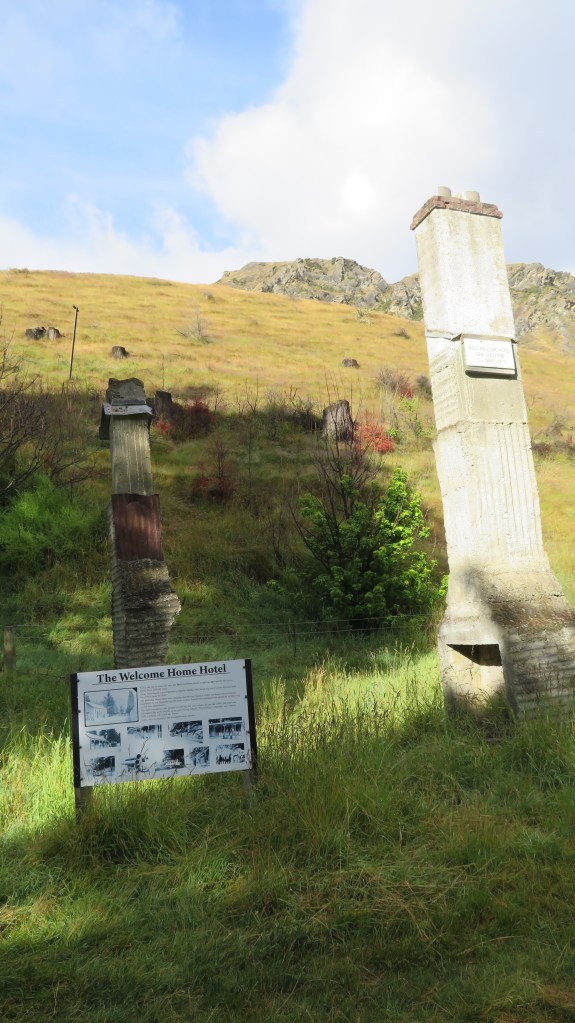
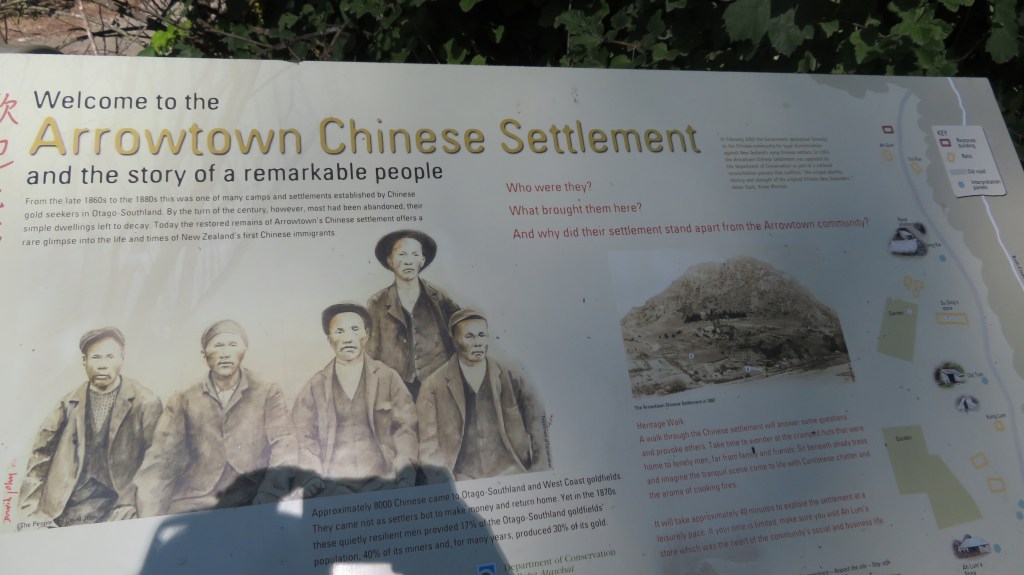
All that remains of the Welcome Home Inn on the road to Skippers Ridge and beyond, near Queenstown.

Industry – these are sites which include places that were worked by people to gain resources of some kind. Whaling/sealing stations are some of the earliest sites in this category. Mineral extractions left a range of site types from mines shafts, pumping stations, sluice gullies, out buildings, ore processing plants and more. Industrial sites such as these would often be associated with a nearby settlement which had evolved from a shanty town to a fully fledged and ‘proper’ town. In addition, other forms of industry such as milling (timber, paper and flour), brick kilns, lime kilns, gumdigging, breweries and iron works to name a few leave their mark on the landscape.
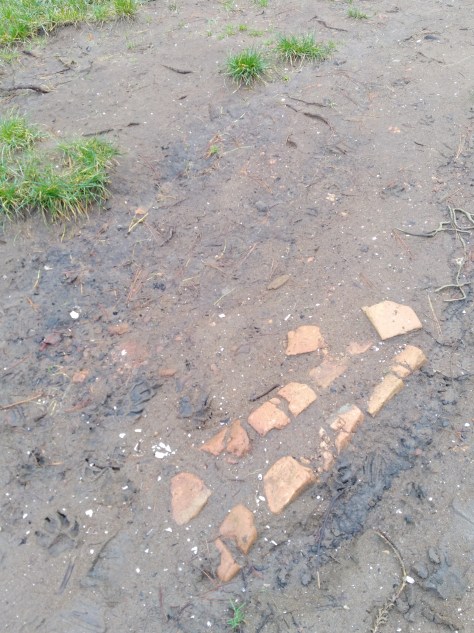
Roads and infrastructure – in the early days of Aotearoa New Zealand, the easiest way to travel was via water (this also goes for the period before European arrival). Wharves, jettys and quays are all evidence of this, looking at the placenames of early European settlements near the coast or rivers and the word ‘landing’ can often be found indicating a site where boats and the like would ‘land’ people and products.

As the population grew so to did the need for actual roads, the name ‘old coach road’ is an obvious reference to an old road no longer in use. Roads, tracks and bridges all form the story of how people moved about the landscape. The railway made a late appearance and where no longer in use its route and any associated buildings add to the archaeological record.
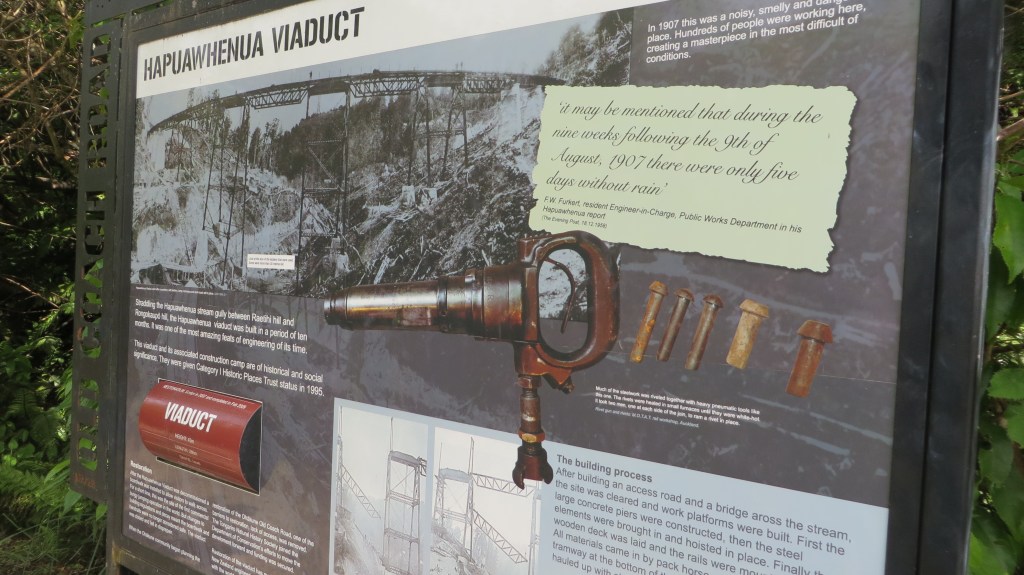
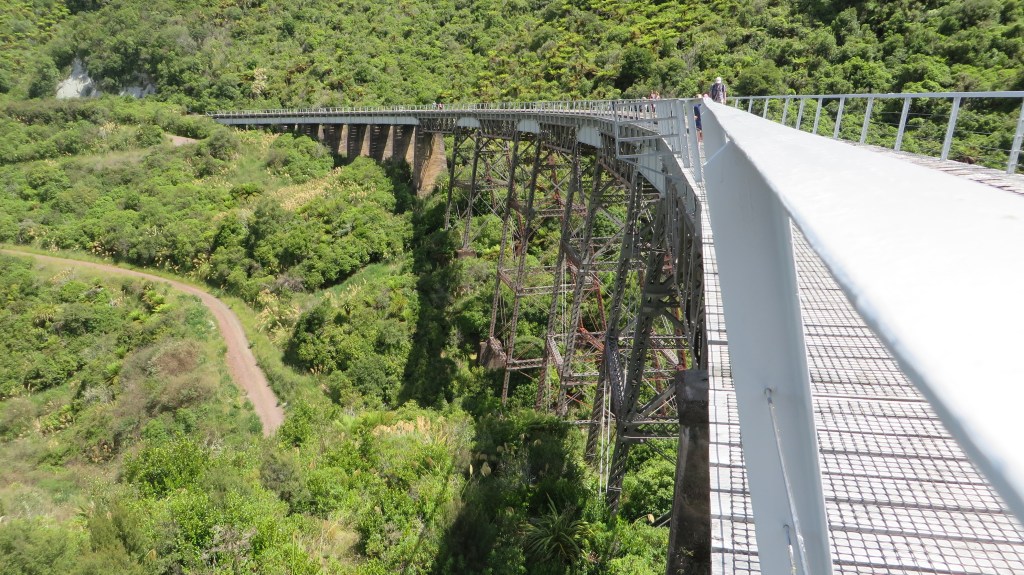
Dump/midden sites – these are always found associated with a settlement or industrial site of some description. Often they are the only indicator that there was a settlement there at all (see my post on Fitzpatrick Bay here).

Conflict – here we can consider sites that relate to the various conflicts that have affected New Zealand over the years. In the 1800s wars with māori resulted in changes to pā construction (Ruapekapeka, Northland) and the creation of redoubts by European militia (Queen’s Redoubt, Waikato). In the early to mid 1900s there were various threats (perceived or otherwise) and a range of forts and coastal defences were constructed as part of this.
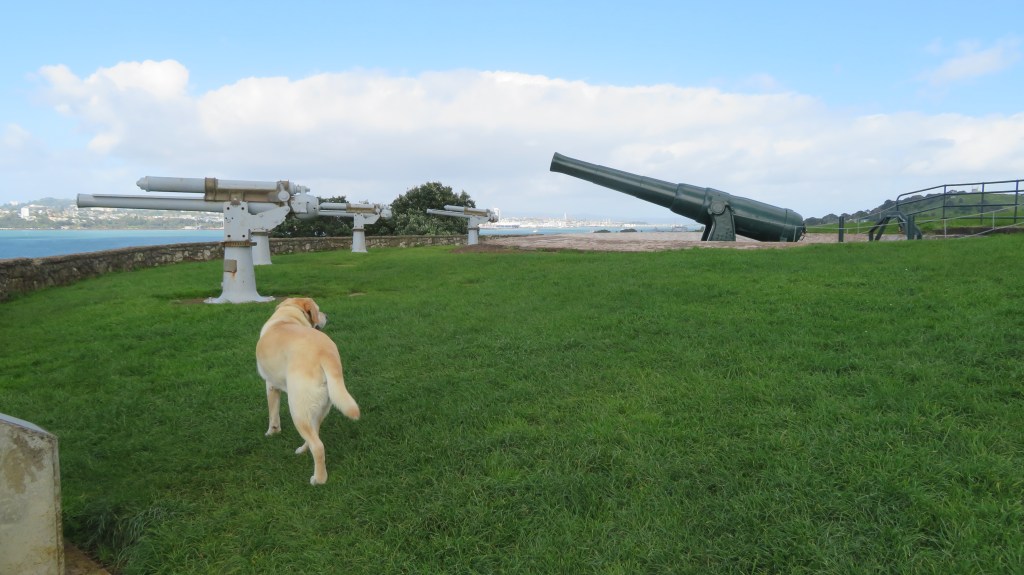
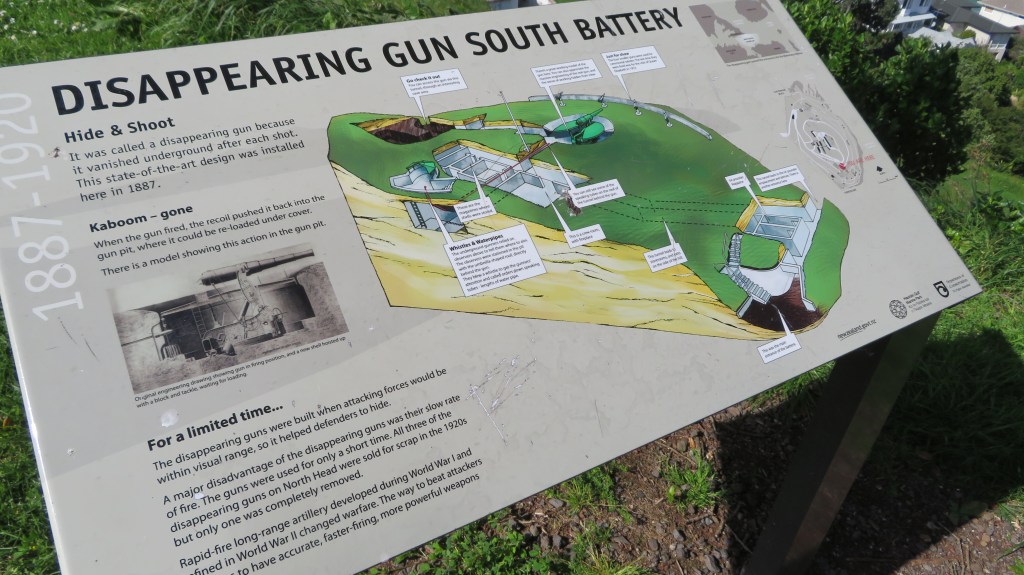
The above photos were taken on North Head, Devonport, Auckland – for more on this site read here.

That brings us to the end of our wee romp through some of the archaeological sites you might find in Aotearoa New Zealand. I hope you have enjoyed this read, feel free to check out some of my other posts.

Further Reading

Davidson J ‘The Prehistory of New Zealand’ (1984) – although over forty years old it is still a useful reference book if you can get hold of a copy.

Wilson J (ed) ‘From the Beginning’ (1987) another oldie but a goodie

Smith I ‘Pākehā Settlements in a Māori World – New Zealand Archaeology 1769-1860’ (2019)

King M ‘The Penguin History of New Zealand’ (2003) For serious history buffs…

The Dark History of Witchcraft in England

As you are all probably aware I am a fan of all things witchy – my book shelves are groaning under the weight of all the books on the history of witchcraft. Below is an interesting read from English Heritage regarding a handful of places connected to witchcraft in England, or should I say to do with the persecution of witches in the past (with the exception of Mother Shipton).

There are of course many places connected to witchcraft that do not involve their persecution but it is the gory details that people seem to want to read. Recently I have been reading about the difference (both legally and morally) between a witch and magic practitioner. The latter were tolerated to a certain extent even at the height of the witch hunts. But this will be the subject of new blog in the future so I shan’t say too much more. In the meantime read on and enjoy!

It’s All A Lark

Just a few of my favourite things…
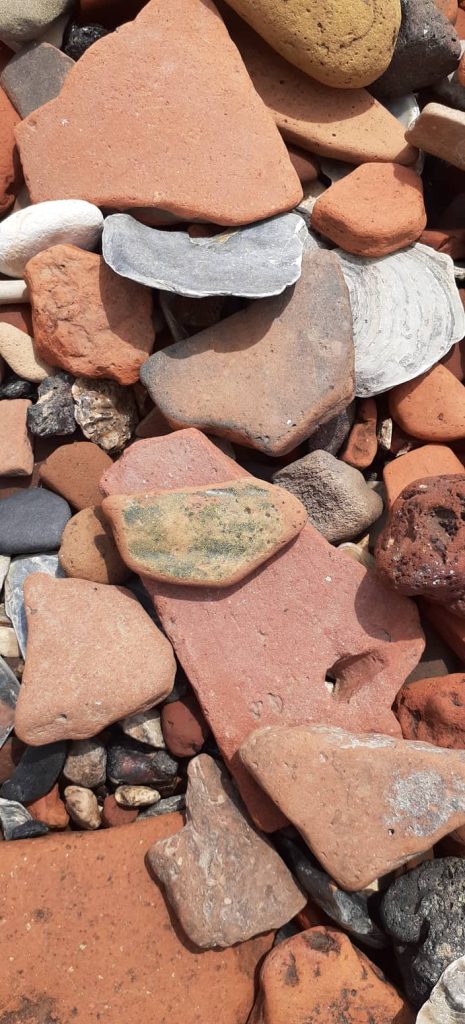
My addiction to beachcombing came about as I was walking my old dog, Brad, and I started to spot bits of pottery and glass in the sand of our favourite haunt. So begun a collection which I have written about elsewhere on here. But my curiosity and collecting did not stop with just one wee beach on the edge of the Waitemata…this blog is short catalogue of just some of the pieces I have found, these are prize possessions.

As some may be aware I live in New Zealand and as some may also be aware we have a relatively short history of human occupation – approximately 800 years give or take a decade or two – compared to other countries around the world. The finds below are restricted to the last one hundred and fifty years or so when Europeans first arrived in Aotearoa New Zealand and are by far the most numerous things to be found.

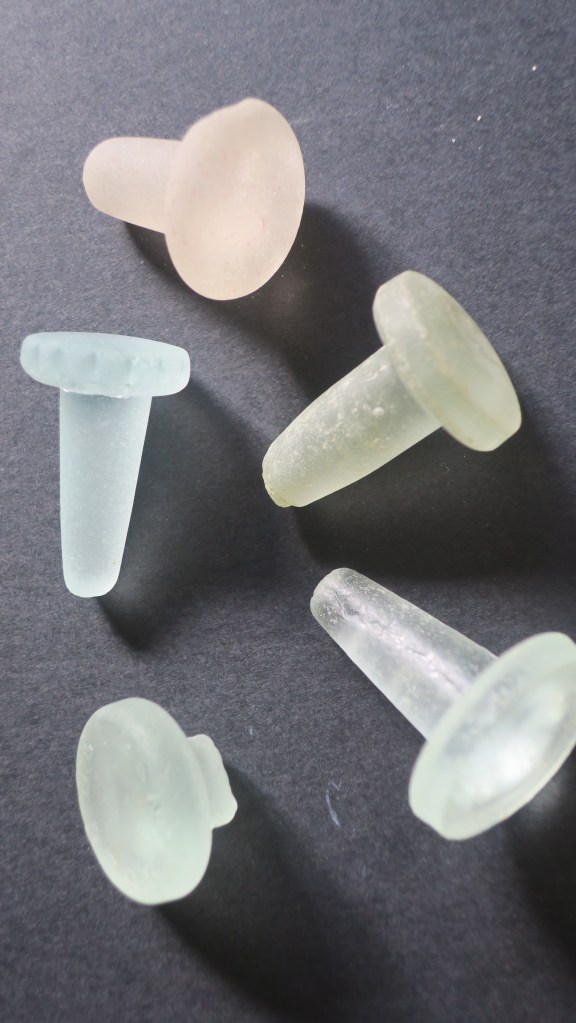
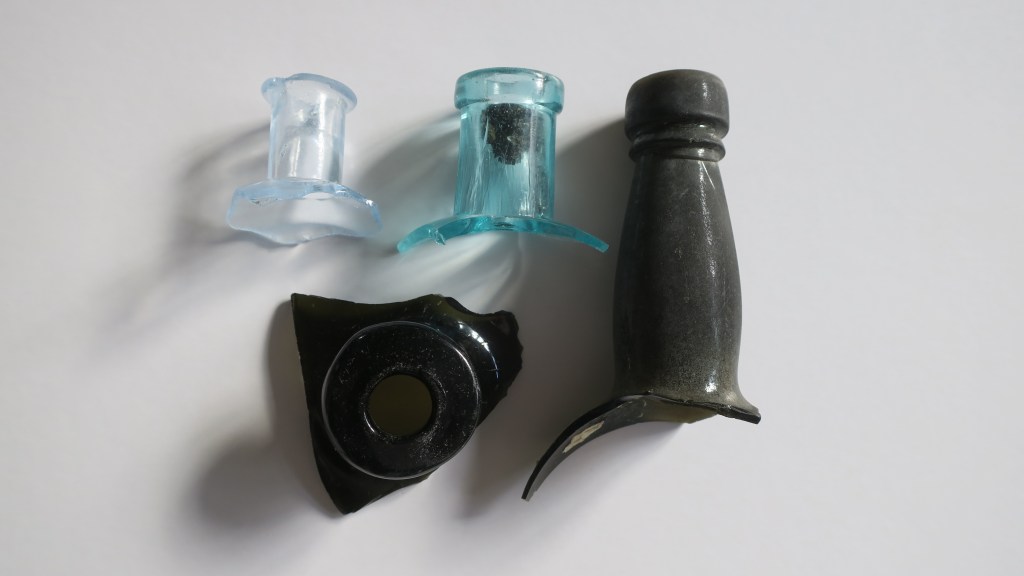
1, Glass stoppers

Long before plastic and screw tops many bottles were closed off with a glass stopper. The most common variety found are the ones in the picture below, used to seal sauce or relish bottles. Originally they would have had a ring of cork around the neck to ensure a tight seal. These very durable objects are a beachcombers delight. It is not a huge collection but each find of a glass stopper gives me an odd sense of joy…
2. Ceramics

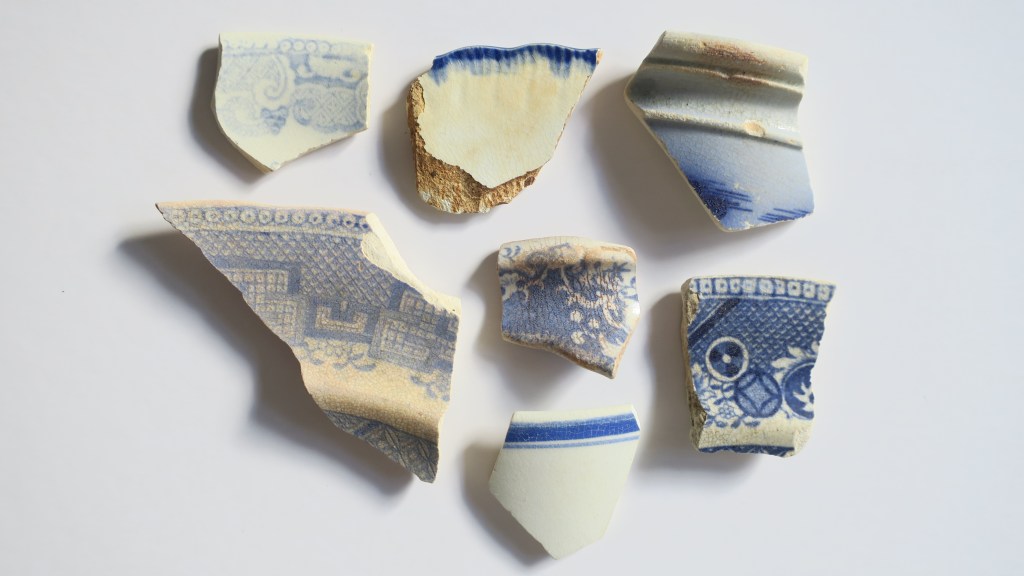
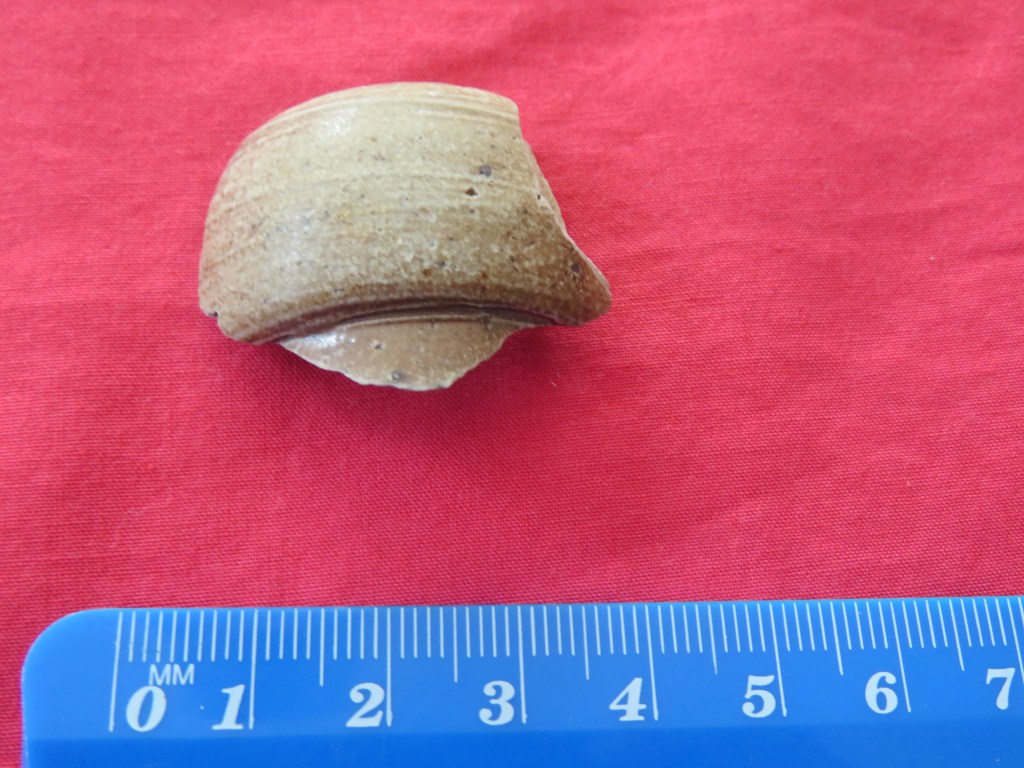
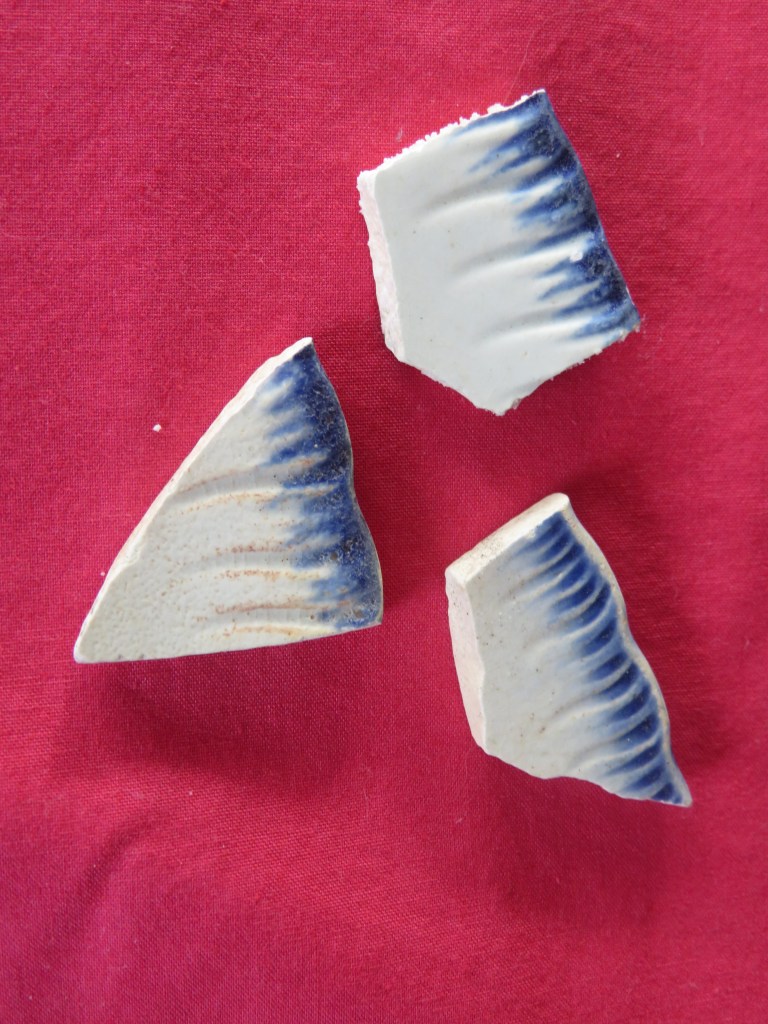
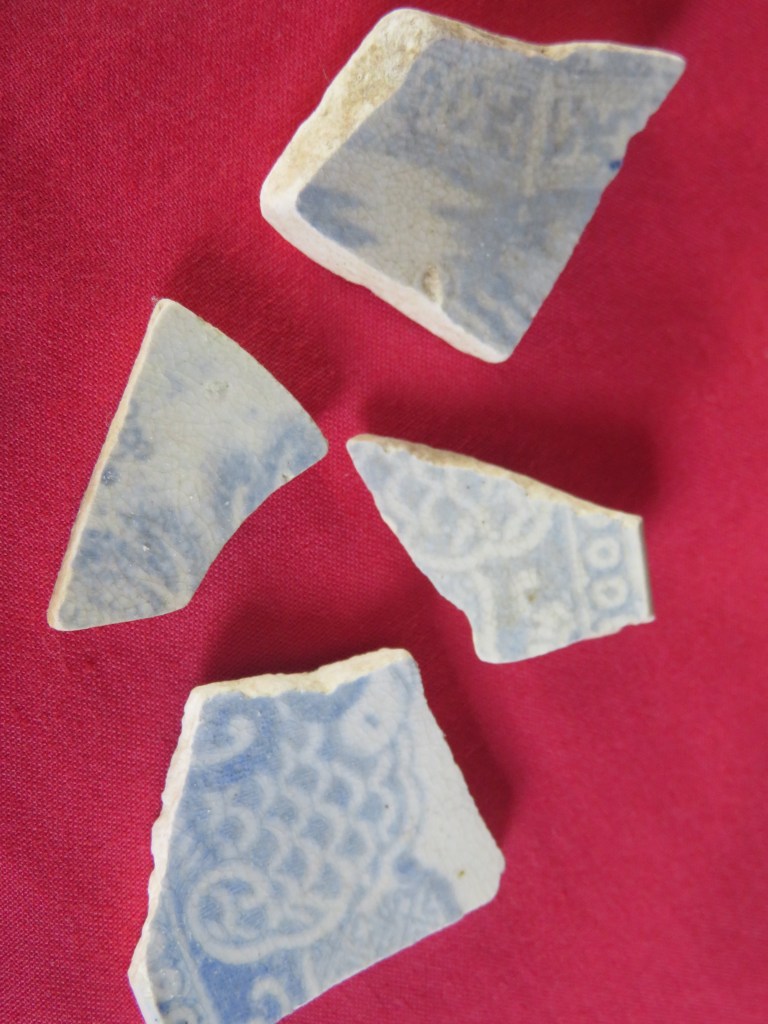
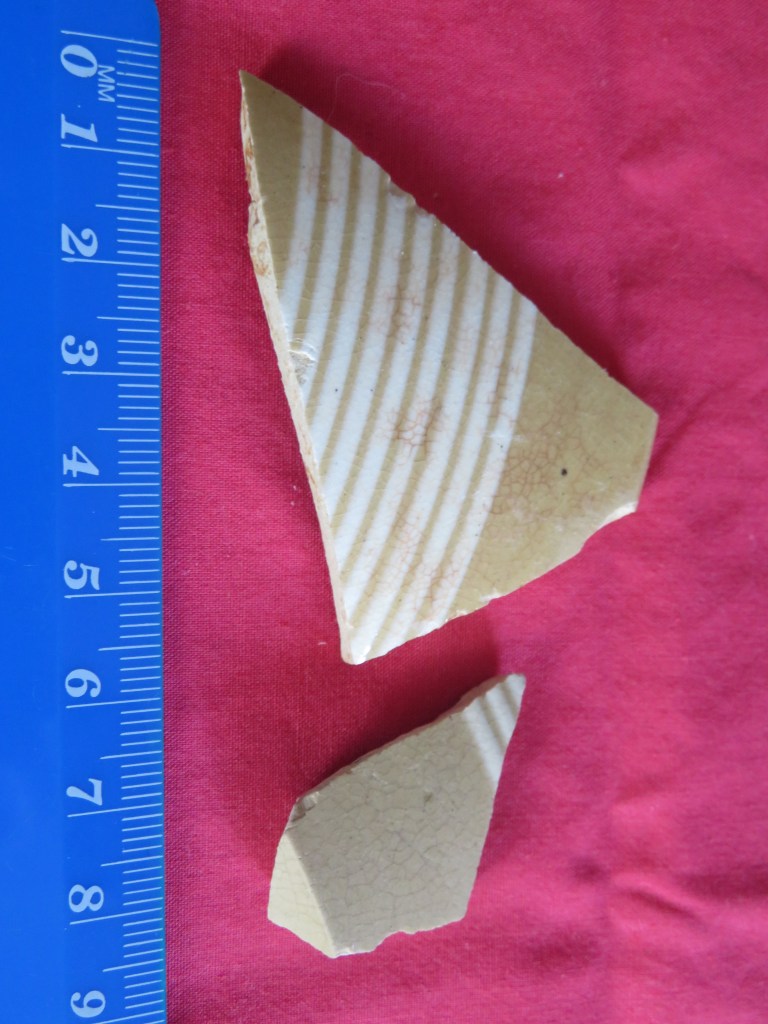
Sea pottery is also a relatively common find on beaches and waterways around the world and here in New Zealand it is no different. The variety of ceramics is often quite surprising, the most common are the plain white or cream pieces. But the most sought after are the early pieces of transfer print earthenwares imported from the UK or brought out with the first settlers. These come in a variety of patterns and colours, my favourite (along with many others) are the blue and white patterned pieces including the ever present ‘willow pattern’. I have written extensively on the ceramics found at Fitzpatrick’s Bay, please feel free to check it out here. Included in this category are also stonewares, I have yet to find a complete example but I have many neck sections and bases.

Just a small selection of my blue and whites…typical of what can be found.
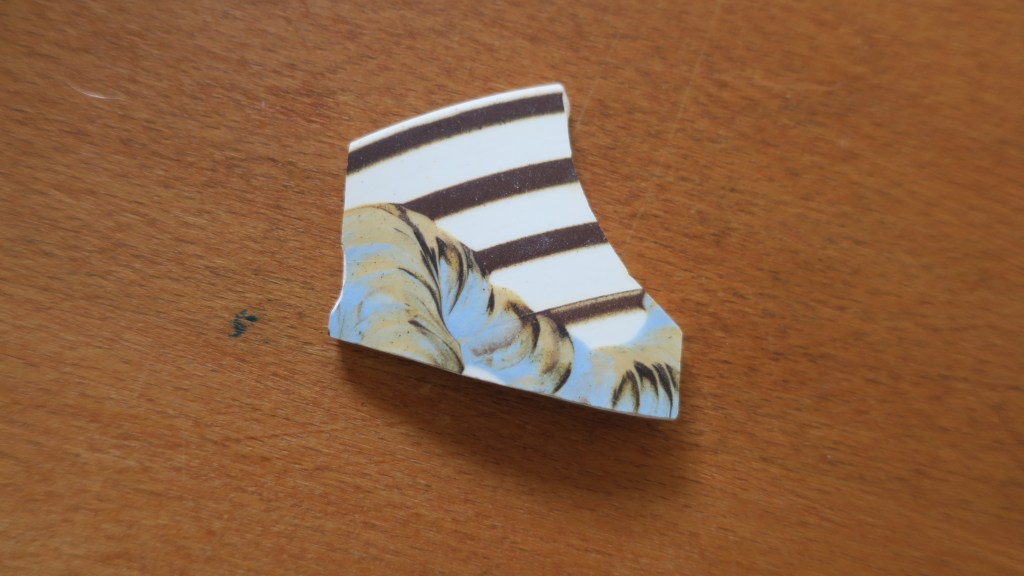
My one and only mocha ware piece.
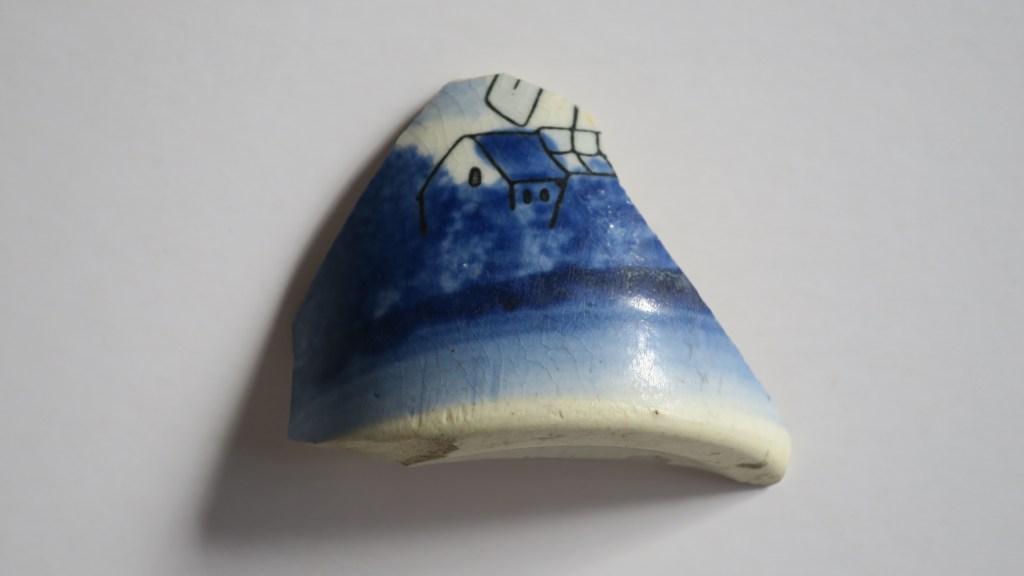
And perhaps my favourite piece thus far, part of small cup with a hand painted house and windmill.
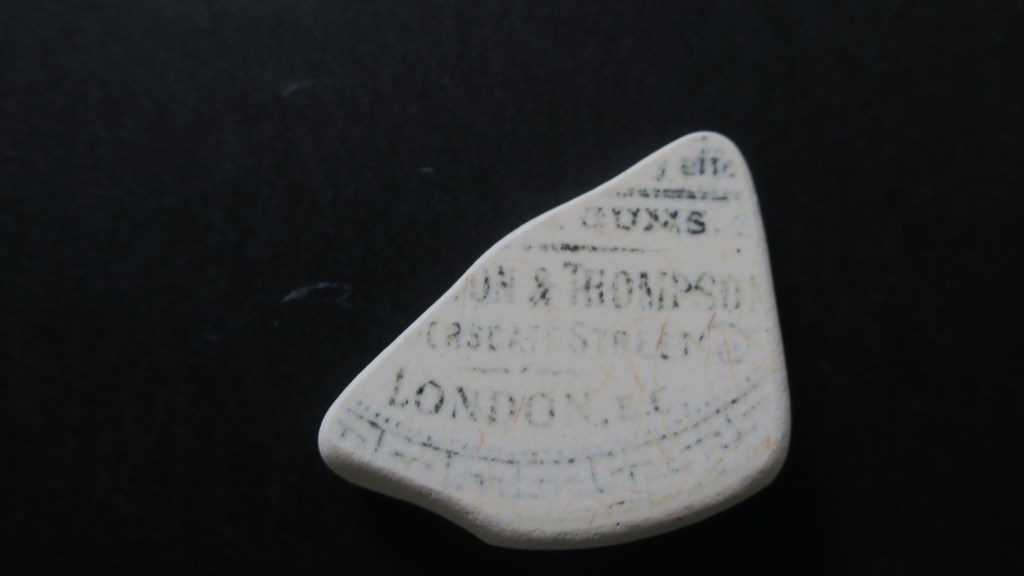
Unlike the pretty pieces often easily spotted, I thought I was very lucky to find amongst the detritus this well worn fragment of a toothpaste lid.

3. Glass

I have chosen to call this section glass as opposed to seaglass as there will be some who dispute my examples as seaglass. When I started to collect I was most surprised to find that there is an International Seaglass Association and they have defined true seaglass as;

Genuine sea or beach glass comes from discarded bottles, tableware, or household items and is found in oceans, lakes, and rivers. Genuine sea or beach glass tends to have: Lettering, embossed images, and distinguishing features such as handles, bottle necks, etc. A frosted patina on the surface with small “C”-shaped patterns, surface cracking, rounded edges, and small crevices where grains of sand may be found.

Much of the glass I find does fall into this category but the most interesting pieces are not so worn by tide and time. These are the bottle necks or fronts with lettering that can be researched. The other smaller (proper seaglass) pieces I collect go into the art pieces I make to sell at a local market (Magpie Designs)

The triangular piece is the top of a gin bottle with its distinct squat neck, on the right is a beer bottle.

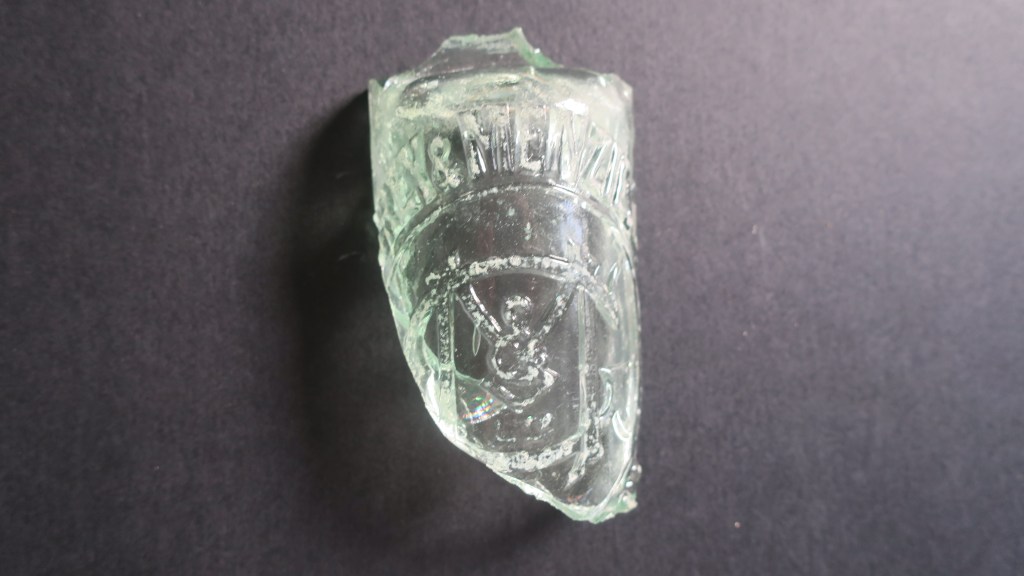
The next photos shows a knarly chunk of sharp glass I found whilst larking under the harbour bridge. I wouldn’t normally have bothered to bring this home but the lettering got me curious. A quick search online found the following on the Auckland Museum website.

Grey & Menzies Ltd (1902-1962)
Established in 1902 following the merger of J Grey & Sons and Thames cordial manufacturer Menzies. The firm operated as Grey and Menzies until 1964 when a merger with CL Innes Ltd resulted in the soft drink brand of Innes Tartan. John Grey established J Grey cordial & aerated water manufacturers at Eden Cres. Auckland in 1874, and in 1880 his sons joined the business it became J Grey & Sons 1880-1902

Robert Menzies was born in Scotland in 1854 and came to New Zealand in 1858, working initially for Buteman Bros, Thames. He later worked for B Ballin (Thames), John Grey and George Gledhill before purchasing Buteman Bros. in partnership with Samuel Hirst to form Menzies & Co at Thames. In August 1902, with two partners he established Menzies Ltd, and leased a property in Stanley Street, Auckland but a month later joined with John Grey & Sons to form Grey & Menzies Ltd

The Grey and Menzies merger occurred in 1902 – the company now covered a considerable area including Northland, Auckland, South Auckland and Thames. The company began to introduce new lines including the ginger beer that became Tartan Dry Ginger Ale. In 1916 the company purchased the Paeroa spring, aerating and bottling the water in Auckland under the “Paeroa Water” label – later to become Lemon & Paeroa. In the early 1920s they began making Orange and Lemon Crush under license from the Crush Co’s reg’d USA patent office.”

Every object has a story…

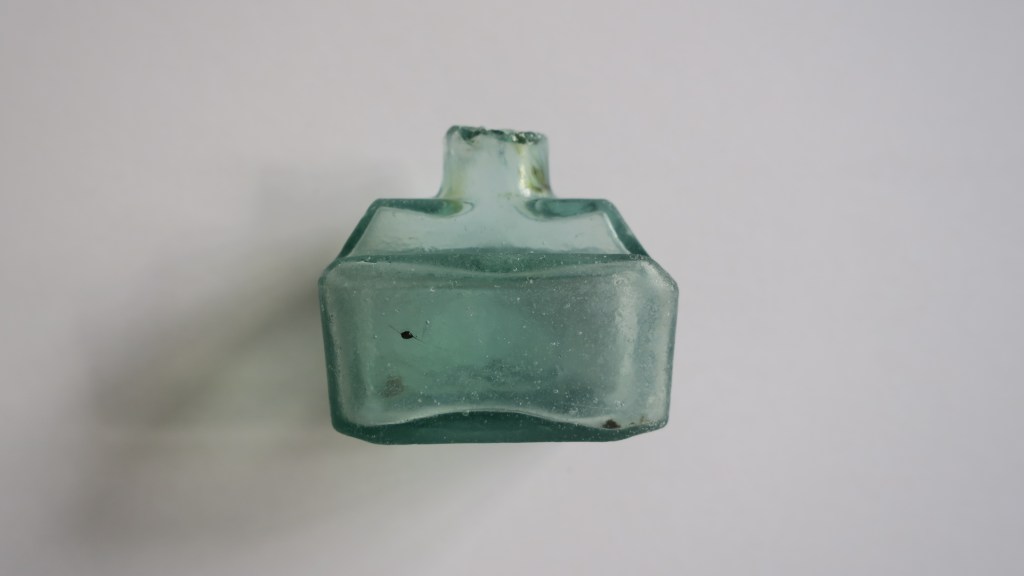
The next photo is of a sweet wee ink bottle, again found under the Harbour Bridge. It was a strange moment…I was about to leave the area having found very little that morning, thinking about a post I had seen on Instagram about these cute glass ink bottles when I spotted nestled in the seaweed one of the very same. Known as Boat ink bottles for their shape and distinctive lip used for a pen rest they come in a variety of colours. During a recent visit to the Dargaville Museum north of Auckland I saw a vast collection of these bottles in all their beautiful colours.

I did a happy dance, much to the dog’s surprise, when I found this.

4. Clay Pipes

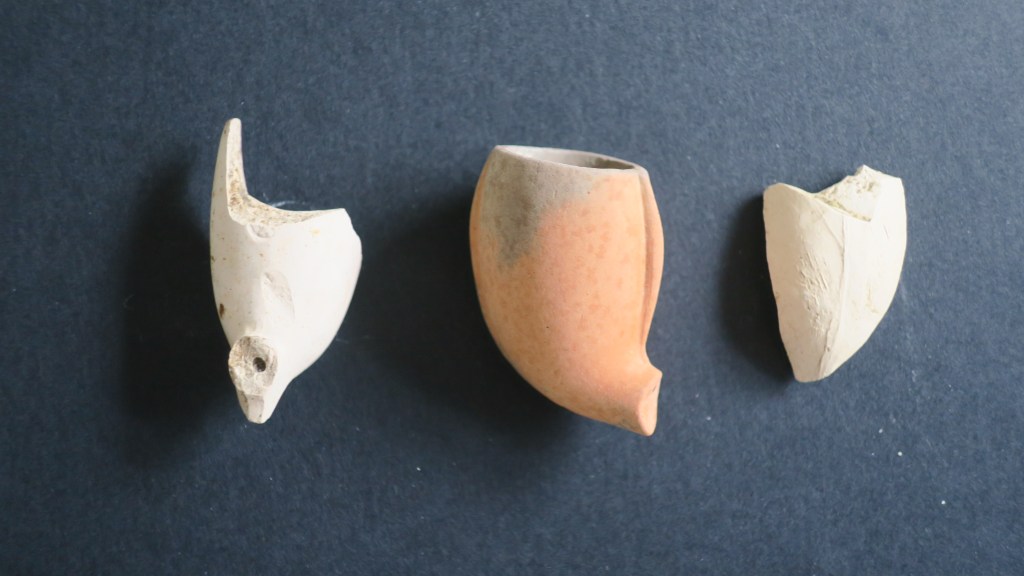
Finding clay pipes on the shores of Auckland’s harbour can be a bit hit and miss, however I do have a small collection of pipe stems and bowls. None of which have any visible decoration or makers mark, given the softness of the kaolin clay used to make these items it should not be surprising that it would easily wear away. Not so long ago I was sent pictures of a pipe stem found at Fitzpatrick’s Bay which did have a stamped name on it, ‘squatters budgeree’ which I have written about here.

For those who would like to know more about clay tobacco pipes in New Zealand the following links may be of interest. For those elsewhere there are a multitude of websites and books on the humble clay pipe.

Mechanics Bay, Auckland

Underground Overground, Christchurch

As you can see pipe stems are far more numerous than bowls due to the tendency for stems to go soft with long use and be broken off and discarded. The center bowl is a much prized part of the collection being a terracotta bowl rather then the usual kaolin, which may be why it survived in better condition than the others.

5. Kauri Gum

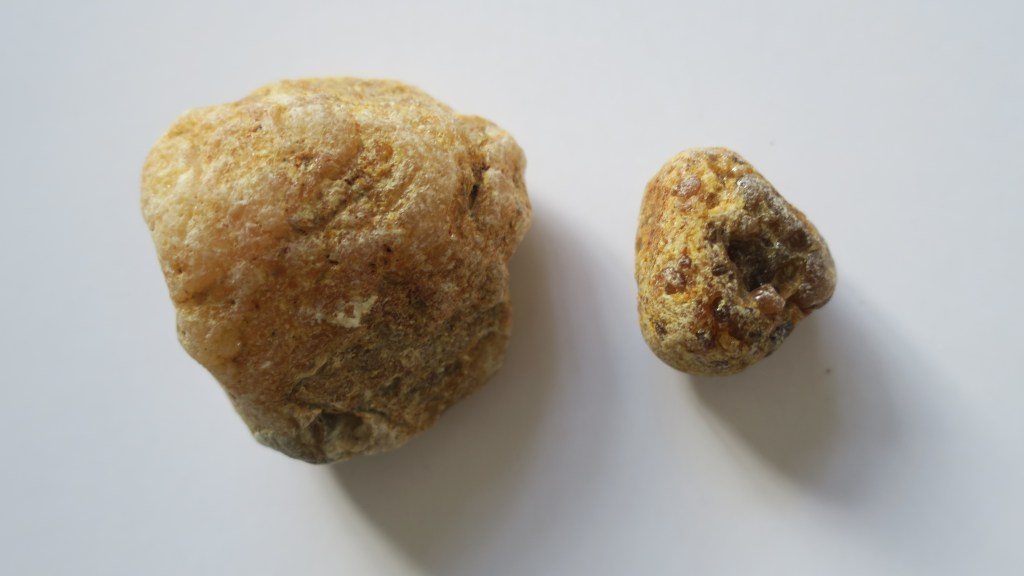
For those who are not familiar with Aotearoa New Zealand’s flora, there is a native tree called kauri. It is a slow growing hardwood which was much sought after by settlers and Māori alike. Its many attributes was the tendency to ooze sap which over time solidifies and becomes much like amber. Early settlers would often turn to gumdigging as a way of supplementing other income or when there was no other income.

The gum was used by Māori as a type of chewing gum (fresh gum), as a fire starter and when burnt and mixed with animal fat for tattoo moko. The early settlers used it in a variety of ways, much like amber for trinkets and jewellery. However, in the mid 1800s it was discovered that when mixed with linseed oil it made an effective varnish and as such was in great demand in the UK and Europe. Kauri gum became Auckland’s main export at this time – between 1850 and 1950 approximately 450,000 tons were exported. The growth of early Auckland owed much to this industry.

The area in which I live once had extensive kauri forests, so it is not surprising to find chunks of gum washing up (and down) onto the beaches. I collect them because of the history they remind me of. Below are a just a couple of the many pieces currently residing in my rockery…

For more on kauri gum read here.

6. A Gun Flint

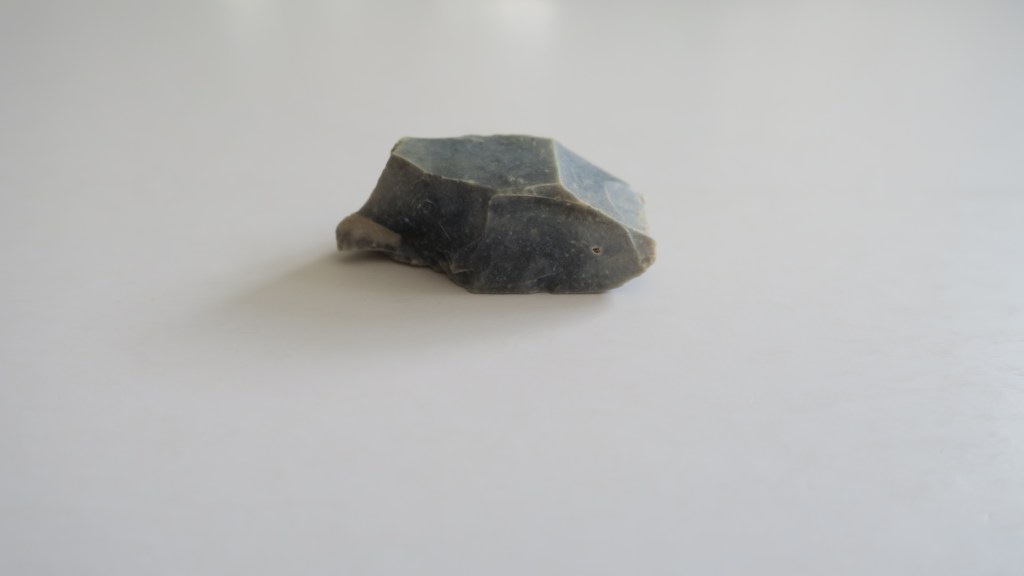
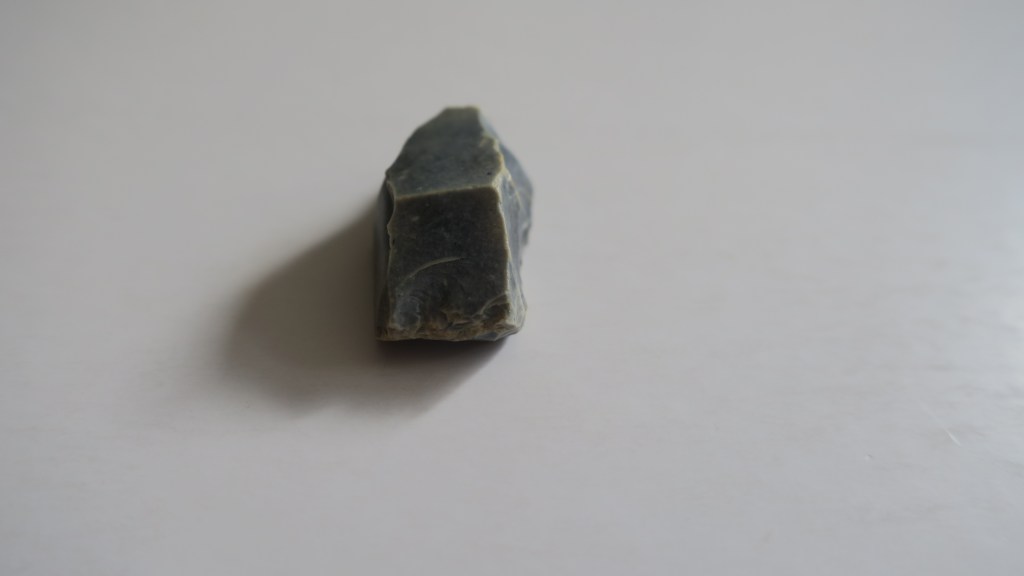
I only have one gun flint and only a partial one at that. Gun flints are part of the striking mechanism for a flintlock gun and were in use in the UK from the 17th to the 19th century. For more on how they were used read here. Here in New Zealand the musket, which also used a flintlock mechanism, contributed to a period in our history known as the Musket Wars.

‘After Europeans brought muskets (long-barrelled, muzzle-loading guns) to New Zealand, these weapons were used in a series of battles between Māori tribes, mostly between 1818 and 1840. As many as 20,000 people may have died, directly or indirectly. Tribal boundaries were also changed by the musket wars.’ From Te Ara Encyclopedia

Although there is no telling who used this particular gun flint (it was found at Fitzpatrick’s Bay) it is a sobering reminder of our past – the good and the bad.

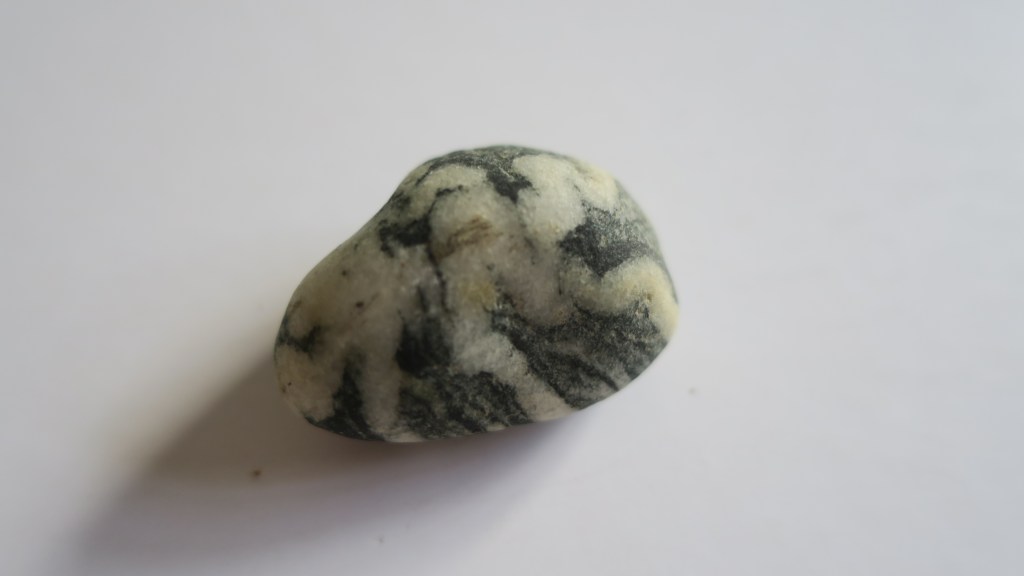
7. A Fossil

No I’m not talking about the other half…but rather this small reminder that the earth is old and for me at least, a reminder that our time here is but a moment.

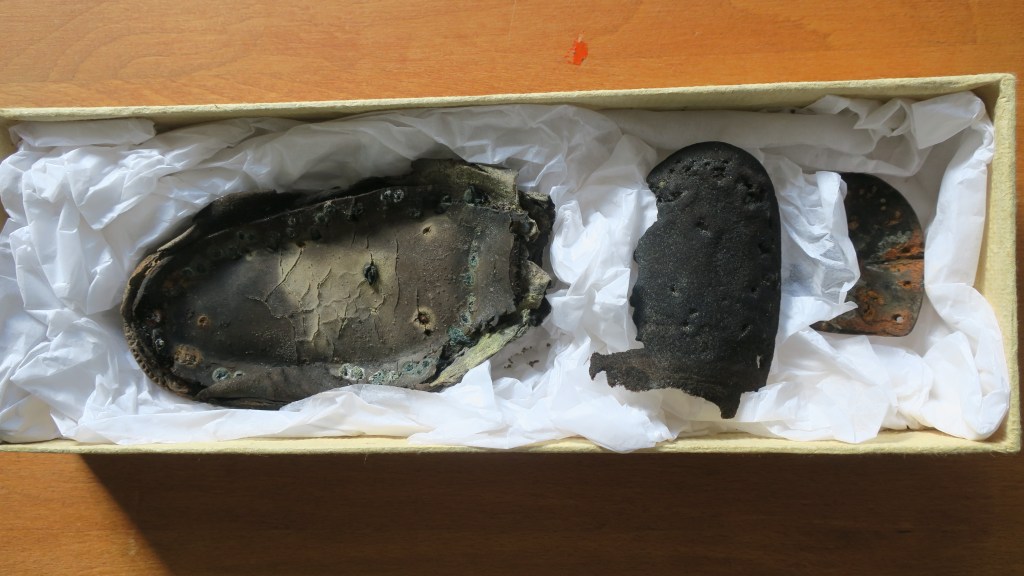
8. Shoes

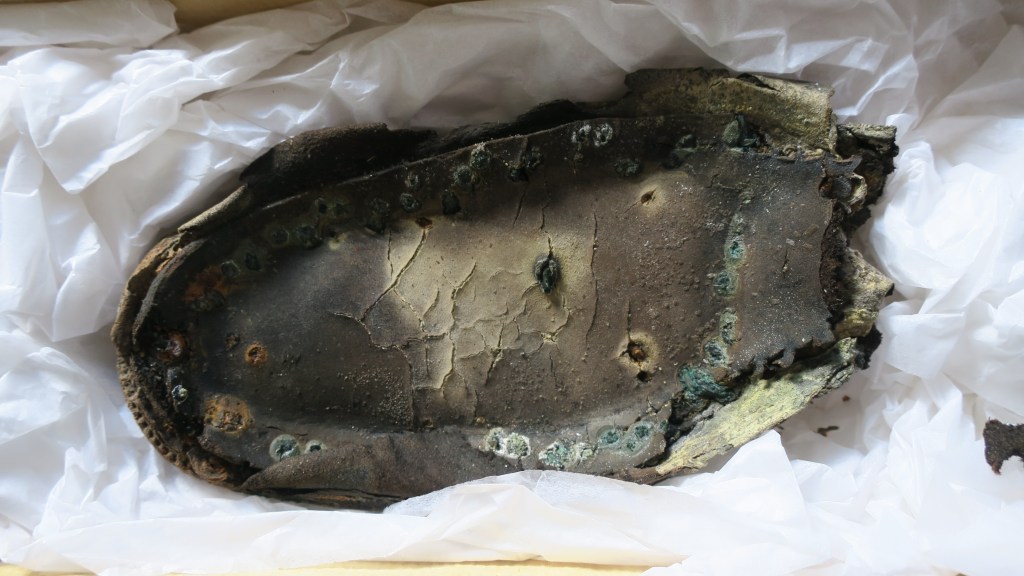
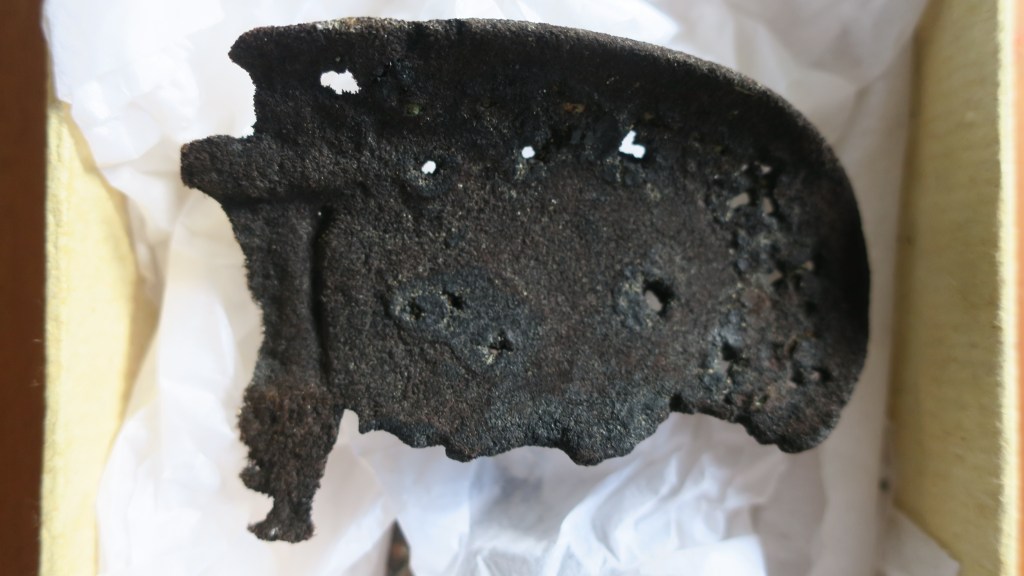
Occasionally I find parts of shoes, sometimes they are modern (so many jandals) and head straight to the bin but other times they are much older. When I look at these shoes parts I wonder who wore them, what was their life like? Oddly shoes feel very personal and connect me to someone in the past – will a person in the future find the sole of my favourite ugg boots and wonder about me too?

This sole consists of several layers and the copper nails are evidenced by the green spots around the edge.
This piece appears to be part of a heel, the rust suggestive of a ferrous metal. I can hear the wearer tapping their way across the floorboards…
9. A Mystery Object…

This final object confounds me and I hope there is someone out there who might be able to shed some light.

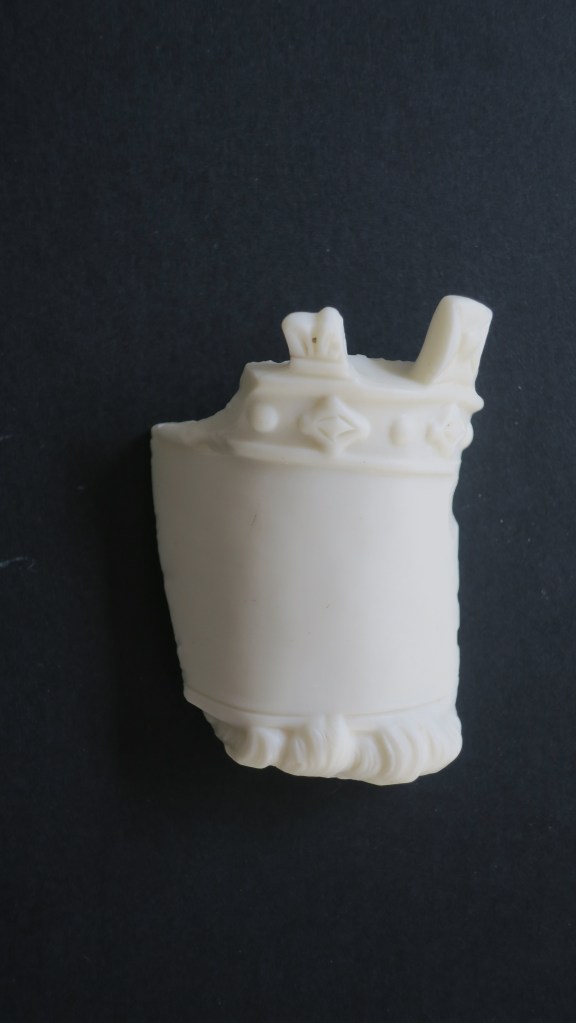
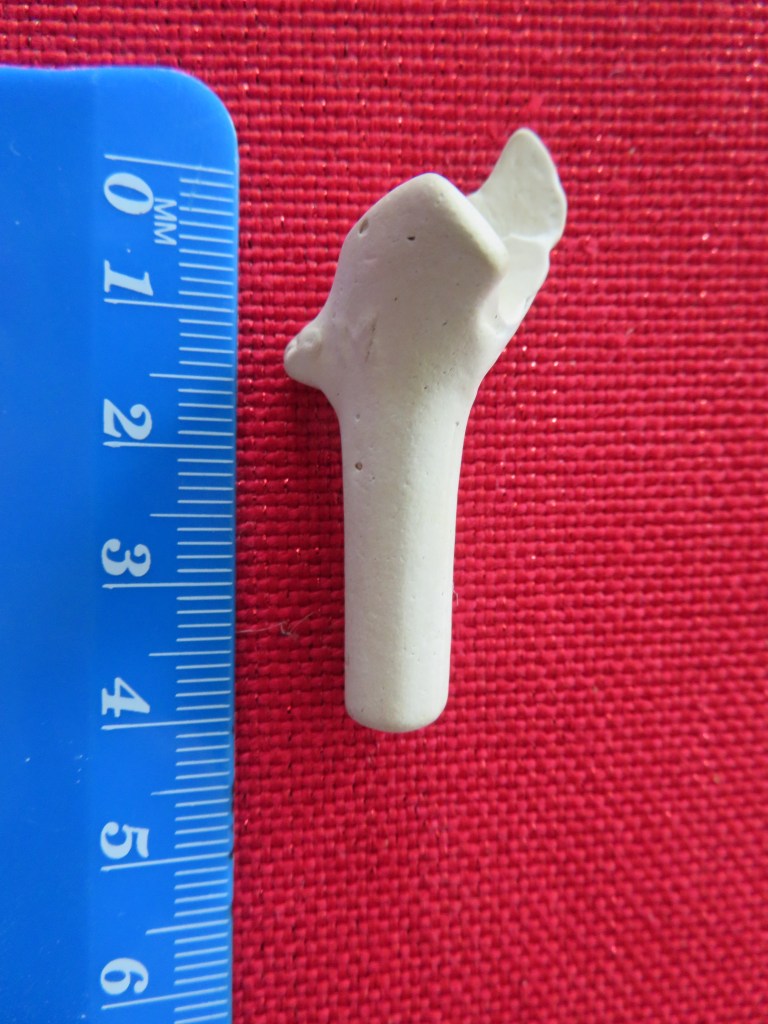
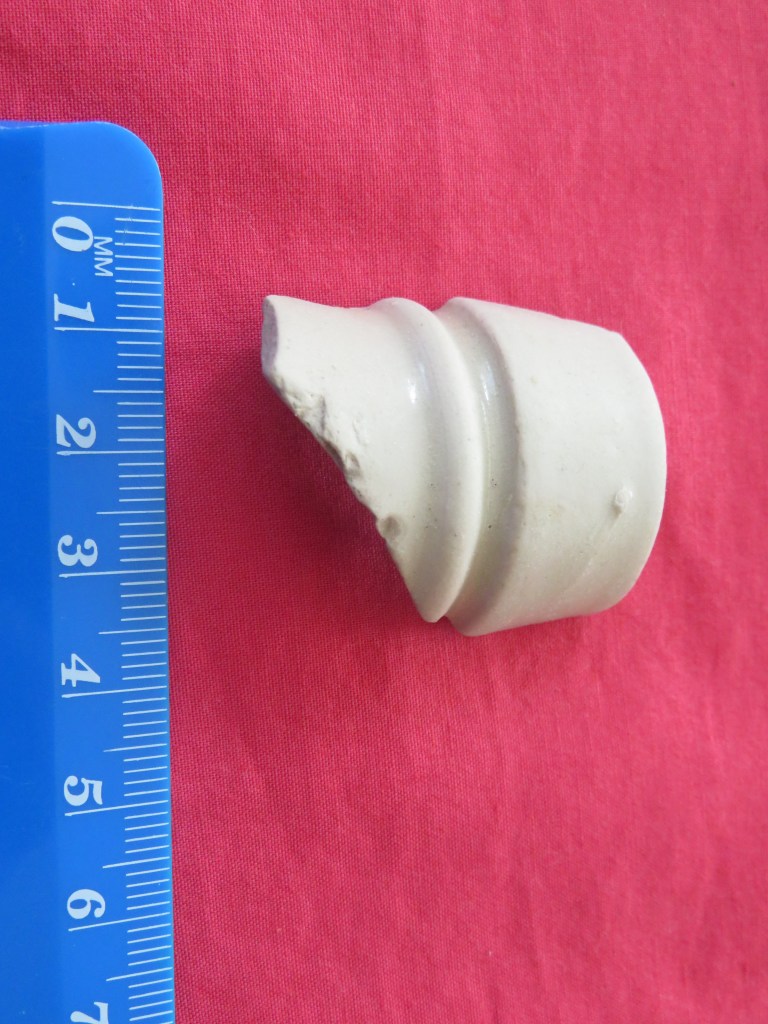
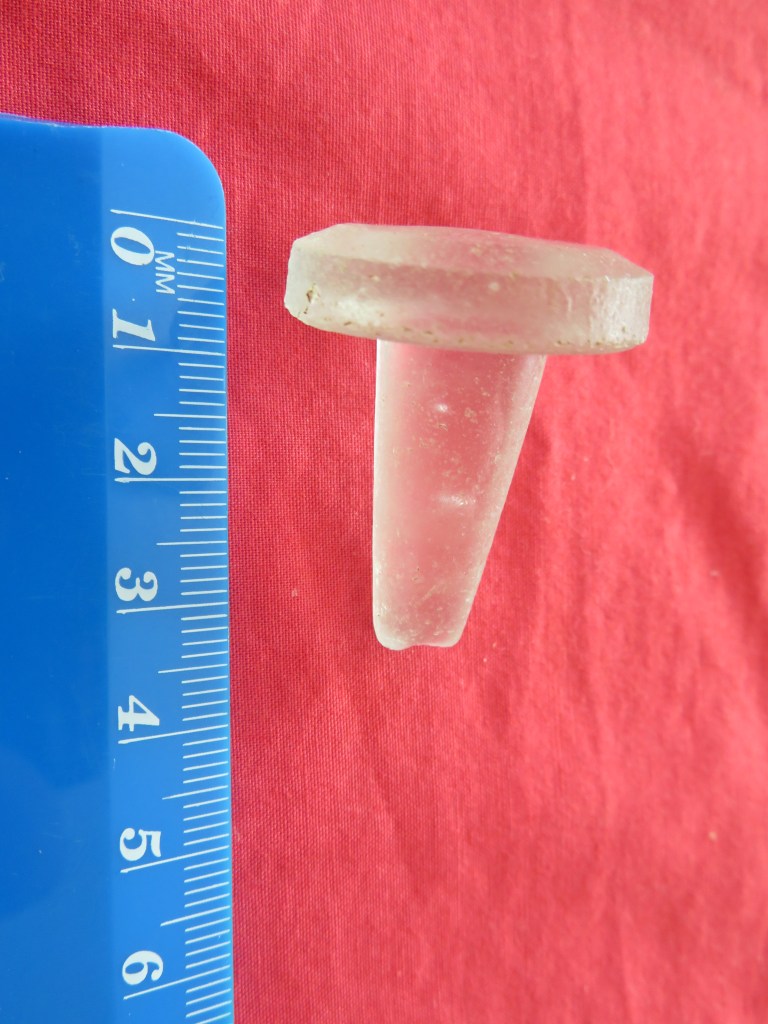
As you can see it is an interesting shape, being 6cm at its tallest, it looks like a crown with a blank space for perhaps a label (?) and locks of hair below. The material at first glance looks like milk glass but I am not sure as it it is quite matt and more like alabaster in appearance. All suggestions welcome…

And there you have it, just a few of my favourite things…

If you have enjoyed this blog please feel free to share, like and comment – tell me your favourite finds!

Mudlarking on the Thames – A Couple of Hours of Joy!

As an Amazon Associate, I earn from qualifying purchases and as such some of the links in this blog are affiliate links. This means if you clink on the link and purchase, I get a small commission, at no extra cost to you. The items I have linked are always ones that I myself have enjoyed/read – all opinions remain my own.

July 2022, it’s hot, humid and even though only 10am the sweat is beginning to accumulate between my shoulder blades and in other unmentionable places. Not for the first time I am surprised at how hot it is in the city. Crossing the road in search of shade, I find myself greeted by the vista of St Pauls Cathedral, but this is not my destination, turning left I head for the Thames and the Millenium Bridge. Today, or at least for a couple of hours, I am joining a group of like-minded people to…mudlark.

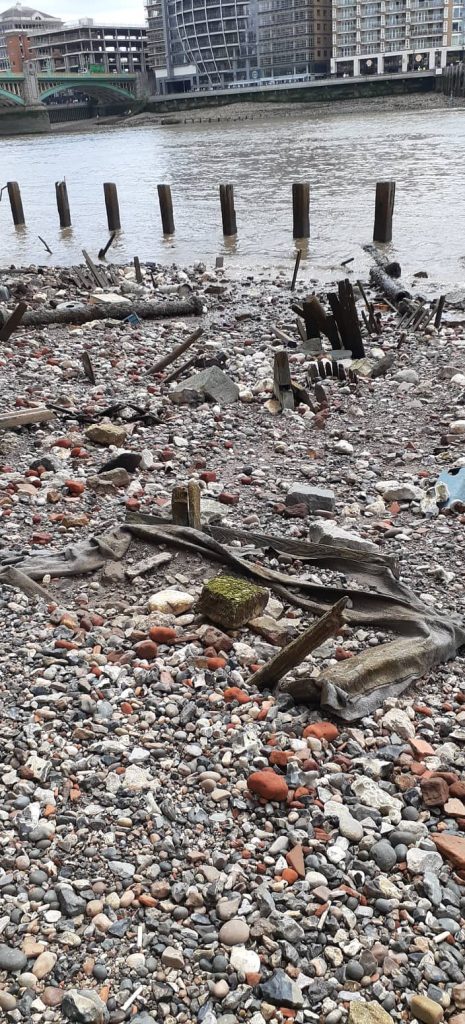
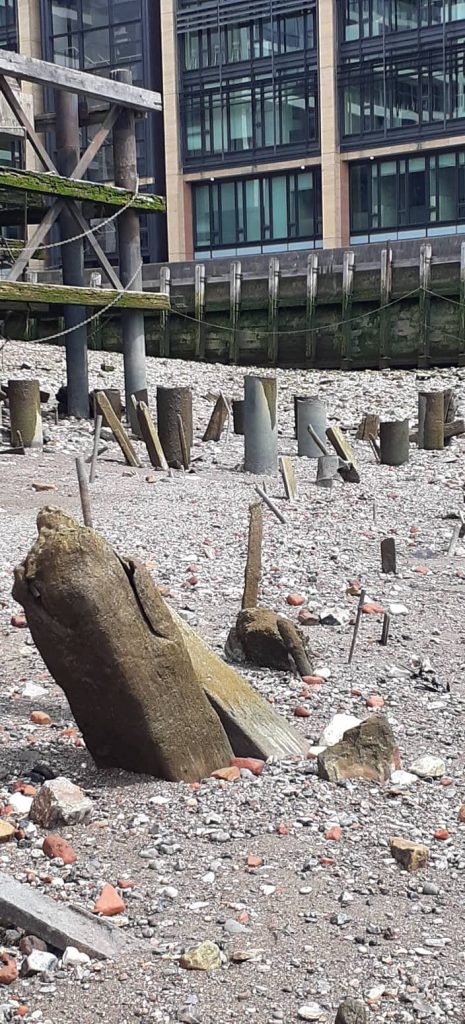
I am early, really early, but it gives me time to watch – the river and the people – from a shady spot, which, thankfully, is tickled by an occasional breeze. Observing the tide as it slowly retreats, numerous wooden structures begin to appear, the remains of old jetties and the like can be seen jutting out of the mud. The Thames has been the lifeblood of London for more than two thousand years and although officially it was the Romans who first established a settlement here there were other inhabitants of the area throughout prehistory.

The tide begins to fall…
The excitement builds as more of the foreshore is revealed…
Finally…I am on the foreshore…where do I look first? (note the ubiquitous clay pipe stem).

All of those people, have over thousands of years left traces of their lives on the foreshore of the Thames.

In the past mudlarks were group of souls who spent endless hours sorting and collecting useful debris from the mud to sell – it was an occupation for only the most desperate.

The searched for pieces of coal they could wash and sell on the streets; rags, bones, glass and copper nails they could take to various merchants to recycle…sometimes the children would turn cartwheels in the mud for the amusement of onlookers, who would toss in a penny for them to find. It was a pathetic existence and just a step away from the workhouse.” (L Maiklem ‘A Field Guide to Larking’ 2021).

Nowadays, mudlarks have a much-improved reputation – the twenty first century mudlarks of the Thames foreshore scour the mud and debris for stories of the past. Bits of broken pottery, clay pipes pieces, coins, buckles, pins, tiles, bones and much more all tell the story of London’s history. Not the story of kings and queens but one of ordinary people whose voices are often lost to us but who can speak to us down through time via the bits and bobs they lost and discarded along the river.

As some may already realise, larking is one of my favourite activities – in NZ it is dressed up as beach combing and often consists of finding odds and ends of glass bottles and 19th/20th century ceramics if I’m lucky. So when the opportunity arises for me to become a mudlark for a few hours…well…what can I say…(actually I yelled, ‘here take my money!’)

At this point it is important to note that not just anyone can mudlark on the Thames foreshore and there are a number of rules and regulations to follow. Everyone who is involved in the searching and removal of objects from the foreshore has to hold a permit to do so. There are also exceptions as to where you can and cannot search, for example, the foreshore in front of Westminster is completely out of bounds (for obvious reasons). There are places where only certain permit holders can go and there are rules surrounding the digging/scraping of the foreshore. For more information on the rules and regulations look here.

For the casual visitor to London there are two ways to get involved mudlarking – get a day permit from the Ports of London Authority or join a mudlarking tour. The Thames Explorer Trust do daily tours and give you plenty of time on the foreshore to fossick. Needless to say, my foray into mudlarking was with the Thames Explorer Trust, as I found it to be the cheapest and easiest way to get involved.

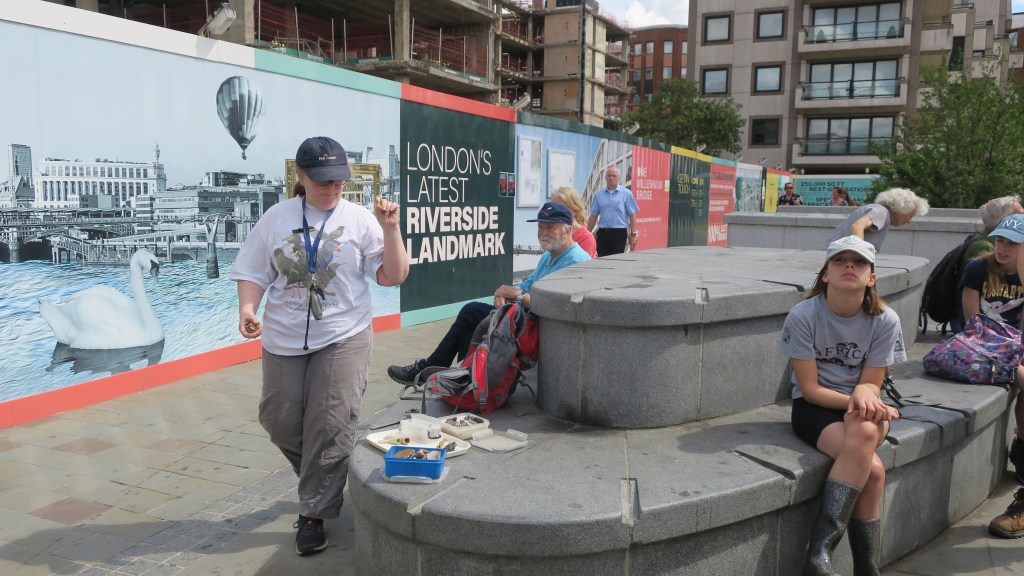
Our guide (standing in the hat) giving us a whistle-stop tour of London’s history through its artefacts.

Our guide for the morning was both knowledgeable and enthusiastic (and a fellow NZer!) She began the tour with a whirlwind introduction to the history of London and the types of artefacts we might find on the foreshore. Eventually, we were ushered to the steps that led down to the riverside. A few final words of warning from our guide (watch out for the wash of passing boats, no digging or scraping and don’t go past that point over there…) and we were left to our own devices.

The area where we were not allowed to venture – the round posts in the center of the photo are actually surrounding the remains of the Anglo Saxon wharf at Queenhithe. Only certain people are allowed to search in this area.

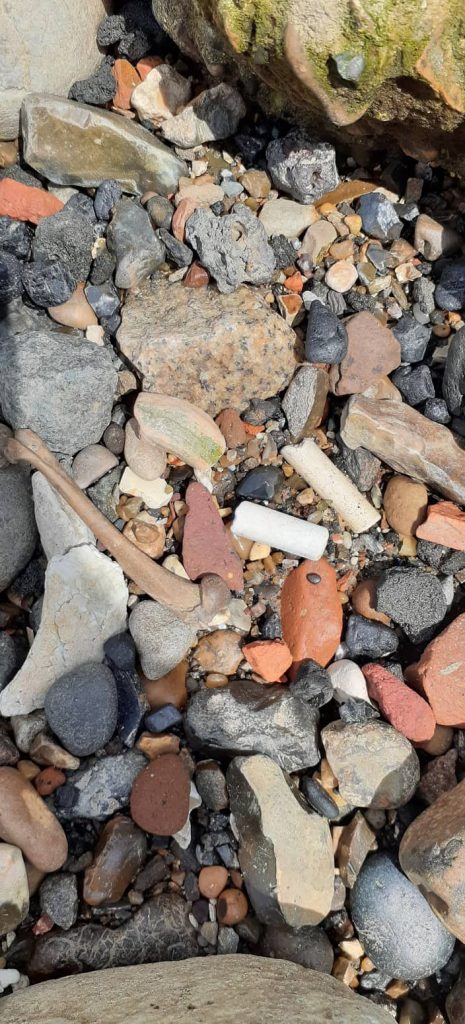
Bent over, eyes on the ground, the rest of the world receded to a low hum in the background as bit-by-bit London’s past revealed itself. The broken stems of clay pipes were by far the most numerous artefacts, along with red bricks and roof tiles, pottery fragments began to leap out. At first the ubiquitous willow pattern and plain white sherds but then as I looked harder, the green glaze of medieval pottery could be seen. Animal bones were plentiful, some the remains of someone’s fried chicken dinner, whilst others spoke of the butcher and the resources needed to feed the people of London. Oyster shells told a tale of cheap and easy eats (in the past oysters were not a delicacy but a cheap foodstuff for poor people).

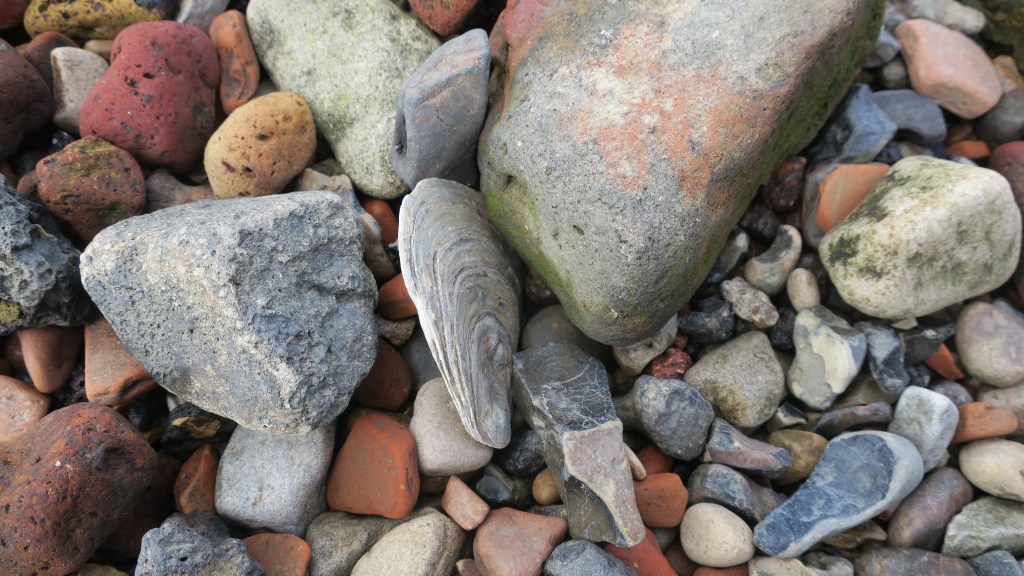
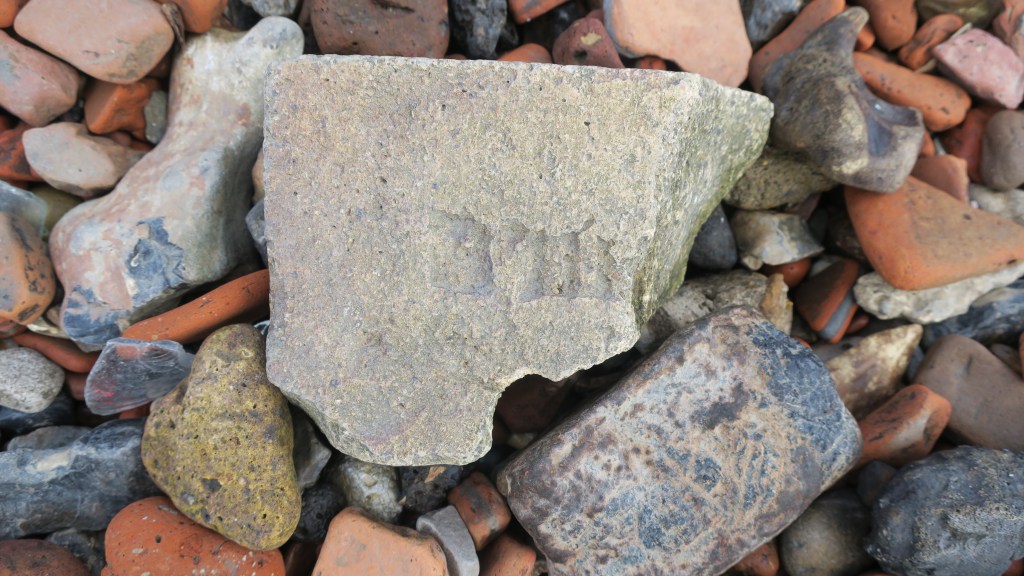
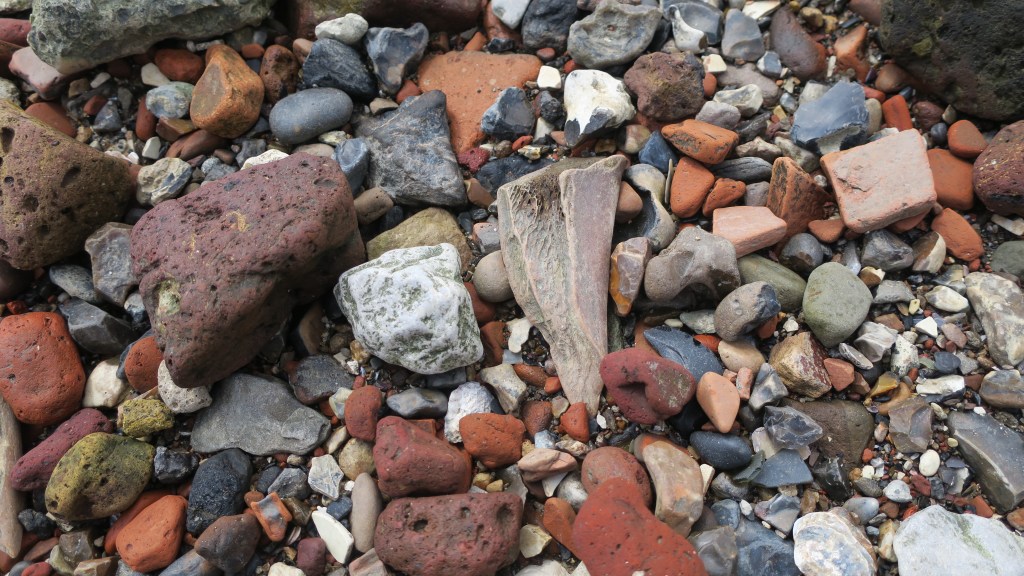
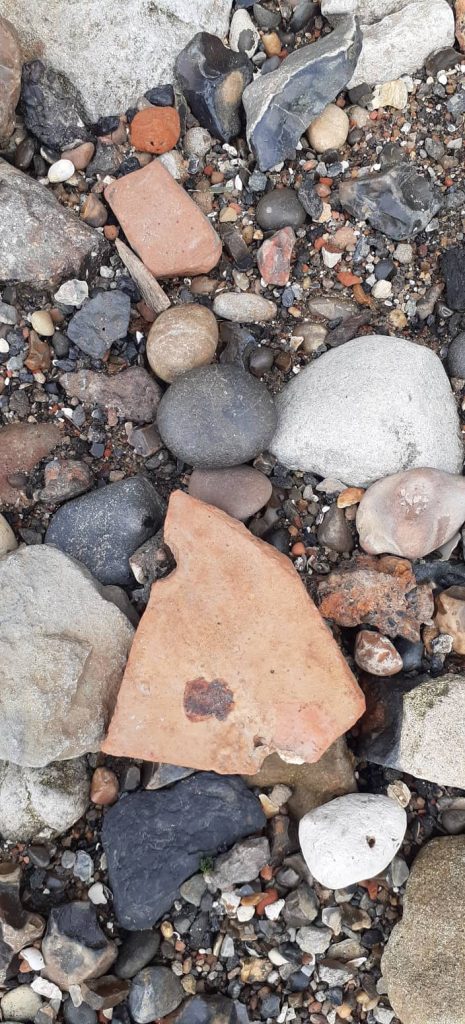
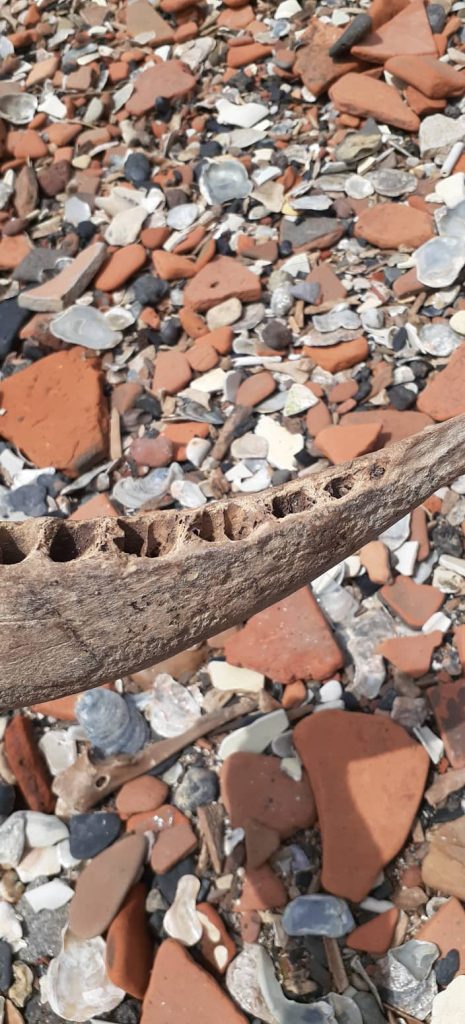
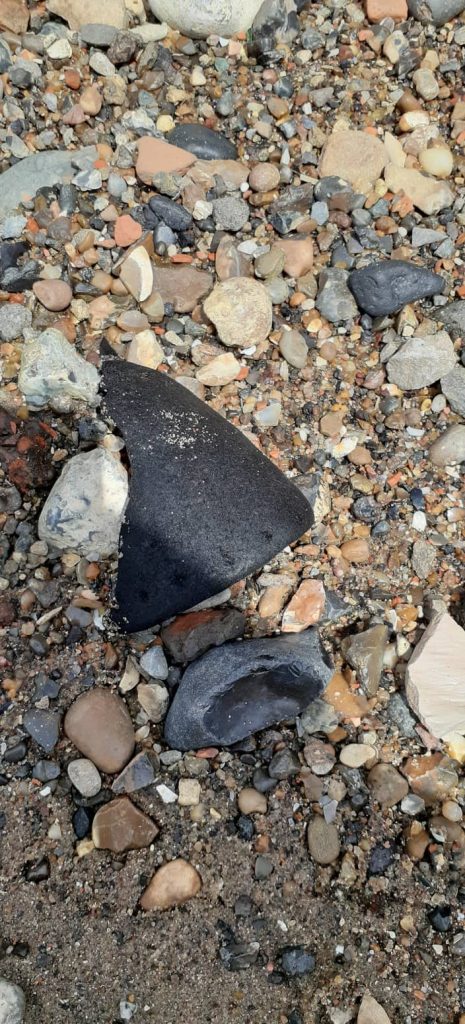
The above photos show just some of the things I spotted – in truth I kept forgetting to take photos, I was so engrossed. The first photo is of a roof tile, the nail holes can be seen on either side (I would like to think this was Roman but I cannot say for sure), second photo is the jaw bone of a pig and represents just some of the vast amount of bones found on the foreshore. The third photo is the sole of a leather shoe, age is undetermined but most likely Victorian – the Thames mud is of type which preserves organic remains very well. The fourth picture shows first a chicken leg bone, clay pipe stems and a small sherd of green glazed medieval pottery. The final photo is a close up of the medieval pottery sherd, note the quantity of terracotta brick and tile.

It was, simply, two hours of joy that flew by in seconds.

Please note, as a participant of the tour artefacts could not be removed from the foreshore; if you have one day permit you can remove artefacts but if you are travelling overseas, it is important to know that it is illegal to remove any artefacts over 300 years old from the UK. I would also like to stress that there are many laws around the removal of artefacts from any archaeological site (The Thames can be considered an archaeological site in its entirety) and it is up to the individual to know and understand these laws.

The following books are a good source of information regarding mudlarking on the Thames.

L. Maiklem (2019) ‘Mudlarking. Lost and Found on the River Thames’

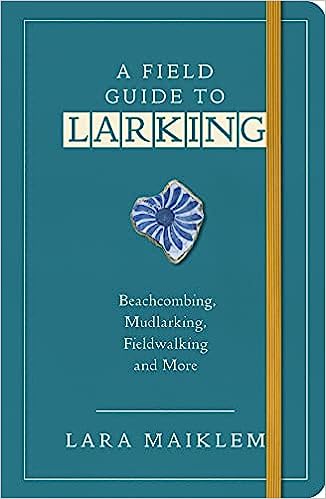
L. Maiklem (2021) ‘A Field Guide to Larking – Beachcombing, Mudlarking, Fieldwalking and More.’

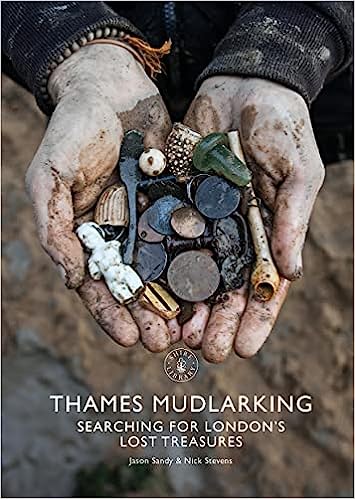
J. Sandy & N. Stevens (2021) ‘Thames Mudlarking. Searching for London’s Lost Treasures.’

Squatters Budgeree !! – A small find with a big story…

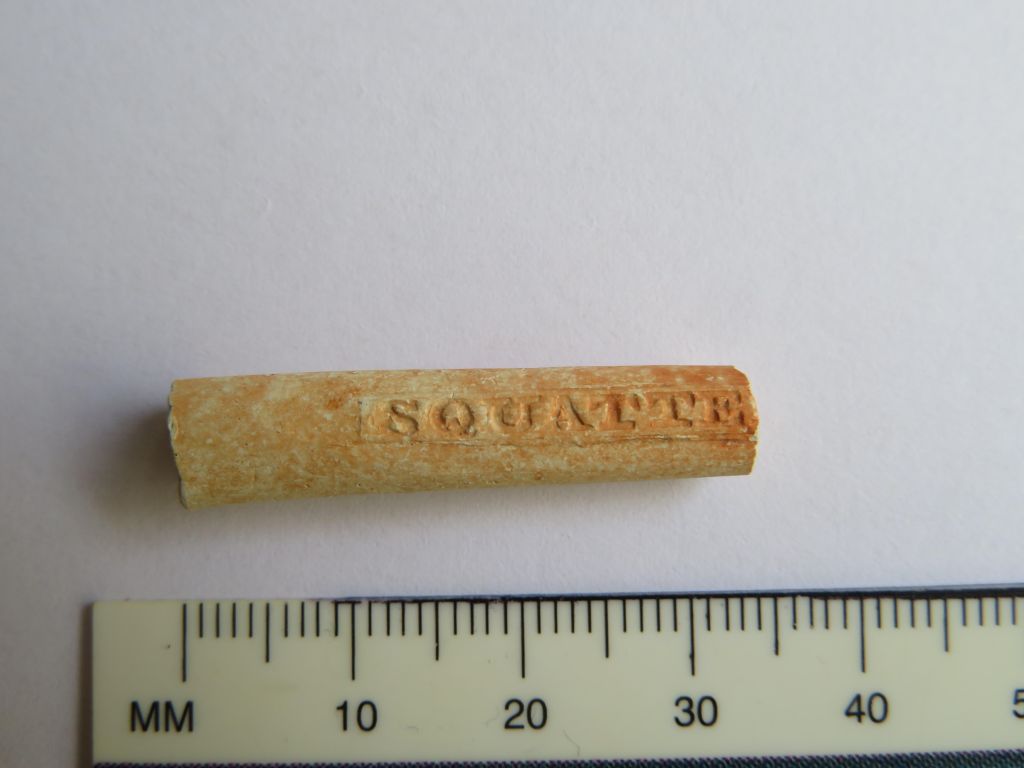
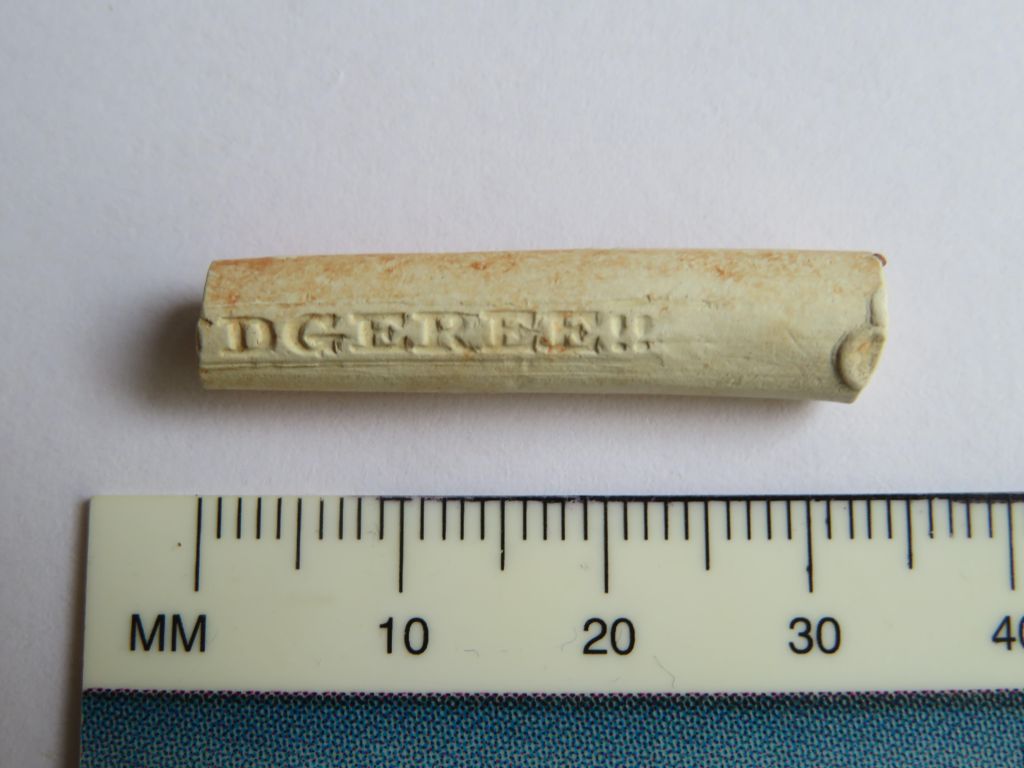
Recently I was contacted by a reader of this blog who showed me a small but intriguing artefact he had found on the beach at Fitzpatrick’s Bay (Waitemata Harbour, Auckland, New Zealand). The photo was of a single piece of clay pipe stem, not all that unusual in itself. Clay pipes are one of the most common finds on any settler/colonial sites. However it was the legend stamped onto the opposing sides of the stem that caught my attention – ‘SQUATTERS BUDGEREE!!’ – yes there are two exclamation marks at the end of the legend.

Such an unusual name must have a good story…

A quick online search located an article published in the Australian Historical Archaeology journal which was able to provide the background to the name (see below for the reference to the article and link) and some eloquent discussion on the symbolism associated with this particular pipe.

This particular type of clay tobacco pipe was manufactured between 1840 and 1865 for the Australian market and was one of the ‘first commercial products specifically branded to appeal to the Australian colonial market’. It should be noted that these were most likely manufactured in the UK and not actually in Australia. Although Gojak and Courtney (2018) suggest that the mold was created by someone with local knowledge. When first manufactured the pipe itself spoke volumes about the political and social situation in Australia at the time.

Australia in the late 1830s and 1840s was undergoing a period of pastoral expansion which resulted in the dispossession and often violence towards indigenous people. Events came to a head with the Myall Creek massacre in 1838, here around thirty Indigenous people were murdered. This went against the then colonial government who tried to reign in the pastoralists and protect the Indigenous people. The government hunted down a number of those who were responsible for the massacre, seven of which were executed.

The symbolism therefore advocated for the pastoral interests at a time when there was a significant divide in colonial society…the symbolism of the pipe matched what many people already believed, that Aboriginal society was widely thought to be doomed…reflecting the belief in the inevitability of the strong and advanced overcoming the weak and primitive.

Gojak, D., & Courtney, K. (2018). Squatters Budgeree: a distinctive clay tobacco pipe produced for the Australian colonial market. Australasian Historical Archaeology, 36, 5–15

The bowl was decorated with coarse depictions of Indigenous people drinking alcohol on the side with word ‘budgeree!!’ And a pastoralist with animals under a cabbage tree on the side with the word ‘squatter’. The symbolism of the two opposing scenes clearly spoke to many in colonial Australia of the differences between the Aboriginal world of chaos and savagery and the world of the pastoralist – serene, productive, sobriety and quiet reflection. Even the exclamation marks at the end of the legend serve to emphasise the indignation of the pastoralists who felt they were being unfairly treated by the government in favour of the Indigenous people.

Unfortunately, all that was found at Fitzpatricks was a short fragment of stem but the words stamped on the stem are also a political statement. Both words originate in New South Wales – ‘squatter’ refers to the pastoralists who grazed their herds on land without government sanction, whilst ‘budgeree’ is a form of pidgin local dialect and comes from the Dharug language from Sydney. It means ‘something that is good’ or ‘someone who is doing well’. Thus the words can be read that the ‘pastoralists are doing really well’.

From this point on colonial society became split into two camps, those who supported the pastoralists and those who did not. Using the ‘Squatters Budgeree’ pipe became a political act – a way of displaying support for the pastoralists. Not dissimilar to our modern inclination of showing support for various causes on a t-shirt.

Photo by D J Payne and used with permission.

So, what is an Australian tobacco pipe doing in New Zealand? Other Squatter Budgeree pipes have occasionally turned up during excavations in New Zealand, such as, at Paremata on the Porirua Harbour and the Victoria Hotel site in Auckland. In the case of Paremata, a military site, it could be that it arrived as a personal item with troops from Australia at the time of the New Zealand wars. Whilst the excavation of the Victoria Hotel yielded a large number of clay pipes, amongst which was a variety of Australian themed types, including the Squatters Budgeree. At the time almost all of New Zealand’s imports came through Australia and it is most likely that these pipes were part of a general lot. It is equally possible that such pipes were sold in New Zealand from a job lot, so to speak, when the Squatter pipes went out of fashion after 1860.

In regard to our small but perfect specimen, the jury is out but given the bay’s proximity to the new settlement of Auckland, the connection to the harbour and of course our understanding of the early settlement of Fitzpatricks Bay – the reader can make their own judgements…

Reference – ‘Squatters Budgeree: a distinctive clay tobacco pipe produced for the Australian colonial market.’ By Denis Gojak and Kris Courtney. Australian Historical Archaeology Vol 36 2018 pp5-15.

https://www.jstor.org/stable/26775685

Written with special thanks to D J Payne who brought the pipe stem to my attention and provided the photos for this blog post. Please do not use the photos without permission.

Excavating on otata Island

Otata Island is the largest of several island that make up the Noises island group. Situated on the edge of the Hauraki Gulf, its nearest neighbour is the island of Rakino.

View of Rakino Island from the beach at Otata.

In 2018 a storm swept away some five meters of the shoreline and in doing so exposed a large midden, approximately 50m in length. Concerned that even more of the shoreline and thus the midden could be lost during subsequent storms the landowners (the Neureuter Family) contacted the Auckland Museum for assistance.

The beach at Otata, the excavation site is just pass the tripod legs of the sieves. For those who know this island well, the beach has been dramatically transformed in the last 2-3 years – in places the erosion issue is plain to see.

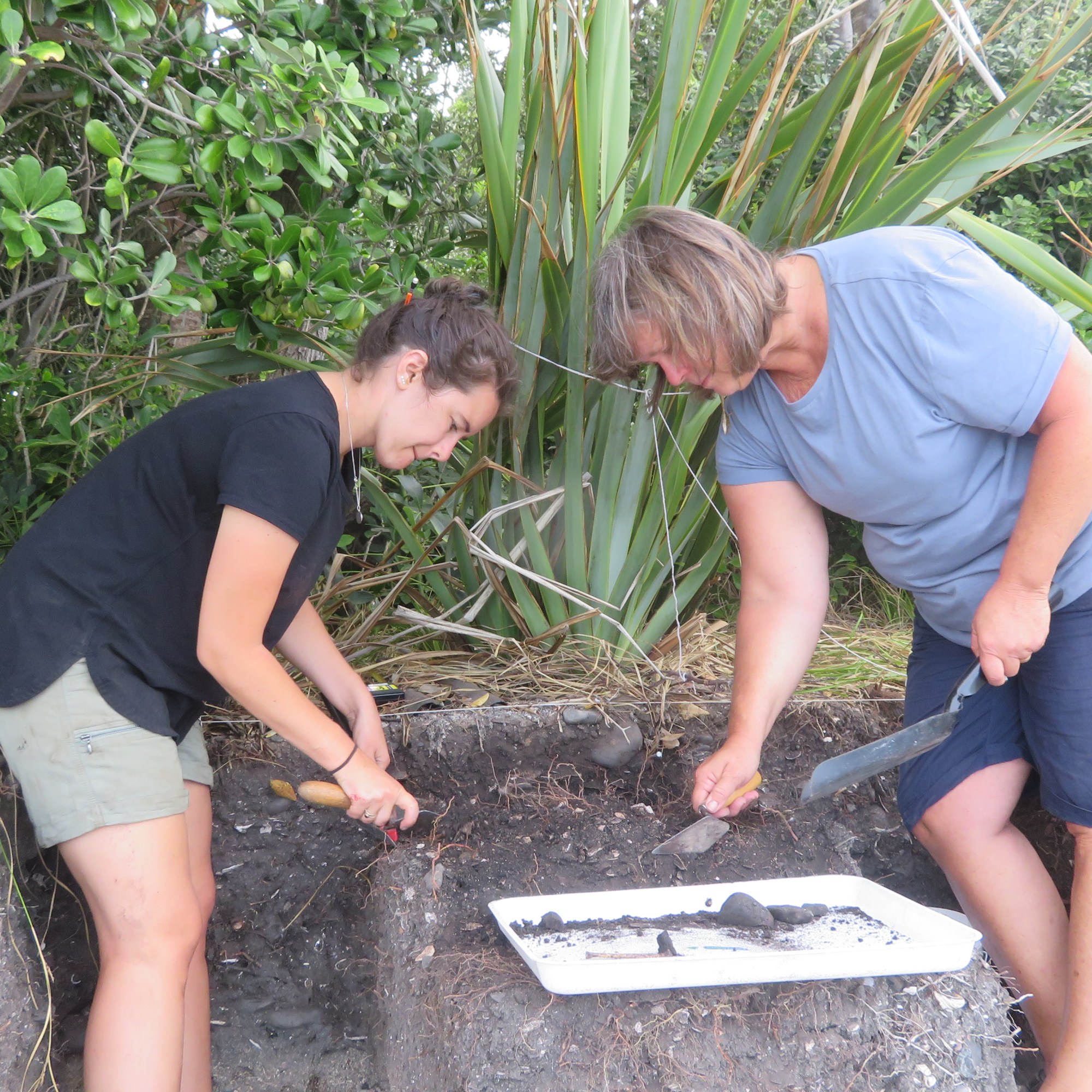
In March 2020 (just prior to New Zealand’s month long lockdown) archaeologists from the Auckland Museum, led by curator Louise Furey, along with representatives from Ngai Tai ki Tamaki and the family began a week long excavation. The following year they were back again for another week of digging (- it was at this time I was given the opportunity to participate).

One of the aims on both occasions was to record vital information before the midden was lost to erosion – a common issue for archeology in New Zealand where so many sites are situated in coastal areas and are vulnerable to climatic conditions. The fragility of the shoreline was evident during the 2021 excavation, when large chunks of the edge would crumble away with the slightest touch – the square I was excavating was reduced by a third by the end of the dig. It is not hard to imagine what a storm surge could do.

Of equal importance is another of the aims of the project was provide an environmental baseline for the understanding the marine environment around Otata and how it has changed over time.

“For archaeologists the most exciting feature of the Otata midden is the rich diversity of species contained within it. Middens with an abundant range of species are rare in the Hauraki Gulf and only a few have undergone full analysis”

E. Ash ‘Excavating Otata Island: A Midden Revealed’ Auckland Museum Blog.

The partnership with the Ngai Tai ki Tamaki provided another dimension to understanding the archaeology. Mataurangi Maori – the knowledge and oral histories of local iwi – can serve as a valuable aid for the understanding of archaeological sites. In the case of Otata, the archaeology appears to support the ancestral stories, aiding our understanding of how early Maori used the Hauraki Gulf.

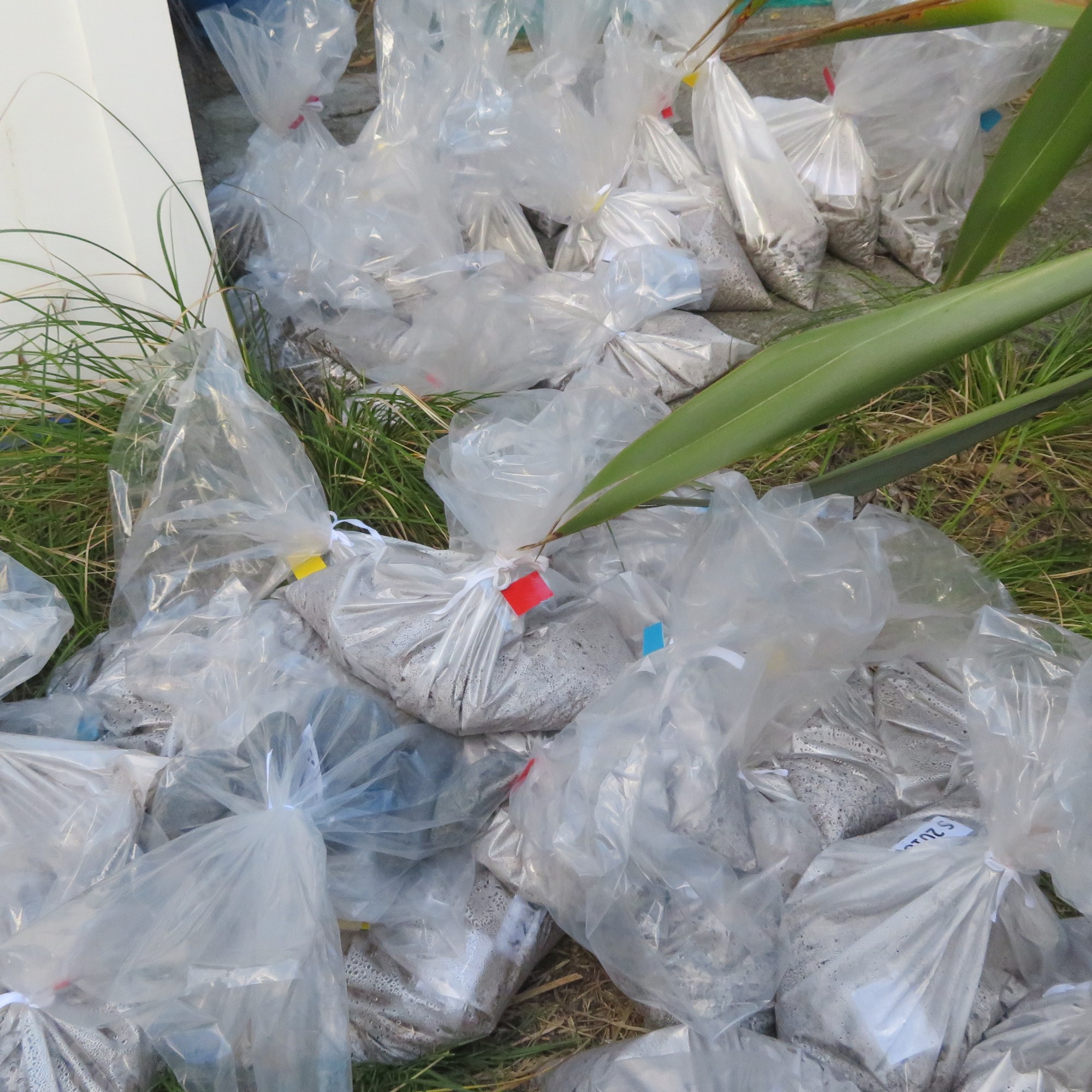
Because of the size of the midden, it would have been impractical to excavate large areas, instead a sampling strategy was employed. In total over the two weeks, seven one meter squares were hand trowelled, using a system of 5cm spits (unless features were identified) with the material from each spit being sieved (6mm and 3mm). The sieved material was then bagged up to be taken back to the museum for further analysis. In both years the samples taken from the island weighed in at approximately 500kgs.

The sieving area with the excavation behind (2021) – the exposed face of the midden allowed us to dig directly into the midden.

From these samples it is the intention to identify and quantify the types of shellfish, fish and birds that were found on and around the island. This gives us an idea of foraging behaviour, food preferences and seasonality.

During the 2020 dig one of the squares dug down into a large hangi which consisted of quantities of burnt shell, a dense charcoal layer and large stones (see Emma Ash’s blog below for more details). Also discovered during that week was a cultural layer sealed below a layer of volcanic ash (tephra) from the eruption of Rangitoto. Only one other site in the Gulf has a similar stratigraphy – the Sunde site on Motatapu Island. It was this lower layer which was the focus of attention during the 2021 dig.

The plan for the 2021 dig was to excavate four one meter squares, each of which was further divided into four quadrants and all but two of the quadrants were excavated.

On a personal level this was fascinating week, not only did I have the opportunity to be digging what, I am sure, will turn out to be a very important site but I was in the enviable position of camping on beautiful island in the Hauraki Gulf. It had been some years since I had last been on a dig so I was a tad nervous about stuffing up…anyway lets just say it was a bit like riding a bike, once learnt never forgotten – at least that’s what they say, I haven’t ridden a bike since I was a child so goodness knows how that would go.

The following are a few photos from the 2021 excavation and my experience (please note these are my own photos).

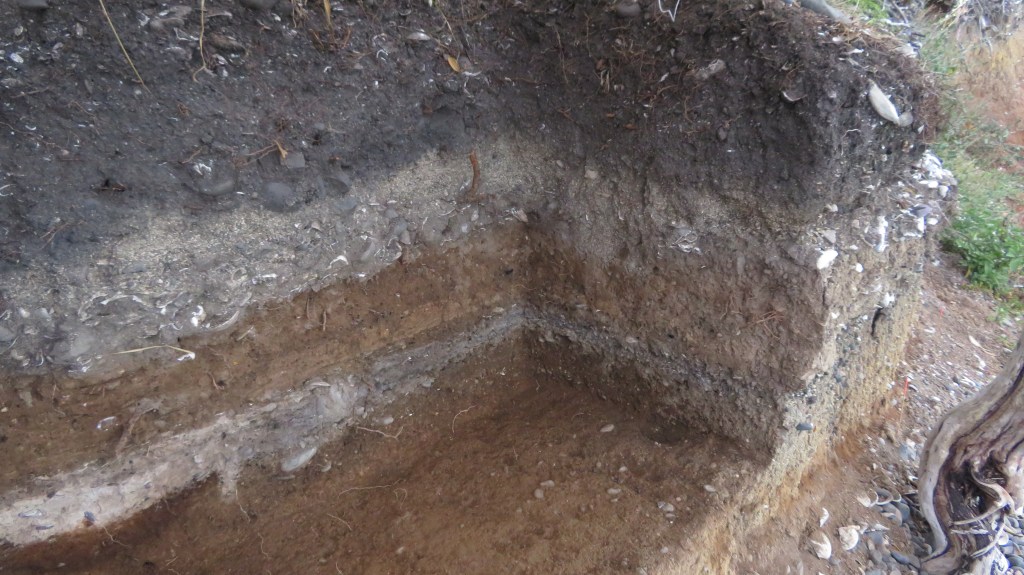
The upper cultural layers found above the tephra, note the blackened stones , the white flecks are degraded shell.
One of several obsidian flakes found at the interface between the tephra and the upper layers.
Removing an intact sample of the tephra stratigraphy for later analysis.
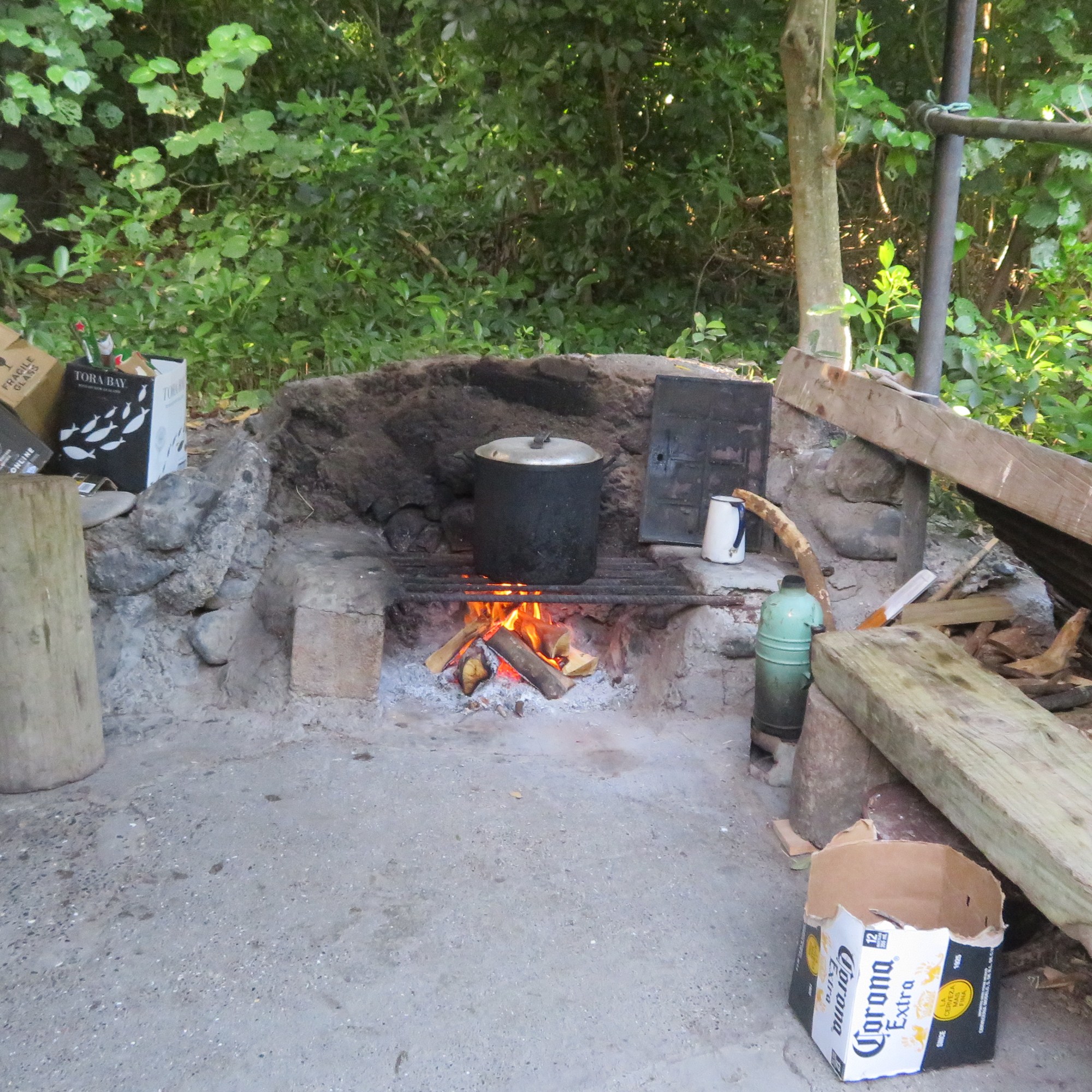
You would be forgiven for thinking we were castaways…
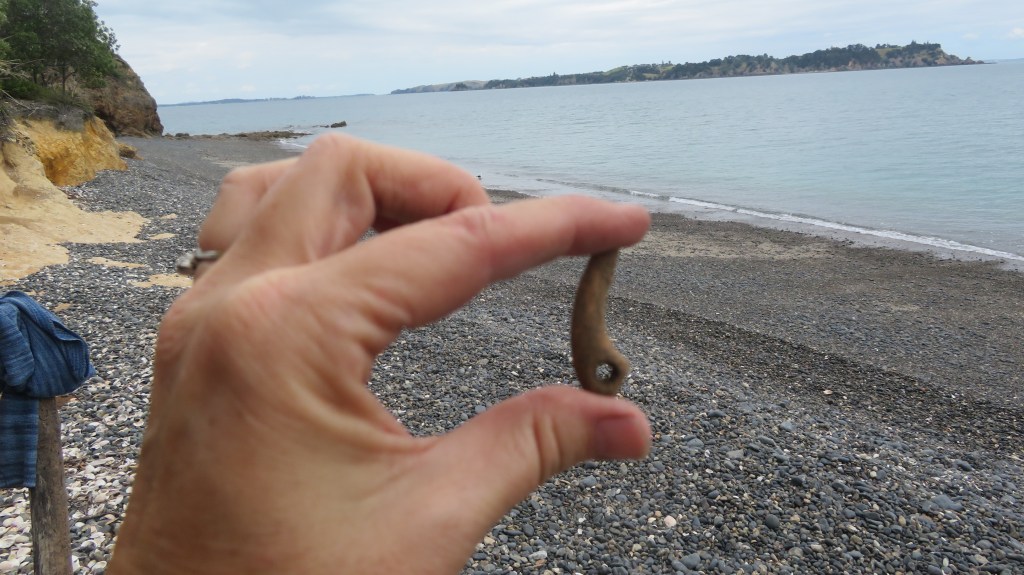
A favourite find – a bone lure point.
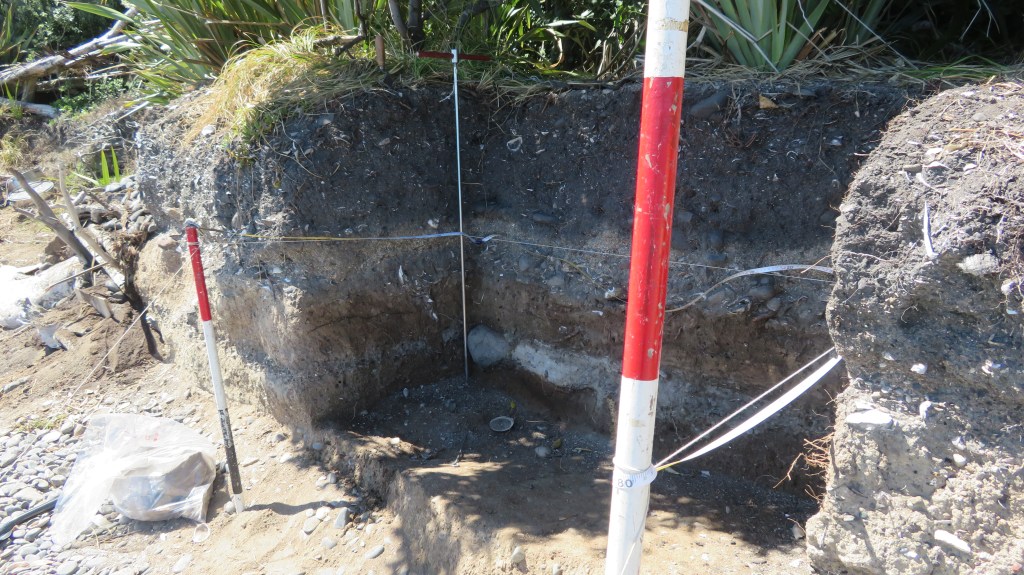
Areas E and F – partway through the tephra layer. The light gray layer was full of shell and bone.
Areas E and F – now below the tephra and into an earlier cultural layer in which a hollow had been dug for a fire and large stones were placed around the edge.
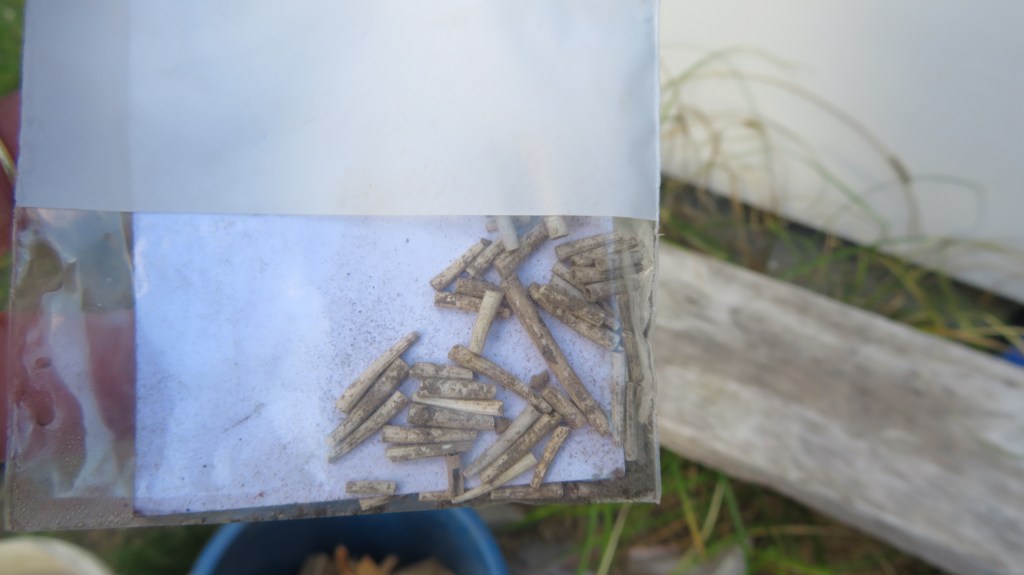
These are ‘Dentalium nanum’ beads – a form of tusk shell commonly found in New Zealand waters and used for personal ornamentation by Maori and is more typically found at sites in the Coromandel. These were very carefully excavated from the ashy layer associated with the fire feature in the above picture.
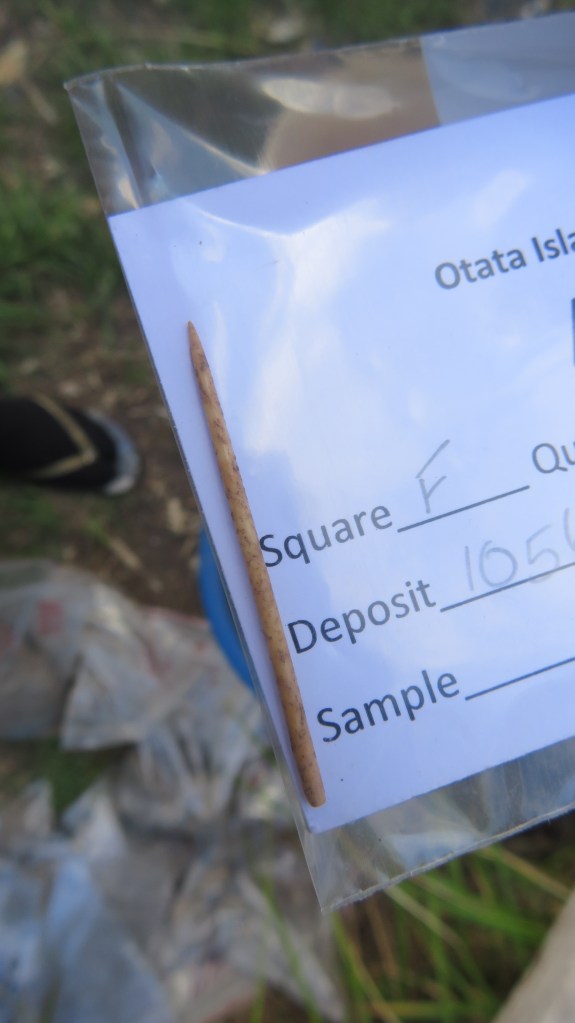
A very fine bone needle, found below aforementioned feature and to the edge of square F.
Recording the sections…
And we’re finished – square E and half of square F.
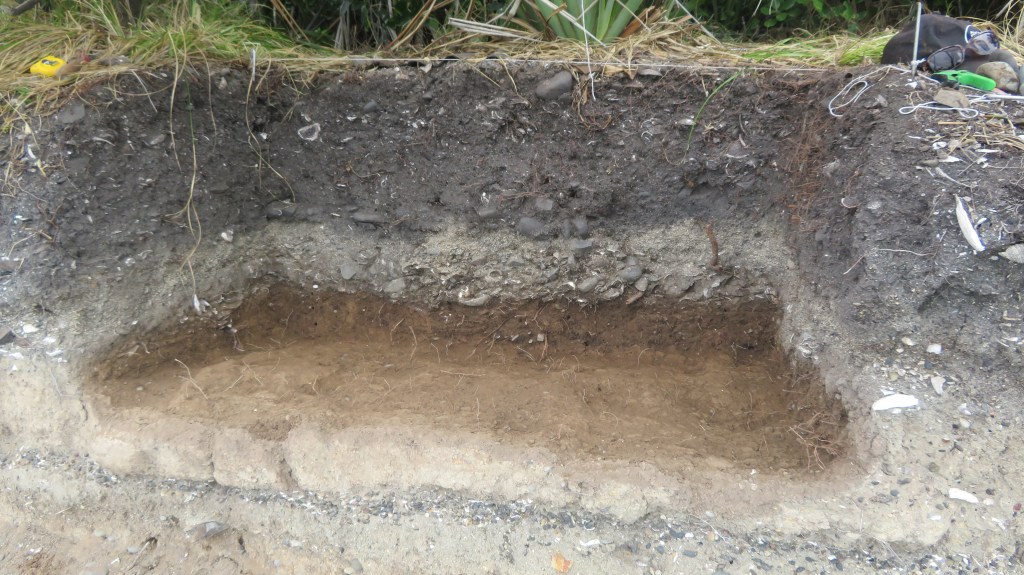
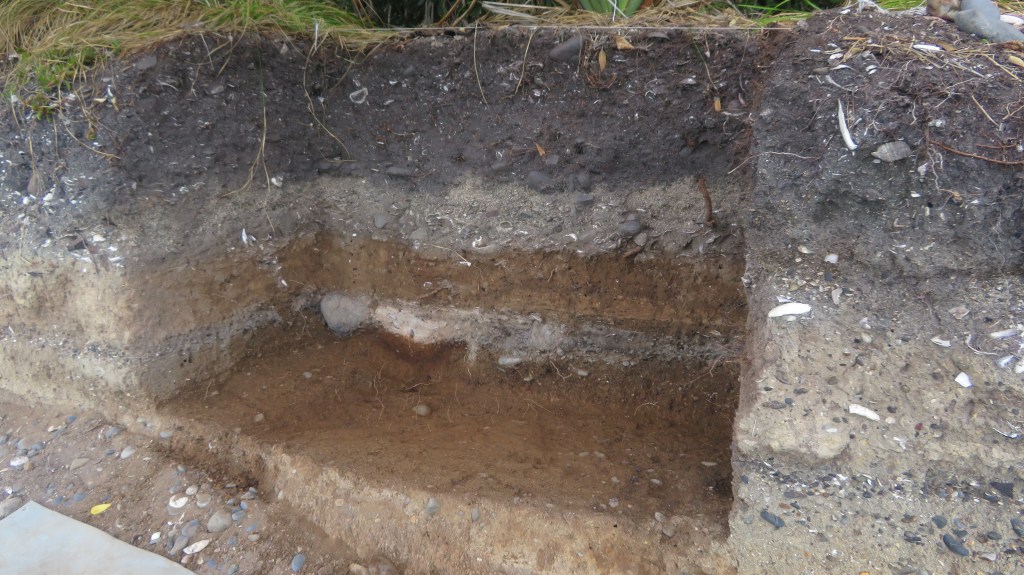
Another look at the final stratigraphy looking south east.
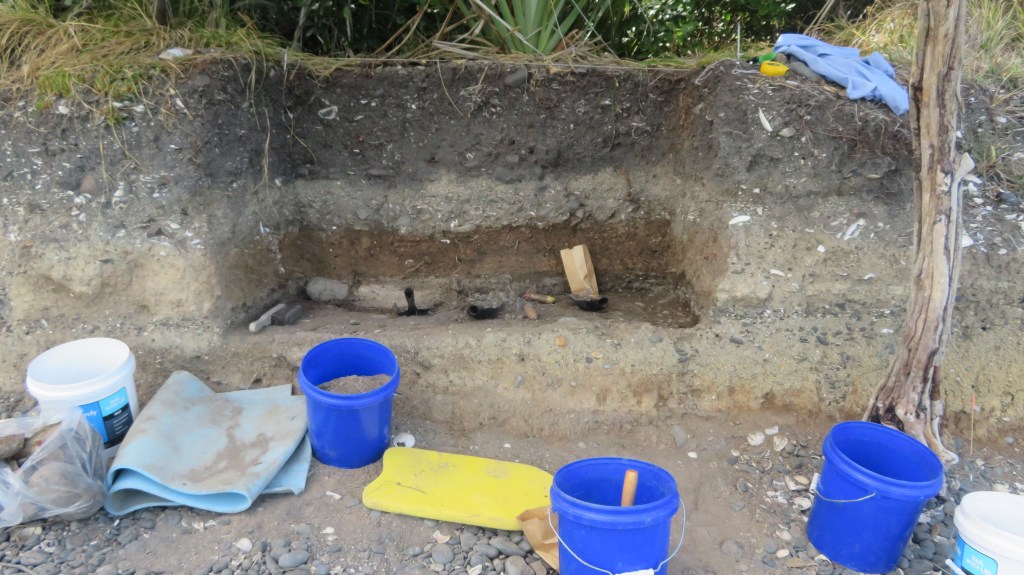
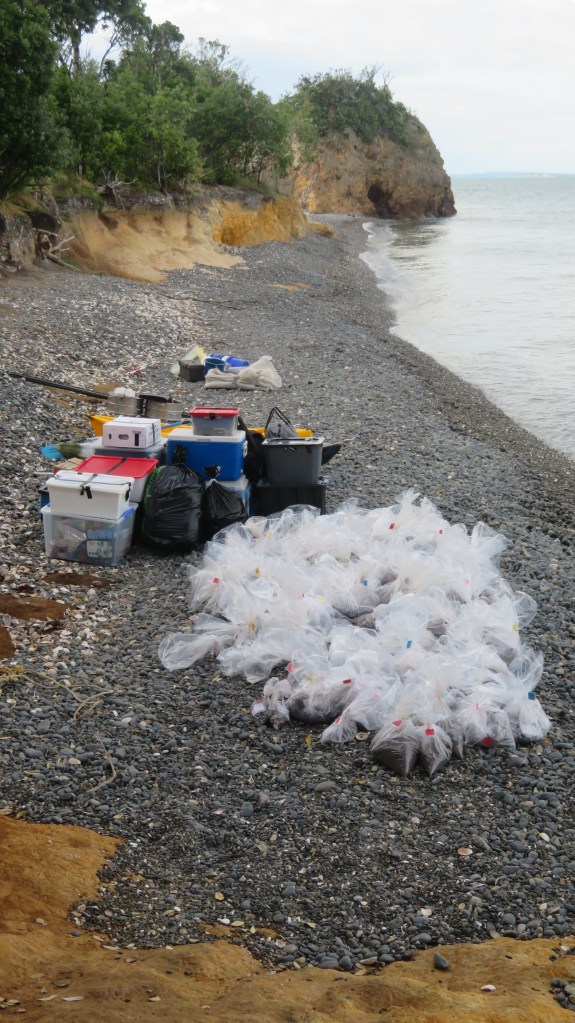
Our gear and many, many bags of samples waiting for pick up…

As a final note I would like to thank Louise Furey (and company – you know who you are) from the the Auckland Museum for inviting me along on the dig this year. I came home tired, smelly, covered in mozzie bites and just a little crispy but even so it was a thoroughly enjoyable experience and one I shall not forget in a hurry…much like riding a bike…

More Information

‘Excavating Otata Island: A Midden Revealed’ by Emma Ash, Auckland Museum Blog. A post on the 2019 excavation.

‘A Second Look Into the Past’ By Emma Ash, Auckland Museum. A blog post on the website below that covers the 2020 excavation.

The Noises (website about the island group in general, including many of the scientific projects being undertaken.)

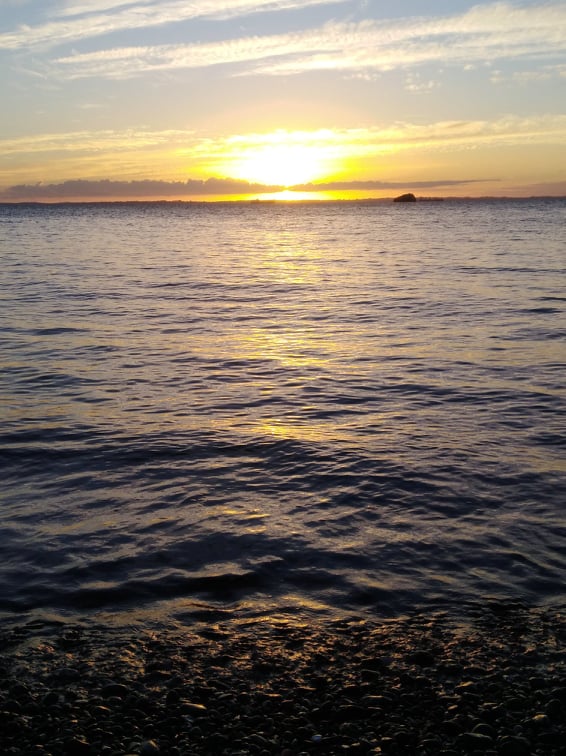
last one…sunset on the last evening…perfect…

Archaeology? What Archaeology?

I have had the privilege of being involved in archaeology in both the UK and to a lesser extent here in New Zealand. If you have read my bio you would know that I taught archaeology to University students and adult education students in Cornwall and here in NZ I am a volunteer with the archaeology department at the Auckland Museum.

Recently as part of the latter I was involved in a Bioblitz event on the Coromandel Peninsula.  Over this three-day event first the local schools and then on the Saturday the community were invited to participate in a range of activities, mostly to do with the natural environment. Members of the Auckland Museum, DoC Rangers and prominent locals encouraged the children and adults alike to look deeply at the world around them.  

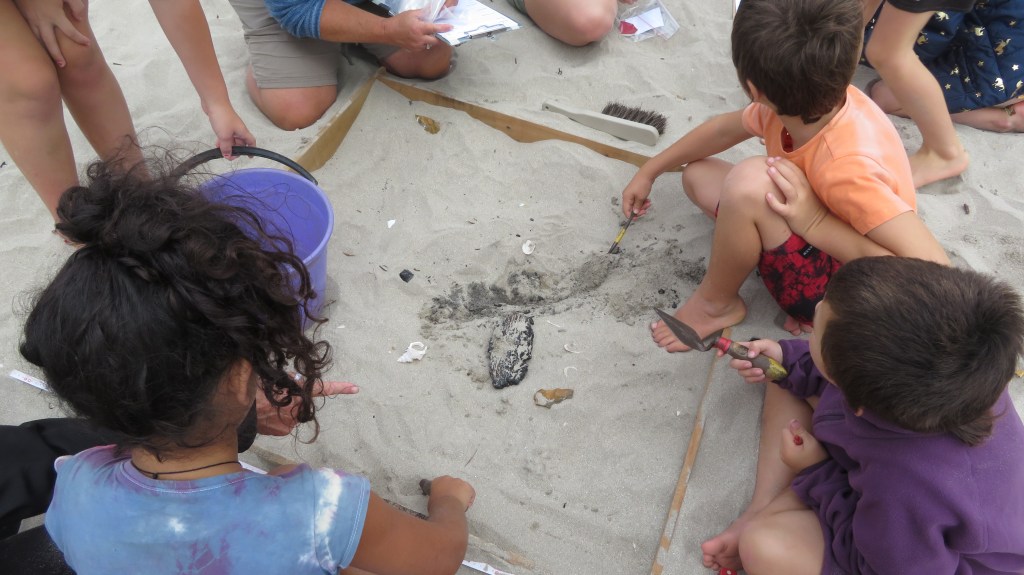
For the first time the archaeologists were also involved and for our part we conducted a mock excavation on the beach for the school children as a way of engaging them in what it is that archaeologists do – it was an interesting experiment and it certainly brought to light an issue that is prevalent within the average New Zealanders mindset.

The mock excavation underway

At the beginning of each session the curator, Louise Furey, would ask each group what they thought archaeology was, ‘what do archaeologists do?’ And yes, you guessed it each and every group came back with, ‘digging for dinosaurs/fossils/treasure’. They can of course be forgiven after all they were just children and the forty-five minutes we had them with us was probably not enough time to get across the complexity that is archaeology.

However, what it did do was get me thinking – why is archaeology in New Zealand so invisible?

Even as a university student here in Auckland when people asked me what I was studying and told them archaeology/anthropology they either did not what they were or once again I would get the old, ‘so you dig up dinosaurs?’ It was frustrating in the least…

Moving to the UK, studying and teaching archaeology there was a completely different game. Archaeology in the UK does not need to explained, only the occasional person who thought they were being funny would mention dinosaurs and thanks to numerous tv shows (Time Team, Meet the Ancestors and others) it was much more main stream. As a teacher of adult education there was no end to those who were keen to learn about archaeology and when I came back to NZ I attempted to start adult education classes in archaeology locally but the uptake was so small (3 or 4 at the most) that it was not viable. So why might this be?

I believe ultimately it comes down to people’s perception of the past and perhaps comparing NZ to the UK is not fair, the two countries have vastly different histories but I do think we can learn something from the UK on how to promote the past as being a place everyone can visit and learn from.  

I have on several occasions had people ask me if there was any archaeology in New Zealand – they are surprised to learn that not only is the answer is ’YES!’ but that is somewhere around 70,000 archaeological sites in the country, not bad for some 800 years of human occupation. Here is the problem, in comparing ourselves with other countries which have a much longer history we do ourselves a disservice, convinced that our past is not as exciting or as interesting as others we disregard it; archaeology, heritage, history take a back seat and in the case of archaeology become virtually invisible.

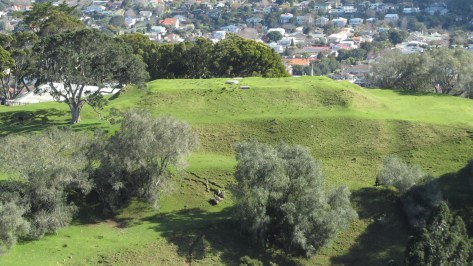
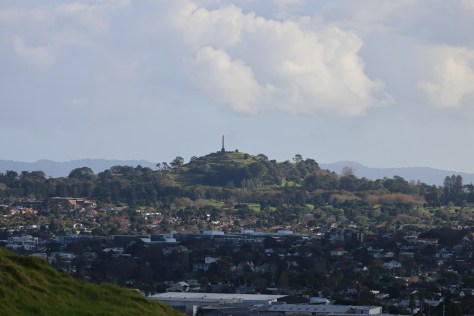
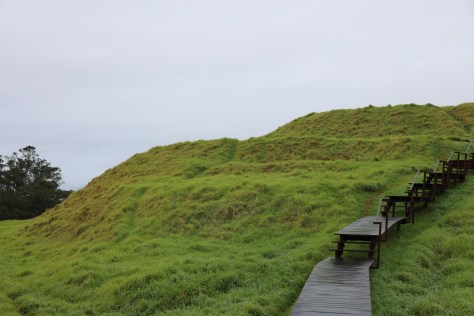
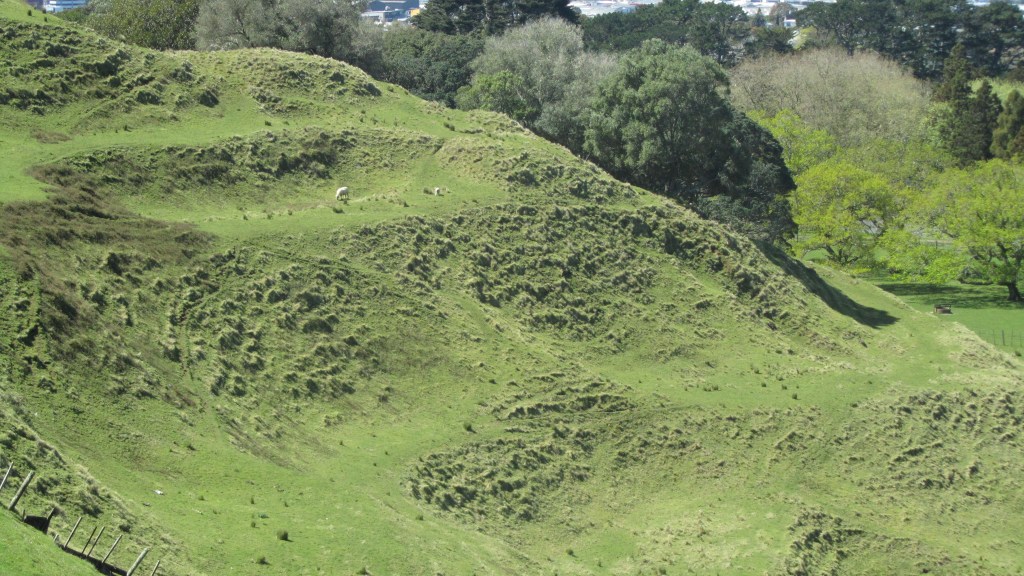
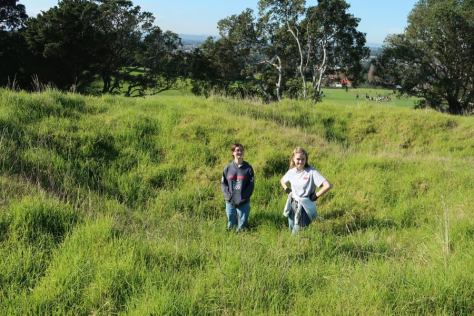
The humps and bumps of terracing on Maungakiekie (One Tree Hill, Auckland), a place of importance for the Maori of Tamaki Makerau and one of many archaeological sites in New Zealand.

Archaeology in NZ has for many years been the domain of professionals and academics which has in effect built a wall between themselves and the general public that was almost impossible to climb over. Changing perceptions takes time and this process has already begun with events such as Bioblitz and New Zealand Archaeology Week which actively involve and educate the public, the enthusiastic amateur. But there is still work to be done, education is vitally important and whilst we do not want people digging up sites (please do not do this, not only is it highly illegal and get you into a whole lot of trouble – about $50,000 worth of trouble – it is ethically wrong), we do want to encourage awareness, understanding and respect.

In a recent Heritage New Zealand newsletter, the Chief Executive Andrew Coleman stated

Archaeology is one of the most questioned aspects of heritage. The questions are often negative and many highlight a significant misunderstanding on the important role archaeology plays in Aotearoa New Zealand.”

Why is archaeology important in New Zealand? In essence, because our oldest heritage can only be found beneath the ground and reading the evidence in a careful and controlled way is the domain of the archaeologist. Andrew Coleman titled his column ‘Archaeology – the unsung hero of history and heritage’ and he is right it is the unsung hero. Without it our picture of the past would be incomplete, there is only so much standing buildings, documents, oral histories and the humps and bumps of the landscape can tell us.  Each are important individually but together with the archaeological knowledge a much more complete picture can be had.

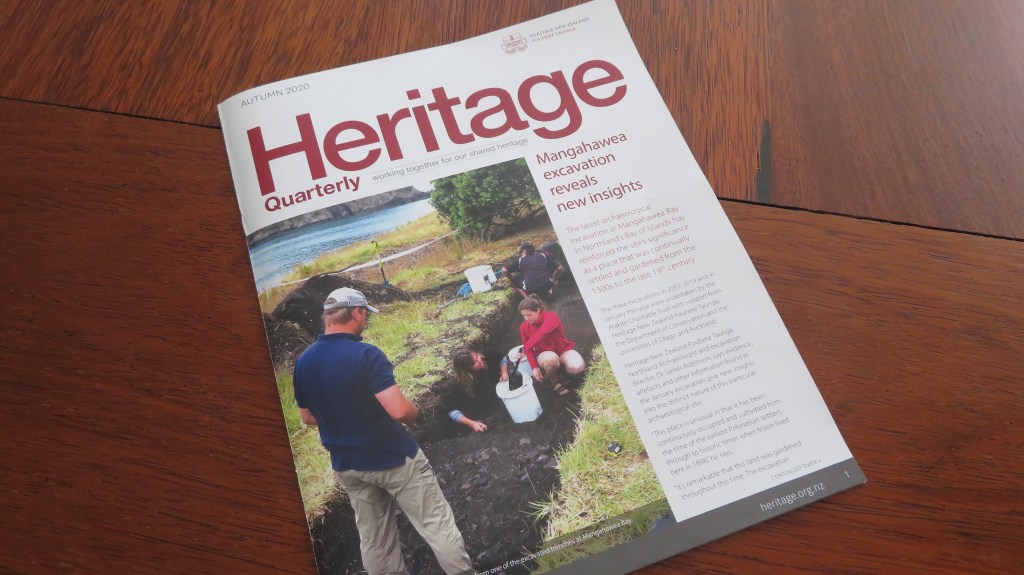
The March issue of Heritage New Zealand newsletter featuring the excavations at Mangawhea in the far north – one of several excavations which are helping us understand the lives of the first people to New Zealand.

It is the kiwi way not to blow our own trumpet but instead we wait for someone else to notice what we are doing and then tell the world – are we as archaeologists too shy to say ‘hey look at us, we’re important too!’ Perhaps we are just tired of the dinosaur jokes and the Indiana Jones references…Maybe it is here we could look to the UK and the way in which archaeology has connected to the media (Daily Mail headlines not included). Television in particular has played a significant role in awakening the public archaeological interest but it does require the archaeologists to join in. There have been several interesting albeit short lived tv shows here in NZ that have attempted to follow in these footsteps and had the potential to show the masses our unique and fascinating past.

In my own rather humble opinion awareness of archaeology in this country begins with education, not just at university level but at primary and high school. Archaeology is after all one of those subjects which encompasses all aspects of the school curriculum regardless of level. Maths, English, geography, biology, chemistry, physics, geology, environmental science, economics, statistics, computer studies, art, history, technical drawing, photography and more are all subject’s archaeology includes in its parameters. So why isn’t it being taught as a part of the school curriculum, to our children who are the future custodians of our heritage? More specifically why isn’t New Zealand archaeology being taught to our youngsters?

We often encourage our children to be themselves, to not compare themselves with others, to accept their unique points, to celebrate that which makes them different. Perhaps it is time we started doing the same to our past, to celebrate not just the parts that are visible but that which is unseen and underground, to say cheers to the archaeology!

For those who want to know more about archaeology in New Zealand both the New Zealand Archaeological Association and Heritage New Zealand are good places to start.

Addendum – I am sure there are some who might read this article and say why would I care, after all I did leave New Zealand to study and work in the UK and that would be fair to ask. At the time of finishing my BA at Auckland University in the mid-90s, I could see that opportunities for me would be limited, this combined with a desire to travel (it’s a kiwi thing) and a long-standing interest in British archaeology it was only natural for me to head overseas. But I have been back now for almost fifteen years watching from the side lines and my enthusiasm and love of the subject has not waned. It does not matter where I am, for myself it is the understanding of the past that matters and archaeology is central to this.

Land Use and Settlement in the Upper Waitemata – Part Two

In this the second part of my small study of land use and settlement in the Upper Waitemata we are staying within the area defined in part one – from Island Bay to Kendall’s Bay, keeping within the coastal strip.  This part will take a look at the early colonial/settler history of the area, with the emphasis being on the early or pre-WWII.  After this point in time there is plenty of written records and several good books written on the history of Birkenhead and I have no desire to rehash already well-known information.

In 1769 Captain James Cook sailed through the Hauraki Gulf past Waiheke Island and made a note that there might be sheltered harbours to the west.  The only other Europeans around at the end of the eighteenth century were whalers and as of yet no records have been found of any exploration into the upper Waitemata.  It appears that it is not until 1820 that Europeans began to show an interest in this sheltered inland harbour. 

Reverend Samuel Marsden is often credited with being the first to explore the area, in his diaries he states that he left the HMS Coromandel at Waiheke and was guided by Te Morenga to Riverhead where he then travelled overland to the Kaipara River – a route travelled by Maori for centuries.

During the next twenty years there were undoubtedly forays by other Europeans into the Waitemata, perhaps looking for timber and other such opportunities however their stories are as yet unknown.  In 1840 the HMS Herald was the next major ship to visit the Waitemata, onboard was the Lieutenant Governor of NZ Hobson and the Surveyor General Felton Matthew.  They spent the next two weeks exploring the harbour – Herald Island is named after the ship and of course Hobsonville after the Governor who had initially favoured the place as the capital of New Zealand.

Slightly further afield from our area of study there are records from around this time which make a note of sailors rowing up Hellyers Creek to a place called The Lagoon to restock their freshwater supplies, however, “it has also been recorded that in 1841 a Mr Hellyer, lived on the bank of the creek which now bears his name.  He brewed beer which no doubt was a great incentive to those earlier seamen who rowed up the harbour…”

An early but seriously water worn pipe end found on the beach at Kendall’s Bay – it is easy to imagine the early sailor who dropped their pipe overboard as they sailed up the Waitemata.

In 1841 our area of study was part of a large land purchase called the Mahurangi Block, it extended from Takapuna/Devonport to Te Arai and encompassed the majority of the present-day North Shore. The first parcels of land to be auctioned in 1844 were between Northcote and Lake Pupuke. Much of the early purchases in the Birkenhead area were part of a land speculation trend without the land being settled or farmed.  Significant chunks of land sold were the area from Rangitira Rd/Beach Rd to Soldiers Bay which was sold to William Brown in 1845 and the area from Balmain and Domain Rds to the shore encompassing one hundred and ten acres being sold to a James Woolly also in 1845.  However, it does not seem that either of them actually lived here.  It was common practice for land to bought speculatively and sold on in smaller parcels to settlers fresh off the boat so to speak, such as the ‘Tramway Company’ a land development company who bought large tracts of land in what is now Birkenhead.

The earliest settlers of the Birkenhead area who are known were Henry Hawkins, Hugh McCrum, John Creamer, Joseph Hill, James Fitzpatrick and William Bradney.  All of whom appeared to have had a go at farming but little else is known about them.

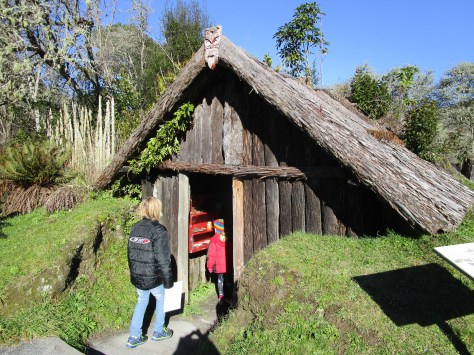
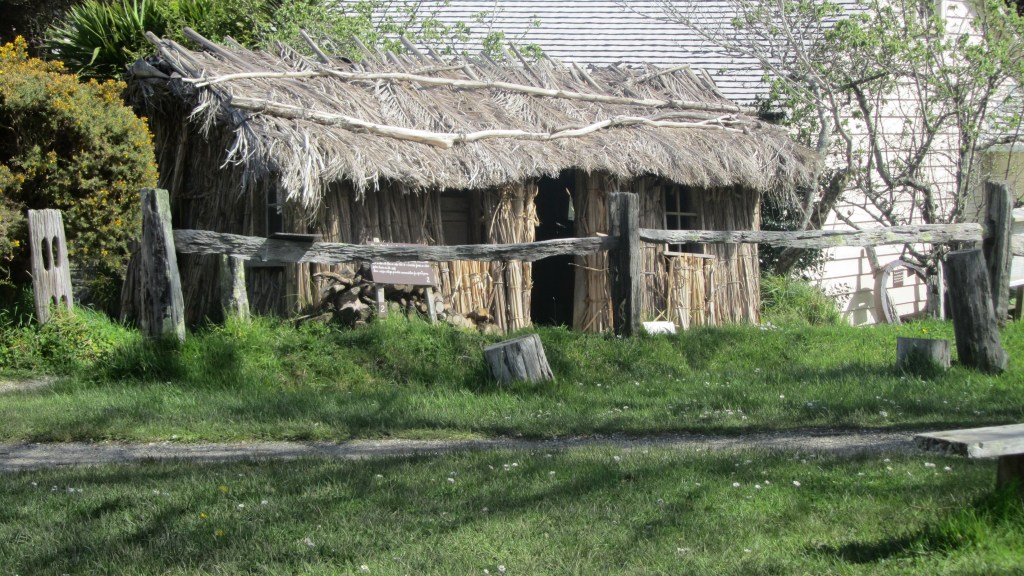
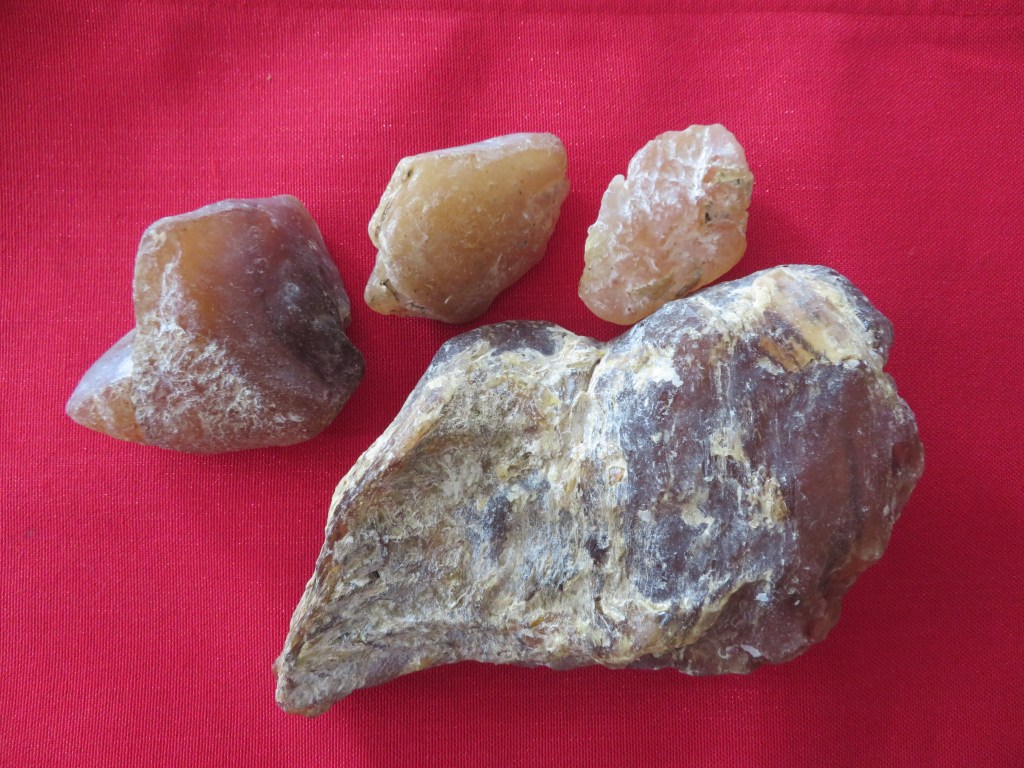
Unfortunately, those early settlers who chose the Birkenhead area were in for a hard time, as mentioned in part one the soil was not conducive to farming in the traditional sense.  Settlement was a rather slow process particularly when compared to other parts of the North Shore and Auckland.  Not surprising when faced with the prospect of clearing the bush before they could even build themselves a dwelling.  Many of the early dwellings were simple one room nikau whares, constructed of sod walls with a raupo or nikau thatched roof.  As they cleared the bush often deposits of kauri gum would be found and sold ensuring a source of income. 

A reconstructed nikau/ raupo whare at Howick Historical Village – a living history museum in east Auckland.
Lumps of kauri gum found at Kendall’s Bay.

Even though most of these early farmers only managed a subsistence living, there were the occasional success story.  Birkenhead became quite well known for its fruit orchards, the first of which was established by Henry Hawkins.  There are two differing accounts as to where Hawkins had his orchard, some maintain it was near Soldiers Bay and others say it was on the ridge where Birkenhead Ave now runs.  It is of course possible that both are correct, one of the earliest estates to be subdivided and sold was the Balmain Estate (also known as the Balmain Township) which extended over a much wider area than just the Balmain Rd of today.  The steep sided valley of Soldiers Bay would appear to not be conducive to a fruit orchard, the thick kauri groves would have been quite a hindrance to say the least.  However, an advertisement in the local paper for 1855 has H J Hawkins selling 700 fruit trees from his farm at The Glen, Soldiers Bay. Later in 1870-71 Hawkins is recorded as owning allotment two and three in Birkenhead – this is situated on the ridge which is now Birkenhead Ave. 

Another early settler is mentioned in relation to a dwelling on a map dated to 1849, the house was owned by a John Crisp and was situated close to what is now Fitzpatrick Bay. Unfortunately, I have been unable to corroborate this.

According to a local history study of Island Bay and surroundings (Island Bay. A Brief History) there is an 1844 map which shows a dwelling occupied by a Mr George Skey. The bottom part of the block was developed into a small farm and sold as a going concern around 1849.  It had its own jetty and a farm boundary ditch, unfortunately I have been unable to track down this map to verify this information and the area where the farm is said to be (and relatively well preserved) is part of the Muriel Fisher Reserve which is currently closed due to kauri dieback.  Having said that, it is definitely something to consider and requires further investigation. 

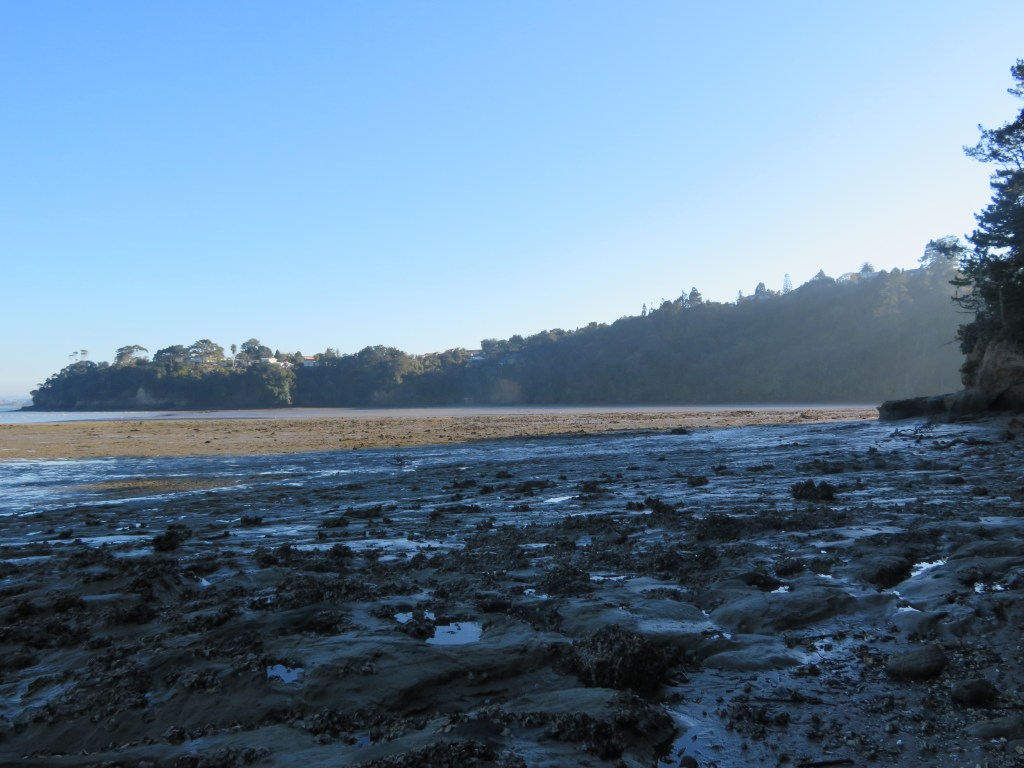
Soldiers Bay at low tide – the tree covered area to the left is part of the Muriel Fisher Reserve and the probable site of allotment 148.

Whilst the 1880-81 electoral roll lists a small block (allotment 148 – a trapezoidal block which ran from what is now Rangitira Rd to the western edge of Soldiers Bay) of twenty-three acres owned by a Mr Clement Partridge who is described as a settler.  The area of Island Bay was one of those places where early land sales were of the speculative kind.  It wasn’t until the “Tramway Company”, a land development company, bought large tracts of land in the Birkenhead area including Island Bay, that small dwellings began to appear. Like many of the bays in the area, Island Bay was a summer place with the majority of dwellings being bach’s and only a handful were occupied all year round.  The road began as a dirt track mostly used by gumdiggers and was previously known as Victoria Rd West prior to 1913.

What’s in a Name?

Placenames often hold clues as to the early settlement of an area and its changing history.  In part one we already looked at some of the Maori names for places and how they relate to not only how the landscape was used but also how the people saw themselves within their world.  For Europeans the naming of places can be a lot more prosaic and, in some cases, the reason for the name is obvious such as Island Bay, so named for the small island at the end of the road which was once separated from the mainland and only accessed at low tide via stepping stones. 

The island after which Island Bay is so named…

Others, however, are much more difficult to ascertain – Kendall Bay is obviously a European name but at this point in time there are no records of anyone with the name of Kendall after whom the bay was so named.  One possibility is that Kendall may be the name of gumdigger or gum buyer situated at the bay – gumdigger camps were often situated at the head of sheltered gullies near fresh water and near to the coast.  Kendall Bay satisfies all of these requirements.  Interestingly, the bay is also known locally as Shark Bay, undoubtedly because of the shark fishing grounds exploited by Maori and later Europeans.

Kendall’s Bay or Shark Bay on a foggy morning.

Interestingly, Kauri Point is the one placename not to change and to be consistently included in the majority of maps dating back to 1842 and up to the present day.  It would be a fair guess to say the name came about as a result of the large kauri stands which would have been easily visible to the first people to sail up the harbour.

Names have also changed through time or have been forgotten.  The Upper Waitemata was once called Sandy Bay on a nautical chart from 1841; another early map refers to Pt Shortland (1842), the headland where the Naval Base currently is; on other maps the bay we know today as Onetaunga Bay was once called Quarryman’s Bay.  

Quarryman’s Bay, like Brick Bay further up the harbour, refer to the early industrial endeavours of the area’s inhabitants.  Both quarrying and brickmaking were popular industries in a land where traditional farming was problematic.  One of the occupations of a potential early settler in the area was brickmaker (see below).

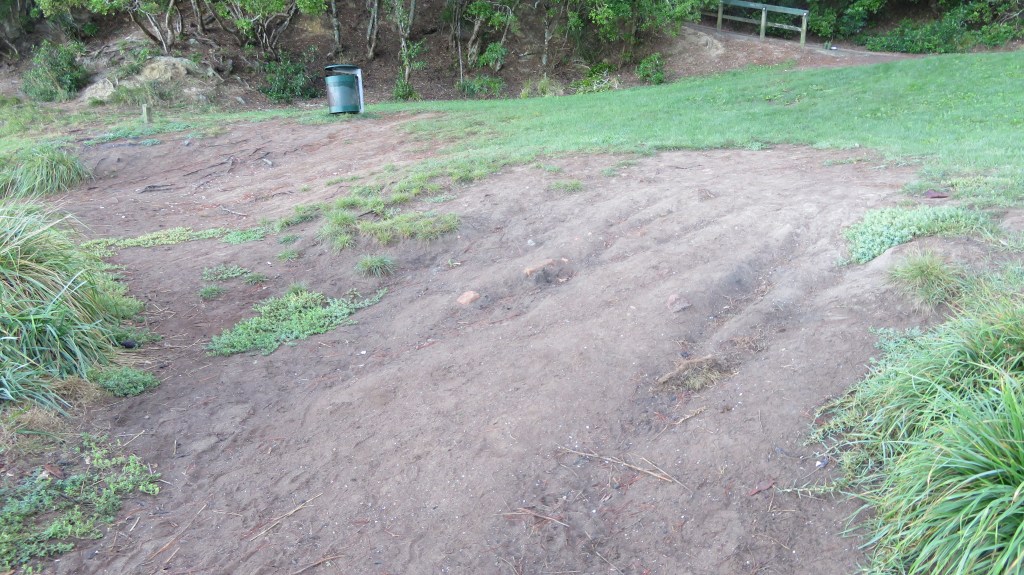
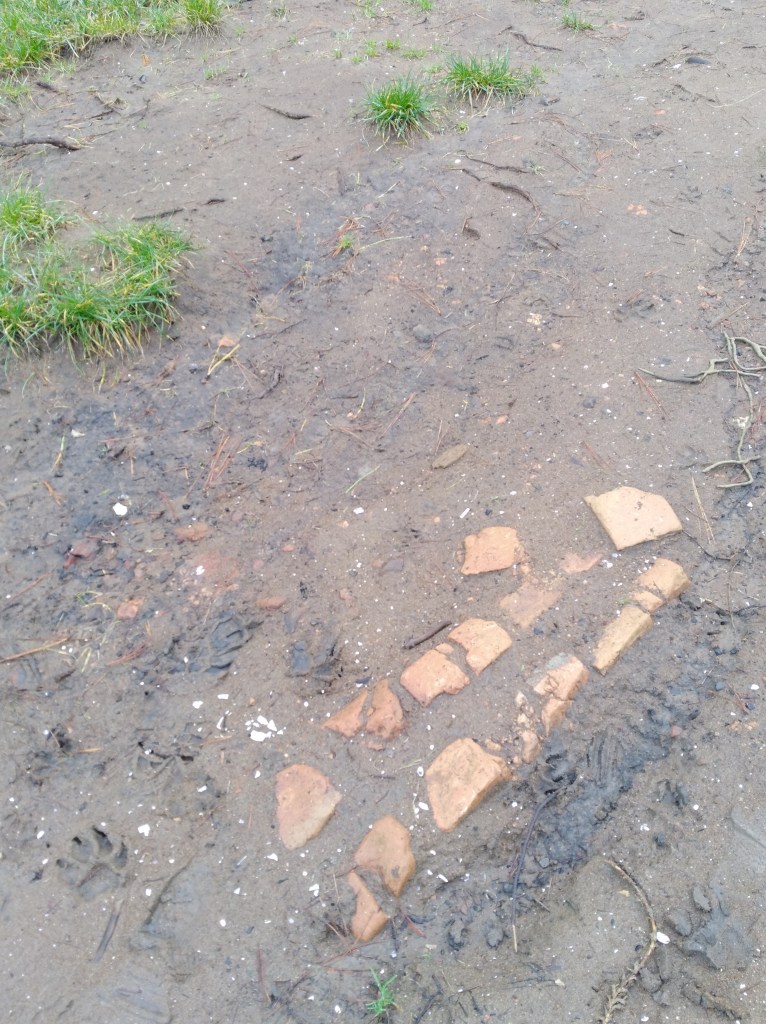
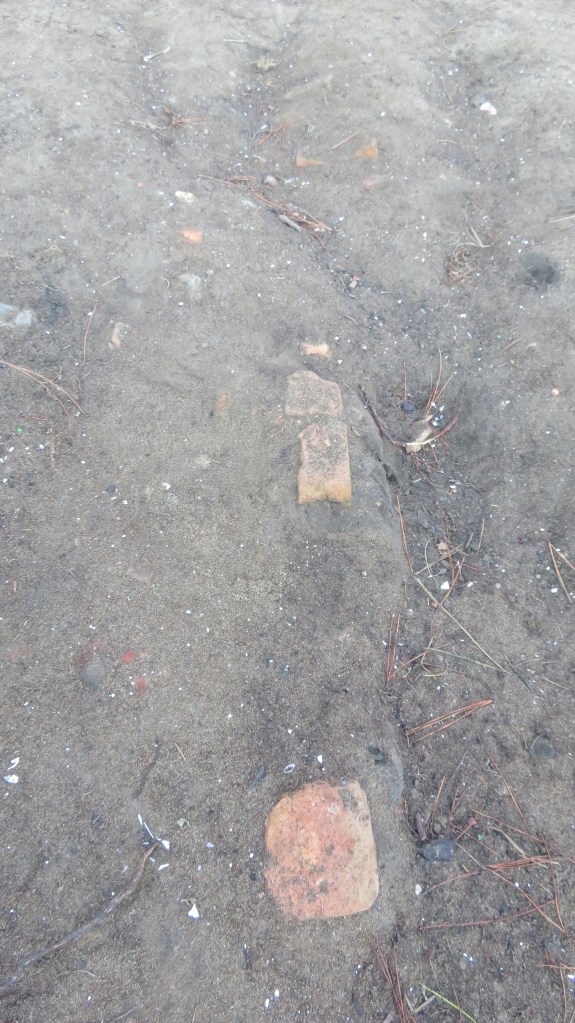
Just a few of the many bricks found on the beach at Fitzpatrick’s Bay – possibly either as a result of a small brick making industry or as a result of the demolition of the house on the hill which may have had a brick chimney.

Soldiers Bay is an interesting case of a name that has been around for a long time but its origins are hazy.  The earliest mention that I have been able to track down is dated to a map of 1863.  Today the stream that runs down from the high ground and empties into Soldiers Bay would have been a lot less silted up and most likely navigable by waka or rowboat as far as the present-day carpark.  Today there is a causeway which joins the bottom of Balmain Rd to the reserve which would not have been there in the early days.  This causeway was most likely constructed in the early twentieth century when a caretakes lived at the end of the reserve above Fitzpatrick’s Bay.

The modern causeway which now links Kauri Point Domain to the bottom of Balmain Rd – there are oral histories which tell of access to the beaches being further up the valley.

None of which gives us any clue as to why Soldier’s Bay is so named…it has been suggested that the bay gained its name as a result of an encampment of militia during the unsettled times of the mid-1800s.  At the time, Hone Heke was ‘making life unpleasant’ for settlers in the north, particularly the Hokianga, and many had moved south to take up land in Birkenhead.  To allay the fears of the settlers a contingent of soldiers may have been positioned in various places…hence Soldiers Bay.  As mentioned before the stream would have been navigable to the bottom of present-day Balmain Rd, just before that though there is a flat spur which would have provided a good position for an encampment, with a clear view of the harbour and a fresh water supply.

The final placename to consider is that of Fitzpatrick’s Bay, this small sandy bay is today part of the Kauri Point Domain and is a popular recreational reserve for the local area.  There are two possible people responsible for naming of the Bay – Charles Fitzpatrick or James Fitzpatrick. 

An examination of Jury Lists and Electoral Rolls shows that a James Fitzpatrick arrived on the Jane Gifford in 1842 with his wife and daughter.  The Jury List of 1842-57 lists James as living on the North Shore as a brickmaker; in the 1850s and 1860s he was still living on the North Shore but was now a farmer and a freeholder.  Whether or not he was actually living in the Birkenhead area is difficult to say; Birkenhead itself was not so named until 1863 and up until that point there was very little distinction between areas.  In the 1870-71 electoral roll James was listed as residing in Takapuna, allotment 15 – a survey of the cadastral maps of 1868 shows that allotment 15 is in fact in Northcote (Takapuna refers to Takapuna Parish of which included todays Takapuna, Birkenhead, Northcote, Hillcrest, Birkdale, Beachhaven and so on).  In 1890, James was still in the Takapuna Parish but was now listed as a gumdigger.

Photo of gumdiggers outside a raupo whare on the Manukau Pennisula ca 1891 (from Auckland Libaries heritage Collections 07064)

Charles Fitzpatrick only appears twice in the lists; first in 1867 and as having a freehold land and house at Kauri Point however by 1890 he had moved to Morrinsville.  Whilst only Charles is listed specifically as living in our area of study and he would appear to be the best option for the naming of Fitzpatrick Bay it is still not possible to rule out James. 

Addendum

Not long after this post was written, I was contacted by a gentleman who currently lives south of Auckland near Hamilton. He was happy to confirm that James Fitzpatrick was indeed the correct person after whom the bay was named – James was his great great grandfather. He was also able to confirm that James did have a small brick kiln in the bay.

Fun in the Sun

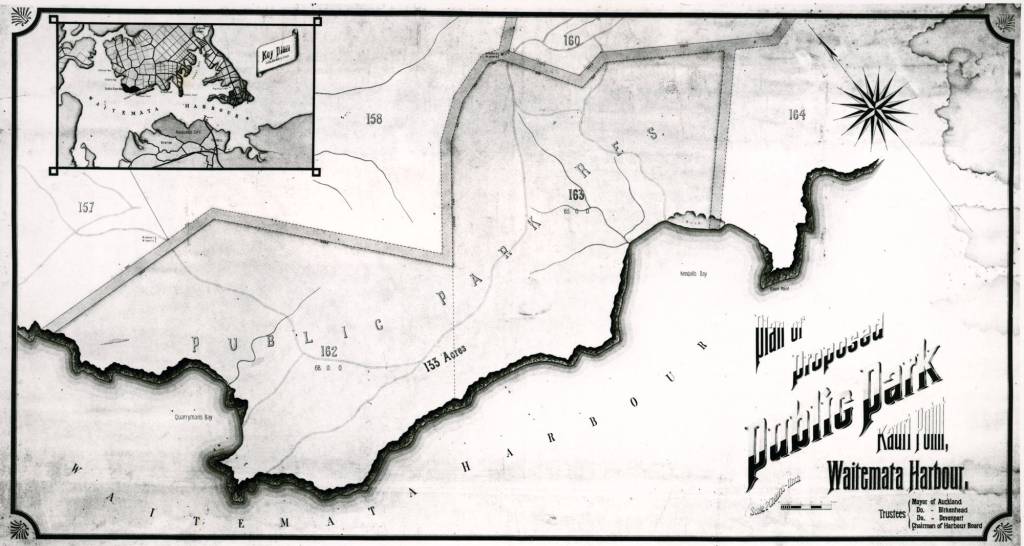
The study area today is made up of three different zones – residential (Island Bay), defence (Onetaunga Bay) and recreational (Fitzpatrick Bay, Soldiers Bay and Kendall Bay).  In 1888 Governor William Jervois permanently reserved for the purpose of recreation 133 acres of land (allotment 162 and 163) in the Parish of Takapuna.  It had been his hope that the area was turned into a national park, a place of tranquillity for Aucklanders. This was the area from Kendall Bay to the eastern end of Fitzpatrick Bay.  In 1913 the Harbour Board acquired a further forty-two acres which included Kauri Point (allotment 164) which had previously been owned by Sir John Logan Campbell until his death in 1912.  Further to this the area around Fitzpatrick and Soldiers Bay were then added to the park in 1916.  An article in the New Zeland Herald in 1916 stated that the reserve had a fine waterfront and had in the past had been much used as a camping and picnic ground.  It also mentions a ‘good five roomed house’, our first mention of what was to be known as the caretakers’ house.

Photo of the proposed plan for a park at Kauri Point dated to 1913.

 An article from 1900 also in the New Zealand Herald also mentions how the Kauri Point Domain board had agreed to allow campers for a small fee.  Interestingly they also denied a request for funds for a wharf.  Reading through multiple articles the request for a wharf in the area is one which is constantly brought up, eventually a wharf was constructed but not at Fitzpatrick’s or Soldiers Bay but at Onetaunga Bay and it was paid for and built without the help of the board or their funds.

The grassy area at Fitzpatrick’s used by campers since the 1900s if not earlier.

This marked a new era for this inner harbour landscape; each of the small bays were transformed in the summer months as families from the city side would spend the warmer days living under canvas. In the 1920s and 1930s there were seven or eight families holidaying at Kendall Bay, their camp was at the western end of the bay where there is a level space and a freshwater stream.  At Fitzpatrick’s the camp site was at the northern end of the bay on the grassy area above the beach.  Unlike elsewhere this part of the reserve was owned by the Birkenhead Borough Council from 1929 who improved it and put in place a caretaker. 

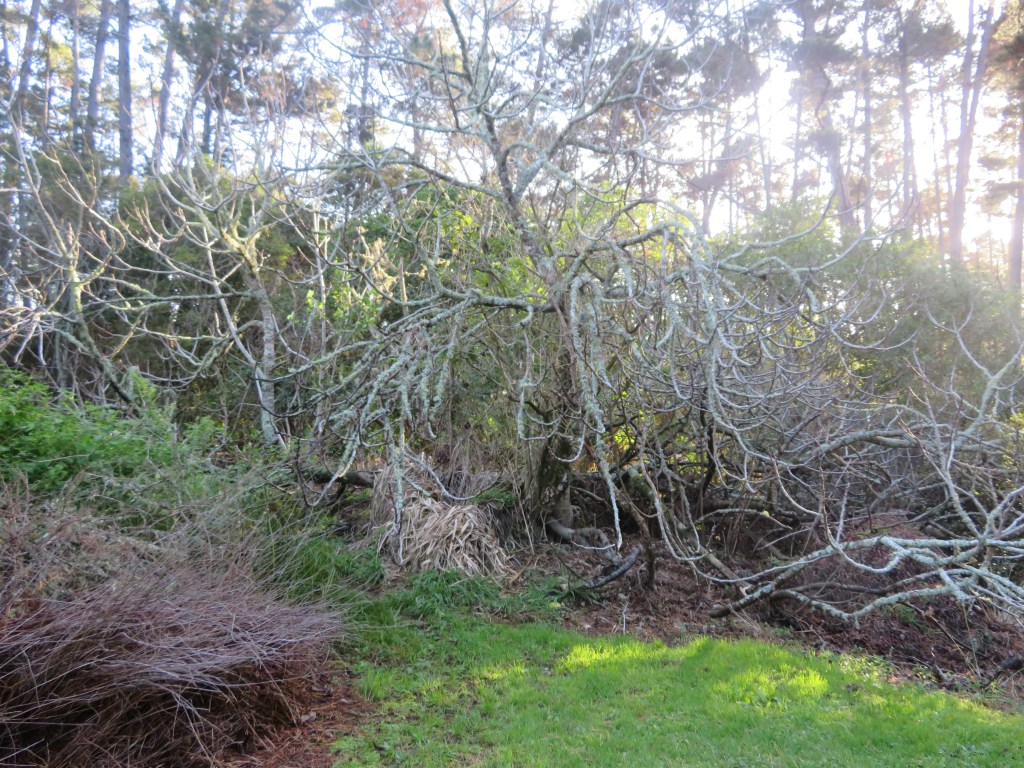
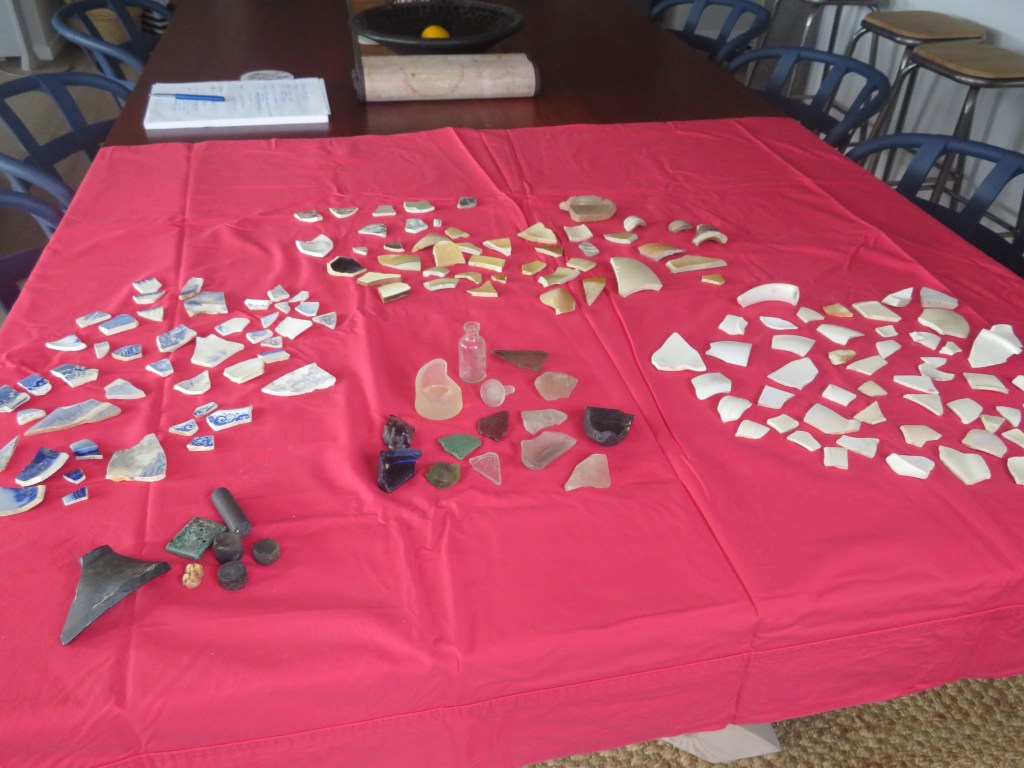
The only recorded caretaker was a William Henry Rickwood who lived in small house with his family on the hill above Fitzpatricks.  Oral histories record how Williams’ wife would keep a small store selling sweets, soft drinks and other useful supplies.  There was also a ‘ponga-house’ where Mrs Rickwood would provide hot water and often sold tea and scones to the visitors.  There is very little that remains of this house today, just a level area with an overgrown collection of European garden plants such as figs and a rambling rose.  However, there is evidence of both the campers and the caretakers in form of the rubbish they were throwing away.  Often along the bay sherds of old ceramics dating from the late 1800s to the mid-1930s can be found, undoubtedly there is a European midden that has eroded onto the beach. 

As well as the tent sites at Kendall Bay, there were other camping places, near the wharf at Onetaunga Bay and at Fitzpatricks bay which is the beach at the present Kauri Point Domain.  Pre-World War Two and back through the Depression years, tents appeared each summer for a back-to-nature holiday by bush and sea.  Much of the housework was left behind at home and there was no problem keeping the children amused. There were good sandy beaches and the harbour water was clear and clean in those days before the march of suburbia. (From a pamphlet of remembrances celebrating twenty years of Kauri Point Centennial Park, available in the Birkenhead Library).

Island Bay whilst listed as residential today was up until the construction of the Harbour Bridge mainly a summer town, full of bachs occupied only in the summer by families from across the water in the city. Unlike the other bays the land around Island Bay was owned by a land development company, being subsequently subdivided and sold off.  However, because of issues of transport and roads only a few of the blocks were permanently occupied.  Newspapers from the early 1900s often have articles describing summer outings by the Ponsonby Yacht Club to Soldiers Bay and area. 

Defence

A final chapter in the history of land use in our area is that of defence.  Just prior to the Second World War in 1935 ninety acres of the Kauri Point Domain was taken for defence purposes.  The area of Onetaunga Bay (once Quarryman’s Bay) was developed for a storage facility for naval armaments.  This unfortunately put paid to those carefree summer campers who no longer came in the large numbers, the caretaker at Fitzpatrick’s was still Mr Rickwood in 1938, as listed in the Wises Directory, but with the outbreak of WWII everything changed.

In 1942 the Americans had arrived in response to the Japanese threat in the South Pacific. Kauri Point Domain, Fitzpatrick’s bay included, were given over to the Americans and a large number of powder magazines were built.  There are several unusual features on the beach at Fitzpatrick’s Bay, which may relate to these days.

After the war the Domain reverted to being parkland but never again were campers allowed back to any of the bays.  Today the Naval depot forms a large wedge between Kauri Point Domain and Kauri Point Centennial Park.

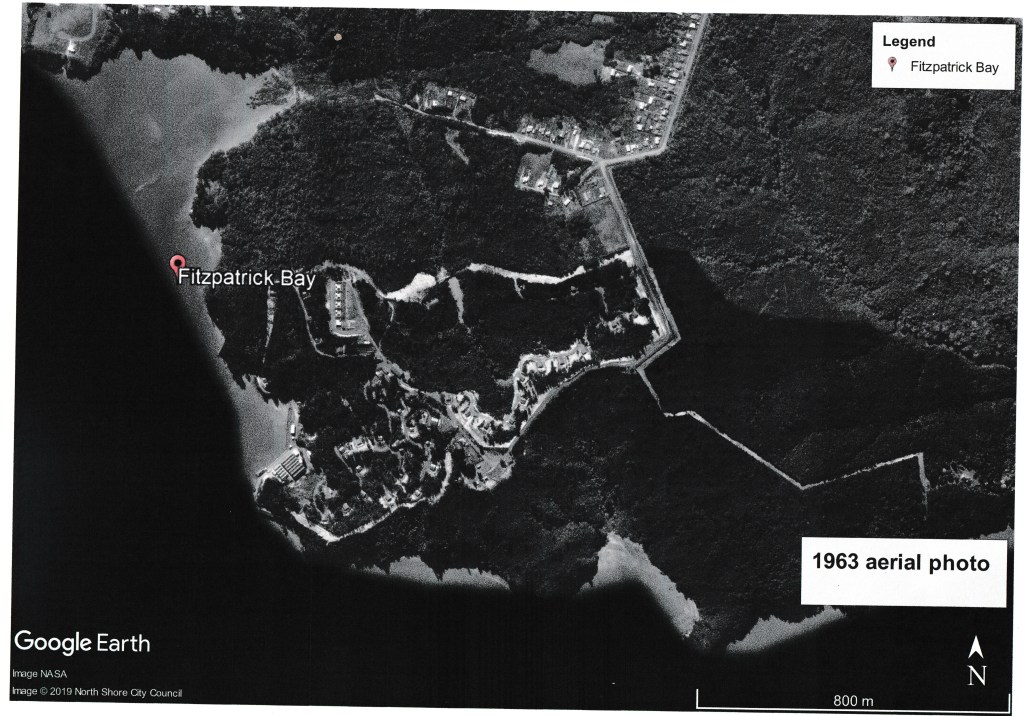
The wedge of buildings and land is the naval depot – Kauri Point Domain is to the top and Kauri Point Centennial Park the dark area to bottom and along.

Sources

McClure M (1987) ‘The Story of Birkenhead’

Auckland Libraries Heritage Collections

‘Island Bay – A Brief History’ – unknown author.

‘Birkenhead The Kauri Suburb’

Papers Past – New Zealand

Electoral Rolls – Ancestry.com

‘Kauri Point Centennial Park Management Plan’ Birkenhead City Council 1989.

‘North Shore Heritage. A Thematic Review Report’ Auckland City Council 2011.

Two Days in Napier

Just recently the husband and I had a child free weekend away, during this time we spend two days exploring the town of Napier in the Hawkes Bay.  Naturally I was drawn to the town’s heritage and as per usual my first stop was to the local museum – MTG Hawkes Bay.

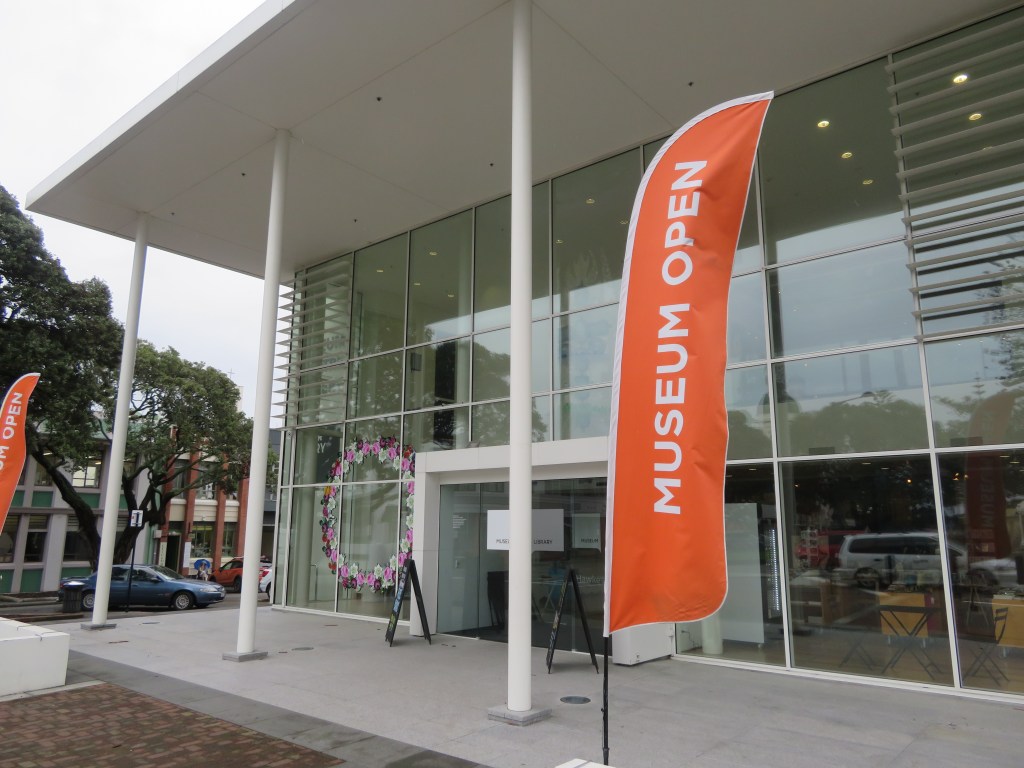
The exterior of the museum.

Situated in the main part of town near the seafront, it is attached to the library and spread over three floors.  The ground floor gallery is taken up by two exhibitions – Tenei Tonu and Turuturu, Fingers, Feathers and Fibre. Tenei Tonu showcased the taonga, both historic and contemporary, alongside the stories of the local Iwi Ngati Kahunguru. Turuturu took up a space which joined the museum to the library and is a fascinating albeit brief look at the importance of weaving in Maori culture.

Turuturu are weaving pegs used to keep a garment off the ground when it is being made. The main peg is the right one and can be elaborately decorated. It represents the mana of Te Whare Pora – the knowledge-bank of the art-form. The peg itself upholds the mana of the growing garment and it spiritually connects the maker to the world of thought and concentration. The peg also grounds the maker so they do not get lost in their intellectual world. (quoted from the MTG Hawkes Bay website)

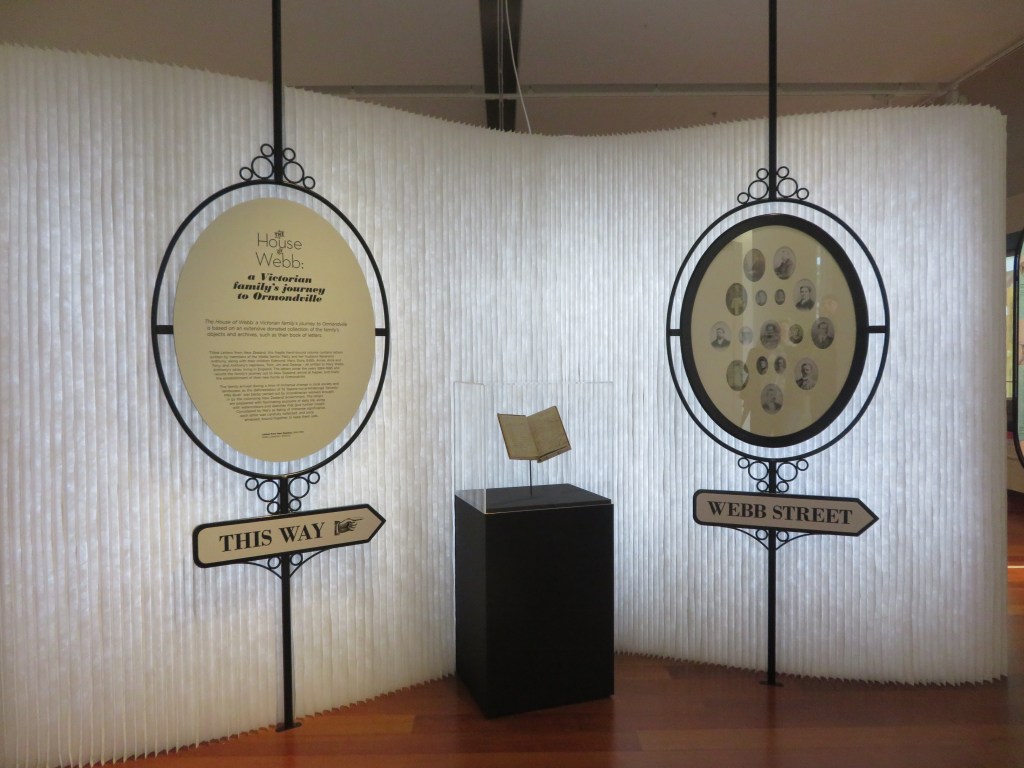
On the second floor was three collections – one of an amazing display of heirloom silverware whilst the second was called Five Pakeha Painters – Perspectives on the Hawkes Bay.  This small exhibition of artwork acknowledged the importance of art as a form of dialogue between the artist, the land and the social norms of the time.  The third exhibition was titled The House of Webb – A Victorian Family’s Journey to Ormondsville.  This is a temporary exhibition (it finishes on the 3rd November) showcasing life in Victorian Napier through the belongings, diaries and letters of the Webb Family.  In 1884 the Webb family left their comfortable life in England and travelled to Napier and then further south to Ormondsville, this exhibition showed what life was like for these early settlers, some of their trials and how they survived those early days. 

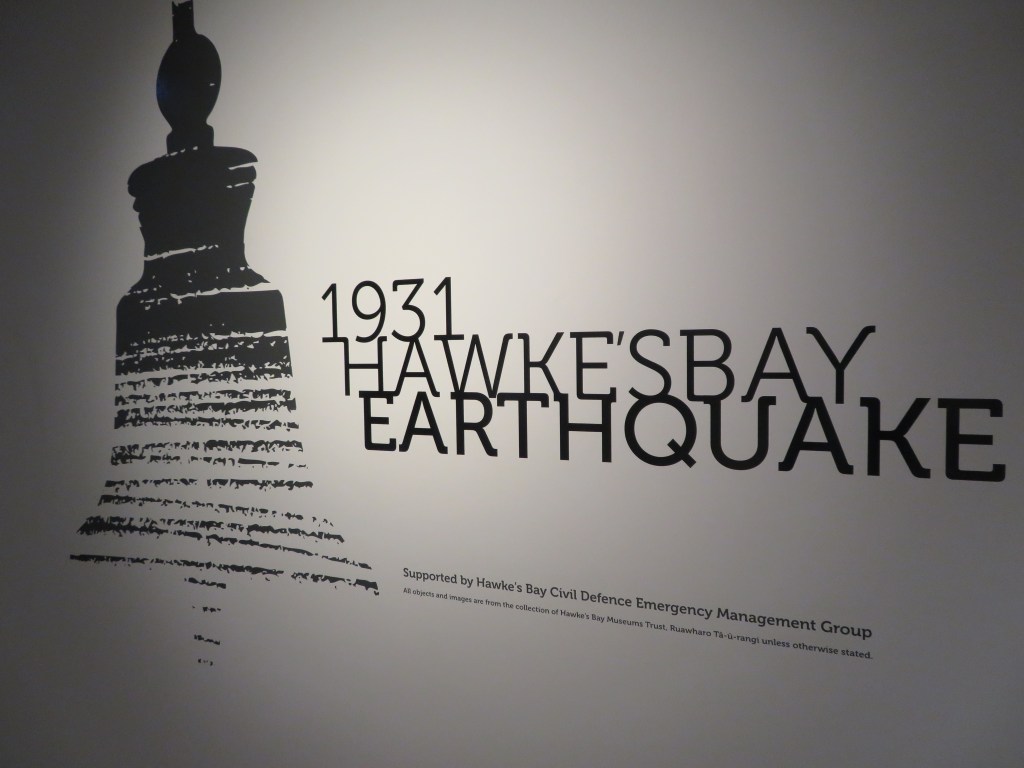
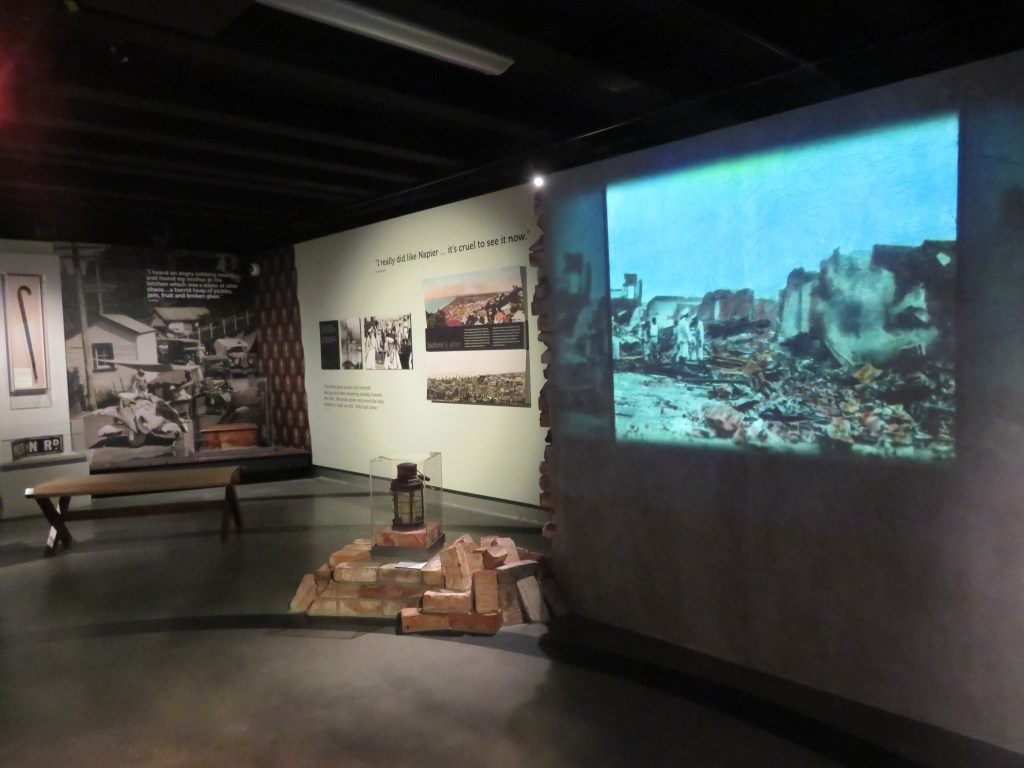
The final gallery to be explored was in the basement of the museum – here the visitor is taken through that fateful day in 1931 when the Hawkes Bay was hit by a massive earthquake which destroyed almost all of Napier and killed over three hundred people.

At 10:47am on 3 February 1931, a devastating earthquake struck Hawke’s Bay. In that moment it seemed the end of the world had come. People were thrown off their feet; buildings shuddered and collapsed as the ground pitched violently. In central Napier, fires broke out within minutes and rushed through the city. Amidst the burning, falling buildings, the bright blue sky of a summer’s day was obscured by smoke and dust. People could only watch as their home was destroyed around them. In desperation the injured screamed for help, others ran for the safety of the beach, or home to find their families. (Quoted from the MTG Hawkes Bay website)

As well as the thoughtful display of objects and stories, there is also a short film of ‘Survivor Stories’ which brings home how devasting the earthquake was to the people of the Hawkes Bay.  Time here will forever be divided between ‘before and after the earthquake’.

The second place to be visited was the Napier Prison…yes on purpose…and no not in shackles…

Napier Prison is New Zealand’s oldest prison, it was first opened in 1852 and was closed to inmates in 1993.  Situated on Bluff Hill and next to the quarry where early inmates were expected to do hard labour extracting the stone that would build walls which now surround the prison.  In 2002 the prison was restored to the state it is in by a local family who turned it into a back-packers (not my first choice of accommodation) but nowadays it is a tourist attraction and even on the cold wet day we visited there were a quite a few visitors.

The forbidding entrance of Napier Prison – visitors must knock…

As a visitor you can either go on a guided tour or do the self-guided audio tour which we did.  The facilities also host scare tours in the evenings and has an Escape Room Experience for those wanting something a bit different.  On two separate occasions and for quite different reasons, the prison has been the focus of a TV show – one looking to enhance the visitor experience from a heritage perspective and the other capitalising on the prison’s spookier stories. The prison has also through its time been used as a psychiatric unit, a lighthouse and a meeting place for Alcoholic Anonymous groups.

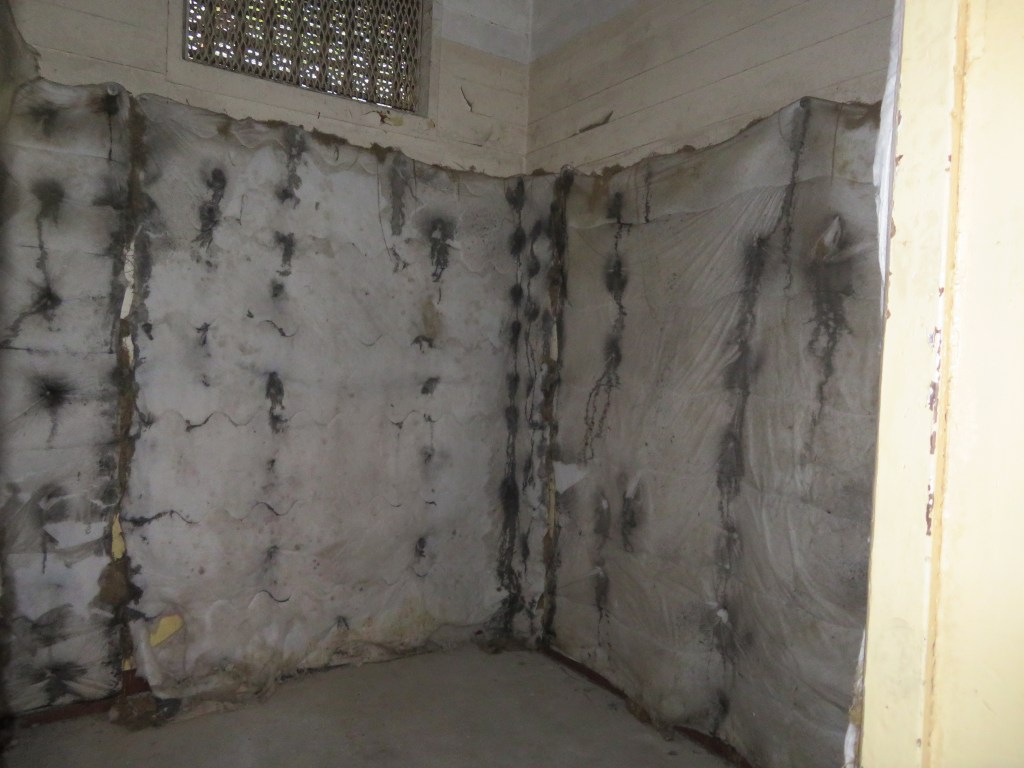
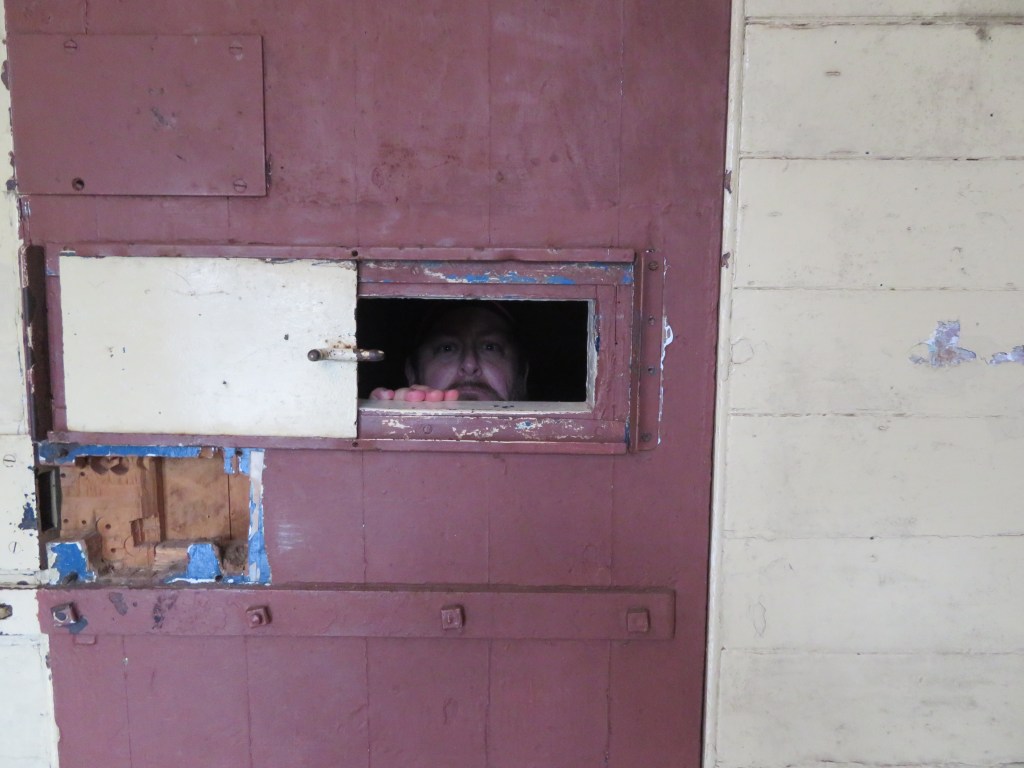
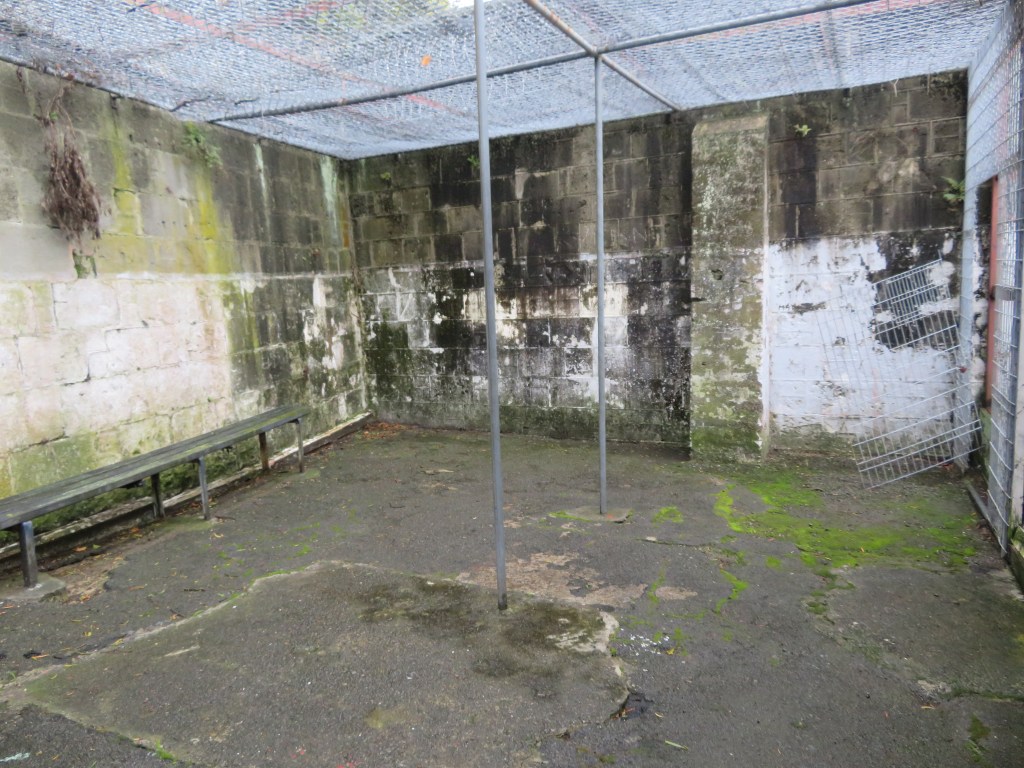
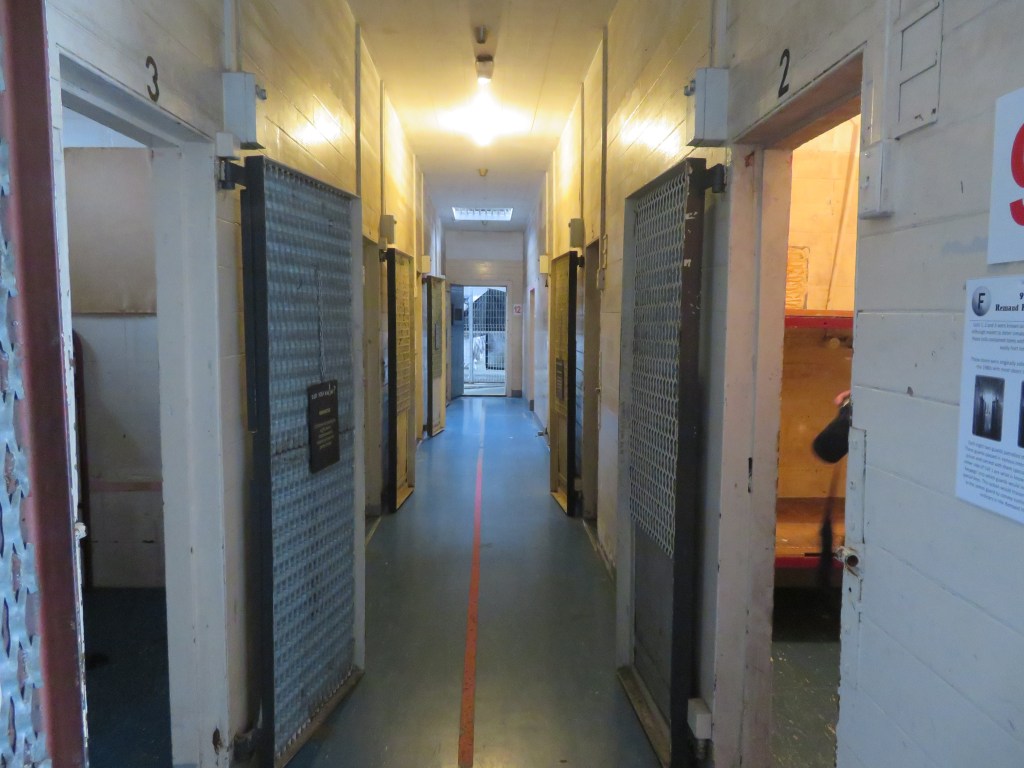
Above is a block called ‘The Pound’ – the padded cells and caged exercise area chilling reminders that once upon a time mental illness was treated with a lot less compassion.

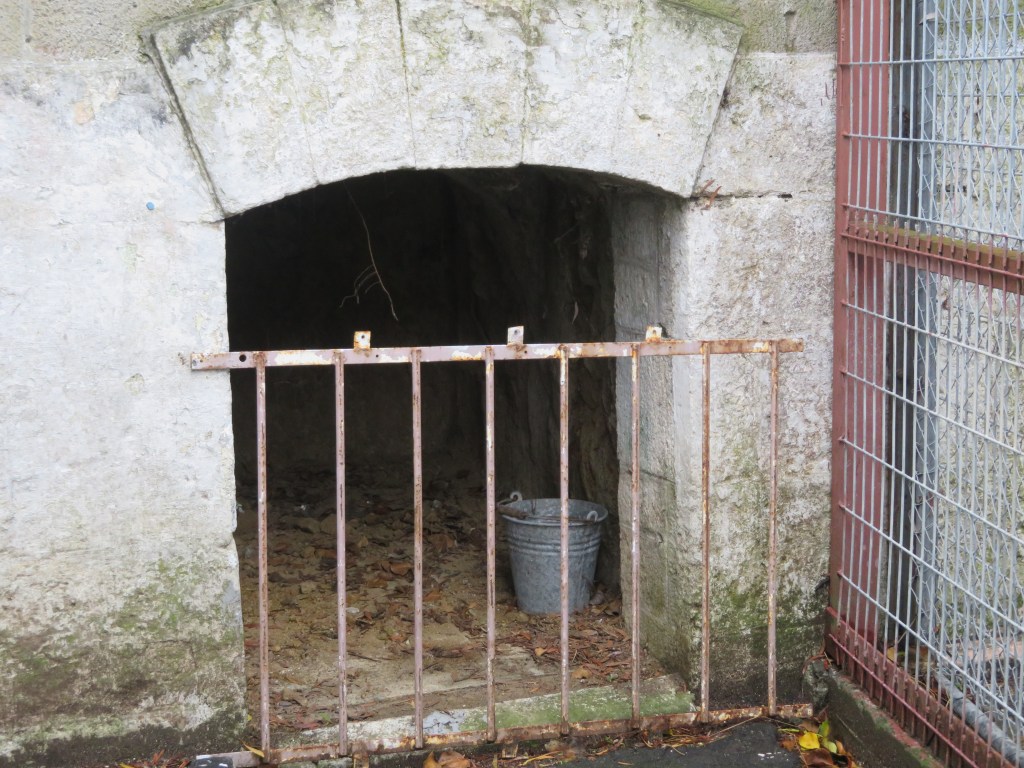
Beside The Pound is ‘The Hole’ – use your imagination…

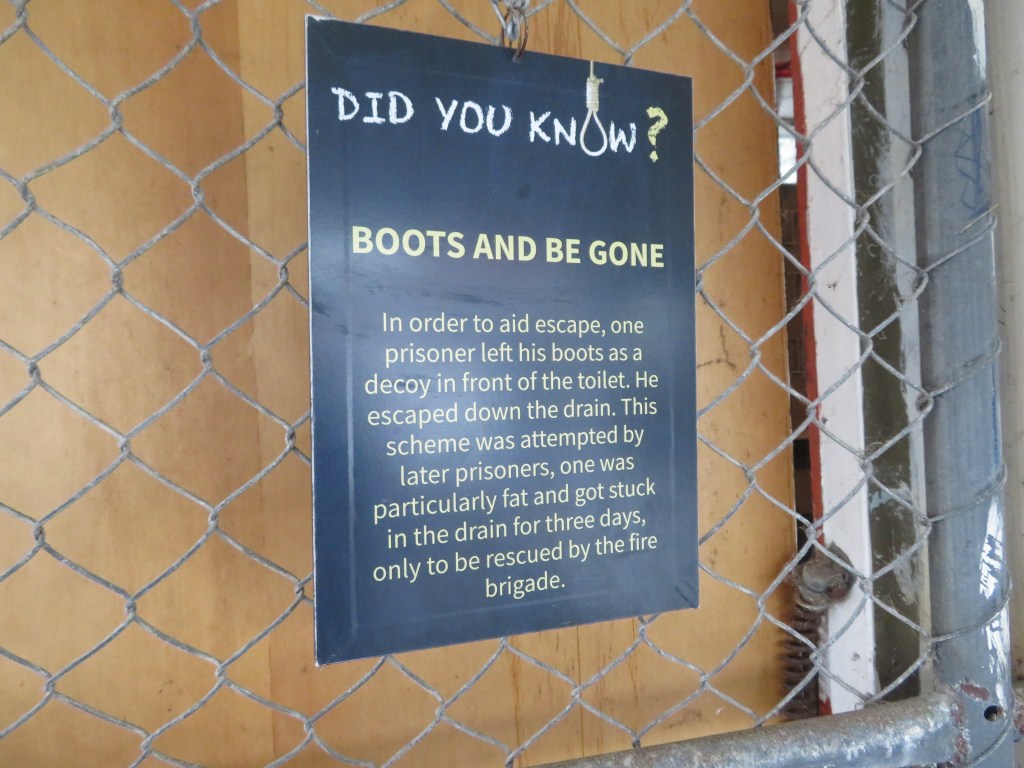
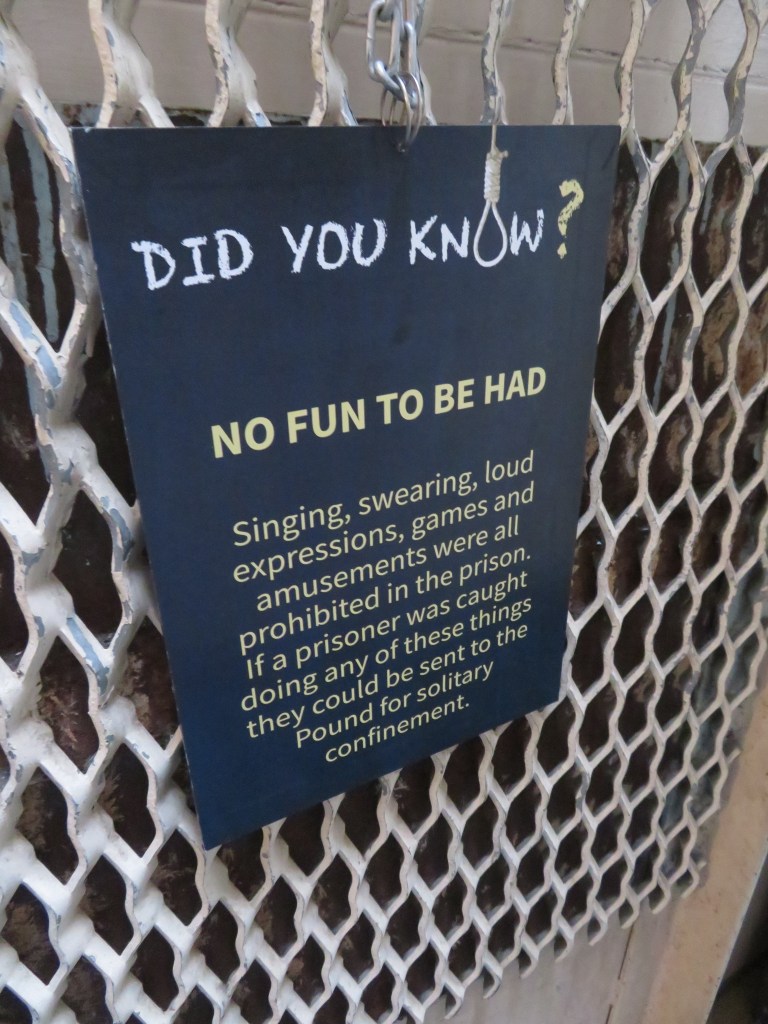
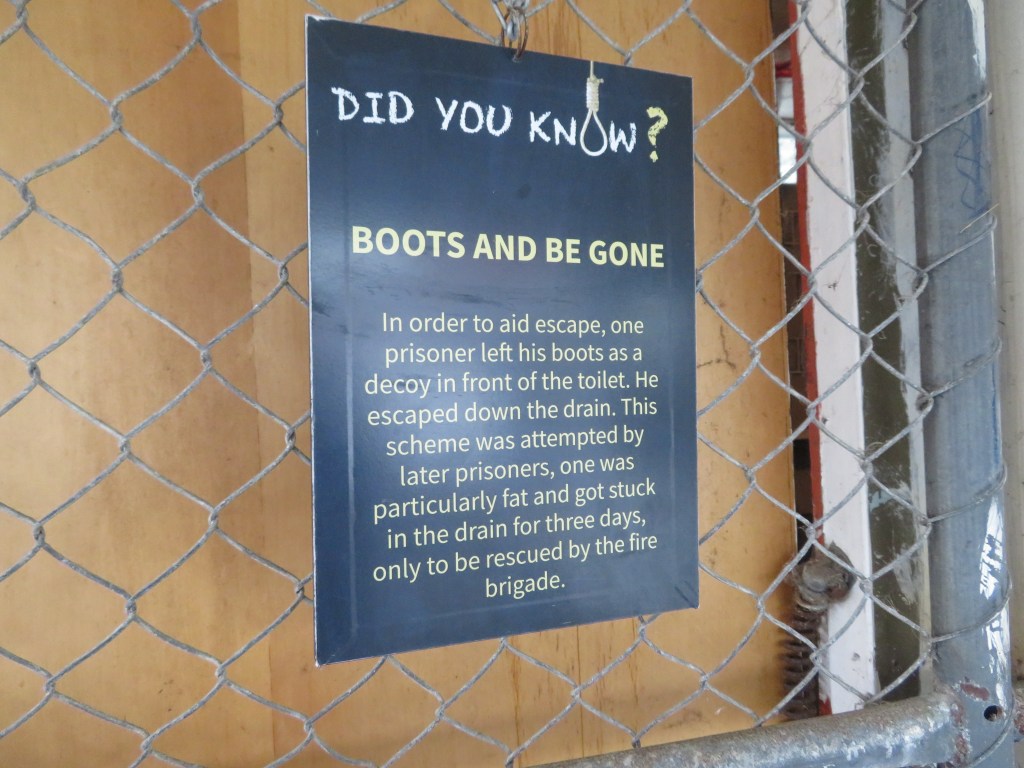
The above photos show a small selection of numerous information boards that provide a light moment amongst the many somber ones.

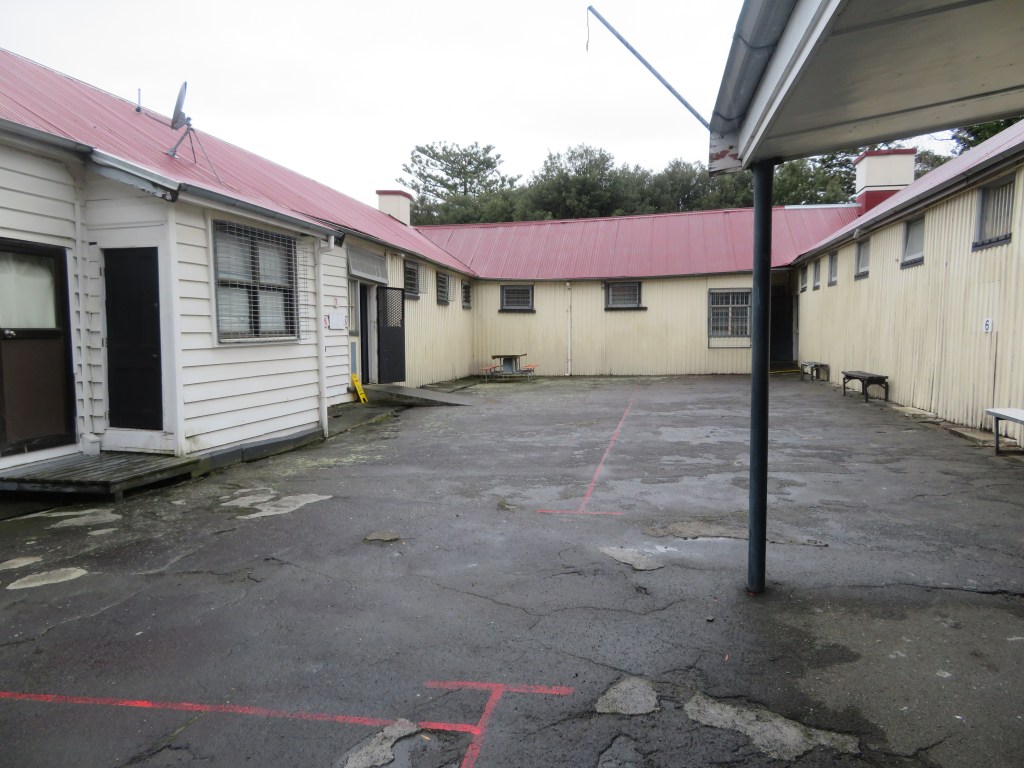
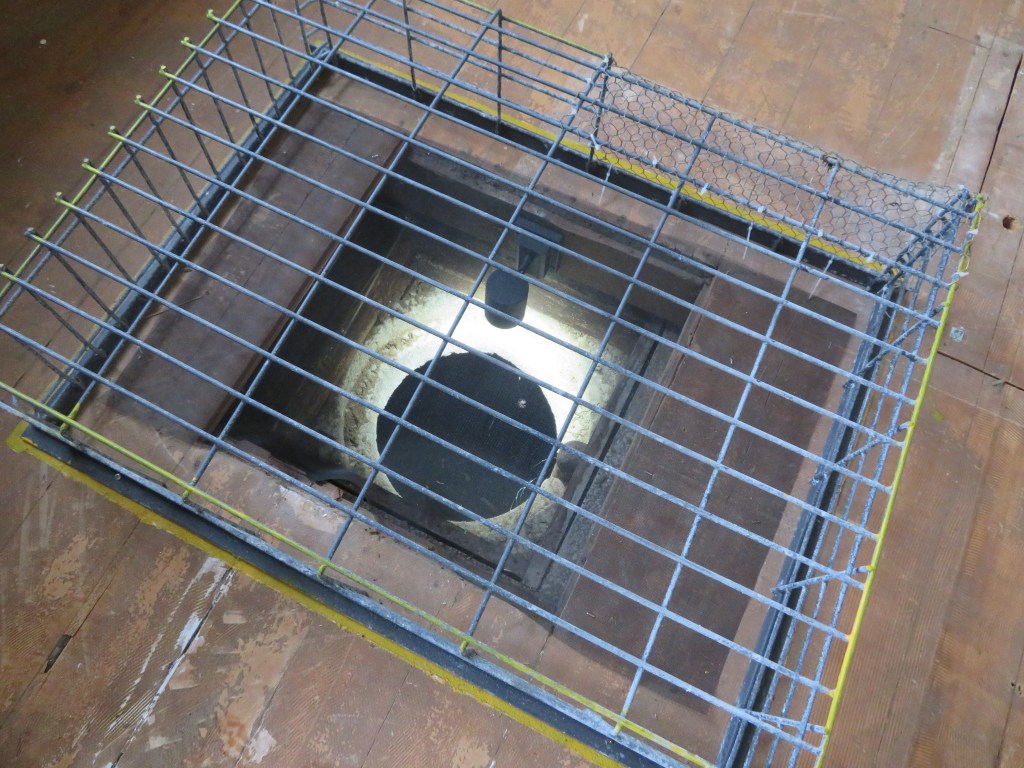
The above photos are of the main block and exercise yard, the bottom picture is of a well discovered a short while ago. The well room is in what was once the infirmary before being divided into other rooms during the prisons back packing days.

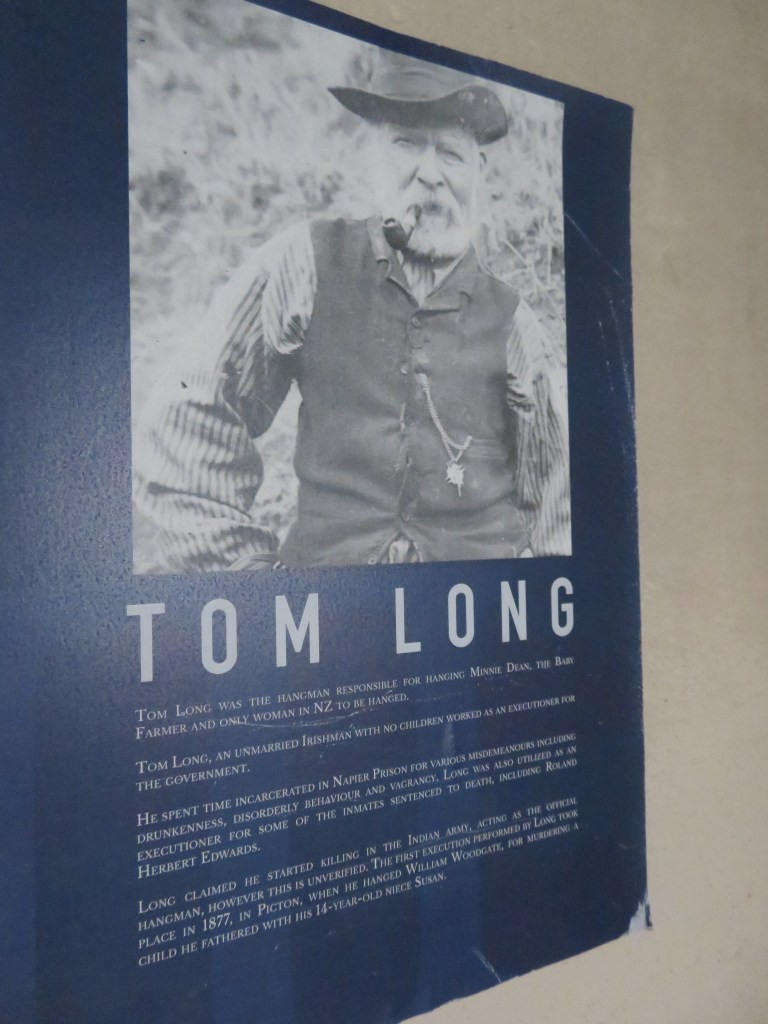
Above is a plaque about one of the prison’s most well known executioners. – the role of executioner would often fall to one of the inmates and Tom Long was no exception.

On a personal note, it was a fascinating place, however the sense of relief when I walked back out the front gates was immense. The heavy sense of foreboding made for an uncomfortable visit, there were places I simply could not enter.  I took no photos of the ‘hanging yard’ or the graveyard (where only three burials are had), the feelings of deep sadness were enough to stop me pressing the shutter. The ‘hanging yard’ in particular had an effect on me…but having said that I am glad I went, it was educational and an eye-opener to life behind bars in New Zealand’s oldest prison.

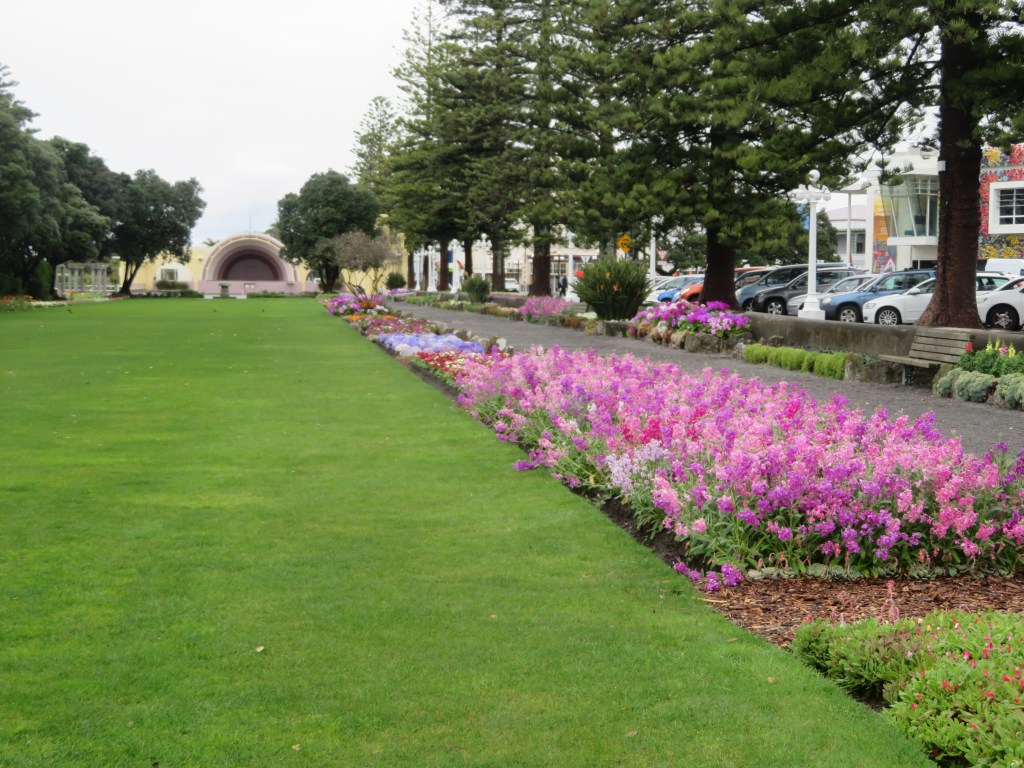
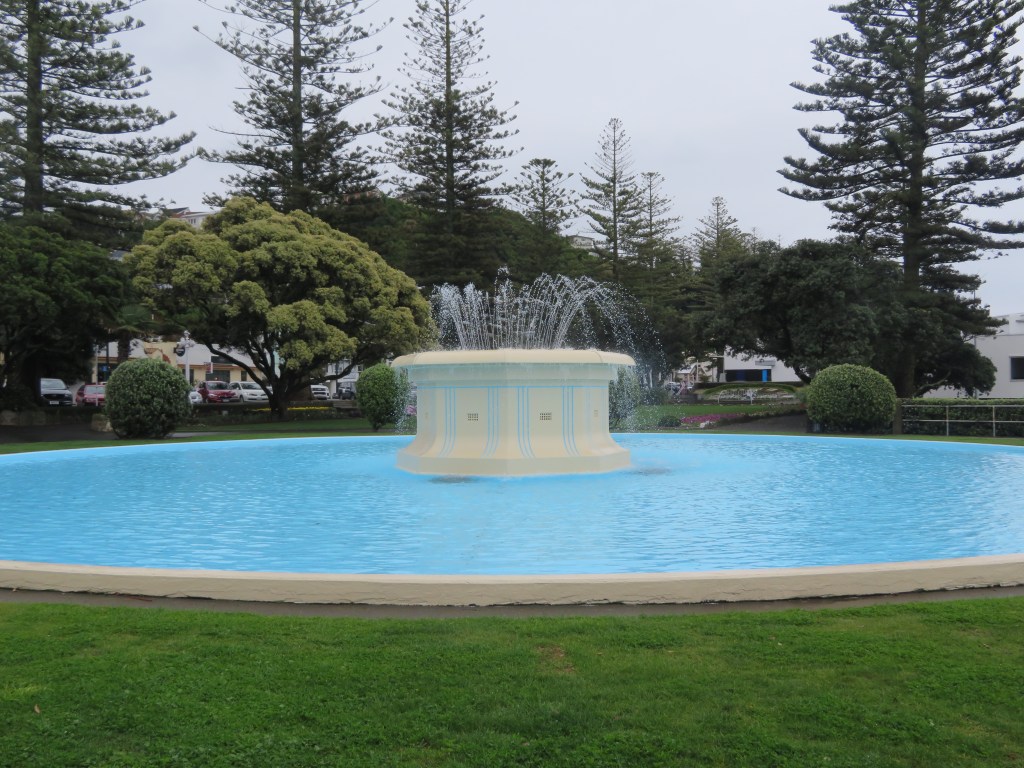
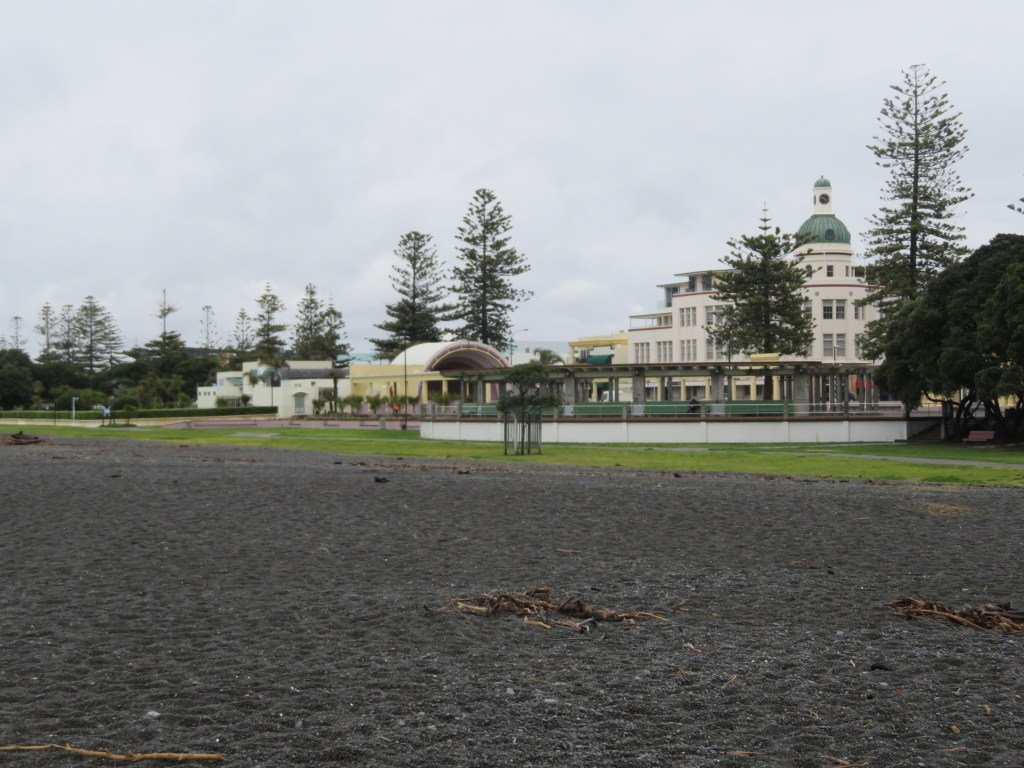
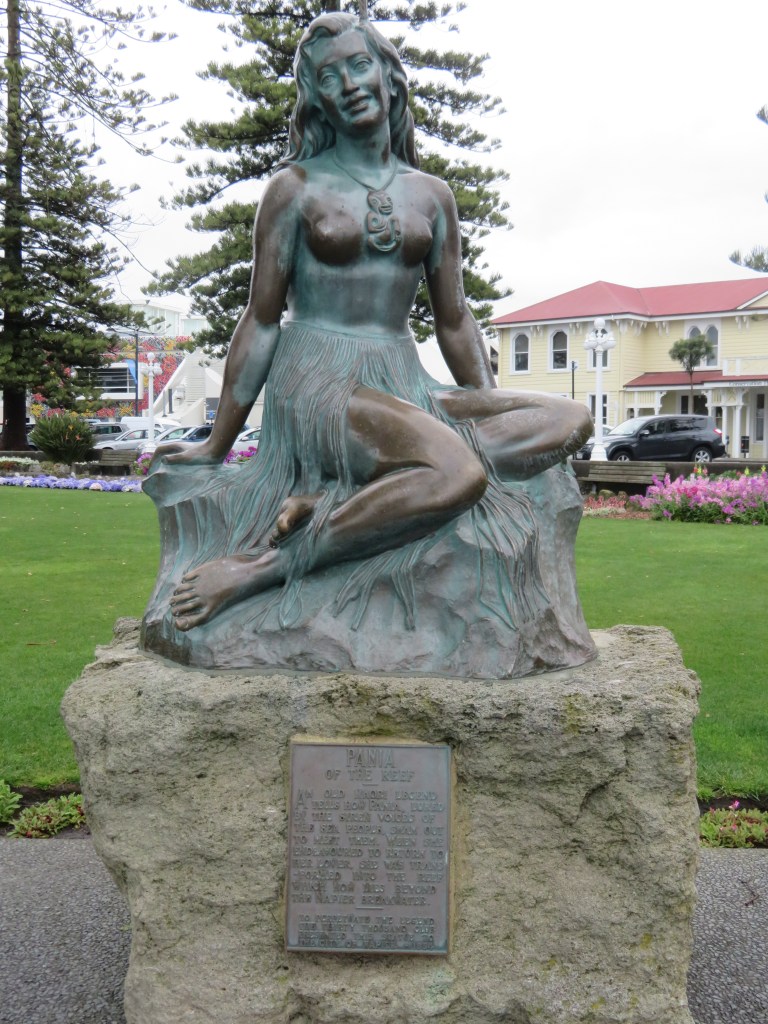
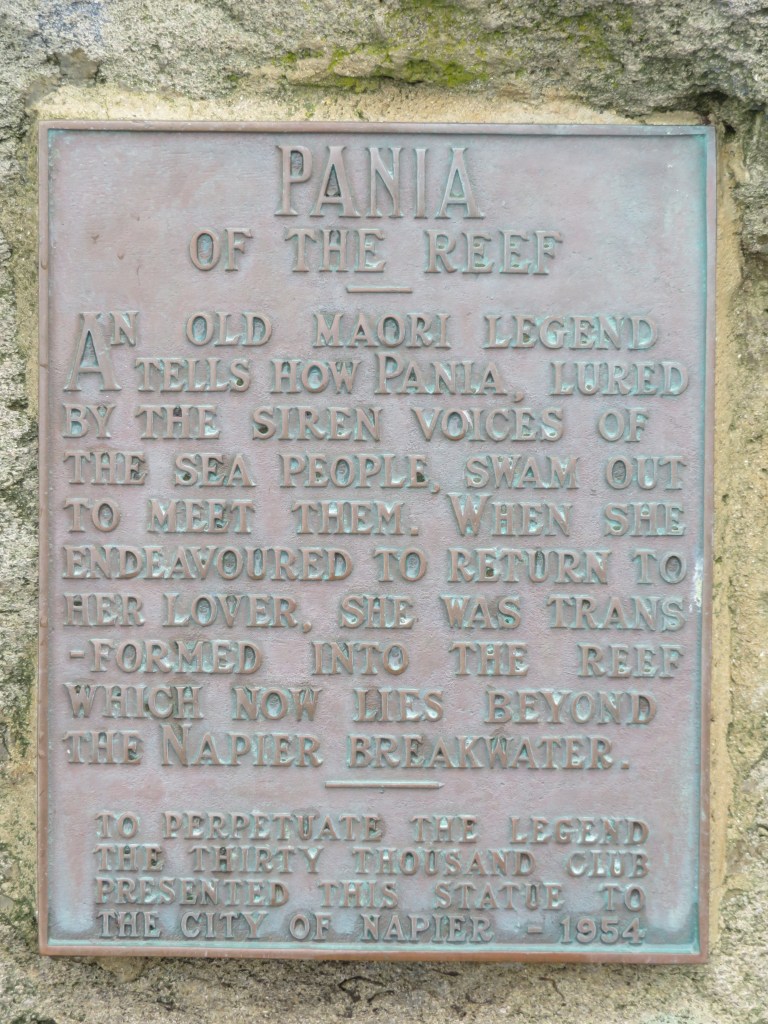
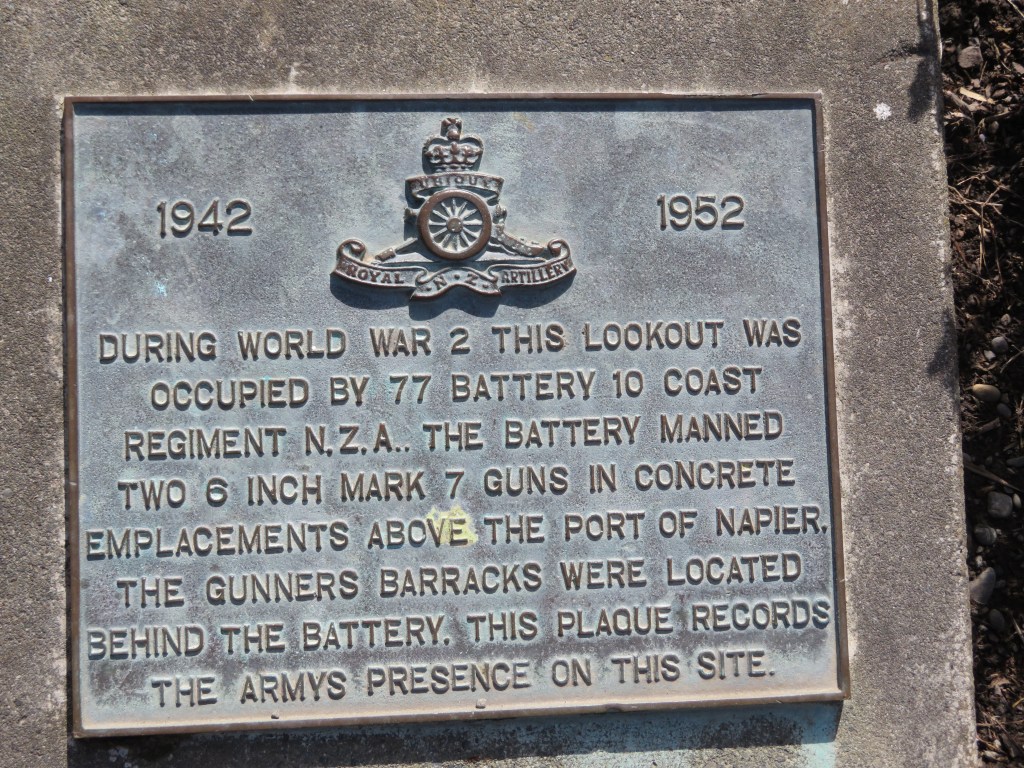
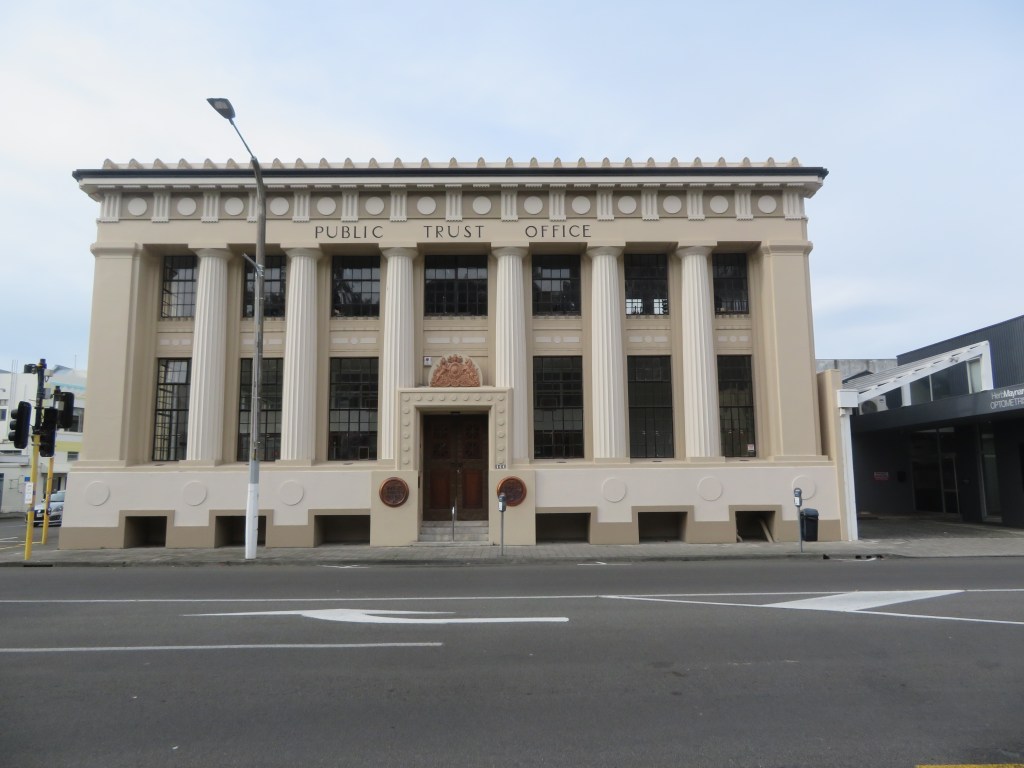
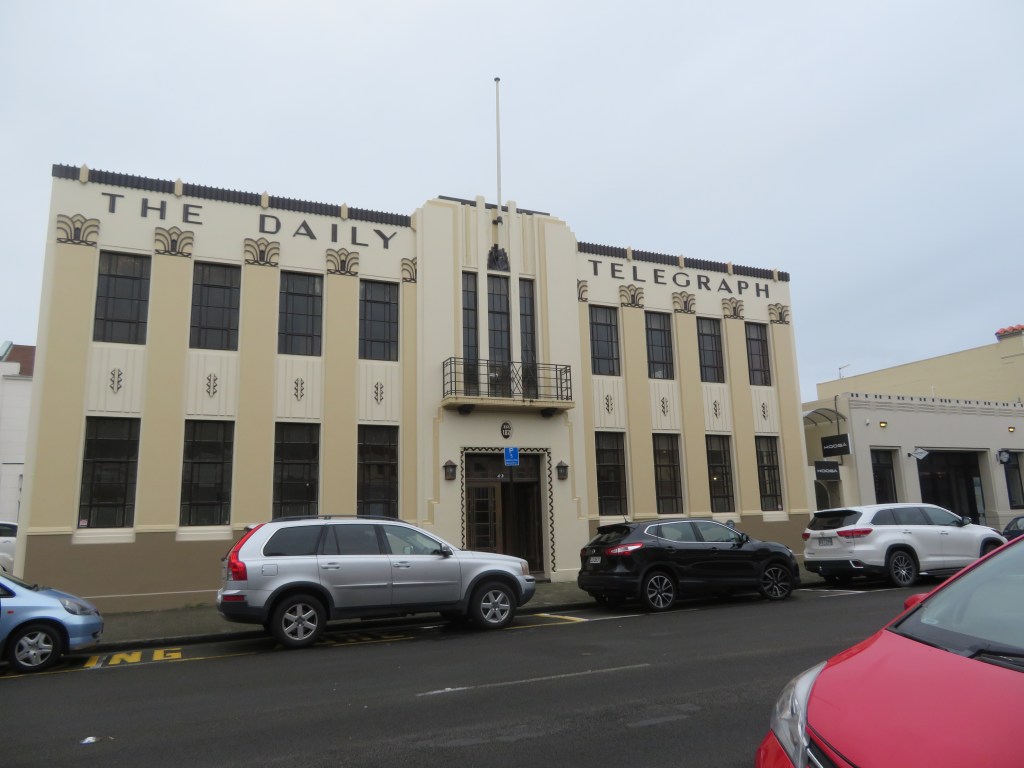
The remaining photos are just a few from around a city well known for its art deco architecture and seafront gardens.

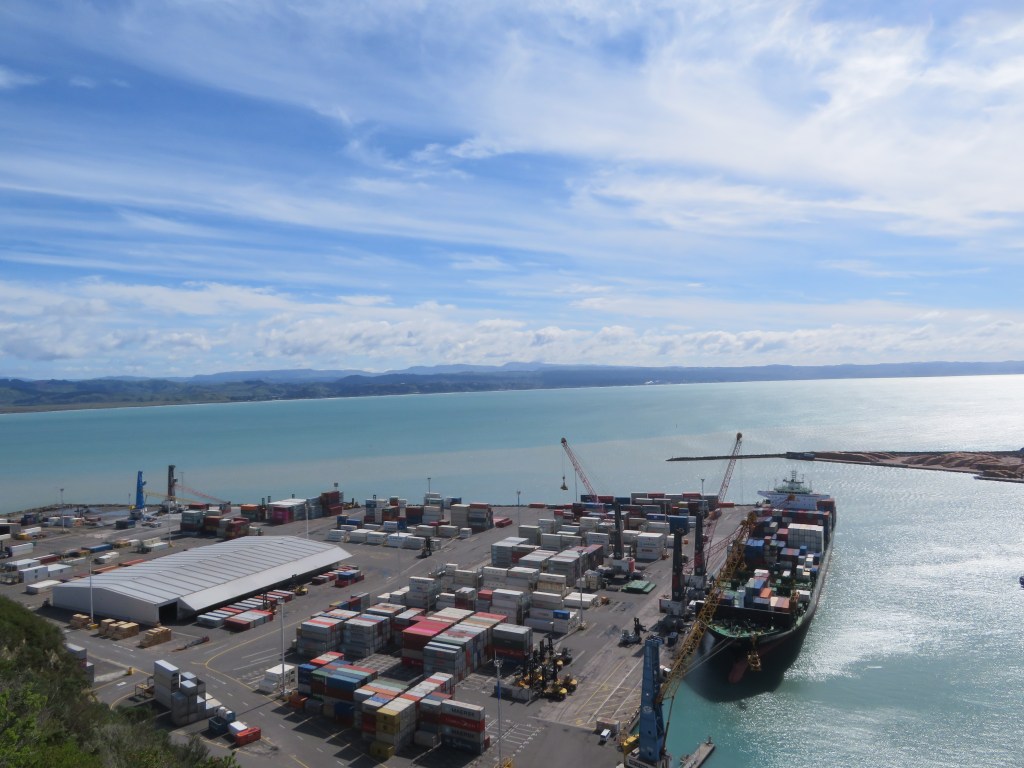
The view of Napier Port from the lookout on Bluff Hill.

Please note that all photos are my own – the MTG Hawkes Bay do not allow photography in many of their galleries, hence the paucity of photos from this lovely museum.