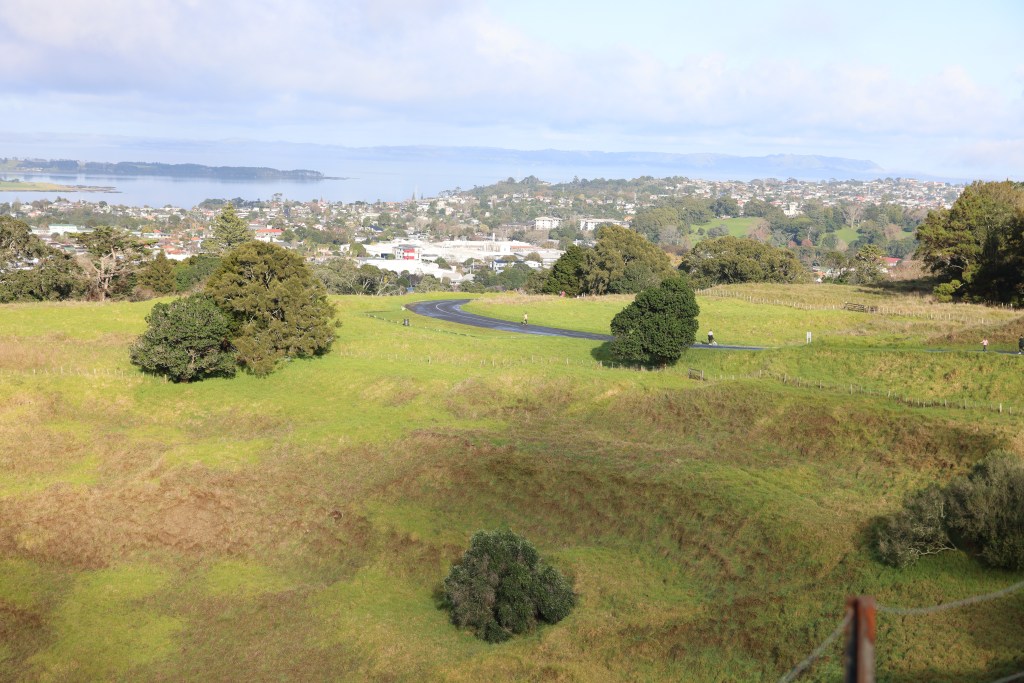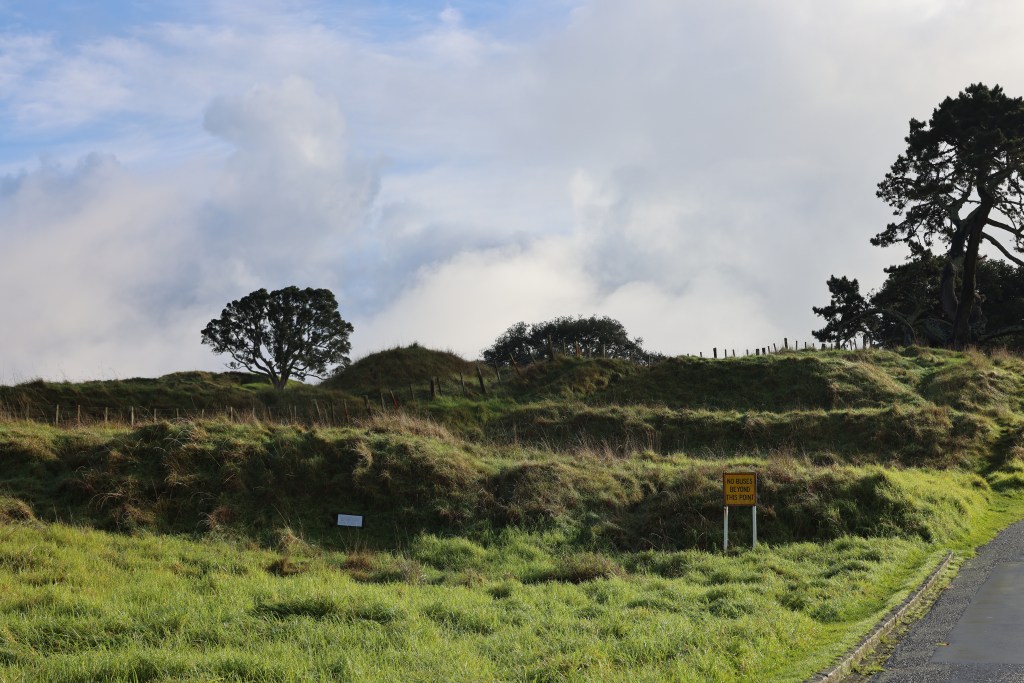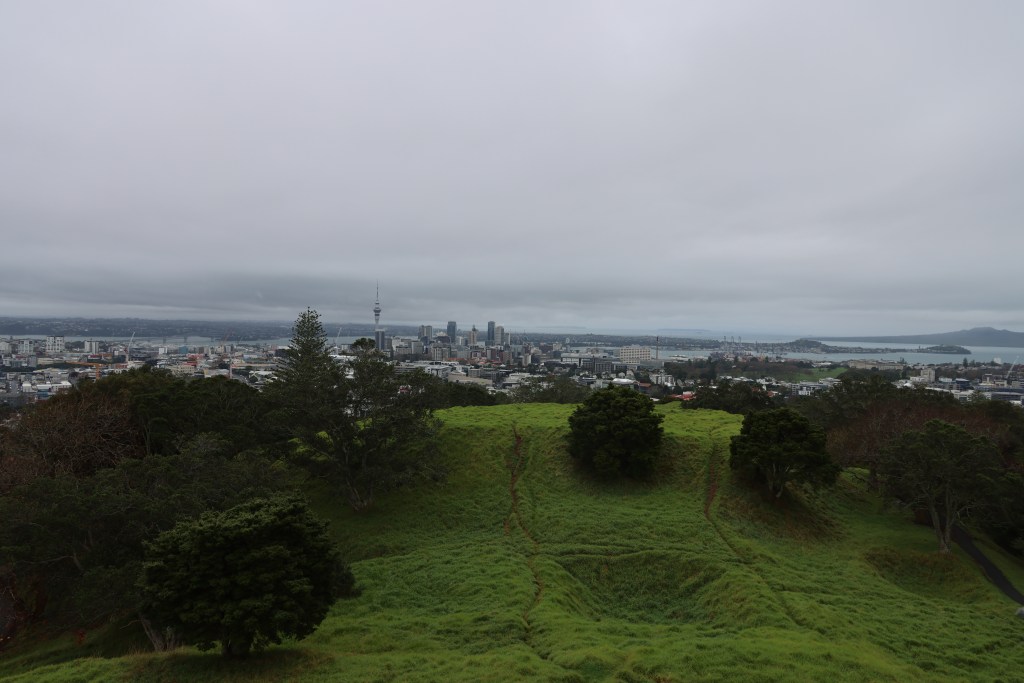
Tag Archives: landscapes

An Adventure to the East Cape

One of the great traditions in New Zealand is the ‘roadie’ – the road trip. As a country whose nearest neighbours are a minimum of a three-hour flight away it has always been considered a must do to explore our own backyard. Something we as a family have endeavored to do, even more so now we have ‘Miffo’ the motorhome. Recently we decided to take a week to explore the beautiful East Cape, an area we had yet to visit.
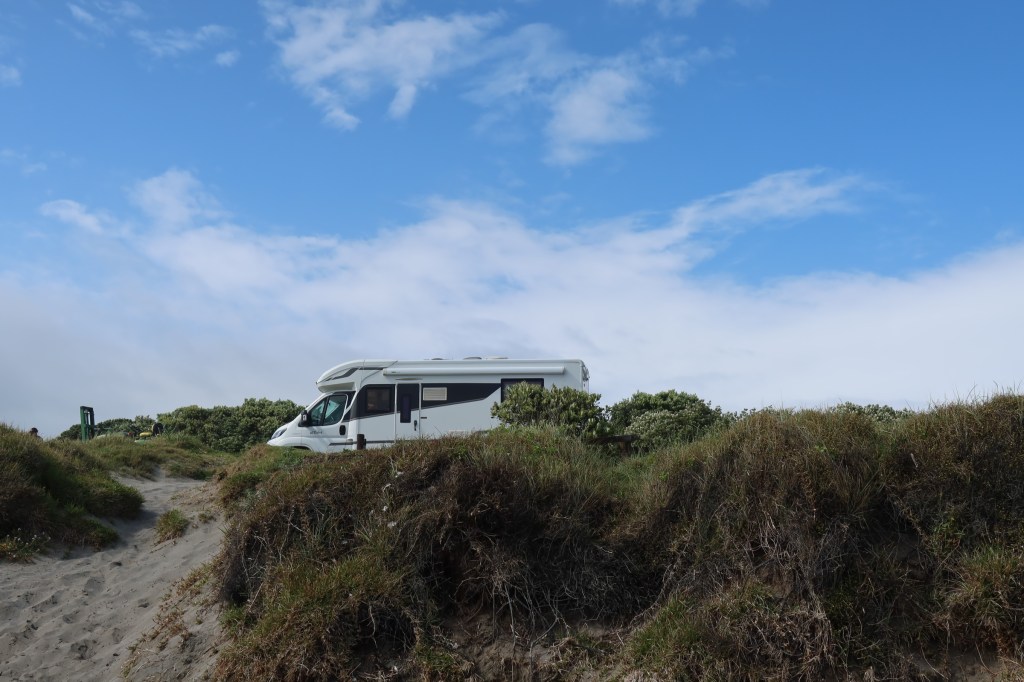
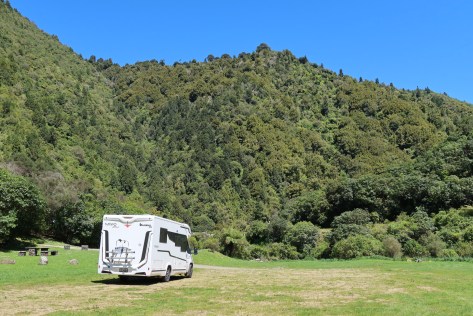
Miffo the Motorhome at one of the many roadside stops on our journey.

Our journey began as it always does with the husband being impatient and wanting to leave at the crack of dawn…the dog and I objected and we compromised – we left a short while after the crack of dawn. The drive from Auckland to Ohope Beach, our starting point, was predictable, much of the road was one we had travelled before. There was a brief stop in Katikati for a visit to the farmers market where we bought honey and we got slightly turned around when himself decided he did not want to pay the toll on the Tauranga East road. It was not a huge sum but sometimes it is very hard to get a Cornishman to part with his money. Apparently, it was the ‘principle’…eventually after a bit of swearing we found the free route.

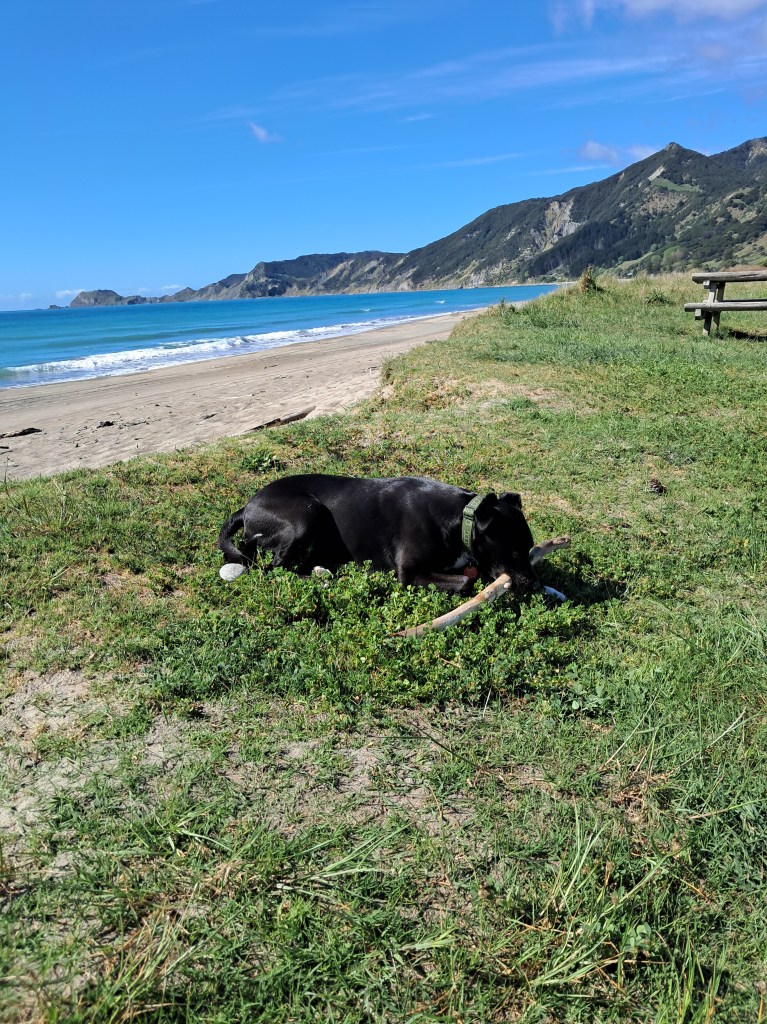
Our first night as mentioned was at Ohope Beach at the freedom camp at the far end of the harbour. Unsurprisingly, it was a popular spot being on the water and quiet. There was a typical husband moment where he lost his phone down one of the side panels in the sleeping area, it was eventually retrieved amidst much swearing and after borrowing a screwdriver (note to self – bring toolbox next time) from a neighbour so I could surgically retrieve said phone. After all that excitement we took a pre-dinner stroll across the dunes to the surf beach and for an Aucklander it was fabulous to have a beach as beautiful as this one to ourselves. The dog found what was to be the first of many sticks…
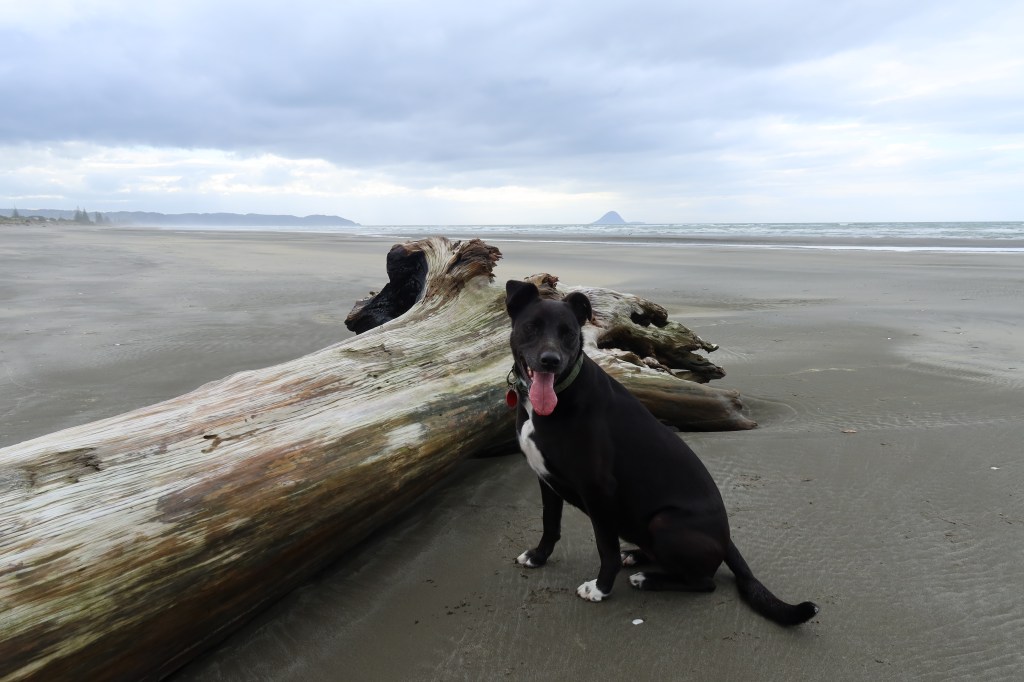
I think this ‘stick’ was just a tad too big to throw – Ohope Beach surf side.
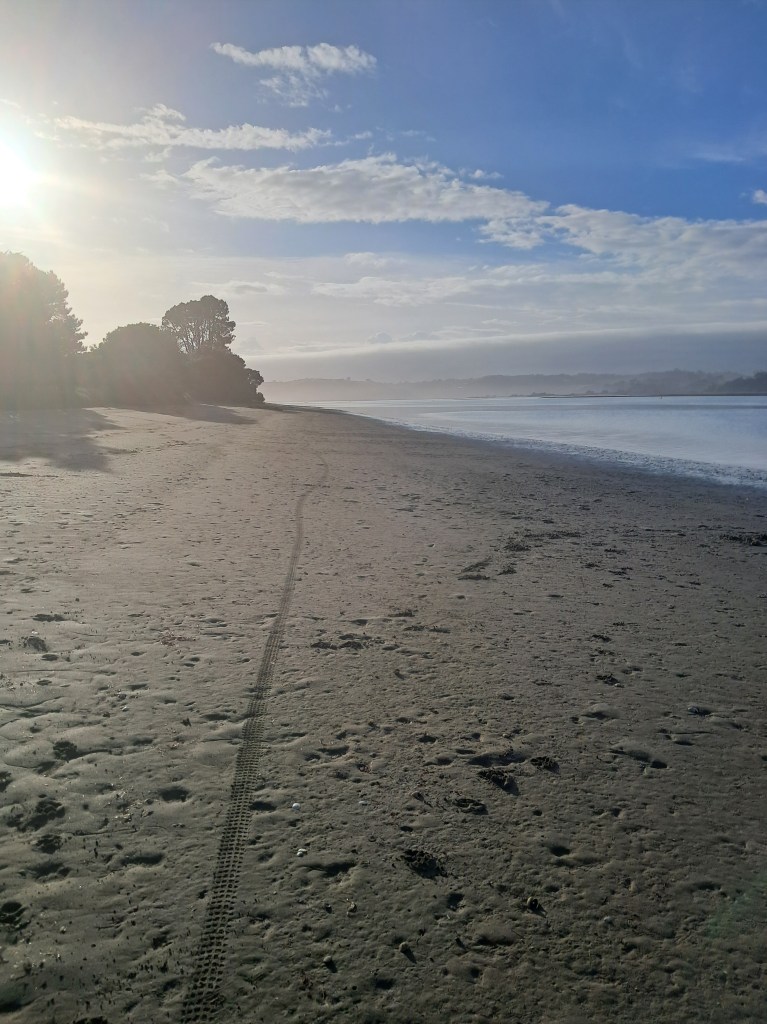
Early morning walk over the fence from our campsite – Ohope Harbour.

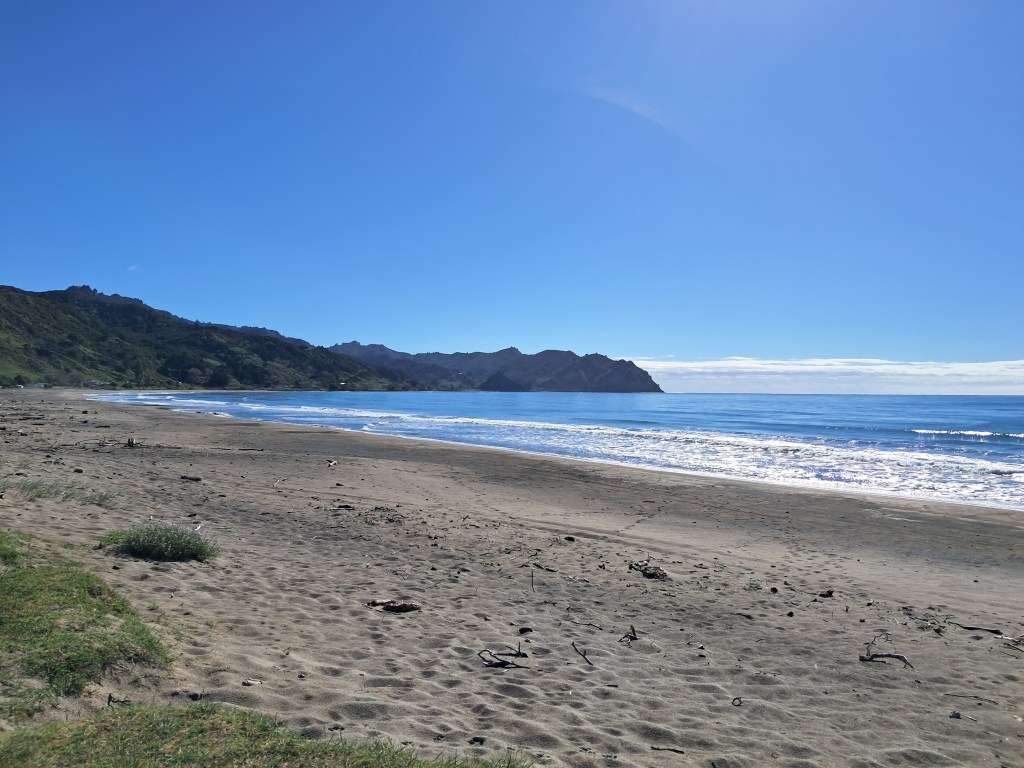
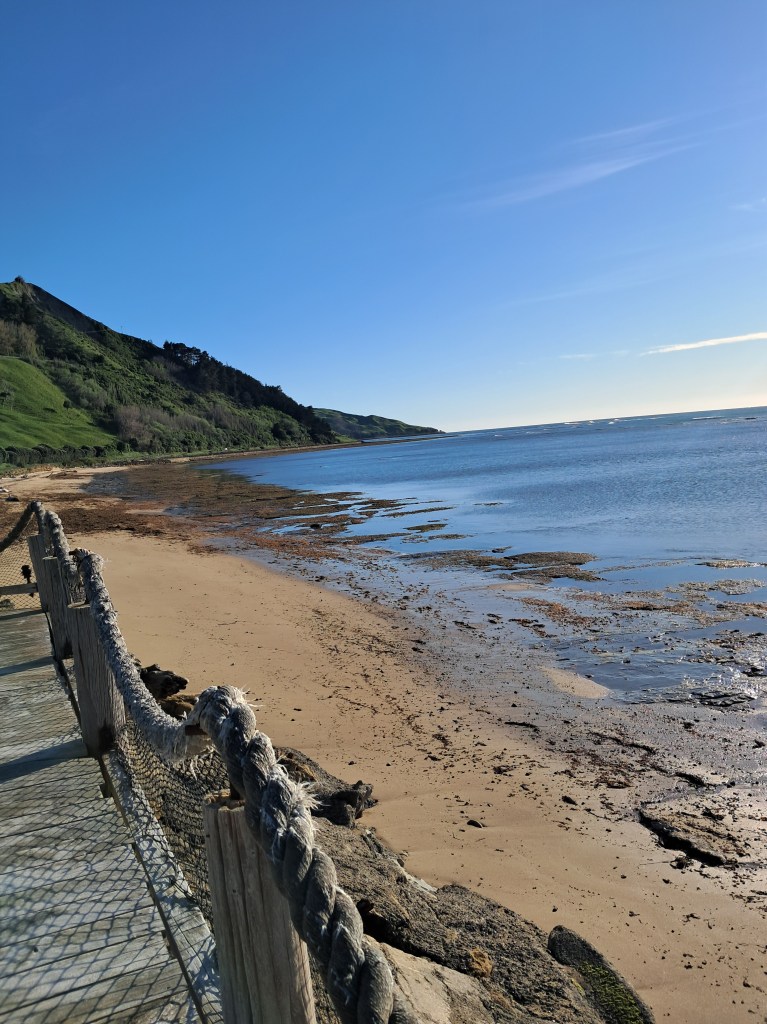
Day two started with the necessary walk and stick throwing for the dog, followed by a mercy mission into Whakatane. The husband had a footwear malfunction and required a new pair – hello Whakatane Warehouse! But it did enable me to purchase the necessary fridge magnets for our collection. After this short side quest we were on our way properly, our target for tonight’s camp was Te Kaha. Along the way, we had a few stops at some lovely beaches (the dog was happy, more sticks!). We arrived at Te Kaha at around lunch time and after some food and a cup of coffee and wee womble on the beach we decided to motor on to Waihau Bay. One of the joys of having a motorhome is the flexibility it offers, sometimes plans change and with our home on wheels we can go with the flow.
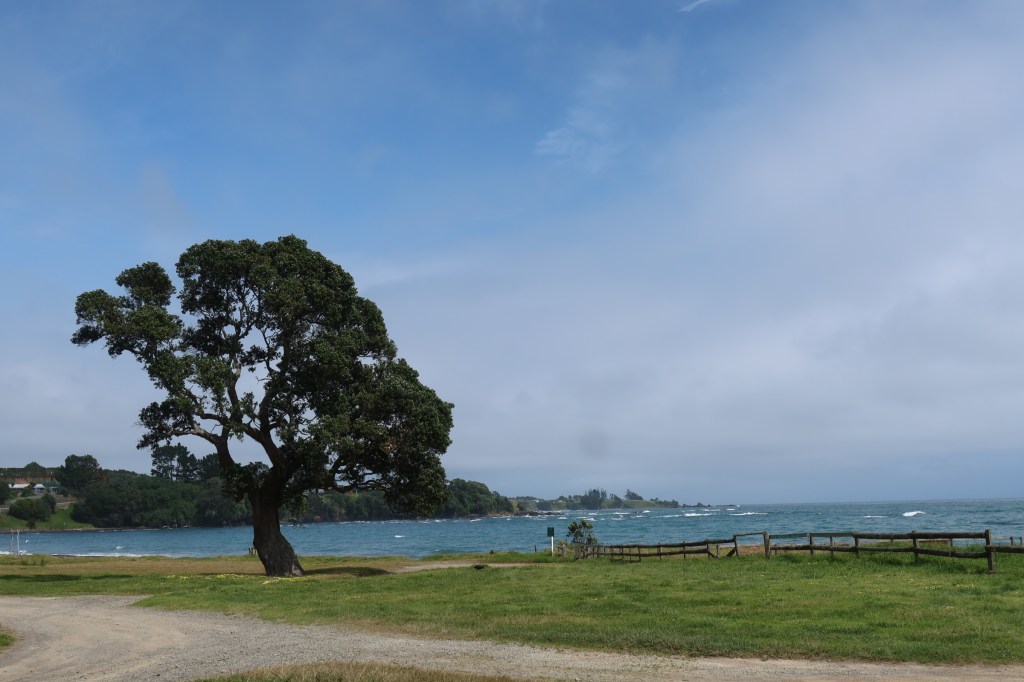
The rest stop at Te Kaha.

Before we reached Waihau Bay we stopped to admire the Kokorore Church. Perhaps one of the prettiest churches I have seen in New Zealand, perched on a small peninsula with its tall wooden spire, it is certainly eye catching. Visiting the small urupa (cemetary) at the rear of the church, it was clear that this was a family church with several names dominating the headstones. I was particularly touched to see the names of three young lads who I presumed to be brothers, who died in an accident in the late 80s. Such young lives to be cut so short, who might they have become, what might they have achieved. With a son the same age I could only imagine their family’s heartache.
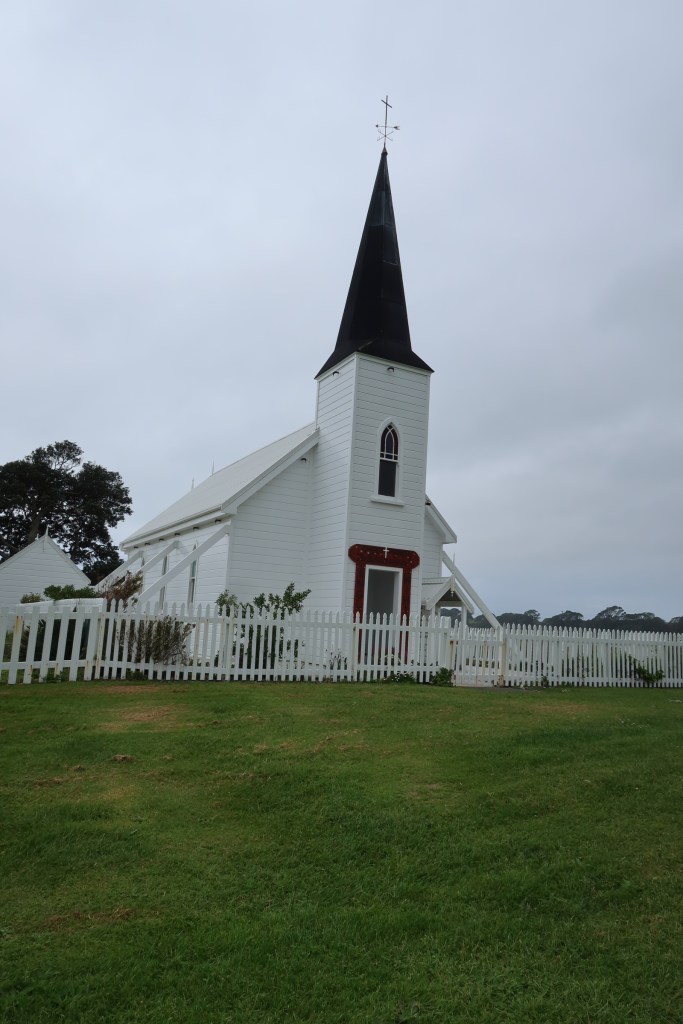
Kokorore Church.

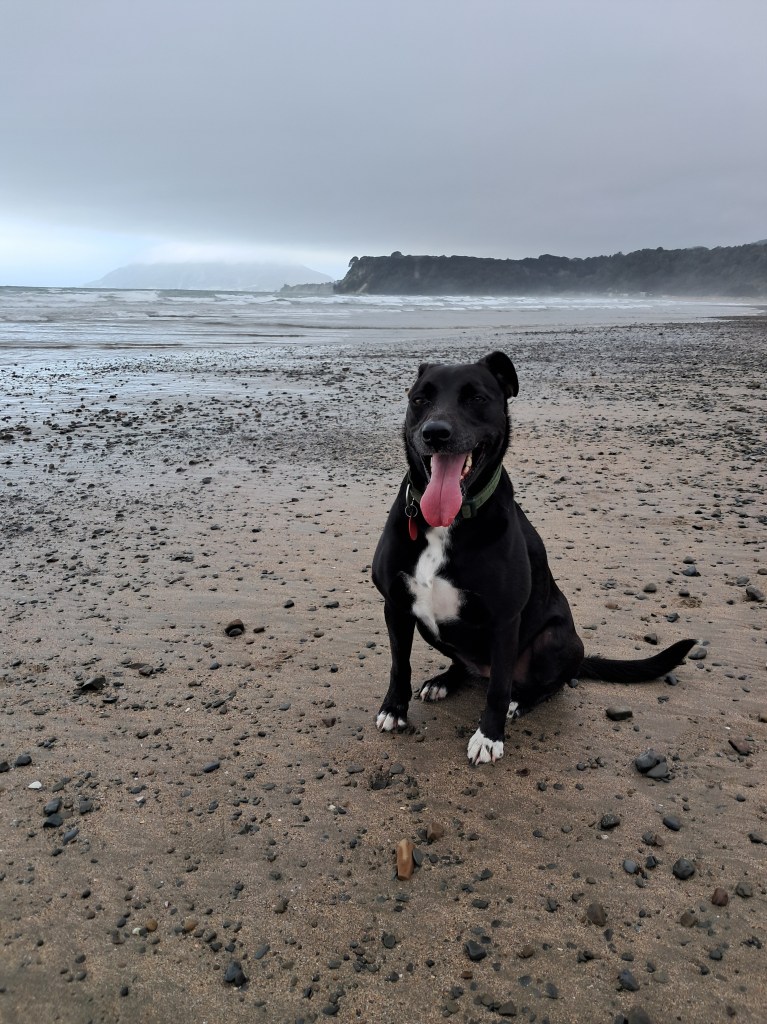
Arriving at the campsite in Waihau Bay we were greeted by the friendly hosts and showed to spot under an old puriri tree. The campsite itself was perhaps a little dated but for the money was perfectly acceptable. It was situated on the main road but to be honest that was not a problem, I think we had a ‘rush hour’ the next morning around 8am where about half a dozen cars and two school buses went past. On the other side of the road was the beach and yes you guessed it more sticks for the dog!
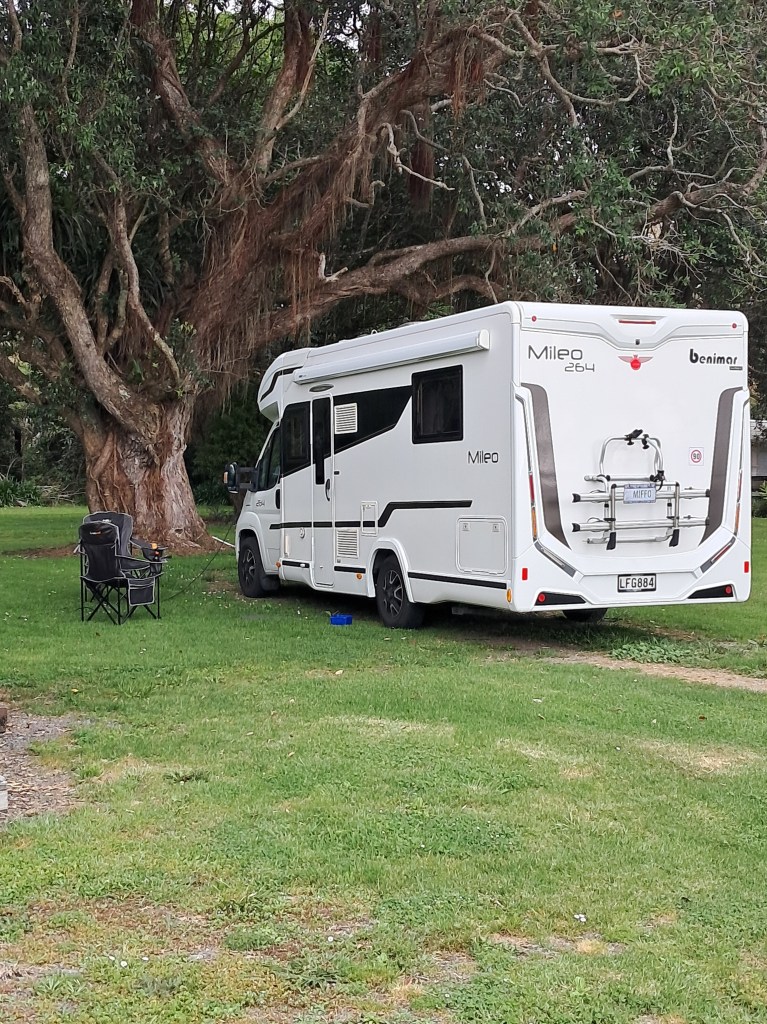
Under the puriri tree.

Day three – we woke up to rain and when I attempted to take the dog for a walk on the beach promptly discovered how well the dunes protected the campsite – it was far windier and rainier than anticipated and was a walk cut short – even the dog was happy to leave the beach. An hour up the road and we stopped at the general store in Hicks Bay, a coffee for myself and what was to be the first of many pies for the Cornishman. The pie is worth a mention here, as it was a Ruatoria pie (Ruatoria is an East Cape town and thus this was a locally produced pie). The husband is always on the lookout for locally produced foodstuffs. His verdict on the pie (steak and cheese) was excellent, apparently, they had used proper cheese (not the fake stuff many pie producers use). I am an awful kiwi, not being a fan of ‘the pie’, so it is good that the husband makes up for my shortcomings.

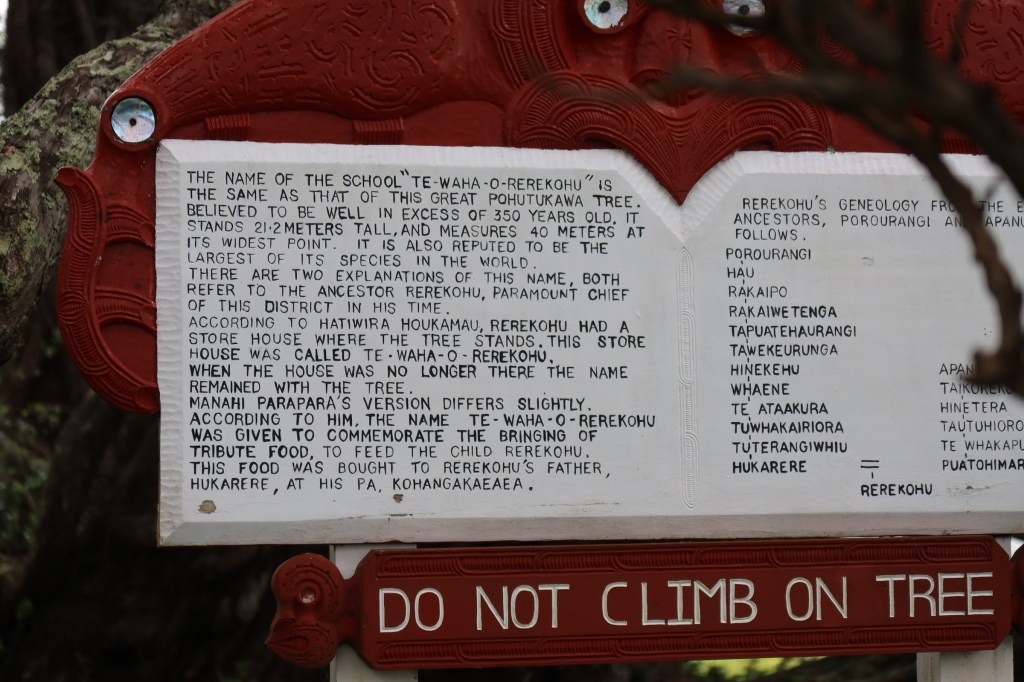
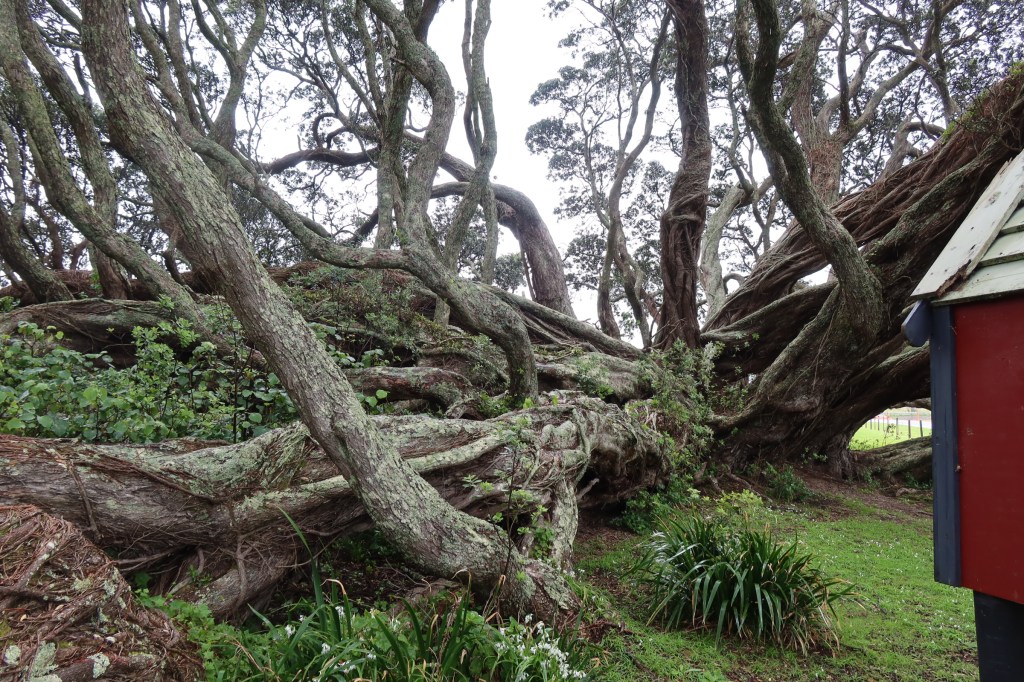
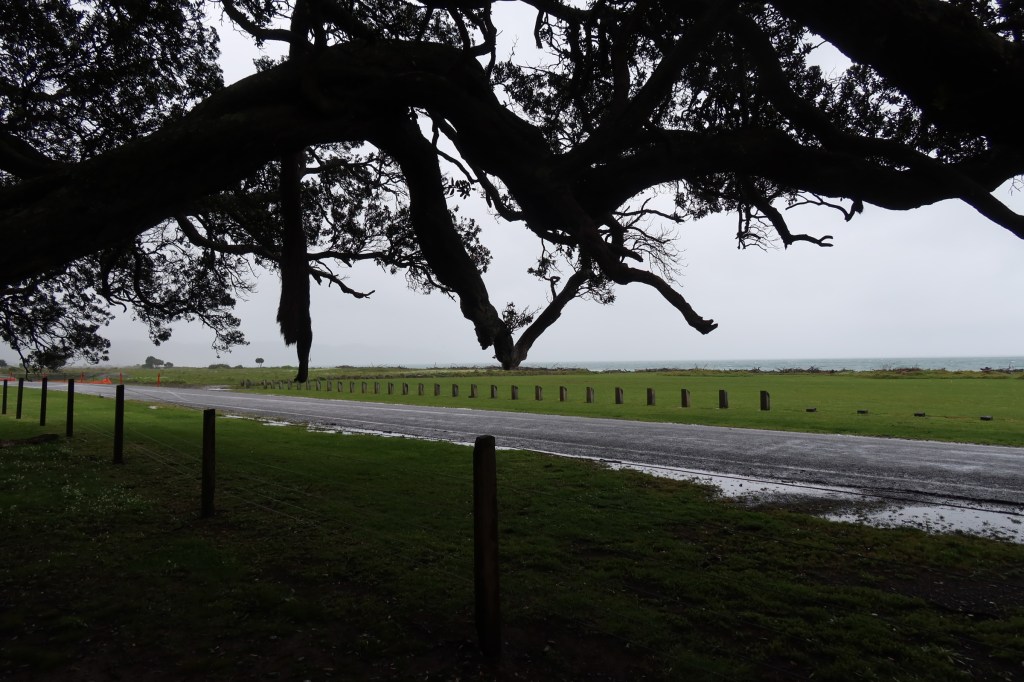
Not long after this we arrived in Te Araroa where we paid our respects to the country’s largest and reputedly oldest pohutakawa. Spent a short time communing with this ancient tree (350yrs approx.), even the husband was in awe and gave it a wee hug. I’ll make him a tree hugger yet…As I stared up and around at its twisted branches, I could only wonder what events that tree had witnessed. It was probably a only a sapling when Cook sailed past. It would be fabulous to do this trip in the summer when all the pohutakawa are in bloom – stunning!
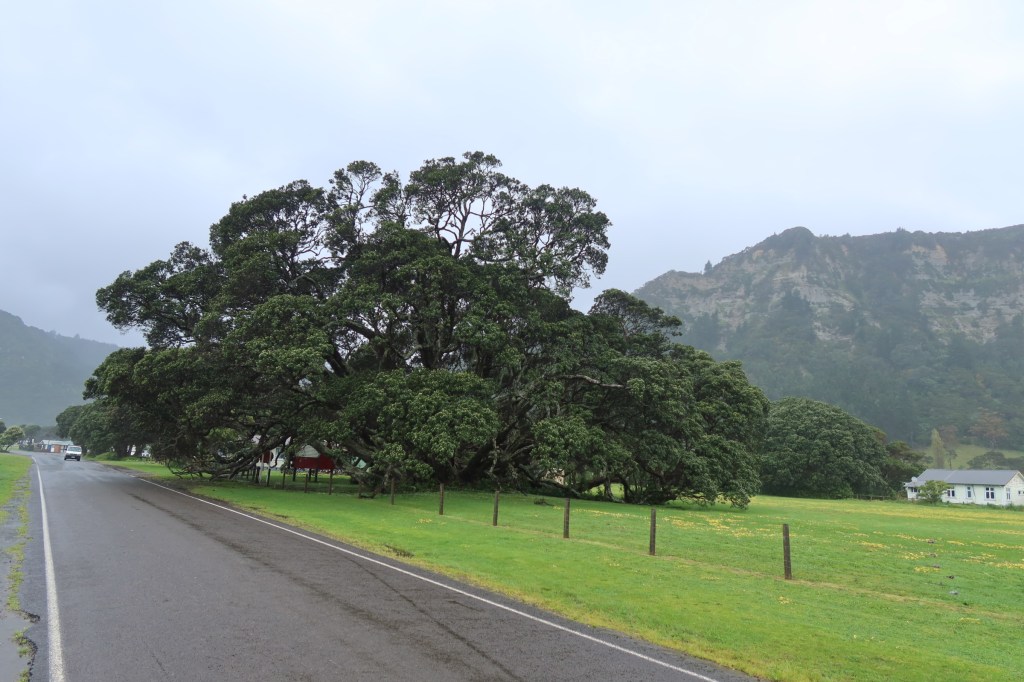
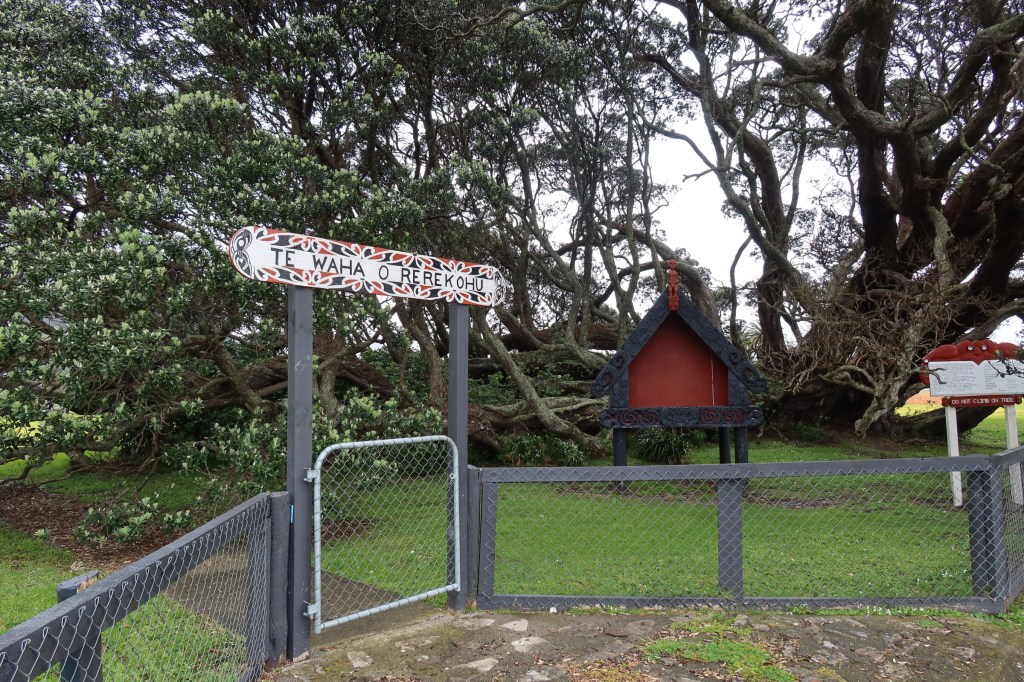
It had been our intention to spend the night at the East Cape Campground, but the rain and the wind hadn’t eased and was predicted to continue for the rest of the day. After a bit of discussion, we decided it was safer and ultimately more pleasant to wait out the rain in Te Araroa where there was an NZMCA park up area. The afternoon stretched out in front of us. Someone took a nap and so did the dog, I read, drank tea and ate biscuits.
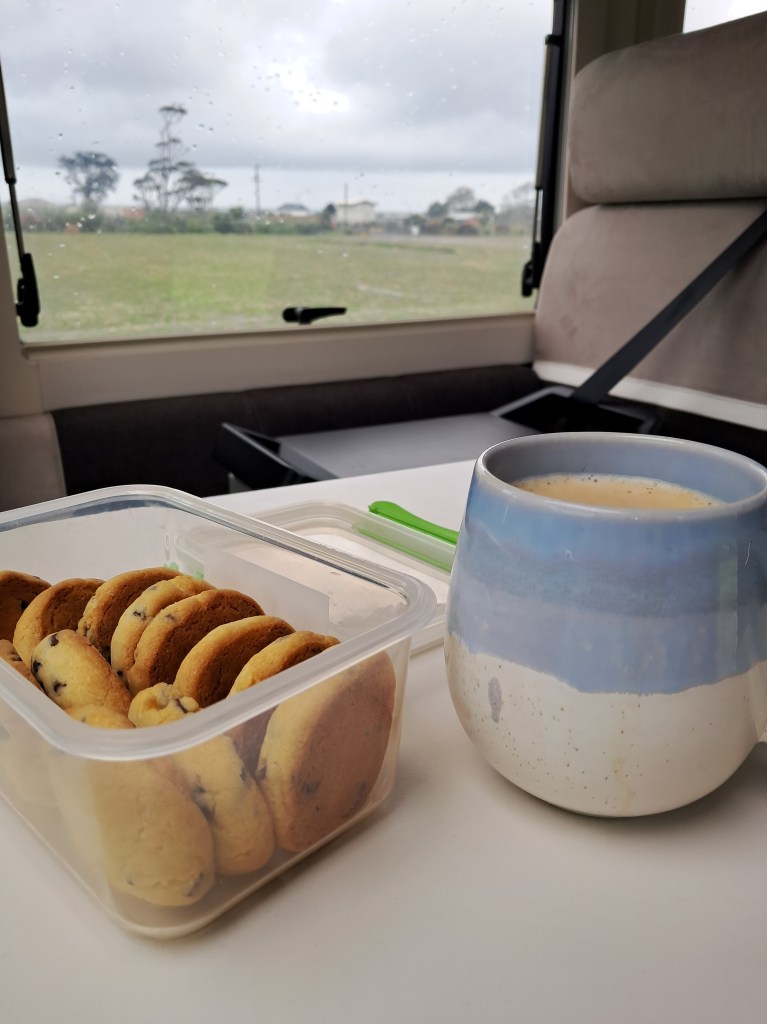
Tea and biscuits – perfect for a rainy afternoon!

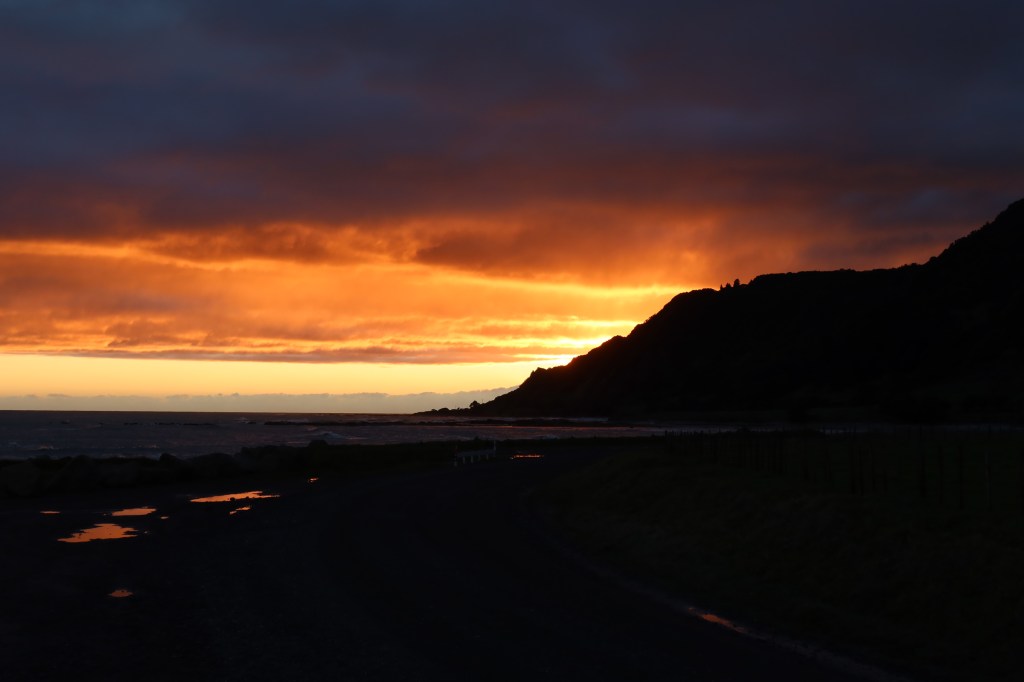
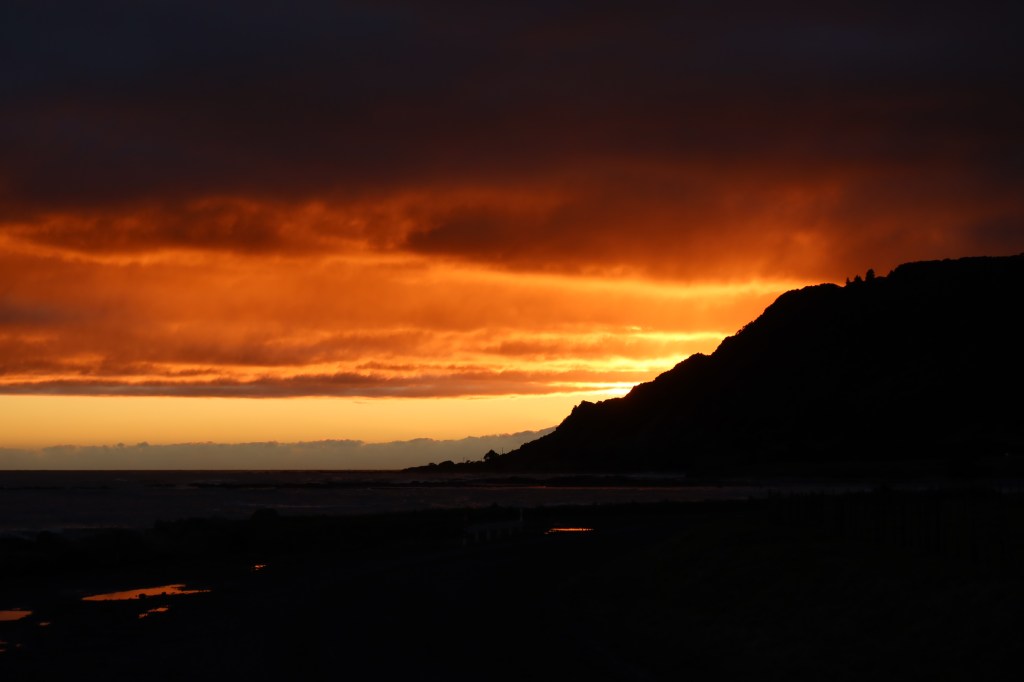
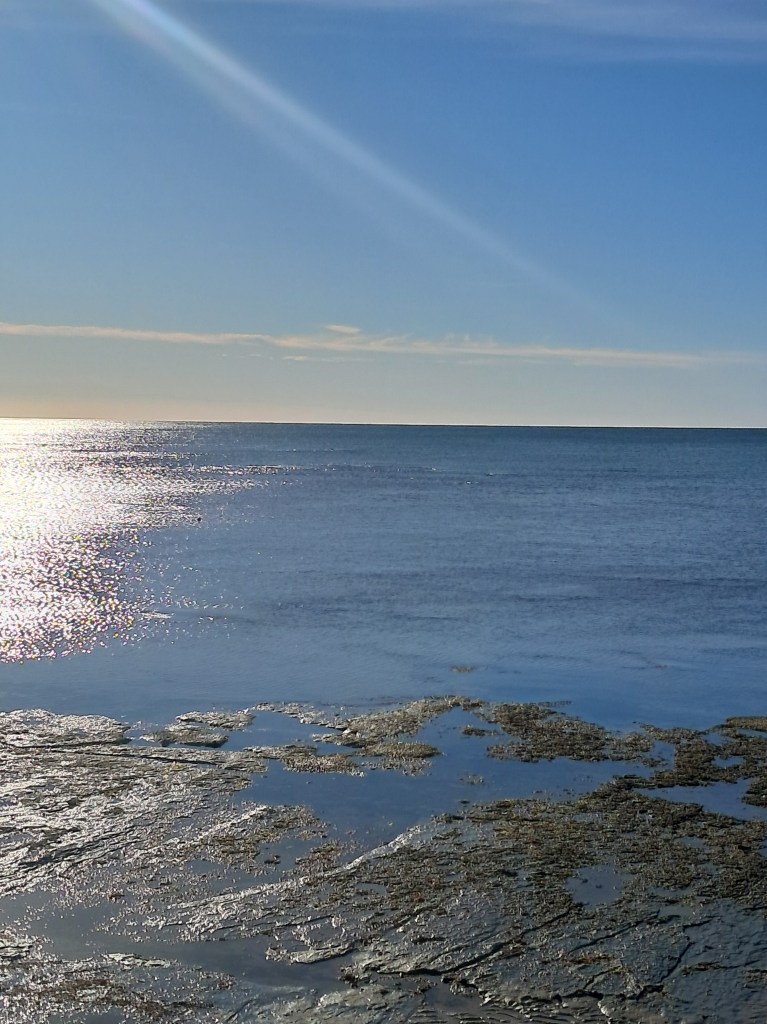
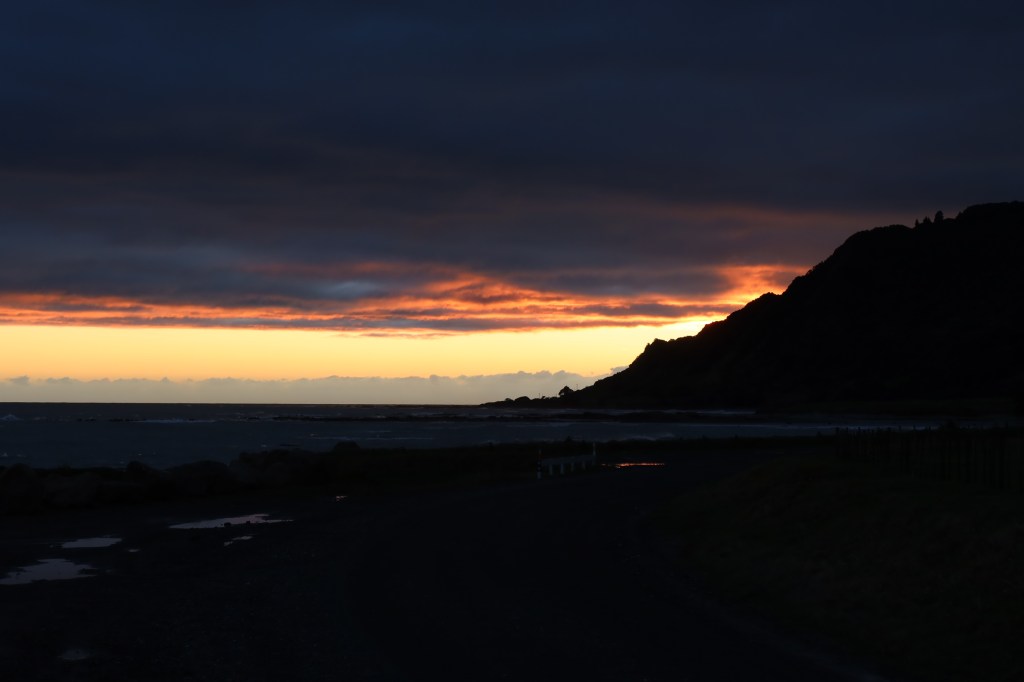
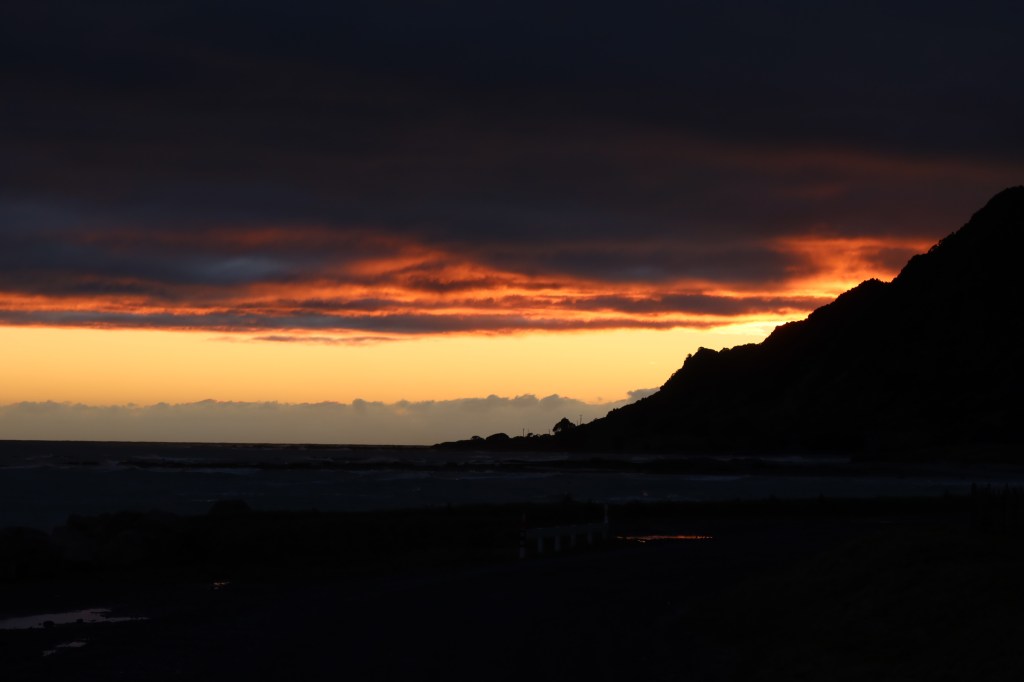
Day four – was awoken rudely by the husband who felt we should make an effort to see the sunrise. After a short drive along the dirt road that leads to the most easterly point (with me still in my pjs) we found a spot to park up. Turns out it was one of his better ideas…the East Cape is the first place in Aotearoa New Zealand to see the sunrise. It was stunning after all the rain the day before and we ate breakfast watching the morning begin in all its glorious colour. Once dressed and ready to face the rest of the day we then headed off, our final destination for the day would be Tatapouri.
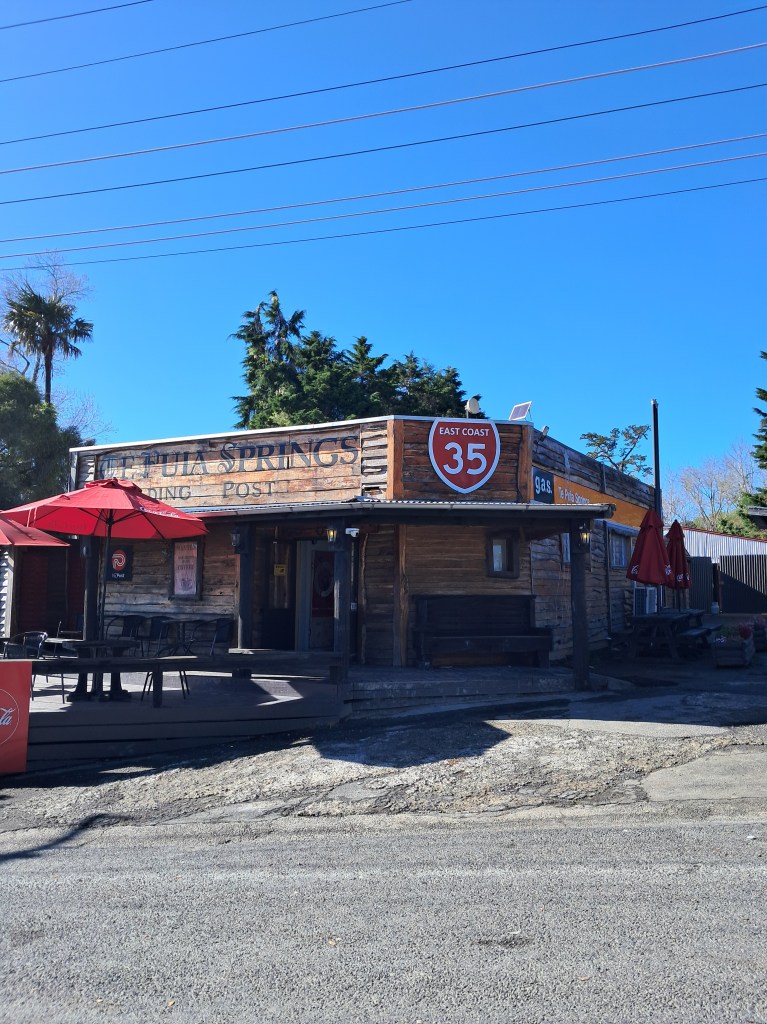
Along the way we stopped briefly at Te Puia Springs general store, the husband bought a pie. This time it was pork belly, he initially did not hold out much hope for the pie. He literally at his words, it was excellent!
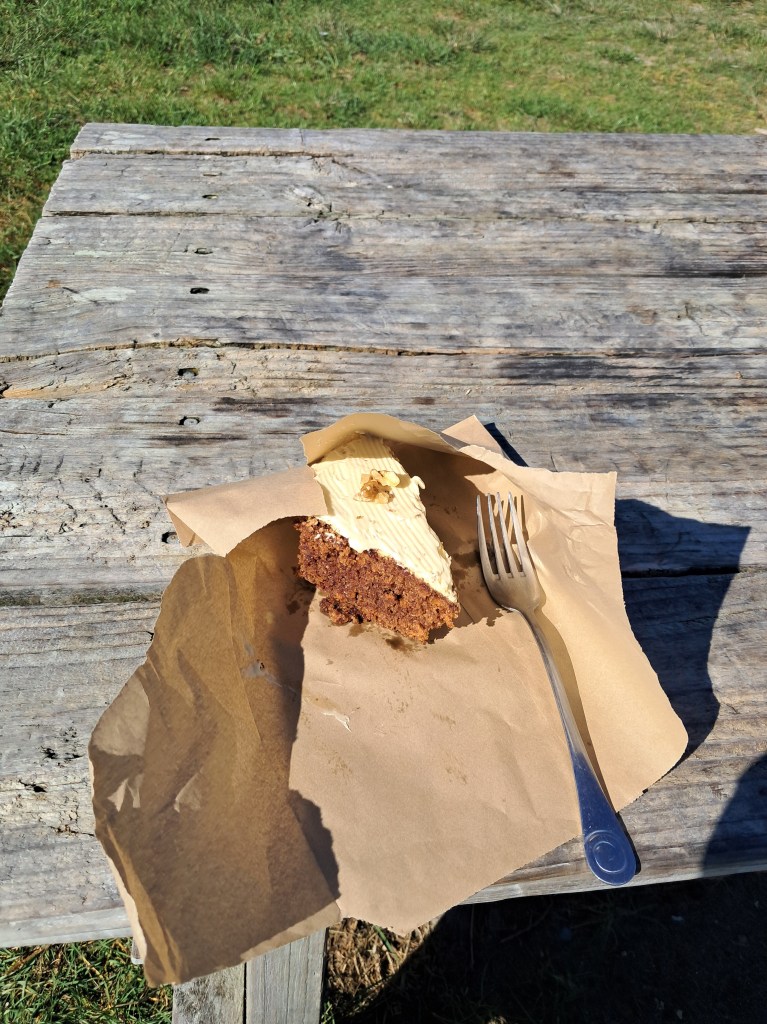
Our next stop was Tokomaru Bay where we stopped at Cafe 35 for you guessed it, another pie (I had a slice of lovely carrot cake). This time the pie was their world famous paua pie and it was apparently so good he had to go back and get another one for the freezer (as well as a pork belly pie for the freezer). The owners of the Cafe 35 make all their own pies and feature in book on Aotearoa New Zealand’s best pies – yes, we own a copy.
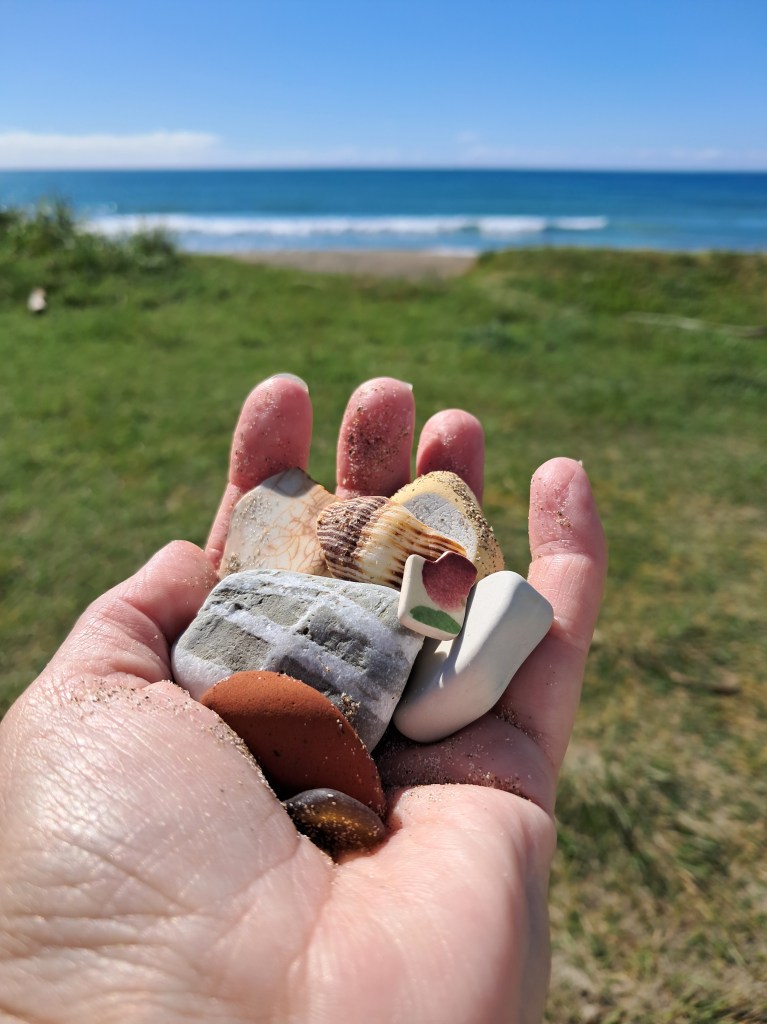
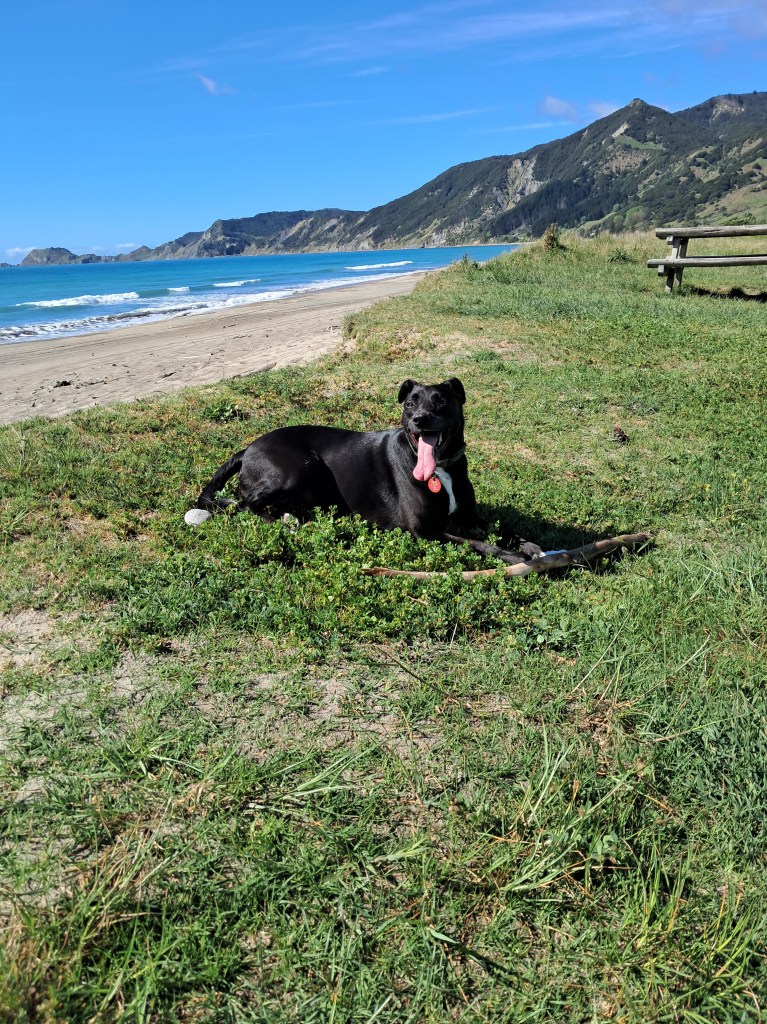
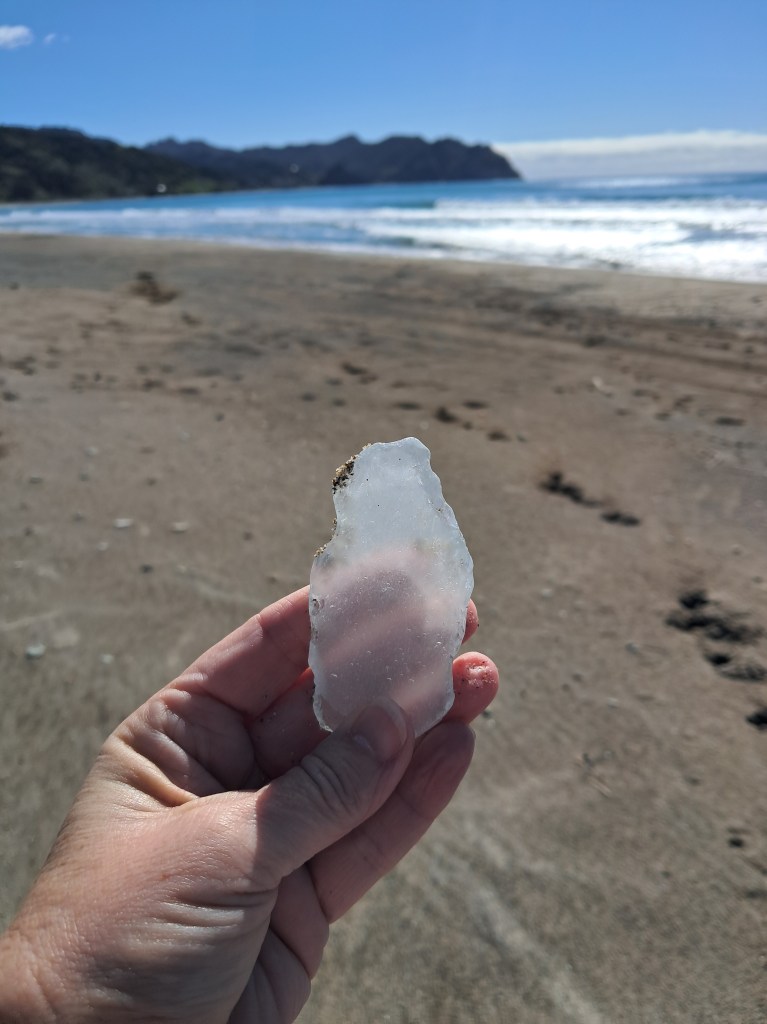
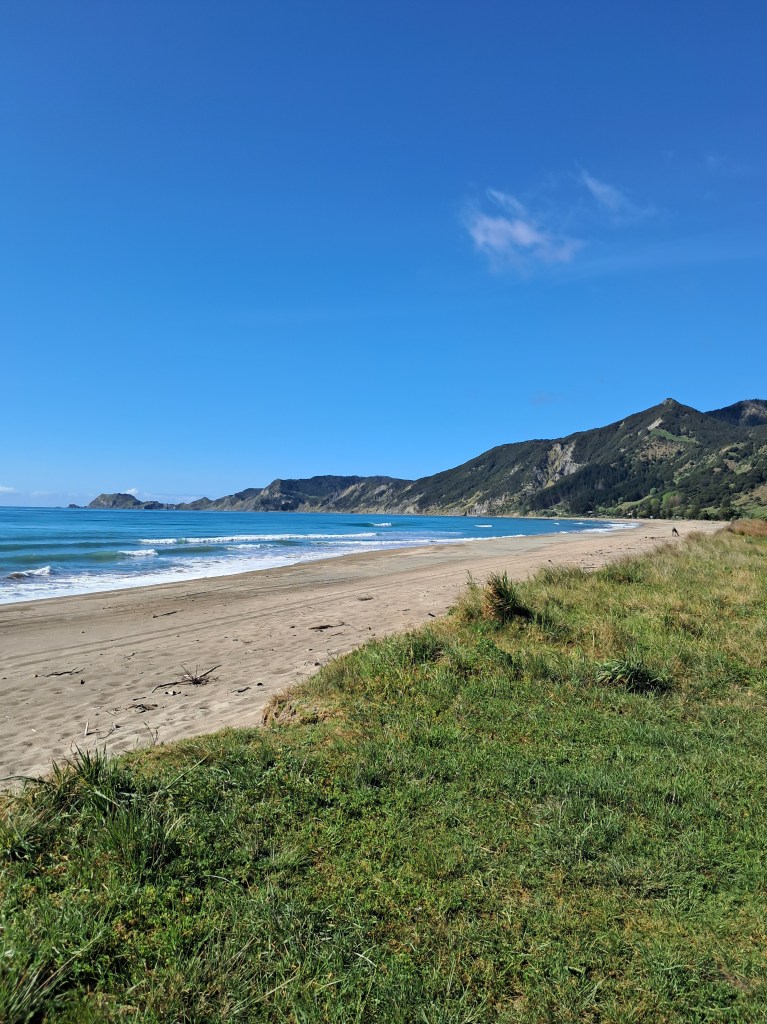
After a bit of walk along the beach finding a few treasures and throwing a stick or two for the dog we carried along state highway 35 (also known as Pie Way 35 for what should now be obvious reasons). This stretch of the highway was a challenging drive, with a great deal of ongoing remedial road works, lots of twists, turns, uneven surfaces and the odd wandering livestock. We came across four very confused calves who had made a break for freedom and then appeared to not know what to do with it once they had it.

The next stop for the day was Tolaga Bay, where, yes, that’s right he bought another pie…but I think he was all pie’d out by this stage as the comments were less enthusiastic then earlier in the day. Did the obligatory stroll down Tolaga Bay wharf, I had a bit of lunch and a coffee and then we were off again, bumping along the highway to Tatapouri Bay Oceanside Campsite.
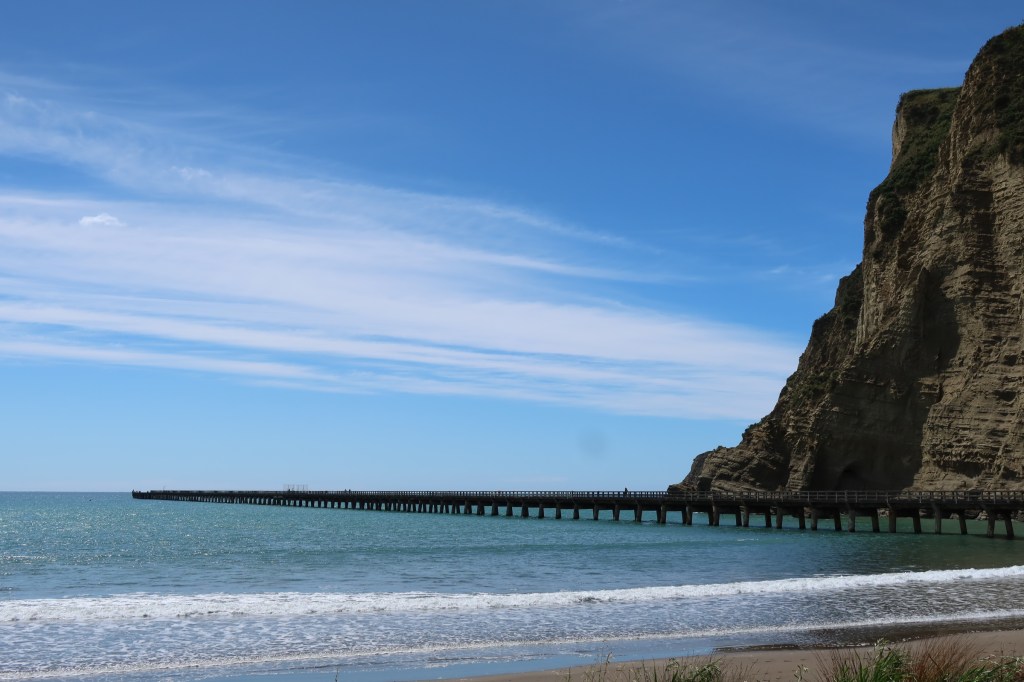
Tolaga bay wharf.

Day five – it was not a great night’s sleep, being beside the highway and so close to Gisborne the number of logging trucks that thundered past the campsite at all hours of the night was a problem, especially as they changed gear going up the hill. Having said that this is lovely campsite but perhaps next time I’d pick a spot further away from the road. But my morning was to greatly improve. Our purpose for stopping here was to join Dive Tatapouri on one of their Reef Tours where you get to do a meet and greet with the local stingray population. We were up early as we needed a low tide; the dog was feed and walked then given her lick mat to keep her occupied whilst we were busy.

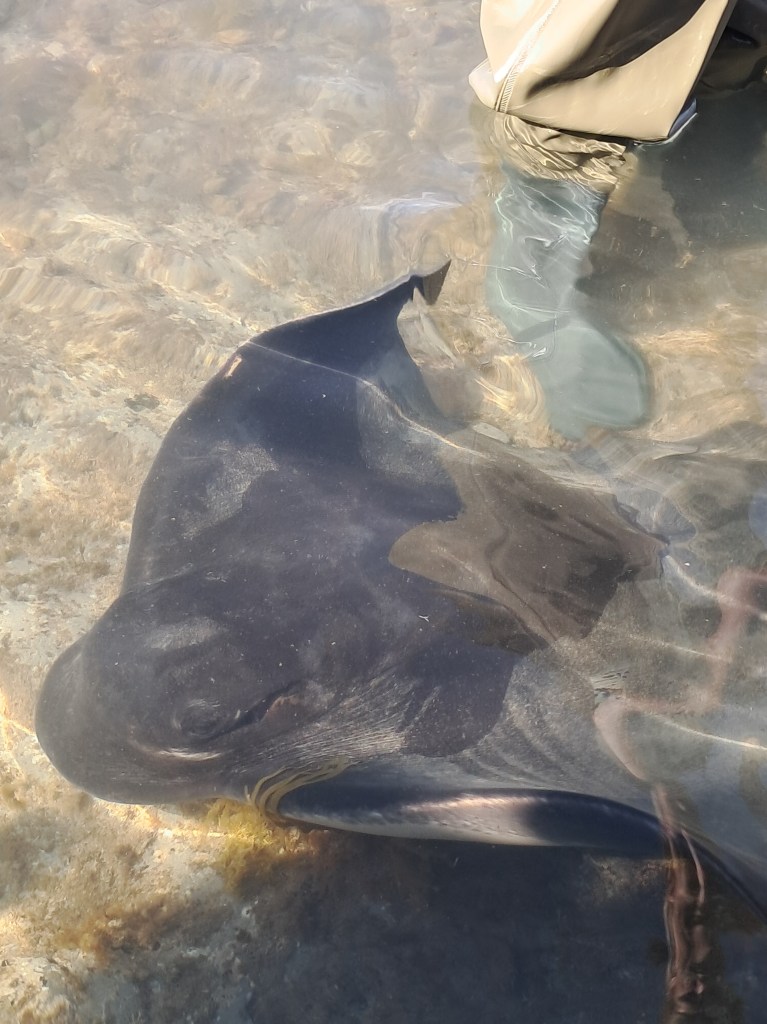
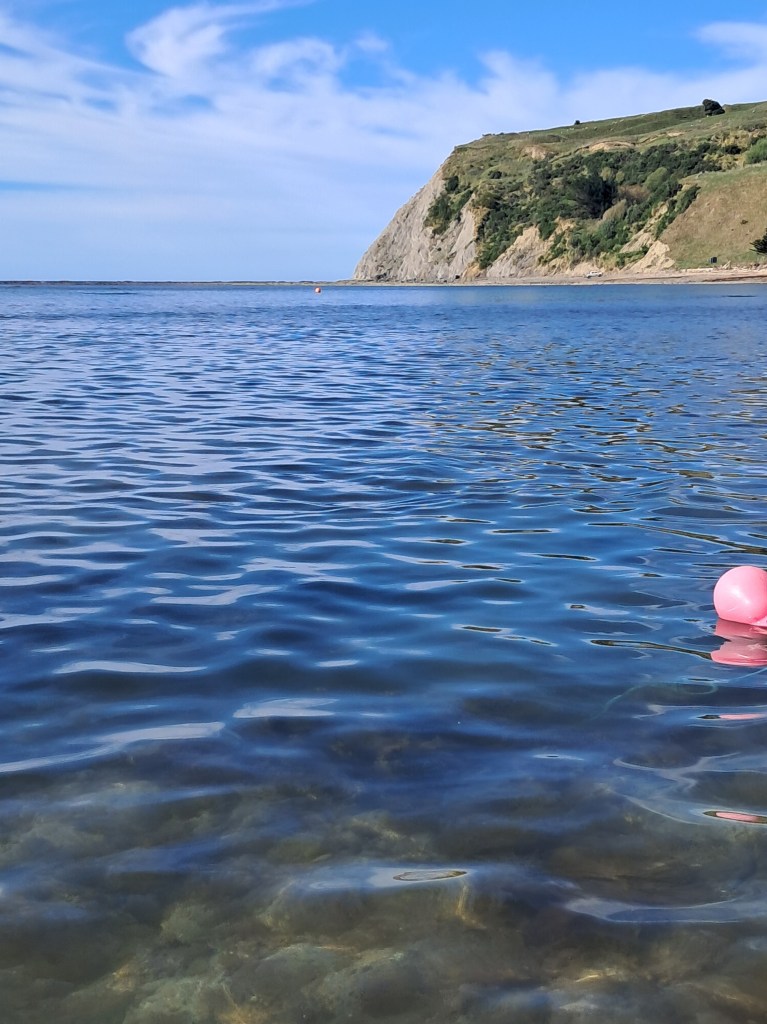
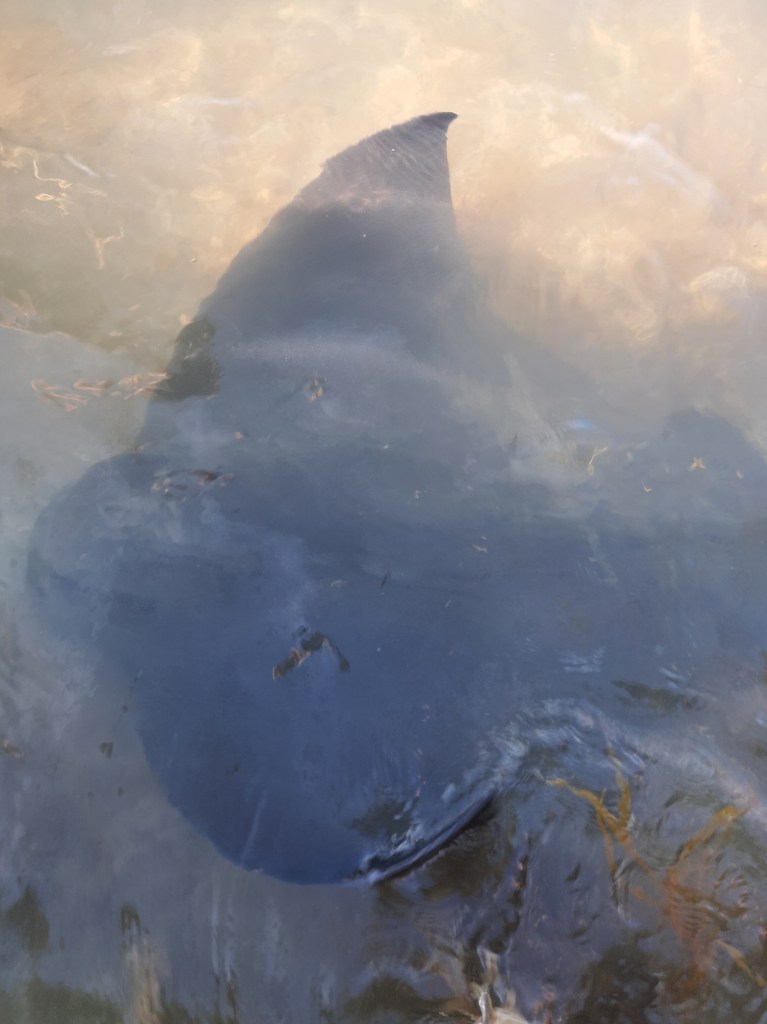
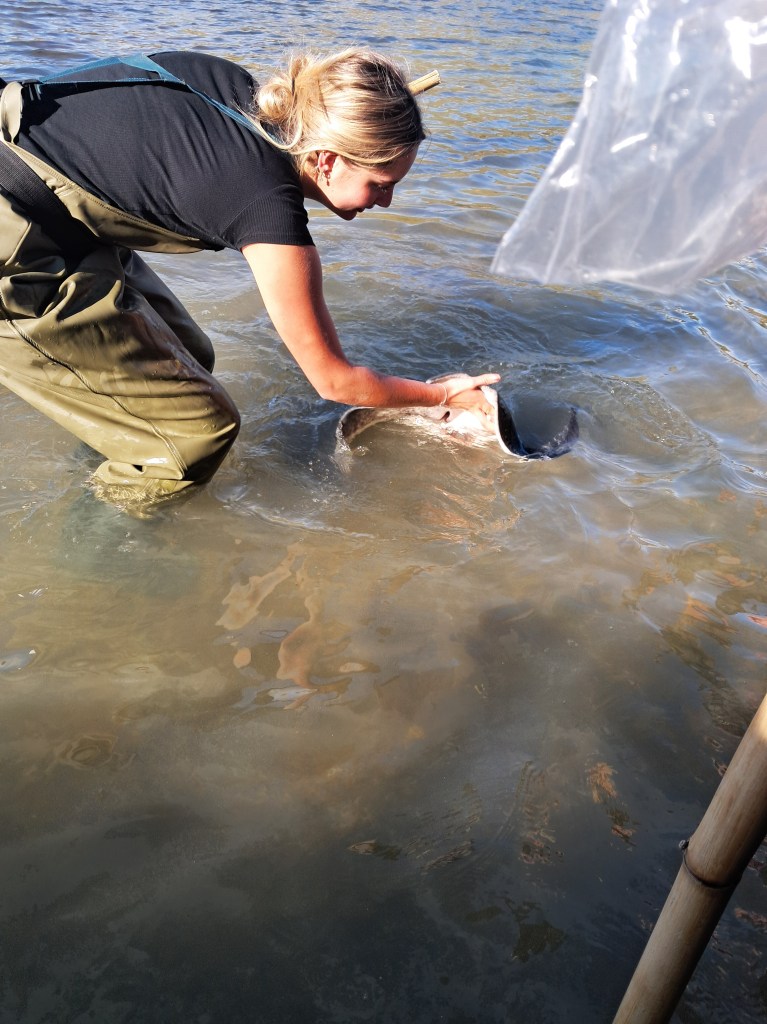
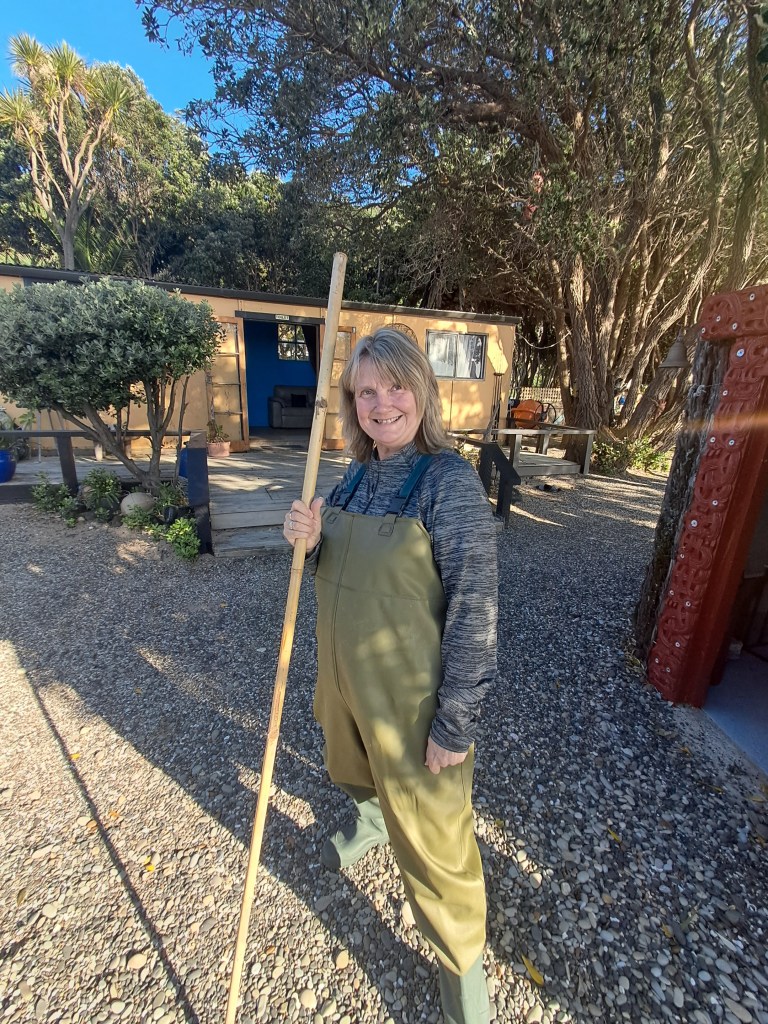
The tour begins with donning some very attractive waders, you’re given a stick to help you walk out over the reef and of course a safety briefing. We are then led across the rocks out to a depth that was about knee high and before you know it there were eagle rays and short tail (named Moana) ray coming over to say hi. They are extremely friendly and reminded me of mischievous puppies, we were allowed to stroke them and give them a wee fishy treat. It was surprising how soft their skin is. The guides were very knowledgeable, explaining how all the rays in the bay were females – the males lived further out to sea with their own territories. I learnt that rays respond to heartbeats and that if you are swimming in the sea, it is more than likely that a ray (especially the eagle rays) will be near by checking you out. Overall, it was fantastic experience and one I would highly recommend.
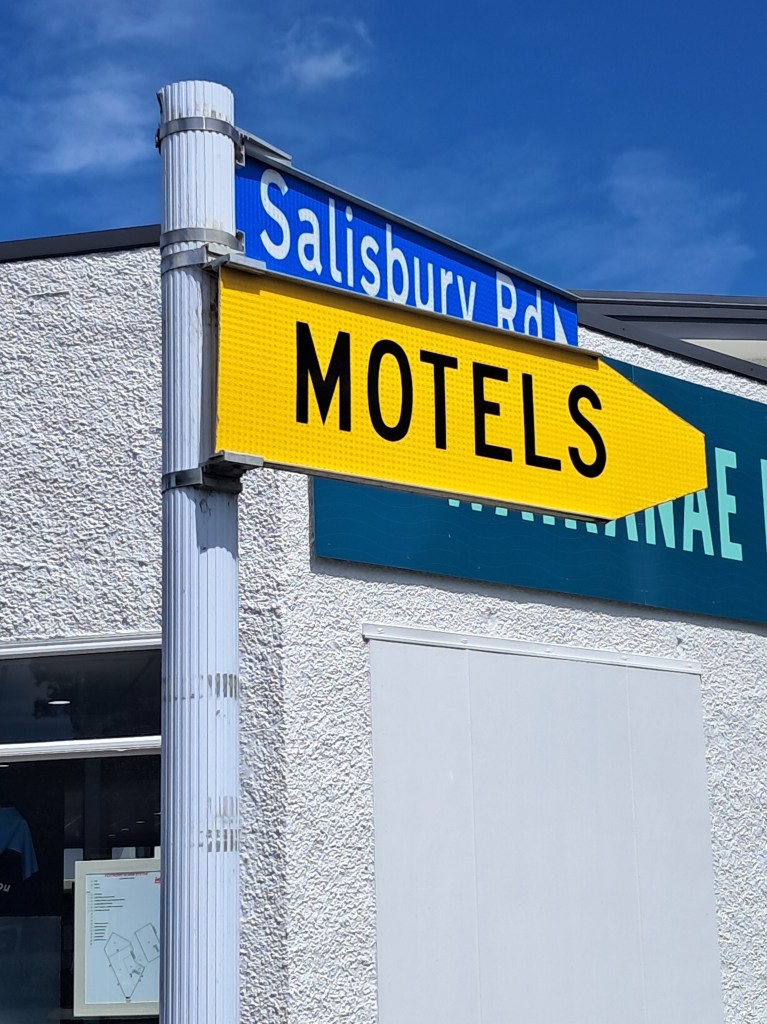
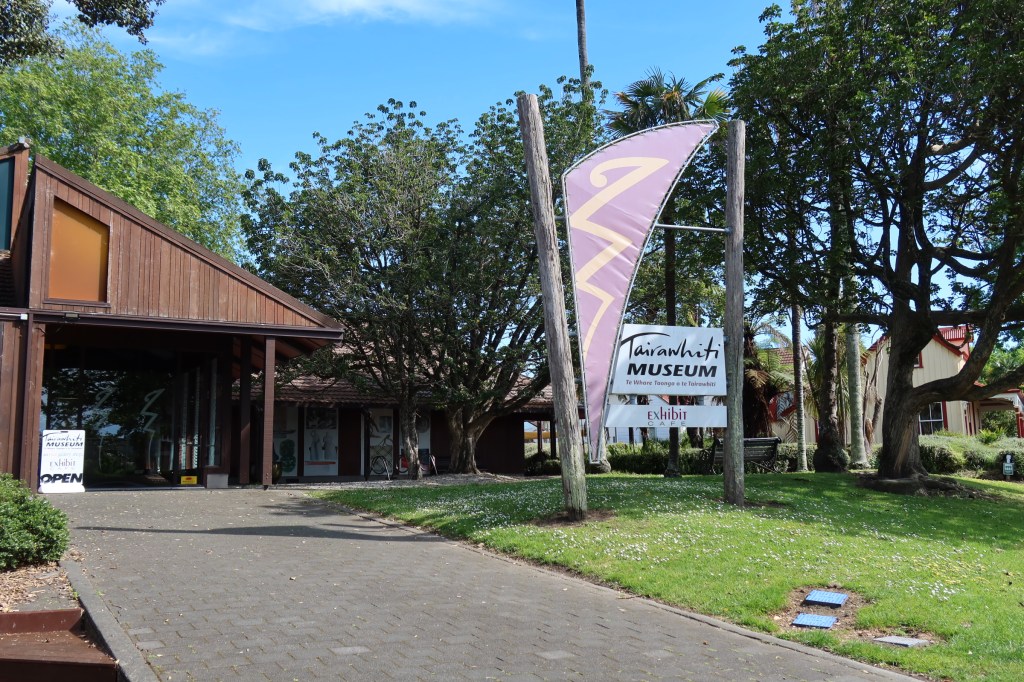
After our exciting morning we drove the short distance to Gisborne, where I paid a quick visit to the Tairawhiti Museum (Tairawhiti is the Māori name for the Gisborne area) and the husband got told off for walking the dog in a no dog park – oops! We then went in search of the ‘i’ site so I could buy some fridge magnets for the collection. Along the way we found another Salisbury road (our road in Auckland) and discovered our number was park – it’s the little things that keep life interesting…That night we parked up in the NZMCA park which was a very well looked after park in a great position across the road from the beach. Yes, there were walks and stick throwing for the dog. I also rescued a bag of small pieces of driftwood. Unfortunately, they were doing a major clean-up of the beach with trucks and diggers removing much of the larger pieces of timber that had washed up on the beach. One of the major issues in the area is when there is flooding etc much of the waste material from the forestry plantations washes down the rivers, onto beaches and out to sea.
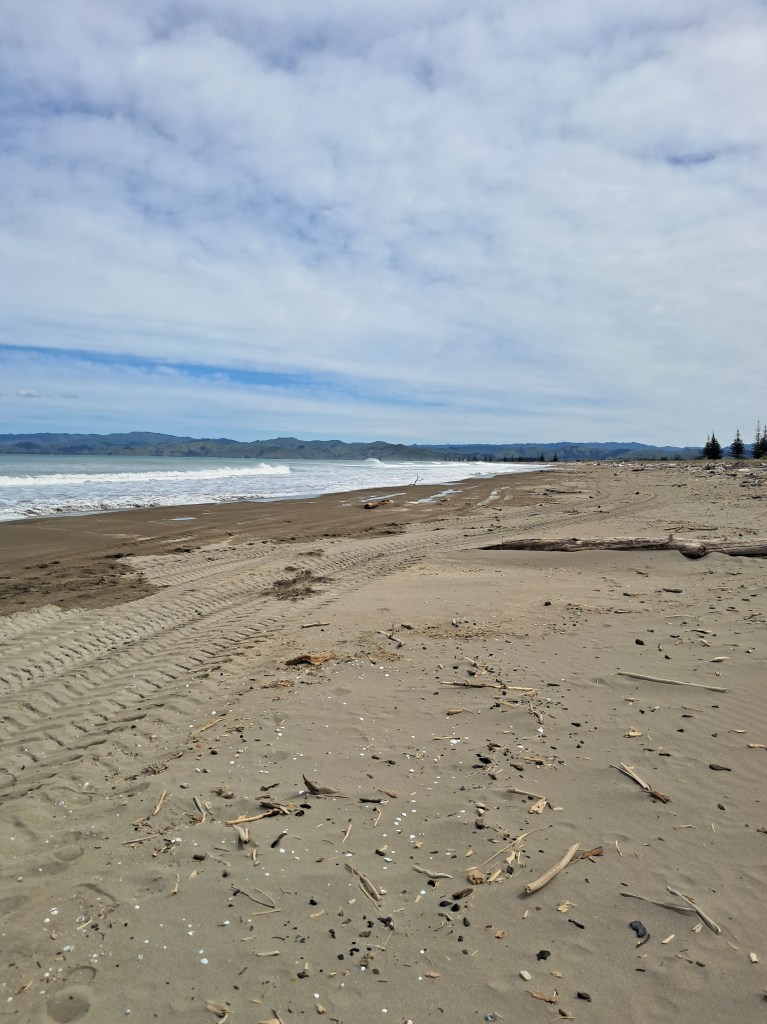
Midway beach, Gisborne.
Well, it had to be done!

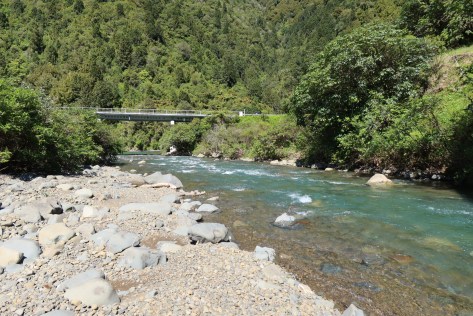
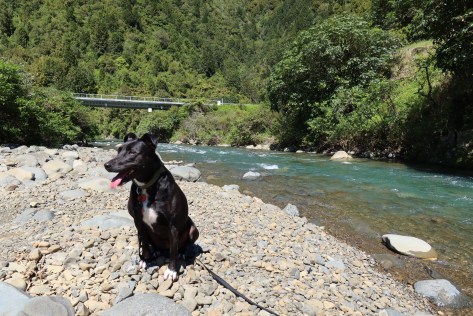
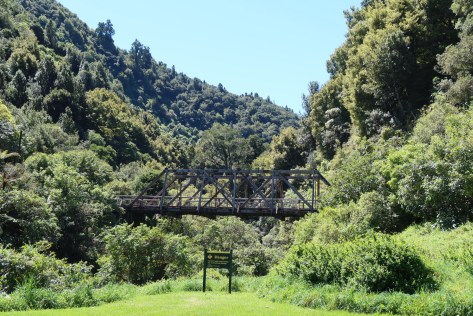
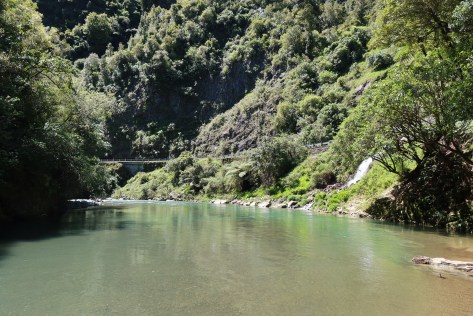
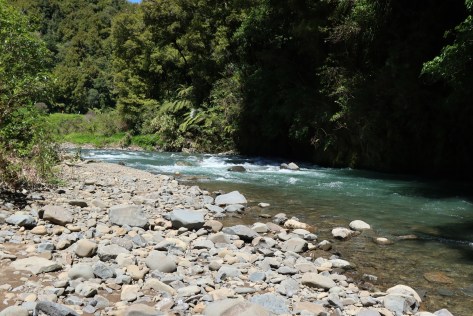
Day six started with the usual walk on the beach and stick throwing for the dog, dodging trucks and a digger going at speed! Our destination today was to be Opotiki via the beautiful (and long and twisty) Waioeka Gorge. Approximately halfway through the gorge is lovely wee campsite with fire pits, beside the river. We stopped here for some lunch and to stretch our legs, talking a loop walk across an old wooden bridge (the Manganuku Bridge) and along the river. The dog was grateful for the sniff stop.
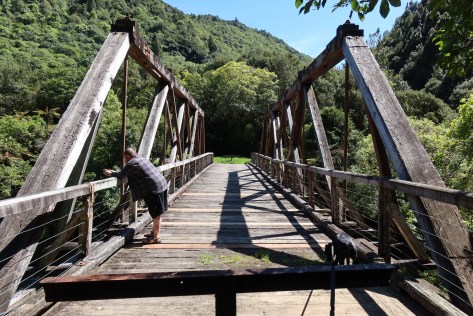
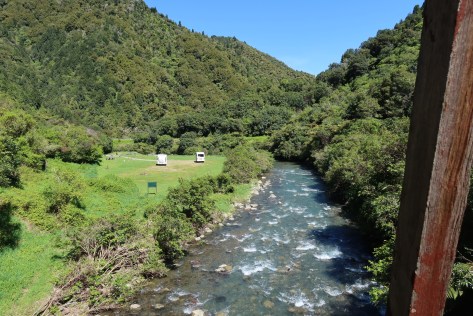
The husband as per usual got to chatting to another motorhomer who had also stopped for break, and they recommended a freedom camp on the other side of Opotiki for our nights stop. It was an excellent recommendation. The freedom camp was at the Te Ahiaua Reserve at the northern end of Waiotahi Beach and even though it was on the main road between Whakatane and Opotiki it was peaceful night’s sleep.
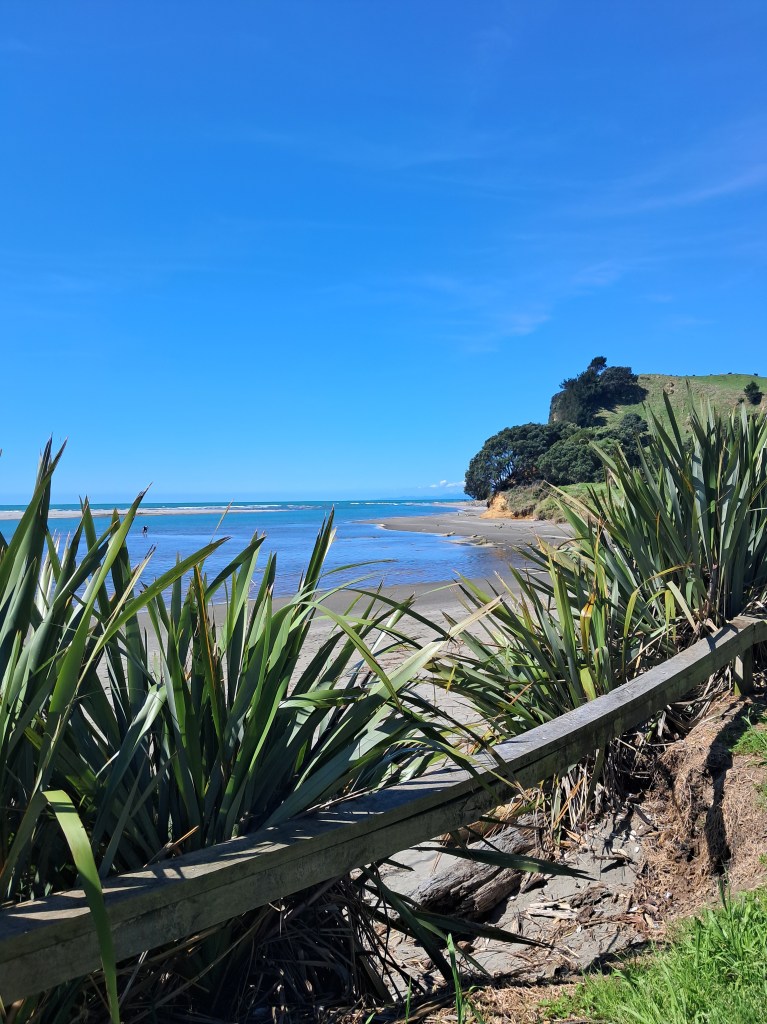
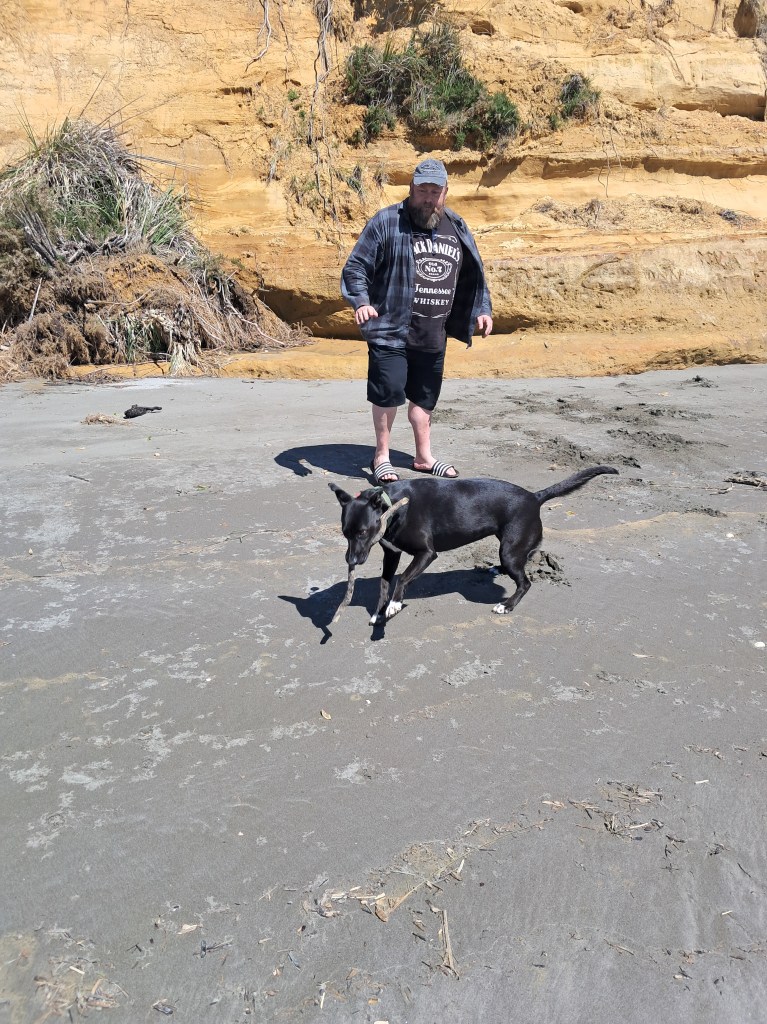
Another beach, another stick!

The next day we meandered our way to Rotorua where we did the usual and went for a walk in the redwoods, the dog met some well-mannered pooches, sniffed out a tree with a possum in it and generally had a ball. We had intended to stay the night at the Lakeview Golf Course, but a lack of room had us moving on and we found ourselves at the Horahora Domain on Lake Karapiro – a freedom camp we have stayed at before. It was busy but once the jet skiers had gone home for the day all was quiet.

Day seven saw us head for home feeling grateful that we could have this time to explore a small part of our country.
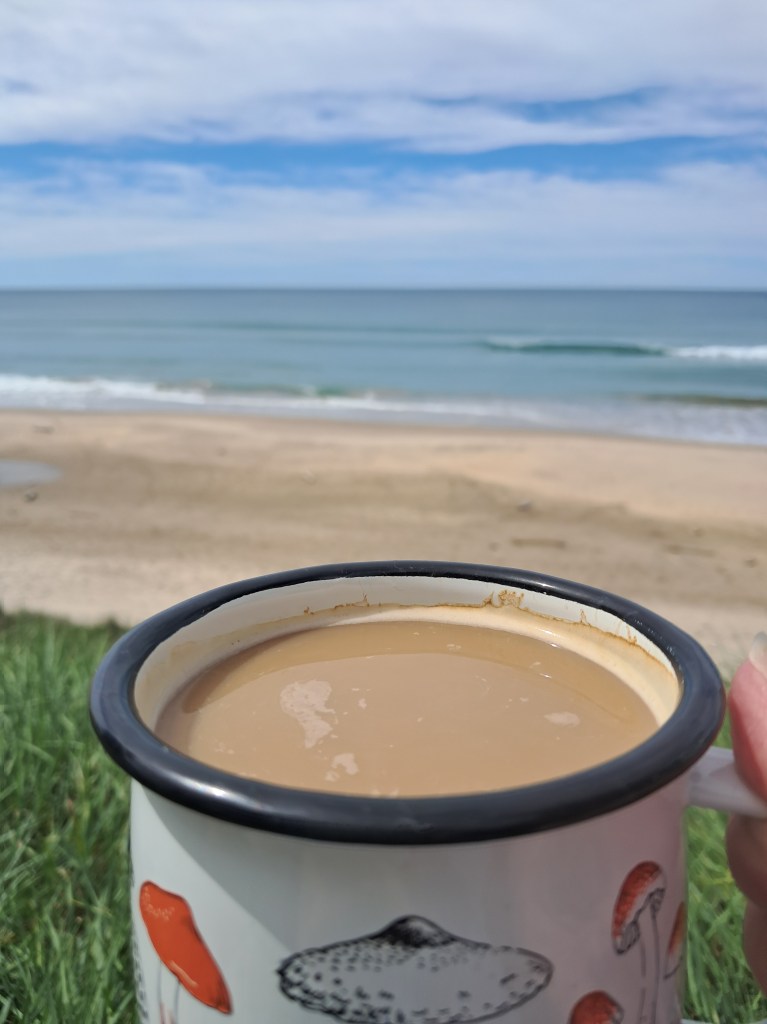
Cheers!

Exploring Cornwall: A Journey Through Grief and Beauty

It has been almost a year since our last journey to Cornwall and so it seems appropriate to tell you all a bit about that time.

Normally any trip to Cornwall is one of expectation, hope and joy but on this occasion, it was a time of sadness. On the day we arrived in Penzance, my mother-in-law passed away. We were half an hour away from seeing her when we got the call…

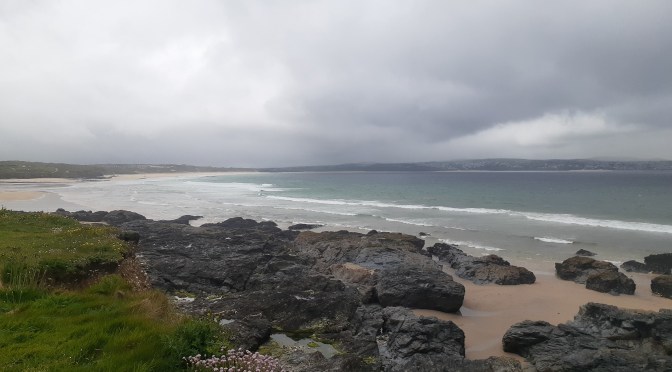
It was not an easy time but we did find moments to distract us, Cornwall, after all is a beautiful county filled with fascinating places. There were beach walks, pasty’s, drives down winding lanes, pub lunches, moors and visits to ancient places. Below is just a few of the places we visited in our down time between packing up a life well lived and saying goodbye. We knew it would be a long time before we came back and so we made the most of the time we had.

Getting fresh air and exercise became a part of our daily routine, early mornings sorting the house, followed by appointments with solicitors or funeral directors and then a good walk in ‘the nature’ to soothe the emotions. Cornwall is not short of a good walk. Below are a few photos from these walks.

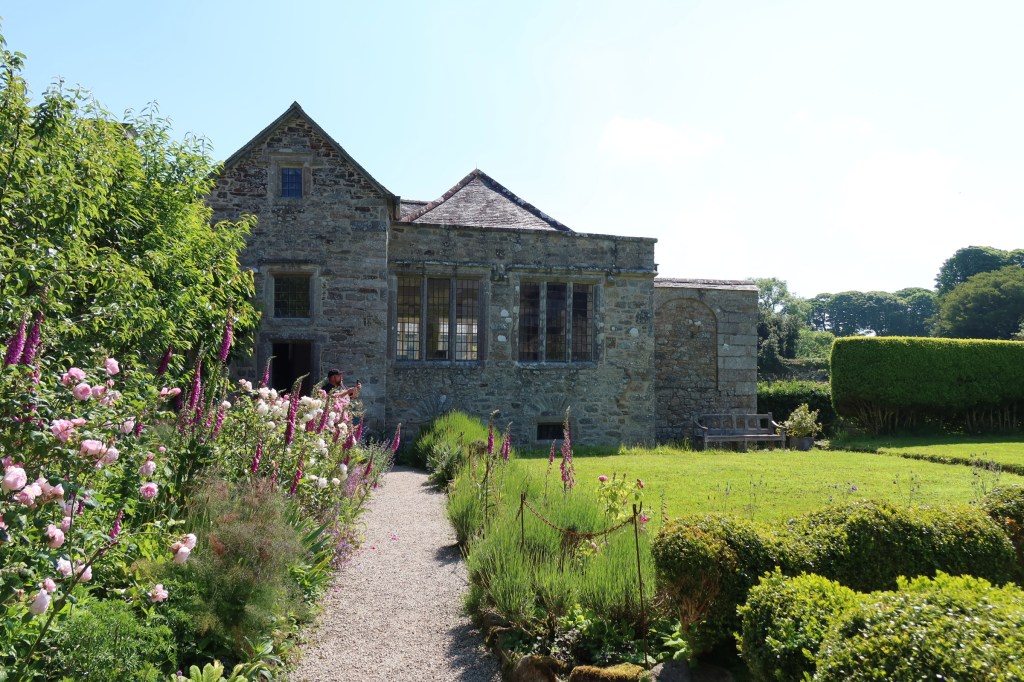
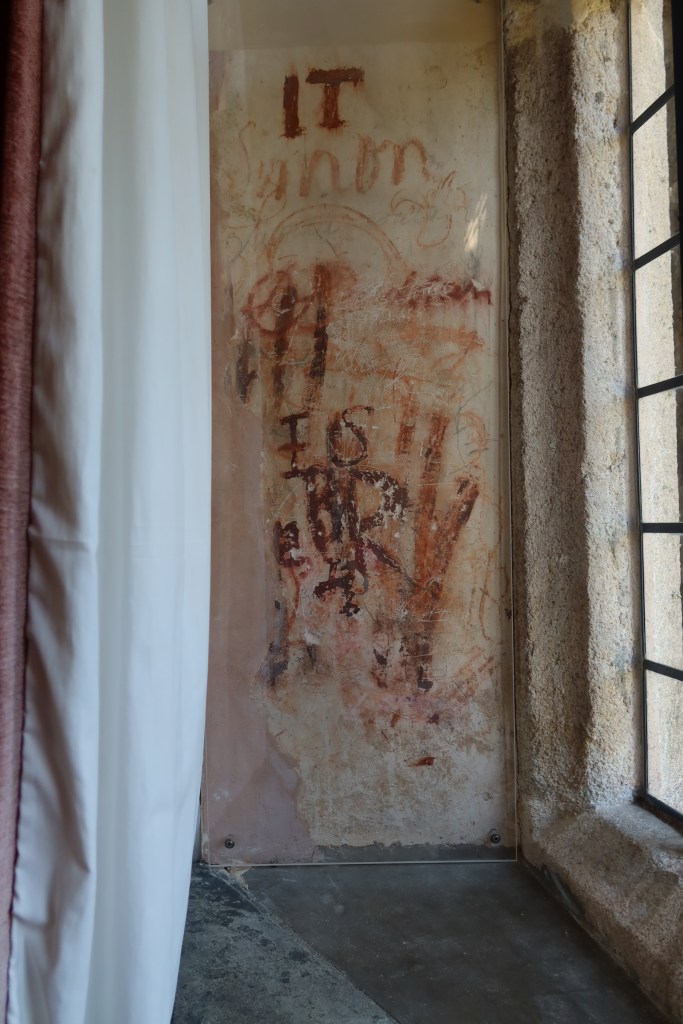
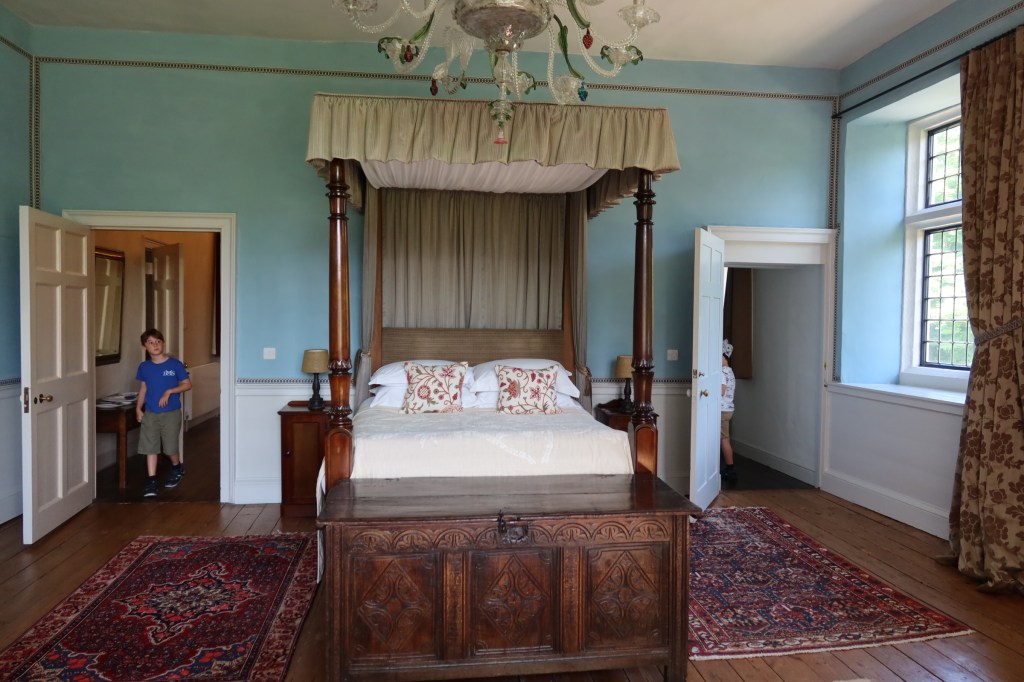
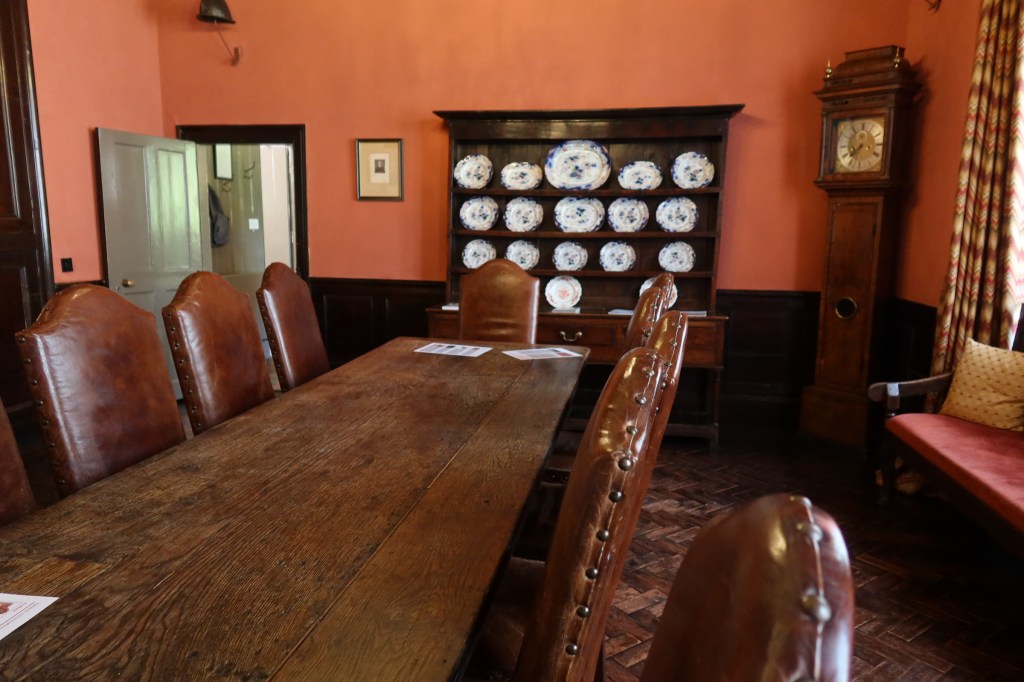
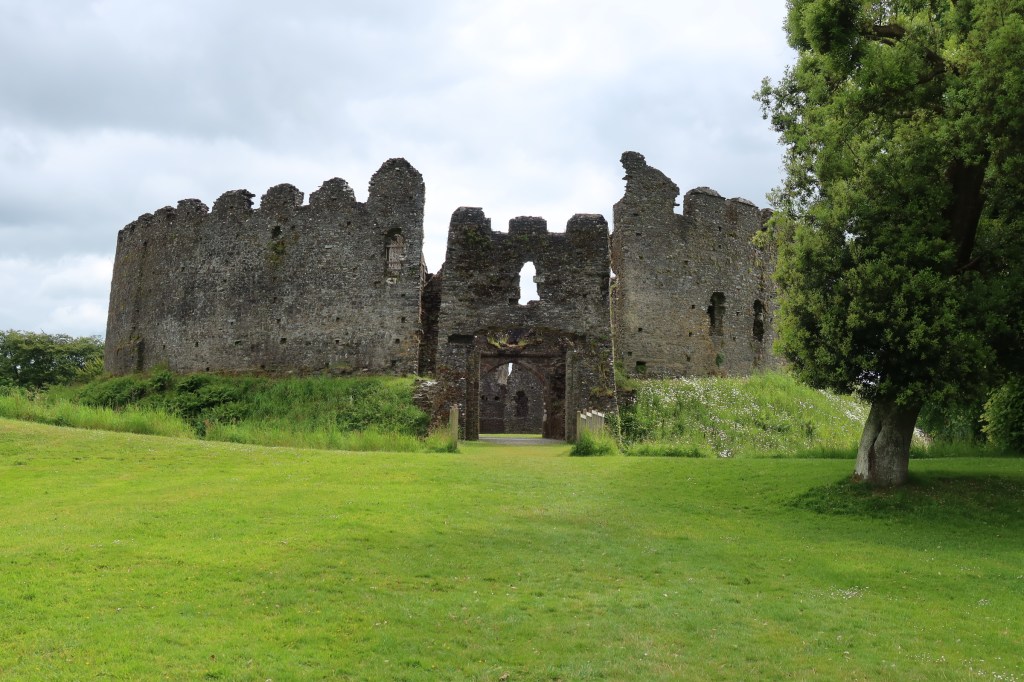
There were some days when we had more time on our hands and on these days we ventured a little further afield. As members of Heritage New Zealand we are allowed to visit both National Trust and English Heritage sites free of charge – Lanhydrock, Godolphin House, Restormel Castle. Tintagel and the gardens at St Michael’s Mount were all on the list.

The Gardens at St Michael’s Mount

Why just the gardens? We had visited the house on several other occasions and given the time of year and how busy it was we thought a good nosey around the gardens – which are not always open – would be nice on a sunny day.

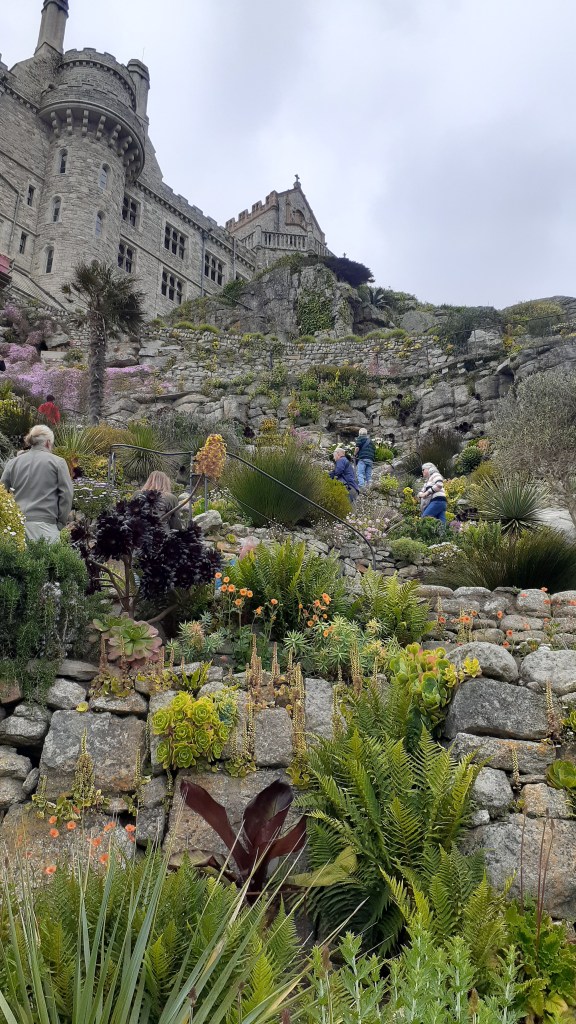
The gardens are situated on the lower terraces of the mount facing towards the Lizard Peninsula. They were first designed in 1878 for Sir John St Aubyn (later the first Lord St Levan). This part of the island has a microclimate and is able to grow a number of plants you would not expect.

The following are just a few photos of the gardens.

Godolphin House

One of my favourite houses to visit in this part of Cornwall is Godolphin House. Only open to the public a few times a year (the house is let out as a holiday let), although the gardens and estate are regularly open to enjoy for walks and cups of tea in the little cafe. The story of Godolphin House is one ‘enormous mineral wealth, heavy industry, agriculture, high political office, war, decline, ruin and eventual rescue – a living timeline through Cornwall’s history’.

As the above quote would imply Godolphin House has a long and winding story to tell and is perhaps one for an article of its own. For now enjoy the following photos and if you do ever get a chance to visit the house, do so.

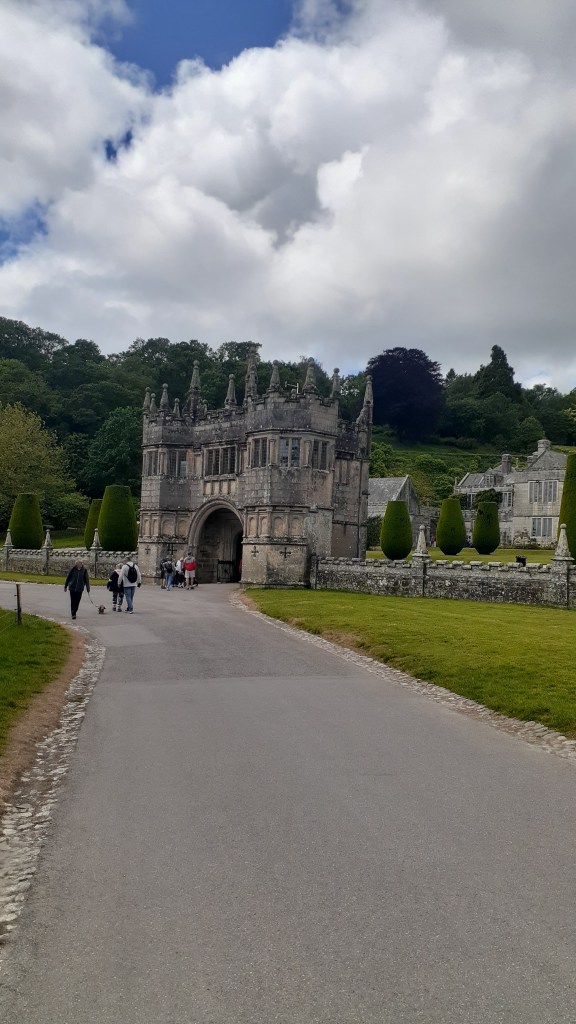
Lanhydrock

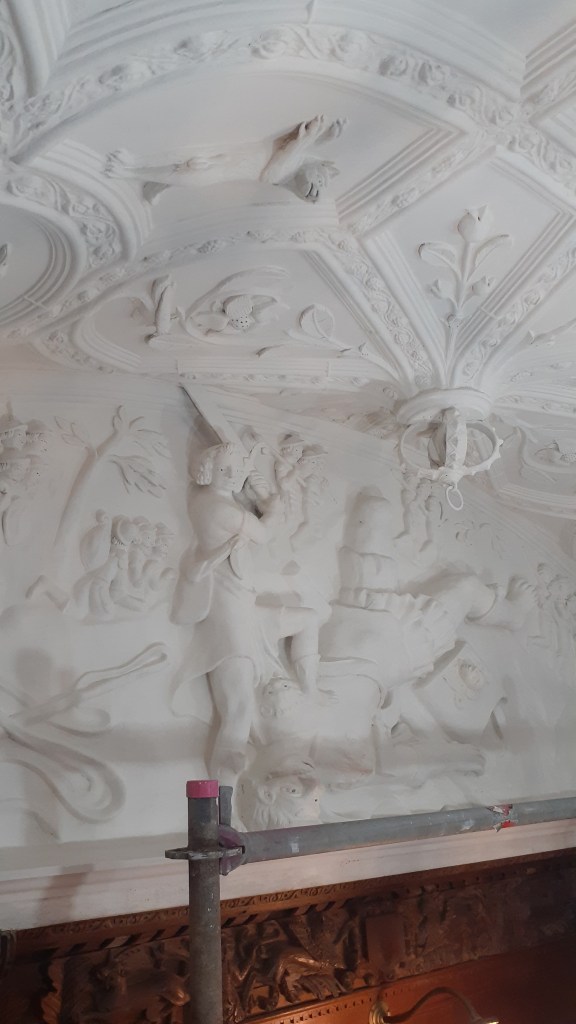
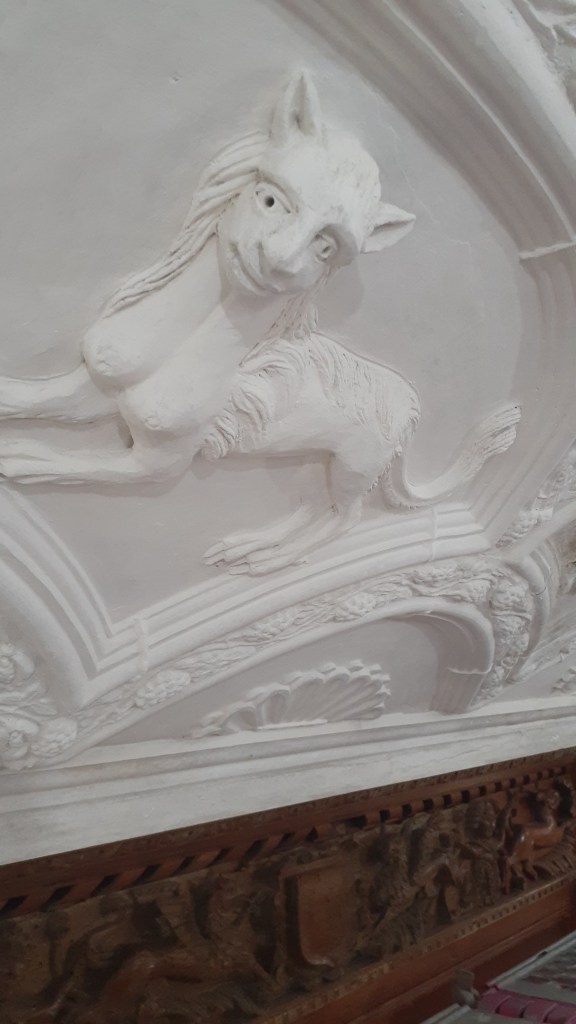
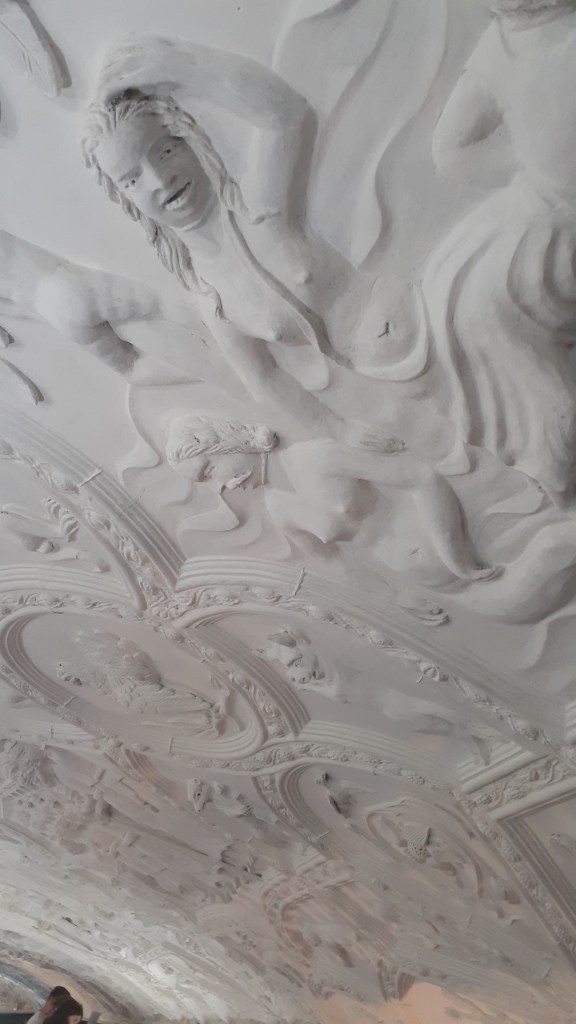
This particular National Trust House and Estate was much further afield. At the time of our visit the house and its contents were undergoing restoration work. Interestingly rather then block off sections and prevent people from viewing the work, the visitor was granted an opportunity to see what happens when a house of this size needs some love and attention. Our visit coincided with the restoration work on the ceiling of the hall and visitors were able to go onto the scaffolding and get a close look at a space that normally only the eagle eyed could view.

Below are a couple of photos of the ceiling.

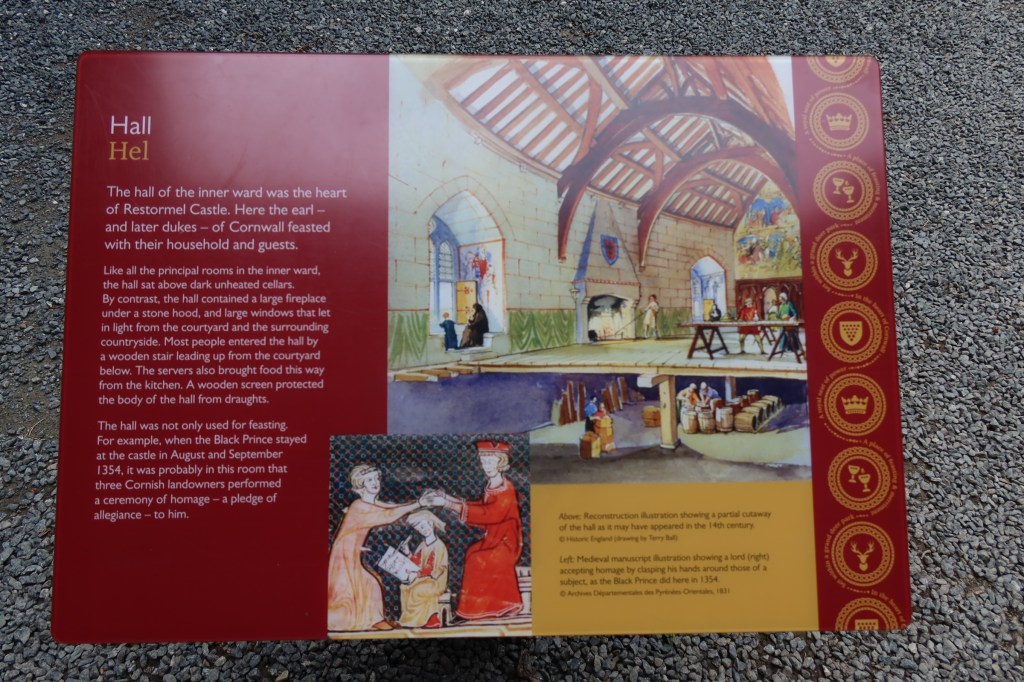
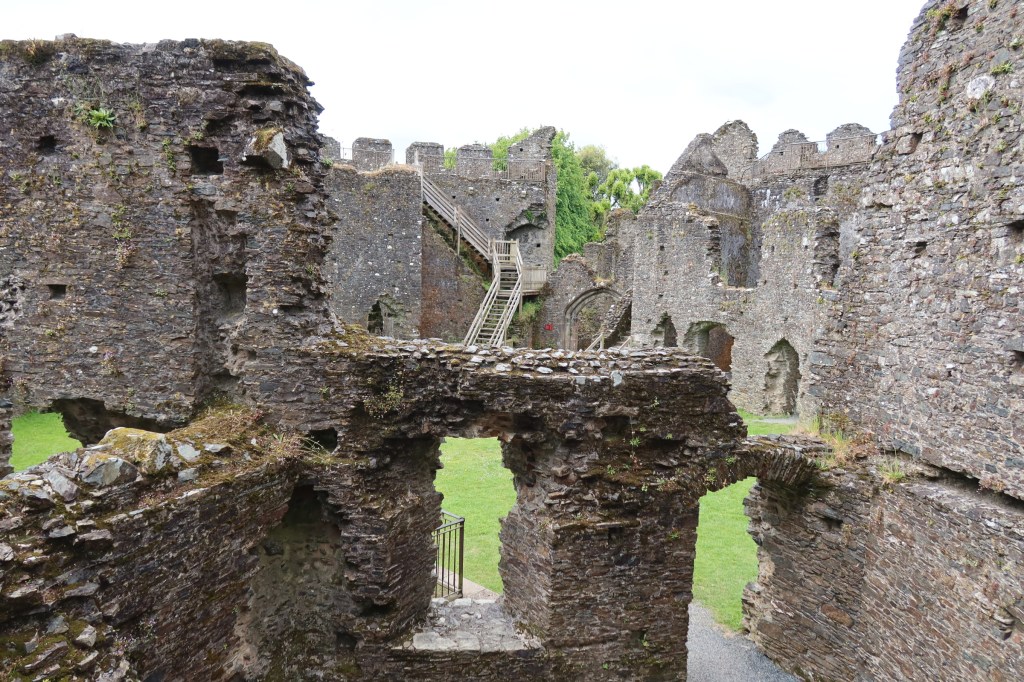
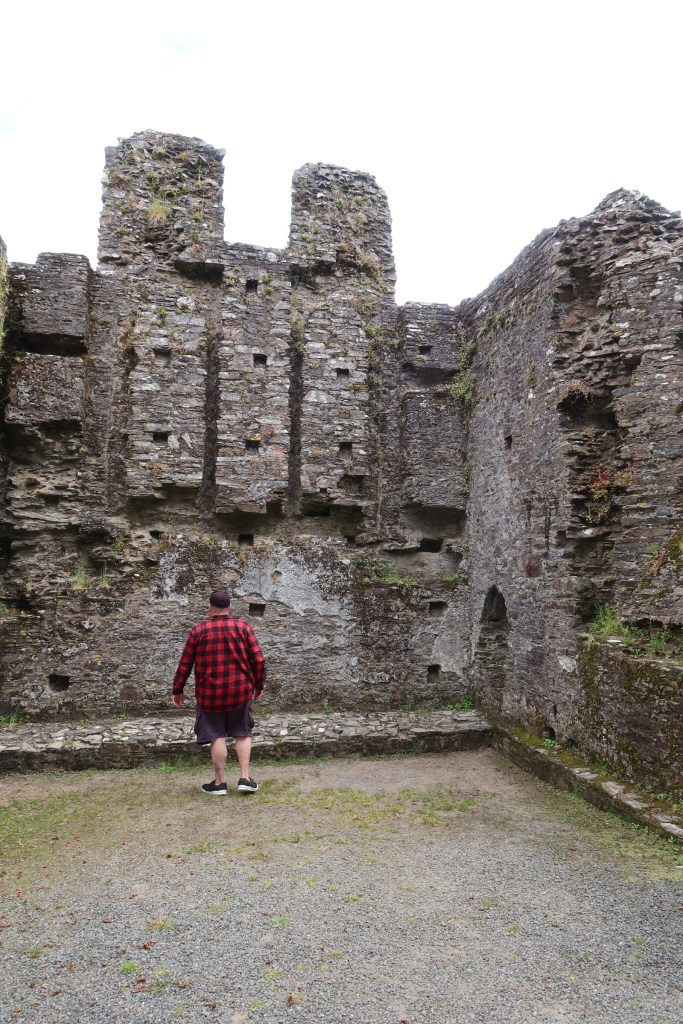
Restormal Castle

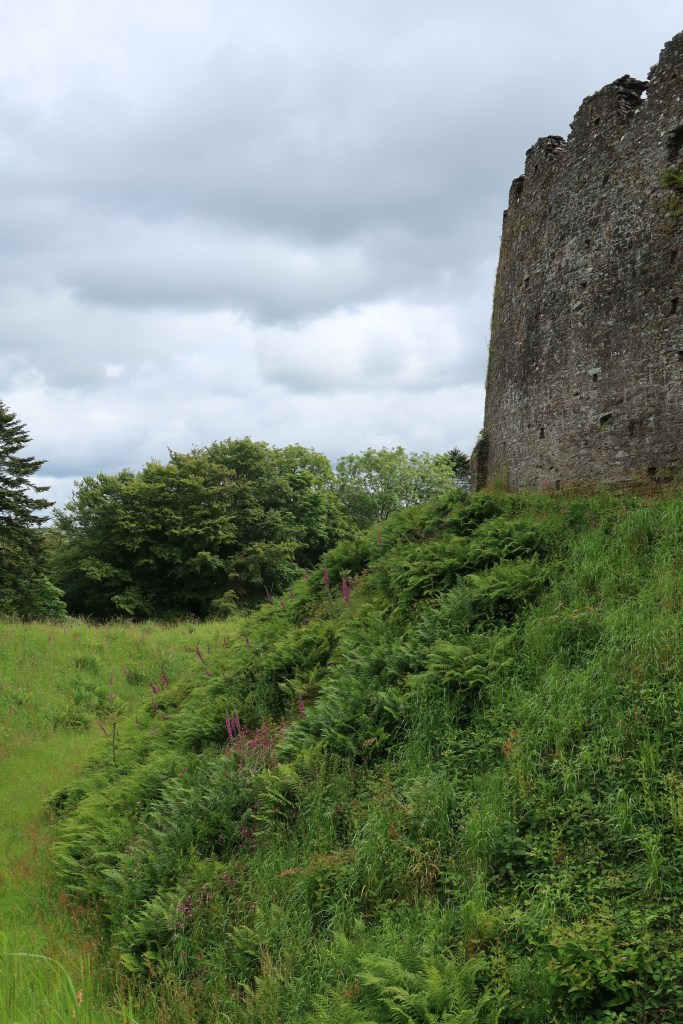
Our visit to Restormal Castle occurred as we were leaving the county, having done all we could. The castle providing a welcome pit stop and distraction.

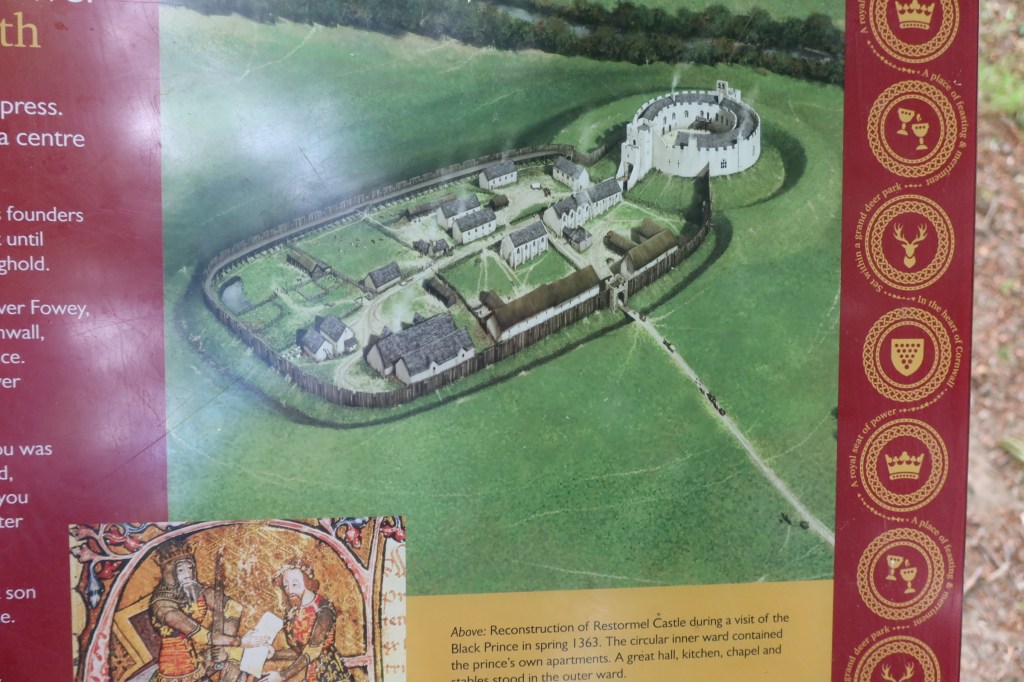
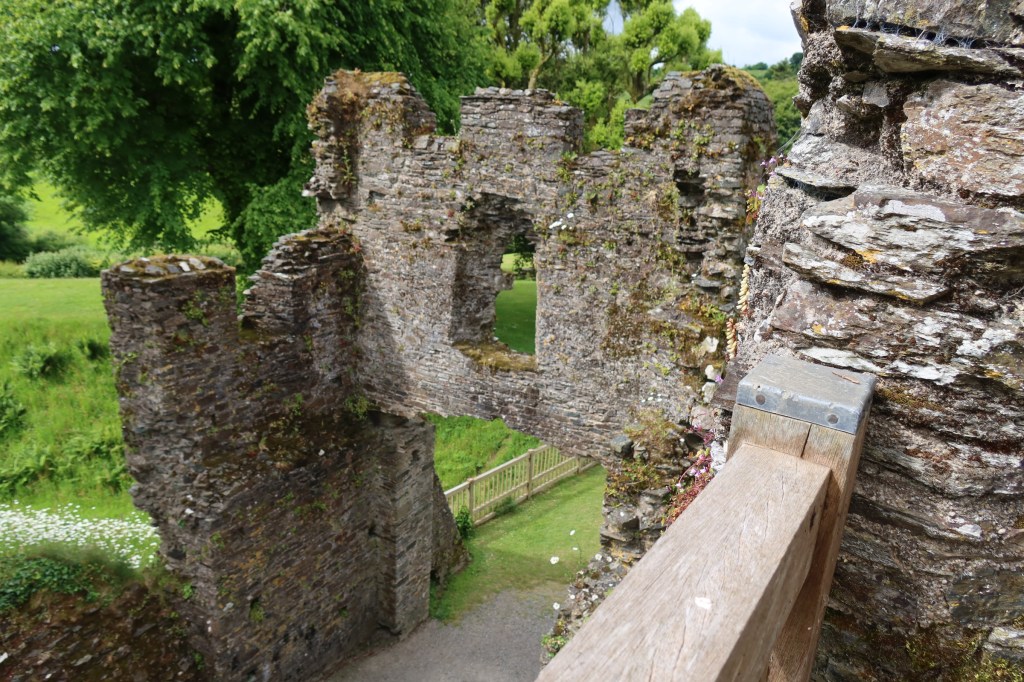
The early history of the site is not well understood, there is some evidence for a mid 12th century date but it the history from the 13th century onwards which is better understood. From the mid 12th the land on which the castle stands belonged to the Cardinham’s – a powerful landowning family from central Cornwall. In 1268  Cardinhams’ heiress, Isolda de Tracy, granted to Richard Earl of Cornwall and King of the Romans, the town of Lostwithiel – a fishery on the river Fowey – and the castle of Restormel, complementing his castles at Launceston and Tintagel. In 1270 he acquired a fourth castle at Trematon.

Earl Richard died in 1272, only four years after acquiring Restormel, so it seems more probable that it was his son Edmund who built the present castle. Edmund’s work at Trematon Castle is documented and provides a parallel. However, by the 1330s (and after the castle had changed hands a few times) documents refer to the castle being in need of repair. 1337 saw the son of Edward III being made Duke of Cornwall (also Edward – the Black Prince), along with a significant endowment of land and properties – including Restormal Castle.

This was a high point in the history of the castle, with many repairs and improvements being made to it and the surrounding park land. Apparently more time and money was spent on the boundary to the park land than on any other feature, an indication of its importance as a hunting park.

The history of the castle and its surrounding is one of neglect, repair and neglect once again. More can be found on its history here.

These are just a tiny fraction of the many places a person can visit in Cornwall, so I hope you have enjoyed this short meander through the county.

In memory of Christine Rowe and Alan Dalton – gone too soon but never forgotten.

Hampton Park – Te Puke o Tara

Back in October the Auckland Council hosted the Auckland Heritage Festival, where, as the name would suggest all things heritage and Auckland was celebrated. There are a wide range of events during the festival weeks from walks, talks, exhibitions and workshops. I was able to attend two events – a talk at the Devonport Museum on Mt Cambria (more on that down the page) and a walk ‘n’ talk at Hampton Park.

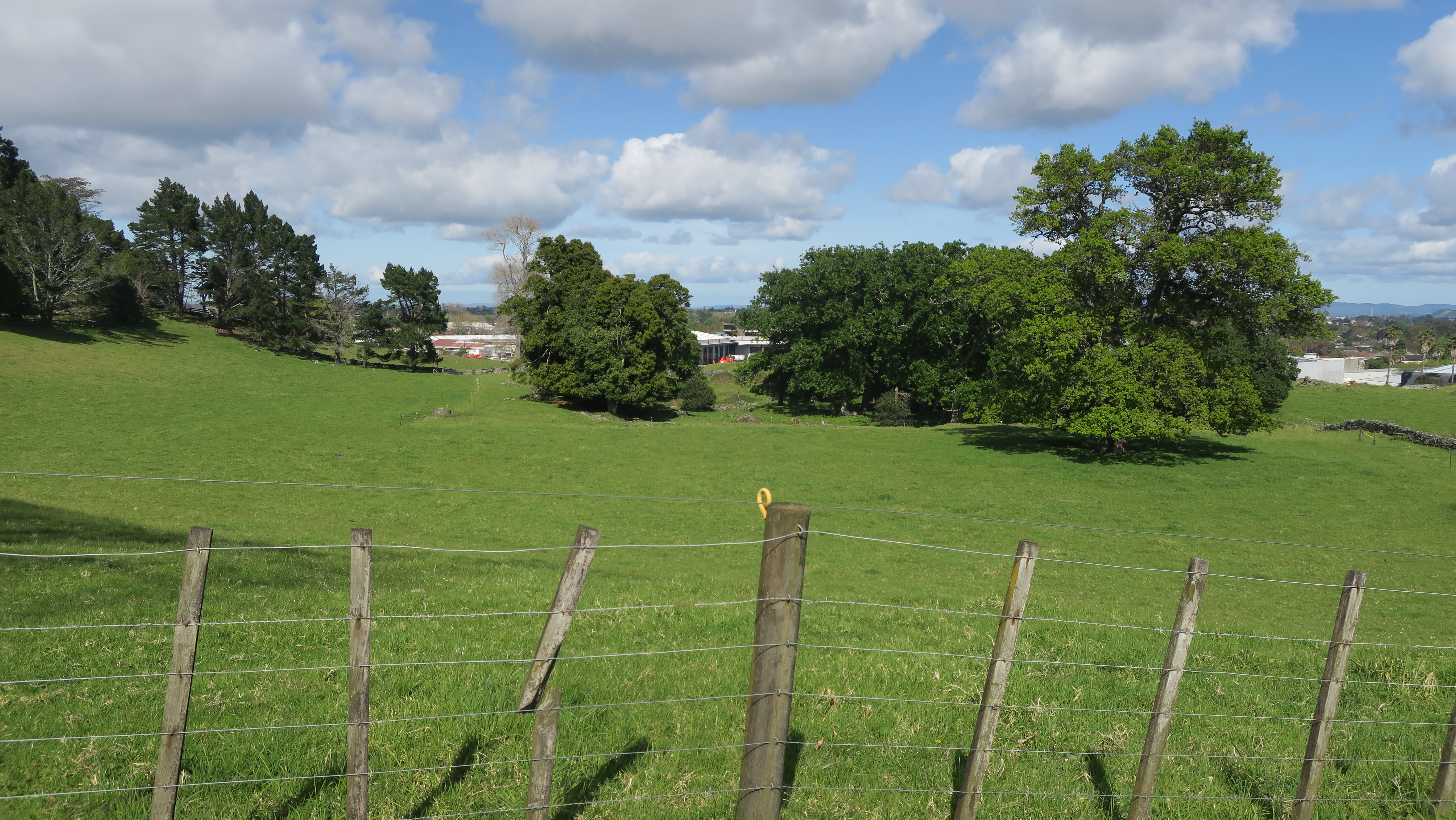
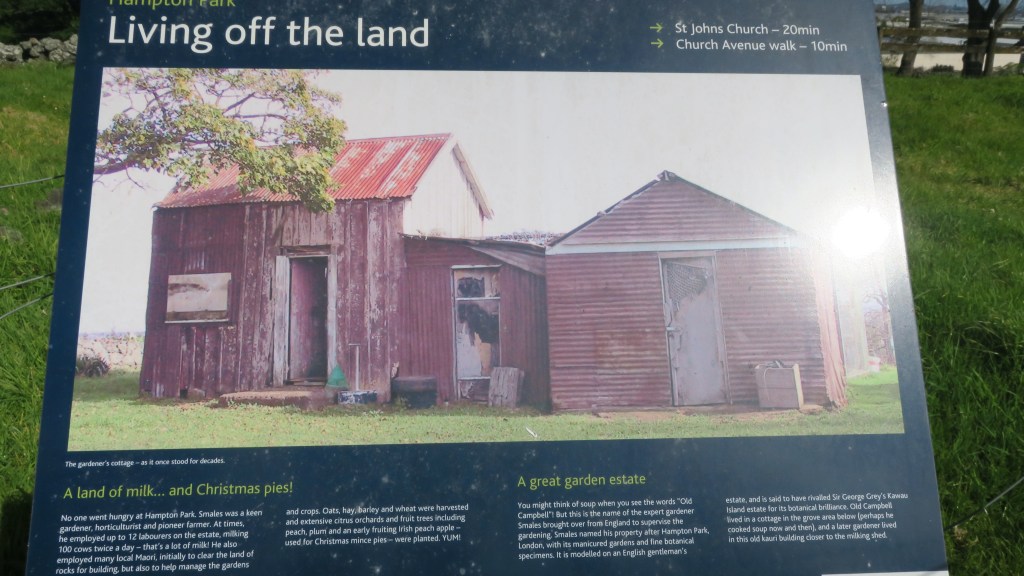
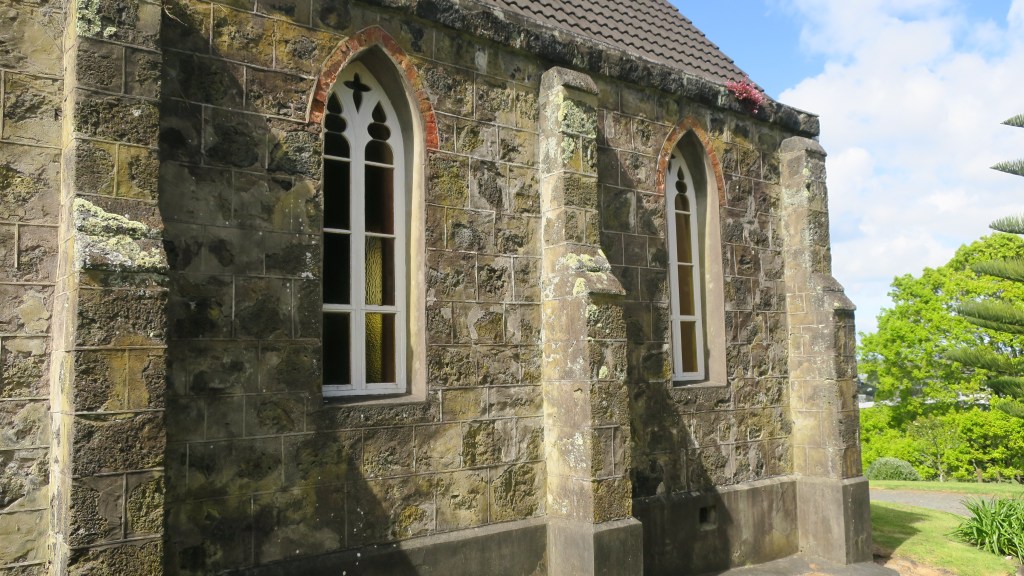
Hampton Park is situated in the heart of commercial Otara, a pocket of farm land amongst the warehouses, factories and offices. Having never been there or even for that matter heard of it, I was intrigued to find out more. The park is in fact a working farm and whilst the public are able to walk around it there are no proper footpaths and no other facilities (there is a house and it is lived in by the family who farm the park as well others – if visiting please respect their privacy).

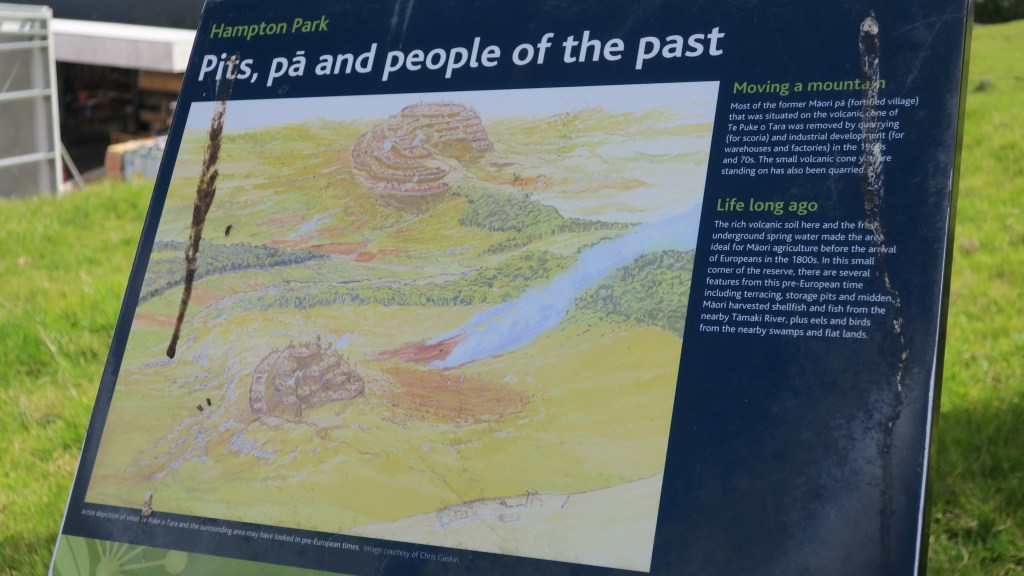
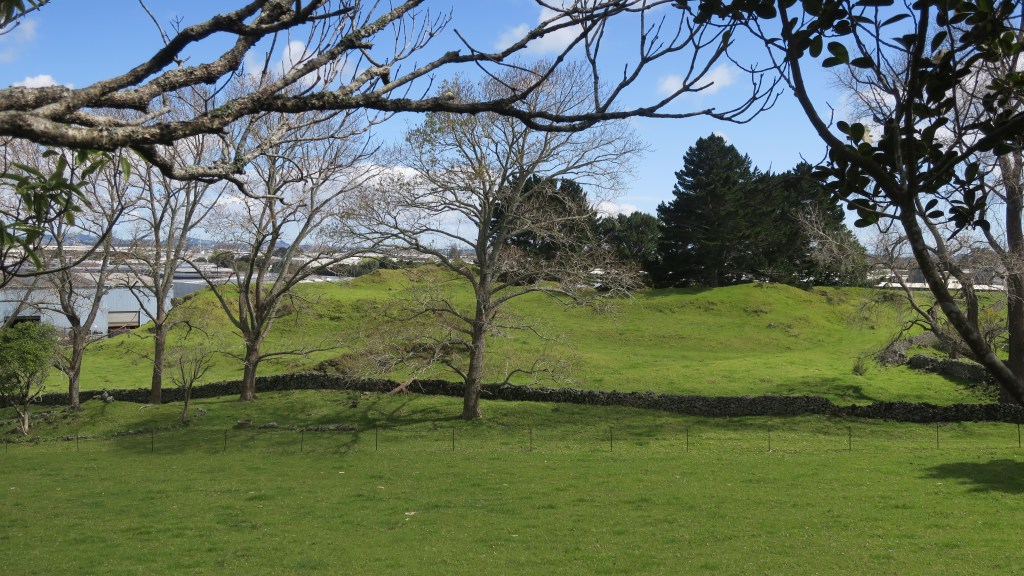
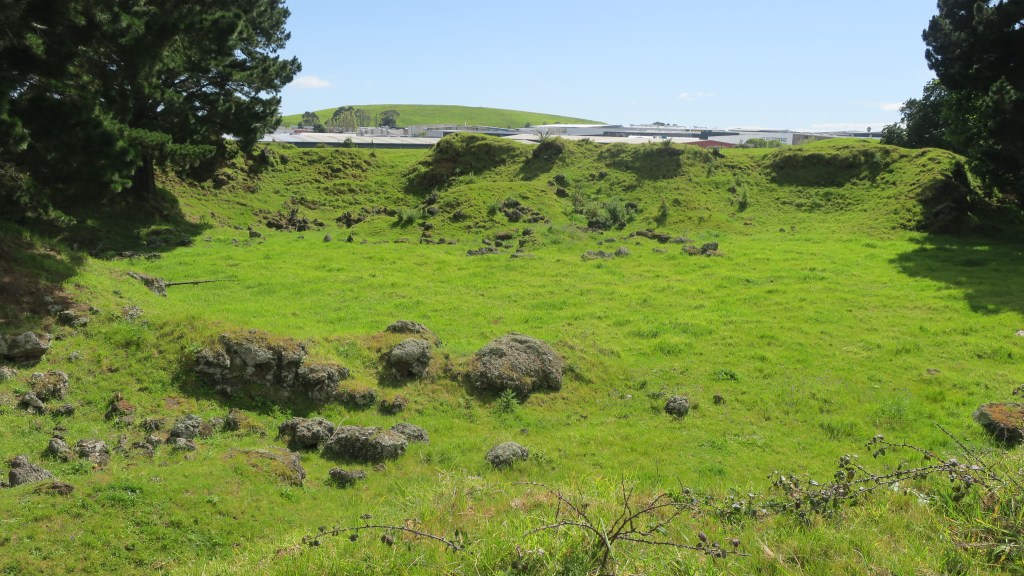
The story of Hampton Park begins long before people arrived in the area. Geologically it is part of the wider volcanic landscape of Auckland, here in Otara there are (or were) three volcanoes, the largest of which was called Te Puke o Taramainuku (‘the hill of Taramainuku’, a Tainui ancestor). The small scoria cone that sits in Hampton Park is the smallest of the three and is probably the smallest of all the Auckland volcanoes. It is so small that it has no formal name, simply being referred to as the Hampton Park volcano.

The beginnings of the human story in the area is much like the human story all over Tamaki Makaurau. Here like everywhere else Māori terraced the flanks of the cones and grew crops in the good volcanic soil. The larger cones would have provided a place of refuge when in need. The small cone in Hampton Park shows some evidence of terracing but later changes has blurred this somewhat. Alongside the driveway between the house and the church there is a large rectangular kumara pit which has remarkably survived. For more on the Māori use and occupation of the maunga of Tamaki Makaurau read here.

The large rectangular kumara pit between the house and the church.
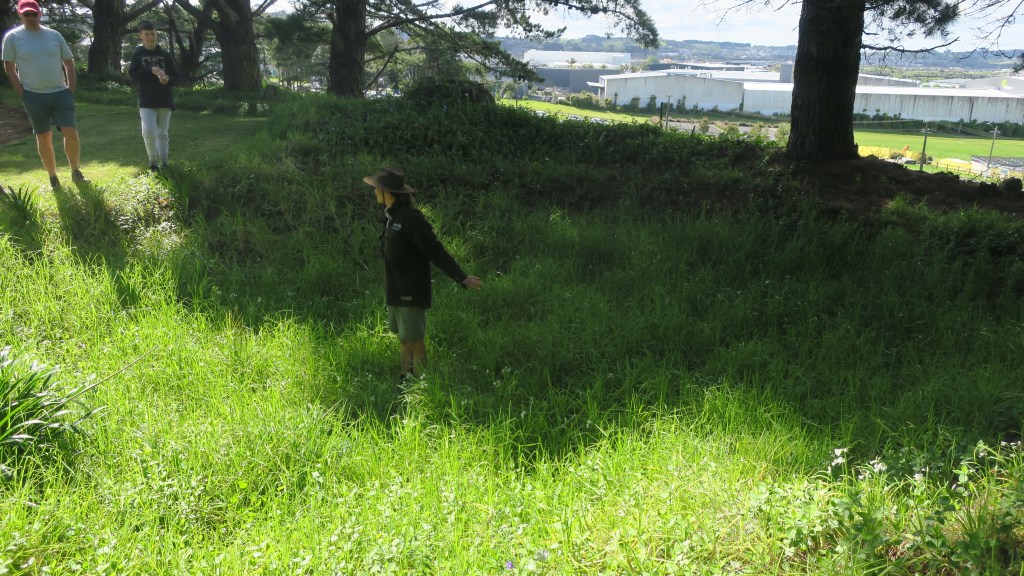
Terracing on the sides of the Hampton Park volcano.

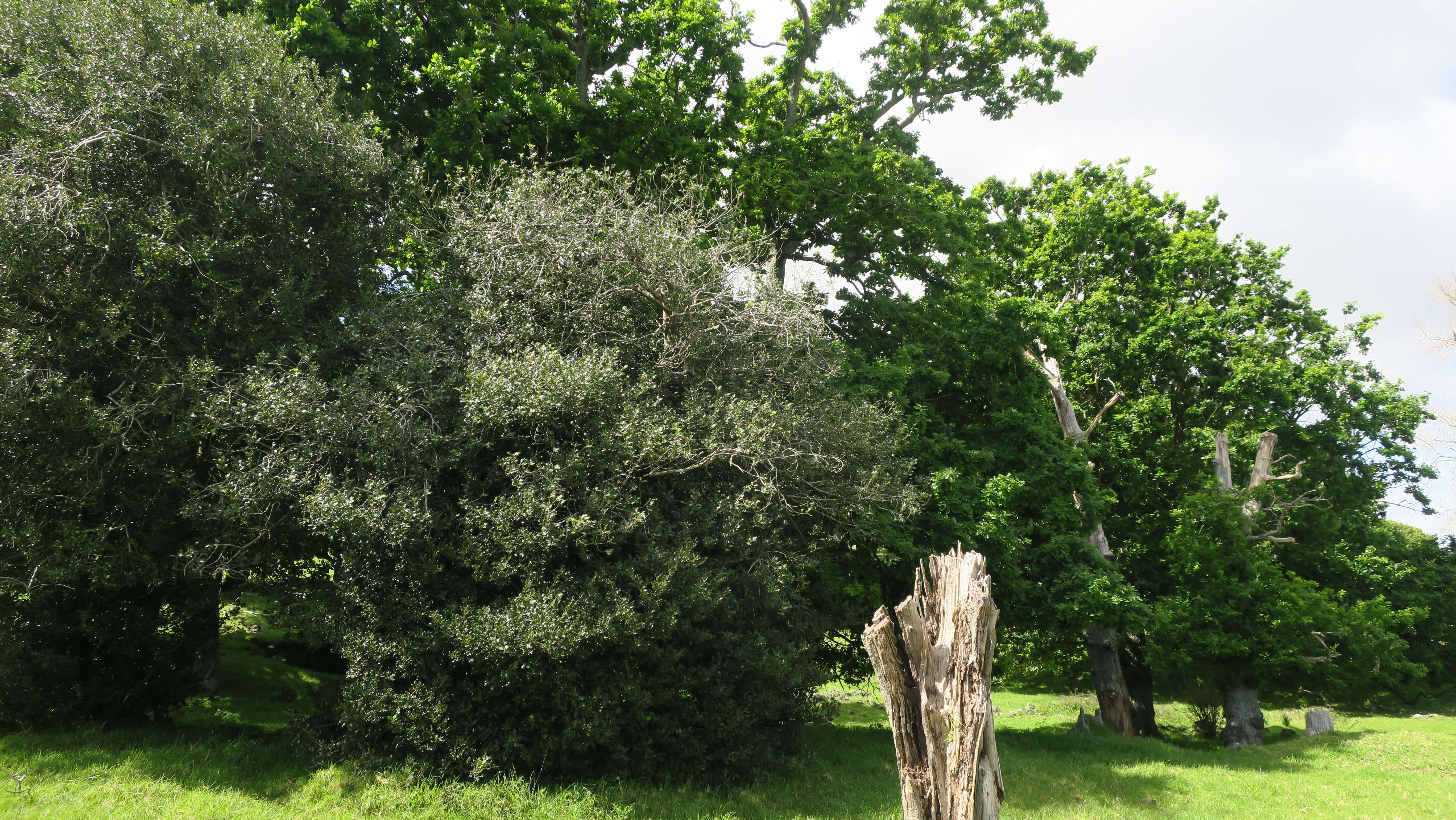
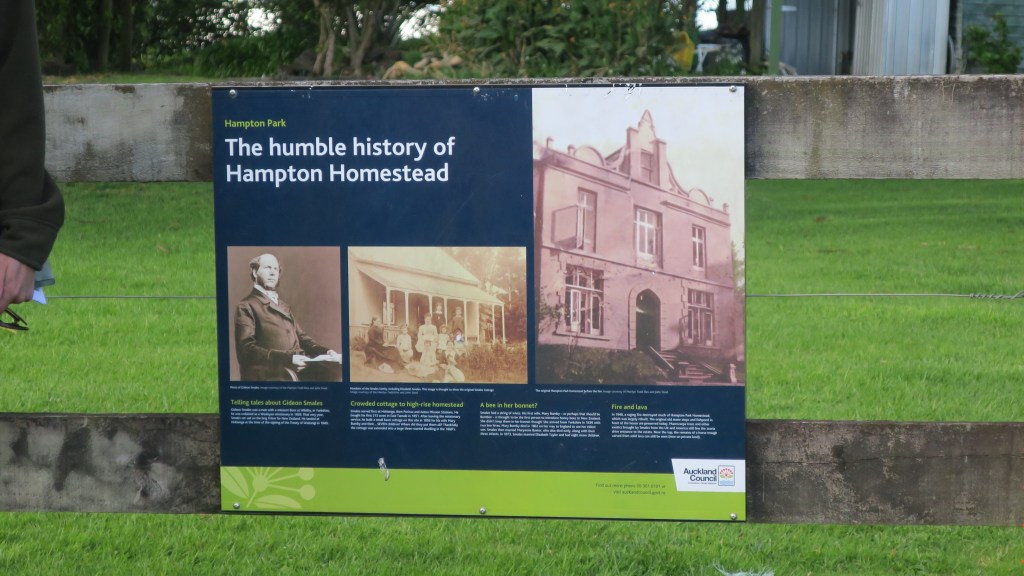
In 1852 the Rev. Gideon Smales, a Wesleyan missionary, bought 460 acres from the fencible Major Gray, settling there with his wife and children in 1855. The land was cleared of rocks, stone walls were built and crops and livestock brought in. Gideon Smales called the farm Hampton Park as he wished to model it on the English gentleman’s estate. It was said to have once rivalled Sir George Grey’s Kawau Island estate for its ‘botanical excellence’.

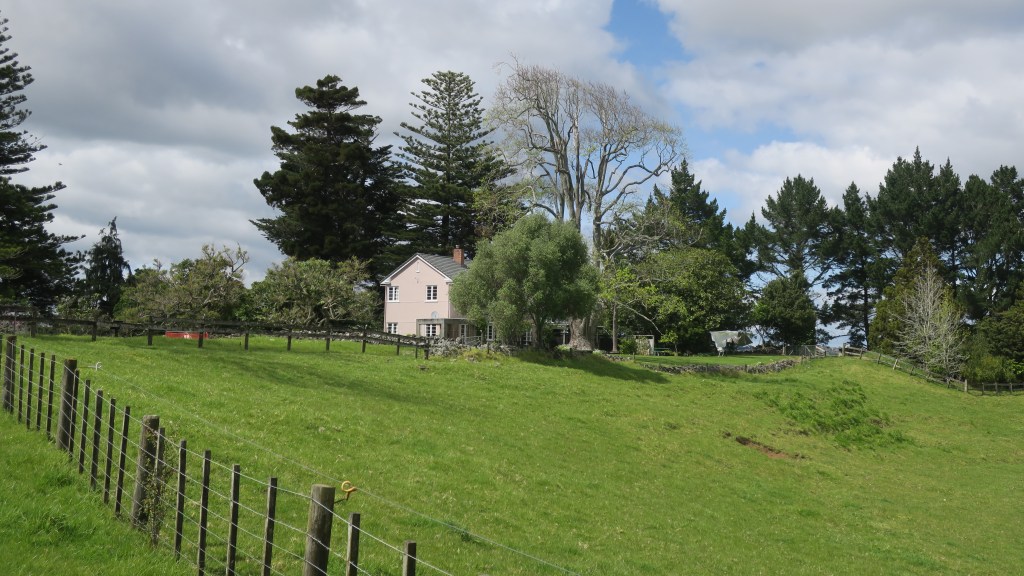
The current homestead.
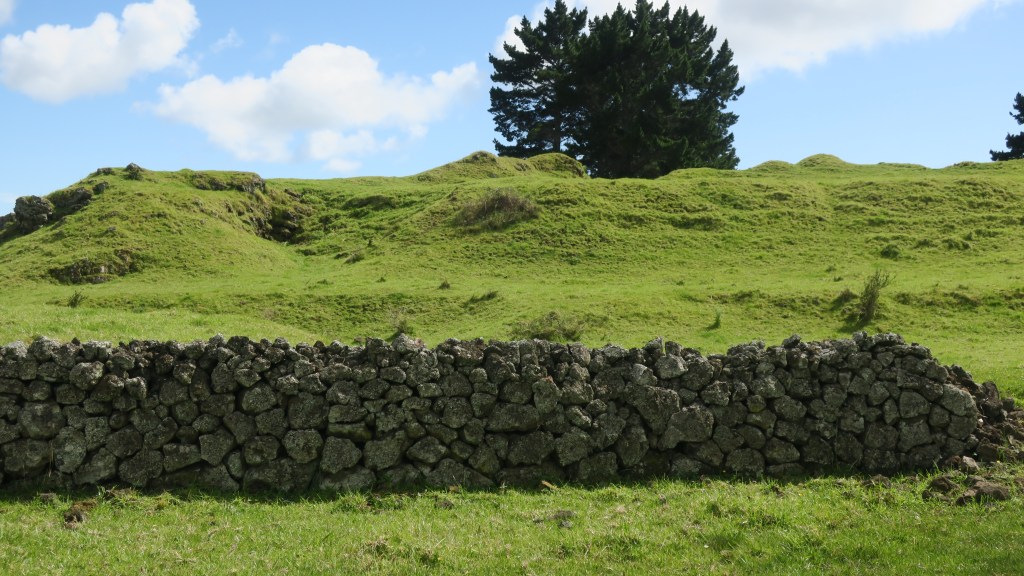
One of the many stone walls found on the farm, in the background is the cone of Hampton Park volcano

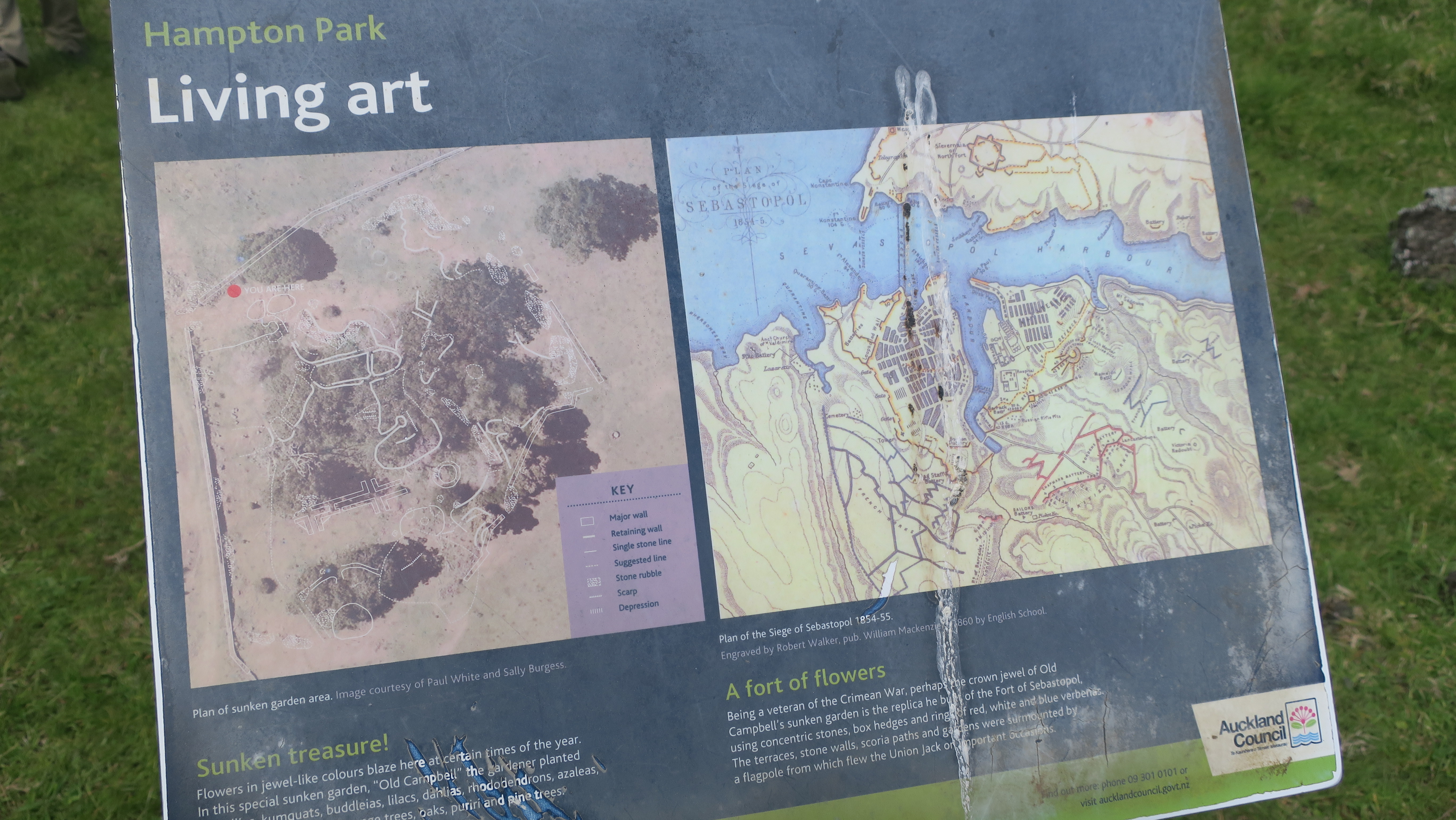
The farm grew oats, hay, barley, wheat and had an extensive orchard which included cider apple trees, pomegranates, oranges, figs and plums to name a few. In addition, to the more practical elements of the farm, the gardener – a veteran of the Crimean War – built a sunken garden in the form of the fort of Sebastopol. The remains of which can still be seen today. The excessive amount of stone on the estate resulted in it being used for a great many projects including the sunken garden, a rockery with a high stone wall and cave and of course the stone walls.

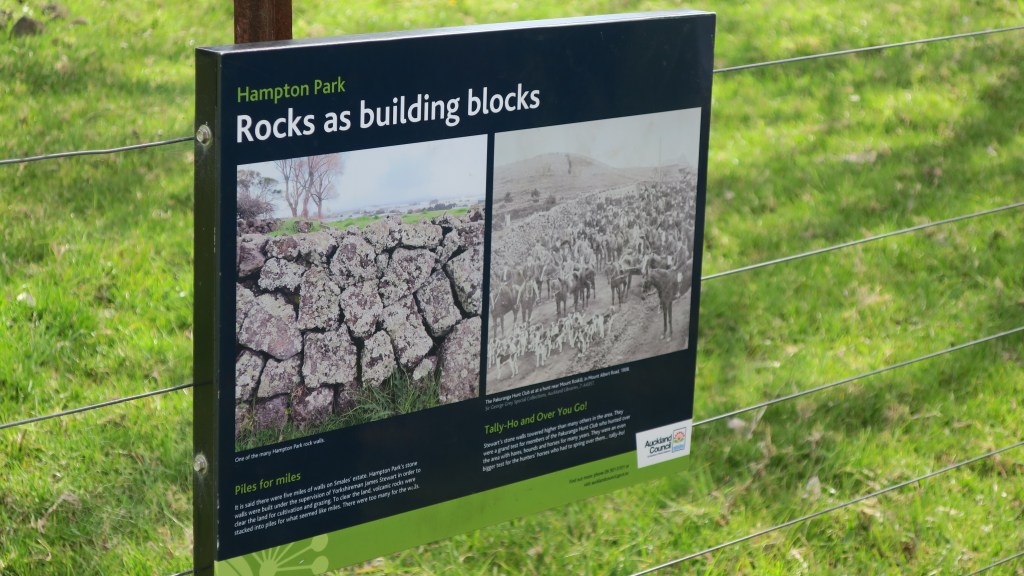
The stone walls which were constructed with the stone cleared away for cultivable fields was done so under the supervision of James Stewart who immigrated to New Zealand from Yorkshire. Due to the vast quantity of stone the walls were higher than was the norm and it was said there was over five miles of walls on the estate.

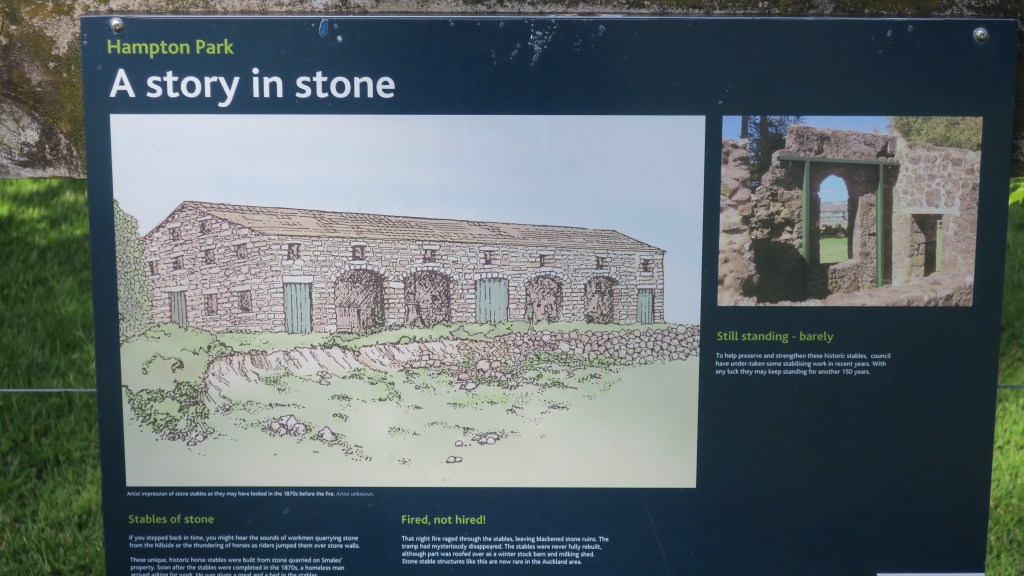
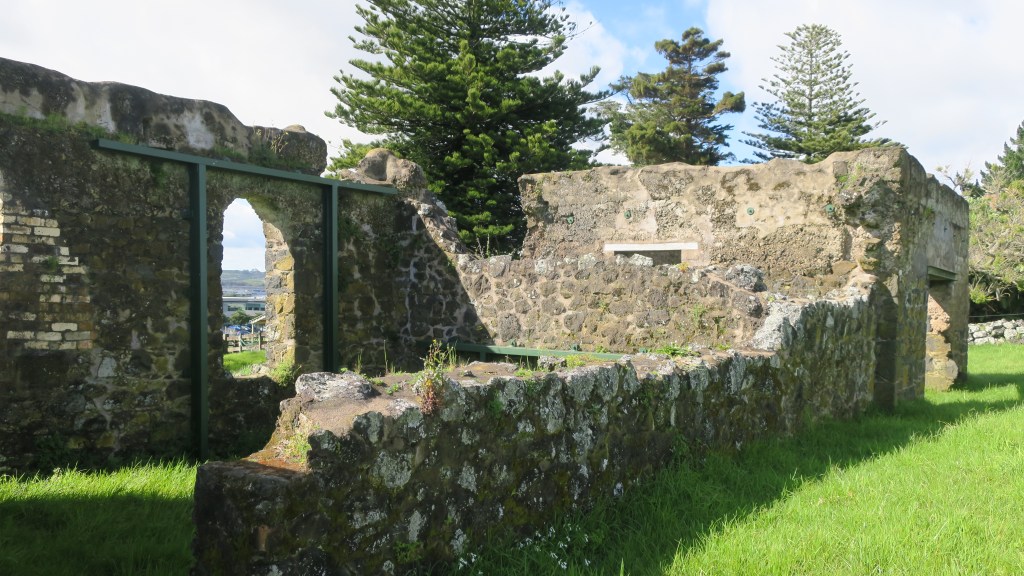
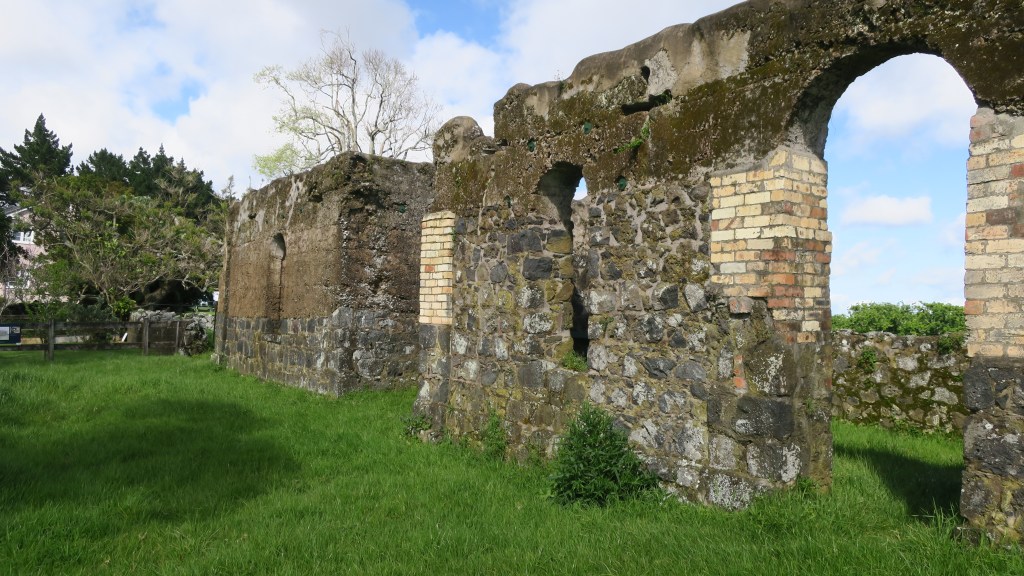
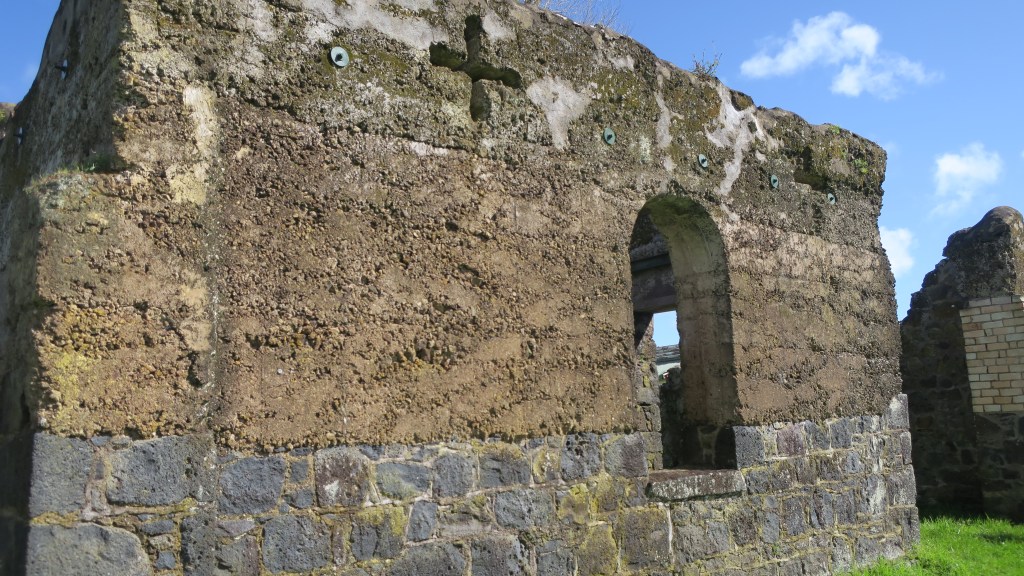
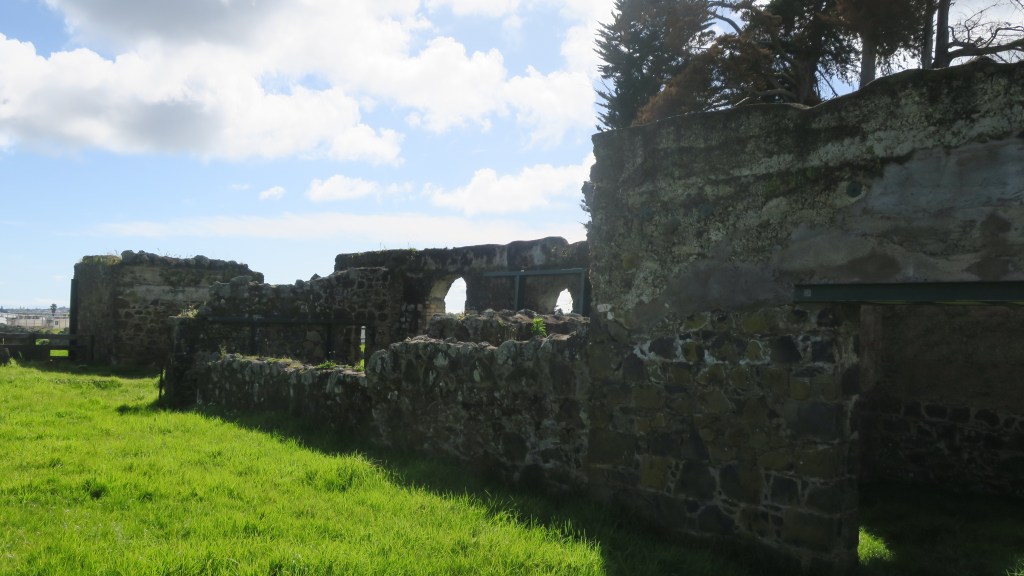
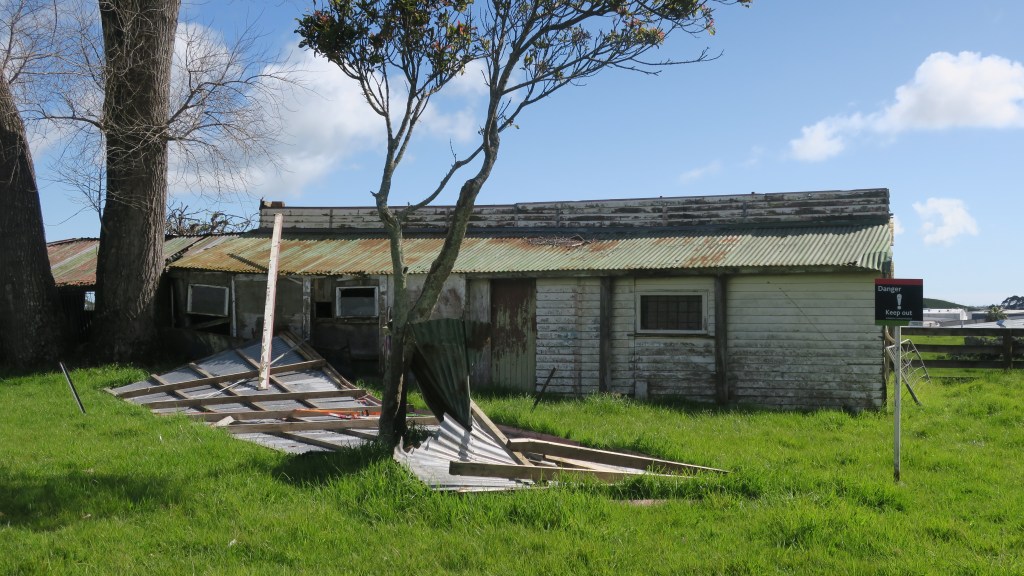
As is to be expected on a farm there are a number of buildings but perhaps the most striking are the remains of the stone stables, again built from stone quarried from the estate. Although not long after they were built a vagrant worker came to the estate looking for work, he was given a meal and allowed to sleep in the stables. That night the stables burnt down and the vagrant disappeared. They were never rebuilt properly although they were partly roofed over as barn and milking shed. Nearby are the derelict tin shed of the 1930s barn.

Two other buildings which still stand are the homestead and the church. The current homestead is the second to have stood on the estate, the first was burnt down in 1940 and the current homestead was built – only the front steps remain of the original house. The first homestead was built in 1855, it was three storied and had ten rooms which was later extended to eighteen rooms in 1869.

Images of the first two homesteads on site with the Rev. Gideon Smales on the left.

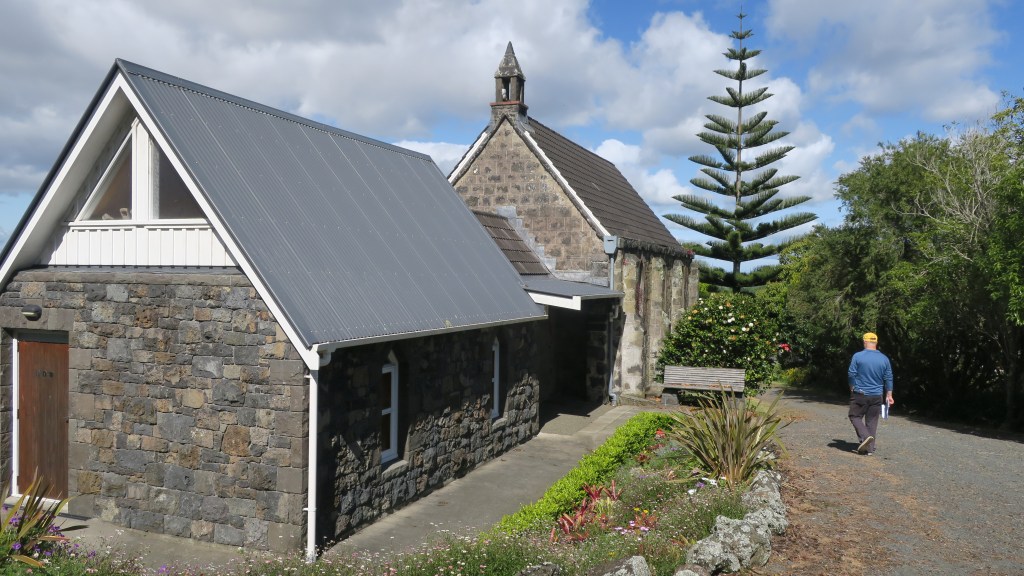
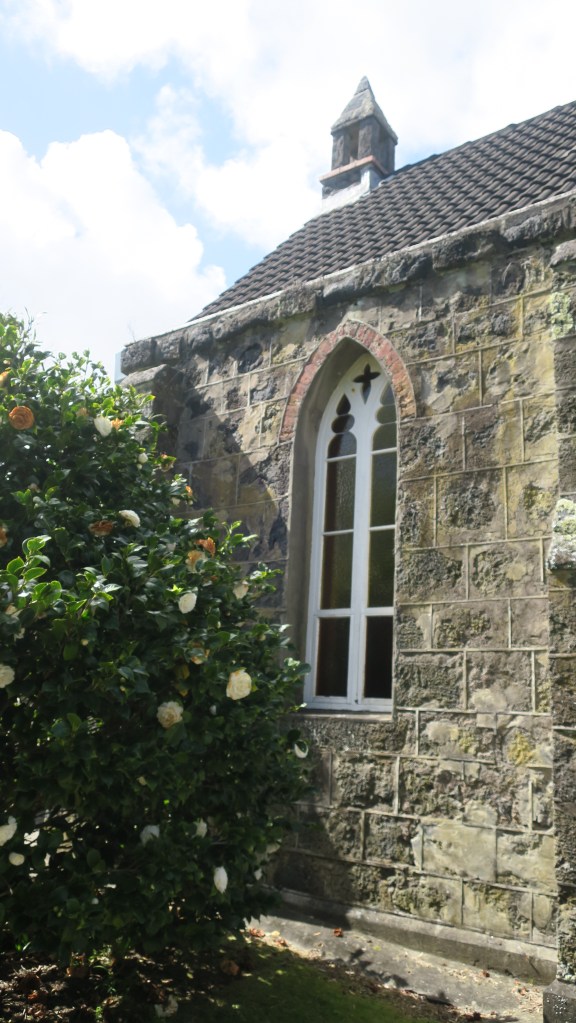
The small chapel – St John’s church – is also constructed using stone from a nearby quarry. Interestingly, the mortar for both the church and the house was made of burnt shell from Howick beach, the timber arrived via the Tamaki river and was brought overland by bullock teams. The first service to be held in the church was on Sunday the 12th January 1862. When the Rev. Gideon Smales died in 1894 he bequeathed the chapel and four acres jointly to the Anglican and Methodist Churches. It is still used today for services once a month.
The Missing Maunga

Beyond the settler history of the park there is another story that is reflected in the wider landscape of Auckland Tamaki Makaurau. As mentioned earlier the small volcano cone at Hampton Park is one of three in the immediate area, which may confuse the visitor, as nothing of the other two remain to be seen.

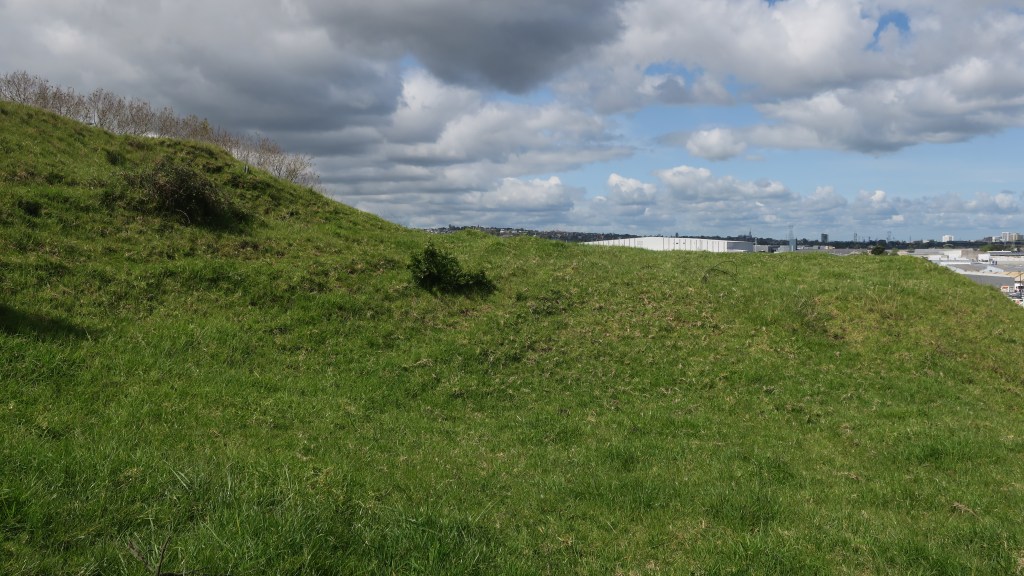
The inside of the Hampton Park volcano. The roofs of the industrial estate in the background is where Te Puke o Taramainuku would have stood and the green mound at the rear is all that is left of Matanginui (see below).

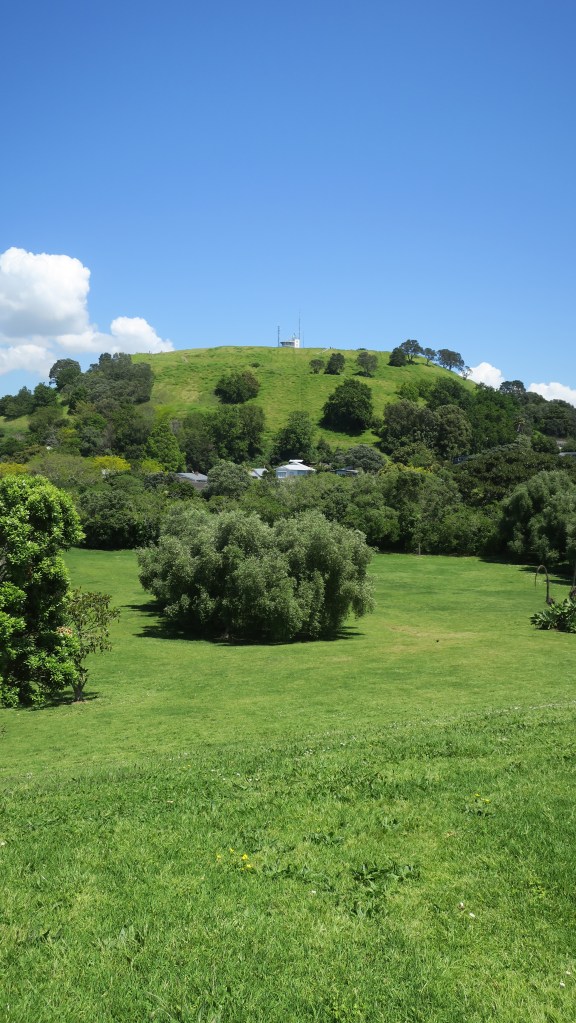
Te Puke o Taramainuku has been completely quarried away beginning in 1955 and now is vast expanse of factories, beyond is Greenmount or Matanginui which had minor quarrying from around 1870 which began in earnest during the 1960s. The quarry eventually became a landfill giving way to the gently sloping mound/hill we see today.
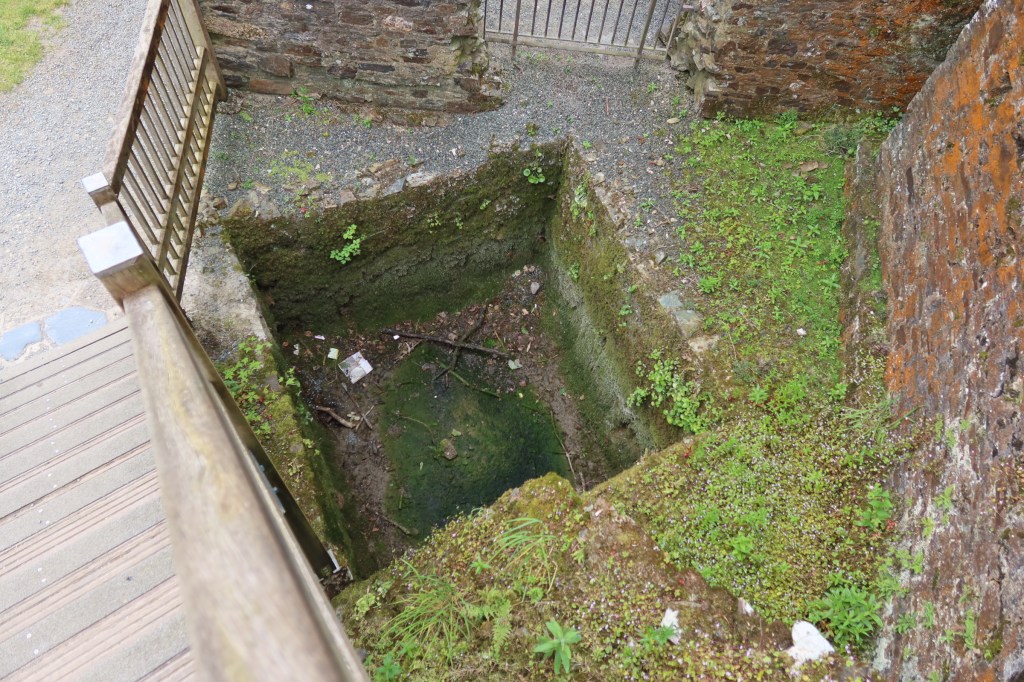
Another view of the missing maunga/volcanoes.
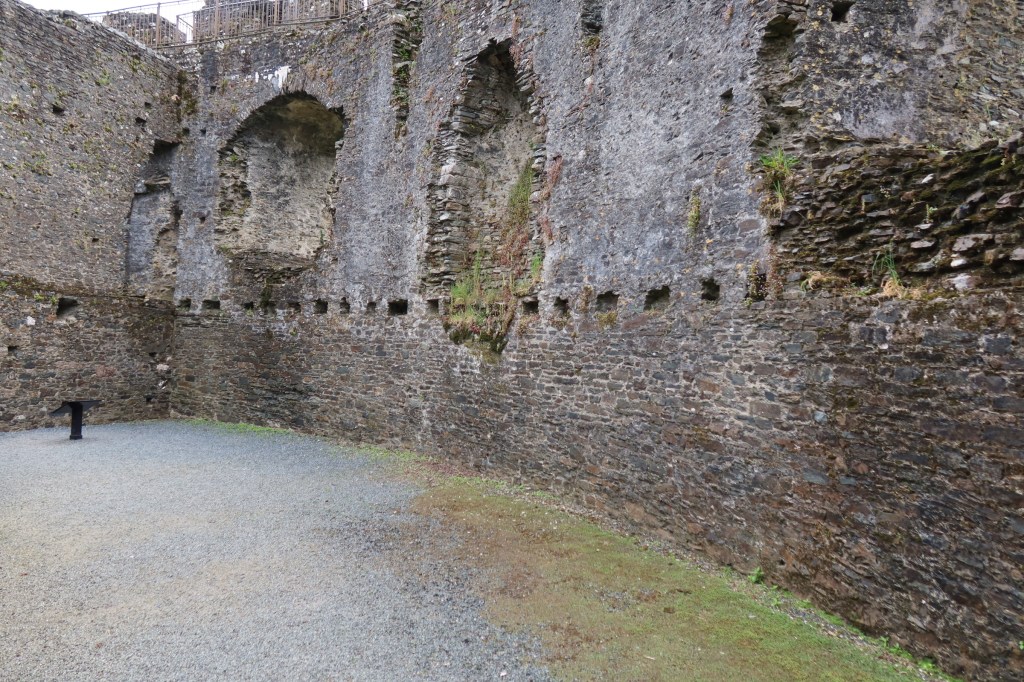
The quarrying of the volcanic cones around Auckland in the late 1800s up until the mid fairly recently was not an unusual. Many of the cities defining features were quarried away to make way for development and to use the raw material of scoria and basalt in the infrastructure of a city. An earlier event at the Devonport Museum told of the history of Takararo/Mt Cambria, another volcanic cone wedged between Takarunga/Mt Victoria and Maungauika/North Head which was mostly quarried away and only more recently became the pleasant parkland area it is today.

The parkland that was Takarora/Mt Cambria with Takarunga/Mt Victoria in the background.

Other volcanoes that have been subjected to quarrying to the point of total removal include –

Te Apunga-o-Tainui/McLennan Hills; Waitomokia/Mt Gabriel; Ōtuataua Volcano/Quarry Hill; Maungataketake/Elletts Mountain; Te Pou Hawaiki (the second smallest cone and now a carpark);Te Tātua-a-Riukiuta/Three Kings; Rarotonga/Mt Smart; Maungarahiri/Little Rangitoto; Te Tauoma/Purchas Hill to name a few.

There are also many others which have been partially quarried, of the fifty three volcanoes in Auckland only thirteen appear to have been untouched by the bulldozer and the digger. This is not to say that those that remain have been completely untouched by human hands. For as long as there has been people in Tamaki Makaurau then the landscape and its features will have been adapted and utilised to suit the needs and requirements of its inhabitants.

For more information regarding the volcanoes of Auckland I recommend the following book –

B. W. Hayward (2019) The Volcanoes of Auckland. A field guide. Published by Auckland University Press

Exploring Auckland’s Maunga

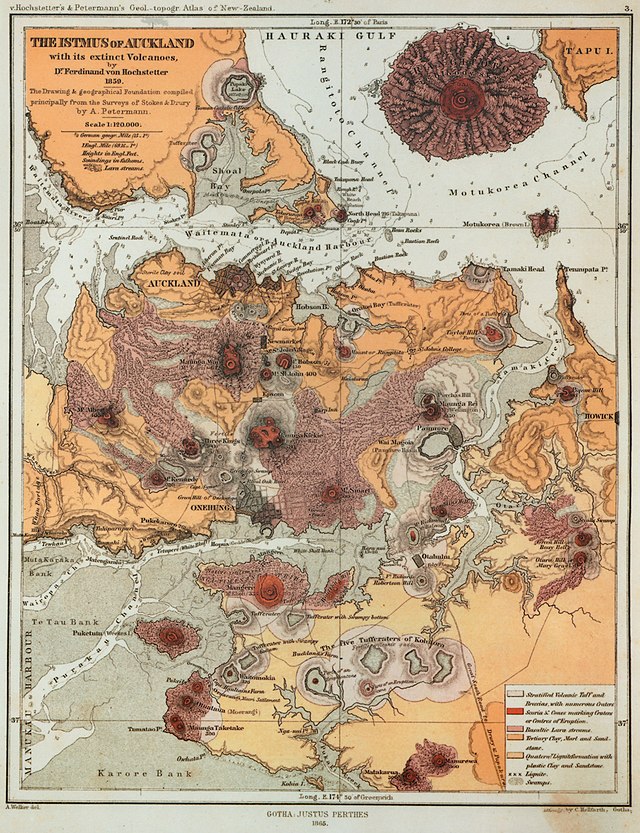
Perhaps one of the most dominant and much-loved landscape features of Tamaki Makaurau Auckland are the remains of long dead volcanoes.  Fifty-three volcanoes have erupted in the Auckland area over many millennia (the most recent being Rangitoto), some exist in today’s landscape as basins or form lakes and many have been quarried away for stone used in the construction of roads and building, or to simply make room for the ever-developing city.

“For hundred of years, these volcanoes have played a key part in the lives of Māori and Pākehā – as sites for Māori pā and 20th century military fortifications, as kūmara gardens and parks, as sources of water and stone.” (B.Hayward ‘Volcanoes of Auckland’ 2019).

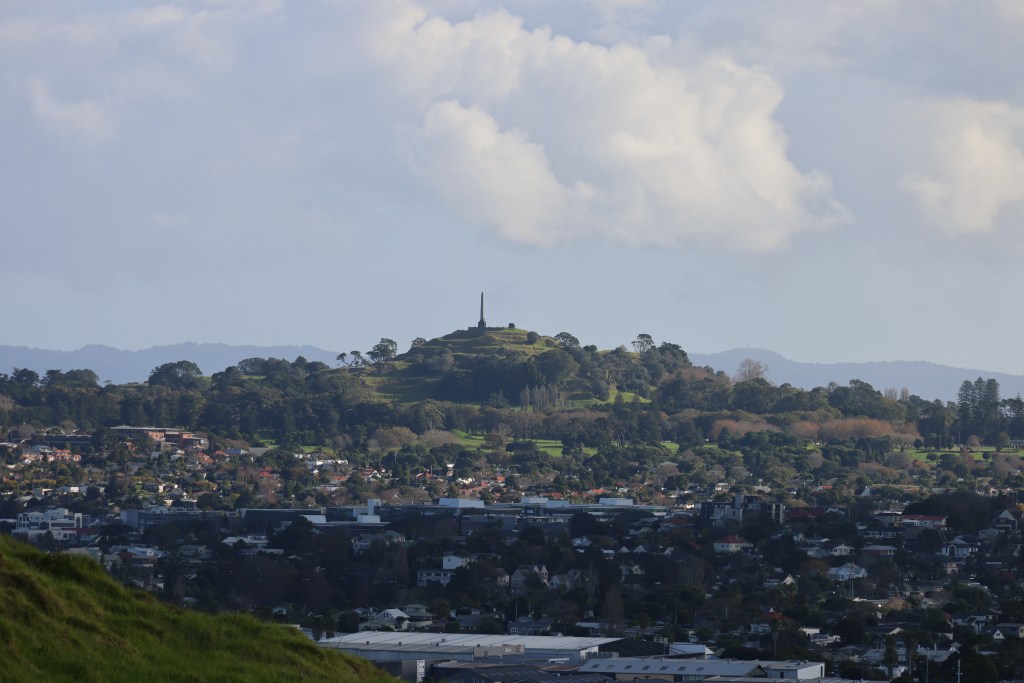
As an archaeologist my interest in the upstanding cones of Auckland’s past volcanoes relate to the features found on and near their slopes, to this extent with the company of the dog, the other half and one of the teens, it was decided to explore those we had seen from a distance as we zipped up and down the motorway.

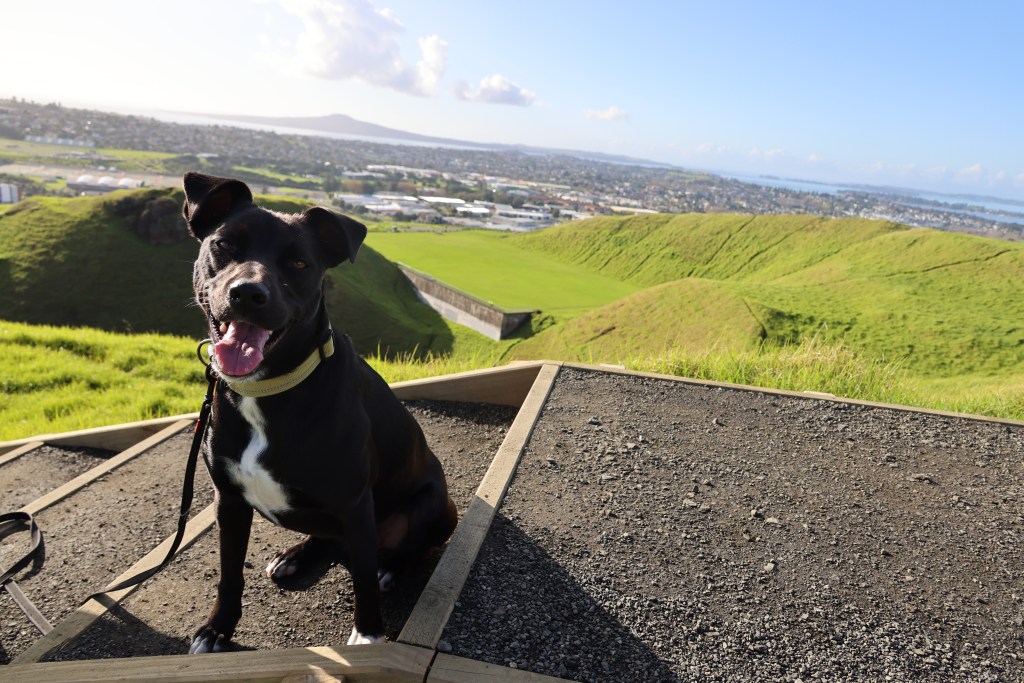
The trusty hound on the summit of Maungarei/Mt Wellington.

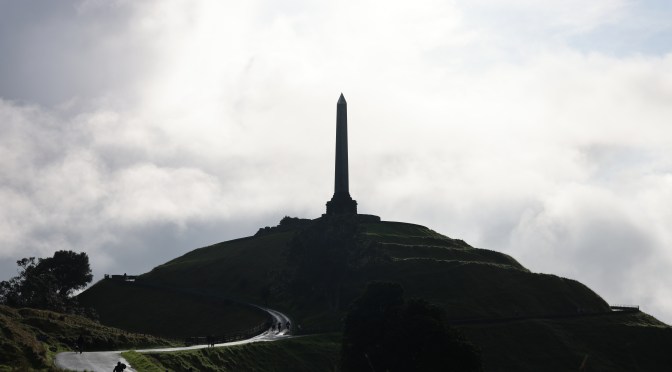
The four largest maunga (mountains/volcanic cones) in Auckland are Maungarei (Mt Wellington), Maungakiekie (One Tree Hill), Maungawhau (Mt Eden) and Mangere. Today’s visitor to these places may have a skewed view of the maunga, seeing them standing alone within a landscape of roads, housing developments and shopping centers. This was of course not always the case, using archaeology it is possible to strip back the layers of modern city life to see into the past. It is equally important to understand that the maunga were not static occupation sites. There were many changes over time, what we see today is simply the last phase of occupation. One of the most common assumption about all of Aucklands upstanding volcanic cones are that they were solely used for defence in times of upheaval. The common name for this type of site with its banks and ditches is pā – a Māori fortification which in turn has resulted in other misconceptions that will be touched upon below.

It is also important to know that remarkably little archaeological excavation work has been done on the maunga of Auckland. The most well known was the series of excavations done on Maungarei between 1960 and 1972 ahead of several developments (installation of water tank and road access).

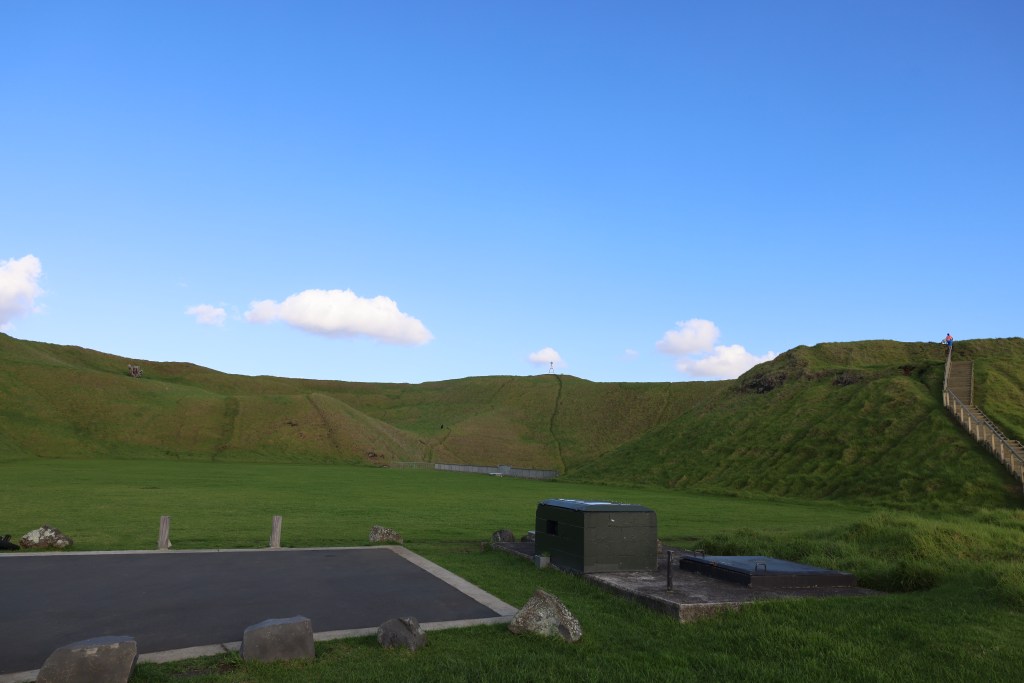
The interior of the volcanic cone – the flat area is the top of a water tank with an asphalt carpark immediately in front (please note vehicle access is no longer possible on any of the maunga).

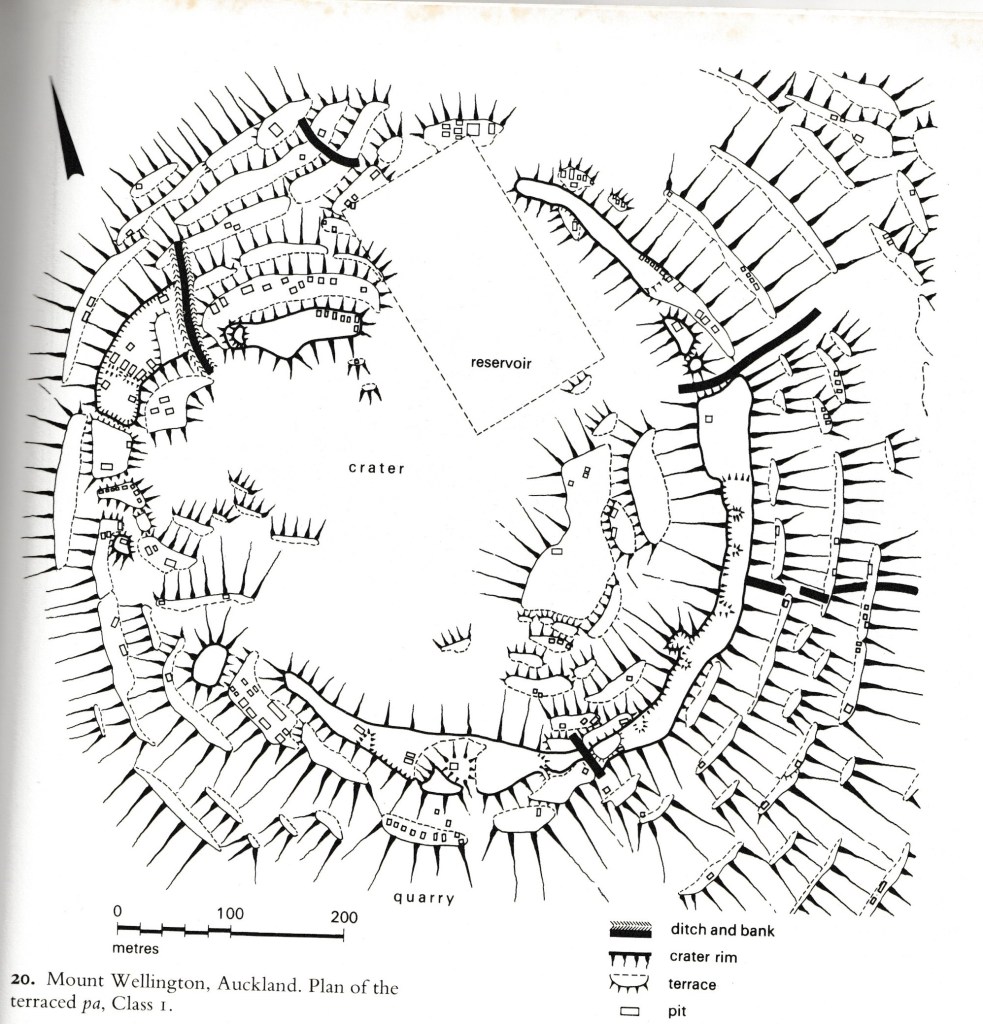
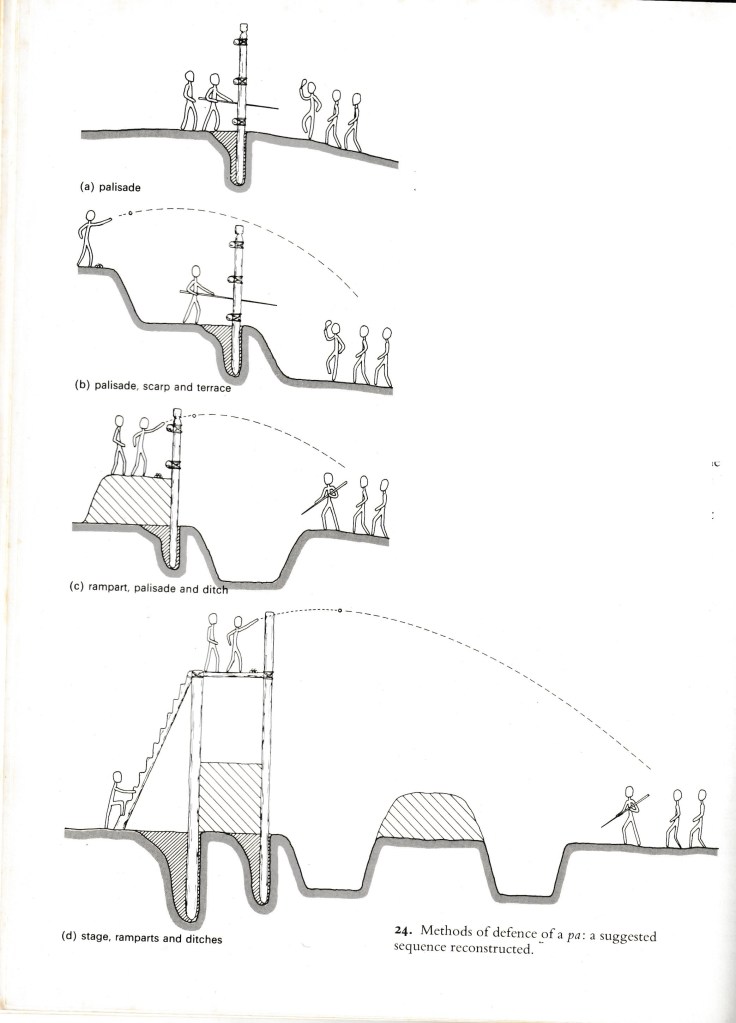
As mentioned above, a pā is seen as any type of settlement which has been fortified, their defining features are the banks and ditches surrounding an area of landscape. Situated mainly on hills, spurs and headlands (but not always, such as the ‘swamp pā’ found in the Waikato), there are some five thousand known pā in New Zealand, of which, the majority are found in areas good for horticulture. Other features can include, pits, terraces and house platforms.

From Fox A (1976) ‘Prehistoric Maori Fortifications in the North Island of New Zealand’
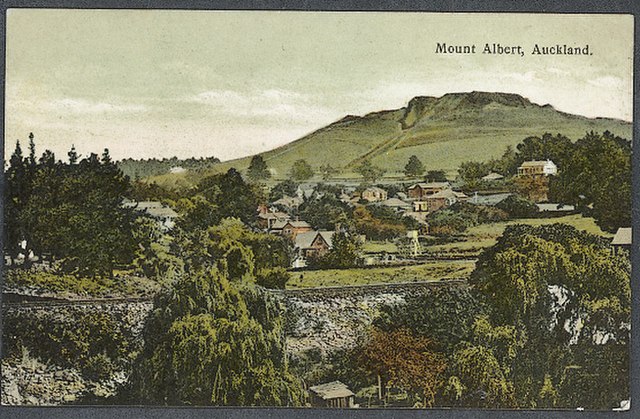
An old postcard of Mt Albert – the banks and ditches surrounding the summit can be clearly seen.

The above diagram is from A Fox (1976) ‘Prehistoric Maori Fortifications in the North Island of New Zealand’ depicting the variety of methods used in defence of a pā.

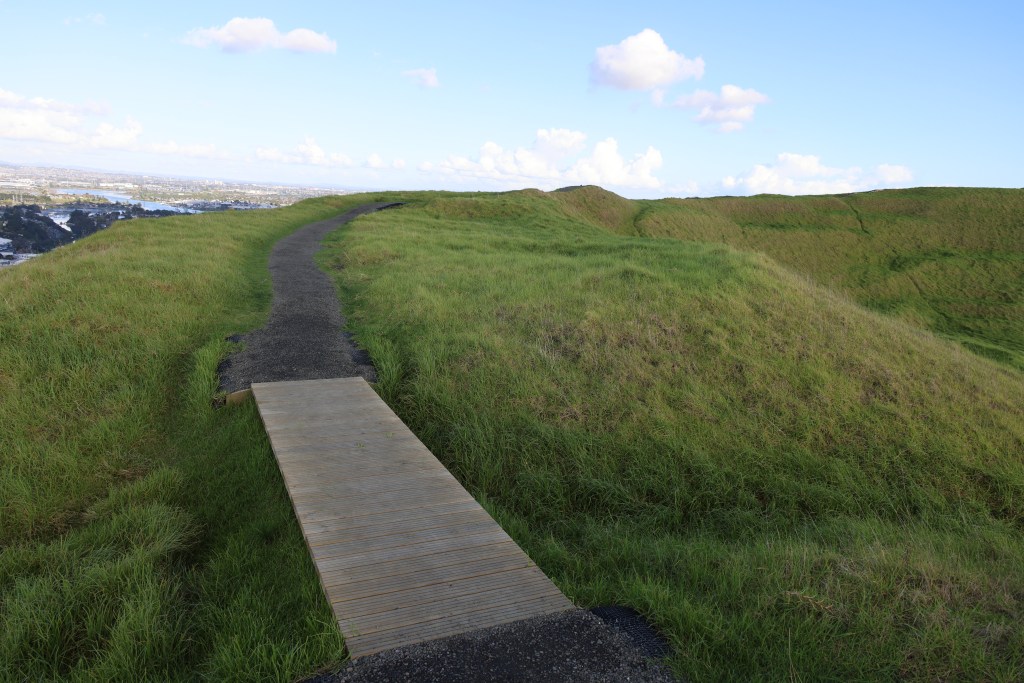
A sequence of ditches and banks along the north east rim of Maungarei/Mt Wellington.

It is perhaps a mistake to assign a singular function to pā – they were used as places of refuge but they were also places were people lived (although not always and in some cases never), where they stored important food and water supplies; they could also be focal points for religious activity. The palisades and ditches were just as likely to be a symbolic boundary separating a sacred area from the everyday, then a fortification built during times of war.

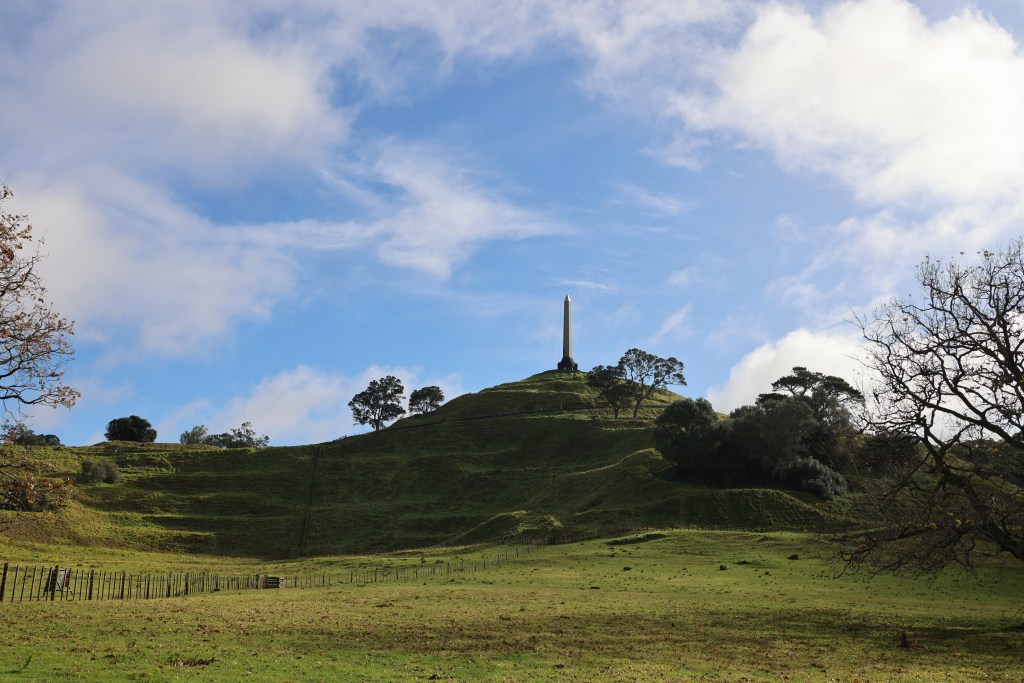
Maungakiekie (One Tree Hill) has four heavily defended summits but at its the very highest point there is an area which is regarded as important and sacred. Called Te Totara-i-ahua after the sacred lone tōtara that grew there in pre-European times (see earlier post) and it has the greatest amount of defenses surrounding it.

The highest point of One Tree Hill – note the many humps and bumps surrounding it – these are the remains of the terraces (lower slopes) and the banks and ditches (upper slopes).

One of the most common features found at many pā including the maunga of Auckland are the storage pits. Unlike the ancestral tropical home of the Māori where important food staples could be grown all year round, Aotearoa’s more temperate climate required some lateral thinking by New Zealand’s first people.

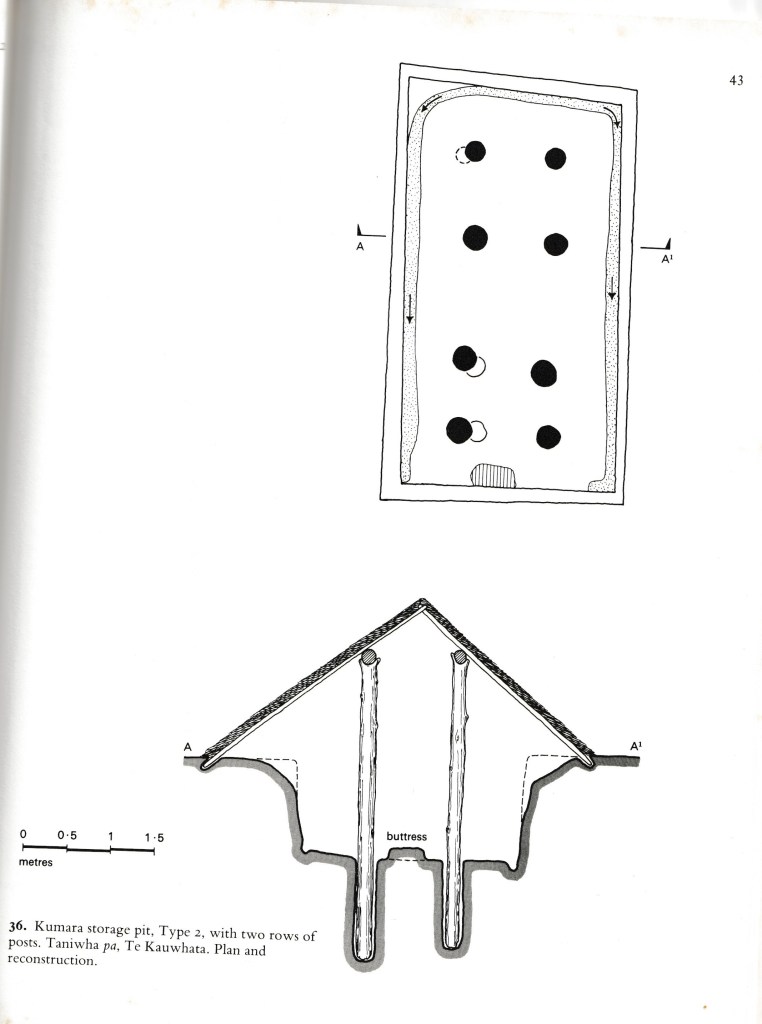
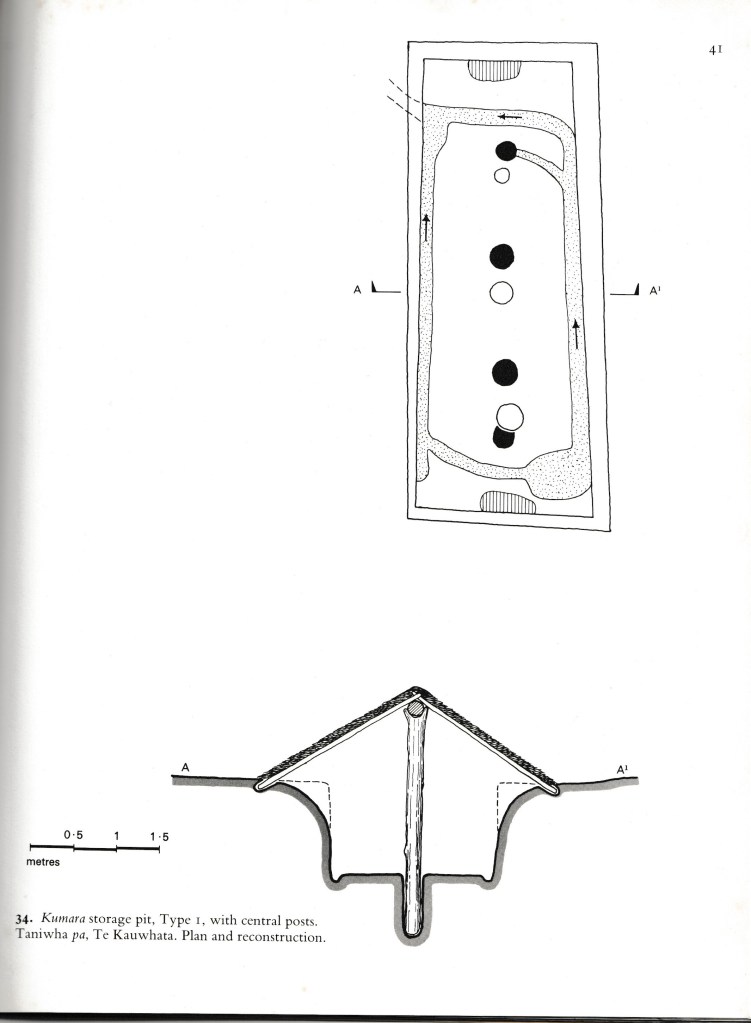
Storage pits enable kumara tubers to be stored in conditions that protected them from extremes of temperature both for future planting and consumption. There are several types of storage pits – rua are small cave like structures that are dug into the ground and sealed with a wooden door. The type which is most obvious on Auckland’s maunga are the large rectangular storage pits dug into an area and topped with a pitched roof. Depending on the size the roof was supported by either a single line of central posts or a double line of posts. Other features within the storage pit itself include drainage channels that led to one corner of the structure and a sump – an important feature in Aotearoa’s rainy climate.

The above are from Fox A (1976) ‘Prehistoric Maori Fortifications in the North Island of New Zealand’ and show the two types of storage pits commonly seen on the maunga of Auckland.

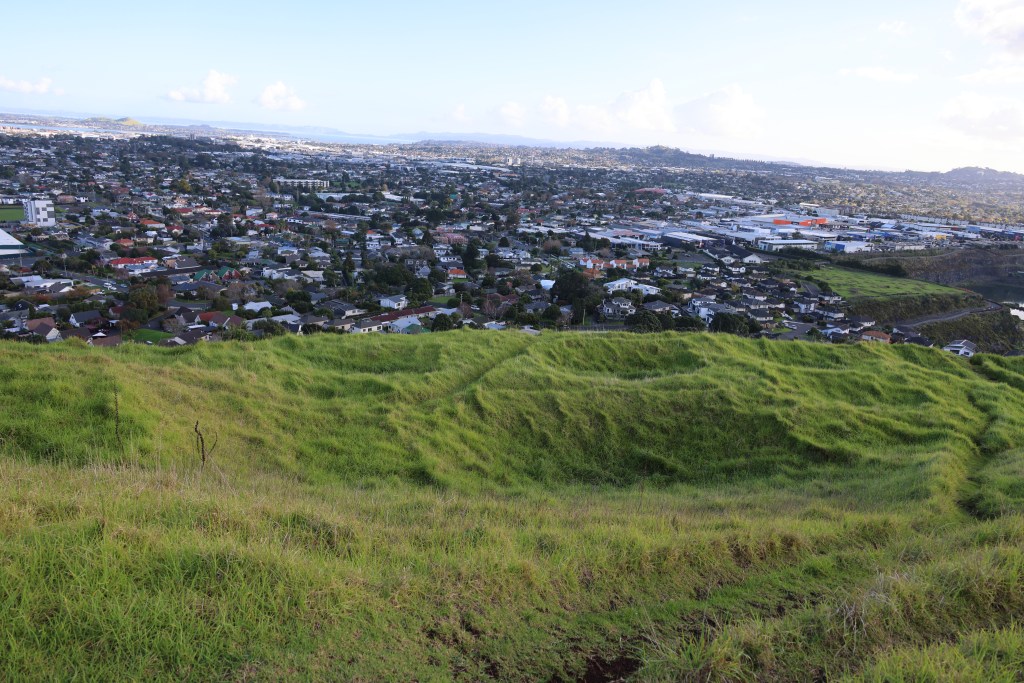
The depressions seen in a row (mid photo) are the remains of the rectangular storage pits – Manugarei/Mt Wellington.
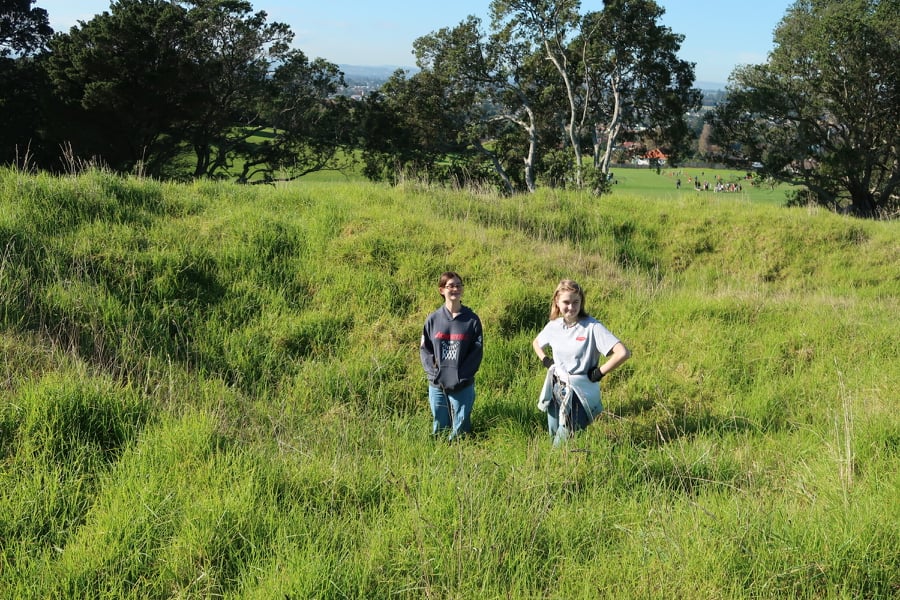
More of the rectangular storage pits but this time from Mangere Mountain – the two reluctant teens being used to show context regarding size of the pits.

As mentioned before the maunga of Auckland existed within a landscape dotted with settlements and gardens. The fertile volcanic soils surrounding the maunga providing a perfect growing medium for kumara and later the potatoe. This combined with the easy access to other natural resources such as fish and shellfish from the nearby harbours east and west of the central maunga made the isthmus a desirable to place to live where resources were plentiful.

The view from Mangere Mountain towards the Manakau Harbour – the stonefield gardens of Otuatua and Puketutu Island are to the top and left of the photo.

“The prospect from the summit is grand and nobly pleasing, I observed twenty villages in the valley below, and, with a single glance, beheld the largest portionn of cultivated land I had ever met in one place in New Zealand.” From Reverend John Butler – travelling with Samuel Marsden in 1820 as he climbed the summit of Maungarei.

The excavations of Maungarei produced radiocarbon dates for the earliest occupation on the lower slopes to the early 1500s. The period from the mid 1500s to the late 1600s was a time of intensive use. But after 1700 Maungarei does not feature in oral accounts of Māori history and was perhaps no longer an important place. The archaeology suggests that it was the two high points which were the most densely protected (tihi) by palisades and ditches. The lower terraces providing evidence of structures (postholes), hearths, fire scoops, midden deposits and storage pits.

“Maungarei was thus the location of repeated settlements, which were sometimes fortified, particularly late in the sequence, but often not.” From J Davidson (2011) ‘Archaeological investigations at Maungarei: A large Māori settlement on a volcanic cone in Auckland, New Zealand’ Tuhinga 22 Te Papa.

A view of the man humps and bumps to be found over Maungarei – looking north towards Rangitoto.
Maungarei – the seeming farmland setting belies the busy road behind me and the surrounding suburban sprawl which are just out of shot.

Increasingly, archaeological studies are showing that the pā as a site was a late feature of the landscape, dating from the 1500s onwards, not all were in use at the same time and not all functioned in the same way. This would appear to be the case for Tamaki Makaurau Auckland as well. For a long time it has been assumed that the widespread presence of pā in Auckland has meant that the area was in a constant state of flux.

“…Tamaki, in the years of Waiohua ascendency, was one of the most settled and extensively cultivated regions in Aotearoa…in spite of the received wisdom of historians to the contrary, was the the fact that tribes enjoyed long periods of relative peace.” From R C J Stone (2001) ‘From Tamaki-makau-rau to Auckland’ Auckland University Press.

Another of the common features of the maunga are the areas of flat ground surrounding cones. These terraces were used as places for living (some have house platforms), as places for storage pits and as places for gardens.

The above slideshow shows a fraction of the terraces that can be found on any given maunga in Auckland. These examples are from Maungakiekie, Mangere, Maungarei and Maungawhau.

But this is not to say that pā were never used for defence, the banks, ditches and palisades would suggest otherwise. Instead it is suggested that a more balanced view be taken when interpreting such places. Understanding that what we see in the landscape is but the final stage of a long and often complicated history – the evidence from the excavations at Maungarei are a good example of this.

A Return to Otata

Auckland was recently subjected to what the meteorologists refer to as a ‘weather event’. High winds and a months worth of rainfall caused damage and chaos throughout the city. None more so than on the islands of the Hauraki Gulf including Otata.

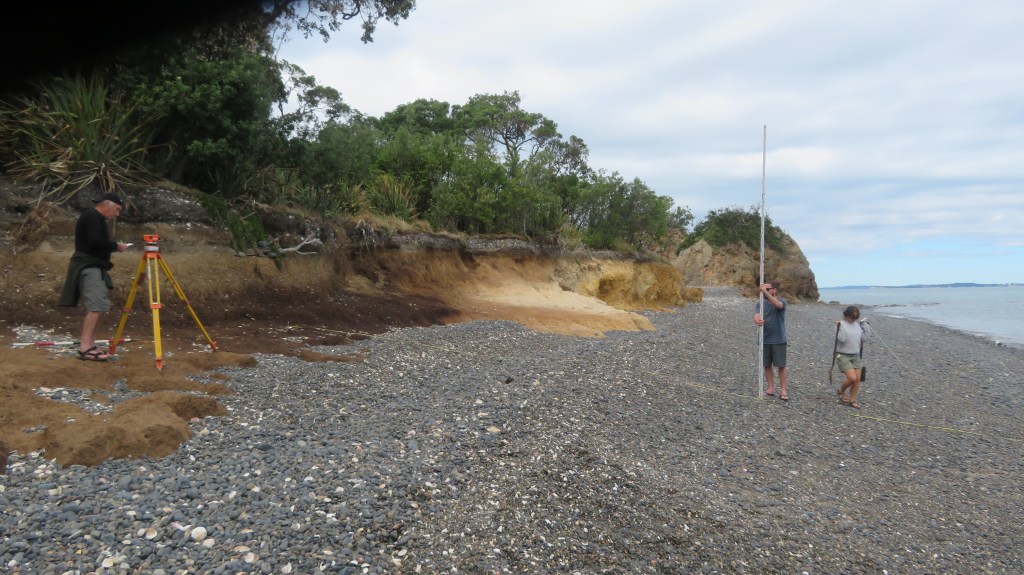
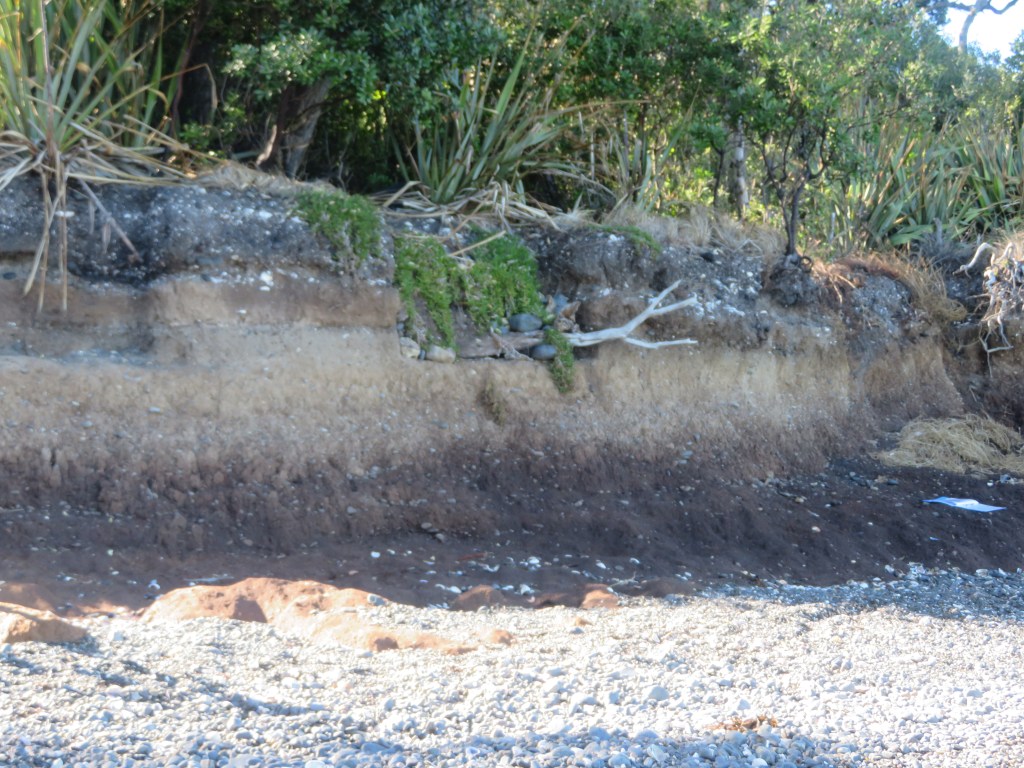
Reports came in of erosion and the lost of the shingle beach exposing the clay beds. It was decided that a visit to the island would be necessary, to assess and record the damage to the midden site. In addition, Louise Furey, the archaeology curator at the Auckland Museum, invited Bruce Hayward and Robert Brassey for a second opinion on the stratigraphy of the site (the former a geologist and the latter an archaeologist who had worked on the nearby islands of Motatapu and Tiritiri Matangi).

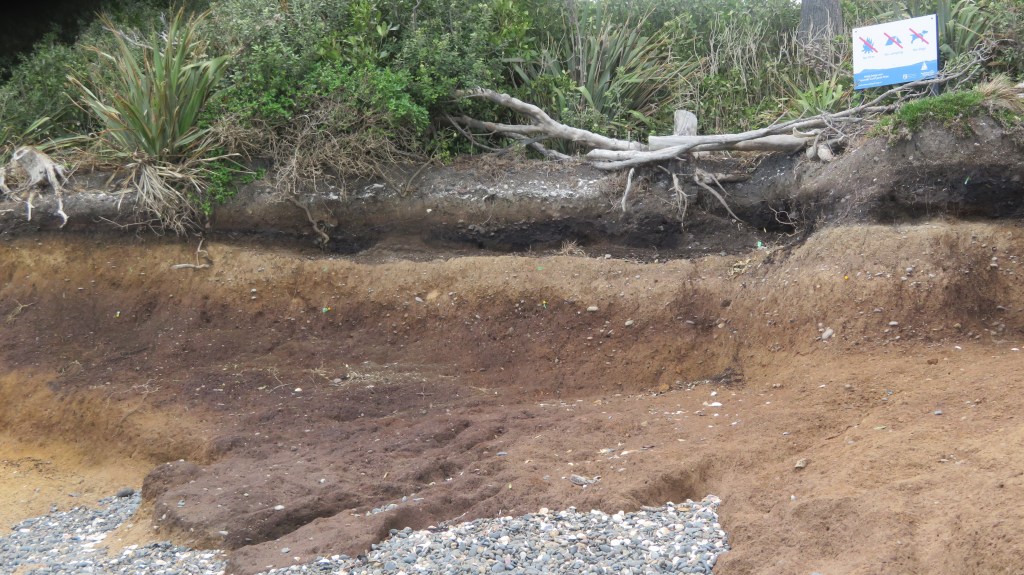
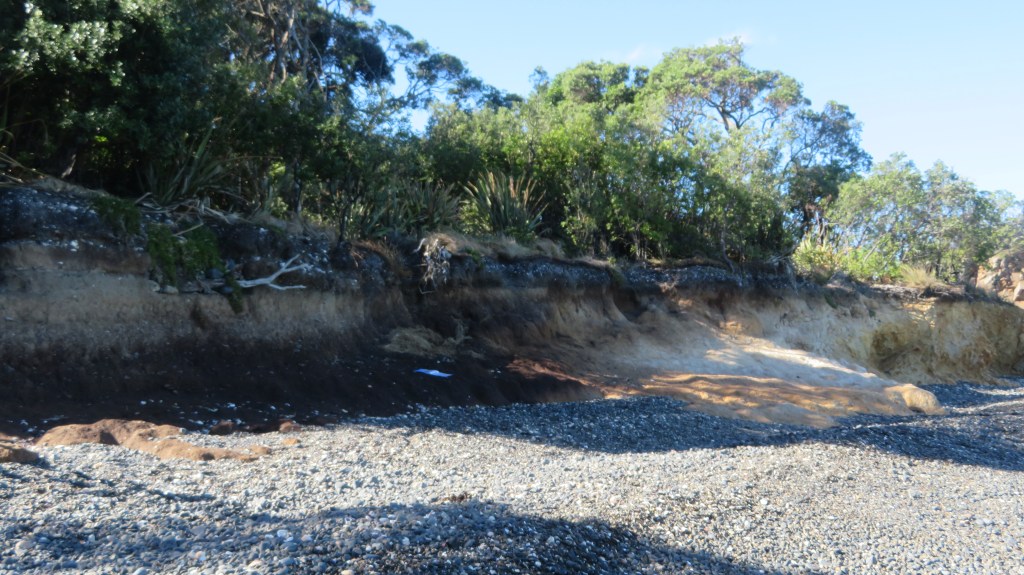
The first attempt to visit the island was thwarted, yet again by bad weather. However, on the second attempt we were graced with a stunning day with tides and winds in our favour and so we set off early morning. It was with some luck that only a few days earlier, the wind and tide redeposited much of the shingle back onto the beach, making landing on the island a little safer. On our arrival we could see that the sea had not been kind to the midden and much of the beach had indeed been washed away, leaving the midden sitting up high.

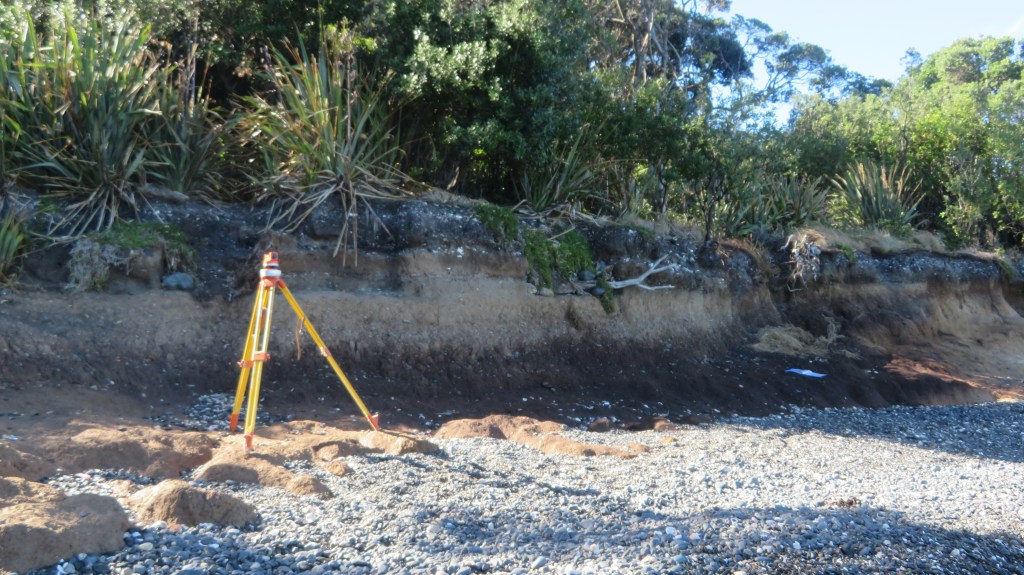
We spent the day measuring levels, recording and describing what could be seen. An Auckland Museum photography was on site to provide a photographic record of the midden in detail (look out for the video during Archaeology Week 2022). There was also a great deal of discussion regarding the stratigraphy – the outcomes of which can wait until the published report.

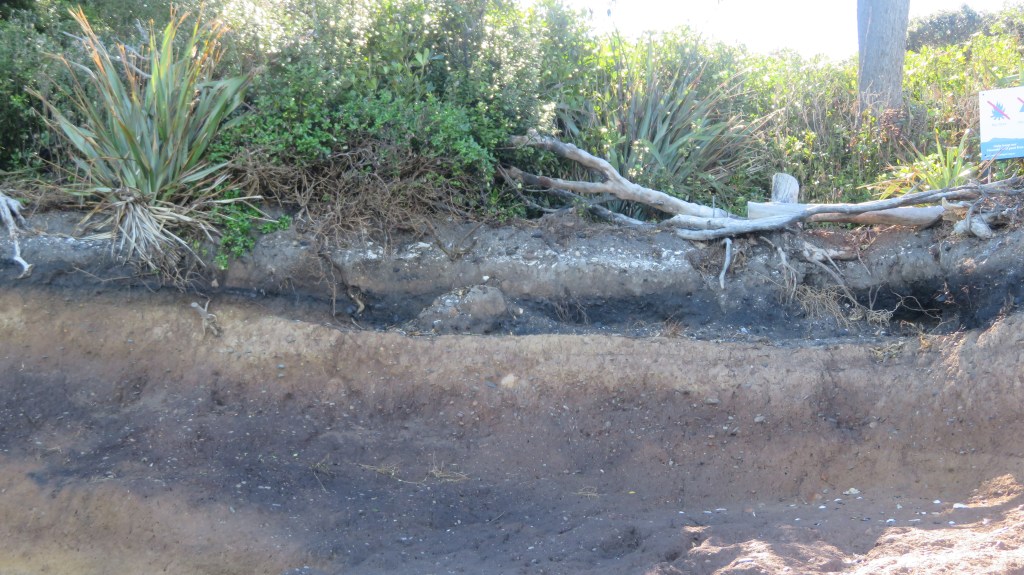
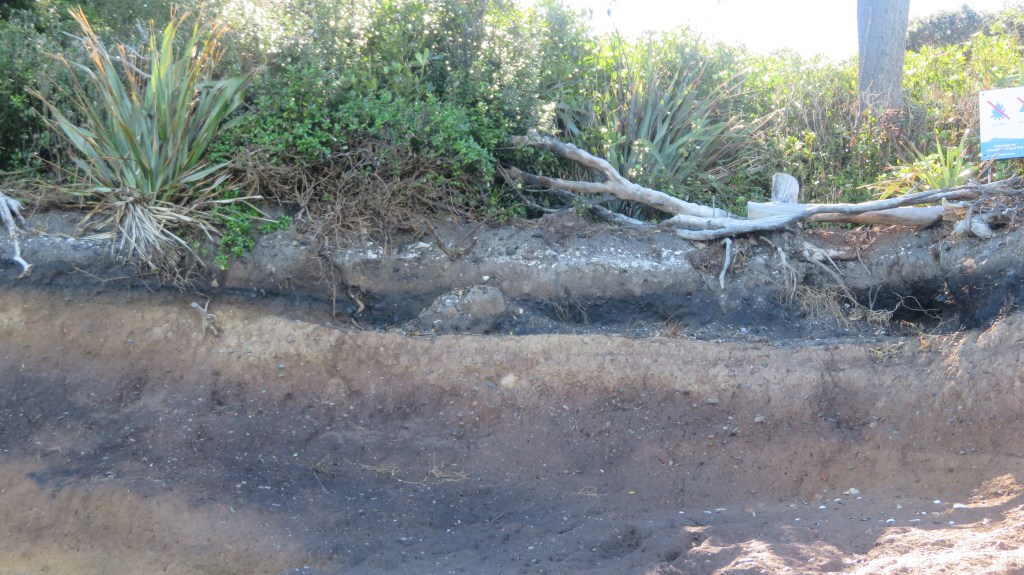
The following photos are of the site as it was seen on March 28th 2022 – these photos are my own.

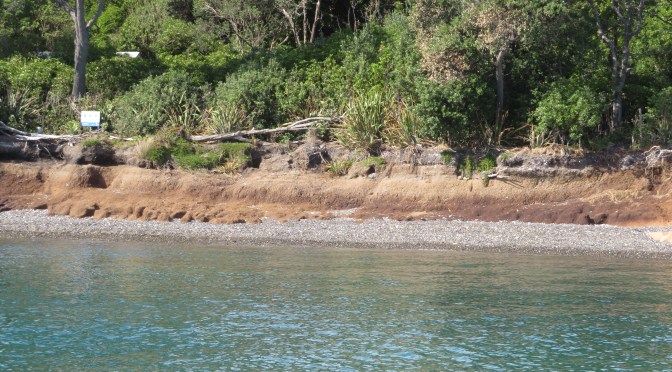
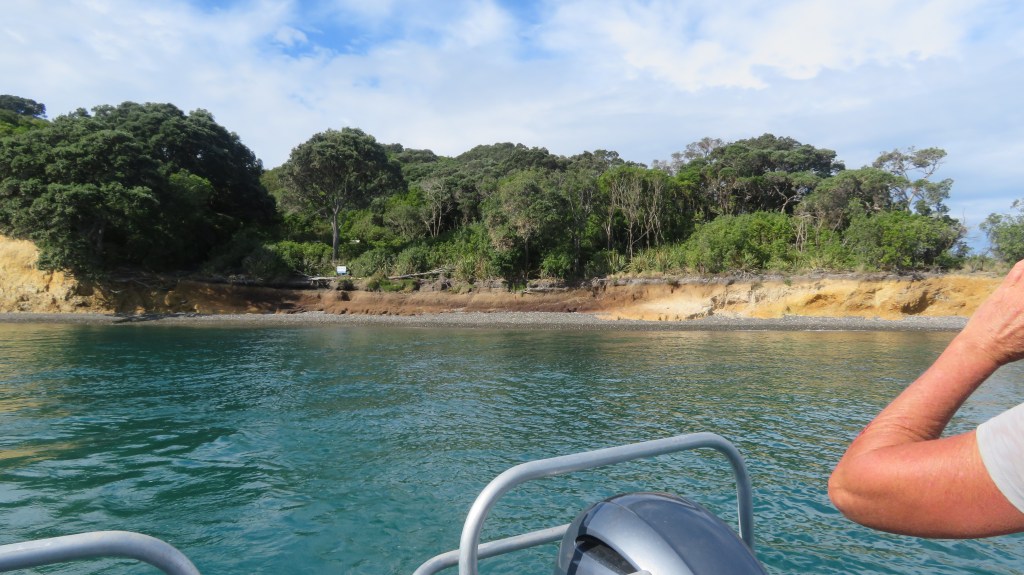
Main Beach from the boat – the grey band is the remaining shingle, the dark brown band is the clay and above that are the midden layers.
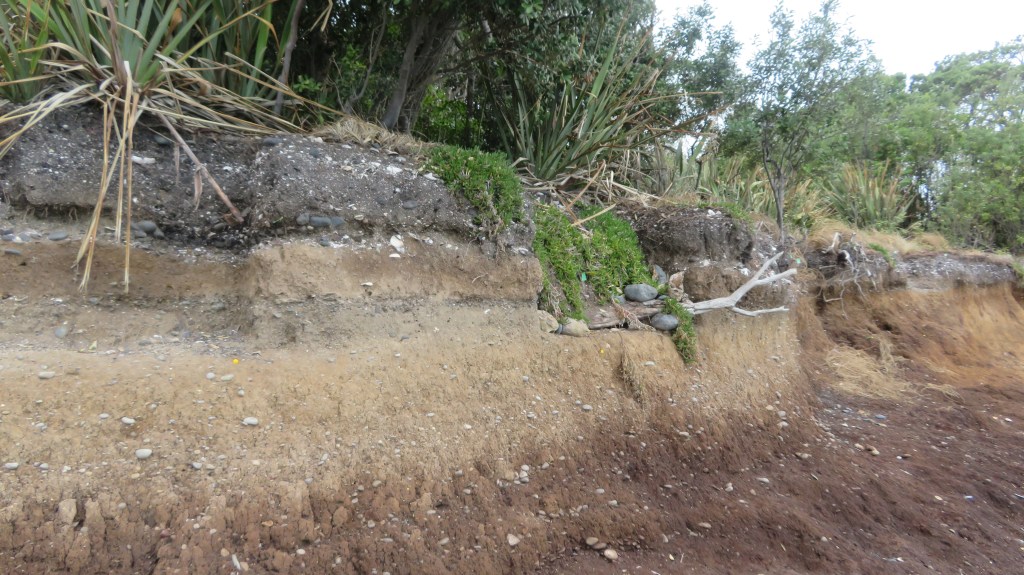
The area of last years excavation – where the cobbles and branch is sticking out of the edge is where I excavated last year. The base of this square was at ankle height but is now almost chest height.
Taking levels.

For more information see a previous article on Otata here or visit the Noises website here and here for articles by Emma Ash (Assistant Archaeology Curator, Auckland Museum).

Coastal sites are always at the mercy of the environment and it can be heartbreaking to watch them year after year become less and less. The greatest shame is in the loss of the information that would have been gained if time and funds had allowed. Yes, it is true that excavation is destruction but when a site is under threat from elsewhere then surely it is time to step in and save that information for future generations. This is often done in urban areas before large developments are undertaken. Rescue archaeology shouldn’t just be about pre-development but also about the natural damage being done to archaeological sites.

A Celebration of Language

Te Wiki o Te Reo Māori – Placenames in the Landscape.

Last week it was Te Wiki o Te Reo Māori – Māori Language Week and even if this post is a little late, it seemed a good idea to take a look at the names Māori gave to their places as a way of celebrating the language of New Zealand’s first people.

As you may already know as a landscape archaeologist I have a fondness for place names (see an earlier post on Cornish Place names) so felt it was about time I had a look at place names here in Aotearoa (New Zealand).

Place names in today’s Aotearoa are either of European origin or Māori, however it should be remembered that many of the places which today have a European name did indeed have a Māori name prior. As mentioned above the purposes of this blog it is the Māori names which are of interest. The European names will be considered in a separate article at a later date.

The need to give a place a name is universal to people across the world, it is our way of defining who we are and our relationship with the world surrounding us. The names of places can commemorate an event, define a landscape feature, be used to help travellers find their way, as a warning or as a way to signify a place of importance. In regard to Māori place names difficulties arise when trying to give a literal translation into English, for some words there are more than one meaning (as it is with English). Often the meanings behind a word are not easily definable. Words such a Mana and Tapu can be given an English interpretation but in actuality have a much more complex meaning to Māori. Add to this the fact that when Māori words were first written down by Europeans often the words were misheard and misspelt – a wrongly placed vowel can change the meaning of a word quite drastically.

What follows is just a few of the many place names and their interpretations.

One of the most important common words that make up Māori place names relate to features in the environment. Thus a word that begins with ‘Awa’ could refer to a river, gulley or valley; ‘Manga’ though is a stream or tributary and is not to be confused with ‘Maunga’ or mountain. The prefixes can be followed by other descriptive terms such as, iti/small, nui/big, roa/long. They can also have the names of people attached to them, the names of gods and the names of birds, fish and fruit. The latter often indicating the good places to forage for the said kai (food). From the perspective of the landscape archaeologist (or anyone interested in the past) the interpretation of place names can give us clues to the past, fleshing out the otherwise dry facts with the human story.
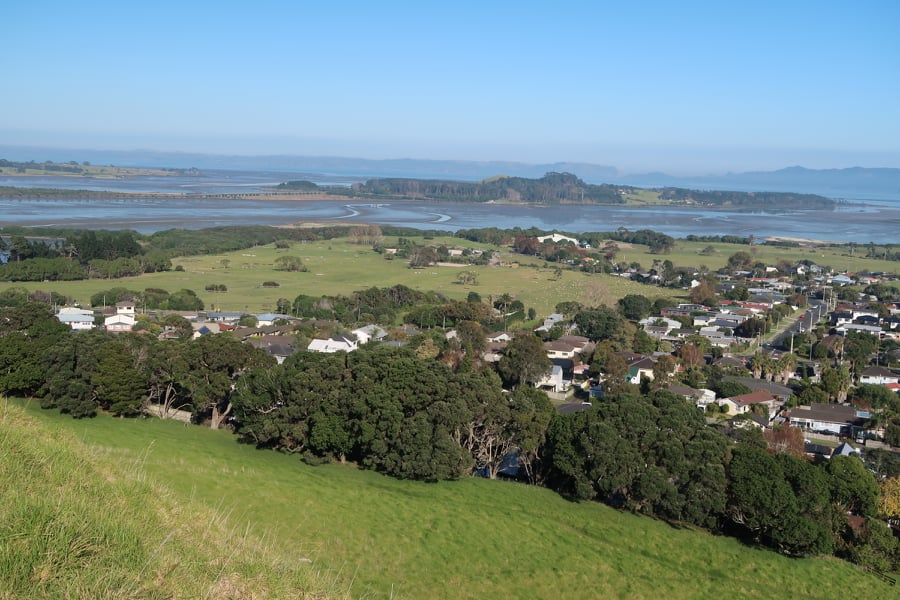
One of the most important part of any society is the ability to feed the people. As a result there are many place names which indicate the places that are good for food gathering and growing.

  • Awatuna – eel (tuna) creek (awa).
  • Kaipataki – to eat (kai) flounder (pataki).
  • Kaipara – to eat (kai) fernroot (para).
  • Motukanae – mullet (kanae) island (motu).
  • Whenuapai – good (pai) land (whenua).
  • Motukina – island (motu) of kina (a type of sea urchin).
  • Otamahua – the place where (o) children (tama – short for tamariki) at seagull eggs (hua).
  • Kaikoura – to eat (kai) crayfish (koura) – its full name is Te Ahi-Kai-koura-a-Tama-ki-te-rangi or where Tama the great traveller stayed and lit a fire to cook crayfish. A place where even today crayfish are sought after.
  • Arowhenua – there are several possible interpretations of this name – good or desirable land; turning land for cultivation or to desire land.
  • Hakapupu – estuary of shellfish.
  • Ororoa – the place of roroa (a type of shellfish).
  • Tahekeaua – a place to catch herrings by the waterfall – taheke (waterfall) aua (herring).
  • Mararua – two (rua) plantations/places of cultivation (mara)
Kaikoura 1983 from Archives New Zealand.

Other resources also appear in place names:

  • Motukauatiti/Motukauatirahi – two bays (Corsair and Cass Bay) noted for the Kaikomako trees, the timber of which was good for firemaking.
  • Omata – the place of flint/quartz – O meaning ‘the place of’ and mata can mean either flint, quartz, sometimes obsidian but also headland (interpretations can depend on what comes before or after the word).
  • Otemata – the place of good flint or quartz.
  • Ratanui – plenty (nui) of rata trees.
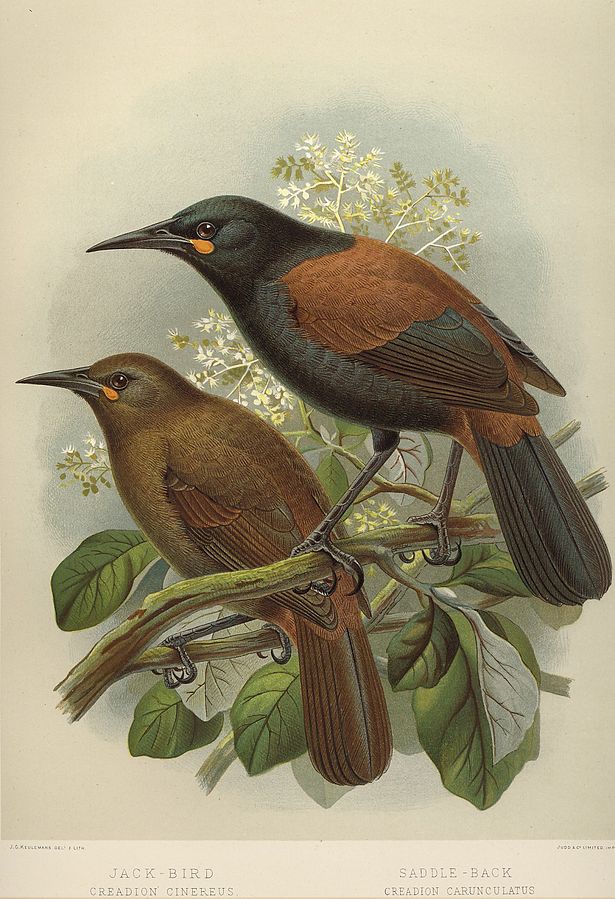
  • Kaitieke – to eat the tieke (saddle-back, a native bird).
  • Whangamata – obsidian/flint/quartz (mata) harbour (whanga) – obsidian is the most likely candidate as it washes upon the beach here from nearby Mayor Island.
  • Anatoki – cave of the adze.
From Buller’s ‘A History of the Birds of New Zealand, 2nd edition’ 1888.

Then there are the names that serve to aid those navigating the landscape:

  • Putarepo – the place at the end of the swamp where it could be crossed.
  • Puhoi – refers to the slow tidal flow thus it was necessary to wait for high tide for the river to be navigable.
  • Otira – the place of travellers – indicating an old campsite on the Otira River where food was prepared for the trip through the Hurunui Pass.
  • Motuara – island (motu) path (ara) – most likely to mean an island in the path of canoes.
  • Tauranga – resting place/safe anchorage for canoes.
  • Kaiwaka – literally to eat (kai) canoes (waka) – may refer to the places where the swift flowing river has the ability to destroy a canoe.
  • Mangawhata – the stream by the storehouse.
  • Arapuni – two possible interpretations – a path to a camp or a path that has been blocked – Ara meaning path.
  • Whangaruru – a sheltered (ruru) harbour (whanga).

There are also names that serve to warn people away from place:

  • Kaitoke – to eat (kai) toke (worms) – indicating a place of poor soil.
  • Mangakino – bad/useless (kino) stream (manga).
  • Waikino – bad (kino) water (wai).
  • Mangamate – stream (manga) of death (mate) – one wonders what happened here to warrant such a name.
  • Otepopo – literally the place of the decay – or the place of Te Popo.
  • Motutapu – sacred/forbidden (tapu) island (motu) – possible a name given after the eruptions of Rangitoto and the island was covered in volcanic ash.
  • Matatapu – sacred headland.
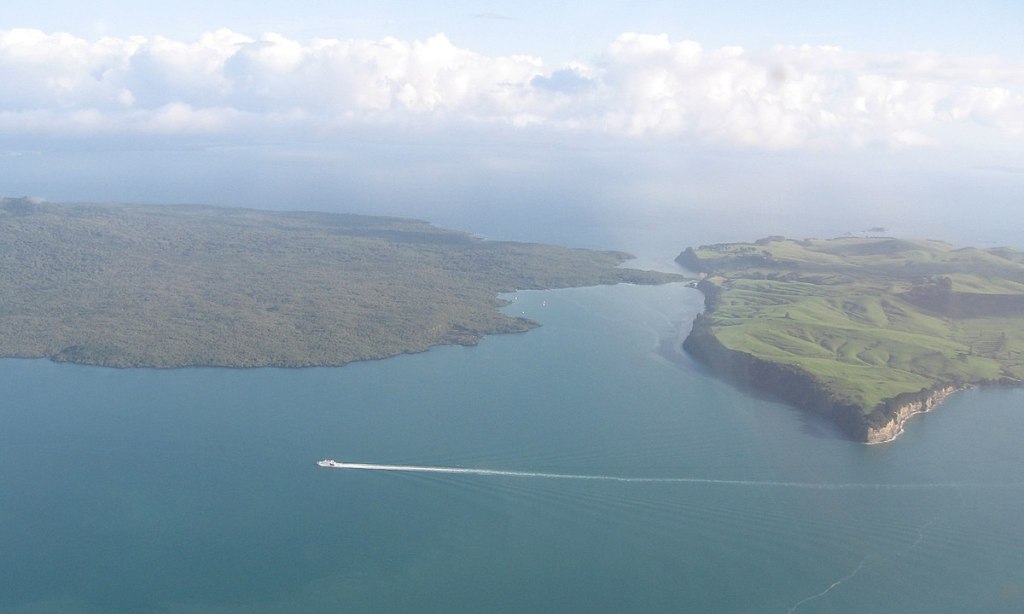
The two islands of Rangitoto (on the left) and Motatapu (right).

Other places are simply descriptive:

  • Maunganui – big (nui) mountain (maunga)
  • Tauranga-Kohu – kohu means mist/fog and thus this name could indicate a place where the mists linger.
  • Waihapa – crooked (hapa) water/stream (wai).
  • Waihaha – noisy (haha) water/stream (wai).
  • Pukekahu – hill (puke) of hawks (kahu).
  • Pakowhai – village/settlement (pa) by the kowhai (native flowering tree).
  • Mahoenui – the place of many mahoe trees.
  • Ngaroto – the lakes.
  • Rotoma – the lake of clear waters.
  • Ngapuna – the springs
  • Onehunga – the place of burial

A simple perusal of any map will show that certain prefixes are more common than others and for obvious reasons. Hills (puke), mountains (maunga) rivers (awa), streams (manga), lakes (roto), caves (rua), water (wai) and harbours (whanga) are prolific features of the landscape.

Other names are used to commemorate an event thus Ahuahu (Great Mercury Island) is literally translated as ‘to heap up’ but refers to when Paikea came to the island on the back of a whale, when he landed he was cold and so heaped the warm sand over himself hence the name.

Iwikatea (Balclutha) is a reference to a great battle that occurred here and where the bones of the slain remained for many years.

The Hokianga proper name is Hokianga-nui- a-Kupe or the ‘Great returning place of Kupe’ – it is from here that Kupe returned to Hawaikii.

A panoramic view of the entrance to the Hokianga Harbour- photo by Andyking50 on wikicommons.

Patumahoe literally translates as a weapon made of mahoe, a native tree. But further digging finds a tale of how ‘in a battle at this place a chief was killed with a mahoe stake’.

Tamaki-Makau-Rau (Auckland) is called thus because of its excellent soils and bountiful harbour there were often many fights to establish who would hold this prize – literally it is translated as ‘Tamaki of a hundred lovers’ – tamaki can be translated as battle.

Motu-toa can be translated as the island where warriors fought.

Rotoiti – the full name of this lake is Te Roto-iti-kite-a-Ihenga and is interpreted as the little lake that was discovered by Ihenga.

Te Tawa – here Ihenga pushed his canoe with a piece of tawa wood, it stuck in the ground and he left it there thus naming the place after it. Ihenga features in many of the interpretations of Aoteoroa’s places.

Kirikau – a place where a battle was fought in which the contestants were naked – kiri (skin) kau (bare).

Another grouping of place names relate to the cosmological – the deities, the supernatural and the movement of the sun, moon and stars.

  • Tapuaenuku – the footsteps of the rainbow god.
  • Te Puka-A-Maui – the anchor stone of Maui (Stewart Island).
  • Ruataniwha – literally, the two taniwha (see earlier article on taniwha for more information) – in this case that there were two great taniwha who lived in a lake and fought over a boy who fell in. Their struggles formed the Tukituki and Waipawa Rivers.
  • Oamaru – the place of the god Maru.
  • Anakiwa – Cave of Kiwa – Kiwa was a man’s name but was also one of the gods of the sea.
  • Omaui – the place of Maui.
  • Oue – the moon on the fourth night.
  • Otane – the moon on the twenty-seventh night – the place of the moon.
  • Momorangi – offspring of Rangi (the sky god).
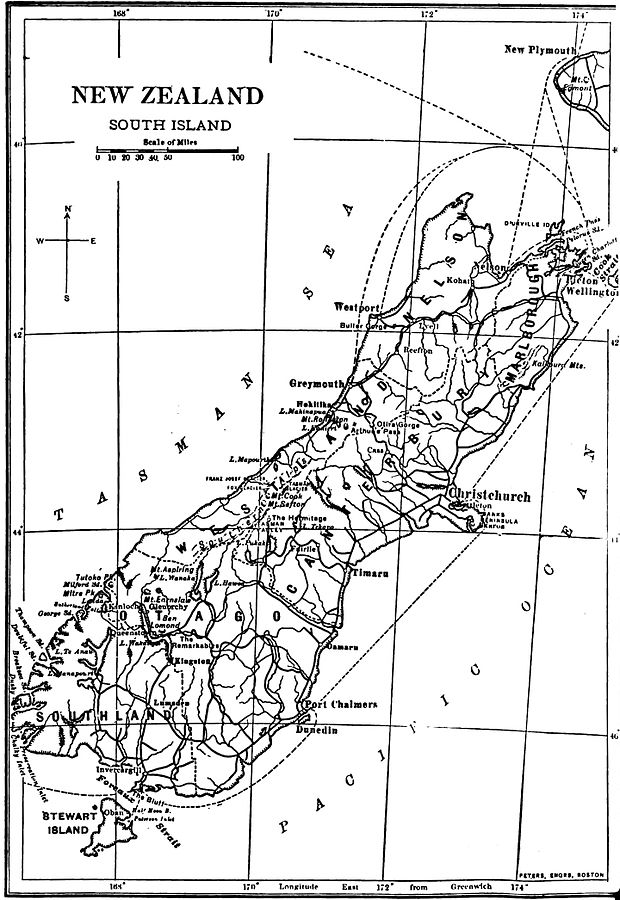
  • Te Waka-A-Maui – an old name for the South Island – referring to the canoe (waka) from which Maui fished up the North Island.
  • Otamarau – the place of Tamarau – a spirit who comes in the whirlwinds.
Map of Te Waka-A-Maui (The South Island)

These are all just a few examples of the wide variety of names used by Māori, there are many more that have not been touched on in this article – to do so would be the work of whole of book. Place names not mentioned are those commemorating a particular person. Ihenga and Kupe have already been mentioned but there are many others such as Mangaotaki (the stream of Taki) or Hekura, the name of a woman from the Arai-te-uru canoe. Or Ohinemutu, the place of the young woman who was killed – she was the daughter of Ihenga who placed a memorial stone at the place of her death calling it Ohinemutu. There are also the places that were named after the arrival of the Europeans such as Hiona, the name given to a pa on the Whanganui River, by the missionaries – it is the Māori name for Zion. Or Maheno, an island – the name was given by the Europeans.

Then there are the names which are very old and come from the homeland of the first people to set foot in Aotearoa. Names such as, Maketu or Nuhaka, both names are after a place in Hawaikii. Then there is Atiu, one of the oldest names in Marlborough and is a possibly a name transferred from the Cook Islands.

As mentioned before this is but a small insight of the fascinating world of Te Reo and the place names of Aotearoa. From a landscape archaeologist point of view all of these names give an insight to how Māori viewed their world and the events that shaped their memories of places. Giving us key glimpses into the past. Putting flesh on the bones of the evidence.

Some further information:

1000 Māori Place Names

Te Reo Map of Aotearoa

Some Photos from Roman Baths in Bath (and why it inspired me to write “A Roman Moon”)

Holidaying in the UK in winter can be rather satisfying.  Mainly because you don’t have to contend with the vast crowds which are usual in the warmer months at popular spots.  One such place was the Roman bath complex in Bath, here we were able to meander around the buildings and displays without being jostled by eager tourists trying to capture the perfect selfie.  This physical space allowed the imagination a chance to wander the halls of time.  A multitude of questions and possible scenarios playing out in my minds eye and so ‘A Roman Moon’ was born.


IMG_7459
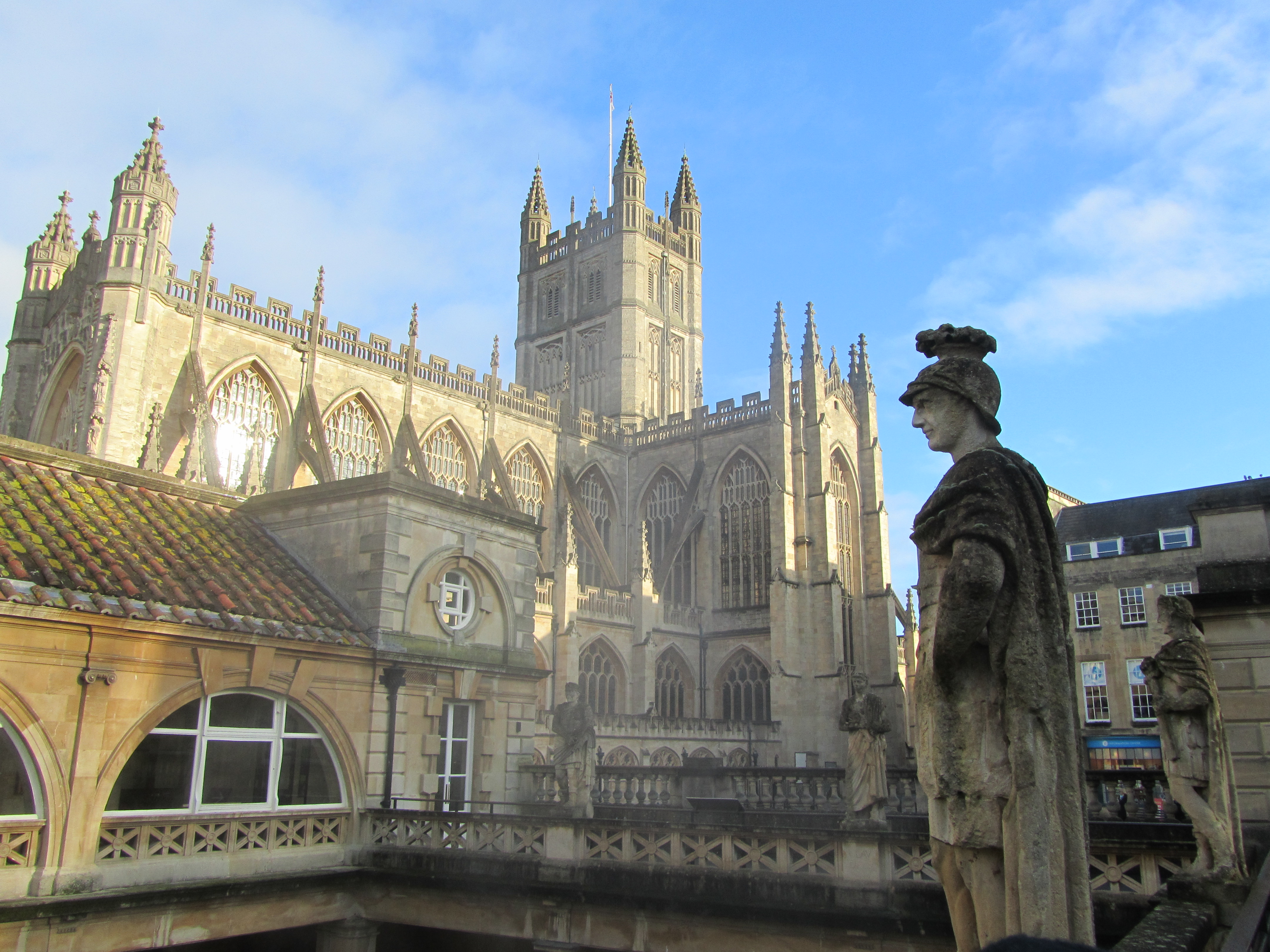
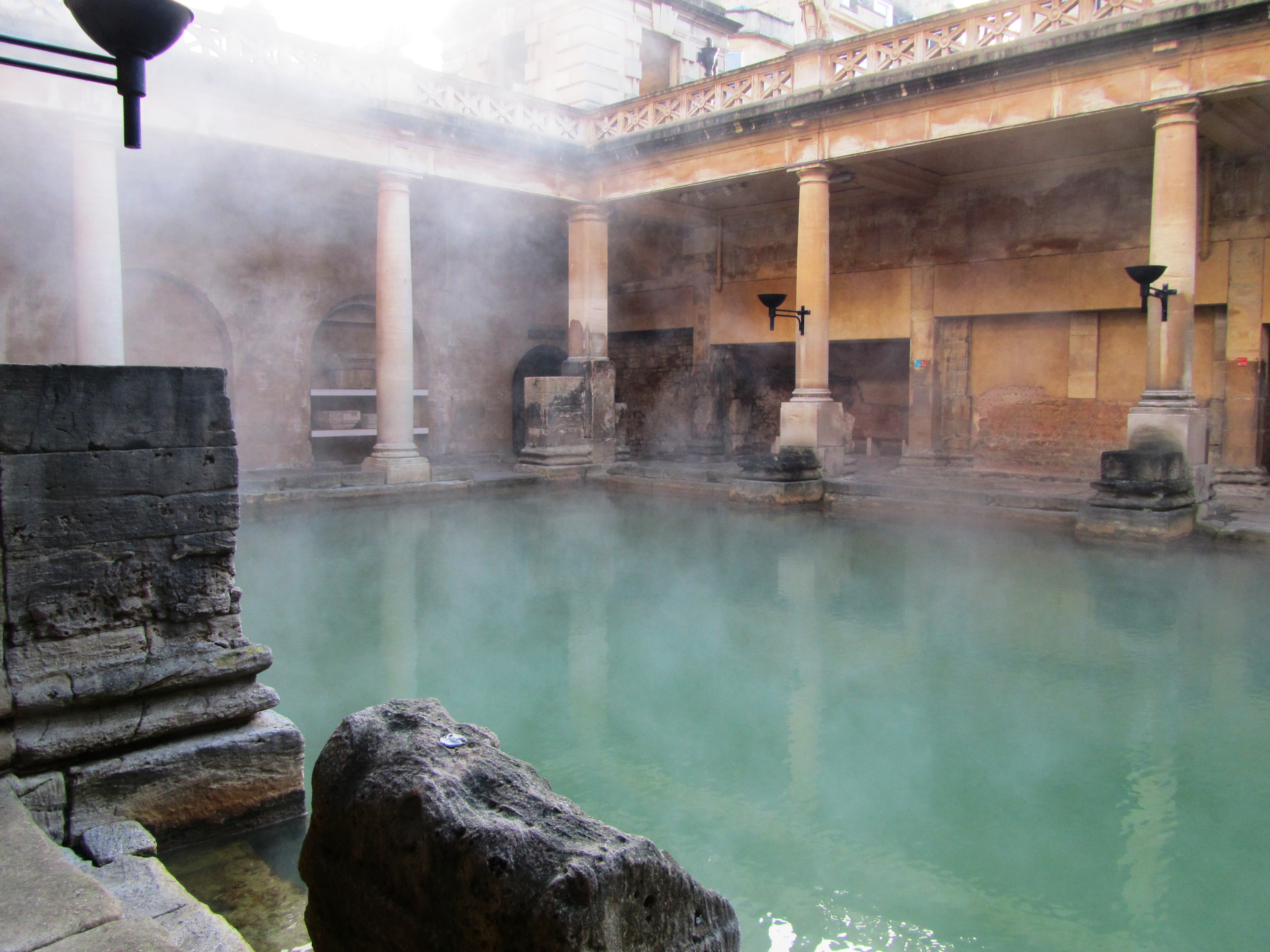
The imposing stucture of Bath Abbey looms over the now open Great Bath – originally the Great Bath would have been roofed, most likely with an arched roof.


IMG_7458
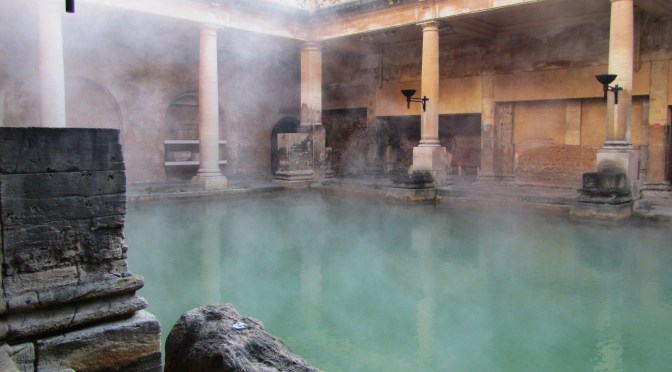
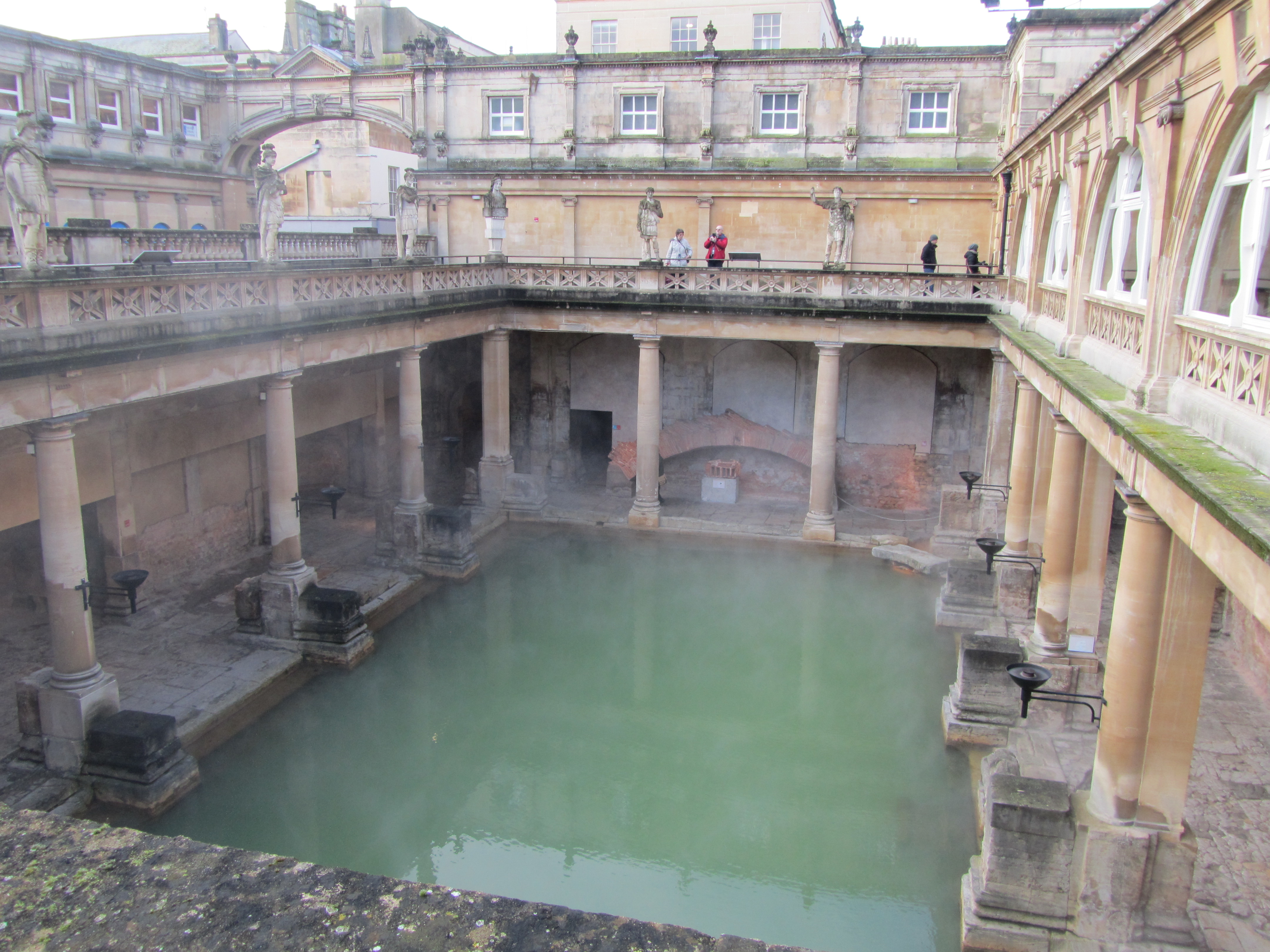
Looking down on the Great Bath.

Bath complexes in the Roman period were not simply places to wash and clean the body but also places to meet, socialise, to be seen and make those all important contacts.  At the Roman town of Aquae Sulis (Bath) the baths rose to prominence from the late first century AD as a result of the natural hot springs which were a feature of the landscape and worshipped for many generations prior to the arrival of the Romans.

As with so many aspects of the Iron Age/Celtic landscape of the time, the natural springs here had its own diety who was recorded by the Romans with the name of Sulis.  The Romans were very good at adopting and blending local cultures with their own as part of their overall colonisation package. For the Romans the local goddess Sulis had much in common with one of their own – Minerva.  Thus the hot springs became dedicated to the amalgamated goddess of Sulis Minerva.

IMG_7477
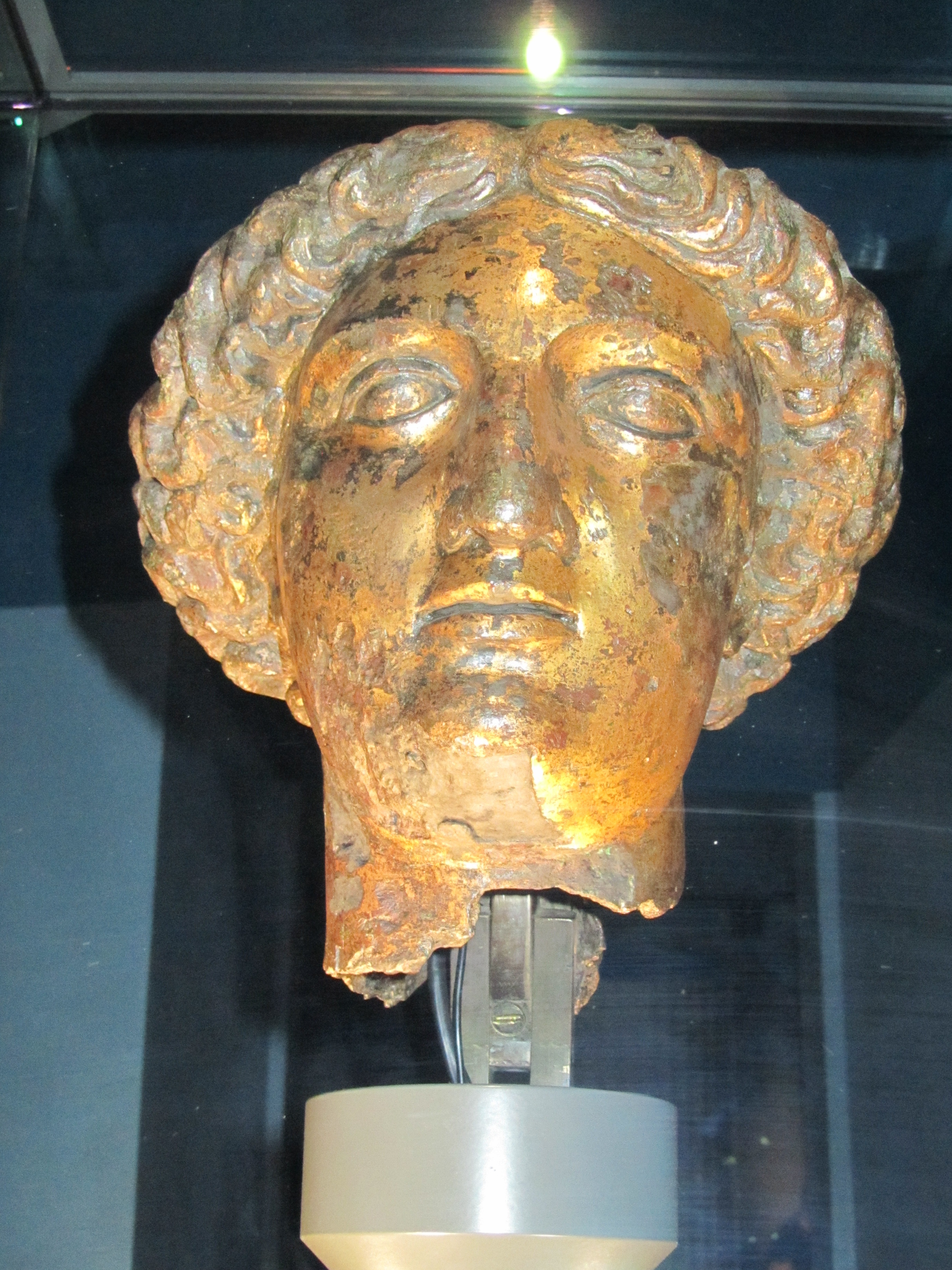
The very roman looking head of a statue believed to be Sulis Minerva herself – most likely stood within the sacred space of the actual temple.

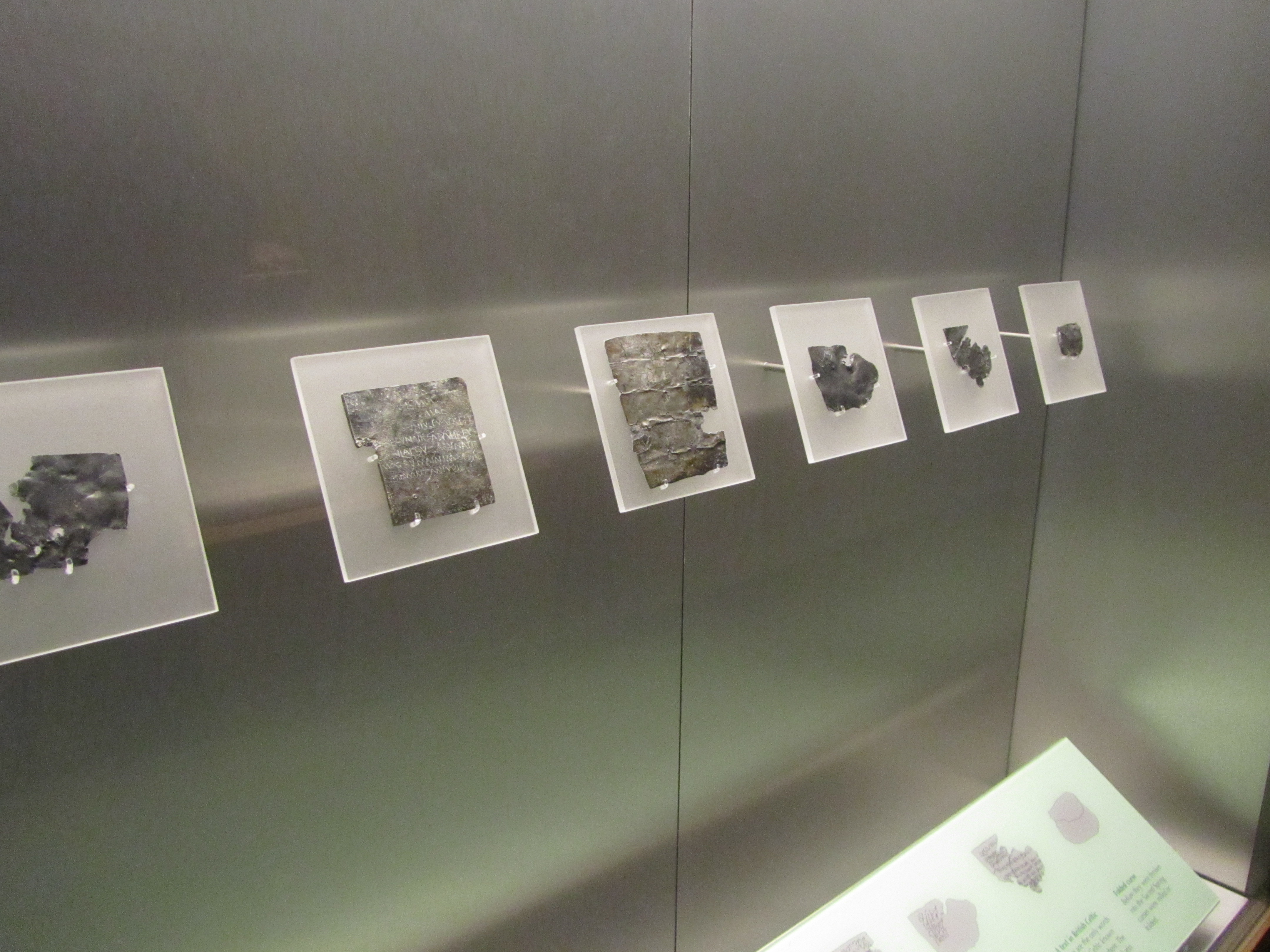
The success of Aquae Sulis (even the towns name pays homage to the goddess – ‘the waters of Sulis’) is down to it also being a place of pilgrimage.  People from all around would come to the town to make offerings or petitions to the goddess.  One such method to ensure the goddess knew what was required was to write a message on a sheet of lead.  For this purpose a trained scribe would be employed.  Once  the wording was just so the lead sheet was folded or rolled and then thrown into the sacred spring – a number of these have been recovered from the spring, mostly they were curses for relatively small wrong doings.

IMG_7474
A few examples of the inscribed lead sheets.

As well as the lead sheets, other gifts were found during excavations.  Thousands of coins (and even today people throw coins into the spring), jewellery, pewter dishes and cups usually inscribed with a dedication to Sulis Minerva.  The cups may have been used to drink the waters (as we continue to do so today) or as libation vessels.  The belief in the healing powers of the spring waters was an important part of the towns fame.

IMG_7469
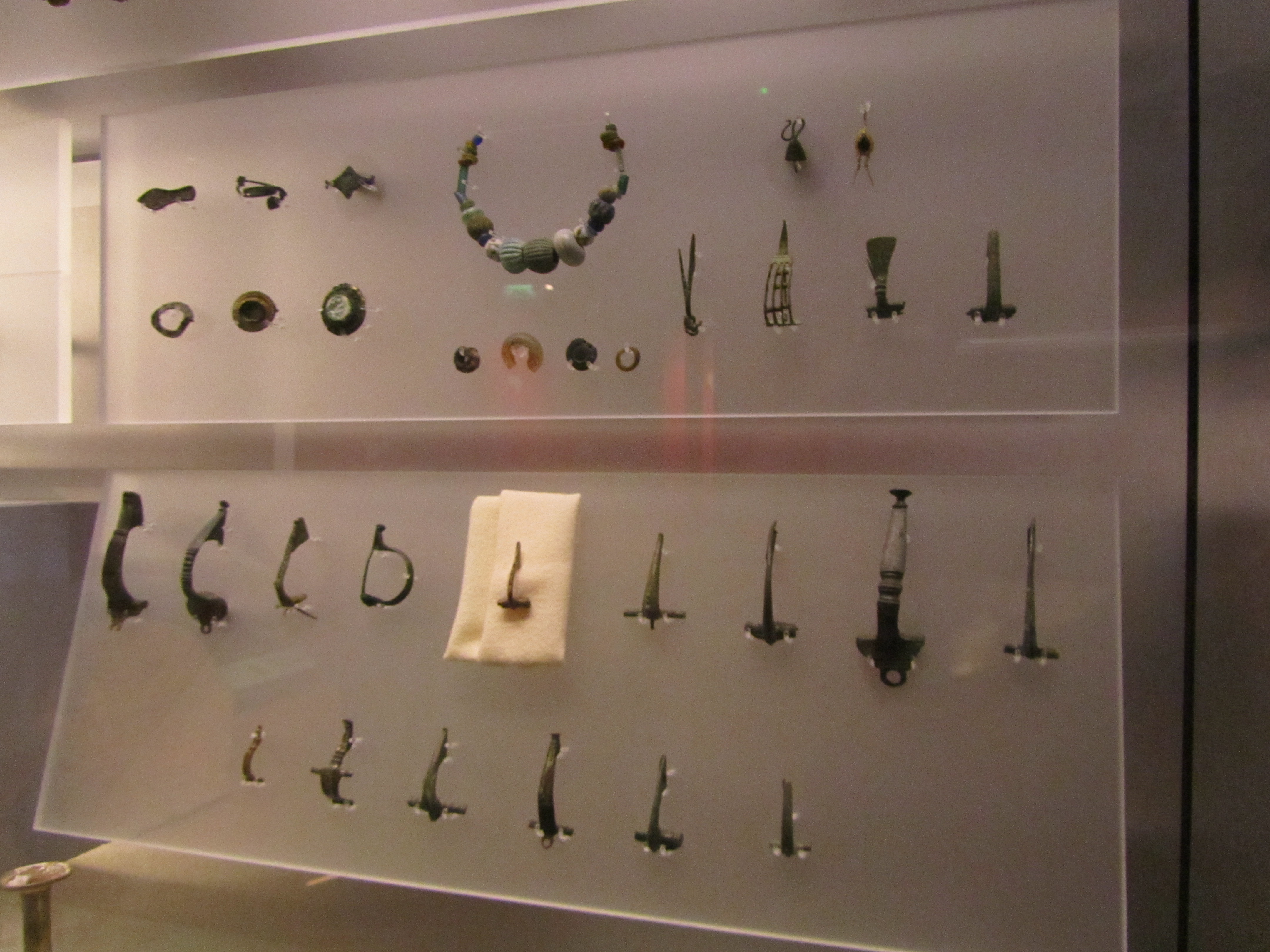
Some of the jewellery finds from the spring.  It is interesting to note the continuity of ritual in this act of depositing important items into a watery context.  For more on this read here.

IMG_7468
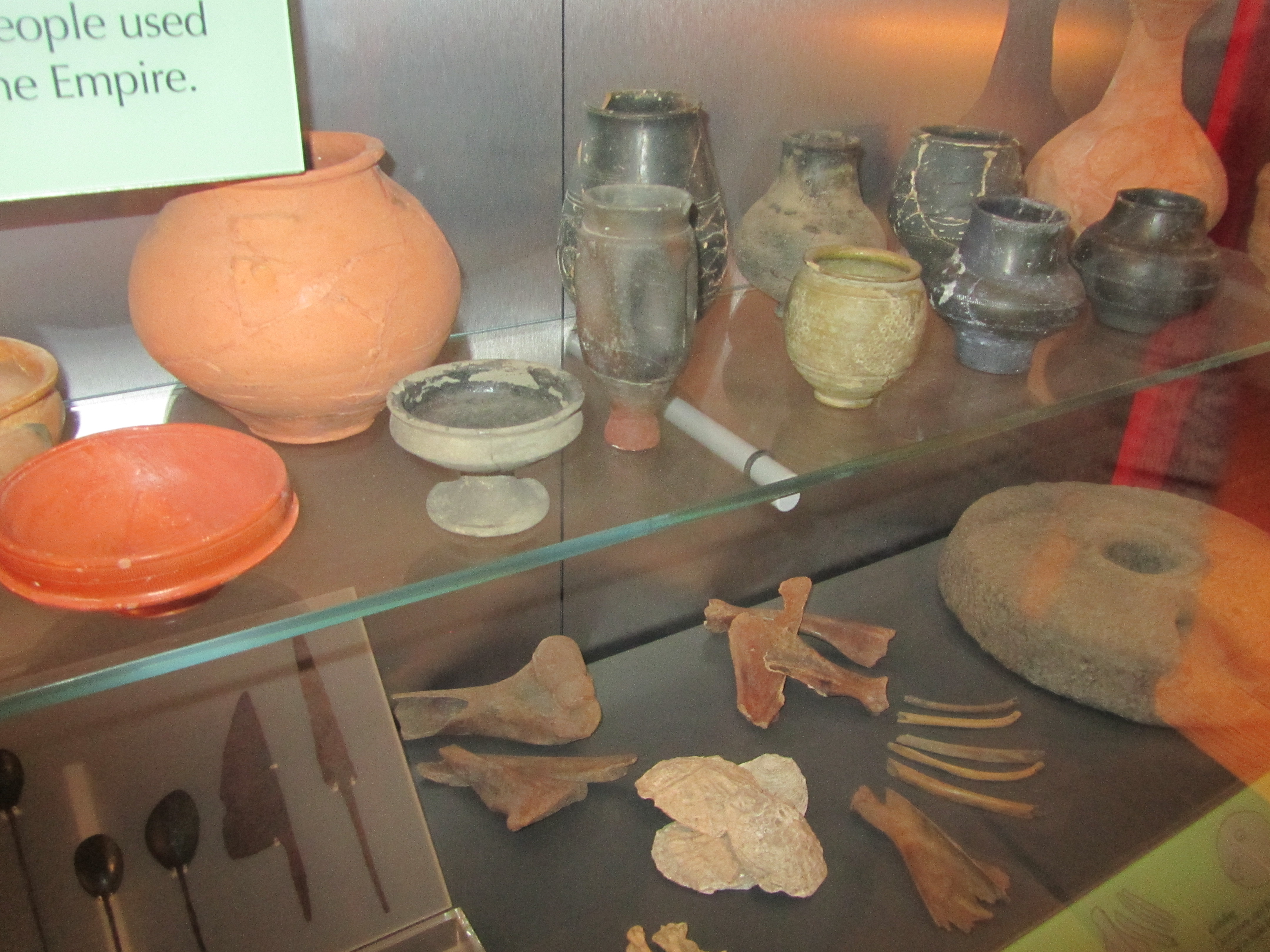
And a few of the more everyday items found during excavations – people lived and worked here too.

Besides Sulis Minerva there were within the temple complex depictions of other deities.

IMG_7471
A relief carving of the goddess Luna – the disc of the moon can be seen behind her head and she holds a whip for driving her chariot across the sky.  This carving would have decorated one of the buildings in the temple precinct. 
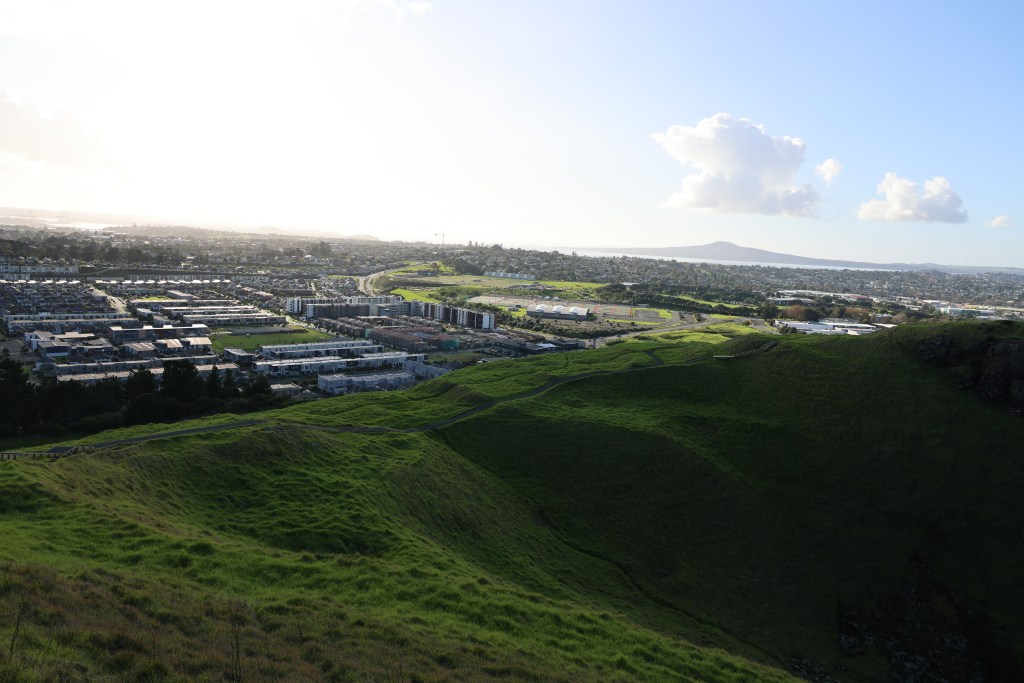
IMG_7463
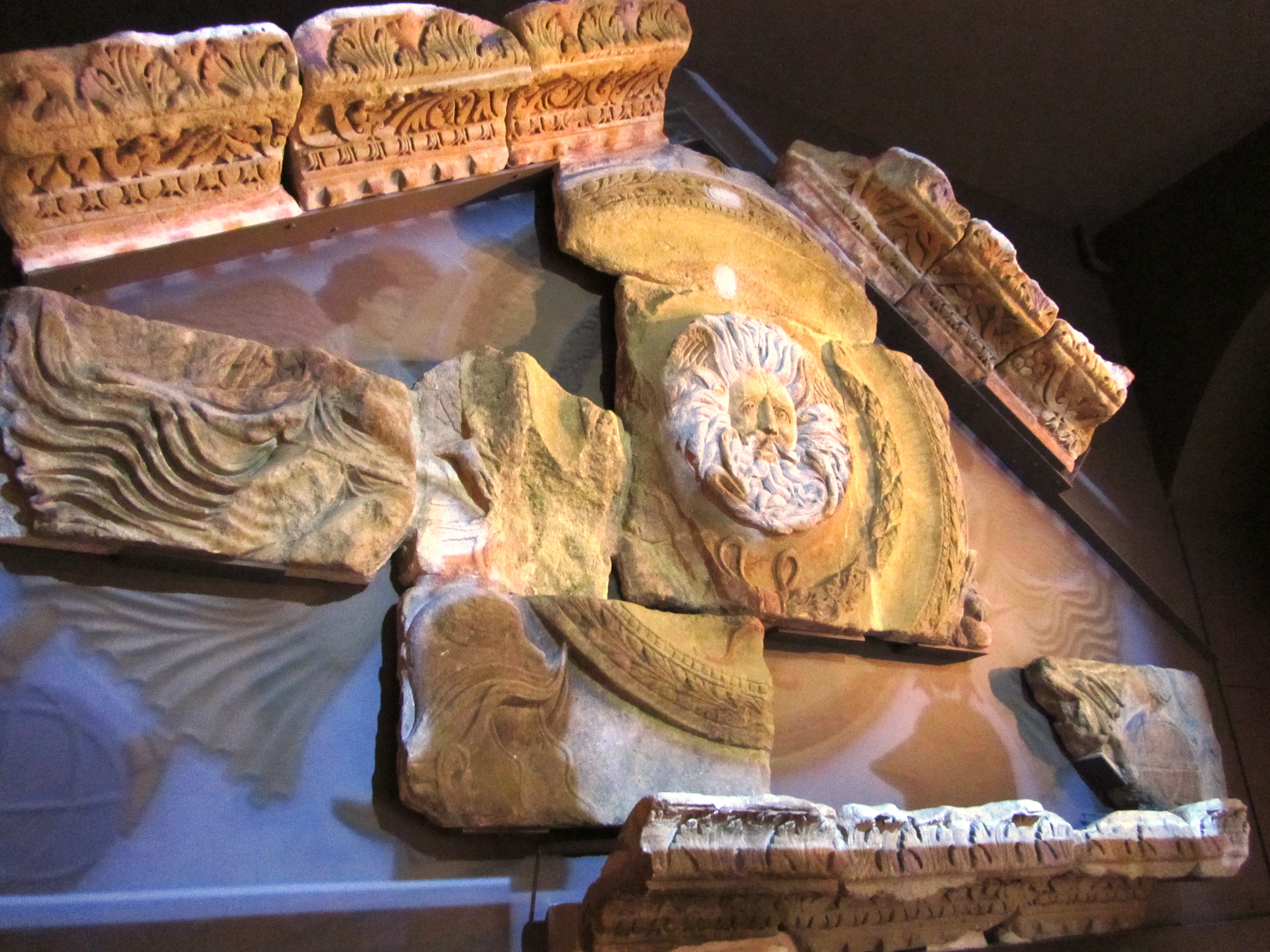
This massive pediment would have originally adorned the entrance to the temple of Sulis Minerva.  Although interpreted as a gorgon others have suggested it may in fact be Oceanus or even the sun god Sol (or Bel, ‘the shining one’ if you are looking for Celtic diety which is also the nickname of our heroines bodyguard and friend…). 

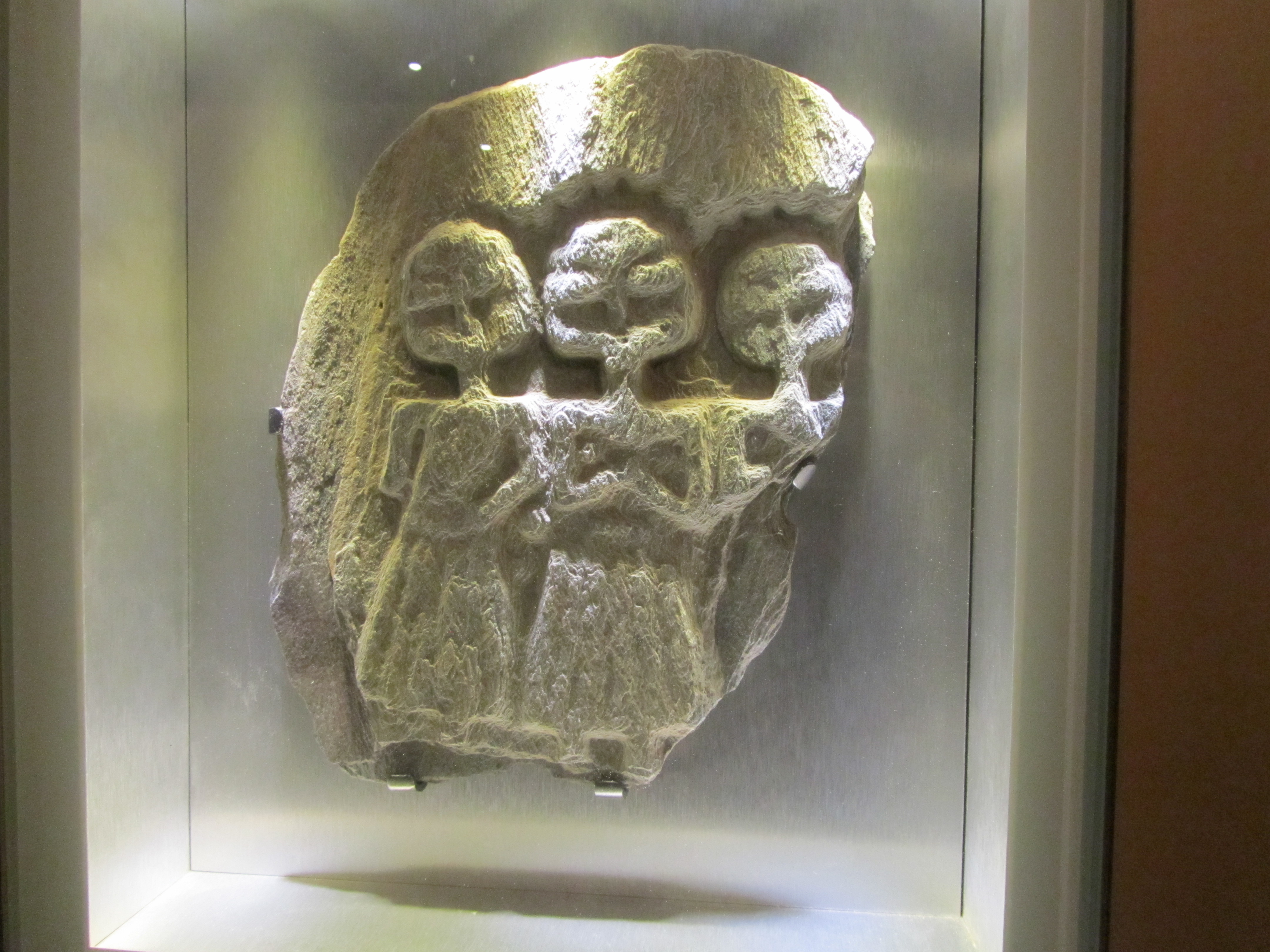
IMG_7472
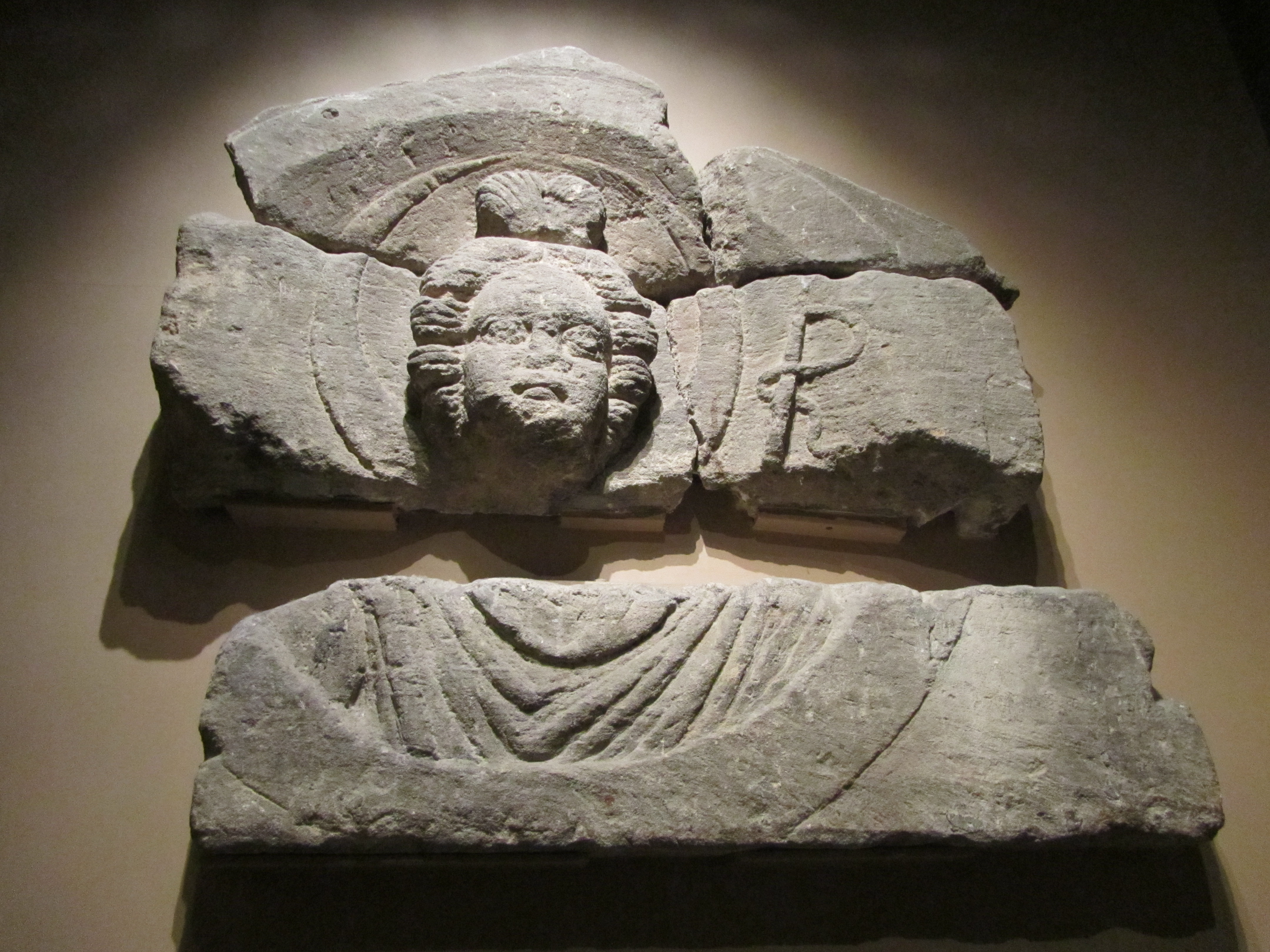
This unassuming relief carving is believed to depict the triple goddess, a distinctly Celtic personification.  As to who and what this may be is a complicated discussion but foremost is the ability of the goddess to have many faces – to be one and the same.  Often the triple goddess in modern pagan/wiccan practice refers to the maiden, the mother and the crone however there is no way of telling if this was the case in the past.   An interesting take on this can be read here.

The rituals in Roman religion took place mostly outdoors, the temples buildings were often small affairs where only the priests or priestesses would be allowed to enter.  Public ceremonies would have been conducted outside in the surrounding precinct.  Within the precinct there would have been altars dedicated to the diety set up by individuals in anticpation of a divine favour or to give thanks, these would have been decorated in offerings of all kinds or with bowls of incense.

“The temple, in its original late first century form, was a purely classical building set on a high podium reached by a steep flight of steps.  Its porch was dominated by four massive Corinthian columns supporting an ornate pediment.  Behind lay a simple room, the cella, where only priests could enter to tend the flames kept burning around the life-sized cult statue of Sulis Minerva” (from ‘The Essential Roman Baths” – a guidebook).

The above is a selection of the numerous altar stones and memorials found in the Roman layers during excavations.


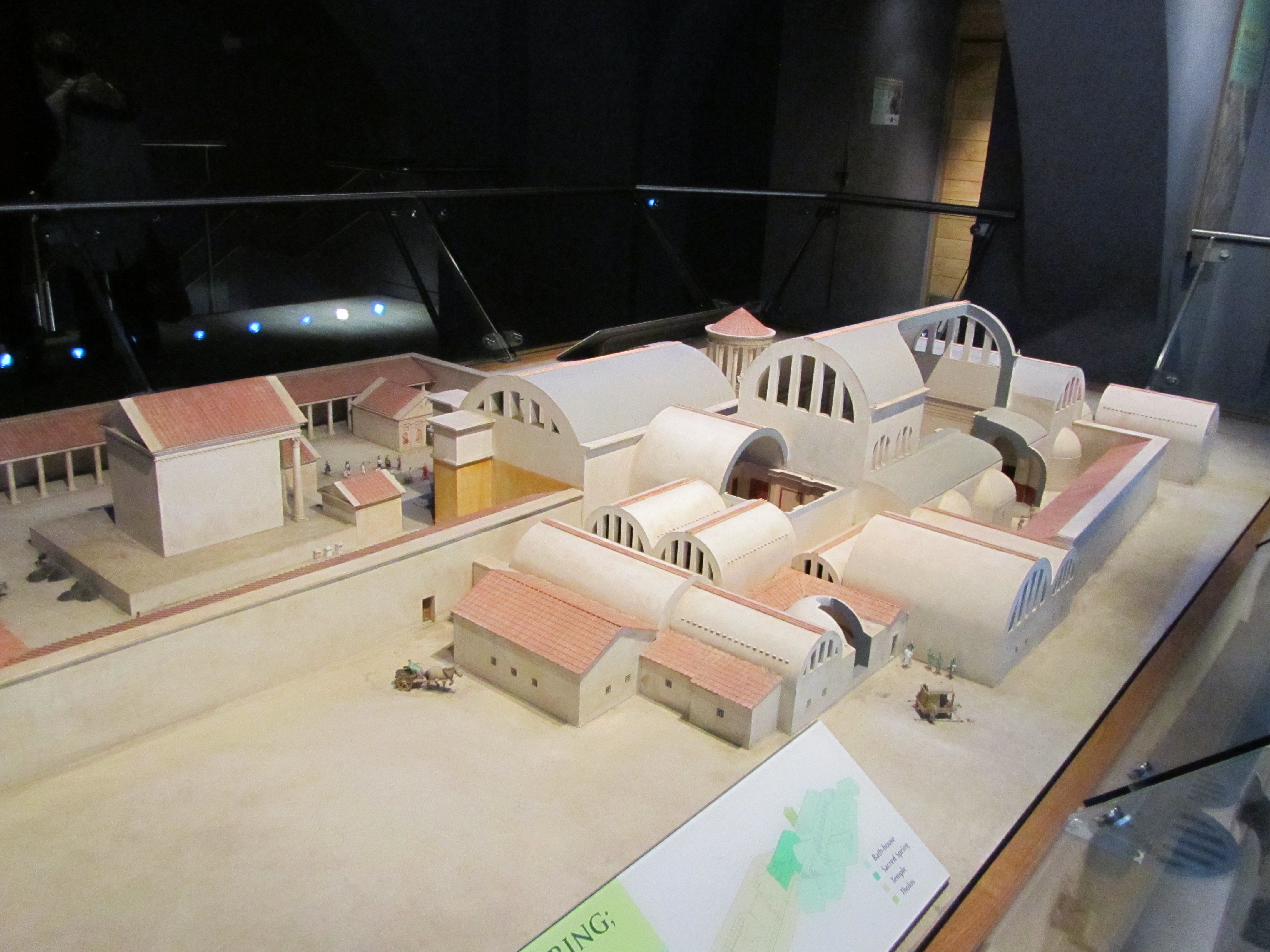
The complex at Aquae Sulis was quite extensive – with facilities for men and women to bath seperately which was rare and spoke volumes about the wealth of the town.  At the heart of the complex is the Great Bath, a rectangular swimming bath surrounded by a walkway with alcoves for people to sit and relax in.  The bath itself was and still is lined with 45 sheets of Mendip lead.


IMG_7460
A model of the bath and temple complex in its heyday. 


IMG_7479
The Great Bath – looking across to one of the alcoves.


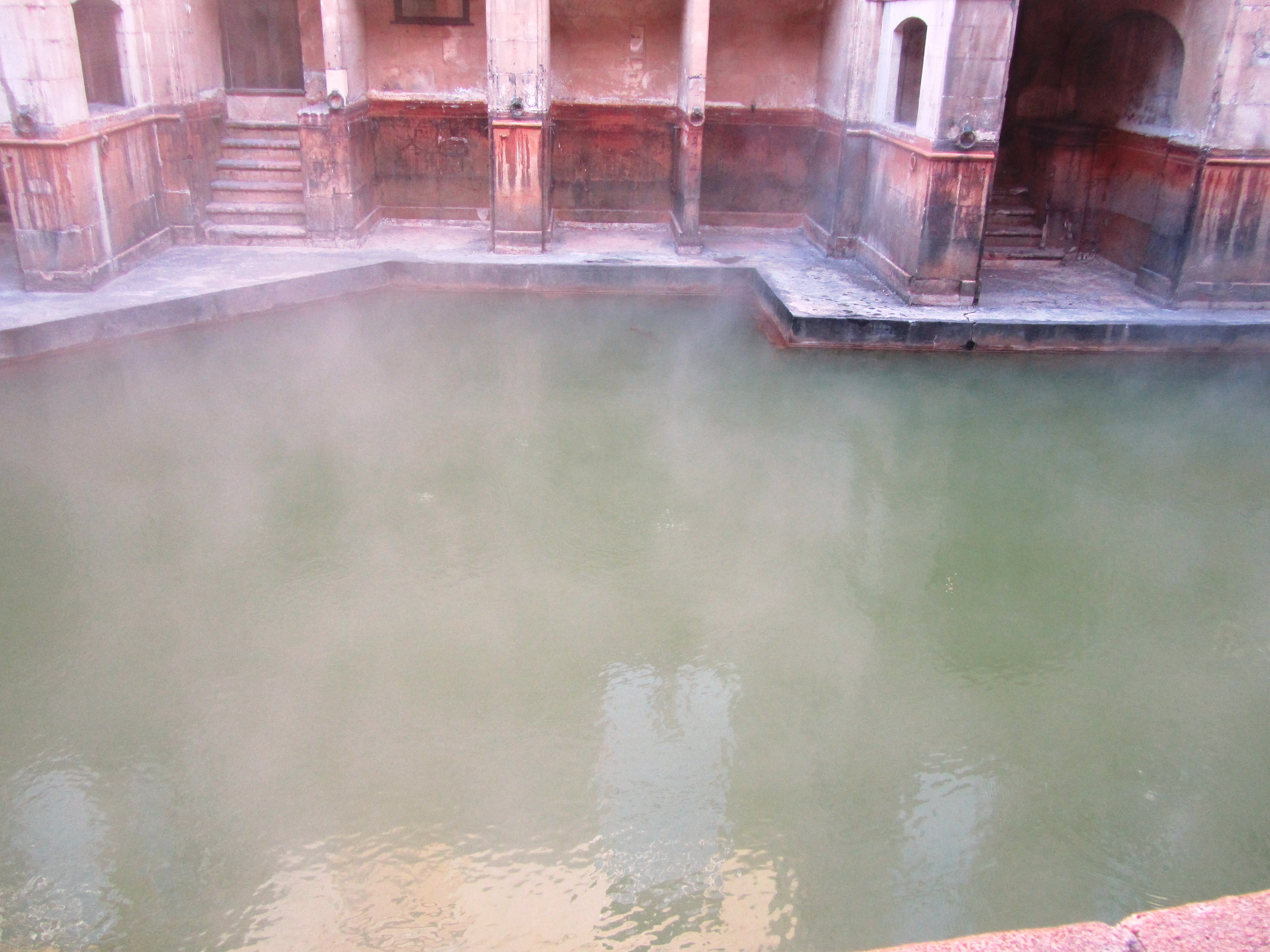
IMG_7484
The East Bath – a rectangular tepid bath – the doors would have led to heated rooms known as tepidariums. 


IMG_7486
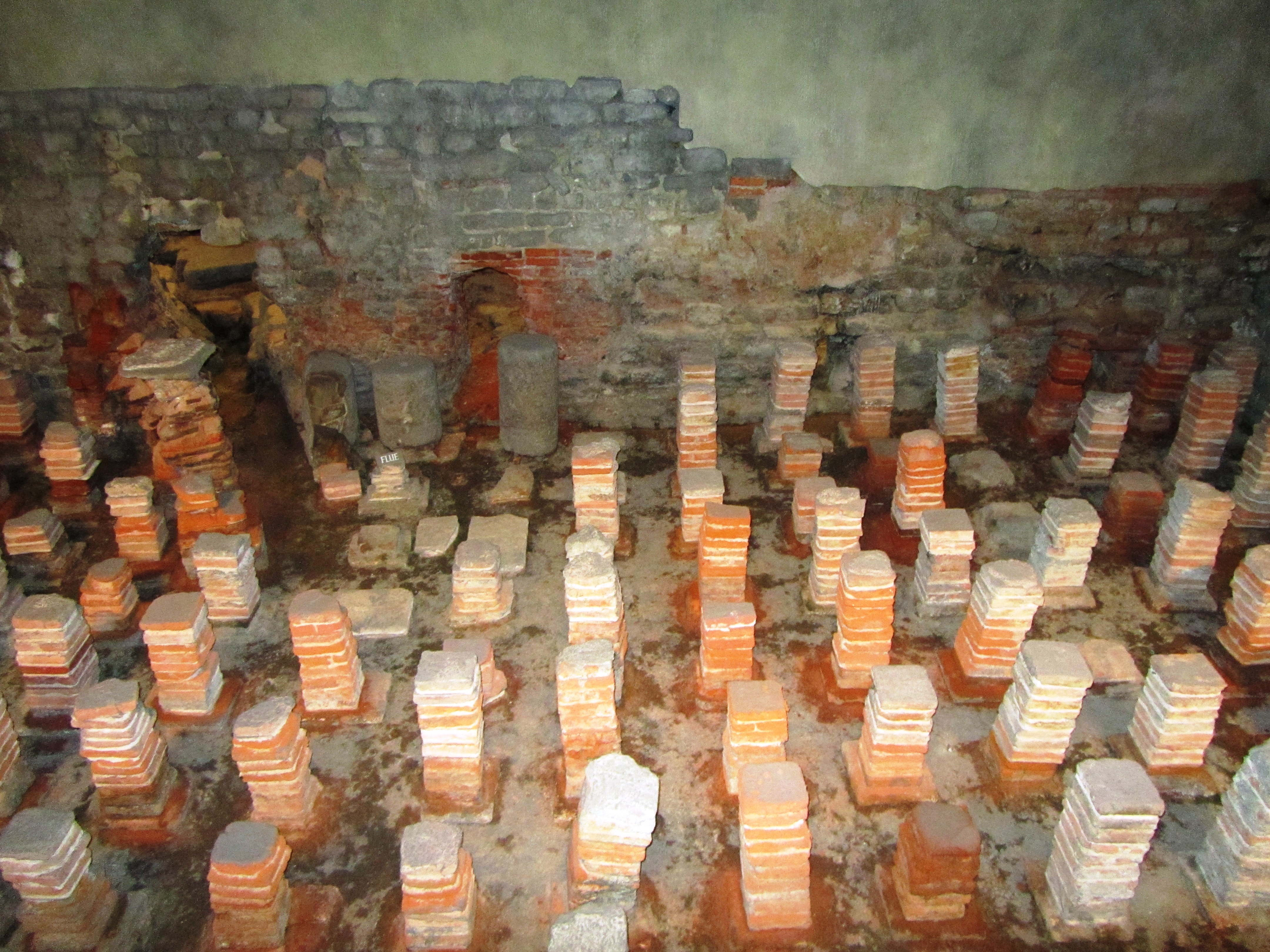
The remains of the extensive hypercaust system – ensuring visitors were kept warm and comfortable at all times.


IMG_7466
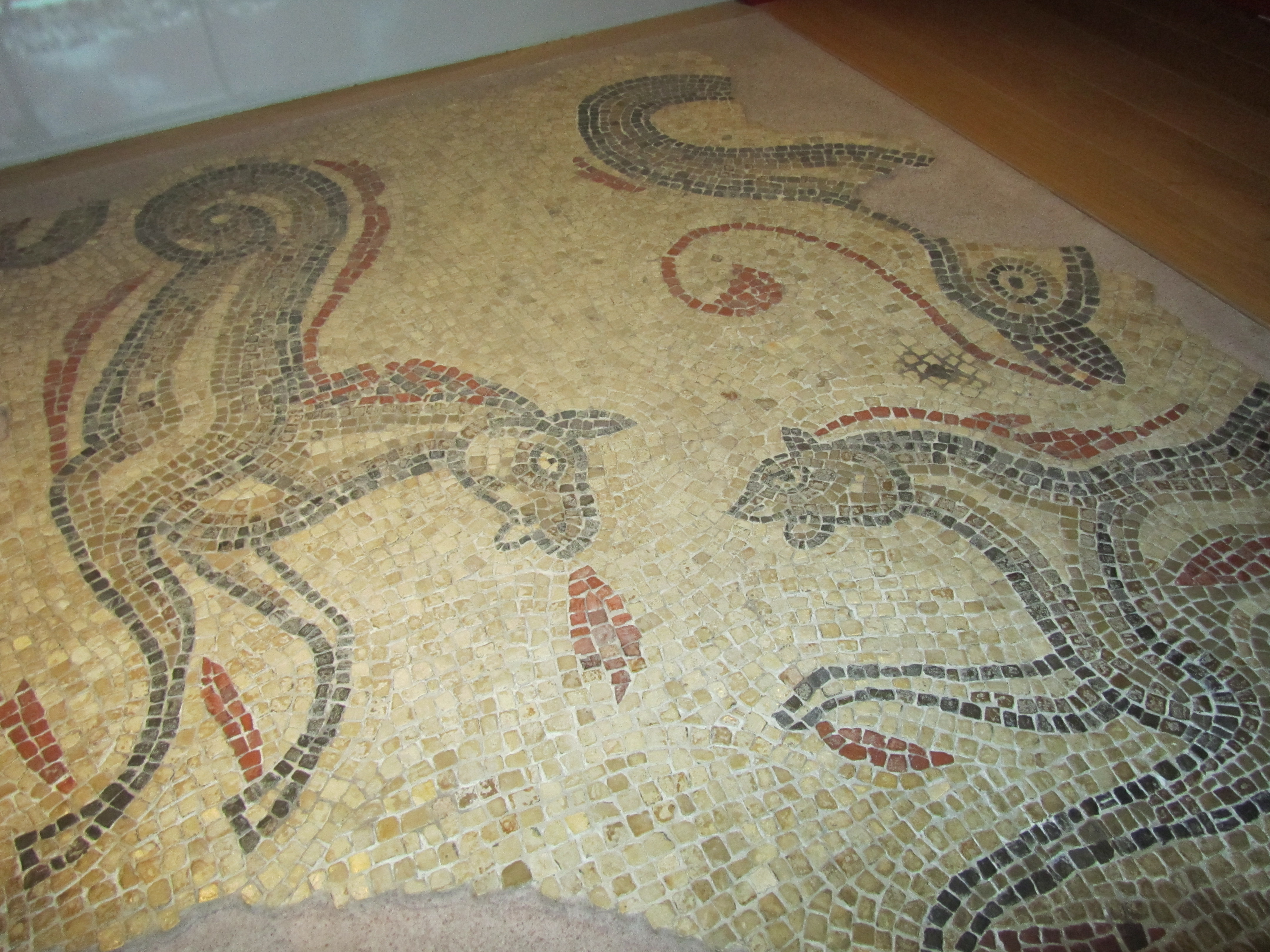
One of many mosaics which would have adorned the floors of the rooms within the complex.


IMG_7478
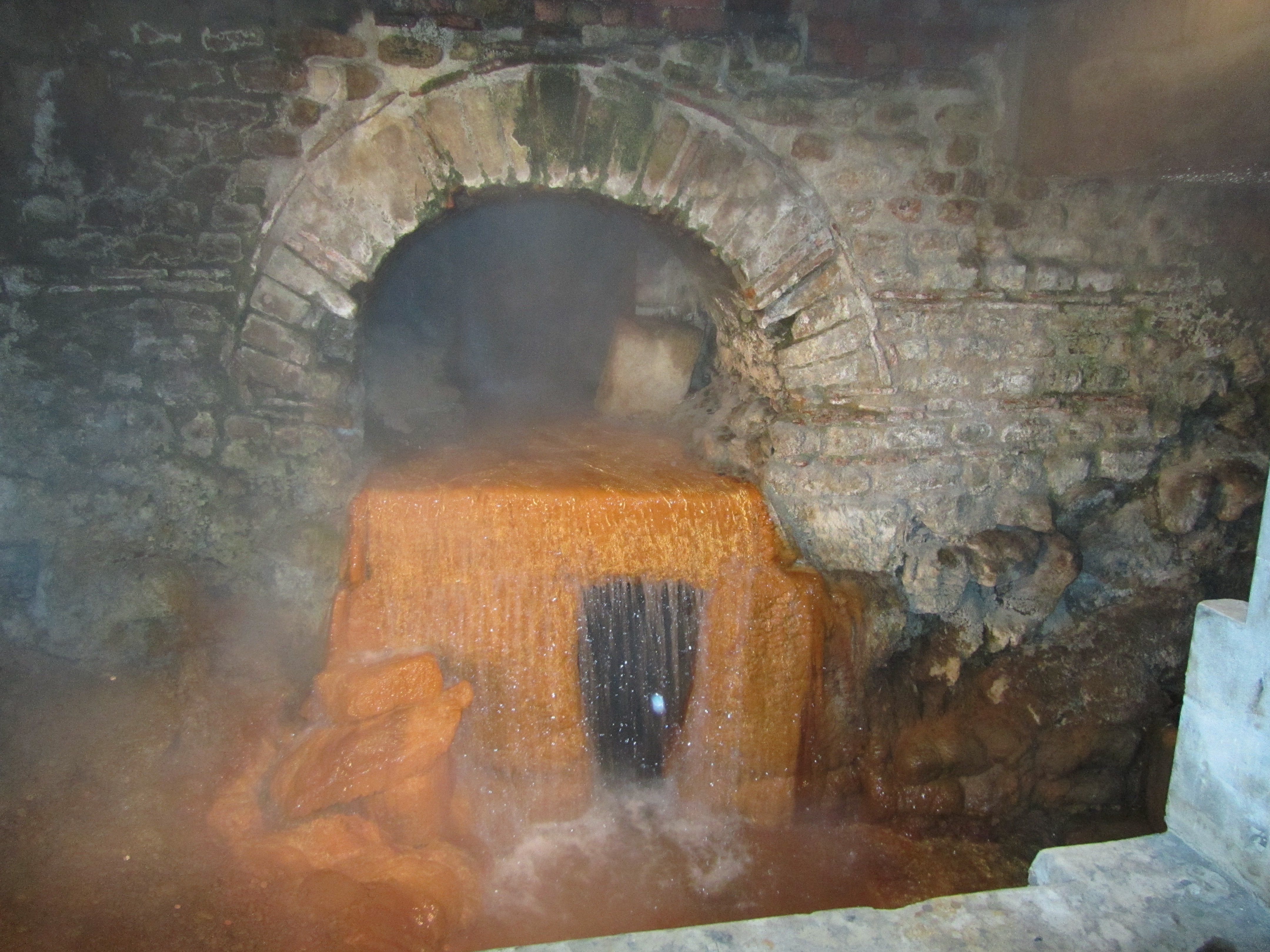
The arched overflow was part of the Roman engineering which kept the water flowing through the complex and still does today.


IMG_7485
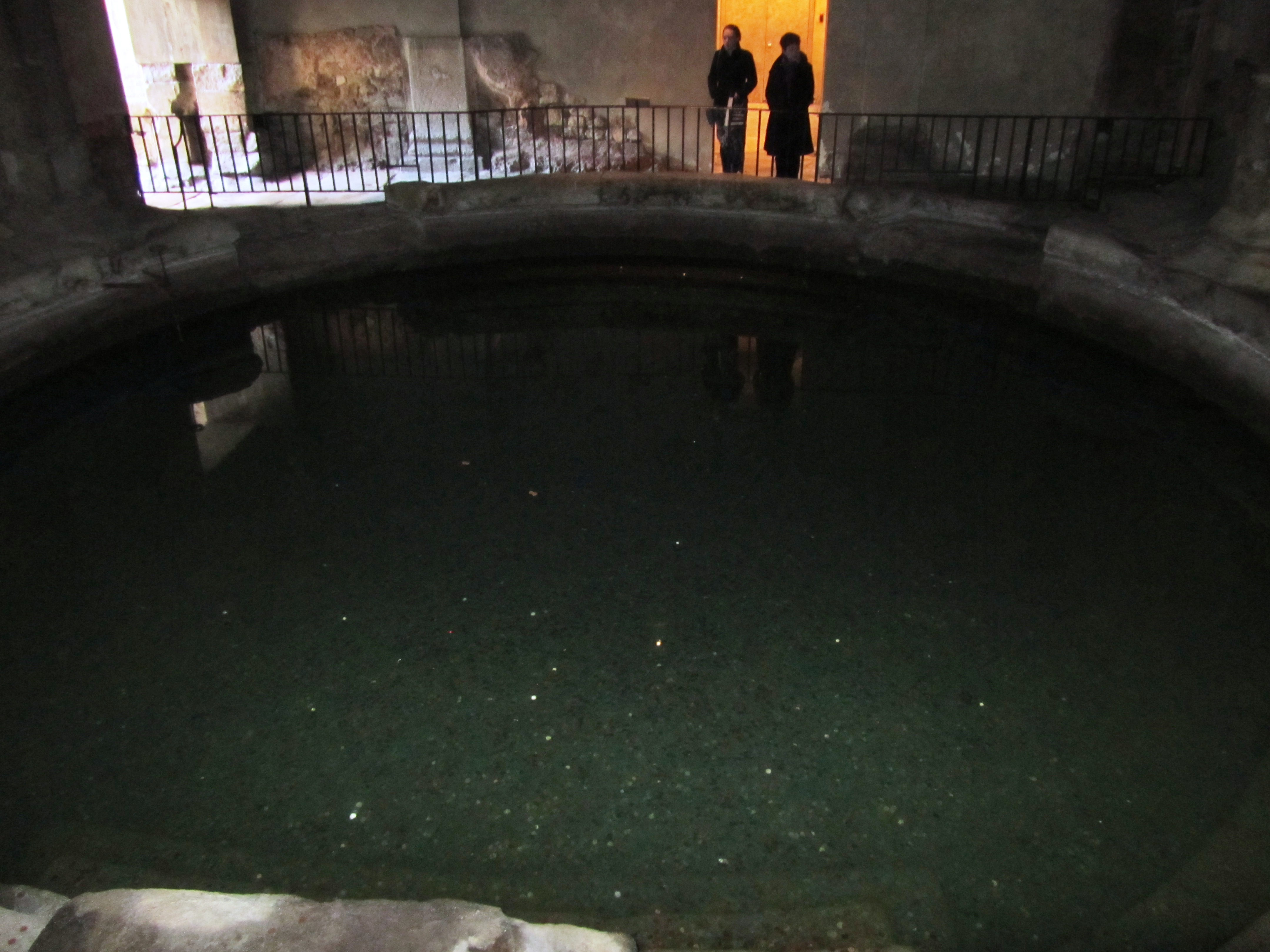
The dark interior of the circular bath, here bathers would complete their visit to the steam rooms with a cold plunge to rinse off – note the coins littering the bottom of the pool. 

The complex at Aquae Sulis was quite extensive – with facilities for men and women to bath seperately which was rare and spoke volumes about the wealth of the town.  At the heart of the complex is the Great Bath, a rectangular swimming bath surrounded by a walkway with alcoves for people to sit and relax in.  The bath itself was and still is lined with 45 sheets of Mendip lead.


IMG_7460
A model of the bath and temple complex in its heyday. 


IMG_7479
The Great Bath – looking across to one of the alcoves.


IMG_7484
The East Bath – a rectangular tepid bath – the doors would have led to heated rooms known as tepidariums. 


IMG_7486
The remains of the extensive hypercaust system – ensuring visitors were kept warm and comfortable at all times.


IMG_7466
One of many mosaics which would have adorned the floors of the rooms within the complex.


IMG_7478
The arched overflow was part of the Roman engineering which kept the water flowing through the complex and still does today.

IMG_7461


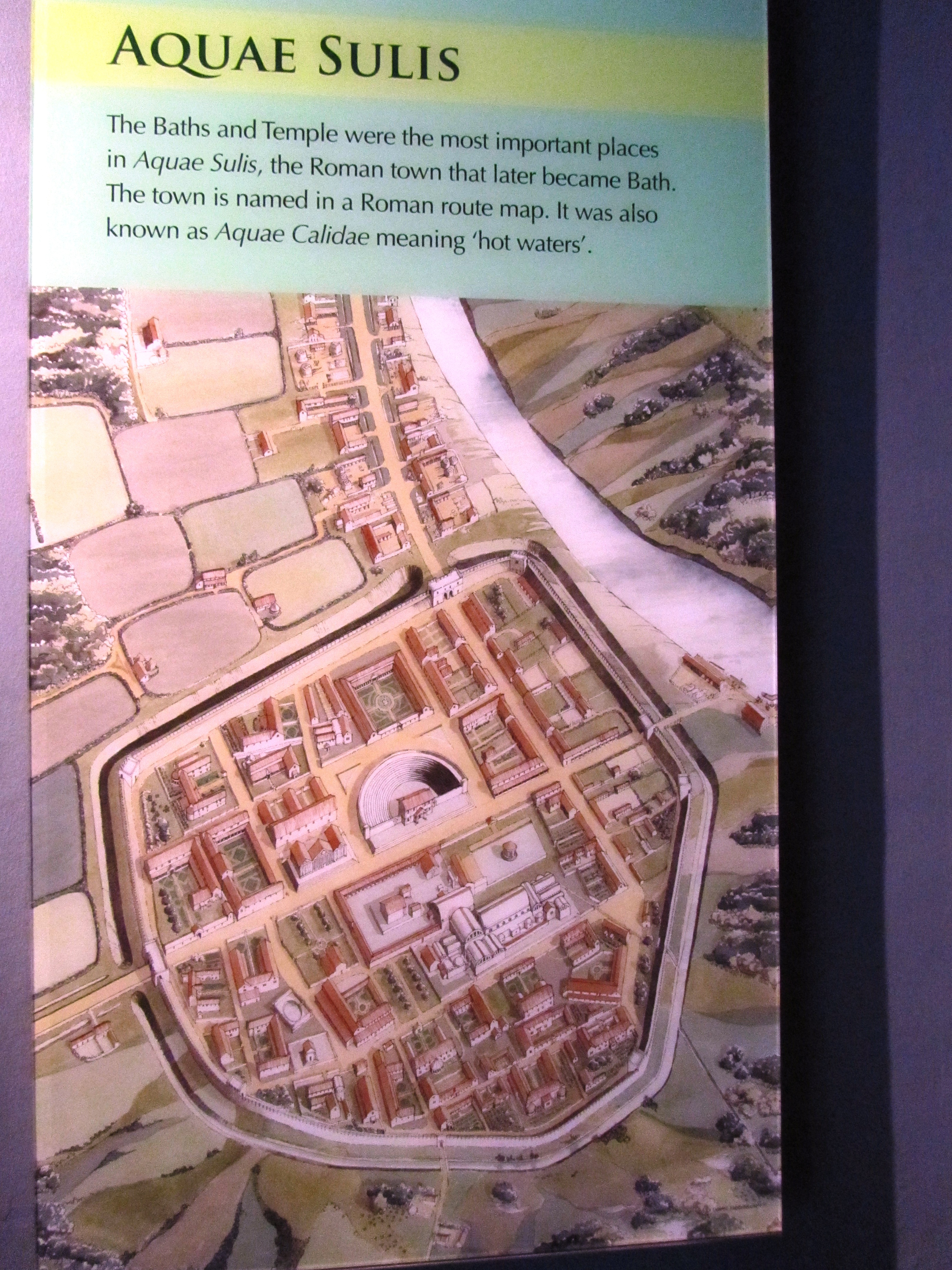
The above shows a reconstruction picture of how the town may have looked at its height based upon what has been discovered through various archaeological excavations.  In “A Roman Moon” astute readers will note that I did away with the amphitheatre, replacing it with a Forum.  Why? Well, to begin with the evidence for an amphitheatre is at this stage is quite thin on the ground and I am sure that a town of such importance would have had a Forum.  In addition, you can also put it down to the authors whim, a bit of ‘literary licence’.

The river running beside the town is the Avon, known then as Afon which is Welsh for river (amusingly making the name of the River Avon, the River River)…

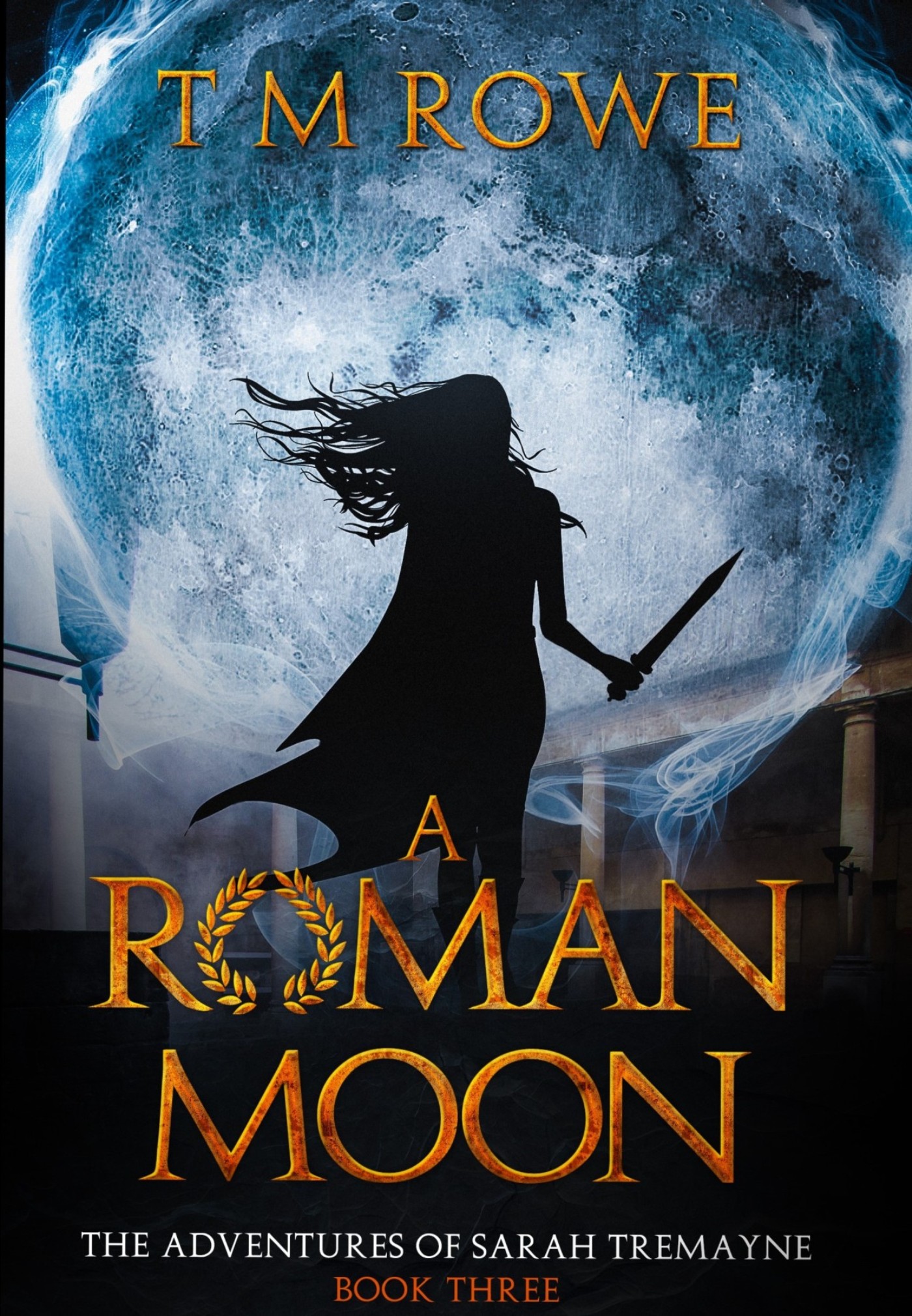
I hope you can see why the ancient town of Aquae Sulis inspired me to write ‘A Roman Moon’ – from the presence of Luna, the triple goddess and the sacred spring all play a part in Sarah’s story.


RM cover 1 (2)


The Roman Baths Official Website

Wikipedia – Roman Bath


Sacred Waters

The original article from which this post comes from was first published in June 2014 for The Celtic Guide, a free to download magazine.

Water – it is life giving and for some life changing.  It shows us a reflection of ourselves and without it we and all around us would cease to exist.  It is essential to our being.  Many cultures, past and present, have recognised this simple fact.  For the ancient Egyptians it was from water that all creation began, in ancient Mesopotamia water was regarded as a symbol of absolute wisdom.  In many situations water is given anthropomorphic qualities which are almost always female.  Interpretations of the meaning behind the names for the Rivers Dee and Don in Scotland range from ‘the goddess’ to ‘the mother’.  Identification with the female is common thread across the world’s cultures.


Today the most sacred river to Hindus is the river Ganges; it is worshipped as the goddess Ganga who descended from heaven to earth.  To bathe in the waters of the Ganges is to wash away your sins; her waters are seen as both pure and purifying.  It is also believed the Ganges flows in heaven, earth and the netherworld and is regarded as a crossing point of all beings, the living and the dead.  Thus it is very desirable to have the ashes of a loved one scattered on the Ganges.  This belief in the sanctity of the river, and all rivers, began early in Indian culture and has continued uninterrupted for several thousand years.


Heading far to the west and much closer to home, we arrive in Britain and ask ourselves was water important to our ancestors?  The answer would be a definitive “Yes”.  In fact, the importance of watery places in Britain’s past is a given for archaeologists and other like-minded individuals.  There have over the years been numerous outstanding excavations and archaeological finds to back this up.


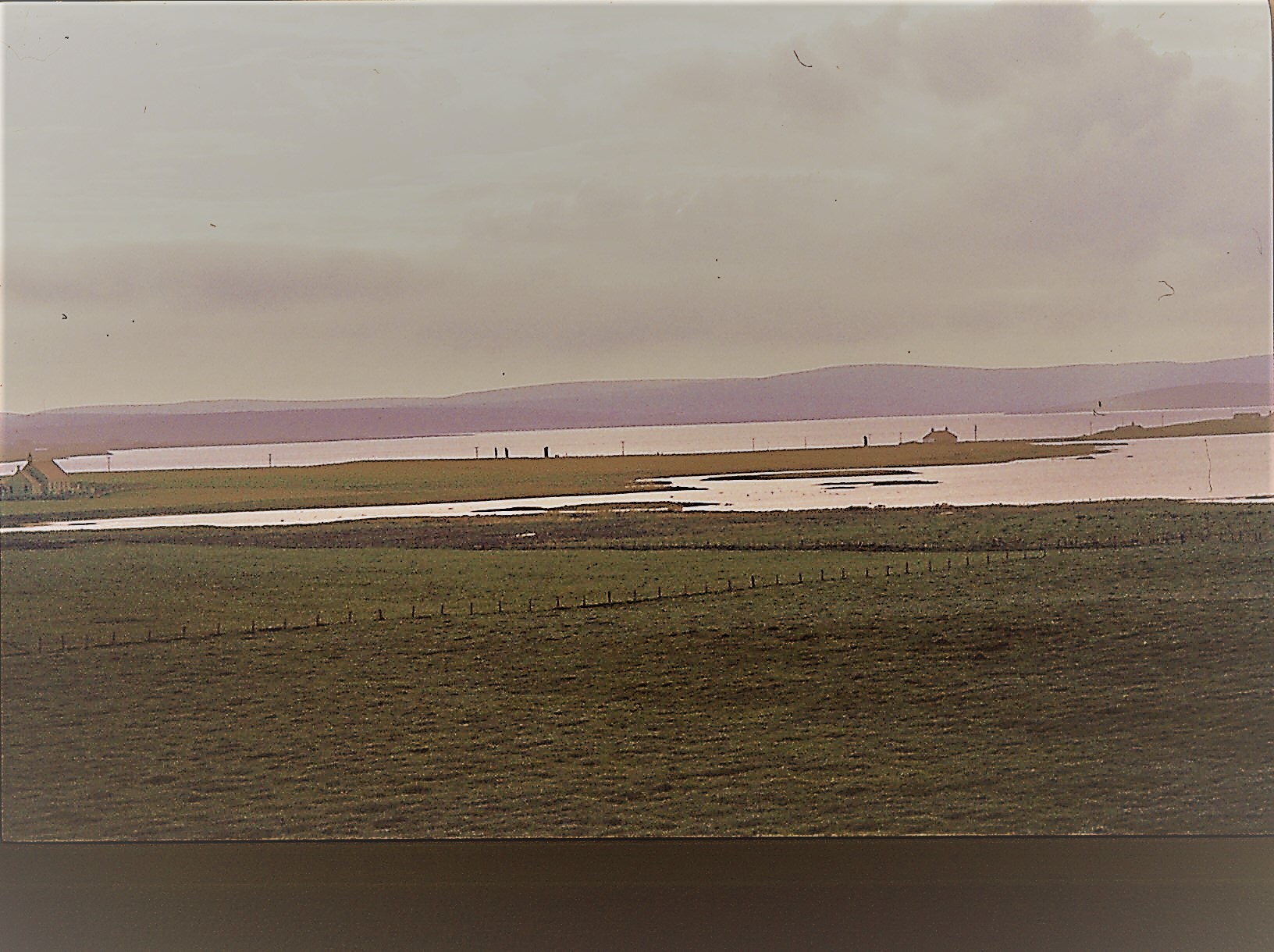
The relationship people had with water in both Britain and Irelands past can be seen as far back as the Neolithic.  During this time people were beginning to make their mark on the landscape constructing sizable and (fairly) permanent monuments such as Stonehenge, Ness of Brodgar and New Grange.  Such sites are usually part of a wider ‘sacred’ landscape, often surrounded by many other monuments of varying type and size but what is of interest to us here is their relationship to water.  Thus the Stonehenge sacred landscape is bounded by the River Avon in the south and east, whilst New Grange and associated sites are nestled in what is known as the Bend in the Boyne (the river Boyne).  The Ness of Brodgar, as well as a large number of other sites, in Orkney is situated on thin strip of land with the saltwater Loch of Stenness on one side and the freshwater Loch of Harry on the other.  In this landscape there is very little to differentiate the water from the sky.


loch harry
The view from Maes Howe in Orkney looking towards the Stones of Stenness and what would later be known as the Ness of Brodgar in the top right corner.  This sacred landscape is bounded by expanses of water. (please excuse quality of the photo – it was taken a long time ago before digital…)


The reasons for the placement of such sites near rivers may never be fully understood but it is possible to say the symbolism is inherent but as Francis Pryor says in his book Britain BC (2003) “…it would be very easy to oversimplify our reading of that complex, layered symbolism that contained within it the shared histories of the people who created, nourished and guarded it.  To say, for example, that water symbolised a soul’s journey to the next world is banal.  It may have done – indeed it probably did – but it also marked boundaries in this world, and provided corridors along which people could move without crossing too many tribal frontiers.”


The Neolithic would have been a very alien world to our modern minds and trying to assess the symbolism of a natural phenomenon is fraught with numerous pitfalls.  Regardless, it is important to take heed the role of waterways in Neolithic life.  The lifestyle of the Neolithic would have been reasonably mobile, with people moving around the landscape following the seasons. 


Where people moved around the land, pathways between places would be emphasised, and monuments placed beside them.  Given the scale of many Neolithic monuments, they may also have been placed at locales where groups were in closer proximity at certain times of the year.” (Barnatt J. ‘Monuments in the Landscape: Thoughts from the Peak’ Prehistoric Ritual and Religion. Eds. A Gibson and D. Simpson).

After the Neolithic we have the Bronze Age, a period heralded, as the name would suggest, by the appearance of metal objects (bronze, copper and gold) within the archaeological record.  We also see an increasing (albeit gradual) degree of sedentary behaviour, with family type groups concentrating their activities at permanently laid out farms and fields.  Many (but not all) of the monuments of the Bronze Age began to reflect this more localised behaviour with smaller monuments being built by these groups for their own use.  The monuments are now found in all manner of landscapes and it would it appear that water is no longer of importance.  However, excavations at sites such as Flag Fen, Lincolnshire and the finds from Duddington Loch, Edinburgh or the Rivers Thames, Trent or Witham to name a few all suggest that watery places were still of great ritual importance.

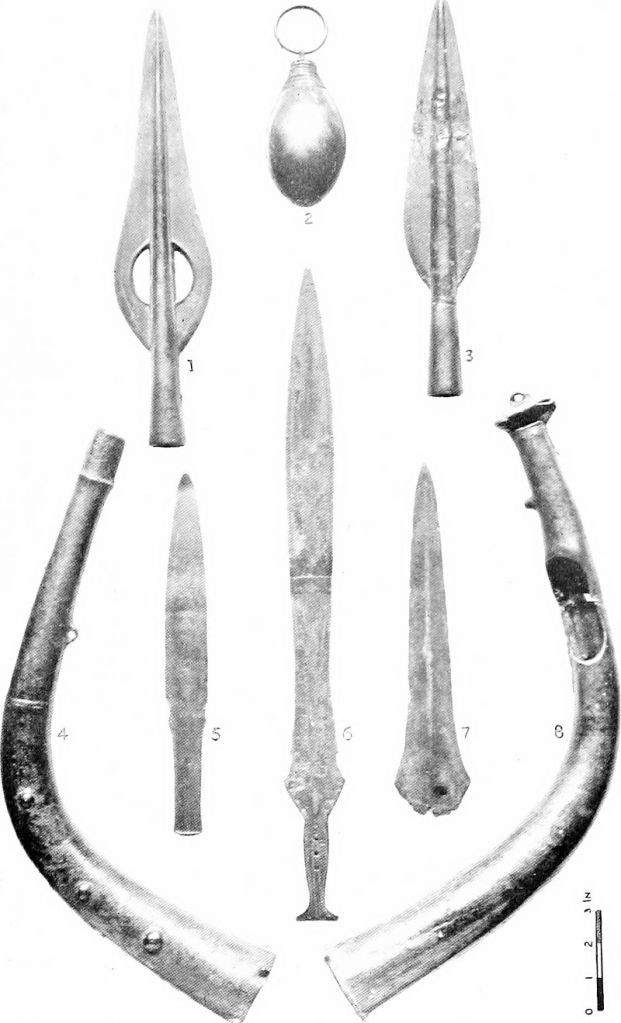
In the early days of discovery such finds were often attributed to accidental loss however the excavations at Flag Fen have seem to indicate the majority of the items deposited were done intentionally and with no desire to retrieve them.  In 1984 Francis Pryor began excavating a post alignment at Flag Fen.  It was 10m wide and consisted of five roughly parallel rows of posts.  During the 1989 dig season the excavators began to find some unusual artefacts, some three hundred and twenty metal objects, mostly made of bronze and dating from the Bronze Age.  Swords, daggers, jewellery, axe-heads, spearheads and pieces of a metal shield were amongst the artefacts uncovered.  Interestingly every object had been deliberately damaged before being placed carefully into the water.  The deliberate destruction of artefacts prior to deposition at Flag Fen is not an isolated example.


At Duddington Loch a number of bronze objects were found, mostly weapons, and once more all had been broken or burnt prior to deposition.  Still in Scotland, Late Bronze Age swords were found in the River Tay and three Late Bronze Age shields were recovered from a bog in Yetholm, Roxburgshire.  Another feature of Bronze Age deposition is its longevity, At Flag Fen and the bog sites of Ireland such as Dowris, Co. Offaly; Mooghaun, Co. Clare and the Bog of Cullen in Co. Tipperary deposition did not occur as a single event rather it was the result of many individual events over a number of years.  In the case of the Irish bogs over two hundred bronze artefacts have been found, deposited over a number of years.


A_guide_to_the_antiquities_of_the_bronze_age_in_the_Department_of_British_and_mediæval_antiquities_(1904)_(14596843508)
A few of the items recovered from Dunaverney Bog in County Antrim, Ireland.  From ‘A Guide to the Antiquities of the Bronze Age in the Department of British and Medieval Antiquities’ 1904 Charles Hercules – The British Museum.


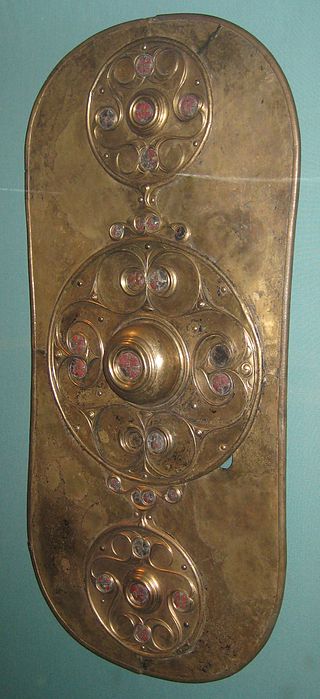
The tradition of deposition in watery places continues into the Iron Age. Still the weapons appear in rivers, for example, the Battersea Shield found in the River Thames, a horned helmet from under the Waterloo Bridge and the Witham Shield from the River Witham. An excavation at Fiskerton in Lincolnshire also discovered a causeway that led to Lindsey a significant patch of dry land which is essentially an island bounded by the rivers Humber and Trent to the north and east and the Witham and fens to the south.  Here the archaeologists found swords, spearheads and other artefacts deposited into the wet ground.  Interestingly it has been suggested that the deposits coincided with periods when the causeway was being rebuilt around the time of lunar eclipses.


320px-British_Museum_Battersea_Shield
The Battersea Shield – photo by Babelstone (CC0 commons.wikimedia.org)


Similar to the Bronze Age, the bogs and lakes of the west seem to be the place of choice for ritual deposition.  The most well known is Llyn Cerrig Bach (originally a lake) in Anglesey.  From here some one hundred and fifty objects were recovered.  The finds from Lylyn Cerrig Bach are regarded as the most important collection of La Tene style metalwork in Britain to be found.  The artefacts found included two slave chains, swords, spearheads, a bronze trumpet, cauldrons, iron bars, blacksmith tools and animal bones.  Once more all had been deliberately broken and deposited over a long period of time, approximately from 300BC to 100AD.  In fact there may have been a double whammy of sacredness here, as it has been suggested that islands represented sacred spaces because they were bounded by water on all sides.

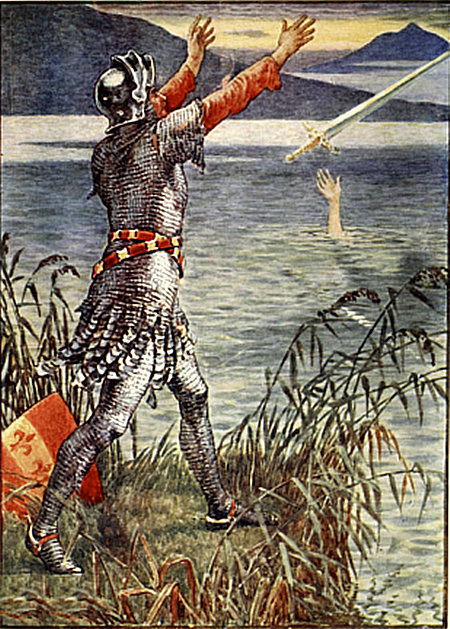
This connection between water and the deposition of weapons is embodied by the later legends of King Arthur.  In Malory’s version King Arthur instructs Sir Bedivere “…take thou Excalibur, my good sword, and go with it to yonder waterside, and when thou comest there I charge thee throw my sword in that water”.  For some this could be regarded as a cultural memory, a continuation of a ritual performed by our ancestors for many generations.


King_Arthur_Sir_Bedivere_throwing_Excalibur_into_the_lake_by_Walter_Crane
Sir Bedivere throws Excalibur into a lake – painting by John Garrick 1862.


But it is not only lakes and rivers that were important there were also the peat bogs.  Finds from peat bogs are of a relatively common occurrence given the use of peat for fuel.  Of course the most famous of all bog deposits are the human bodies.  Bog bodies are well known in several European contexts for example, Tollund Man found in a Danish bog.  However, there are also examples from Germany, Holland, Norway and Sweden.  The tradition goes right back to the Mesolithic and culminates in the Iron Age and early Roman period.   


One of the most dramatic discoveries in Britain was that of ‘Lindow Man’ found in a peat bog at Lindow Moss in Cheshire.  The remains were of a young male (mid 20s) who had been violently killed from a blow to his head, strangled and a cut to his throat.  A detailed examination of the remains suggests he was of a high status.  His teeth were healthy, his nails manicured and his beard and moustache neatly trimmed, in addition there were none of the usual signs on the bones that he had ever done any heavy manual labour.  Radiocarbon dating has his death and deposition at somewhere in the mid first century AD.


Many reasons for such a grisly deposition have been put forth, from murder and violent robbery to human sacrifice.  Sacrifice in the Iron Age was well known and took many forms either as the sacrifice of an object, an animal or a person. 


“The Celts did not love their deities; they made contracts with them as they did in their own society.  By making offerings into pits, wells, springs, peat bogs and all watery places, no doubt with the solemn attendant ritual, the druids were in fact ‘binding’ the gods into making reciprocal gifts to mankind…” (A Ross ‘Ritual and Druids’ in The Celtic World ed M Green).


It would seem that the greater the ‘ask’ the greater the sacrifice.  The Lindow man was deposited at a time of turmoil in Britain, northern England was not properly subjugated by the Romans until well into the first century AD, perhaps he represents a last ditch attempt by the Druids asking for the Gods intervention?  Perhaps his grisly death is a reflection of ‘destroying’ an object before it is deposited into its watery grave?  Throughout Britan and Ireland there have been almost two hundred documented cases of bodies found in bogs.  Not all are dated to the Iron Age and not all can be given a ritual explanation.


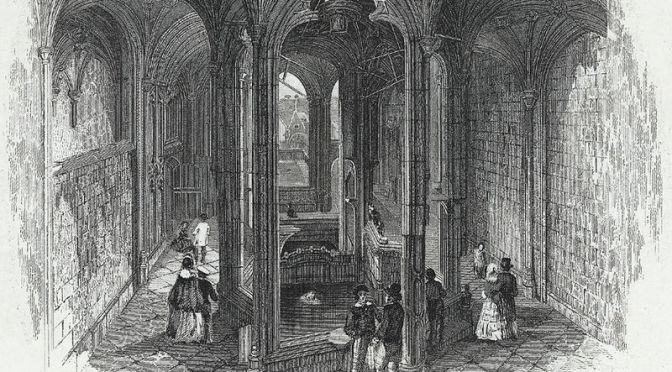
Any discussion on the sacredness of watery places needs to include springs and wells. Unfortunately, the majority of springs have been tampered with, cleared out and utilised to such a degree in our history the evidence is very sparse indeed.  Some prehistoric sites are associated with springs through proximity such as Swallowhead springs which is near the Neolithic monuments of Silbury Hill and West Kennet long barrow.  However, the best preserved piece of evidence comes from the town of Bath.  Here we have the very famous Roman baths based around the springs dedicated to the goddess Sulis Minerva.  The impressive complex of baths and temples built by the Romans began some fifteen years after the Boudiccan rebellion.  It does seem this was an attempt to do honour to a local deity – Sulis – by aligning it with one of the more significant Roman deities – Minerva.  It is well recorded by the Romans the importance of this site to the local people.  Thousands of coins of both Roman and Celtic type have been found in or near the hot springs in addition to many curse tablets of a Roman date. 

This slideshow requires JavaScript.


This tradition of offerings to a spring or well continues into the modern day.  Throwing a coin into a well to make a wish is a common practice as is the tradition of well dressing.  Every summer throughout the counties of Britain wells are cleaned up and made pretty.  The longevity of this practice is well attested, in 960 a canon was issued that expressly forbade the ‘worship of fountains’ and yet it could not be suppressed, eventually the church turned these pagan sites into Christian holy wells.  In some cases the well or spring has a special tree nearby, a Clootie tree.  The clootie is a piece of cloth that has been dipped in the spring’s water and then tied to the tree, after which a supplication is given to the saint or deity of the spring.  Many of these springs are associated with healing, in some cases the clootie represents the ailment and it is believed that once it has perished then so will the ailment. 


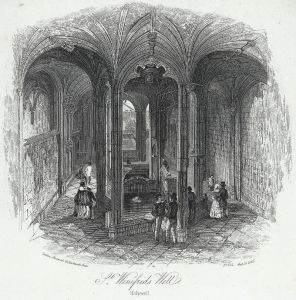
Furthermore it is not unusual for a church to be built near a sacred spring or well such as St Oswalds in Cumbria or at Golant in Cornwall.  Some have even embraced the sacred well as is the case for St Winefride’s well in Holywell, Wales.  In fact the overall sanctity continues well into the Christian era, monasteries can be found on islands (St Michael’s Mount or Lindisfarne) and many other Christian religious houses are situated close to rivers. 


St._Winifrids_Well,_Holywell.jpeg.jpeg
St Winifreds Well, Holywell, Wales. A renown place of healing, it continues to be popular today. This image is available from the National Libary of Wales.


This article merely scratches the surface but from reading and research it soon becomes apparent that water in all its forms has played a major role in the history and prehistory of our world.  It has defined where we live and it has defined how we live, indeed if we live at all.  That our ancestors’ revered water should be of no surprise to us and yet often it is. 


“Water is life’s mater and matrix, mother and medium.  There is no life without water.” Albert Szent-Gyorgi


“Nothing is weaker than water, yet for overcoming what is hard and strong, nothing surpasses it.”  Lao Tzu

A recent interesting blog from the British Museum which talks about the Thames – “Secrets of the Thames”.


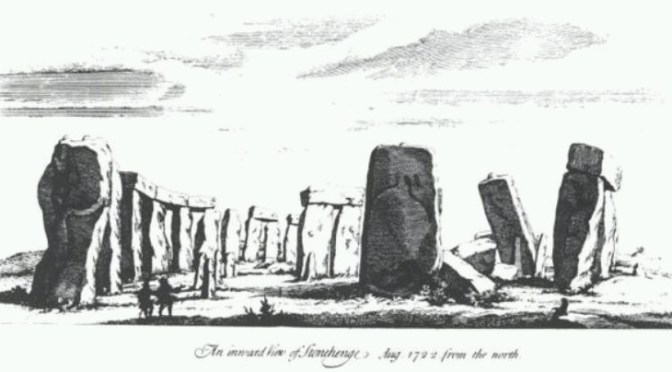
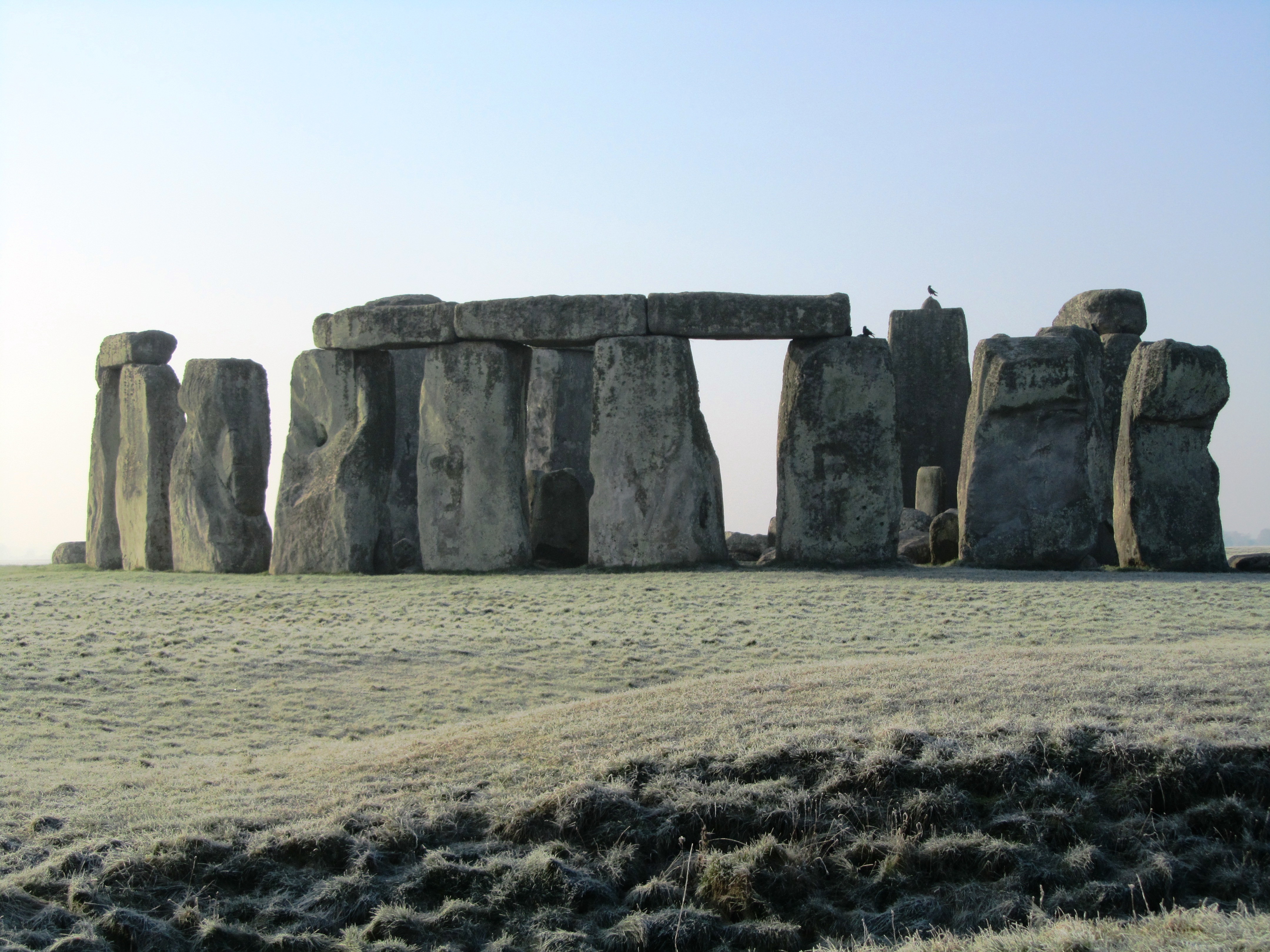
Stonehenge – more than a ring of stones.

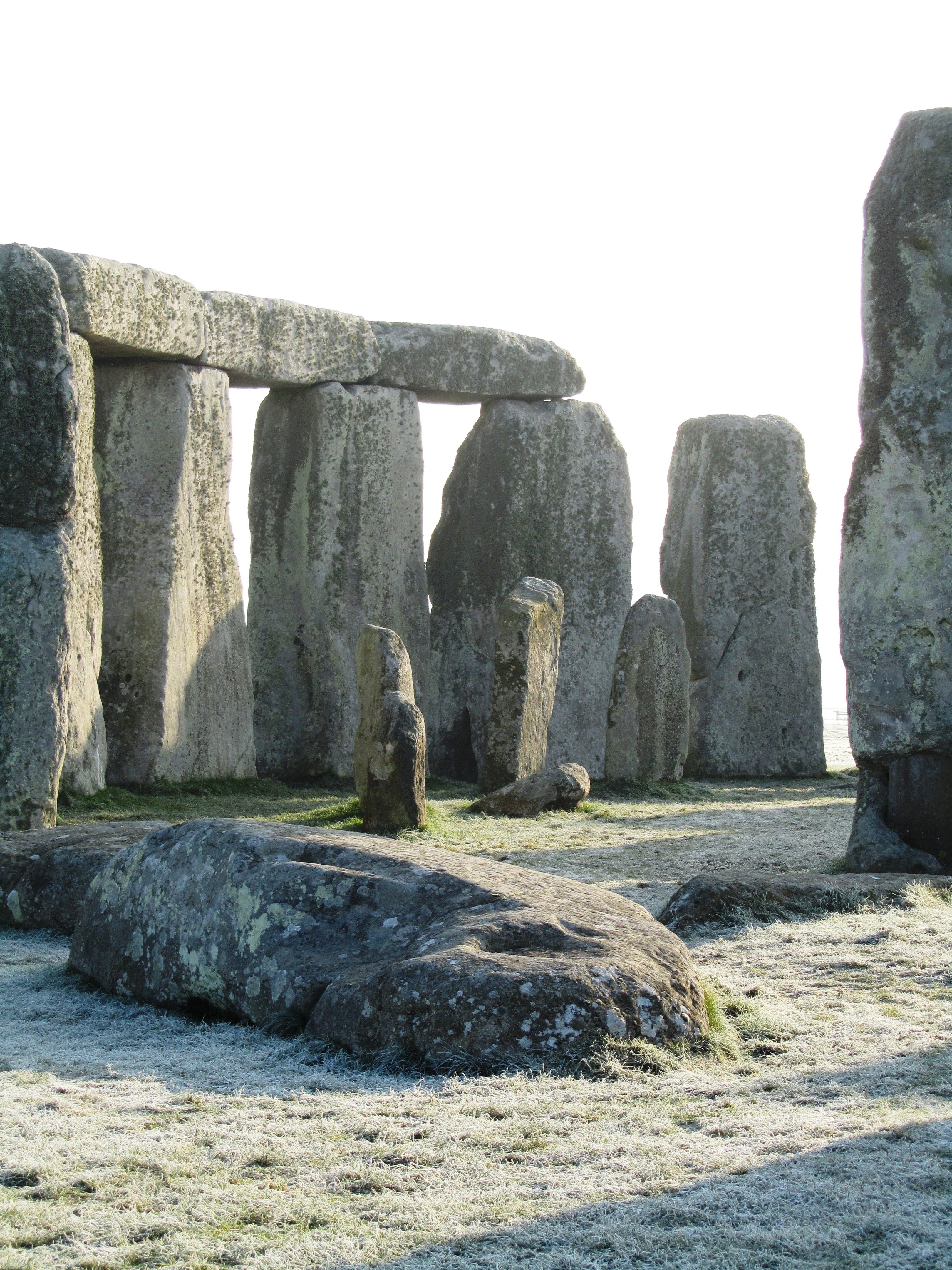
Stonehenge – a name that evokes a great many emotions in a great many people.  For some it is a place of pilgrimage, a place to connect with the ancestors and for others it is seen as a tourist trap or something to tick off the bucket list.  For centuries it has captured our imagination; never has a heritage site been so controversial – something which continues to this day.  In this post it is not my intention to give a full on thesis about Stonehenge, there are plenty of books/websites who do this already.  Instead it is simply an overview of what is currently understood about the site, its surrounding landscape and my own personal thoughts.

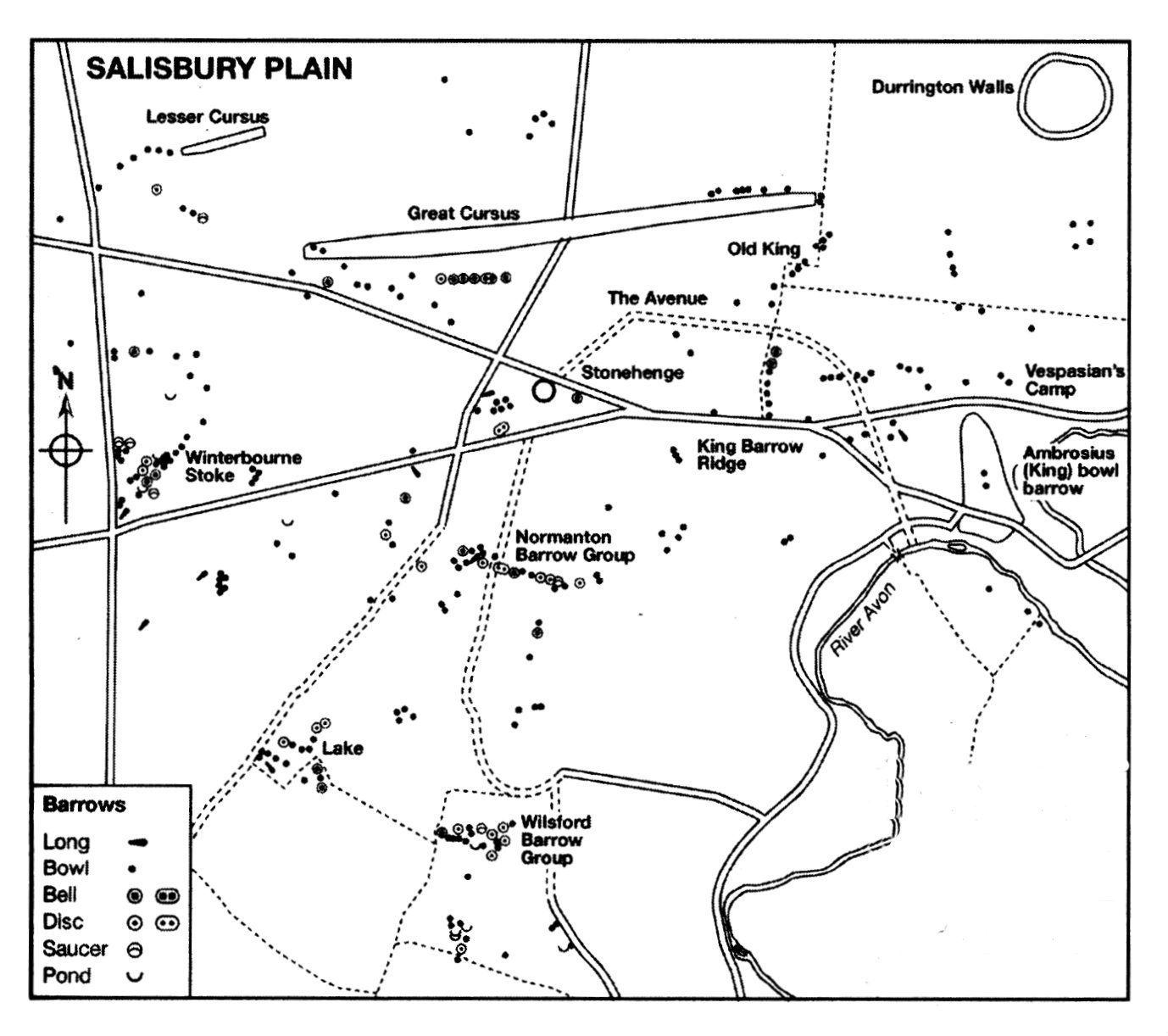
Stonehenge is situated on the Salisbury Plains, to the south is the busy A303, a main road between the south-west and London, and for many years the equally busy A344 ran alongside the site.  This latter road was removed sometime ago to improve the visitors experience.  Today there are ongoing discussions regarding the upgrading of the A303 and a proposed tunnel.  It is a highly emotive subject, on one hand I understand the need to improve the road situation (ask anyone who is stuck in a traffic jam on the A303) but as an archaeologist I am also aware of the sensitive nature of the surrounding heritage landscape (and yes I am on the fence).  Mike Pitts in his recent post discusses the pros and cons for those of you who are interested.

img_7543

For the visitor today the focus is on the large stone circle with its trilithons, they marvel at how it could have been built by ‘primitive man’ often leading to suggestions of alien intervention and lost technologies.  But such thoughts only serve to belittle our ancestors and our past.  Others may ask why did our ancestors build Stonehenge?  Often the answers are unimaginative and simple – sun-worship; display of power; ancient computer; druid temple – once more when we look only for one answer to a what is obviously a complicated site of great longevity we belittle their achievements.  Instead if Stonehenge was understood in terms of the wider landscape and as a site whose history spanned several millenia we might come to some small understanding of how and why.

In today’s world of instant gratification where everything has a beginning and an end,  it is hard to imagine beginning a project knowing you might not see it finished but this was a reality for the builders of Stonehenge.  It has lead some to suggest that it was not the end product which was important but the doing, the act of building which was in fact the purpose.  Suggesting a cyclical thought pattern which can be seen in other aspects of prehistoric life – round houses, stone circles, round barrows.  in addition, time itself was most likely viewed in cycles, the phases of the moon and the movement of the seasons are all cyclical events which would have been of great importance to prehistoric people trying to make sense of their world.

“So was Stonehenge ever ‘finished’?  The answer to that has to be no, because completion was never the intention of the people who created it.” (Pryor F. 2016 ‘Stonehenge: The Story of a Sacred Landscape).

It is well known that Stonehenge itself had many incarnations, perhaps meaning new and different things with each alteration or rebuild.  To understand Stonehenge it is important to consider it in the wider context of the surrounding landscape (there are literally hundreds of prehistoric monuments around it) in all the different phases.

The Mesolithic Story

The story of the Stonehenge landscape begins back in the Mesolithic, ongoing recent excavations at Blickmead are providing archaeologists with tantalising clues as to why this area was important to our ancestors.  The site is situated near a spring by the River Avon, excavations began in 2005 and almost immediately were fruitful.  Basically, the deposits consisted of an array of Mesolithic settlement debris, mostly flint fragments (tens of thousands) but also a great number of animal bones.  Interestingly, the site also yielded the largest collection of auroch bones ever found on a Mesolithic site in Britain so far.  Other animals which were hunted and consumed included red deer, wild boar and salmon – this has led archaeologists to suggest that feasting was a common occurence around the spring.  The spring itself is quite unusual as it has the tendency to stain flints and other materials a bright magenta pink – the importance of springs in later prehistory is well attested to.

70334941656960

In 1966 row of four large pit like features were found during upgrades to the old carpark close by Stonehenge.  When excavated one was found to be a the root-hole of a tree and the other three were holes dugs to hold large poles.   Examination of the material from these features gave a date range from between 8500 and 7000BC.  The posts would have been approximately 75cm in diameter and were from pine trees.  Later in 1988 another post-hole was discovered south and east of the original pits but it was contemporary.

So here we have a landscape already well populated by hunter-gatherer communities who revered certain natural features long before Stonehenge makes an appearance.  A landscape which had meaning to the people who inhabit it; who had traditions and memories of place.

At around 3500BC (Neolithic) with the arrival of farming these communities and their traditions had evolved and more permenant features began to make an appearance on the landscape.   Long barrows such as those at East and West Kennet or Winterbourne Stoke were the first to appear and by 3400BC the Stonehenge Cursus and Lesser Cursus was under construction.

Houghton_Arc_855.214_-_Stukely,_the_Druid_temple_of_Abury

3000BC – The first official phase of construction

In many parts of Britian at this time a new type of monument was being constructed, these were earthwork enclosures which are referred to as henges.  They consist of irregular cut ditches encircling a defined area with corresponding banks.  Stonehenge’s earliest phase was one such earthwork.  Here there were two entrances one faced north-east and the other faced south.  The north-easterly entrance remained in use for much of the sites lifetime and appears to be important to its function.  The entrance is aligned along a line of natural gullies which face towards the midsummer sunrise in one direction and the midwinter sunset in the other.


img_7542
The bank and ditch of the first phase of construction – often overlooked by the visitor as they focus on the stones.


These natural gullies would have been visible to the people of the Mesolithic and may have been why the large pine posts were erected where they were – the midsummer and midwinter solstices were just as important then as they were to the later prehistoric communities.

Inside the earthwork enclosure around the inner edge of the bank were fifty-six regularly spaced pits – these are now known as the Aubrey Holes.  There is some discussion as to what they were or what they contained – small stone uprights or wooden posts?  However, what is known is that eventually they did contain cremated human remains.  Similar deposits have been found in the partly filled ditch and cut into the bank suggesting that at this stage in its history Stonehenge was used as a cemetary, among other things.


img_7537
These circular markers define the spot where an Abrey Hole can be found.


The Building of the Stone Monument

At around 2500BC Stonehenge began to resemble a site we are much more familiar with. It is at this time that the massive sarsen stones from the Marlborough Downs were moved to the site and erected.  If that was not all at the same time the smaller but no less cumbersome, blue stones from the Preseli Mountains in Wales were transported and erected at Stonehenge.  The Heel stone was moved to its current position and four smaller sarsen stones (the station stones) were erected  inside the enclosure just inside the bank.

700251477253807002510254766070025459156180

The first two diagrams above demonstrate one theory of how the trilithon stones were erected.  The third diagram shows the sophistication of the construction, with each lintel fitting neatly into each other – borrowed from the Univeristy of Buckingham’s MOOC “Stonehenge”.


img_7536
The friendly raven accentuating the knob which would have ensured a lintel that did not move.


stonehenge 1917
Stonehenge in 1917 – taken from a hot air balloon.


In a mere one hundred years it seems the two main structures of the trilithon horseshoe and the circle was completed. Interestingly it seems that greater care was taken in the shaping and construction of the stones visible from the north-east side and the main entrance.  The bluestones were also erected at this time but not in the form we see today at Stonehenge.  Excavation has shown us that there were two concentric arcs of stone holes, known as the Q and R holes were found on the north and east sides of the central area.  It has been suggested that these were not representative of a complete circle as there is little to no evidence on the southern or western sides of corresponding holes.


img_7544
The Heel stone – it is thought that unlike the other sarsen stones which come from the Marlborough Downs, the Heel stone was always here and simply raised upright.


2200BC – Consolidation and Alterations

From this time on Stonehenge underwent a series of minor alterations although the large sarsen stones remained in their positions although much later in the Bronze Age shallow carvings of axeheads and the occasional dagger were added.  There are some 115 carvings and these have been dated stylistically to between 1750 and 1500BC.

The smaller bluestones however were rearranged and by 2200BC the incomplete circles were dismantled and repositioned to form a circle concentric to and just inside the circle of larger sarsen circle whilst a second oval of bluestones (spotted dolerite) was also formed within the trilithon setting.  Later a number of stones were removed from the oval to form the horseshoe setting which is seen today.


img_7541
The smaller stones are the remnants of the bluestone circle.


At around the same time the ditch was recut and a small bank was constructed and the Avenue was constructed.  This later feature follows the solstice alignment with ditches and banks for part of the way and then veers off to the east ending in a valley of the River Avon.  Recent excavations at the place where the Avenue meets the River Avon have uncovered evidence for a previously unknown henge monument made up of bluestones. These were likely to have been removed to supplement the bluestones already at Stonehenge.

Surrounding the monument are significant numbers of round barrows dating from the Bronze Age, some of which contained rich burials with artefacts made of bronze, gold, jet and amber.  Suggesting a society rather different from the one which was able to come together communally to construct Stonehenge and yet the place, the landscape and the site still had a powerful pull to these people – it is no different today…

Above are two of the many round barrows littering the landscape around Stonehenge.

stonehenge landscape after Aubrey Burl 1955
A map showing the distribuiton of barrows in the Stonehenge landscape.

The pictures above show a reconstruction of houses found during excavations at Durrington Walls which date to approximately the same time as when the main phase of construction at Stonehenge was underway.  It is interesting to note the layout of the houses with the ‘dresser’ opposite the door and the beds to the right as you enter.  This layout is reminiscent of house layouts at Skara Brae and later similar layouts are seen in Bronze Age roundhouses.

This slideshow requires JavaScript.


Stonehenge is a UNESCO World Heritage Site, it is one of the most popular tourist attractions in Britain; it evokes a variety of emotions; it is a British icon and yet so many people still only today see the stones.  Yes they are impressive but there is so much more to their story than what you see.  To really understand Stonehenge the curious need to look at the wider landscape and then look further again.  Afterall, not too far away is the equally astounding landscape surrounding Avebury.  What was the relationship between these two sacred landscapes?  What can they tell us about the people who lived at the time?  These landscapes were created by a people who viewed the world very differently to ourselves and carry a language, a dialogue that would have been obvious to those who lived in the Neolithic and even the Bronze Age.  In our modern world where landscapes are viewed as places to use – either to make money or in terms of leisure pursuits – it is often hard for us to step back in time to view the landscape as living breathing entity without which we could not survive.

Stonehenge and its surrounding landscape undoubtedly meant many things to the people who occupied it (and probably those further afield too), the stones themselves were taken from the land and perhaps used to create a space where the natural world could be contained; where a semblance of control was maintained; where perhaps a balance was found between the natural world and the constructed world.

There are a great deal of books and websites which delve into the Stonehenge enigma in far greater detail.  I have listed some of those below (browse Amazon for comprehensive lists).  In particular I would like to recommend the free online course run by Buckingham University via Iversity (click here for more details).

Further Reading

Pryor F (2016) Stonehenge: The Story of a Sacred Landscape

Parker-Pearson M  et al (2015) Stonehenge: Making Sense of Prehistoric Mystery

Parker Pearson M (2013) Stonehenge: Exploring the Greatest Stone Age Mystery

Bowden M et al (2015) The Stonehenge Landscape: Analysing the Stonehenge World Heritage Site.